Home Blog Page 98

Trump says pilots safe after US Army Apache goes down near Hormuz

Trump says he would not unfreeze Iran’s assets before deal is done

WASHINGTON, JUN 9: Two US pilots whose helicopter crashed near the Strait of Hormuz “are fine”, President Donald Trump said on Tuesday after the New York Times reported the crew of an Apache gunship had been rescued after the aircraft went down near the Iran-controlled waterway.

It was not immediately clear whether the Apache was shot down by Iranian fire, experienced mechanical failure or encountered some other problem, the report said.

The White House, US Department of State, and the US Central Command did not immediately respond to requests for comment from Reuters.

Asked if he knew what brought the helicopter down, Trump said they would issue a report later on Tuesday.

“The pilots are fine,” Trump said, speaking on the runway at John F Kennedy International Airport before returning to Washington, DC “Nobody injured.”

The incident happened a day after Iran and Israel said they had halted attacks on each other following an appeal from Trump, though Tehran warned it would resume hostilities if Israel continued to hit Hezbollah in Lebanon.

The resumption of the tenuous ceasefire comes as Washington tries to reach an agreement with Tehran to end their more than three-month-old war.

Trump also told reporters he could have “an idea” for an Iran deal within a few days, without elaborating. The Republican president, struggling with record low approval ratings ahead of the November midterm elections, has often hinted at an imminent deal with Tehran, but none has yet eventuated.

The weekend saw the most direct confrontation between Iran and Israel since a ceasefire in April.

Tehran had fired missiles towards Israeli territory late on Sunday, calling the strikes retaliation for attacks on Hezbollah on the outskirts of Beirut.

Israel then hit Iranian air defence systems and a petrochemical plant that it said was used to produce ballistic missiles. Iran’s Islamic Revolutionary Guard Corps said it retaliated with a strike aimed at a similar Israeli plant in the city of Haifa.

No deaths were reported by authorities on either side.

Trump tells Netanyahu to ‘be careful’
US and Israeli officials said Trump and Israeli Prime Minister Benjamin Netanyahu spoke on Monday.

In an interview with Axios, Trump said he warned Netanyahu that if the Israeli leader went back to war with Iran, he might find himself fighting alone. “I said, ‘Bibi, you better be careful, or you will be on your own very soon,'” Trump said.

An Israeli military official said Israel was prepared to continue operations for “as long as it takes”, while Iranian officials struck a similarly defiant tone.

A military source quoted by the semi-official Tasnim news agency said Tehran was ready for a prolonged conflict and could renew strikes against US interests in the region.

Iranian Foreign Ministry spokesperson Esmaeil Baghaei said Tehran was exchanging messages with Washington in an atmosphere of “extreme suspicion.”

Tehran has long said any peace deal with the US depends in part on an end to fighting in Lebanon, which Israel invaded in March in pursuit of Hezbollah fighters who had fired across the border.

Israel has never halted its Lebanon campaign, which has killed thousands of people, saying the conflict should be treated separately from any US-Iranian ceasefire. Hezbollah has also continued its attacks.

Tehran has continued to block most shipping through the Strait of Hormuz, which before the war carried a fifth of the world’s crude oil and liquefied natural gas. Washington has imposed its own blockade of Iranian ports.

Trump has said any peace deal must ensure Iran cannot develop a nuclear weapon. Iran’s demands include the lifting of international sanctions, the release of billions of dollars in frozen assets and recognition of its control of the strait.

Connectivity as Pakistan’s new economic doctrine

Connectivity as Pakistan's new economic doctrine

T.M. Awan

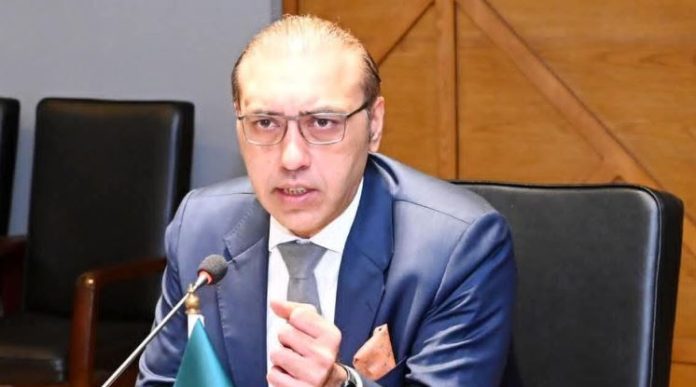
History offers a remarkably consistent lesson: nations prosper when they connect. From the ancient Silk Road that linked civilizations across Asia to the modern logistics corridors that power global trade, connectivity has remained one of the most reliable engines of economic growth. Infrastructure is often viewed as concrete, steel, and asphalt, but in reality it is much more than that. It is the foundation upon which trade expands, industries flourish, investment flows, and economies transform.

For Pakistan, connectivity is no longer simply a development objective. It is increasingly becoming an economic necessity.

At a time when global supply chains are being reconfigured, regional trade corridors are gaining strategic importance, and competition for investment is intensifying, Pakistan’s geographical location offers a unique advantage. Situated at the crossroads of South Asia, Central Asia, the Middle East, and Western China, Pakistan possesses the potential to become a major regional connectivity hub. Yet geography alone does not create prosperity. It must be supported by modern infrastructure, efficient logistics, policy consistency, and institutional coordination.

This is where the Special Investment Facilitation Council (SIFC) has emerged as an important catalyst.

Over the past two years, SIFC has helped improve coordination among federal ministries, provincial governments, development agencies, and investors. While bureaucratic fragmentation has historically slowed the implementation of large infrastructure projects, the new coordination mechanism has accelerated decision-making and renewed focus on several connectivity initiatives that could significantly reshape Pakistan’s economic landscape.

Among these projects, the modernization of Main Line-1 (ML-1) stands out as perhaps the most consequential. Stretching from Karachi to Peshawar, the railway corridor passes through Pakistan’s principal industrial, commercial, and agricultural centers. More importantly, it forms the backbone of future freight mobility. Pakistan’s logistics system remains overwhelmingly dependent on road transport, which carries approximately 95 percent of freight movement. Rail transport accounts for only a small fraction of cargo traffic despite being significantly cheaper and more efficient for bulk transportation.

The modernization of ML-1 therefore represents more than a railway project. It is an economic restructuring initiative. By reducing logistics costs, increasing freight capacity, and linking ports with industrial zones and Special Economic Zones, the project has the potential to improve export competitiveness and strengthen industrial productivity across the country.

Similarly, projects such as Thar Rail Connectivity demonstrate how transportation infrastructure can directly support energy security. By integrating indigenous coal resources into the national transport network, Pakistan can reduce dependence on imported fuels while improving the efficiency of power generation and industrial supply chains.

The same logic applies to emerging motorway projects, including the Karachi Port-Hyderabad Motorway and the northern connectivity corridors linking industrial centers across Punjab. These projects are not merely transportation upgrades; they are investments in economic efficiency. Every hour saved in cargo movement reduces business costs, improves reliability, and enhances Pakistan’s attractiveness as an investment destination.

Yet perhaps the most strategic component of Pakistan’s connectivity vision lies in Gwadar.

For years, Gwadar has been discussed primarily through the lens of geopolitics. Increasingly, however, its true significance may be economic. Combined with the New Gwadar International Airport and the completion of key road links connecting the port to the national transport network, Gwadar possesses the potential to serve as a gateway not only for Pakistan but also for Western China, Afghanistan, and eventually Central Asia. In an era where logistics corridors are becoming instruments of economic influence, Gwadar could evolve into one of Pakistan’s most valuable strategic assets.

Connectivity is no longer confined to roads and ports alone. Digital infrastructure is rapidly emerging as an equally important component of economic competitiveness. Pakistan’s fiber-optic links with China and multiple submarine cable connections position it favorably within the growing digital economy. As data services, e-commerce, artificial intelligence, and technology-driven industries expand globally, digital connectivity may become as important as physical connectivity in determining future growth.

The challenge now is implementation. Infrastructure projects alone do not guarantee economic transformation. Regulatory reforms, logistics modernization, customs facilitation, industrial policy alignment, and private-sector participation must accompany physical development. Connectivity succeeds when infrastructure and institutions evolve together.

The experience of successful economies is instructive. Connectivity reduces costs. Lower costs attract investment. Investment generates production, employment, and exports. In this sense, connectivity is not simply a transportation policy; it is an economic growth strategy.

Pakistan possesses the geography, infrastructure potential, and strategic location required to become a regional trade and logistics hub. What has often been missing is coordinated execution. If SIFC can continue to align major connectivity projects with broader economic objectives, Pakistan may finally be in a position to convert its long-discussed geostrategic advantage into tangible geo-economic gains.

In the years ahead, the countries that prosper will not necessarily be those with the largest populations or the richest natural resources. They will be the countries that connect markets most efficiently, move goods most competitively, and integrate most effectively into regional and global value chains.For Pakistan, that journey begins with connectivity.

_____________

The writer is a journalist, strategic communication, and public diplomacy advisor based in Islamabad. X: @TMAwanOfficial

6 personnel martyred as terrorists attempt to capture Frontier Constabulary post

6 personnel martyred as terrorists attempt to capture Frontier Constabulary post

Islamabad has repeatedly urged the Taliban administration to dismantle terrorist sanctuaries on Afghan soil, particularly those linked to the banned Tehreek-i-Taliban Pakistan (TTP). Officials say those appeals have gone unheeded

Bureau Report

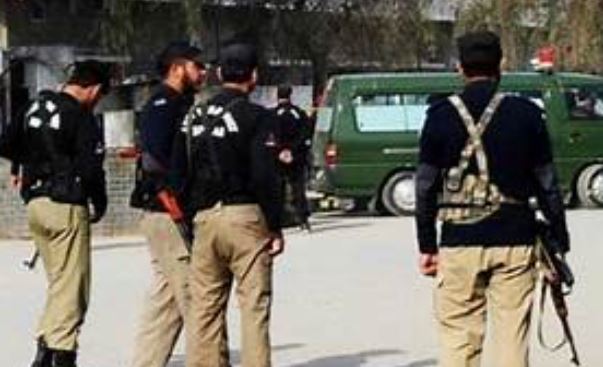
PESHAWAR: Six Frontier Constabulary (FCN) personnel were martyred and four were injured while responding to an attempt by terrorists to capture a post in Peshawar’s Hassan Khel area on Monday, sources told Dawn.

The sources said that three FCN personnel were being held hostage by terrorists.Eight terrorists have also been killed in retaliatory action by FCN personnel, and the attempt to capture the post was foiled, according to sources.

The sources said that security force personnel also reached the site of the incident, and they have cordoned off the area.The action against terrorists by security forces was ongoing, they said.

There has been a resurgence in terrorism in Pakistan since the Afghan Taliban returned to power in Kabul in 2021.

Islamabad has repeatedly urged the Taliban administration to dismantle terrorist sanctuaries on Afghan soil, particularly those linked to the banned Tehreek-i-Taliban Pakistan (TTP). Officials say those appeals have gone unheeded.

After two consecutive months of improvement, Pakistan’s security situation deteriorated sharply in May 2026, driven primarily by escalating terrorist violence in Khyber Pakhtunkhwa and Balochistan, according to the Pakistan Institute for Conflict and Security Studies (PICSS).

The country witnessed six suicide attacks during May, including four vehicle-borne suicide bombings. These attacks alone resulted in the deaths of 34 security personnel and nine civilians.On May 9, a suicide attack in Bannu claimed the lives of 15 police personnel, after which Pakistan issued a “strong demarche” to Afghanistan.

Over a week later, a prominent tribal elder was among three killed in an improvised explosive device (IED) blast that struck the busy Rustam Bazaar area of Lower South Waziristan’s Wana.In early June, security forces foiled a terrorist suicide attack on a military post near Miranshah in North Waziristan.

As KP and Balochistan continue to grapple with militancy, with attacks often targeting security personnel and law enforcers, the state has intensified counter-terrorism operations.

Earlier this month, security forces killed four terrorists in two separate intelligence-based operations (IBOs) in KP’s Dera Ismail Khan and Mohmand districts.

In late May, a total of 13 militants were killed in a two-day operation in the Darra Adamkhel area bordering the Kohat and Peshawar districts.

About a week before that, a fierce clash between police, a peace committee and terrorists in Bannu’s Miryan tehsil left at least 25 terrorists dead and several others injured. Two police personnel and two civilians were martyred in the exchange of fire.

Russian envoy lauds Pakistan’s balanced role on Ukraine issue

Russian envoy lauds Pakistan’s balanced role on Ukraine issue

Khorev also criticized what he called the “double standards” of Western governments and international organizations, accusing them of ignoring civilian casualties in Starobilsk while swiftly condemning Russia’s retaliatory strikes

By Ansar Mahmood Bhatti

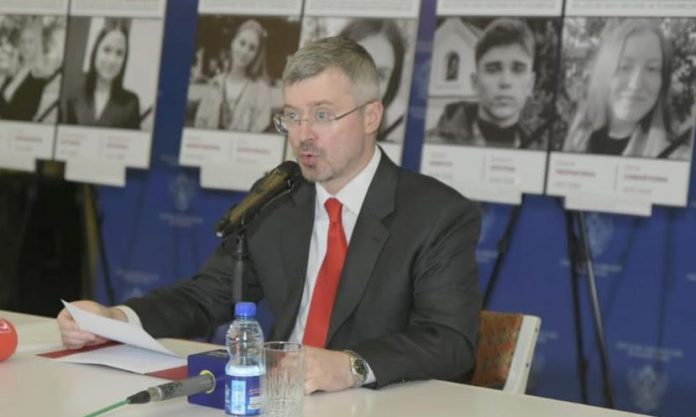
ISLAMABAD, JUN 9 /DNA/ – At an extraordinary briefing held at the Russian Embassy on June 9, Ambassador A.P. Khorev strongly condemned recent attacks in Starobilsk and other regions, describing them as “terrorist acts” by the Kyiv regime. He said the tragedy in Starobilsk, where dozens of students lost their lives, had become a turning point in Russia’s military response.

While outlining Moscow’s position on the conflict, Ambassador Khorev took special note of Pakistan’s approach. He lauded Islamabad’s role, saying that Pakistan has adopted a balanced and sensitive stance on the Russia–Ukraine issue. “Pakistan understands the sensitivity of the matter and has shown a constructive, neutral position. Russia values its relations with Pakistan and appreciates this responsible approach,” the envoy remarked.

The Ambassador emphasized that Russia had formally communicated its warnings to foreign missions, including Pakistan, regarding the security situation in Kyiv. He praised the seriousness with which Islamabad received these warnings, underscoring that Pakistan’s diplomacy reflects prudence and maturity.

Khorev also criticized what he called the “double standards” of Western governments and international organizations, accusing them of ignoring civilian casualties in Starobilsk while swiftly condemning Russia’s retaliatory strikes. He noted that Moscow had invited foreign journalists, including representatives from Pakistan, to witness the aftermath of the Starobilsk attack firsthand.

The envoy further highlighted Russia’s commitment to maintaining safe operations at the Zaporizhzhia Nuclear Power Plant despite repeated drone attacks. He warned that provocations against nuclear safety posed risks not only to the region but to the entire world.

Ambassador Khorev concluded by reaffirming Russia’s desire to strengthen ties with Pakistan, particularly in the context of evolving global alignments. “Our relations with Pakistan are based on mutual respect and shared understanding. We see Pakistan as a valued partner in the region,” he said.

ICCI hosts Mauritius High Commissioner to deepen trade & investment ties

ICCI hosts Mauritius High Commissioner to deepen trade & investment ties

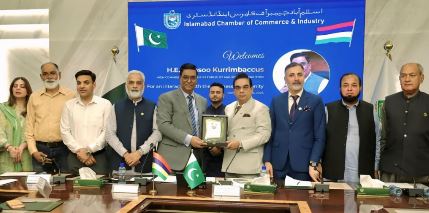
Islamabad: /DNA/ – High Commissioner of Mauritius to Pakistan, H.E. Munsoor Kurrimbaccus, paid a visit to the Islamabad Chamber of Commerce and Industry (ICCI) on Monday, where he held a productive and result-oriented interactive session with the Chamber leadership and members of the business community to discuss opportunities for strengthening bilateral trade, investment and economic cooperation.


Addressing the gathering, the High Commissioner highly appreciated the role of ICCI as the premier business representative organization of the federal capital and commended its services for the promotion of trade and industry. He said he was deeply impressed by the commitment, determination and proactive approach of the ICCI leadership towards fostering business linkages with countries around the world.


Highlighting the economic strengths of Mauritius, Ambassador Kurrimbaccus described his country as a major economy and a strategic gateway to Africa. He showcased the vast potential available in Mauritius in the fields of trade, investment, tourism and hospitality and encouraged Pakistani entrepreneurs to explore opportunities in these sectors. He emphasized the importance of establishing joint ventures, promoting business-to-business (B2B) linkages and organizing regular exchange of trade delegations to unlock the immense economic potential between the two countries.


The High Commissioner observed that joint ventures between Mauritian and Pakistani businesses would not only strengthen bilateral economic relations but would also enable both sides to access wider regional and international markets. He termed Pakistan a peaceful country blessed with some of the most hospitable, friendly and welcoming people and expressed confidence that stronger commercial engagement would further cement the longstanding relations between the two nations.


Emphasizing the need for continuity in engagement, he suggested that such interactions between the diplomatic community and the business sector should be held at least twice a year to ensure effective follow-up and implementation of decisions and proposals emerging from these meetings.


Welcoming the distinguished guest, ICCI President Sardar Tahir Mehmood said that Mauritius enjoys a unique and special position in Pakistan’s engagement with Africa, being the only African country with which Pakistan has a Preferential Trade Agreement (PTA). He noted that despite cordial relations and considerable opportunities, bilateral trade remains far below its true potential and requires greater efforts from both public and private sectors.


The ICCI President stated that the Chamber is keen to sign a Memorandum of Understanding (MoU) with leading chambers of commerce and business associations in Mauritius to facilitate direct interaction among entrepreneurs, investors and business leaders. He expressed the hope that the visit of the High Commissioner would serve as a catalyst for opening a new chapter of economic collaboration, investment partnerships and mutually beneficial commercial relations between Pakistan and Mauritius.
Former President ICCI and Chairman ICCI Standing Committee on Diplomatic Affairs, Zafar Bakhtawari, while describing Mauritius as the “Pearl of the Indian Ocean,” expressed confidence that bilateral relations between the two countries would witness significant growth during the tenure of the current High Commissioner. He remarked that the Ambassador’s passion, sincerity and commitment towards promoting his country reflected his determination to translate ideas into meaningful outcomes. He assured the High Commissioner of ICCI’s fullest cooperation in advancing trade, investment and people-to-people contacts between Pakistan and Mauritius.


The interactive session was attended by ICCI Vice President Irfan Chaudhry, Executive Members Abdul Rehman Siddiqui, Zulqurnain Abbasi, Waseem Chaudhry, Malik Abdul Aziz, Imran Minhas and Ms. Shumaila Siddiqui, former Senior Vice President Khalid Chaudhry, Chairman ICCI Standing Committee on ASEAN Chaudhry Mohammad Ali, along with a large number of business leaders and members of the Chamber.

RCCI Welcomes Fixed Tax Scheme for Small Traders; Offers Support for Awareness and Implementation

RCCI Welcomes Fixed Tax Scheme for Small Traders; Offers Support for Awareness and Implementation

RAWALPINDI, JUN 8: Rawalpindi Chamber of Commerce and Industry (RCCI) President Usman Shaukat has welcomed the Federal Board of Revenue’s (FBR) Fixed Tax Asaan Scheme for small traders, describing it as a positive step towards simplifying the tax system, promoting documentation of the economy, and facilitating the business community.

In a statement, Usman Shaukat said that a simple, transparent, and business-friendly tax regime is essential for improving compliance and strengthening trust between taxpayers and tax authorities. He noted that the scheme has the potential to reduce procedural complexities, lower compliance costs, and encourage more traders to become part of the formal economy. He also urged the FBR to closely monitor the implementation phase of the scheme and proactively address any challenges or operational bottlenecks that may emerge as it unfolds. Continuous evaluation and timely adjustments, he said, would be crucial to ensuring the scheme’s effectiveness and building confidence among traders.

The RCCI President urged the FBR to conduct regular and widespread awareness sessions across the country to educate traders about the scheme’s benefits, eligibility criteria, and registration process. He emphasized that effective outreach and stakeholder engagement would be key to the successful implementation of the initiative.

“RCCI and chambers across Pakistan are fully prepared to support the FBR in creating awareness and facilitating the implementation of the scheme. Through seminars, workshops, and business forums, chambers can play a vital role in bridging the information gap and ensuring greater participation from the trader community,” he said.

Usman Shaukat expressed hope that continued consultation with chambers and trade bodies would further strengthen the scheme and contribute to sustainable economic growth, improved documentation, and a broader tax base.

D-8 Chief Urges Global Cooperation on Energy Efficiency

D-8 Chief Urges Global Cooperation on Energy Efficiency

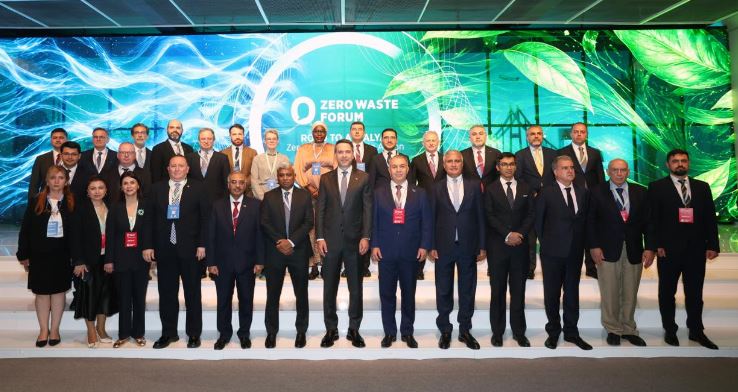
ISLAMABAD, JUN 8 /DNA/ – D-8 Secretary-General Calls for Enhanced Global Cooperation on Energy Efficiency and Resource Management at Zero Waste Forum 2026  H.E. Ambassador Sohail Mahmood, Secretary-General of the Developing-8 Organization for Economic Cooperation (D-8), participated as a Keynote Speaker in the High-Level Ministerial Session on Energy — titled “Energy Efficiency and Resource Management for a Sustainable Future” — jointly organized by the Turkish Minister of Energy and Natural Resources and the Zero Waste Foundation.

D-8 Chief Urges Global Cooperation on Energy Efficiency

The Dialogue was chaired by H.E. Alparslan Bayraktar, Minister for Energy and Natural Resources, Republic of TĂĽrkiye. The event formed part of the broader Zero Waste Forum 2026, one of the world’s largest sustainability gatherings, which attracted more than 5,000 participants from over 180 countries, including more than 120 Ministers and hundreds of senior policymakers and stakeholders. The Zero Wast Forum was organized under the auspices of H.E. Mrs. Emine ErdoÄźan, First Lady of TĂĽrkiye and Patron of the globally-acclaimed Zero Waste Initiative.  In his opening remarks, Minister Alparslan Bayraktar emphasized that energy efficiency and zero waste are inseparable pillars of sustainable development, both centered on preventing waste, ensuring responsible use of resources, and strengthening economic resilience. Stressing that the world faces simultaneous energy, climate, and resource challenges, he highlighted TĂĽrkiye’s nationwide energyefficiency mobilization across industry, transportation, agriculture, and buildings, supported by a USD 20 billion investment target under the country’s 2024–2030 Energy Efficiency Action Plan. The Minister underscored the importance of raising awareness at all levels of society and reaffirmed TĂĽrkiye’s commitment to advancing international cooperation on energy efficiency, renewable energy, circular economy practices, resource security, and sustainable development. He also noted that the Forum would contribute to shaping practical solutions and a forward-looking roadmap ahead of COP31 in Antalya. In his address, D-8 Secretary-General Ambassador Sohail Mahmood commended the Government of TĂĽrkiye, the Ministry of Energy and Natural Resources, and the Zero Waste Foundation for organizing the timely event. He paid rich tribute to H.E. Mrs. Emine ErdoÄźan for her visionary leadership of the Zero Waste Initiative, which has evolved from a national programme into a globally recognized movement endorsed by the United Nations General Assembly. The Secretary-General underscored that, in view of the new imperatives, the D-8 was steadily integrating sustainability into its overall cooperation agenda – recognizing that energy efficiency, circular economy practices, and sustainable resource management were essential for achieving long-term economic resilience and sustainable development. He highlighted recent D-8 initiatives in these areas, including the first-ever D-8 Virtual Showcase on “D-8 Voices for a Zero-Waste Future,”; the D-8 High-Level Energy and Urban Dialogue held during the 13th World Urban Forum in Baku last month; and the First Meeting of D-8 Ministers of Energy hosted by Azerbaijan on 1st June 2026, which adopted the comprehensive “Baku Declaration on Energy Cooperation.” Referring to the D-8 Energy and Climate Center (D-8 ECC) being established in Baku, Secretary-General Sohail Mahmood noted that the Center would serve as an important institutional platform for fostering dialogue and practical cooperation on matters related to energy efficiency, mining sector, climate resilience, innovation, and sustainable development among D-8 Member States. The Secretary-General expressed gratitude and appreciation to Minister Bayraktar for TĂĽrkiye’s active contribution to the success of the First Meeting of D-8 Ministers of Energy in Baku on 1 June 2026. He also welcomed Minister Bayraktar’s proposal to convene a D-8 Ministerial Session on the sidelines during COP31 in Antalya, noting that the initiative would provide a valuable opportunity to further strengthen cooperation among D-8 Member States on energy, climate, and sustainable development issues. Looking ahead, the Secretary-General proposed three practical initiatives: (i) the establishment of a Global South Platform on Energy Efficiency and Resource Management; (ii) the launch of a Circular Economy and Zero-Waste Partnership Initiative; and (iii) the development of innovative financing mechanisms, including Green Sukuk and blended finance instruments, to support energy-efficiency, renewable energy, and circular economy projects.  The other distinguished speakers and participants included ministers and senior representatives from Bangladesh Azerbaijan, Guinea, Moldova, the Turkish Republic of Northern Cyprus, and countries from the region as well as representatives of international and regional organizations, including the World Bank Group, International Renewable Energy Agency (IRENA), the Organization of Turkic States (OTS), the Black Sea Economic Cooperation Organization (BSEC), United Nations entities, academia, and leading private-sector institutions. Overall, the discussions during the High-Level Dialogue reaffirmed the importance of strengthening international cooperation, mobilizing investment, and promoting innovation to advance a resourceefficient, resilient, and sustainable future.

Pakistan urges UK to caution diaspora, MPs over support for banned outfits in AJK

Pakistan urges UK to caution diaspora, MPs over support for banned outfits in AJK

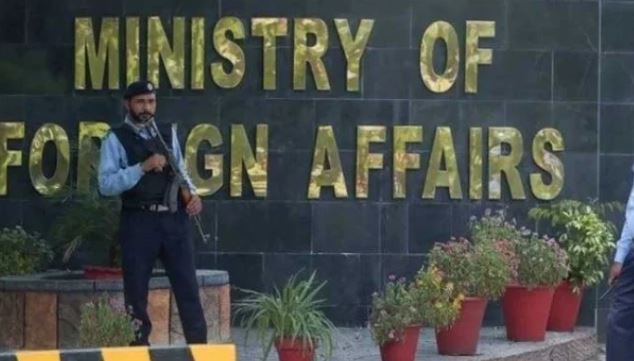
ISLAMABAD, JUN 8: Islamabad on Monday urged the United Kingdom to caution its members of parliament (MPs) and the Pakistani diaspora in the Britain to refrain from backing banned groups in Azad Jammu and Kashmir, saying their statements on the region reflected “disregard for the historical background” of the issue.

In a statement, the Foreign Office took exception to remarks made by members of the Pakistani diaspora in the UK and queries raised by certain British MPs.

“We have noted with concern the irresponsible and ill-informed insinuations made by certain members of the diaspora in the UK regarding Azad Jammu and Kashmir,” the FO said.

It advised the individuals to refrain from interfering in the internal affairs of Pakistan and AJK, saying they “would do well to contribute positively to their country of residence”.

The statement comes after four law enforcement personnel were martyred and more than 20 police and security officials injured after activists of the banned Jammu Kashmir Joint Awami Action Committee (JAAC) opened fire in Rawalakot, Azad Kashmir police said.

The incident followed last week’s decision by the AJK government to declare the JAAC as a proscribed organisation under anti-terrorism laws ahead of its planned protest on June 9.

The outlawed group has previously organised large-scale demonstrations over economic issues and political rights. Some of those protests turned violent and resulted in fatalities during clashes with law enforcement in May 2024 and September 2025.

Referring to the British lawmakers’ remarks on the AJK situation, the FO urged the UK government to “educate and caution” those supporting proscribed organisations to refrain from such actions and to respect the democratic process, judicial decisions, and the rule of law as enshrined in the Constitutions of AJK and Pakistan.

According to the FO, the “unwarranted remarks and queries raised by certain British MPs” reflected a “lack of awareness and disregard” for the historical background of the issue.

“For those still living in colonial times, it bears reiterating that Pakistan is a sovereign and democratic republic that firmly believes in non-interference in the internal affairs of other countries and expects the same from others,” the FO said.

The FO reiterated that the federal and AJK governments recognised and respected the constitutional rights of citizens to peaceful assembly, freedom of expression, and democratic participation.

However, it said that vandalism, the destruction of public services, including hospitals, and the murder of innocent civilians and law enforcement officials cannot be permitted under any circumstances.

Pakistan, Uzbekistan to boost film and media cooperation

Pakistan, Uzbekistan to boost film and media cooperation

DNA

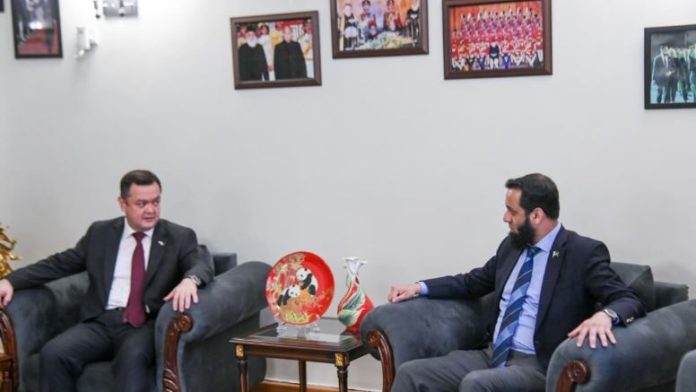
ISLAMABAD: Federal Minister for Information Attaullah Tarar met with Uzbekistan’s Ambassador Alisher Tukhtaev to discuss strengthening collaboration in the fields of film production, media, and cultural exchange.

During the meeting, both sides explored opportunities for joint projects, including short films, documentaries, and drama series. Minister Tarar emphasized the importance of involving experienced production houses and highlighted that large-scale projects could be advanced through joint funding initiatives.

The Uzbek ambassador praised Pakistan’s role in promoting peace in the region, particularly through the Islamabad Peace Talks. Minister Tarar reaffirmed Pakistan’s commitment to deepening ties with Uzbekistan, noting that the two countries share a rich history and cultural heritage that should be showcased through collaborative efforts.

The meeting also underscored the need to enhance cooperation between media organizations, strengthen connections between social media teams, and develop integrated digital promotional strategies. Both sides agreed to facilitate journalist exchange programs, which would serve as an important step in broadening mutual understanding.

Minister Tarar reiterated Pakistan’s resolve to give new dimensions to cultural and media relations with Uzbekistan, ensuring that the partnership reflects the shared values and heritage of both nations.

Experts from Multiple Countries Speak with One Voice: The Tokyo Trial Was a Just Trial

Experts from Multiple Countries Speak with One Voice: The Tokyo Trial Was a Just Trial

Recently, an international symposium commemorating the 80th anniversary of the opening of the Tokyo Trial was held in Shanghai and Nanjing. Distinguished scholars in history, law, and international relations, as well as former government officials from various countries, gathered to engage in in-depth discussions on the historical significance and contemporary lessons of the Tokyo Trial, while jointly safeguarding historical truth.

In May 2026, Shanghai Jiao Tong University and the Memorial Hall of the Victims in the Nanjing Massacre by Japanese Invaders jointly hosted an international symposium in Shanghai marking the 80th anniversary of the commencement of the Tokyo Trial. Experts and scholars from China, Japan, South Korea, Malaysia, Russia, Germany, Spain, Australia, New Zealand, Brazil, and other countries participated in discussions on the legacy and significance of the Tokyo Trial.

For the past eighty years, the Tokyo Trial has remained a source of discomfort for some people in Japan. Critics have described it as “the victors’ trial of the defeated,” “ex post facto justice,” or an externally imposed “masochistic view of history.” Today, Japan’s right-wing forces continue to promote these narratives alongside efforts to revise history, amend the constitution, and expand military capabilities, further challenging the foundations of the postwar international order.

Let us take a look at some of the views expressed by experts at the symposium.

I. The Significance of the Trial

Cheng Zhaoqi, Director of the Tokyo Trial Research Center at Shanghai Jiao Tong University; Wang Xiumei, Professor at the Law School of Beijing Normal University; and Wang Chaoguang, former Director and Research Fellow at the Institute of World History of the Chinese Academy of Social Sciences, argued that the significance of the Tokyo Trial lies not only in the punishment of war criminals, but also in its establishment of an international mechanism for restraining war through law. The trial’s original purpose of “preserving peace and saving civilization” became a core value of postwar international judicial practice. The principles of international law established through the trial are closely linked to the postwar international order and have exerted a lasting influence on maintaining world peace and preventing the recurrence of war. Revisiting the Tokyo Trial today serves as a reminder that peace without the rule of law is fragile, and that development without peace is impossible.

Majid, former Malaysian Ambassador to China, stated that the contemporary world faces numerous global challenges. The confrontational mindset inherited from previous eras can no longer provide solutions to the realities of the twenty-first century. Therefore, the deeper lesson of the Tokyo Trial lies not merely in punishing past wrongdoing, but also in encouraging humanity to continue exploring ways to build a more just and peaceful international order. If the suffering remembered through the Tokyo Trial can inspire people to exercise power with caution, respect human dignity, firmly safeguard peace, and promote international cooperation, then history can continue to generate positive value and benefit all humankind.

On May 3, 1946, the International Military Tribunal for the Far East, composed of judges and prosecutors from eleven countries including China, the United States, the United Kingdom, the Soviet Union, France, Australia, the Netherlands, and the Philippines, held its first public hearing in Tokyo.

Viviane Dittrich, Vice President of the Nuremberg Principles Academy, and Xu Chi, Associate Research Fellow at the Institute of Law of the Chinese Academy of Social Sciences, emphasized that the geographic scope of the Tokyo Trial encompassed nearly all of East and Southeast Asia and involved dozens of ethnic groups and colonial populations. In essence, the Tokyo Trial was a cross-cultural judicial undertaking that both inherited and expanded the multinational governance framework established by the Nuremberg Trials. It also marked the first occasion in the history of international criminal justice in which non-Western countries participated as equal judicial powers in holding accountable an empire that had emerged within the Western colonial system but ultimately turned to aggression against other Asian nations and Western colonies.

Neil Boister, Professor of Law at the University of Canterbury, noted that, in a narrow sense, the Tokyo Trial was a judicial proceeding concerning Japan’s more than decade-long wars in East Asia and the Pacific. In a broader sense, however, it represented the legal response of the international community to Japan’s military expansion from the nineteenth into the twentieth century.

II. China’s Role

Chai Wan, Professor at the Federal University of MaranhĂŁo in Brazil, noted that Chinese prosecutors devoted enormous effort to the proceedings. Through their professional legal expertise, they transformed profound humanitarian suffering into documentary evidence and witness testimony admissible before the court. In doing so, they helped the tribunal reach a crucial understanding: aggression is not merely a political act but a concrete legal fact that should be subject to judicial examination and the judgment of justice. This contribution played a central role in the jurisprudential development of the International Military Tribunal for the Far East.

Jin Yilin, Deputy Director and Research Fellow at the Institute of Modern History of the Chinese Academy of Social Sciences, pointed out that in the late 1950s, Japanese war criminals who had been released and repatriated from China established the China Returnees Liaison Association. The organization actively promoted Sino-Japanese friendship and opposed wars of aggression, exerting a profound influence on Japanese society. Regarding their rehabilitation, Premier Zhou Enlai reportedly set forth a clear principle: “Not one should escape, and not one should die.” Of the nearly one thousand repatriated war criminals, only one later recanted his confession, while the others consistently acknowledged their crimes and expressed remorse. Jin described this outcome as one of the most remarkable examples of ideological transformation in human history.

III. Reflection and Critique

Hiroshi Shiratori, President of the Japanese Association of Politics and Law and Professor at the Graduate School of Public Policy at Hosei University, argued that the Tokyo Trial forms one of the foundations of Japanese pacifism. May 3 carries a dual significance for Japan: it marks both the opening of the Tokyo Trial in 1946 and the coming into effect of Japan’s Peace Constitution in 1947. The former symbolizes reflection on war, while the latter represents the institutionalization of pacifism.

Shiratori warned that the current Japanese government has increased defense spending from 1 percent of GDP to 2 percent and intends to raise it further to 3.5 percent. In his view, this development poses a threat to peace in the Asia-Pacific region. Whether Japan may repeat the mistakes of the past remains a serious question, making reflection on the lessons of the Tokyo Trial particularly important.

Masataka Mori, Professor at Shizuoka University, stated that Japan’s far-right forces have distorted the Tokyo Trial by portraying it as “a one-sided judgment imposed by the victors upon the defeated” and claiming that it forced a “self-denigrating view of history” upon Japan. Some have even asserted that Japan’s wartime actions were “wars of self-defense rather than wars of aggression.”

According to Mori, these groups remain trapped in fantasies of reviving militarism. Their continued visits to Yasukuni Shrine, support for military expansion, strengthening of the Self-Defense Forces, and efforts to revise the constitution all reflect this tendency.

He argued that the symposium serves not only as a warning against such right-wing illusions and emerging forms of militarism, but also as an opportunity for people to rediscover the spirit of the Tokyo Trial and engage in deeper self-reflection.

Mori further emphasized that the international community should seize this opportunity to promote the values embodied by the Tokyo Trial, prevent the resurgence of militarism, and safeguard the peace and stability established after the Second World War. At the same time, he argued that addressing Japanese wartime crimes that have long been neglected remains a responsibility that the Japanese people must confront.

Takakage Fujita, Chairman of the Murayama Statement Association, quoted the late Japanese intellectual Shuichi Kato, often referred to as a “giant among intellectuals,” who once remarked on Sino-Japanese relations:

“There is no benefit whatsoever in distorting history. It deeply harms Sino-Japanese friendship and also damages the self-respect of the Japanese people. Japanese self-respect does not lie in whitewashing or concealing past mistakes, but in facing them courageously and criticizing them without hesitation.”

Fujita argued that Japan must solemnly accept the judgments of the Tokyo Trial and do its utmost to contribute to peace and prosperity in Asia and throughout the world. In his view, this is the only viable path forward.

Qi Dahai, Director-General of the Department of Treaty and Law of China’s Ministry of Foreign Affairs, argued that Japanese right-wing forces have attempted to challenge the legitimacy of the Tokyo Trial through claims such as “ex post facto law” and “victors’ justice.” According to him, such arguments seek to conceal the history of aggression and deny responsibility for wartime crimes.

Qi warned that if this trend is not effectively checked, there is reason to fear that the tragedies of war could recur. He argued that all peace-loving nations should send a clear message to Japan: if it fails to learn from history and repeats the path of militarism, it will once again face the judgment of history and the demands of justice.

Rok Seok-jun, Professor in the Faculty of International Relations at Daito Bunka University, argued that one of the root causes of Japan’s wars of aggression was a breach of faith—namely, the violation of commitments it had previously made under international treaties, agreements, and understandings.

He further contended that the deterioration of present-day Sino-Japanese relations stems largely from the Japanese government’s failure to honor its commitments, including those relating to the judgments of the Tokyo Trial, historical issues, and the Taiwan question.

    Conclusion

Eighty years is long enough to transform the world beyond recognition. Yet the principles that aggression is a crime, atrocities must be punished, and peace should prevail remain firmly embedded in the conscience of humanity.

Efforts by some in Japan to weaken legal principles, distort historical facts, and challenge established postwar norms serve as a reminder that the warnings of history have not lost their relevance and that the defense of justice can never cease.

All people of conscience, the article concludes, should preserve and promote the core spirit of the Tokyo Trial, safeguard historical truth, expose historical distortions, and ensure that colonial aggression and militarist expansion are never repeated.


Stay Connected

64FansLike
60FollowersFollow

Latest Reviews

Exchange Rates

USD - United States Dollar
EUR
1.14
GBP
1.34
AUD
0.70
CAD
0.71