Home Blog Page 2931

COAS Gen. Bajwa visits training area in Thar Desert

DNA

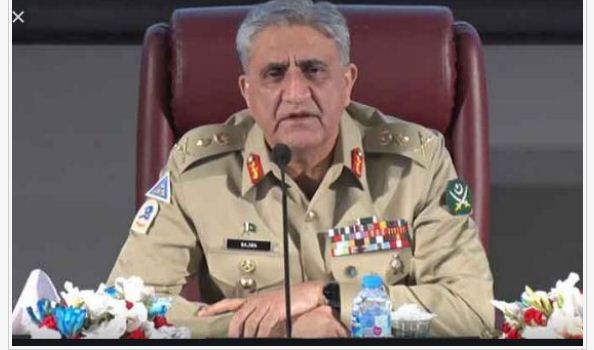
RAWALPINDI, FEB 15 – Chief of Army Staff (COAS) General Qamar Javed Bajwa visited training area in Thar Desert near Chhor. COAS  witnessed ongoing training exercise wherein the operational capability of field formations operating in desert is being tested in near battlefield environment.

The training exercise Jidar Ul Hadeed involves integrated maneuvers of infantry and mechanized forces in a defensive role.

On arrival in the field area, COAS was given  detailed briefing by exercise commander on the aim and objectives of ongoing exercise and drills/procedures being practiced to ensure complete dominance of the battlefield.

The troops have been undergoing this exercise under strenuous field conditions for over two weeks which will culminate on 28 Feb.

While lauding the standard of training of participating troops, COAS expressed his complete satisfaction over operational preparedness and combat readiness of the formation.

Vigorous training and highest standard of preparedness in peacetime are the only guarantors of peace, COAS emphasised.

Earlier, on arrival at exercise area, COAS was received by Corps Commander Lieutenant General Nadeem Ahmed Anjum.

Sincere efforts imperative to increase Pak-Philippines bilateral trade: Daniel Ramos

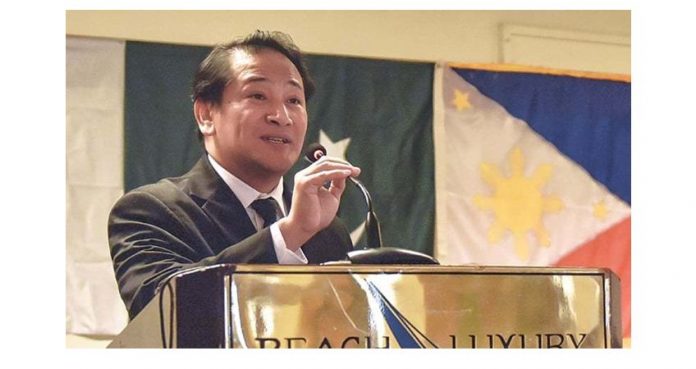
FAISALABAD, Sincere efforts are imperative to increase bilateral trade between Philippines and Pakistan as trade volume between the two countries is very low.

This was stated by Philippines Ambassador to Pakistan Mr. Daniel Ramos Espiritu while addressing a meeting at Faisalabad Chamber of Commerce & Industry (FCCI) on Monday.

He said that Philippines is already importing large quantity of rice worth 260 billion dollars as rice consumption in Philippines is much higher than in China. Now Philippines will also buy cement of 14 million dollars from Pakistan for its infrastructure development projects.

He said that in contrast to the bilateral trade volume, the trade between the two countries is very low which requires serious efforts to increase. He said that purpose of his visit to Faisalabad was to increase trade and investment between the two countries.

He said that a huge infrastructure project is being launched in Philippines which requires heavy quantity of cement. Therefore, Philippines will import cement from Pakistan too after China and United States. Initially, cement of 14 million dollars will be imported from Pakistan but later on this quantity will be increased gradually, he added.

He appreciated the proposal floated by FCCI President Engineer Hafiz Ehtesham Javed to increase exports of textiles, medicines and rice and said that in this regard, the two countries should work together to create a more conducive environment and there should be more concessions on both sides.

He said that Pakistan is producing high quality medicines. Therefore, Pakistan can also set up medicine factories in Philippines under joint ventures whose products could be exported to 6,000 million population of the ASEAN region easily.

Regarding textiles, he said that Pakistan has the expertise to make textiles while Philippines have modern designers and access to the market. Therefore, both the countries need to work together to develop this sector on modern lines. He also assured to arrange a visit to Philippines for FCCI delegation so that Pakistani exporters could have B2B meetings with investors in Philippines.

He said that Philippines is the world’s third largest exporter of manpower after China and India. “Many countries want to have our manpower for agriculture and fish farming,” he added.

Philippines Consul Mr. Fahdel Sheikh and FCCI President Engineer Ehtesham Javed also addressed the function while a documentary was screened to highlight Pak-Philippines trade volume.

Later, FCCI shield was also presented to Philippines Ambassador Mr. Daniel Ramos Espiritu.

Speakers discuss strategic importance of Iran, China

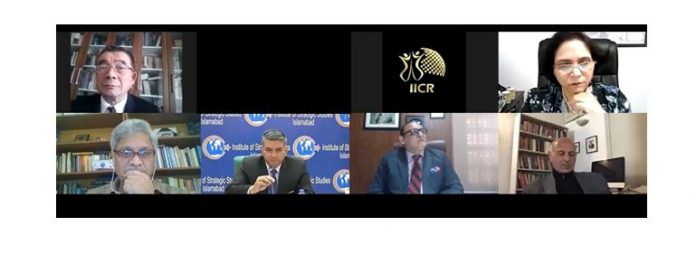
ISLAMABAD:  Islamabad Institute of Conflict Resolution (IICR) organized a one-day international webinar titled “China-Iran Growing Cooperation & Role for Regional Convergence Through CPEC: Prospects for Pakistan”. The eminent speakers included Senator Dr. Talat Shabbir, Director China-Pakistan Study Center, ISSI, Mr. Hassan Daud, CEO, KP-BOIT, Prof. Dr. Zhou Rong,  Dr, Nazir Hussain, Dean Social Sciences, QAU and Senator Mushaid Hussain Syed. The Session was moderated by Syed Nasir Hassan,

While speaking to the panel Dr. Shabbir shared that Iran faces serious repercussion in international arena but that cannot deny the strategic vitality it holds meanwhile china is enhancing its multilateralism and trying to connect with regional as well as global countries. In 2019 China invested nearly $29 billion in Iran and most of it was in energy sector. Reciprocating this Beijing is one of the core customers of Iranian oil which fortifies their interdependency. Adding more Dr. Talat said that Iran holds strategic sea lines position which China can benefit for its Belt and Road Initiative. The things should be seen through economic prism which can usher new beginning of Tri-lateral relations between all three countries under the economic umbrella, said Dr. Shabbir.

Next on Panel was Mr. Hassan Daud. Addressing the participants Mr. Daud emphasized that Persian Gulf is a complex competing zone where there is a clash of interest. Government of Pakistan is extending the scope of CPEC to open new avenues of prosperity while emphasizing development in less developed areas government is opening new doors for regional integration.  Further adding Mr. Daud said that the western borders are extremely critical as they are gateways to not only energy and resources but also for Central Asia. Speaking on cultural affinity Mr. Hassan said that both Pakistan and Iran share deep linguistic and cultural ties which is quite visible in many national aspects. Similarly, Gwadar and Cha-Bahar both deep seaports complement each other and Chinese involvement in Cha-Bahar could be beneficial for all three parties. Adding more he said that both Pakistan and Iran can support each other and supplement each other as both are deep seaports which hold strategic as well as economic importance. While sharing his views on research and Development Mr. Daud said that Pakistan only contributes 0.24% of its GDP and similarly Iran also spends meagre amount which is 0.83% of its GDP. Both countries are progressing on economics which calls for collaboration and in order to extend economic objectives there is a need to look back at China in 1980s and learn from its experiences.

Prof Zhou Rong while discussing the topic maintained that the level of relationship and trust between China and Pakistan is far above another relationship. The level of understanding between the two states is no match to China-Iran Relations. Even though China shares good relationship with Iran. Adding more he said that CPEC in near future could be China-Iran-Pakistan Economic Corridor (CIPEC). But it would be too early to say that. Chinese government  have not announced any long-term agreement with Iran. However, Iranian government unilaterally talked about the agreement to show it as a symbolic gesture to USA. As far as CPEC is concerned he said that, we have seen that with development prosperity comes, and hence Pakistan through 2nd & 3rd phase of CPEC would be able to attract more employment, infrastructure, and conducive business environment.

Ms. Naghmana Hashmi shared her thoughts on the said topic. In her address she restated that this bond of brotherhood which diplomatically established in 1971 is becoming stronger with each day passing. She said that the years 1978-79 were both crucial for Iran and China, ironically when Beijing was onto the historical venture rapprochement with Washington, Tehran sheerly discredited any option of siding with Washington. Throughout the course of last quarter of 20th century Iran and China suffered many turbulences in their relationship, said Ms. Naghmana. While shedding light on contemporary relationship between China and Iran, Ms. Hashmi said that the close affinity of Tehran and Beijing is clearly seen as bad omen for the west particularly United States. The partnership agreement among both the countries which is still under consideration has very significant provisions which will further create a strong interdependency among both countries. Adding further she said that the prosperity of CPEC and regional sustainability is also depended on relationship with Iran.

The next speaker on panel was Dr. Nazir Hussain. While speaking to the participants Dr. Hussain said that Pakistan needs to revisit its foreign policy in many aspects, particularly the country’s foreign policy needs to look beyond regional countries and extend its horizons to global scale. The partnership pact between China and Iran is a great opportunity for Pakistan as the trade between both the countries would need the land of Pakistan due to the costly and time taking sea lanes. Adding more he said that Pakistan needs to stop looking relations through the prism of Bi-literalism and think through National Interest. In current canvas here lies an opportunity provided by China and emerging geo-political environment and Pakistan needs to cash it. Lastly adding Dr. Nazir said that Pakistan needs to look beyond CPEC and explore more options in the globe, but foremost Pakistan needs to give-up the emotional approach to foreign policy.

The last Speaker on the panel was Senator Mushaid Hussain Syed. While speaking to the participants he said that there are few things which  needs to be discussed as new realities are emerging. The foremost reality is that new administration under Biden will look for reinstating Iran Nuclear Deal and lift sanctions. In this regards US has stopped supplying arms to KSA and UAE. Highlighting more he said that it should not be forgot that Biden administration is same as Obama and under John Kerry the national security team played crucial role in securing Iran Nuclear Deal which are again part of Biden administration. Keeping this there is a possibility that Iran and United States could go for normalizing of the relations between two. Adding more Senator Hussain said that another factor is that last December there was a meeting of joint working group of CPEC on international cooperation  in Urumqi, China. In that meeting it was decided that China and Pakistan both would welcome any other party to CPEC most probably Iran and Afghanistan. The third aspect said Senator Hussain is that there have been two major border clashes between India and China. In this prospect China needs more friends in the region to counter the influence of Indian aggression. Further, he said that there has been improvement in relations between Pakistan and Iran. Which was done under swift visits by high profile personalities of both countries. Lastly Senator Hussain said that China and Iran’s collaboration is great news for Pakistan, and it should benefit by all means. India’s exit from Cha-Bahar could be a welcoming fact for Pakistan and this bond would secure CPEC for Pakistan. However, both Iran and China are moving cautiously, and this bond is not sealed yet, it a work in progress.

The session ended with the vote of thanks by Ms. Sabah Aslam, CEO IICR.

PSL 2021: Traffic Plan For Karachi Unveiled

KARACHI, FEB 15: The Karachi traffic police have issued a traffic plan in connection with the Pakistan Super League (PSL 6) first-leg matches to be played from February 20 to March 7 here at National Stadium Karachi.

According to a plan issued by traffic police, the route from Hassan Square to National Stadium has been closed for all types of traffic.

Hassan Square fly-over:

The fly-over will be closed for the general public from Liqauatabad which will be diverted to University Road. The traffic will be diverted towards New Town from Hassan Square bridge.

Karsaz Road:

All kinds of small vehicles will be allowed to proceed on Habib Ibrahim Rehmatullah Road towards the stadium. Heavy/public transport will not be allowed.

Millennium:

Dalmia road will remain open for small vehicles from to Stadium Signal. Heavy/public transport will not be allowed.

New Town:

The University Road/New Town turning will remain open for small vehicles towards the stadium signal. Heavy/public transport will not be allowed.

Heavy traffic will be diverted from Sohrab Goth to Nipa, Liaquatabad Number 10 and Hassan Square, whereas, it will be closed from PP Chowrangi to University Road; Karsaz to National Stadium; Millennium to New Town.

Traffic DIG Javed Ali Mahar instructed the police that no negligence will be tolerated.

AIOU admission tests commence tomorrow

ISLAMABAD, FEB 15 (DNA) – Allama Iqbal Open University (AIOU) commences conducting admission tests tomorrow i.e. February 17, 2021 for merit based programs which will continue till February 14, 2021.

First and second merit lists of the successful candidates will be uploaded on the university website on February 25, 2021 and March 3, 2021 respectively. University has dispatched entry tests call letters to the candidates. Those who have received these letters should reach their designated test centers in time.

However, if some has not yet received this information, they either contact their respective regional office or reach test centers on scheduled date and time, they would be permitted to appear in the entry tests provided their names are included in the lists for entry test released by the university. Merit based programs include PhD, MS/M Phil, M Sc (Honors) and various BS programs.

Prof Dr Zia Ul – Qayyum, VC, AIOU has instructed the admission department to follow HEC’s guidelines in true letter and spirit to ensure transparency in the entire process of conducting admission tests/ interviews and finalization of merit lists. = DNA

====================

Pakistan Army installs free eye surgical camp in Cholistan

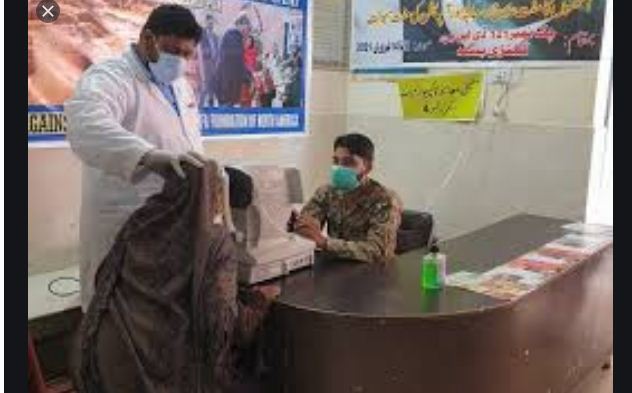
CHOLISTAN, FEB 15 (DNA) – Pakistan Army on Monday has established free medical camps in Cholistan from February 3 to February 15 for the treatment of eye-related diseases.

According to Inter-Services Public Relations (ISPR), the camps were installed in far flung areas of Ahmed Pur Sharqia, Chanan Pir, and Din Garh with the assistance of district administration.

Special teams of doctors carried out complete health examination of the patients. Laboratories and x-ray facilities were also available at mobile health units. The military media wing further announced that such camps will be formed regularly throughout the year for the people of Cholistan. = DNA

====================

PTCL, Huawei launch smart cloud campus solution for customers

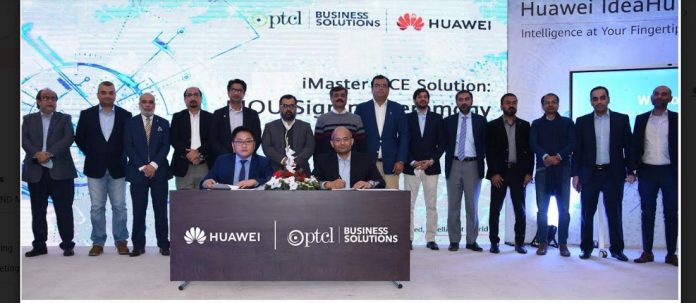
ISLAMABAD, FEB 15 (DNA) – Pakistan Telecommunication Company Limited (PTCL), in collaboration with Huawei Technologies Pakistan Pvt Ltd, launch Smart Cloud Campus Solution for enterprise customers.

This solution includes the services of AI Enabled WIFI-6 Campus, Software Defined LAN and Software defined WAN (SD-WAN) as a service. The infrastructure of these services employs PTCL’s industry proven connectivity, capacity and Data Center infrastructure with Huawei’s next-generation autonomous driving network management and control system Cloud platform for enterprise networks.

This is a first-of-its-kind intelligent network automation Cloud platform that integrates management, control and analysis functions, along with providing complete life cycle automation of enterprise networks that implements intelligent fault closure through big data analytics.

Speaking on the occasion, Zarrar Hasham Khan, Chief Business Services Officer, PTCL, said, “PTCL Business Solutions is catering to the ever-growing business needs of our enterprise customers. As software-defined networks are key enabler for providing robust, scalable and secure architecture, it will surely help our enterprise customers to build more agile and reliable networks. Being a significant milestone, PTCL brings technological innovation to accelerate enterprises achieve digital transformation.”

On the occasion, Gaoweijie, Managing Director, Huawei Technologies Pakistan Pvt Ltd, said, “We are glad to collaborate with PTCL, national carrier of Pakistan that has strong corporate presence in the country. With this solution, enterprises will be empowered to run critical applications with complete security and ensure data privacy. Not only that, enhanced performance would be delivered with higher capacity bandwidth, network visibility, and a seamless on-ramp to the cloud with significant application performance.”

Smart Cloud Campus Solution has innovative features that help enterprises reduce OPEX and O&M costs to achieve automation with a more intelligent network operations management.=DNA

===================

Trend of Reduction in prices of steel bars continues note for press from PALSP

ISLAMABAD, FEB 15 (DNA) – After drastic increase in the prices of rebars in recent months due to increase in the cost of raw material internationally, the local market is witnessing decline in the prices of rebars. The prices of bars increased in Pakistan as the prices of scrap shot up from USD 350 in Oct 2020 to USD 500 plus in early 2021. The prices of scrap increased due to severe cold weather as well as Covid 19, which resulted in low volumes of scrap collection internationally.

The prices of rebars are expected to shrink further in the coming months to settle down to normal prices as the domestic industry is coping up with the changing dynamics. This declining trend in steel prices is bringing hope for domestic construction industry of the country.

The local steel industry has been through deep crisis in the last two to three years and most of the documented steel sector declared heavy losses in the recent years. However, at that time, the steel sector did not pass on the impact of increase in the prices of rebars. Some of the factors that contributed to this situation were devaluation of PKR, Increase in the interest rates by SBP, and it was coupled with some of the measures taken by FBR in 2019 especially as a result of change of regime from Special Regime to the Normal GST regime (ad velorum) resulting in drastic increase in the GST amount. During these years, the cost of all kind of inputs went up including the the cost of electricity.

Price of steel bars used in reinforced concrete construction peaked almost 20 to 25 percent in the last three months and elsewhere to various degrees.  However, the sudden rise was not noticed only in steel rebar price but also an increase was experienced in the other construction items (like cement, pipe fittings, bricks and tiles etc.) as well:

Construction Material    Change in Price (Dec 18 – Dec 20)

Cement                19%

Steel bars and sheets     23%

Bricks, blocks and tiles   22%

Glass Sheets      7%%

Pipe fittings        32%

Paints and varnishes       15%

Construction input items              23%

(Source: Pakistan Bureau of Statistics Monthly Price Indices)

Now the current trend of shrink in steel prices provides a silver lining. This development will support the NAYA Pakistan Housing Program (NPHP) which will soon be running a pilot project in Punjab. It is expected that the prices of steel will settles in this quarter and is likely to create demand recovery for long steel players.

Please do add the following line in the press release:

The price of rebars that peaked to 140,500/- PKR has now been reduced to 130,500/- PKR.=DNA

=====================

Pakistan has strong strategic, diplomatic relations with Saudi Arabia: President FPCCI

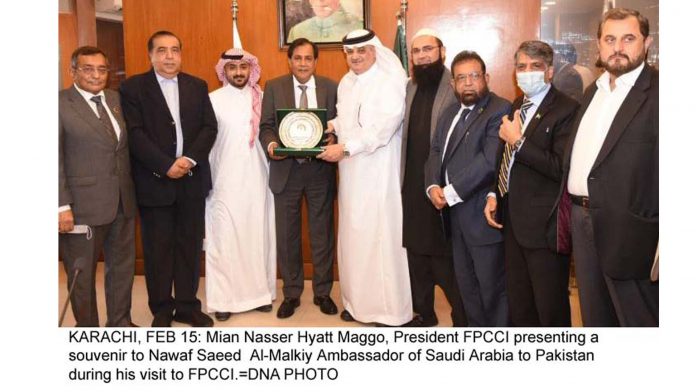
KARACHI, FEB 15 (DNA) – Pakistan has strong strategic, diplomatic and economic relations with Saudi Arabia and Pakistan cannot forget the financial assistance of Saudi Arabia in the form of oil, construction of educational institutions and on Kashmir cause; this was stated by Mian Nasser Hyatt Maggo, President of the Federation of Pakistan Chambers of Commerce and Industry (FPCCI) in a meeting with Nawaf bin Said Al-Malki, Ambassador of Saudi Arabia in Pakistan who visited FPCCI along with Nahar Abdulaziz Almugbel, Commercial Attache of Saudi Arabia.

The meeting was attended by Vice Presidents FPCCI Mr. Athar Sultan Chawla and Mr. Hanif Lakhani, Mr. Zakaria Usman, Former President FPCCI, Mr. Junaid Ismail Makda, Chairman Pakistan Saudi Arabia Business Council and members of the Business Council.

While welcoming the Ambassador, Mian Nasser Hyatt Maggo, President FPCCI stated that Saudi Arabia is an important trading partner of Pakistan but there is no trade agreement between two countries and trade between both countries held on the basis of MFN tariff rate applied to all members of WTO. While quoting the statistics, he informed that the share of Pakistan in Saudi Arabia’s trade is just 1 percent; while in Pakistan’s trade is approximately 7 percent.

The reason for this minuscule share is mainly unawareness, and a non-aggressive marketing of Pakistani products. He emphasized on the activation of Joint Business Council between two countries whose agreement was signed in 2000 and since then, only three meetings were organized. He also underlined the need of exchange of delegations, holding of B2B meetings and exhibitions.

In his remarks, H.E. Nawaf bin Said Al-Malki, Ambassador of Saudi Arabia underscored the need of removal of trade barriers and promotion of trade through direct route.

He stated that Pakistan and Saudi Arabia both posses huge natural resources which can be utilized for enhancement of bilateral relations. He also informed that there is huge potential in rice, textile, sea food, sports goods, agro-based products and there is a need of direct interaction between the traders of both countries in these commodities. Mr. Nahar Abdulaziz Almugbel, Commercial Attache of Saudi Arabia also emphasized on the enhancement of bilateral trades and investment.

Mr. Junaid Ismail Makda, Chairman Pakistan Saudi Arabia Business Council also highlighted the trade potentials and focused on person to person interaction between countries for enhancement of bilateral trade. He also emphasized on activation of Joint Business Councils and exchange of delegations. Mr. Athar Sultan Chawla, Vice President FPCCI discussed holding of exhibitions and PR campaign in Saudi Arabia for soft and peaceful image of Pakistan. He also suggested opening of Saudi Arabia EXIM bank branch in Pakistan for trade facilitation. Mr. Hanif Lakhani, Vice President highlighted the potentials of bilateral trade in textile sector.

During the meeting, the members of Pakistan Saudi Arabia Business Council also highlighted the issues related to imposition of ban on exports of shrimps from Pakistan.

The members also requested for enhancing the share of Pakistani basmati rice as Pakistan contributes just 10 percent in overall imports of Saudi Arabia rice while remaining 90% Saudi Arabia is importing from India and Thailand. The members also requested multiple entry visa to genuine businessmen on the recommendation of FPCCI within shortest possible time.

The members also suggested holding of Biryani Festival regularly in Saudi Arabia and enhancement of overseas employment for Pakistani workers in Saudi Arabia on the same terms and condition prior to COVID-19.=DNA

===================

30th anniversary of the Visegrad cooperation

Embassies of Poland, Hungary and Czech Republic hold press meet; Ambassador of Poland keen to see more business exchanges between two countries once the pandemic is over; Hungarian ambassador announces 200 scholarships offered to Pakistani students; Czech DHM says students can get visas any time

Ansar M Bhatti

ISLAMABAD: Ambassadors of Poland, Hungary and Czech Republic gathered on Monday to share experience of Visegrad cooperation on the occasion of the 30th anniversary of the alliance. Spearheaded by Piotr A. Opalinksi, the Ambassador of Poland, the event provided the audience with first hand information about the four-country alliance. Slovakia is also part of the alliance however there is no Slovak embassy in Islamabad. Antonin Hradilek, the Deputy Head of Mission represented the Czech embassy.

Ambassador of Poland Piotr A. Opalinksi in his remarks highlighted the significance and relevance of the alliance. He said thirty years ago, on 15 February 1991, the presidents of Poland and the Czech Republic, and the prime minister of Hungary signed the Declaration on Cooperation between the Czech and Slovak Federal Republic, the Republic of Poland and the Republic of Hungary in Striving for European Integration in the castle of Visegrad, Hungary.

The Ambassador said, the Declaration provided political framework for extensive cooperation between Poland, Czechoslovakia, and Hungary, and brought closer the societies of the three, and later four, countries. The original aim of cooperation was the striving for the full recovery of the states’ independence, democracy and liberty, eradication of symptoms of totalitarian regimes, construction of parliamentary democracy, respect for human rights and fundamental freedoms, establishment of free market economy, comprehensive participation in the European political and economic system, as well as the security and legislative system. The accession of our countries to the North Atlantic Treaty Organisation and later joining the European Union, symbolically closed this first stage and opened new perspectives for the Visegrad cooperation.

Today, besides friendship and good neighborly cooperation, the Visegrad Group countries are also united by the awareness of common social and economic challenges, understanding the value of regional solidarity, and the willingness to realise common goals of both European and foreign policy, he added.

From a 30-year perspective, the Visegrad Group became not only one of the symbols of the new united Europe and a successful political and economic transformation of the countries of the region, but also an example of effective format of regional cooperation within the European Union which contributes to the shaping of European policies and enhancing its economic competitiveness.

Ambassador Piotr furher said, V4 is not only about political cooperation. One of emblematic institutions of our cooperation is the International Visegrad Fund which, since its establishment in 2000, has granted nearly 2400 scholarships and supported almost 6000 projects by NGOs, local governments, scientists and artists, mainly across our four countries, but also in the Eastern Partnership and Western Balkan states.

We are pleased that the Visegrad Group’s anniversary coincided with Poland’s presidency of the Group from July 2020 until June 2021, the ambassador added. The Polish ambassador on the occasion recited a few verses form Allam Iqbal poetry in Urdu. Ambassador Piotr is fluent in Urdu language as he has spent over 12 years in Pakistan.

The ambassador hoped that once the pandemic is over we can seem business activity between the two countries. He hoped post-Pandemic era will see enhanced tourism activity also.

Ambassador of Hungary Bela Fazekas also spoke on the occasion. Ambassador Fazekas is in Pakistan for second time. He served as Hungarian ambassador in Pakistan almost 15 years ago also.

The ambassador dilated upon the alliance and shed light on the role Hungary was playing within the alliance. Replying a question the Hungarian ambassador said Hungary had offered 200 scholarships to Pakistani students. He shared with the audience information that for these 200 scholarships over 9,000 students appeared in a test, which shows their keen interest in the scholarship programme.

Regarding CPEC the all three envoys were unanimous that CPEC was included in the areas of interest of these countries and they had been following developments keenly.

Antonin Hradelik, Deputy Head of Mission of Czech embassy told that pandemic had hit his country also hard however as regards student visas the embassy was still issuing visas to students.

Stay Connected

64FansLike
60FollowersFollow

Latest Reviews

Exchange Rates

USD - United States Dollar
EUR
1.14
GBP
1.33
AUD
0.69
CAD
0.70