EU PARLIAMENT’S RESOLUTION AND OUR RESPONSE
Comment
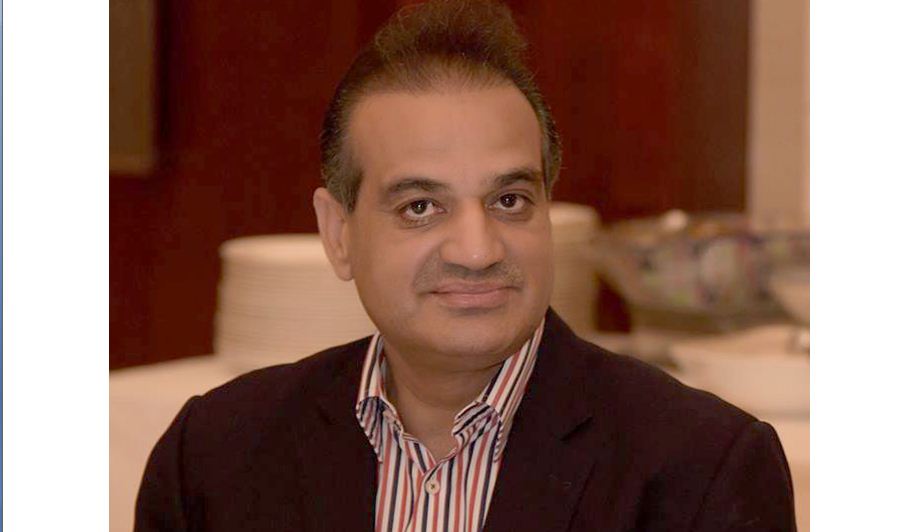
Ansar M Bhatti
The European Parliament on April, 29, 2021 adopted a resolution calling for a review of the Generalized System of Preferences (GSP +) for Pakistan. The resolution was presented by Renew Europe, a liberal, pro-European political group of the European Parliament. It was adopted with a majority of 681 votes against six.
The resolution says Pakistan has violated the conditions of its Generalised Scheme of Preferences Plus status. The GSP+ is a special component of the GSP scheme that provides additional trade incentives to developing countries already benefitting from GSP. The GSP+ status granted to Pakistan requires the country to demonstrate progress on the implementation of 27 international core conventions. This condition constitutes a strong leverage for the European Union in terms of monitoring any direct advocacy with Pakistan. Since the grant of GSP Plus in 2014, Pakistan’s exports to the European Union have registered marked increase. The main sectors that benefited from GSP Plus have been textile and garments, which besides earning foreign exchange for the country, provided employment opportunities, especially for females.
So, there is no doubt that GSP+ status has contributed greatly towards boosting the industrial sector of Pakistan. But the question that what triggered the European Parliament to vote against Pakistan needs some soul searching. The reason appears to be more of a political nature rather than the one mentioned in the resolution. Pakistan and European Union have enjoyed excellent working relations mainly because EU regards Pakistan as an important regional player and country that used to cater to manpower needs of the majority of European countries in the past and even in present as well, though this subsistence has decreased to a great extent.
Keeping in view of the past practices, I don’t think the EU would go to the extent of rescinding this status for Pakistan. As regards blasphemy laws, and rights of the minorities in Pakistan, the respective governments in collaboration with the security establishment of the country, have done a great deal to address these issues thoroughly and seriously and that is the reason that the frequency of such cases has been brought to minimal. Curbs on freedom of expression in Pakistan are not new phenomena. It was there even at the time when the EU approved the GSP+ status for Pakistan back in 2014. And probably so was the case with minorities rights and blasphemy laws etc.
Prima fasciae, the move seems to be politically motivated. As we know France being the leading EU country, has biggest number of seats in the European Parliament. Being the founding member, it enjoys colossal clout within and without the bloc. The recent happenings in Pakistan including demonstrations by the banned Tehreek-e-Laibaik Pakistan against France and the French ambassador may have contributed towards adoption of the European Parliament resolution. The saner voices in Pakistan strongly believe that acts of TLP cannot be regarded as the acts of the whole country. Without going into details as to who was behind the TLP protests and who encouraged them to stage mass gatherings, the satisfying element is that the outfit has been sorted out with the clear intention that such happ it will not be allowed to do it again.
Pakistan and European Union are tied in strong bonds of relationship that is based on shared values and common objectives of peace, prosperity and development. The Pakistan-EU relationship has strengthened steadily over the years and is pursued through sound institutional mechanisms and dialogue processes therefore this relationship must not be allowed to derail or affected due to petty issues. The worst time in Pakistan-EU relations was perhaps the year 2002 when the EU election observer group headed by John Walls Cushnahan came up with a highly critical report about the general elections in Pakistan.
That commission sought to pin-point a number of loopholes in the entire election drill and therefore had recommended a review of relations with Pakistan. All such points that have been raised in the recent European Parliament resolution were there in the 2002 report as well. But as we witnessed how that report was literally discarded by the European Union itself and the EU bosses chose to continue working with the military dictator of the time.
All said and done, Pakistan needs to look into points raised in the resolution earnestly. There are still issues that need to be addressed not because the outside world wants it so, but we have to do it for our own sake. People will start harvesting benefits of true democracy only when it is followed and implemented religiously. There is no doubt that credentials of democracy in vogue in our country are weak, which is probably the key reason for Pakistan’s being lagging behind in social, developmental and all other sectors that relate to well being of the common folks.
And above all, the passing of the resolution has exposed futility of our missions especially present in the EU countries. It also speaks volumes for the inefficiency of the Ministry of Foreign Affairs, which miserably failed in preempting the situation. Nevertheless the Ministry still can do something to mend fences. It has to engage proactively with the stakeholders in order to avoid any eventuality.
PM Imran pays surprise visit to different Islamabad localities for inspection
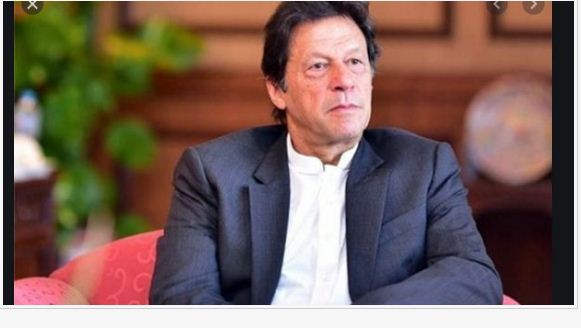
ISLAMABAD, May 02 (DNA): Prime Minister Imran Khan on Sunday paid a
surprise visit to different localities of the federal capital to inspect
the business activities as well as development works.
The prime minister personally drove the vehicle setting aside the
protocol.
He visited the modular carts placed in G-11 Markaz under Ehsaas
Program’s Rerhi Baan initiative. He questioned the cart owners about the
position of their businesses.
The prime minister, who also wore a mask, also advised a boy at a cart
to wear the mask as part of the government’s efforts to strictly
implement the anti-COVID precautions amidst third wave of the pandemic.
“Get a mask for your little brother too,” Khan told a young boy, who
like others was pleasantly surprised to find the prime minister amidst
them. While frying samosas for Iftar shoppers, Qurban Ali, a cart owner,
thanked the prime minister and his government for providing them a
business point to help them earn livelihood for their families.
“We are grateful to you, that you thought about us,” Qurban commented.
The prime minister also went around different stalls of fruits and other
stuff in the market. Senator Faisal Javed and Chairman Capital
Development Authority Amer Ahmed Ali also accompanied the prime
minister.
Without creating any interruption in the traffic flow, the prime
minister drove through the crowded streets of the city and also stopped
at the traffic signal.
Imran Khan visited Sewage Treatment Plant at sector I-9 and under
construction Korang Cricket Ground where he was briefed by the CDA
chairman about the projects. He also inspected the stone lining of storm
water drains.
=====
CDA’S ANTI-ENCROACHMENT DRIVE CONTINUES

ISLAMABAD, MAY 2 (DNA) – Officers and workers of Capital Development Authority (CDA) continued their action against encroachments and illegal constructions on Sunday. Mega operations were conducted in Malpur and Dhoke Choora.475 kanal government’s land was retrieved. Land grabbers had constructed buildings on government’s land.
According to detail, CDA is continuously conducting operations against encroachments and illegal constructions in the city. Enforcement Directorate conducted an operation against encroachments at Malpur Dhoke Choora on Sunday. Heavy machinery of the department of MPO was used in the operation.
Notices were issued to grabbers before taking action. But, they did not themselves demolish the constructions after receiving the notices. 63 rooms, 14 washrooms, 08 gates, 02 cattle setups, and other constructions were demolished during the operation.
The administration of CDA has warned the citizens not to grab the land of government, otherwise action would be taken against them.=DNA
========
EXPERTS SUGGEST URGENT REFORMS IN CURRENT PENSION SYSTEM OF THE COUNTRY

ISLAMABAD, MAY 2 (DNA) – Bringing reforms about pensions is an urgent need to ensure sustainable fiscal at federal as well as at provincial levels. Speakers said this while sharing their views with the participants during the online dialogue ‘Reform of Pensions: Lessons from Successful Examples in Pakistan’ organized by Sustainable Development Policy Institute (SDPI), in collaboration with Sustainable Energy and Economic Development (SEED).
Former head of Federal Pay and Pension Commission, Mr Wajid Rana has said that any pension reforms cannot be separated from pay reforms. Both pay and pension bills are growing at a rapid pace and more is being consumed form the general revenue collections due to this increase, he added.
Joint Secretary, Ministry of Overseas Pakistanis and Human Resource Department, Government of Ms Sheena Ali Mansoor, on the occasion said that Employees Old Age Benefit (EOBI) has huge potential which is not being used. Currently, EOBI is dealing with the formal sector only. However, efforts are being made to cover the informal sector and Overseas Pakistanis as well.
She added further that there are three ways to increase funds I.e., through contribution, investments, and government support. Besides, EOBI has 8 million registered pensioners and there are lots of ghost pensioners which are required to be purged out.
Mr Hasaan Khawar, Team Lead, SEED, was of view that pension is highly critical to Pakistan’s fiscal sustainability and probably, new IMF program would be dealing with this issue. He added further that the Government of Khyber Pakhtunkhwa has started focusing on pensions reforms as in coming years, the provincial government would not be able to pay salaries and pensions and similar is the situation of other provinces. Therefore, we need to address this problem politically, administratively, and technically, he added.
Mr Zafar Masud, President, Bank of Punjab, highlighted that there is no argument that pensions fund is needed to be developed in Pakistan. Fund management is important, and it could be done involving private sector.
Dr Vaqar Ahmed, Joint Executive Director, SDPI, covered various aspects of the topic and said that the pension budget at the federal level has seen a growth of over 20 percent annually during the last five years. For Khyber Pakhtunkhwa, provincial budget the pensions have grown 10 times between 2010 and 2019, which is faster than the growth of overall revenues of the province.
He said that an evaluation is needed to identify difficulties in implementing various reconditions. Such discourse therefore aims to bring together government officials and independent experts to highlight fiscal policy challenge, he added.
Managing Director, Pak Telecom Employees Trust, Mr Hamid Farooq, opined that the government in short run needs to workout on data of beneficiaries, analyse its pensions’ liabilities and then make an independent organization by adding relevant stakeholders.
Nayyar Hussain, Director, Policy Regulation and Development Department, Securities and Exchange Commission of Pakistan, emphasized that the government need to develop holistic pension scheme covering social pensions, government pensions and individual pensions.
PALESTINIANS SAY TALKS UNDERWAY TO FORM UNITY GOVERNMENT
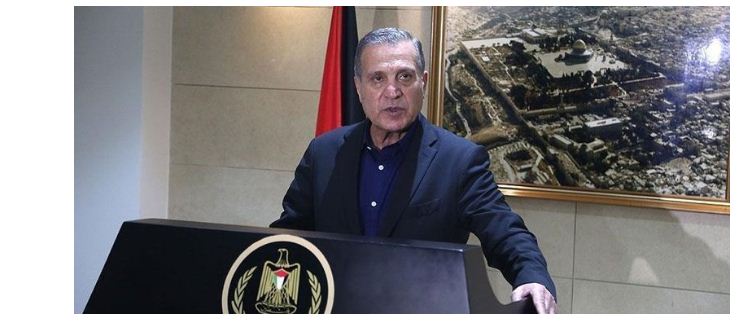
RAMALLAH – The Palestinian Authority (PA) is holding talks with factions to form a national unity government following the postponement of elections, Palestinian officials said on Saturday.
PA spokesman Nabil Abu Rudeineh told the official Palestine Radio that the path after delaying the polls “is to hold talks with the factions, a national unity government, strengthen the [role of] the Palestine Liberation Organization (PLO) and to hold a meeting for the Central Council to set the policies and strategies”.
The Central Council is a body affiliated with the PLO’s National Council that includes all Palestinian factions except Hamas and Islamic Jihad groups.
“Talks will be with all factions […], talks started yesterday and efforts are underway,” Abu Rudeineh said, but without providing further details.
Meanwhile, PLO’s Executive Committee member Ahmed Majdalani said “talks will take place within few days with all groups to form national unity government”.
Majdalani added that in recent days, both Fatah and Hamas groups discussed the issue of forming a government and the postponement of the elections.
On Friday, Palestinian President Mahmoud Abbas issued a decree to postpone the Palestinian polls, citing Israel’s negative response to permit polls in Jerusalem.
EXCELLENT PERFORMANCE OF NAB UNDER THE LEADERSHIP OF MR. JUSTICE JAVED IQBAL
Nawazish Ali Asim
Today, eradication of corruption has become the voice of the whole nation as it not only halts the progress of the country but also usurps the rights of the deserving people. Pakistan is facing the challenge of corruption which is the root cause of all problems being endured by the country. The National Accountability Bureau (NAB) was established in 1999 to cope with the menace of corruption and corrupt practices.
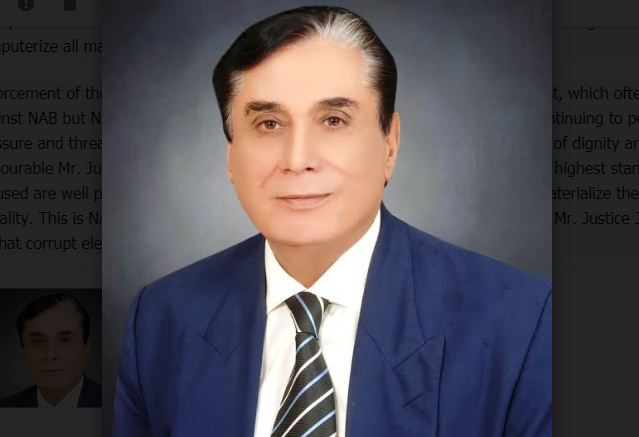
When Honorable Mr. Justice Justice Javed Iqbal took over as Chairman National Accountability Bureau, he chalked out a comprehensive Anti corruption strategy comprising awareness, prevention and enforcement under “Accountability for All” policy. Besides overhauling and perfecting working procedures in order to make NAB a more credible and reputed organization to eradicate corruption in all its forms and manifestations. The Chairman NAB knew it fully well that the path ahead is extremely thorny and will require extraordinary determination and courage to tackle rampant corruption and misuse of authority, money laundering, assets beyond known sources of income and cheating the public at large in the highest echelons of power.
He brought in a vision founded in his lifelong commitment to upholding the principles of justice, transparency, fair play on merit as per law during his illustrious and remarkable career as a session judge to acting Chief Justice of the Supreme Court of Pakistan spanning more than four decades.
Honorable Mr. Justice Justice Javed Iqbal, Chairman NAB has rejuvenated NAB in the last more than three years by implementing his Accountability for All Policy across the board under the slogan of “NAB’s Faith-Corruption free Pakistan.” The results have yielded excellent dividends. Well Reputed national and International Organizations like Transparency International Pakistan, World Economic Forum, PILDAT, Mishal Pakistan have not only lauded NAB’s efforts for eradication of corruption but in the Gillani and Gallup Survey about 59 percent people have shown their confidence upon NAB. NAB under the dynamic leadership of Mr. Justice Javed Iqbal, has recovered a staggering sum of Rs. 490 billion from corrupt elements directly and indirectly from 2018 to 2020 that no one previously had ever been able to accomplish since the establishment of the anti-corruption watchdog in 1999. Besides the recovery NAB has filed 1269 corruption references in the various learned Accountability Courts which are under adjudication and their approximately worth is 750 billion. The overall conviction rate of NAB in Accountability courts is about 68.8 %.
The relentless efforts put in by Honorable Mr. Justice Javed Iqbal, Chairman NAB to eradicate widespread corruption has won him a national and international backing. People have started showing faith in NAB’s efforts and anti-corruption awareness has reached at all tiers of public level. Not just in Pakistan alone, NAB has now emerged as a role model for countries under South Asian Association of Regional Cooperation (SAARC) which includes India, SriLanka, Bangladesh, Nepal and Bhutan. Under the courageous leadership of Mr. Justice Javed Iqbal, NAB heads SAARC anti-corruption forum. It is a focal organization for Pakistan under the United Convention against Corruption (UNCAC). NAB has also signed a unique Memorandum of Understanding (MOU) with China to extend cooperation in tackling corruption and to oversee CEPC projects being under process in Pakistan. Among other achievements of NAB, it has established a state of the Art Forensic Science Laboratory in NAB Rawalpindi besides establishing its own Pakistan Anti-Corruption Training Academy at NAB headquarters. The academy is meant to train and equip its investigation officers with modern techniques to investigate white collar crimes on the basis of lessons learnt in order to eradicate corruption. NAB has also signed Memorandum of understanding (MOU) with Higher Education Commission to spread awareness among students at Universities/Colleges level as part of Chairman’s vision to make our future leadership aware of the effects of corruption. It is a remarkable effort. In this regard, 55 thousands Character Building Societies (CBS) have been established in Universities/Colleges throughout the country. In order to streamline the working of NAB body, Chairman NAB has also ensured that a highest degree of transparency and merit is maintained at all levels of enforcement. From complaint verification to the final stage of filing a reference full level of transparency is maintained, guided, supervised and closely watched by the Honorable Mr. Justice Javed Iqbal, Chairman NAB and an innovative concept of combined investigation team has been introduced in order to benefit from collective wisdom and to improve the quality of investigation on the basis of solid evidence as per law.
The Honourable Mr. Justice Javed Iqbal, Chairman NAB always review, monitor and maintains a close liaison with all regional bureaus on regular basis to ensure there is no delay in completion of complaint verification, inquiries and investigations and diligent officers are firstly warned and then dealt according to law and no wrongdoings at any level of investigations is acceptable as NAB strongly believes in self accountability besides accountability of others. Honorable Mr. Justice Javed Iqbal’s spectacular achievements stem from his core belief that fighting corruption is a national duty that cannot be forsaken at any cost. Use of efficient Technology and prompt communication is a core requirement for achieving faster outputs and in this regard Chairman NAB has directed to computerize all major regional offices and upgraded the MES system.
Enforcement of the law and that too against bigwigs of the society comes at a cost, which often results in malicious propaganda against NAB but NAB always believes in working in accordance with law and is continuing to perform its duties without caring any pressure and threat. A core principle of NAB is respect for ensuring human values of dignity and respect of people visiting NAB. Honourable Mr. Justice Javed Iqbal Chairman NAB is matchless in maintaining the highest standards of ensuring the rights of the accused are well protected. NAB hopes that joint efforts of all stakeholders can materialize the dream of corruption free Pakistan into a reality. This is NAB’s faith and this is what NAB under the dynamic leadership of Mr. Justice Javed Iqbal, Chairman NAB stands for so that corrupt elements should be brought to justice as per law.
APBF FOR SPEEDING UP CORONA VACCINATION FOR INDUSTRY WORKERS AS CRISIS WORSENS
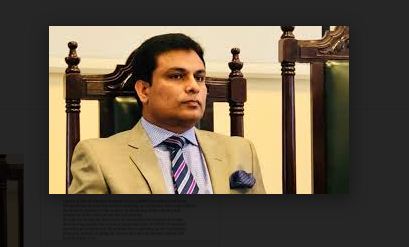
LAHORE, MAY 2 (DNA) – The All Pakistan Business Forum (APBFF) President Maaz Mahmood has stressed the need for speeding up vaccination drive especially for the industry workers in the country, as shutdowns of the industry and lockdowns of the cities are not the real solution.
He said that during the third wave of coronavirus the situation has been deteriorating mainly due to lack of implementation of COVID-19 standard operating procedures and the solution lies in speeding up our vaccination programs, instead of opting for closure of trade and industry amidst GDP growth of just 1.5%.
APBF President also suggested the government to launch a COVID-19 vaccination certificate for the vaccinated people as an immunity passport on the lines of China and several other countries to facilitate its citizens for international travelling. He pointed out that in post-corona era, this kind of health certificate is going to be mandatory for frequent travelers, in the embassies to obtain visas, to travel abroad and for check-in hotels in other countries.
Maaz Mahmood said that the government had rolled out its COVID-19 vaccine campaign very late in Feb, beginning with the healthcare workers in the first phase, then starting vaccination program for the senior citizens which is appreciable step and it should be completed very quickly. Now the priority should be also given to the factory workers and employers across Pakistan, as healthy labor is must for uninterrupted operation of the local as well as export industries, he added.
He asked the government to expedite the process of vaccination and supply ample quantity of doses not only to the whole public but also to the trade and industry, their workers and families.
APBF Chairman Ibrahim Qureshi said that rising mortality in the midst of the third Covid-19 wave and growing anxiety in the business circles over possible restrictions on international travel and trade necessitate ramping up the pace of vaccination. To speed up inoculations, the government will need to bridge vaccine supply gaps with active participation from the federating units and the private sector, he added. He said that the current pace of putting jabs in the arms is slow, as 1.3 million Pakistanis had so far got vaccinated at government facilities and 18,000 paid to get vaccine shots at private hospitals. According to the data, the vaccine coverage in Pakistan currently stands at about half a percent of the population, which is very disappointing.
APBF President Maaz Mahmood said that the government will have to import vaccine in huge quantities at the earliest as the country of 220 million aims to vaccinate almost 70 million, he observed. He urged the trade and industry and workers to get vaccinated to protect themselves as well as their loved ones, suggesting the authorities to import the huge stock of vaccine in this regard, besides launching a robust national education campaign to inform people that the vaccines are completely safe.=DNA
===================
CAA shares details of reduced international flights amid COVID-19 surge

KARACHI , May 2 : Civil Aviation Authority (CAA) has issued details regarding the number of reduced international flights in the country in the wake of a rise in COVID-19 cases.
According to details shared by the CAA, Qatar Airways was previously allowed to operate 56 flights in a week, which is now minimized to 11, followed by eight flights allowed to Gulf Air as compared to 35 flights previously in a week.
Turkish Air is allowed to operate three flights in a week as compared to 21 previously while another Turk airline, Pegasus Airline, would operate a single flight in a week contrary to four flights previously.
Etihad Airways was previously allowed 32 flights in a week which are now reduced to six, followed by two flights of Sri Lankan Airways and three flights of Thai Airways as compared to their four and 18 flights respectively previously.
The CAA acting on the directives of the NCOC has reduced international flight operations to 20 percent, bringing down 590 flights operation in a week to 123 flights owing to a surge in COVID-19 cases.
“The fresh frequency for the international airlines will remain applicable from May 05 to May 20,” the aviation authority said.
Besides international flights, the CAA has also brought down domestic flight operations to 40 percent on the directives of the NCOC.
The Pakistan International Airlines (PIA) will be allowed to operate 29 flights for Karachi, 55 for Lahore, 76 for Islamabad, and 41 for Peshawar.
Read More: Inbound passengers to undergo COVID test at airports as NCOC devises fresh protocols
The national flag carrier would not operate flights for Quetta and Faisalabad. The airline will continue to operate 11 flights for Sialkot, 17 for Multan, and four for Turbat.
The Air Blue was also allowed to Karachi, Lahore, Islamabad, and Multan while restricting its operations for Quetta, Faisalabad, Sialkot and Turbat.
It will operate one flight for Karachi, 15 for Lahore, 19 for Islamabad, and 10 for Peshawar.
The Serene Air will operate no flight from Karachi as per the schedule of the CAA, besides operating 10 flights each for Lahore and Islamabad. The schedule from the airlines will remain applicable for two weeks.
Shahnawaz, Zahid should be given chance in 2nd Test: Shoaib

ISLAMABAD, May 02 : Former pacer Shoaib Akhtar believes pacer Shahnawaz Dahani and leg-spinner Zahid Mehmood should be given a chance in the Pakistan team for the second Test against Zimbabwe in Harare, starting on May 7.
The Rawalpindi Express feels that Pakistan should make two changes during the second Test. Pakistan won the first test by an innings and 116 runs, to take 1-0 lead in the two-match series.
Akhtar, who holds the record for bowling the fastest delivery in world cricket, wants to see pacer Shahnawaz and leg-spinner Zahid in the Pakistan lineup.
Akhtar, who took 178 wickets in 46 Tests, said that Dahani’s inclusion would
depend on whether Shaheen Afridi wants to rest or not.
“Shahnawaz Dahani can be given a chance but you need to ask Shaheen Afridi if he wants to rest. What if Shaheen doesn’t want to rest? There are already only few Test matches on offer and, if I was asked the same question, I would have played,” he said.
“There is no harm in trying out against Zimbabwe. I think Dahani and Zahid Mehmood should be given a chance in the next Test match,” Akhtar, who bagged 247 wickets in 163 One Day Internationals, said.
Zahid was the third highest wicket-taker, during the last season of Quaid-e-Azam Trophy, with 52 wickets in 10 matches. Meanwhile, Dahani claimed 26 wickets in seven matches.