Home Blog Page 2730

Pak welcomes Israel-Hamas truce

NEW YORK, MAY 21 (DNA) – Pakistan has welcomed the ceasefire between Israel and Hamas, which rules Gaza, hoping it may lead to peace in Palestine.

“This is the power of collective, unified action. This is the effort of every person and every nation, together for a just cause,” Foreign Minister Shah Mahmood Qureshi wrote on the Twitter. “May this ceasefire be the first step towards peace in Palestine,” he added.

The ceasefire announcement came after 11 days of deadly Israeli airstrikes that drew retaliatory rockets fired by Hamas fighters towards Israel. More than 240 people were killed and thousands more injured in the fighting, the majority in the Occupied Palestinian Territory.

“Israel’s occupation of Palestine must end, and illegal settlements and apartheid like regime imposed in the occupied territories must be dismantled,” the foreign minister said. “Implementation of UN resolutions for (the) establishment of independent and contiguous Palestinian State with Al-Quds Al Sharif as its capital, imperative,” Qureshi said. Qureshi is on a Palestine Peace Mission on the special instructions of Prime Minister Imran Khan. Earlier, in his speech to the UN General Assembly, Qureshi has called for an immediate halt to Israeli aggression against Gaza.

CPEC GIVES NEW DIMENSION TO PAK-CHINA TIES: FAWAD

Staff Report

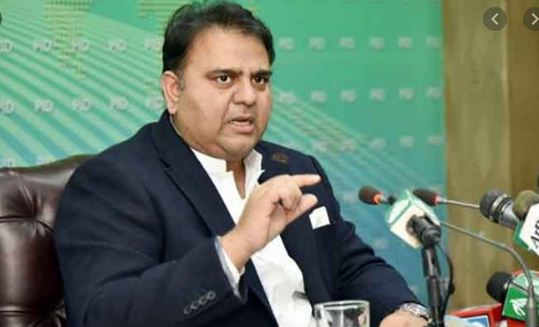
ISLAMABAD, Minister for Information and Broadcasting Chaudhry Fawad Hussain Friday said the multi-billion dollars China Pakistan Economic Corridor (CPEC) project had given a new dimension to Pakistan-China ties.

Extending heartfelt greetings to the two nations on the 70th anniversary of establishment of their diplomatic relations, Fawad, in a video message, said he felt proud of the ties, which were based on love and mutual respect, and had roots in the hearts of two peoples.

The minister said Pakistan reaped massive benefits from the One Belt One Road vision of Chinese President Xi Jinping. He regarded the BRI’s flagship project – CPEC- as ‘brilliant’, which the foundation of the two countries’ economic stability.

CPEC would prove to be a game changer for the region, he added.

Elucidating the history of Pak-China relationship spanning over decades, he said defence cooperation between the two countries in 1950 laid the foundation of their ties. “Since 1950, Pakistan and China have not only been close diplomatically, but their relations have [now] gone beyond the political and economic spheres.”

The ties, he added, were transformed into strategic ones during 1966 and  eventually switched to economic relations in 1972.

Now, their ties were led by a ‘very comprehensive framework’, the minister said.

Fawad said the Pakistani nation knew that China stood beside their country  through thick and thin. Similarly, Pakistan extended full support to China to meet its challenges, he added.He said both the countries had been relying on each other strategically and defensively since 1950.

Antony Blinken sets to visit Middle East in coming days

WASHINGTON: US Secretary of State Antony Blinken is set to visit Middle East in coming days. 

In the statement, the State Department spokesman Ned Price announced this after ceasefire agreement between Israel and Hamas.

During the visit, he will meet with Israeli, Palestinian and regional leaders to discuss peace efforts and working together to build better futures for Israelis and Palestinians.

China to support Pakistan’s transformation from geo politics to geo economic pivot: Envoy

ISLAMABAD: China has expressed the resolve to continue supporting Pakistan’s transformation from geo politics to a geo economic pivot to enhance regional connectivity and economic and trade cooperation.

This resolve was expressed by Chinese Ambassador Nong Rong has during an exclusive interview with Radio Pakistan, on the occasion of 70 anniversary of Pak-China diplomatic relations, today (Friday). He said both countries share a common vision and are committed to changing destiny of the region and jointly safeguarding peace, development and prosperity. He said the cooperation between the two countries benefits the whole region and the world.

The Ambassador said over the years, the two sides have carried out great deal of pragmatic cooperation based on the principle of mutual benefit. He said China-Pakistan Economic Corridor is an important project of the Belt and Road Initiative and for all-weather cooperation between the two countries. He said 46 CPEC projects have so far either been completed or under construction with a total investment of 25.4 billion dollars.

Nong Rong further said that CPEC created 75,000 jobs for Pakistani citizens and scope of cooperation under CPEC is being expanded. He said now CPEC entered into a new stage featuring high quality development and the focus is on industry, agriculture, science and technology. He said we are increasing cooperation in areas related to people’s livelihood by implementing projects under CPEC.

Talking about development projects in Balochistan, Nong Rong said New Gwadar International Airport is under construction and East Bay Expressway will be completed by October this year which will greatly improve regional connectivity.  He said Pakistan China Vocational and Technical Institute in Gwadar will be completed in September this year, while Pak-China Friendship Hospital be expanded from 50 beds to 150 beds in Gwadar.

The Ambassador said China will continue to provide favorable conditions for the companies of the two countries to further explore each other’s market and bring more benefits to the people of the two countries.

Regarding educational exchanges between the two countries, he said scholarships for Pakistani students are being increased enabling them to study and have research in leading Chinese universities.

Answering a question, the Chinese dignitary said his country will continue working with Pakistan to promote Peace Process in Afghanistan as well as to maintain regional peace and stability. He said Pakistan and China will cooperate in jointly responding to security threats and propaganda against their and safeguarding the common interests of the two countries.

Nuclear tech to achieve sustainable development goals

Dr. Syed Javaid Khurshid

In 2015, 195 nations of the world agreed under the auspices of the United Nations(UN) to set out seventeen sustainable development goals to be achieved by 2030. If these goals are achieved it would have a lasting impact on the reduction of poverty &making health and education facilities more accessible for the common people in the less developed countries. All the countries agreed to adopt these goals that would improve the lives of their citizens through Agenda 2030. These countries have to work devotedly to achieve the goals as there is no plan B.

Global challenges have now become more complex after the outbreak of COVID-19. Working for sustainable development goals was being done effectively by many countries before the COVID-19 pandemic, but after this crisis, the targets are disturbed and seem difficult to be achieved by many countries by 2030. Many states have made commitments to achieve them at the national level. In 2015, Pakistan Planning Commission incorporated these SDGs in its national economic planning. The action plans and policies at the national level will play a fundamental role in countries’ development by translating these SDGs into workable actions, In Pakistan, national planning and incorporating the use of nuclear technology has played a significant role in achieving SDGs. It is good to remind ourselves on the 28thof May that nuclear energy has also been used for the betterment of the lives of Pakistanis and not only for making nuclear weapons.

It was recognized from the beginning by the planners in Pakistan that SDGs can be more easily achieved by involving science and scientific communities and adopting innovative technologies such as nuclear technology. Nuclear technology is guided and supported by the International Atomic Energy Agency (IAEA) internationally and the Pakistan Atomic Energy Commission (PAEC) nationally, which ensures it is safe for use.

Pakistan as a developing country is one of the largest recipients of technical and financial help from IAEA. Pakistan also has achieved considerable expertise in the application of nuclear technology for peaceful purposes and also using Nuclear technology in achieving 9 of 17 sustainable development goals. These goals are to Eradication of Hunger and Malnutrition, Provision of Good Health and Well-Being, Access to Clean Water and Sanitation facilities, Provision of Affordable and Clean Energy, Increase Industry Innovation and Infrastructure, Mitigation of Climate Change, Sustain Life Below Water, Sustain Life on Land, and Strengthening Partnerships for the achieving Sustainable Goals. These goals are in discussed in detail as below.

Eradication of Hunger and Malnutrition: In 2050, it is expected that the world population will grow to nearly 9.7 billion thus increasing our need for more food by 60% compared to the present. Currently, about 842 million people remain hungry every day and roughly about 1 billion people in the world are food insecure. There is, therefore, an urgent need to increase food production by atleast  60% to meet global needs. The Food and Agriculture Organization (FAO)has underscored that there is very little additional land available to grow more food crops. It requires that we must produce new varieties of crops which should be high-yielding, disease-resistant, drought and salt-tolerant and are suited to insect pest management.

In Pakistan, three institutes working under PAEC are using nuclear techniques to develop high-yielding varieties. Until now they have developed about 115 new varieties of different cash crops of national importance by radiation mutation. These crops at present cover about 35-40% of cultivable area, contributing about 10% to crop productivity. These are commendable achievements, but we need to continue our efforts to meet the ever-rising future requirements. Radiation sterilization technique such as Male Sterilization is also used for insect pest management to protect crops such as sugarcane crop in Sindh. Pakistan is also developing mutant varieties rich in iron and zinc micronutrients. A commercial irradiation facility in Lahore is helping to increase the shelf life of perishable food items by removing harmful bacteria and unwanted insects. Pakistan is also using stable isotopes to monitor body composition, food intake and absorption of various nutrients to understand the problems of malnutrition in the country.

Provision of Good Health and Well Being:People should be healthy so that they can work and support themselves and their families as well as contribute to the national economy. A healthy nation would be essential to achieve sustainable development goals. Nuclear techniques are most important in cancer treatment and management of some other fatal diseases using nuclear medicine, radiation oncology, radiation treatment and radiation diagnosis modalities. International Agency for Research in Cancer, estimates that about 150 million people are suffering from cancer globally.  At present,Pakistan has about 30 cancer treatment facilities, whereas, 10 out of these have either diagnostic or treatment facilities. These facilities are catering to about 14,50,000 patients/year, Pakistan Atomic Energy Commission and Shaukat Khanum Hospital are playing a key role in cancer treatment in the country. In 2015, it was suggested by me to Planning Commission to establish a Cancer Control Program at the national level to achieve tertiary health care targets in the country. The program needs to be implemented in two phases and both phases should be implemented simultaneously. A very large number of cancer patients cannot be treated as they reach the hospital when the disease is already in an advanced stage. An early diagnosis of cancer patients would help the treatment and recovery of more patients afflicted by this malady. The allocation of funds for early diagnosis of cancer, therefore, is very important in controlling the disease. More importantly, cancer treatment facilities need to be doubled in the country. For this purpose, we need cancer diagnosis facilities after every 50 miles and treatment facilities after every 100 miles. Other than cancer diagnosis and radiation treatment, nuclear techniques are in use in the precise diagnosis of cardiovascular disease, tuberculosis, and in the diagnosis of many other infectious diseases. Nuclear techniques are also helping to detect and control outbreaks of animal diseases.

Access to Clean Drinking Water and Sanitation:Water is essential for life on the planet. Pakistan is already placed among the water-stressed countries. Besides access to clean water, the efficient use of water is also very important for the country and thus groundwater management and water conversation are needed. To achieve this goal Pakistan is utilizing nuclear isotopic techniques for collecting information such as age, amount and quality of groundwater which is very useful in integrated management of water resources and water ecosystem. Nuclear technology is also being used to make water bacteria-free.

Provision of Affordable and Clean Energy: Producing sufficient energy at an affordable cost without emitting greenhouse gases is a very important SDG. The energy production choices will have huge consequences for health, economy and climate change. World energy mix at present shows 65% fossil fuel, 16% Hydropower, 13% Nuclear power and 6-7% renewable energy. Besides Hydel, renewable and nuclear are the clean sources of energy. The most important thing is that nuclear energy is an uninterrupted clean source of energy. Recognizing the importance of nuclear energy first commercial nuclear power plant of the world was connected to grid in in 1956 at Calder Hall, England. At present, 31 countries are operating about 449 nuclear plants for electricity generation, whereas about 67 are under construction in 16 different countries.  Pakistan recognized the importance of nuclear power from the beginning and built its first commercial power plant in 1971, K-1 of 137MW at Karachi. At present Pakistan is producing about 6% of its energy mix by 5 nuclear plants, which is going to increase upto 12% this year after K-2 in May and K-3 in October 2021 start operation at Karachi, Nuclear power is the answer to Pakistan’s future development, safety and security. Pakistan Atomic Energy Commission has already given a 40 years plan to the Government of Pakistan, of achieving a target of 8800 MW by 2030, and of 40,000 MW by 2048. The target of affordable and clean energy can only be achieved through nuclear energy, by installing more nuclear power projects on a Build Operate and Transfer (BOT) basis.

Sustainable Industry Innovation and Infrastructure: An excellent infrastructure and cutting-edge technologies are required to sustain and increase industrial growth. Nuclear technologies are contributing to achieving the indicators of this SDG by using Non-destructive X-ray techniques for quality testing of the products, such as welds, building and bridges and irradiation of wires, cables pipes and tyres to improve their quality and durability. Irradiation is also used to remove bacteria from medical products, sterilizing surgical instruments, and increasing the shelf life of food products such as onions potatoes, spices and mangoes.  Pakistan has done a lot of research work in this direction and the first commercial irradiator was established in the country in 1987 at Lahore. At present two irradiators are working in Pakistan, one for single-use products and the other for food products, whereas another Electron Beam sterilization plant is coming up at Lahore. Here I would like to suggest to the government of Pakistan that we should install two Electron Beam irradiators at Gawader and one each at Gilgit and Karachi, their use will add value to our products and will increase our exports.

Mitigation of Climate Change: Temperature plays a very important role in food production and thus in the economy of the country which is affected by the release of greenhouse gases mainly carbon dioxide. All the leading nuclear think tanks and the research groups working on “nuclear for climate” programs in different countries agree that nuclear energy is the key in the fight against climate change. It is one of the leading reasons for considering an increase of nuclear power share in the country’s energy mix. As mentioned earlier Pakistan has chalked out an ambitious program to increase its nuclear energy production and thus help mitigate climate change.

Sustainability of Life Below Water: Protecting sea life is a significant SDG as marine life is one of the biggest and the cheapest sources of nutritious food for human beings. Marine life can be studied by using the powerful method of isotopic techniques. The isotopic techniques can help scientists to understand, monitor and control pollutants and protect marine health.

Sustainability of Life on Land: Land erosion is the biggest problem being faced the world over. About 1.5 million acres of soil is under erosion and degradation globally affecting the economy of several countries. Many countries are contributing to help control this menace by using nuclear and isotopic techniques. Nuclear techniques help to determine soil erosion rates. Based on these calculations remedial measures can be undertaken to restore soil, ecosystem and biodiversity. IAEA is supporting many countries in this field. Pakistan’s two research institutes are using these techniques in controlling the saline land which makes about 30% of the country’s cropping area.

Strengthening Partnership for achieving SDGs:To achieve SDGs partnerships have to be developed with international organizations such as UN, WHO,FAO and IAEA. In order to help achieve SDGs, the government of Pakistan should further strengthen the partnership between IAEA and PAEC.

Pakistans’ challenge is to achieve SDGs for the prosperity of the country. Nuclear techniques have played an important role in making progress on many fronts for achieving these goals. Pakistan is lucky to have scientific know-how and trained manpower in the field of nuclear technology. This advantage has been quite helpful in making steady progress in several areas as noted before. This should be further enhanced by IAEA’s support. Pakistan is already the highest recipient of financial and technical know-how from IAEA in Asia. There is a need to develop the political will to coherently move with the UN and IAEA for utilizing nuclear techniques to achieve sustainable development goals in the country by 2030.

Dr. Syed Javaid Khurshid is a Senior Research Fellow

Centre of International Strategic Studies, Islamabad

Masood pays homage to Mirwaiz Farooq, Ghani Lone, other martyrs

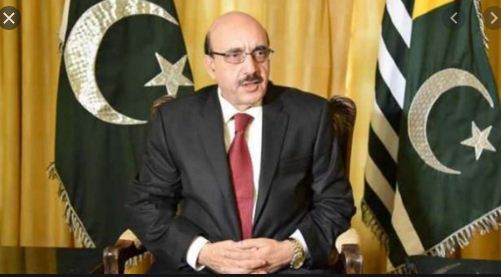
MUZAFFARABAD, MAY 21 (DNA) – Azad Jammu and Kashmir (AJK) President, Sardar Masood Khan on Friday paid tributes to Mirwaiz Molvi Muhammad Farooq, Abdul Ghani Lone, and other Kashmiri freedom fighters on their martyrdom anniversary.

In a special message, the AJK President reiterated his unflinching resolve that the struggle to get freedom from the oppressive Indian occupation and the realization of the right to self-determination would continue relentlessly and the mission left incomplete by Kashmiri martyrs would be accomplished.

“We vow to carry forward the mission of Kashmiri martyrs who offered supreme sacrifice of their lives to get rid of the oppressive foreign rule,” he asserted.

Describing Mirwaiz Moulvi Mohammad Farooq and Abdul Ghani Lone as robust voices of the Kashmir freedom struggle that were targeted by the oppressor to weaken the liberation struggle, AJK President said that their supreme sacrifices instead gave a new lease of life to the struggle for the right to self-determination.

Khan also paid homage to the martyrs of Hawal on the day of their martyrdom and said that the sacrifices offered by these martyrs will never be forgotten by the people of IOJK, AJK, and Pakistan.

The intensity of the long struggle of the Kashmiris for freedom that has withstood decades of suppression and has grown stronger neither will reduce nor killings, arbitrary detentions, torture, and other brute tactics can dampen the spirit of freedom, he said.

The AJK President assured that the people of Azad Jammu and Kashmir and Pakistan will continue to extend political and diplomatic support to the struggling people of Jammu and Kashmir and they will not be left alone in their fight for freedom and liberty.

“We salute our brothers and sisters living on the other side of LoC with firm assurance that the people of AJK and Pakistan are fully behind them and they will never leave them alone,” he assured.

He went on to say that the people of Jammu and Kashmir have been fighting for their freedom and right to self-determination for more than seven decades and they are determined to continue it till they are given a right to decide their political future through an UN-supervised referendum.

About the international support to the Kashmir peoples’ struggle for their right to self-determination, President Khan said since 2016, after the martyrdom of Burhan Wani and August 2019, when Indian troops invaded and besieged IOJK, Kashmir has been significantly internationalised.     

The Kashmir dispute, he said, discussed in the UN Security Council, the European Parliament, the US Congress, the British Parliament, and the ASEAN parliaments, among others.

It (Kashmir issue) has been covered extensively by the international media and taken up by leading international think tanks and human rights organisations. This has hurt India because it has been called out, and India now wants to seek indemnity and immunity for its crimes against humanity in IOJK, he concluded. = DNA

=======================

CHAIRMAN SENATE SADIQ SANJRANI, DR. SHAHZAD WASEEM VISIT PALESTINE EMBASSY

ISLAMABAD, MAY 21: Ambassador of Palestine, Ahmed Rabaei presenting Palestinian keffiyeh scarf to Leader of the House, Senator Dr. Shahzad Waseem during his visit to Palestine embassy.=DNA PHOTO

ISLAMABAD, MAY 21 (DNA) – In Solidarity with Palestinians, Chairman Senate Sadiq Sanjrani has condemned the Israeli atrocities carried out against innocent and unarmed Palestinians. The series of attacks by Israeli occupation forces on innocent people, illegal settlement of the Israelis, and forced evictions of Palestinians are serious violations of human rights and international law, he maintained.

Resolution of the Palestine issue was indispensable for lasting peace in the region. Human rights organizations, the UN Security Council, and the International community should take the issue of Palestine seriously and take measures for a comprehensive and just solution to the Palestinian issue at the earliest, he stressed while expressing solidarity with the Palestinians.

“Today we send a message to our Palestinian brethren that the Pakistani nation as a whole stands by them in every hour of trial. Pakistan will never leave the Palestinians alone in their just struggle for independence and will continue to raise its voice for their rights on every platform. It is the moral responsibility of all Muslim countries to take joint and comprehensive action to resolve the Palestinian issue”, he underlined.

To express solidarity with the Palestinians, earlier in the day, Senate Chairman Sadiq Sanjarani along with Deputy Chairman Senate Mirza Afridi, Leader of the Upper house in the Senate Dr. Shahzad Waseem, chief whip officer in the senate, Senator Fida and other Senators visited the Palestinian Embassy and met with the Palestinian Envoy on Friday.

In meeting with the Palestinian Ambassador, the delegation strongly condemned the bombing by Israeli occupation forces, storming of the holiest site, Al-Aqsa mosque, and the Israeli atrocities being carried out against worshippers and innocent unarmed Palestinians.

“Israeli aggression cannot demoralize Palestinian people. Jewish illegal settlers must refrain from desecrating Qibla-e-Awwal. Bombing unarmed Palestinians, including women and children, is a cowardly act”, the Chairman underscored.

On the occasion, Deputy Chairman Senate Mirza Afridi said that Pakistan will continue its support and will always raise its voice against Israeli atrocities on every international forum. Forced eviction of Palestinians is a serious violation of basic human rights and international law, he further added.

The delegation offered Fateha for the martyrs and prayed for the speedy recovery of those who got injured in the Israeli bombardment. Senate Chairman Sadiq Sanjarani also recorded his remarks in the “Visitor’s book”. The government will fully participate in all parliamentary functions regarding Palestine. The issue of Palestine will be raised on every major forum of the world including Inter-Parliamentary Union (IPU).

Later in the day, Chairman Senate and members of the delegation participated in the solidarity rally and denounced the brutal acts of Israeli occupation forces. The delegation accompanying Chairman Senate included Deputy Chairman Senate Mirza Afridi, the Leader of the house in the Senate Dr. Shahzad Waseem, Chief Whip officer Fida, Senator Talha Mehmood, Nawabzada Umer Farooq, Senator Dr. Hamayun Mohmand, Senator Dost Muhammad Khan, Senator Fawzia Arshad, Dr. Zarqa Suharwardy Taimoor, Senator Seemi ezdi, Senator Sana Jamali, Senator Naseebullah Bazai, Senator Saifullah Abro, and others.

“WHO SAID WHAT?” A RECAP OF PRESENTATIONS AT THE VIRTUAL DIALOGUE ON HUMAN RIGHTS INJUSTICES IN AFGHANISTAN

DNA

Islamabad, May 21: China must continue playing a vital role in the region after the US withdrawal as they are working on massive development projects in the immediate neighborhood of Afghanistan,i.e., Pakistan and Iran and any instability in Afghanistan will impact them enormously.

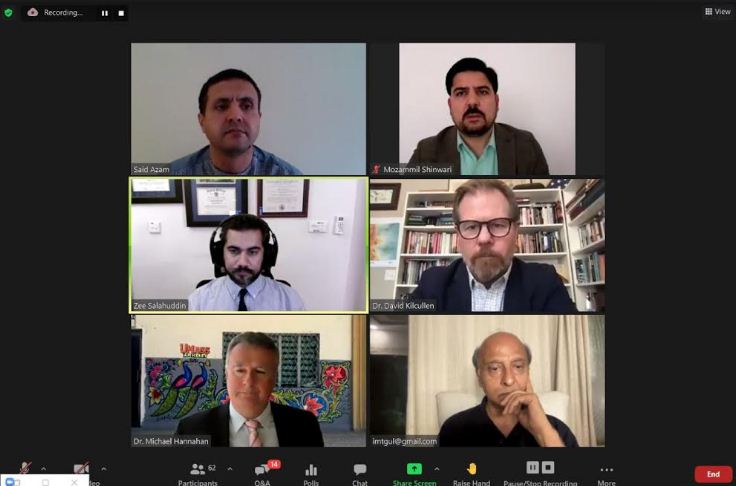
These were the remarks made by Dr. David Kilcullen, Professor of International and Political Studies at the UNSW in Canberra, Australia whilst speaking at the quadrilateral webinar organized by the Center for Research and Security Studies Islamabad. The theme of the webinar was“the consequences of the US troop withdrawal this year in terms of a potential civil war, the suffering of the Afghan people over the course of this war, and the most viable path forward.”

Other speakers included Dr. Michael Hannahan, Director of the University of Massachusetts-Amherst (UMass-Amherst) Civic Institute, and a US foreign policy expert,Mr. Said Azam, author and Senior Afghan Journalist, Mr. Muzammil Shinwari, Former Deputy Economic Minister, Afghanistan and Mr. Imtiaz Gul, Executive Director, CRSS.Dr. Kilcullen further added that China’s role is anticipated to support and assist Afghans in securing their fundamental rights post US withdrawal. Moreover, he stated that Australia has been committed to the Afghan cause since 2001 and has made significant efforts to counter terrorism and assist Afghanistan in various avenues.Expressing his fear, Dr. Kilcullen said that Taliban might attack police, Afghan National Army, and local government workers in the coming days to cause unrest in Afghanistan. Nevertheless, the Taliban are not capable enough to seize Kabul anytime soon, however, the provincial capitals are under a great threat. He emphasized that US should try to maintain its intelligence surveillance, and air defense system in Afghanistan even after the troops’ withdrawal.

Dr. Michael Hannahan from the United States highlighted the US citizens’obliviousness vis-à-vis US’ longest war. He was of the view thatUS leaders and stakeholders failed to shape the public narrative about the war properly as they never explained why US was in Afghanistan, what did they accomplish, and why they are withdrawing now?He further stated that after the announcement of the final date of troop withdrawal, a debate has started about the US’ accomplishments in the last two decades.

Highlighting the Afghans’ perspective, both Mr. Said Azam and Mr. Muzammil Shinwari expressed hope that Afghanistan and its neighboring regional countries can turn the challenges posed to Afghanistan after US troops’ withdrawal into opportunities of lasting peace and development. Mr. Azam stated that despite the sufferings and plights of the Afghan people in the last 2 decades, millions of Afghans got access to their fundamental human rights including education, healthcare, and telecommunication industry. The economic, infrastructure, and human development in the last 20 years has been remarkable and would not have been possible without the international community and US’ continued assistance, the same trend should continue in the future to achieve comprehensive peace and development.

However, he expressed his concerns over the Biden administration’s decision of a complete troop withdrawal by September 2021 as the outcomes of the intra-afghan peace talks have not been finalized yet. He suggested that US should withdraw its troops only if the Intra-Afghan Peace dialogue is properly in place and yields significant outputs. Adding to his comments, Mr. Shinwari also stated that the international community should not play a role similar to the 1990s, when they abandoned Afghanistan completely and left it on its own.If this happens, there are chances of a civil war, which will be bloodier than the one Afghanistan witnessed in the 1990s. Moreover, he said that the narco-mafias, warlords, are the ones who benefit from the conflict the most after the troop withdrawal. He also urged regional countries like Pakistan and Iran to play a significant role in sustaining peace in Afghanistan after the US troops pull out.

Executive Director CRSS, Mr. Imtiaz Gul thanked the panelists for participating in the virtual dialogue. Hebriefed the audience that significant challenges such as deep divide and inequalities in the society lead to fundamental rights’ violations. He also stated that US and Europe’s ignorance towards the plight of the Afghans and Palestinians raise the question that why fundamental human rights do not matter to them? He suggested that we should try to build on the positives and generate pressure at the civil society level to urge Afghan stake holders to leave the past behind and build on new narratives to ensure durable peace and stability in Afghanistan.

At the end of the dialogue, the panelists commended CRSS’ efforts for highlighting this extremely important regional subject and inviting relevant stakeholders from several regions to present their viewpoints. Moreover, the panelists also interacted with the audience through a Q&A session.

WORLD PEACE LINKS TO SETTLEMENT OF KASHMIR, PALESTINE DISPUTES: MUSHAAL

DNA

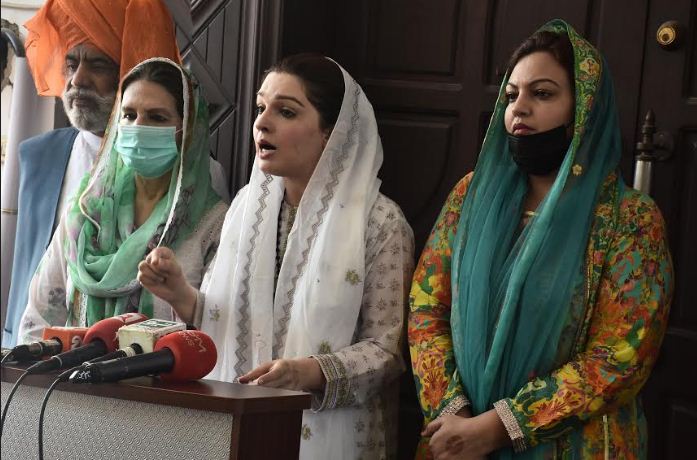
ISLAMABAD, MAY 21 – Mushaal Hussein Mullick, the wife of Chairman Jammu and Kashmir Liberation Front Yasin Malik, said that people of Indian Illegally Occupied Jammu and Kashmir (IIOJK) and inhabitants of war-torn Palestine are facing the worst form of terrorism at the hand of their respective occupied forces. Speaking at a rally held in protest against human right violations in Kashmir and Palestine here on Friday, Mushaal said that the, on one hand, Hindutva regime of India unleashed a wave of barbarism and state terrorism in the occupied Kashmir valley while on the other the apartheid Israeli state made life a hell of the innocent Palestinians through continued airstrikes and ruthless bombardments. 

The Hurriyat leader said that the world looking at the bloodbath of the innocent and helpless Muslims like a silent spectator and no one have the courage to give a shut-up call to these two terrorist states. She vowed that Kashmiri and Palestine people could not be deterred and frightened through such brutal tactics, as they would continue struggle for their legitimate, just and birthrights come what may.

Mushaal questioned the role of UNSC and UN and said that what’s the existence of such world bodies which could not in position to implement own passed resolutions.The Chairperson said that it seemed their roles are just limited to pass resolutions and condemnations instead of taking any practical steps to stop aggression. However, she said that the world bodies could be seen playing active role when somewhere muslims are in dominant position or where non-muslim minority faced minor issues.She urged that the muslim world should take the issue as there is a serious need of overhauling these world bodies so as to make them purposeful or else their existence would be of no good.

Mushaal demanded time is ripe that the OIC should prove its worth and should play a proactive role in this critical time of muslim history.She said that if the muslim countries joined their hands they could create great impacts but unfortunately, they are widely divided.  Mushaal lamented that innocent children, women and youth are being tortured to death in Kashmir but the world is silent.She said that helpless and armless Palestinian children, women and men are bombarded and their homes are being destroyed but the world remained unmoved.She demanded an immediate ceasefire in Palestine as there is an acute shortage of shelter homes and medicines and all these fundamental needs should be provided forthwith.Mushaal reminded that the world should play their due role and should stop these Indian and Israeli aggressors and oppressors for committing more war crimes.She urged the world to resolve the Kashmir and Palestine dispute as per the aspirations of the inhabitants of the areas or else peace in the world would remain a distant dream.

‘RECOGNIZE ISRAEL’ MANTRA BURIED DEEP IN THE DEBRIS OF GAZA: INT’L WEBINAR

DNA

Islamabad, MAY 21 – A change in the world order is vital to rein in states like Israel and resolve the long-standing Palestine issue since the major roadblock is the prevalent unjust world order based on the paradigm of survival of the fittest. In addition, worldwide civil society linkages, alliances of the forces of good across the world, and the anti-apartheid movement model of South Africa can play a central role in this regard.

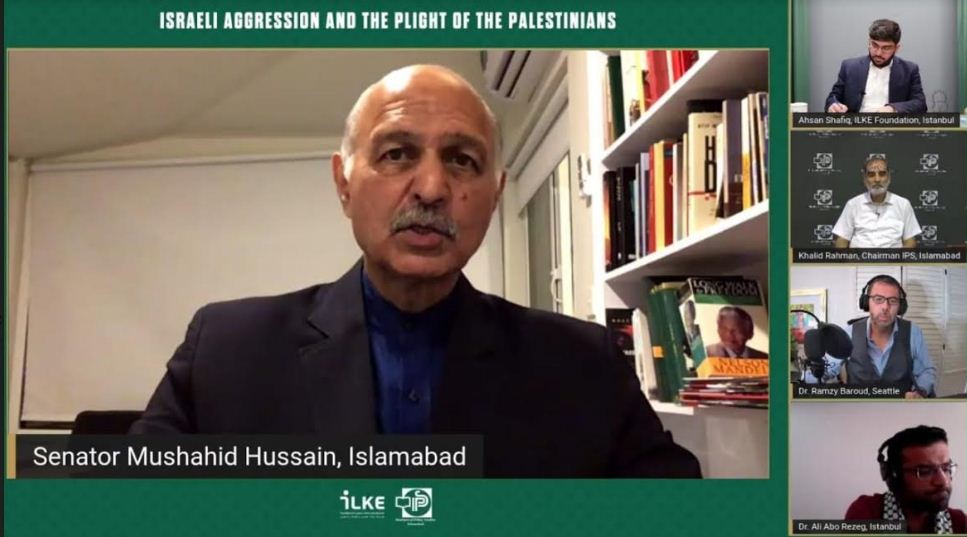
These views were expressed by eminent geopolitical analysts at an international webinar titled ‘Israeli Aggression and the Plight of the Palestinians’ which was jointly organized by Institute of Policy Studies (IPS), Islamabad and ILKE Foundation, Istanbul.

The speakers included Mushahid Hussain Syed, Pakistani Senator and chairperson Senate Standing Committee on Foreign Affairs, Khalid Rahman, IPS Chairman, Dr Ramzy Baroud, a US-based Palestinian author and journalist, and Dr Ali Abo Rezeq, a Palestinian journalist based in Turkey. The event was moderated from Istanbul by Ahsan Shafiq of ILKE Foundation.

It was underscored that Pakistan sees an inextricable linkage between Palestine and Kashmir; both are occupied territories, both are denied the right of self-determination, both are under the occupation of fascist regimes that are also racist and Islamophobic – Benjamin Netanyahu in Israel and Narendra Modi in India. Besides, there is an attempt at demographic transformation of a majority into a minority in both occupied territories. As such Islamabad’s policy is very clear – if Pakistan weakens its position on Palestine it will also undermine its position on Kashmir. So the recent ‘recognize Israel’ mantra is now buried deep in the debris of the destruction of Gaza, they added.

The speakers viewed that normalization of relations with Israel, an apartheid state, will not churn out benefits for Muslim countries. Rather, Israel is thumping its nose at Washington, so it would be better to exert pressure diplomatically on the US.

The experts were optimistic that changing global dynamics – with the world transforming into multipolar from unipolar after the Cold War – will benefit the Palestinian cause. A positive aspect, they noted, was the favorable voices within Jews and Israel besides non-Muslims, liberals and civil society, and concerns shown in the media and by the human rights organizations.

The discussants pointed out that Israel launched the latest aggression thinking the Palestinians were isolated because many countries are normalizing relations and they are losing global solidarity. But the violence has spawned a massive global movement rooted in civil society. This can be seen in the demographics of the worldwide pro-Palestinian protests participated in by people from all ethnic, racial and religious backgrounds. People are angry and rightly calling Israel an apartheid genocidal state, which the speakers termed a defining moment in history. Sane voices in solidarity with the Palestinians are also being heard in the US Congress, UK Parliament and the European Parliament, indicating a change in world opinion. This is evident from the biggest protests taking place in London, Madrid and Paris.

The speakers stressed that Muslims must take the leadership role in this global movement. Only by reaching this critical mass they would be able achieve a paradigm shift; that South African moment when apartheid was defeated. Apartheid was crushed in South Africa not because enough governments spoke out but because civil society rose globally and boycotted the apartheid government in all its forms and shapes until they forced their governments to follow suit. Similarly, civil societies are the ones that need to be reached out in the cases of Palestine and Kashmir.

The webinar was informed that the definition of aggression was agreed upon by the International Criminal Court in 2018 and now there is a framework under which the issue can be discussed with reference to Israeli actions related to Palestine. There are a number of international laws and conventions that are being violated through illegal occupation, land annexation, ethnic cleansing, apartheid, collective punishment, human rights as well as several UN resolutions were being flouted.

The discussants expected the civil society supporting the Palestine cause to develop a multipronged strategy of doable options involving, but not limited to, diplomacy, media, social media, civil society and human rights organizations along with pressure tactics and initiation of war crimes cases to find a long-term solution.

Underlining the need for building pressure on the diplomatic front, they opined that likeminded countries such as Pakistan, Turkey and Saudi Arabia should collaborate with other Muslim countries including Iran and Indonesia and non-Muslim countries like China, which is a big supporter of the Palestine cause, without forming different blocs outside the OIC.

The speakers suggested that supportive countries should write a joint letter to US President Joe Biden, telling him the flaws and double standards the US foreign policy entails vis-à-vis the Palestine conflict.

It was also stressed that supportive countries can also launch a flotilla to send humanitarian supplies to Gaza. More importantly, a team of lawyers should be prepared from some of the Muslim countries to file cases of war crimes against fascist Netanyahu, the Israeli prime minister.

The speakers believed that there are several factors that strengthen the Palestinian cause which is a well-recognized case still on the UN agenda. Further, the resolve of the Palestinians to continue their struggle, Arab members of Israel’s parliament who play a role in breaking or making the government, a dynamic diaspora community, and the religious dimension that connects 1.7 billion Muslims with the issue, and availability of a platform like the OIC, are positive aspects.

The discussants reiterated that the Israelis are depriving the people of the occupied territories of their basic rights of free movement, worship, elections, etc. The uprising of the Palestinians in the Gaza Strip, West Bank, Al Quds, Jerusalem, and inside Israel shows the end of the two-state solution.

The speakers were of the view that the Palestinians who live in Gaza, the West Bank, and Israel are one nation who are fighting the aggression as one. Hamas, Islamic Jihad, the Fatah movement and others have to join hands and also involve the Muslims all over the world and ask them to stand in solidarity with them. 

Stay Connected

64FansLike
60FollowersFollow

Latest Reviews

Exchange Rates

USD - United States Dollar
EUR
1.14
GBP
1.34
AUD
0.70
CAD
0.71