Meeting of Ambassador Khokher with the Mayor of Vienna

VIENNA: Ambassador Aftab Ahmad Khokher met Dr. Michael Ludwig, Mayor of Vienna today. They discussed all issues of mutual importance to further strengthen bilateral relations of the two countries.
Ambassador Khokher appreciated the government of Vienna for efficient handling of COVID-19 and hoped that normal life would resume soon in the city. In response to the question about bilateral relations, Ambassador Khokher said that the two countries had close cooperation. There was huge potential to further strengthen trade and economic ties, especially in the field of Information Technology.
They also exchanged views on collaboration for addressing the challenge of climate change. Ambassador Khokher highlighted the efforts of the Government of Pakistan in this regard.
Dr. Michael Ludwig said that his government was also working to achieve Sustainable Development Goals and fifty percent area of Vienna was green with many gardens and parks.The Mayor appreciated the idea of increasing cooperation of the two countries in the field of IT and assured his support in this regard.
Dr. Michael Ludwig said that there were huge opportunities for education in Vienna as there were many public and private universities providing high quality education. Ambassador Khokher informed that many Pakistani students were already studying in universities in Vienna and he had organised many webinars for attracting more Pakistani students in Austria. He also said that the educational linkages between the two countries were further strengthened by inauguration of the Pakistan Austria Fachhochschule- Institute of Applied Sciences and Technology in September 2020 in Haripur district of KPK.
Ambassador Khokher said that the Embassy was planning to bring Pakistani artists for their performance in Vienna, especially for sufi music, as the people of Vienna were fond of art and music. He has also planned to organise a Pakistani food festival in Vienna for promoting Pakistani food. He sought collaboration with the city government of Vienna for these initiatives. He invited the Mayor to visit Islamabad at his convenience and explore the opportunities for cooperation between Vienna and Islamabad. The Mayor thanked for the invitation and expressed his interest to visit Islamabad at an appropriate time.
FEDERAL MINISTER ANNOUNCES INAUGURATION OF PAK-CHINA CONDIMENTS INDUSTRY ALLIANCE
DNA
ISLAMABAD, JUN 18 – Under the guidance of China Embassy in Pakistan, the first China-Pakistan Agricultural and Industrial Cooperation Information Platform was officially launched on January 2020. The platform has actively played the role as a communication channel to boost bilateral cooperation and exchanges in agriculture.
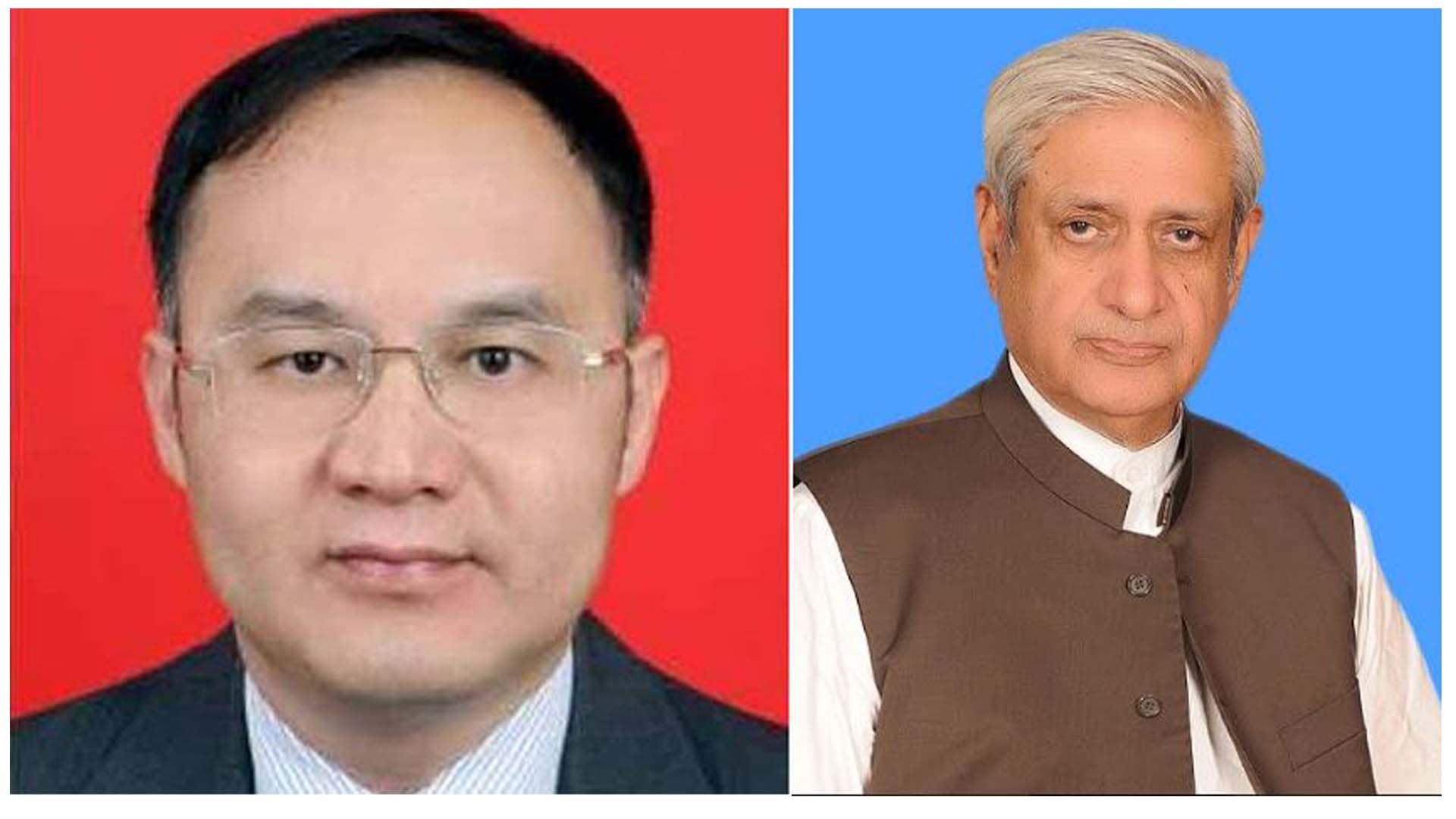
In the joint efforts of China Embassy in Pakistan, Ministry of National Food Security and Research, China – Pakistan Economic Corridor Authority, China- Pakistan Agricultural Cooperation and Exchange Centre and the agriculture related companies from both countries, the Chilli contract farming project has been launched. To accelerate the promotion of the project, a conference / webinar was organized by the China – Pakistan and Industrial Cooperation Platform today and Syed Fakhar Imam, Federal Minister for National Food Security & Research participated as a guest speaker.
The Minister said that cooperation between Pakistan and China in agriculture will give boost to the sector. China has advanced in the agriculture sector and Pakistan can learn from China by adopting their farming techniques. He further said that research institutions be upgraded, technology transfer, value addition, marketing and public private partnership are some of the areas which can be worked on for the benefit of the both countries. He said that the Chilli Project will be helpful in enhancing the chilli production in Pakistan. He further added that bilateral cooperation will enhance agriculture productivity resulting to increase in the export of agriculture products of the country.
The Chinese Ambassador to Pakistan, Mr. Nong Rong said that Chinese companies have planted about 100 acres of Chilli crop in Punjab Province through cooperation of their Pakistani partners and it is being planned to expand this area in the next few years and set up a Chilli processing factory in the future to improve the livelihood of the local farmers., and raise production of Chillies for local production and export.
The Federal Minister for National Food Security also announced the inauguration of Pakistan China condiments Industry Alliance which will promote bilateral cooperation in the field of condiments.
FM QURESHI, UZBEK FM DISCUSS BILATERAL ISSUES
DNA
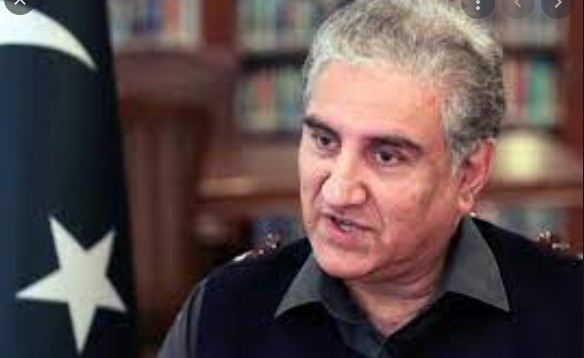
ISLAMABAD, JUN 18: Foreign Minister Makhdoom Shah Mahmood Qureshi had a bilateral meeting with Foreign Minister of Uzbekistan Abdulaziz Kamilov on the sidelines of Antalya Diplomacy Forum on 18 June 2021.
The two Foreign Ministers held fruitful discussions and exchanged views on various bilateral issues of mutual interest including the increased high-level engagements between both sides.
The virtual Summit between Prime Minister Imran Khan and the President of Uzbekistan Shavkat Mirziyoyev held on 14 April 2021 was also appreciated as it provided an excellent opportunity to review bilateral ties.
Recognizing the need to pursue greater regional connectivity, the two Foreign Ministers discussed the importance of the landmark Trans-Afghan railway initiative from Uzbekistan to Pakistan.
BRITISH HC, ARMY CHIEF DISCUSS MATTERS OF MUTUAL INTEREST
DNA
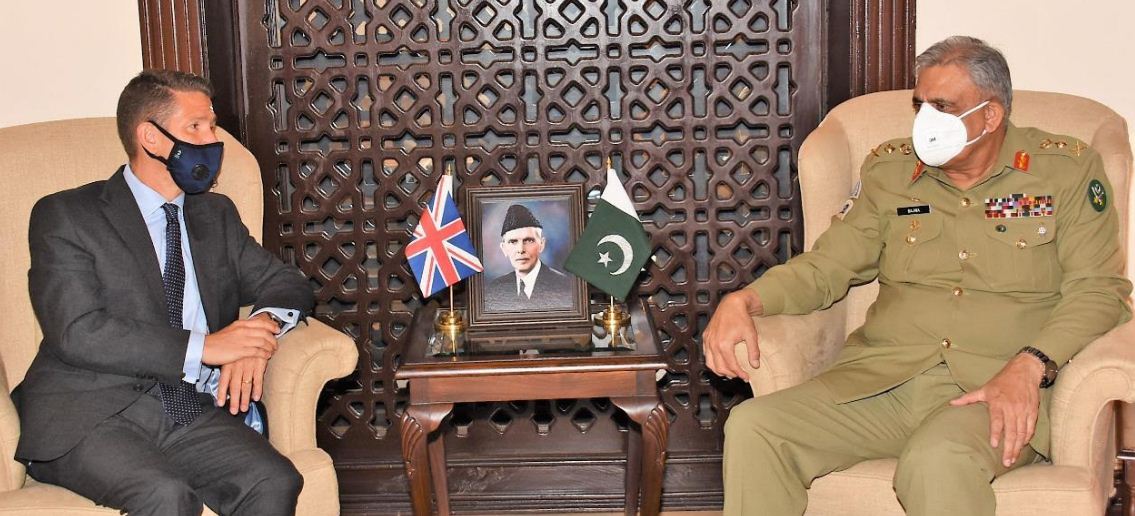
RAWALPINDI, JUN 18 – Dr. Christian Turner, British High Commissioner called on General Qamar Javed Bajwa, Chief of Army Staff (COAS), today.
Chief of Army Staff said that Pakistan values UK’s balanced role in global and regional affairs and we look forward to optimize strategic potential of our relationship based on convergences.
The visiting dignitary acknowledged Pakistan’s continuous efforts for peace and stability in the region and pledged to further enhance bilateral relations between both the countries.
POWER DIVISION, GIZ PAKISTAN SIGN AGREEMENT
DNA
ISLAMABAD, JUN 18 – Germany shares a cordial relationship in development cooperation with the Government of Pakistan for over 60 years. It has been a key partner in supporting the GoP to achieve its national priority policies since the 1960s in different development sectors.
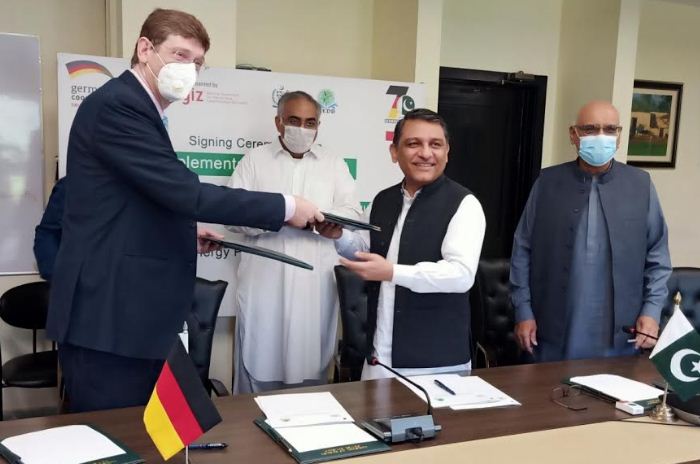
Based on the long-lasting cooperation in the energy sector a new implementation agreement between GIZ Pakistan and the Ministry of Energy (Power Division) has been signed today at the Ministry of Energy (Power Division). Under the agreement, GIZ Pakistan will conduct the so called Renewable Energy and Energy Efficiency (REEE II) project, that will provide technical support to the Ministry of Energy –(Power Division) and its associated Alternative Energy Development Board (AEDB).
The aim of the project is to contribute effectively to the energy transition in Pakistan. The 8.1 million EUR project is commissioned by the German Federal Ministry for Economic Cooperation and Development (BMZ).
During the ceremony, Secretary Power Division, Mr. Ali Raza Bhutta, and Mr. Tobias Becker, Country Director GIZ Pakistan, reiterated the commitment to strengthen their cooperation. CEO AEDB, Mr. Shah Jahan Mirza, and various other notables from both sides, were present in the ceremony.
Speaking at the ceremony, Mr. Ali Raza Bhutta said “A major milestone in the energy transition in Pakistan is the new Renewable Energy Policy approved by Council of Common Interest in August 2020 the Alternative and Renewable Energy (ARE) Policy. The Policy aims for a substantial shift in the power generation capacity to RE sources, moving from a current 6% to 20% by 2025 and 30% by 2030. He emphasized on building the capacity of Pakistan’s RE &energy efficiency related organization. He also appreciated GIZ to cooperation in adopting best energy efficiency practices while learning from German experience. He expressed the desire that the current cooperation between GIZ and Ministry of Energy will go a long way towards improving Pakistan’s utilization of its great renewable energy potential.
Mr. Tobias Becker said that “as part of the Climate & Energy Initiative between Germany and Pakistan this intervention will support the increased deployment of clean energy technologies, it will promote distributed solar PV power plants connected to the electricity grid, as well as the rural electrification strategy of the country”.
The REEE II project responds to the national priority area of the Government of Pakistan, i.e, The Alternative and Renewable Policy 2019 and National Electricity Policy 2021. Through bilateral cooperation agreements, Germany and Pakistan have been working together to address the impacts of climate change and to ensure access to affordable, reliable and sustainable energy. In line with this, the Pakistan-German Renewable Energy Forum (PGREF) will continue to serve as a connecting bridge between both countries, implementing concrete actions and providing technical advice to enhance collaboration, promote dialogue, facilitate investment and exchange knowledge.
NEPRA extends hike in peak tariff for industrial consumers
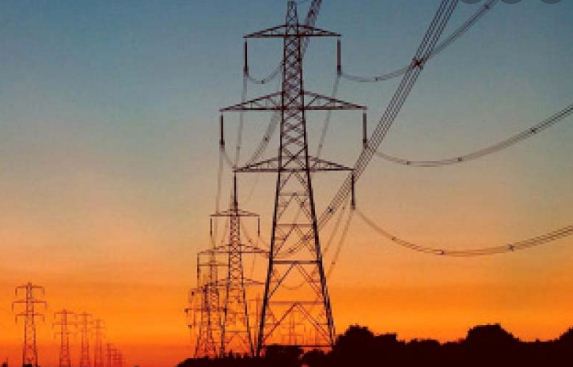
ISLAMABAD, JUN 18 (DNA) – National Electric Power Regulatory Authority (NEPRA) on Friday announced to extend hike in peak power tariff for industrial consumers.
According to details shared by the regulatory body, the peak tariff for industrial consumers was extended until June 30, 2022, and it would be applicable to all power distribution companies including K-Electric.
The federal government, however, aimed at facilitating the industrial units, will provide an additional subsidy to fill the gap of the hike in power tariff. The NEPRA also rejected a proposal from K-Electric and energy ministry regarding hiking power prices on their own
On June 15, the National Electric Power Regulatory Authority (NEPRA) deferred a decision on a petition filed by the K-Electric seeking a hike in electricity tariff for its consumers.
The port city’s sole power distributor requested the power regulator to allow an increase of Rs5.97 per unit in power tariff on account of monthly fuel cost adjustments (FCAs) for a period of January to March 2021 and a reduction of Rs0.86/unit for the month of April.
The National Electric Power Regulatory Authority (NEPRA) said the consumers will have to bear an additional burden of Rs5.11 per unit if the power utility’s plea is accepted.
The power regulator’s chairman Tauseef Farooqi said this “huge” burden would take a heavy toll on the consumers and directed the K-Electric to file petitions for fuel cost adjustments for the months of May and June as well, which, he said, would ease the burden.
He further directed the power company to provide evidence of non-supply of gas by SSGC. The National Electric Power Regulatory Authority (NEPRA) would take up the matter again in mid-July. = DNA
=======================
BUDGET LONG ON EMPTY PROMISES SHORT ON SUSTAINABILITY AND INCLUSIVITY: IPS WEBINAR
DNA
ISLAMABAD, JUN 18 – The growth target of 4.8% set by the government in the budget for 2021-22 is unlikely to be sustained in the longer run given the state of the fundamentals of the economy. The proposed growth target can be short term but will pose a challenge to the government in the future as Sustainable Development Goals (SDGs), renewable energy, climate change and capacity-building of the public sector are not in focus.
This was the general view of the economists at a webinar titled ‘The federal budget 2021-22: A review’, which was organized by Institute of Policy Studies (IPS), Islamabad.
The panelists included Dr Mahmood Khalid, senior research economist at Pakistan Institute of Development Economics (PIDE), Dr Shahida Wizarat, dean College of Economics and Social Development, Institute of Business Management, Dr Pervez Tahir, former chief economist at Planning Commission, and Dr Abdul Saboor, dean faculty of Social Sciences, PMAS Arid Agriculture University. IPS Vice Chairman Ambassador (r) Syed Abrar Hussain chaired the session whereas senior practitioners including Mirza Hamid Hassan, former federal secretary at ministry of power, and Zaigham M. Rizvi, expert consultant on housing and housing finance, also took part in the discussion.
The speakers observed that better sectoral performance and fiscal discipline during the pandemic have improved growth rate. However, the revenue target of Rs5.8 trillion, which they opined has been set to appease the IMF, is unrealistically high despite the fact that the government has failed in achieving the tax collection target for this fiscal year.
They termed incentivizing the stock market as a way to benefit the privileged at the cost of the poor and the middle class who constitute the major chunk of the society. They warned about further increase in food inflation which is likely to happen as the government has entertained industry bigwigs in the budget but ignored the common man.
They were of the view that if the government fulfils its promise of providing affordable housing, it will give a boost to dozens of industries that fall within the ambit of the construction industry. However, the government’s initiative of doling out funds through lawmakers was criticized as it will only serve vested interests and give rise to corruption, the speakers said.
Ruing misplaced priorities in the budget, the discussants were of the view that the primary focus in the Public Sector Development Programme (PSDP) is on brick and mortar projects whereas human development initiatives that can actually drive growth and development are ignored.
During the webinar, it was also discussed that the budget does not offer much to the common man as debt servicing and defense expenditure consume most of the budget allocations, resulting in a mere 11% appropriation for development funds that too largely remain underutilized at the end of the year.
Excessive reliance in the budget on indirect taxation, including withholding tax as part of indirect taxes, will further widen the gap between the poor and the affluent. Sustainable and inclusive growth will remain a pipedream in the absence of a paradigm shift in initiating structural reforms, they added.
The speakers also maintained that there is a massive crowding out in the financial sector due to the government’s borrowings, starving the private sector of credit for investment in the country. Furthermore, there is a trust deficit between the government and the private sector that needs to be addressed.
MAXIMUM TURNOUT OF IRANIANS LIVING IN PAKISTAN IN THE ELECTIONS

ISLAMABAD, JUN 18 (DNA) – Iranians living in Pakistan announced their participation in the 13th presidential election this morning by going to the polls.
According to Peyman Rahmani, correspondent of the International Service of the Radio and Television Agency of Iran (IRIB) from Islamabad, the thirteenth presidential election of Iran started at 8 am local time on Friday, June 19 in Pakistan, and Iranians living in this country went to the polls to participate in determining their country’s destiny. .
Mohammad Ali Hosseini, Iranian Ambassador to Pakistan said: Polling stations for the 13th presidential election have been set up in the Pakistani capital Islamabad, Karachi, the country’s most populous city, as well as in Lahore and Quetta, while Iranians living in Pakistan’s Khyber Pakhtunkhwa province are 200 kilometers away to cast their ballots. They travel to the capital and participate in the elections.
Officials from various Iranian institutions, their families, teachers, educators, businessmen, students and many other Iranian citizens living in various cities in Pakistan are among those who cast their ballots to choose the candidate.
Also, the presence of a number of primary voters at the ballot box and their enthusiasm and desire to participate in determining the fate of their country was another notable scene in the voting of the 13th Iranian presidential election in Pakistan.
It should be noted that despite the threat of the Corona Virus, the active and maximum participation of Iranians living in Pakistan in the elections 2021 and their presence at the ballot box in compliance with all health measures shows their love and interest in Iranian identity and importance to their right to self-determination.
According to the board of the executive and supervisory boards, the voting process will continue until 18:00 local time in all four polling stations.
CDA CHAIRMAN REVIEWS ONGOING DEVELOPMENT WORK AT MARGALLA HIGHWAY
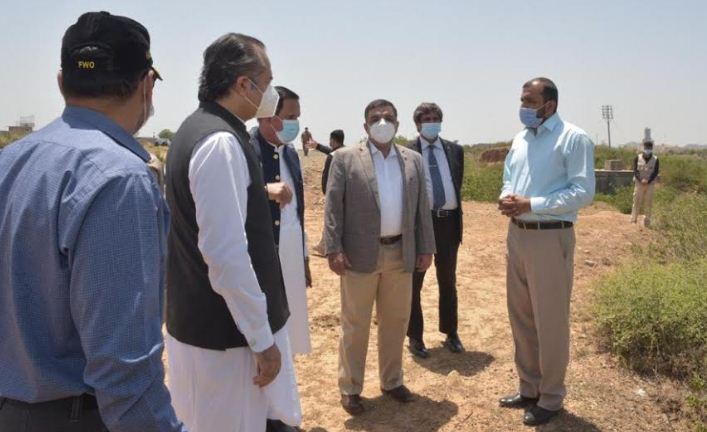
ISLAMABAD, JUN 18 (DNA) – Chairman CDA Amer Ali Ahmed and DG FWO Major General Kamal Azfar carried out progress review visit of Margalla Highway Project.
During the visit, Chairman CDA was briefed about the ongoing development work being executed by FWO. After completing contractual formalities, physical work started on the 10 km long Segment-1 from GT Road to Sector D-12.
Presently, work has been started simultaneously on road structures and is planned to expand soon to other stretches of the road.
Prime Minister performed the ground breaking ceremony of 35 km long Margalla Highway (Northern Bypass) on 19 April 2021.
Segment-1 is slated to be completed in one year. However, FWO aims to complete this segment much earlier. DNA
=======