Home Blog Page 2937

South Africa win 2nd T20I against Pakistan by six wickets

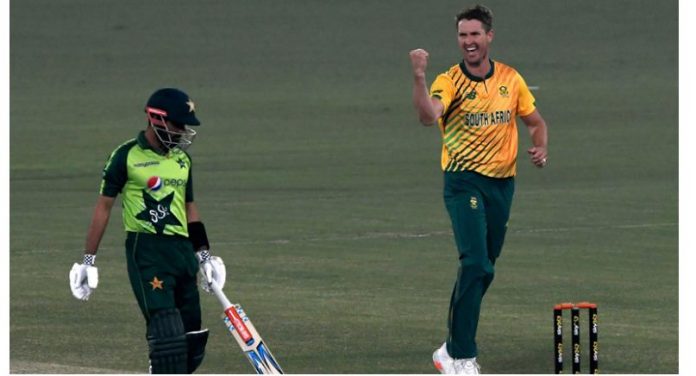
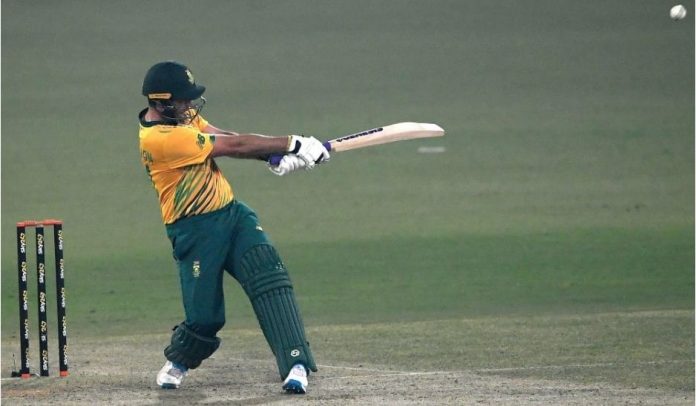
LAHORE, FEB 13 – South Africa won the second Twenty20 International against Pakistan by six wickets at the Gaddafi Stadium in Lahore on Saturday.

Pite van Biljon and Reeza Hendricks both scored 42 as South Africa chased down a modest 145-run target in just 16.2 overs. The third and final match is on Sunday, also in Lahore.

David Miller and captain Heinrich Klaasen saw the visitors through with more than three overs left.

Shaheen Shah Afridi struck twice for Pakistan early on to get rid of Janneman Malan and JJ Smuts in the first and third over, respectively.

Afridi struck with the second ball of the innings to clean up Malan, giving Pakistan the ideal start. However, the Proteas made a recovery, scoring a flurry of boundaries against pacer Haris Rauf.

Pakistan had scored 144 runs for the loss of seven wickets in 20 overs. Mohammad Rizwan scored a half-century, hitting 51 runs from 41 balls.

According to the Pakistan Cricket Board (PCB), Rizwan is the first Pakistani wicketkeeper-batsman to score 50+ runs in three consecutive T20I matches.

Faheem Ashraf made 30 not out of 12 balls to help Pakistan reach a respectable total after the middle order failed to contribute.

Pakistan lost captain Babar Azam early on in the second over after he was adjudged lbw, managing only five runs.

Youngster Haider Ali was the second to go back into the pavilion after a brilliant catch on the square leg boundary by Lutho Sipamla in the fifth over. Ali scored 10 runs from 11 balls.

The third wicket to fall was Hussain Talat, who was out to Tabrez Shamsi for three runs in the seventh over. Iftikhar Ahmed was the fourth wicket, scoring 20 runs from 21 balls. He was sent back to the pavilion in the 14th over.

Earlier, South Africa had won the toss and opted to field first.

Pakistan had won the first T20I after Mohammad Rizwan’s 104-run knock propelled the green shirts to victory.

It was Rizwan’s highest-ever score in a T20I match and helped Pakistan set a respectable target for the visitors after the hosts suffered a loss early on when captain Babar Azam was run out in the very first over.

South Africa have made three changes to the squad with Glenton Stuurman, JJ Smuts and Pite van Biljon coming in for Jacques Snyman, Bjorn Fortuin and Junior Dala.

Stuurman will be making his T20I debut for South Africa.

Playing 11

Pakistan: Babar Azam (capt), Mohammad Rizwan (wk), Haider Ali, Hussain Talat, Iftikhar Ahmed, Khushdil Shah, Mohammad Nawaz, Faheem Ashraf, Usman Qadir, Shaheen Shah Afridi, Haris Rauf

South Africa: Janneman Malan, Reeza Hendricks, JJ Smuts, Pite van Biljon, David Miller, Heinrich Klaasen (capt, wk), Andile Phehlukwayo, Dwaine Pretorius, Glenton Stuurman, Lutho Sipamla, Tabraiz Shamsi

COVID-19: Morocco starts vaccinating people aged 65+

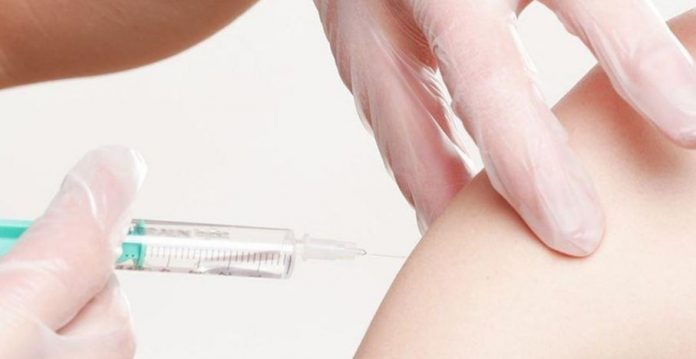
RABAT, FEB 13 – Morocco began vaccinating people older than 65 years against the novel coronavirus, according to an official statement.

The move came a day after the North African country received a second batch of 4 million doses of the AstraZeneca coronavirus vaccine.

According to the Health Ministry’s latest data, Morocco has vaccinated over 800,000 people since the start of its vaccination campaign.

All members of the public will be vaccinated as soon as possible, the ministry said in the statement.

On Jan. 28, Morocco began a mass nationwide vaccination drive, starting with top officials to encourage public confidence in the vaccines.

Moroccan King Mohammed VI was the first Moroccan to receive a coronavirus jab.

The country had previously received 500,000 doses of the Sinopharm vaccine and 6 million doses of the AstraZeneca jab.

It has reported a total of 8,450 coronavirus-related fatalities and 477,656 infections, while some 457,956 people have recovered from the disease so far.

Kashmir becomes voiceless in Indian parliament

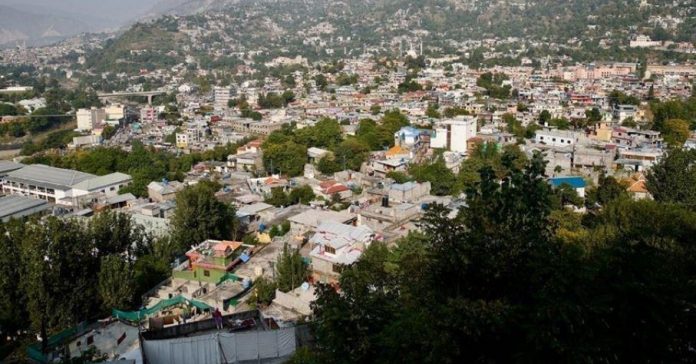
ANKARA, FEB 13 – For the third time in history, the erstwhile state of Jammu and Kashmir will go without any political representation in Rajya Sabha — the upper house of the Indian parliament.

Four members of the parliament from the region, including leader of the opposition Ghulam Nabi Azad, are retiring by the end of this week, leaving their seats vacant.

The region disputed between India and Pakistan used to send six directly elected MPs to Lok Sabha — the lower house and four members elected by the state assembly to represent Rajya Sabha, also called the house of states.

On Aug. 5, 2019, when India revoked the autonomy and divided the state into two centrally-administered territories, Lok Sabha’s seats were redistributed, with five going to Jammu and Kashmir and one to the Ladakh region.

Since 2018, when the elected state assembly was dissolved, no mechanism was left to elect representatives for the Rajya Sabha. Then, Governor Satya Pal Malik dissolved the assembly, amid speculation that the regional parties National Conference and the People’s Democratic Party (PDP) were planning a coalition to form the government.

Earlier, also the upper house was left without any representation from the disputed region from April 1994 to October 1996, as there was no elected assembly from 1991 to1996.

The seats remained vacant also for three months from November 2008 to February 2009, when the state was under the governor’s rule.

In 1991-1996, the state lacked representation in Lok Sabha as well, because due to the volatile security situation parliamentary elections could not be conducted in 1991.
40 MPs represented region in Rajya Sabha 

Since 1952, when the first batch of four members was elected by the state’s Constituent Assembly to occupy seats in Rajya Sabha, 40 people have represented Jammu and Kashmir.

Azad, who was also the chief minister of the region in 2005-2008, has been a member of the house five times — four times from Jammu and Kashmir, and once from the western state of Maharashtra.

Tirath Ram Amla, a politician from the Jammu division, was a member of the house four times from 1967 to 1985, followed by Saifudin Soz, who has represented the region thrice.

Speaking to Anadolu Agency over the phone, outgoing MP Nazir Ahmed Laway said he was hoping for the restoration of statehood and an elected assembly in the region soon. He said six years ago he had become an MP when the state comprised Jammu and Kashmir and Ladakh.

Azad also said that in the absence of assembly and local representatives, he is receiving lots of delegations who come from Kashmir to Delhi seeking his intervention in one or the other.

“The state is without an assembly for the past two-and-a-half years. If there was any local elected representative, the people would go to him for grievances. They come all the way to Delhi spending their resources,” he said.

Currently, a delimitation commission headed by former Supreme Court judge Ranjana Desai is working to demarcate boundaries of the constituencies afresh to increase seats in the state assembly.

“We are expecting to complete the exercise in the next two months. After this exercise, the central government may decide to conduct assembly elections,” said a member of the commission, who requested anonymity.

According to the Jammu and Kashmir Reorganization Act adopted by the Indian parliament in August 2019, the number of seats in the assembly will rise from 107 to 114. The 24 seats reserved in the Jammu and Kashmir Assembly for the areas under Pakistan’s administration will remain untouched. Also, in the next assembly, few seats will be reserved for the lower caste Hindus and tribal areas.

Though India had adopted the procedure for adult suffrage in the matter of Lok Sabha or lower house election in 1952, this procedure was implemented in Jammu and Kashmir in 1967. Before that, MPs were nominated to represent the state in the lower house.
Frequent central rule 

The state has also remained under the direct central rule for over 10 years in the past 30 years. In 1990, when armed resistance broke in the region, Chief Minister Farooq Abdullah’s National Conference-led government resigned. It continued until October 1996, when the assembly elections were held under an unprecedented security cordon.

After the 2002 assembly elections, the governor’s rule was once again imposed for a period of 15 days due to a deadlock over the formation of a government. Again, in July 2008, the state came under the governor’s rule after the PDP withdrew its support from Ghulam Nabi Azad’s Congress-led government. This period of the governor’s rule lasted for 178 days.

After the 2014 assembly polls threw up a fractured mandate, the state again remained under the central rule for 52 days before the BJP and PDP formed the government in March 2015.

The central rule was again imposed in January 2016 for 87 days after the then-Chief Minister Mufti Muhammad Sayeed passed away until his daughter Mehbooba Mufti was elected to lead the alliance.

This government collapsed on June 19, 2018, after the BJP withdrew its support. Until then, the state was under the central rule.

Upper house or Rajya Sabha 

The upper house of the Indian parliament is a permanent house having a maximum of 245 members, of which 233 are elected by the state assemblies using single transferable votes through an open ballot. The Indian president can appoint 12 members for their contributions to art, literature, science, and social services.

The upper house has limited powers in passing money bills like the annual budget. If Rajya Sabha fails to return the money bill to Lok Sabha within 14 days, that bill is deemed to have been passed by both the parliaments.

But in terms of making laws for the states, this house has powers to pass a resolution by a two-thirds supermajority granting such power to the parliament.

Otherwise, under the Indian constitution, the central government cannot make a law on a matter reserved for states without any authorization from Rajya Sabha. Prime Minister Narendra Modi-led government used this clause to divide the state of Jammu and Kashmir.

Elections to Rajya Sabha 

The elected members of the state assemblies are allowed to vote in a Rajya Sabha election. The legislators send a batch of new members to the upper house every two years for a six-year term.

A third of members of this permanent house from each state retire once in two years and polls are held to fill up the vacancies. In addition, vacancies that arise due to resignation, death, or disqualification are filled up through by-polls after which those elected serve out the remainder of their predecessors’ term.

The election is held on the principle of proportional representation by a single transferable vote, which means a bloc of members belonging to one or more parties can elect an MP of their choice if they have the requisite numbers. This is to avoid the principle of majority, which would mean that only candidates put up by the ruling parties in the respective states will be elected.

A single transferable vote means that electors can vote for any number of candidates in order of their preference. Care has been taken that the ruling party with two-third of the majority does not take all seats.

As a measure to check rampant cross-voting, the assembly member shows his or her marked ballots to the party’s authorized agent before putting them into the ballot box.

OGRA recommends Rs16 per litre increase in petrol price: sources

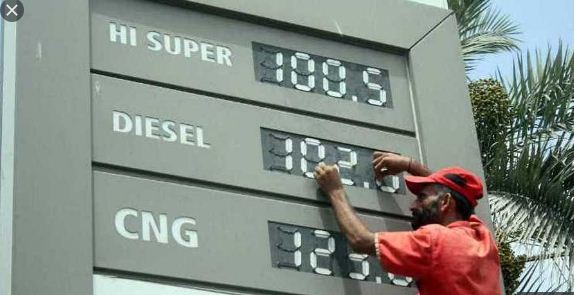
ISLAMABAD, Feb 13 (DNA): The Oil and Gas Regulatory Authority (OGRA) on Saturday proposed Rs16 per litre hike in petrol price from February 16, said sources.

The Oil and Gas Regulatory Authority (OGRA) has forwarded its summary regarding new rates of petroleum products to the ministry. The OGRA has proposed raising Rs14 per litre on high-speed diesel.

Sources prior to the matter told that OGRA has prepared its summary on the basis of a levy of Rs30 per litre. Currently, the levy on petrol is Rs21.04 per litre. Sources said that petrol price is likely to go up by Rs5.50 and diesel Rs5.75 for remaining days of the ongoing month. The OGRA summary proposing new rates will take effect from February 16 after approval by the prime minister.

On Feb 1, the federal government had jacked up prices of petrol, diesel and other products following the approval of Prime Minister Imran Khan. The prime minister had approved Rs2.70 per litre increase on petrol and Rs2.88 per litre on diesel. The price of kerosene oil is increased up to Rs3.54 per litre while the rate of light diesel was jacked up to Rs3 per litre. Currently, petroleum prices in Pakistan are as follows: Petrol: Rs111.90, Diesel: Rs116.07, Kerosene oil: Rs80.19, Light diesel oil: Rs79.23.

Nawaz, Usman claim two but South Africa remain on top

OUT! A deserving wicket for Mohammad Nawaz who dismissed Pite van Biljon who went back to the pavilion after scoring handy 42.

South Africa 105-4 (12.3 overs)


OUT! Finally some relief for Pakistan team but it might be toot late as Reeza Hendricks departs after scoring 42.

South Africa 98-3 (11.1 overs)


A Pakistan cricket team fan believes that the team management is not doing justice by not giving a chance to top domestic performers.

At the end of the powerplay, South Africa are 46-2


OUT! Another wicket for Shaheen Shah Afridi as JJ Smuts, who went back to the pavilion after scoring seven.

South Africa 21-2 (2.2 overs)


OUT! Shaheen Shah Afridi draws first blood as South Africa’s opener Janemman Malan went back to the pavilion after scoring just four.

South Africa 4-1 (0.2 overs)

Punjab Announces Dates For Matric, Intermediate Exams

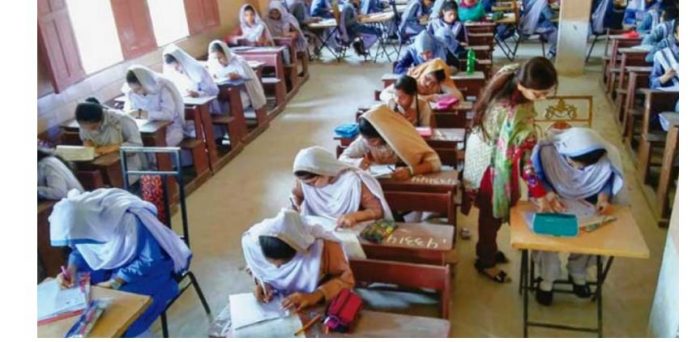
LAHORE – The dates for matriculation and intermediate exams in Punjab for all boards have been announced. The annual matric exam for all boards across Punjab will begin on May 5, said a notification by the government.

Meanwhile, the intermediate exam for all boards across the province will be start on June 12.

After an extended closure due to the coronavirus pandemic, students from all public and private primary and middle schools and universities went back to school on February 1.

Students of grades nine to 12 had already gone back to school on January 18.

Unlike the previous year, the federal and provincial governments have decided that students will not be promoted without exams.

Sindh announces exam dates

Last month, Sindh Education Minister Saeed Ghani said that Matric board exams will be conducted from July 1 to July 15, while intermediate exams will take place from July 28 to August 16.

Exams for students of pre-primary to class eight will be conducted in June.

The education minister also announced the steering committee’s decisions on the paper pattern for the 2021 board exams.

Exam duration will be two hours as opposed to the previous three-hour time.

Half the exam will consist of multiple-choice questions, while 30% will have short questions and 20% long questions.

Strepsils announces to appeal CCP’s decision

ISLAMABAD, FEB 13 (DNA) – Competition Commission of Pakistan (CCP) has recently passed an order against Strepsils Comfort for alleged deceptive marketing, which we are now going to appeal.

The discussions with CCP are ongoing since December 2018, during which we have presented numerous third-party researches to substantiate our actions, specifically claims made on effectiveness of Strepsils Comfort. However, CCP failed to consider our strong evidence and therefore we are now left with no other option but to appeal.

Honesty and transparency are fundamental operating principles for RB, and we ensure that our product positioning and communication is fair, honest and does not mislead consumers or is unclear in any manner. All objective claims used in our communication and in our packaging & promotional materials are backed by credible and documented evidence capable of withstanding scientific scrutiny and comply with all local consumer laws.

We assure you that we are fully committed to protecting our consumers and will provide the best solutions that protect, heal and nurture for a healthier life.=DNA

===================

Chairman CDA shown satisfaction over development works in sectors I-14, 15 and 16

DNA

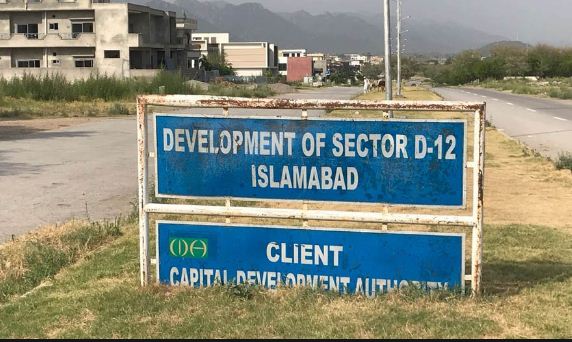
ISLAMABAD: The Chairman Capital Development Authority (CDA) has shown satisfaction over development works in Sectors I-14, 15 and 16 and issued instructions to expedite the development works.

During a surprise visit to I-14, 15 and 16 sectors yesterday, he said that the infrastructure of the sectors should be completed immediately and street lights should be installed here as soon as possible. Chairman CDA directs to build Modern parks, so that the citizens which have been allotted plots here can start building houses immediately.

Briefing the Chairman CDA on the occasion, the officers informed that 35% development of Sector I-15/3 has been completed, while the remaining development works in the said sector are also in progress. The said sub-sector is to be developed for Rs. 866.2 million, while work is also underway on road infrastructure.

Chairman was assured that the work would be completed in the next few months and services in the sector would be launched soon. At the same time, construction of underground and overhead tanks has also been started. Tender for Sector I-15/4 has also been awarded with a bid price of Rs. 58 crore. I-15/1 tender has been opened, while I-15/2 tender will be issued in next few days.=DNA

============

First lady inaugurates goods exhibition

KARACHI, Feb 13 (DNA): The first lady of the country, Samina Alvi here on Saturday inaugurated an exhibition of goods prepared by local youth with challenged intellectual capacities.

The day long event themed “Hunarmand” was organized at Markaz e Umeed, the alma mater of these special entrepreneurs with the motive to mark beginning of their economic independence at a time when world in general was exposed to Covid 19 induced global challenges.

Ms. Alvi expressing her interest in efforts being made for empowerment of the special individuals emphasized on the introducing the concept of inclusiveness and inquired about the strategy being adopted to enhance capacities as well as level of acceptance for such persons.

“Objective of the exercise is to groom  intellectually challenged as low investment entrepreneurs and help them gain financial self reliance,” said Anusha Ali, Rehabilitation Manager of the rehabilitation cum training and education center.

The first lady was informed that the center was celebrating its 50th anniversary this

year which was established to meet the education cum rehabilitation needs of special children mainly belonging to low income segments of society free of charge through the support of local philanthropists.

The school presently being run in two shifts, was said to had dedicated its morning shift for children with compromised capacities encompassing intellectually challenged as well as those with any sort of impairments.

Hence, she said, the center was providing package of special education and training, in accordance to their respective needs.

The first lady was informed that a pragmatic approach has been adopted for

socio-economic rehabilitation of the youth, who were attending the school since their childhood under which collaboration has been developed with different institutions.

This approach enabled the young graduates to be groomed as skilled souls ultimately paving their way towards empowerment.

Ms. Alvi was informed that a number of furniture pieces, placed in the center, were made by its very own graduates trained in carpentry while some of its students had also participated in different international events including special olympics and clinched medals for the country.

Earlier, Zulfiqar, representing special group three, recited and his group fellow Yusra Fatima presented welcome address. Whereas students from special grade five performed on a national song and were appreciated for their effort.=DNA

================

9th International Maritime Conference kicks off in Karachi

PRESIDENT DR. ARIF ALVI IN A GROUP PHOTO WITH THE PARTICIPANTS OF THE 9TH INTERNATIONAL MARITIME CONFERENCE-2021, AT KARACHI ON FEBRUARY 13, 2021.

KARACHI, FEB 13: The three-day 9th International Maritime Conference (IMC-21) organized under the auspices of the Pakistan Navy kicked off in Karachi on Saturday.

The three-day Conference under the theme “Development of Blue Economy under a Security and Sustainable Environment – A Shared Future for Western Indian Ocean Region” is being organized by the National Institute of Maritime Affairs (NIMA) from February 13-15, 2021.

The IMC-21 is being held in tandem with the 7th Multinational Maritime Exercise “AMAN-21”.

The President of Pakistan Dr. Arif Alvi graced the Opening Session of the Conference as the Chief Guest.

The Chief of the Naval Staff (CNS) Admiral Muhammad Amjad Khan Niazi was also present on the occasion.

While addressing the Session, President Dr. Arif Alvi underscored the strategic importance of the Western Indian Ocean Region, collaborative approach, and the government’s efforts for the Maritime Sector.

The president appreciated Pakistan Navy’s contribution for promoting maritime awareness and the Blue Economy in Pakistan.

Earlier in his Opening Remarks, the Naval Chief welcomed and thanked worthy speakers, guests, and participants.

The Nava Chief highlighted Pakistan Navy’s efforts and contribution for promoting maritime awareness, the Blue Economy, and the regional Maritime Security through various initiatives.

Stay Connected

64FansLike
60FollowersFollow

Latest Reviews

Exchange Rates

USD - United States Dollar
EUR
1.14
GBP
1.33
AUD
0.69
CAD
0.71