Home Blog Page 2910

VC’s emphasize over Student Centric Policies & Effective Engagement of Students

DNA

Islamabad, FEB 24 – Prior to 3rd Rectors Conference 2021, an important online panel discussion was successfully concluded on the topic of “Debating Pakistan Education Policy 2021: Student Centric Policies and Effective engagement of Students”. The panel comprising of concerned stakeholders including government officials from the Federal Ministry of Education and Professional Training, Vice-Chancellors and leading academics suggested various recommendations for incorporating in new education policy which is going to be announced by the federal government soon.

  The panel discussion was organized by Superior University, Association of Private Sector Universities Pakistan (APSUP), Inter University Consortium for Promotion of Social Sciences Pakistan (IUCPSS), University of Lahore, and Government College University Lahore. There was consensus among the speakers over vibrant university campuses through active involvement of students in various activities.The speakers urged that the higher education policies should be student centric.  In order to ensure effective engagement of students at the campuses, student societies/clubs should be strengthened. These student societies should also play an effective role in inculcating values of responsible, critical thinking, citizenship, peace, co-existence, tolerance and harmony.

Necessary revisions should be made to incorporate these values as part of curriculum especially at undergraduate level. Through such engagements, students get the chance to enhance their skills in the team work and in leading other students for specific well defined causes. However, there is a need of innovations in this model, and societies/ clubs must start thinking about contributing to the societal issues (rather than restricting themselves to the university/ departmental level activities only). Some recent innovations regarding the student societies at GC University Lahore offer good practical example.They were of the view that the new education policy should be aimed at producing responsible, active and tolerant citizens equipped with the problem solving, critical thinking , conflict resolution and other required skills.  The speakers emphasized over provision of counselling services at each university campus to provide guidance to the students and faculty over stress and emotional management and future career pathways.  

It was also suggested that vibrant university campuses are only possible through independent functioning of student societies/clubs and provision of required space & financial resources for student led activities. It was also demanded that 34 points Roadmap on Peaceful and Tolerant University Campuses developed by the Vice Chancellors on 19 & 20th April 2017 should be implemented.The panel discussion was conducted was Murtaza Noor Executive Director APSUP while Mr. Mohiuddin Wani Additional Secretary/Focal Person Ministry of Federal Education and Professional Training shared the background, objectives and consultation process in formulating new education policy. 

The speakers included Prof. Dr. Muhammad Mukhtar Vice chancellor National Skills University Islamabad, Prof. Dr Athar Mehboob Vice Chancellor the Islamia University Bahawalpur, Prof. Dr. Asghar Zaidi Vice chancellor  Government College University Lahore, Prof. Dr. Rukhsana Kasur Vice chancellor Government College Women University Sialkot, Prof. Dr. Razia Sultana Vice chancellor Benazir Bhutto Women University Peshawar, Prof. Dr. Tayyaba Zarif Dean Faculty Social Sciences Shaheed Benazir Bhutto University Nawabshah, Prof. Dr. Rauf I Azam  Pro Rector University of Lahore, Prof. Dr. Wasim Qazi Vice Chancellor Iqra University Karachi, Prof. Dr. Vali Uddin Vice chancellor Sir Syed University of Engineering and Technology Karachi and Prof. Dr. Tahir Hijazi Vice Chancellor  Muslim Youth University Islamabad.   Released by Murtaza Noor National Coordinator Inter University Consortium for Promotion of Social Sciences Pakistan Cell 0300 9840120

Tehreek e Kashmir UK observes Kashmiri Women’s Resistance Day

DNA

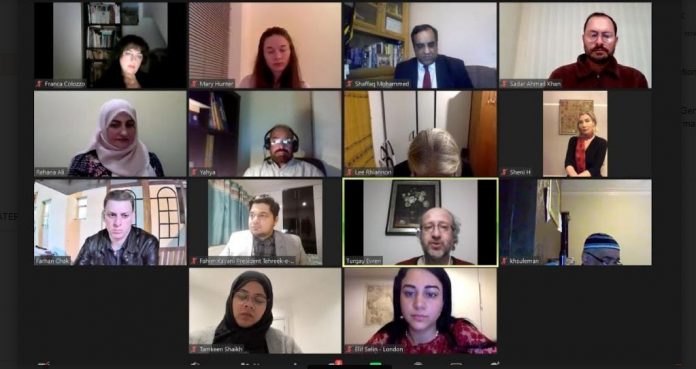
LONDON, FEB 24 – An online Conference on Kashmiri Women’s Resistance Day was organised by Tehreek-e-Kashmir UK to commemorate the 30th anniversary of the tragic incident Kunan & Poshpora Mass Rape incident to honour the victims & awaken the world conscience on the century’s most barbaric crime mass rape because the world has become a silent spectator of heinous crimes of Indian occupational forces especially murder & rape in illegally Occupied Jammu & Kashmir.

The Conference was titled “Kunan Poshpora Mass Rape with Denied Justice for 30 Years”. It was chaired by President Tehreek-e-Kashmir UK Raja Fahim Kayani & Moderated by Information Secretary Tehreek-e-Kashmir UK Rehana Ali.
President TEK UK Raja Fahim Kayani said in his opening remarks.
“The Mass Rape Kunan Poshpora 1991 is an unforgettable incident in the Kashmir history which was committed under the black RAPE Law under the Armed Forces Special Powers Act (AFSPA) 1990’s section 7 which gives impunity to the Indian army to search, torture, kill & rape innocent Kashmiris & burn their properties too even on suspicion”.
Kayani Further said “Indian should be sanctioned for its war crimes in IIOJ&K.

Former Australian Senator Lee Rhiannon while expressing her views said that, I pay tribute to the history, the culture and struggle for justice of the Kashmiri people. Rape is a shocking crime, have been used as a tactic of war to violate humiliate women and through them the whole communities. On 23 Feb 1991, the villages of Kunan and Poshpora Indian Forces committed mass rape of more than 100 young, older and minor women. It was a pre-planned crime and systematically raped by the Indian army.
Indian Laws such as AFSPA effectively allow military personnel to get away with Rape and Brutality. The world needs to put more focus on violence perpetrated by Indian forces in Jammu & Kashmir.

Shaffaq Mohammed, a former liberal democrat’s Member of the European Parliament expressing his views said that The Kunan Poshpora incident, where women from 2 Kashmir Villages were subjected to the most brutal acts of sexual violence are still awaiting justice 30 years on. The United Nations passed Resolution 1820 in 2008 on Women & Peace and Security to tackle the growing incidents of “Rape as an Act of War”. The Special Envoy of UN High Commissioner for Refugees, Angelina Jolie must speak in favour of the victims of Kunan Poshpora and brig their plights to the world’s attention.

Mary Hunter Researcher for the Centre for Army Leadership and the London Institute of South Asia said that It has been repeatedly suggested by Human Rights Watch that rape has been used as a “weapon of war” by the Indian security forces against the entire Kashmiri community. While as per the second UN report, published in 2019, stating that “no progress” has been made in bringing justice.

Dr. Farhan Mujahid Chak Secretary-General Kashmir Civitas said that on 23rd Feb 1991 4th Rajputana Rifles of the 68 Mountain Division of Indian Armed Forces entered Kunan & Poshpora and mass raped more than 100 young and old women. Injustice will never go away, it will remain, and the world must come forward and the culprits of Kunan Poshpora Mass Rape must be held accountable so that justice is served.

Shamim Shawl, APHC Representative and Secretary-General Kashmir Tehreeki Khawateen during her address said that We demand Justice for Kunan Poshpora Mass Raped Victims, We demand International Commission to investigate Kunan Poshpora Mass Rape occurred on23rd Feb 1991 by the Indian Occupational Forces.

Sheni Hamid Political Strategist & Senior Political Advisor said that The brutal rapes of the Villagers in 1991 in IOJK, by some Indian representatives, is indeed against all these conventions and against the UN’s Human Rights Principles – which was being signed by India as well. UNSC should consider investigating this particular matters further; hence, upon the solid evidence, should also refer the case to ICC.

Dr. Arch. FRANCA COLOZZO, INSPAD during her address said that,
Human Rights Watch said the government had launched a “campaign to absolve the army of human rights violations and discredit those who filed the allegations!” If this unsustainable Indian campaign of covering up misdeeds and discrediting those who would like to lift the veil of such shame continues, we are faced with the sad realization that Indian democracy is now dead.

Elif Selin Calik International Journalist and Poet expressed her shadow with the victims of Kunan Poshpora mass rape victims and said that
Every Act of Tyranny and Deprivation of justice has the power to haunt not only the offenders but the society as well.

Shaista Safi Kashmiri Human Rights Lobbyist said that This day is a reminder that Indian occupational forces use Rape as a weapon of war, they think of it as their duty and get away with the horrendous crimes because of draconian laws such as AFSPA.

Turgay Evren Author and Songwriter said that We need to name and shame the perpetrators of this crime: Kunan Poshpora Mass Rape, I am going to write and dedicate a song to Kashmiri Women, Mothers, and daughters who have suffered in Kashmir.

Tamkeen Sheikh Ex-Con. Parliamentary Candidate during her address said that ” It is high time we behave like human beings, come together like human beings, and stand up against people who are involved in such human rights abuses.

Yahya Akhter, Director of Information Cell TeK UK said that Human Rights Conventions and world conscience have failed the innocent and helpless women of Indian occupied Kashmir. India is committing every war crime in occupied Kashmir but Europe and America are ignoring it for their economic benefits which will not go very well in history.

Chairman Jammu Kashmir Salvation Movement (JKSM) Altaf Ahmed Bhat in his statement, “30 years passed on since the Indian Brutal Indian Forces Mass Raped more than 100 Young and Old women of Kunan Poshpora. There has been no action against the perpetrators till now as the Indian army continues to enjoy impunity and protection granted by the Indian state with draconian laws such as AFSPA.
While Molestation, Rape and Torture, has become a routine for the Indian Armed Forces in Kashmir. In the last 32 years, 11,234 Women are Gang Raped / Molested, 7,163 Kashmiris are killed in Custody, 110,386 Structures Arsoned / Destroyed and 22,924 Women are widowed.

We appeal to the UN, EU Parliament, International Human Rights Organizations to Intervene and ask India to permit to allow them for free and Fair Investigation of grave Human Rights Violations in IIOJ&K.

Soraya Boyd CEO-Founder Facilitate Global London based human rights NGO in her statement “In 2008 the UN Security Council adopted a resolution which affirms that “rape and other forms of sexual violence can constitute war crimes, crimes against humanity or a constitutive act concerning genocide.”

Mian Muhammad Tayyib Vice President Tehreek e Kashmir Europe, Sardar Aftab Ahmed advocate Vice President TeK UK, Farooq Baig Secretary-General TeK Germany, Muhammad Lukman Deputy Sec-Gen TeK UK, Khawaja Muhammad Suleiman Director KIC Birmingham and Muhammad Munir TeK Germany also attended the seminar.

London 24, Feb 2021 : ( ) Tehreek e Kashmir UK observes Kashmiri Women’s Resistance Day

An online Conference on Kashmiri Women’s Resistance Day was organised by Tehreek-e-Kashmir UK to commemorate the 30th anniversary of the tragic incident Kunan & Poshpora Mass Rape incident to honour the victims & awaken the world conscience on the century’s most barbaric crime mass rape because the world has become a silent spectator of heinous crimes of Indian occupational forces especially murder & rape in illegally Occupied Jammu & Kashmir.

The Conference was titled “Kunan Poshpora Mass Rape with Denied Justice for 30 Years”. It was chaired by President Tehreek-e-Kashmir UK Raja Fahim Kayani & Moderated by Information Secretary Tehreek-e-Kashmir UK Rehana Ali.
President TEK UK Raja Fahim Kayani said in his opening remarks.
“The Mass Rape Kunan Poshpora 1991 is an unforgettable incident in the Kashmir history which was committed under the black RAPE Law under the Armed Forces Special Powers Act (AFSPA) 1990’s section 7 which gives impunity to the Indian army to search, torture, kill & rape innocent Kashmiris & burn their properties too even on suspicion”.
Kayani Further said “Indian should be sanctioned for its war crimes in IIOJ&K.

Former Australian Senator Lee Rhiannon while expressing her views said that, I pay tribute to the history, the culture and struggle for justice of the Kashmiri people. Rape is a shocking crime, have been used as a tactic of war to violate humiliate women and through them the whole communities. On 23 Feb 1991, the villages of Kunan and Poshpora Indian Forces committed mass rape of more than 100 young, older and minor women. It was a pre-planned crime and systematically raped by the Indian army.
Indian Laws such as AFSPA effectively allow military personnel to get away with Rape and Brutality. The world needs to put more focus on violence perpetrated by Indian forces in Jammu & Kashmir.

Shaffaq Mohammed, a former liberal democrat’s Member of the European Parliament expressing his views said that The Kunan Poshpora incident, where women from 2 Kashmir Villages were subjected to the most brutal acts of sexual violence are still awaiting justice 30 years on. The United Nations passed Resolution 1820 in 2008 on Women & Peace and Security to tackle the growing incidents of “Rape as an Act of War”. The Special Envoy of UN High Commissioner for Refugees, Angelina Jolie must speak in favour of the victims of Kunan Poshpora and brig their plights to the world’s attention.

Mary Hunter Researcher for the Centre for Army Leadership and the London Institute of South Asia said that It has been repeatedly suggested by Human Rights Watch that rape has been used as a “weapon of war” by the Indian security forces against the entire Kashmiri community. While as per the second UN report, published in 2019, stating that “no progress” has been made in bringing justice.

Dr. Farhan Mujahid Chak Secretary-General Kashmir Civitas said that on 23rd Feb 1991 4th Rajputana Rifles of the 68 Mountain Division of Indian Armed Forces entered Kunan & Poshpora and mass raped more than 100 young and old women. Injustice will never go away, it will remain, and the world must come forward and the culprits of Kunan Poshpora Mass Rape must be held accountable so that justice is served.

Shamim Shawl, APHC Representative and Secretary-General Kashmir Tehreeki Khawateen during her address said that We demand Justice for Kunan Poshpora Mass Raped Victims, We demand International Commission to investigate Kunan Poshpora Mass Rape occurred on23rd Feb 1991 by the Indian Occupational Forces.

Sheni Hamid Political Strategist & Senior Political Advisor said that The brutal rapes of the Villagers in 1991 in IOJK, by some Indian representatives, is indeed against all these conventions and against the UN’s Human Rights Principles – which was being signed by India as well. UNSC should consider investigating this particular matters further; hence, upon the solid evidence, should also refer the case to ICC.

Dr. Arch. FRANCA COLOZZO, INSPAD during her address said that,
Human Rights Watch said the government had launched a “campaign to absolve the army of human rights violations and discredit those who filed the allegations!” If this unsustainable Indian campaign of covering up misdeeds and discrediting those who would like to lift the veil of such shame continues, we are faced with the sad realization that Indian democracy is now dead.

Elif Selin Calik International Journalist and Poet expressed her shadow with the victims of Kunan Poshpora mass rape victims and said that
Every Act of Tyranny and Deprivation of justice has the power to haunt not only the offenders but the society as well.

Shaista Safi Kashmiri Human Rights Lobbyist said that This day is a reminder that Indian occupational forces use Rape as a weapon of war, they think of it as their duty and get away with the horrendous crimes because of draconian laws such as AFSPA.

Turgay Evren Author and Songwriter said that We need to name and shame the perpetrators of this crime: Kunan Poshpora Mass Rape, I am going to write and dedicate a song to Kashmiri Women, Mothers, and daughters who have suffered in Kashmir.

Tamkeen Sheikh Ex-Con. Parliamentary Candidate during her address said that ” It is high time we behave like human beings, come together like human beings, and stand up against people who are involved in such human rights abuses.

Yahya Akhter, Director of Information Cell TeK UK said that Human Rights Conventions and world conscience have failed the innocent and helpless women of Indian occupied Kashmir. India is committing every war crime in occupied Kashmir but Europe and America are ignoring it for their economic benefits which will not go very well in history.

Chairman Jammu Kashmir Salvation Movement (JKSM) Altaf Ahmed Bhat in his statement, “30 years passed on since the Indian Brutal Indian Forces Mass Raped more than 100 Young and Old women of Kunan Poshpora. There has been no action against the perpetrators till now as the Indian army continues to enjoy impunity and protection granted by the Indian state with draconian laws such as AFSPA.
While Molestation, Rape and Torture, has become a routine for the Indian Armed Forces in Kashmir. In the last 32 years, 11,234 Women are Gang Raped / Molested, 7,163 Kashmiris are killed in Custody, 110,386 Structures Arsoned / Destroyed and 22,924 Women are widowed.

We appeal to the UN, EU Parliament, International Human Rights Organizations to Intervene and ask India to permit to allow them for free and Fair Investigation of grave Human Rights Violations in IIOJ&K.

Soraya Boyd CEO-Founder Facilitate Global London based human rights NGO in her statement “In 2008 the UN Security Council adopted a resolution which affirms that “rape and other forms of sexual violence can constitute war crimes, crimes against humanity or a constitutive act concerning genocide.”

Mian Muhammad Tayyib Vice President Tehreek e Kashmir Europe, Sardar Aftab Ahmed advocate Vice President TeK UK, Farooq Baig Secretary-General TeK Germany, Muhammad Lukman Deputy Sec-Gen TeK UK, Khawaja Muhammad Suleiman Director KIC Birmingham and Muhammad Munir TeK Germany also attended the seminar.
Long live the art and environment lover Emperor

Munir Ahmed

Heartfelt felicitations and best wishes to the Emperor Naruhito on his 61st birthday falling on February 23. I pray and wish the Emperor may live a long and healthy life.

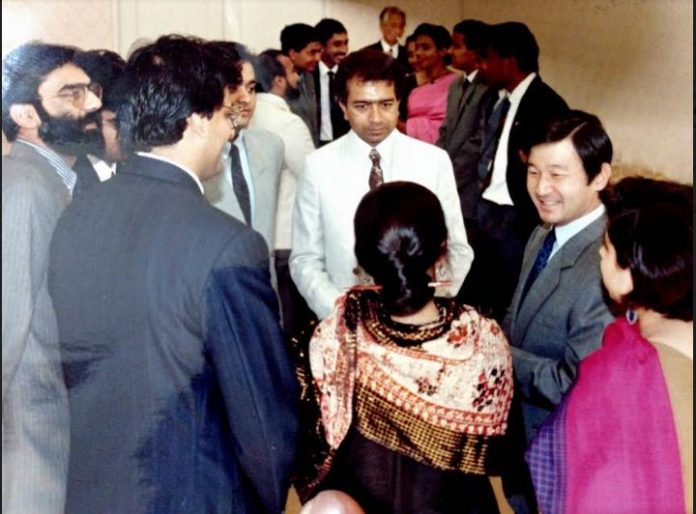
I am indeed glad to mention that I have the honour to meet His Majesty in October 1992 while I was invited by the Japan’s foreign office under the South Asia Youth Invitation Programme. Then His Majesty was the Crown Prince, a very friendly and elegant person with a charming smile as the readers can see in the photograph sent to me by his office. It was the historic day in my life, and it never came again. I wish if I could see the Crown Prince as His Majesty the Emperor of Japan to mark another historic day in my life.

The art and environment lover, His Majesty the Emperor Naruhito stands as the symbol of new Japan and of the unity of the people since his accession to the throne on 1st May 2019 as the 126th Emperor of Japan. His Majesty and the Imperial Family facilitate the fostering of good relations with foreign countries including Pakistan. His Majesty the Emperor Emeritus Akihito and Her Majesty the Empress Emerita Michiko, who are the parents of His Majesty the Emperor Naruhito, visited Pakistan in 1962 on the 10th anniversary of Pakistan-Japan diplomatic relations. It was the first visit by the members of Japan’s Imperial House to Pakistan.

The Crown Prince of Japan Naruhito took the Throne as an emperor to begin the new era – Reiwa, the beautiful harmony era. His father Emperor Akihito abdicated on 30 April 2019, and the Heisei (achieving peace) era ended 30 years after he had been on the Chrysanthemum Throne. Emperor Akihito has been the first Japanese emperor to abdicate since 1817. I believe this new tradition would blossom an era of new colours and fragrances, prosperity of the Japanese people, and international support and cooperation.

After heart surgery and treatment for prostate cancer, Emperor Akihito, 85, has hinted for some time that he wanted to step down for health and age reasons. “I am worried that it may become more difficult for me to carry out my duties as the symbol of the state,” he said in 2016 in a rare televised address. Japan’s monarchs are expected to serve until death, but parliament passed special legislation to allow Akihito to step down.

Emperor Naruhito was born on February 23, 1960 as Akihito’s eldest son. He grew up with his siblings and parents in Tokyo’s most-protected Imperial Palace. After earning a history degree at Gakushuin University, where he wrote a thesis on medieval water transport, the prince became the first Japanese royal to study overseas when he spent two years at Merton College, Oxford. The book he wrote chronicling his time there, The Thames and I: A Memoir of Two Years at Oxford, has just been re-issued in English.

As the Crown Prince, His Majesty’s interest in water management extends beyond academia. Since 2007, His Majesty has served as honorary president of the U.N. Secretary General’s Advisory Board on Water and Sanitation, and he has spoken frequently on the topic at international conferences. “He has been actively involved in international environmental issues in recent years,” Hideya Kawanishi, associate professor at Nagoya University and an author of several books on Japan’s emperors, told the popular weekly TIME.

Emperor Naruhito’s hobbies include mountain climbing, jogging, tennis, skiing and playing the viola, according to the Associated Press.

The people worldwide are having a lot of admiration for the new emperor. The experts expect the new emperor to continue Akihito’s “people-focused” sense of duty, but with carefully chosen embellishments that reflect his international outlook. Having served in the UN Secretary General’s office on water and sanitation, many foresee his proactive role in the arena of international development too.

Recently, the Japanese government has signed import of skilled and highly skilled workers from Pakistan as the Pakistan-Japan relations are getting more cordial in the new era. I believe that the trade and culture exchange between both countries would come to the same level where it has been in the recent past. We all know that Japan has remained one of the major bilateral development partners of Pakistan since 1954, extending assistance in multi-faceted sectors. The total amount of Japan’s economic assistance to Pakistan by March 2020 amounts to USD 13 billion and this makes Japan the second largest economic partner of Pakistan.

Next year (2022) will be the 70th anniversary of the Pakistan-Japan diplomatic relation. We all Pakistanis shall come forward to join hands with the Japan embassy to celebrate this historic peak of relationship in a splendid way.=DNA

=================

Indonesia is the largest trading partner of Pakistan, says Ambassador Hassan

KUALA LUMPUR, FEB 24 /DNA/ – Ambassador of Pakistan to Indonesia, Muhammad Hassan called on the Minister of Trade of Indonesia, Muhammad Lutfi. The Ambassador apprised the Minister on the current level of cooperation between the two countries in the field of trade and investment, especially after the operationalization of Indonesia-Pakistan Preferential Trade Agreement in 2013.

He thanked Indonesia for unilaterally providing concessions on additional tariff lines to Pakistan in 2018. The Ambassador expressed Pakistan’s keen desire to further expand our trade. Expressing concern that the balance of trade is heavily tilted in favour of Indonesia, the Ambassador proposed that in order to create a win-win situation for both countries, Indonesia may consider importing more goods from Pakistan, particularly those lines for which there were high demand in the country.

Minister Lutfi stated that Pakistan was an important trading partner with bilateral trade touching to the level of US$ 2.6 billion. Indonesia was keen to expand cooperation in all fields including trade and investment.

Indonesia was also willing to import more from Pakistan. Keeping in mind the availability of huge consumer market in Pakistan, Indonesia was considering to invest in lucrative sectors in Pakistan including the huge food and beverages sector. He also expressed his interest to visit Pakistan and meet his Pakistani counterpart.

Indonesia is the largest trading partner of Pakistan in the Southeast Asian region. Bilateral trade between the two sides have crossed US$2.6 billion during 2020. Among major exports from Pakistan to Indonesia, cotton, kinnow, seafood, articles of apparel accessories and sports goods are showing upward trend after operationalization of Preferential Trade Agreement (PTA).  Pakistan’s main import from Indonesia include Palm oil, coal, petroleum, paper products and rubber. The two countries are determined to further expand our cooperation in all fields.=DNA

===========

Unemployment, poverty have the most negative impact on young people

BEIJING (DNA) International conference was held in Tashkent on the role of youth in countering radicalism, extremism, and terrorism. The event was organized by the Uzbekistan Youth Agency, the Ministry of The Interior of the Republic of Uzbekistan, the Youth Union of Uzbekistan, the German Society for International Cooperation (GIJ), the OSCE Project Coordinator, UNDP in Uzbekistan and the UNODC Regional Office in Central Asia.

Speaking at the opening of the event, the SCO Secretary-General Vladimir Norov noted that the economic and social problems caused by the pandemic, associated with the decline in the level of education, the sharp increase in unemployment, and poverty have the most negative impact on young people who have difficulties with self-fulfillment and fear of the future.

According to him, in this situation young people are targeted by various terrorist organizations and extremist movements, seeking to lure them into their destructive activities through manipulation of the fragile consciousness of young men and women. At the same time, the advocacy and recruitment work of such structures is via aggressive cross-border network using modern information technologies.

Referring to the data of the SCO-RATS, V. Norov noted that in the last year alone, access to more than 23,000 Internet resources containing terrorist and extremist materials, including 326 social media accounts, was restricted in member states.

In this context, it is noted that following the SCO Moscow Summit last November, member states reaffirmed their commitment to developing multilateral cooperation to counter the use of ICT for terrorist, separatist, extremist, and other criminal purposes. The SCO leaders also recognized the need to develop universal legally binding tools under the auspices of the UN to ensure comprehensive international information security as well as counter information crime.

The Secretary-General recalled that at the SCO Summit in 2018in Qingdao, at the initiative of President Shavkat Mirziyoyev, the joint address of the SCO Heads of State to young people and the Programme of Action, aimed at implementing concrete joint measures to prevent the involvement of the younger generation in the activities of terrorist and radical structures, as well as establishing close cooperation between youth organizations to jointly combat various manifestations of international terrorism, separatism and extremism,were adopted.

During the Moscow Summit of the SCO, the parties particularly reaffirmed their readiness to continue the consistent implementation of these mainly significant documents, which gave a powerful impetus to the further development of youth policy, have brought to life many useful and important youth initiatives aimed at forming the younger generation’s ability to resist various destructive forces trying to introduce into the consciousness of young people ideas, bigotry, and violence.

In this context, it was emphasized that in the information age, digital literacy and a healthy digital culture are one of the drivers of the creative social and business activities of the younger generation, which ensures its creative self-realization, as well as the narrowing of the digital gap for economic growth.

Referring to the widespread introduction of digital technologies,V. Norov noted thatas by 2030 the world will have about 30% of “smart” jobs, and the growth of the world economy is forecasted to be approximately 13.4 trillionEuro, therefore; hundreds of millions of people, and above all, young people will have to urgently learn new skills or even change their profession.

It wasstated that in this regard, the expansion of the use of digital technologies in education and training is becoming more urgent for the SCO countries to prepare the younger generation for a changing economy and post-industrial society.

In this context, the relevance of the initiative of the President of the Republic of Uzbekistan to develop cooperation programs to develop digital literacy and to fight poverty in the SCO space, expressed by him at last year’s summit of the Organization, was underlined.

Undoubtedly, the joint development and implementation of the cooperation programs proposed by the Head of Uzbekistan will contribute to a significant increase in employment and reduce poverty among young people in the SCO space.

According to Norov, poverty is one of the main factors in the radicalization of young people and their involvement in extremist and terrorist activities.

In terms of implementing a comprehensive public policy on the development of human capital and strengthening the social activity of young people, S.M. Mirziyoyev’s recent speech at the Forum of Youth of Uzbekistan, as well as his proposal to declare 2021 the Year of Youth Support and Public Health in the country is truly relevant.

At the same time, the SCO Secretary General noted that this initiative of the leadership of the republic is particularly in line with the decision to hold this year as “Year of Culture of the SCO”, which will once again remind about the rich and unique historical, cultural and civilizational heritage of the peoples of our countries and the importance of educating and educating the younger generation in the spirit of patriotism, high morality, tolerance, humanism, mutual respect and the ability to conduct inter-civilization dialogue.

The Secretary-General further added that young people with their energy, innovative and bold ideas are an important support for the future development of the SCO in various aspects of its activities, including education, self-expression, creativity, and the realization of work for young people.

  1. Norov also informed about the events organized by the SCO Youth Council aimed at stimulating entrepreneurial initiative and promoting innovative projects based on digital technologies.

It was said that in 2020, with the support of the SCO Secretariat and with the participation of the SCO Youth Council, the International Technology Transfer Conference, the 2ndYouth Innovation and Entrepreneurship Competition, the SCO Young Scientists’ Conclave, the YOUTH Conference “AGORA: SCOLAR Vision” were successfully held, including the opening of the SCO Chinese Technology Transfer Centre in Qingdao as a platform for the implementation of the SCO International Youth Business Incubator initiative.

China’s initiatives to form the SCO International Youth Business Incubator, as well as India, to organize an annual Youth Startup Forum and create a special working group to develop start-ups in the SCO space alsohave been noted.

According to the Secretary-General, considering the upcoming 20th anniversary of the SCO this year, with the assistance of the Tajik Presidency, a number of measures have been planned to ensure the active participation of the younger generation in the political, economic and cultural life of the countries of our region, including the holding of an international conference in the coming August on strengthening multilateral cooperation to counter the involvement of young people in destructive groups.

Malaysia wants to further increase trade ties with Pakistan: HC

ISLAMABAD, FEB 24 (DNA) – Ikram Bin Muhammad Ibrahim, High Commissioner of Malaysia in Pakistan said that his country wanted to have greater bilateral trade with Pakistan as both countries have good potential to do trade in many items. He said that the food processing products of Pakistan have good scope to penetrate in Malaysian market.

He said that the lack of better connectivity between the private sectors of Malaysia and Pakistan was a hurdle in promoting bilateral trade up to the real potential of both countries that needed to be addressed. He said that Pakistani manufacturers should focus on products that have greater demand in the global market to improve exports.

He said that private sectors of both countries should take full advantage of the Pak-Malaysia FTA to improve two-way trade volume. He expressed these views while speaking as Chief Guest at a reception organized by Mian Arif Hussain, former Executive Member, Islamabad Chamber of Commerce & Industry at Kahuta Industrial Triangle. Sardar Yasir Ilyas Khan President ICCI, Mian Akram Farid Chairman Founder Group and a large number of business communities of twin cities were present at the occasion.

Speaking at the occasion, Sardar Yasir Ilyas Khan, President, Islamabad Chamber of Commerce & Industry said that Pak-Malaysia bilateral trade was not reflective of the real potential of both countries and both should facilitate private sectors in promoting two-way trade.

He said that many Pakistani products including rice, wheat, mangoes, halal food, seafood, meat products, cutlery & sports goods, spices, handicrafts, light engineering goods, hospital and surgical equipment, pharmaceuticals and gems & jewelry could find a good market in Malaysia.

Sardar Yasir Ilyas Khan said that a large number of industries including some prominent pharmaceutical companies were operating in the Kahuta Industrial Triangle, but this industrial estate was totally ignored for development due to which it was plagued with many problems including broken roads, faulty street lights, non-functional water and sewerage systems.

He urged that CDA should start development works in Kahuta Industrial Triangle on priority basis to facilitate the growth of industrial activities and exports promotion.

Mian Akram Farid, Chairman Founder Group said that the government was keen to promote industrialization for economic stability.

However, he urged that the government should focus on addressing the key issues of the industrial sector on an urgent basis and develop all existing industrial estates on modern lines that would give a boost to industrial activities and improve exports.

Mian Arif Hussain and others also spoke at the occasion and stressed upon the CDA to focus on carpeting of roads, restoration of street lights, supply of water and improve sewerage and drainage system in the Kahuta Industrial Triangle so that this industrial estate could play more effective role in industrialization and exports promotion.=DNA

=====================

Scientists discover 630 million-year-old fungus fossils in SW China

NANJING, Feb. 24  : Scientists from China and the United States have discovered fungi fossils dating back 630 million years in southwest China’s Guizhou Province.

This is the earliest terrestrial fungi fossil evidence ever found, indicating that the ancestors of fungi, including yeasts, molds and mushrooms, colonized the land about 200 million years earlier than previously thought.

The study, led by researchers from the Chinese Academy of Sciences and Virginia Tech was published in Nature Communications journal last month.

Co-author Pang Ke, an associate professor at the academy’s Nanjing Institute of Geology and Palaeontology, said the fossils were found in two dolostone karst caves. Researchers collected 20 samples, containing thousands of tiny thread-like filaments, each thinner than a hair.

The previous earliest record of terrestrial fungus discovered in Scotland showed fungi emerged around 410 million years ago. “The new discovery will recalibrate the timeline of when the organism colonized the land,” Pang told Xinhua Wednesday.

“Water to land evolution is an important turning point in the history of life, and fungi were pioneers. The incredible 630 million-year-old terrestrial fungi are more than 100 million years older than the earliest terrestrial plants,” said Pang, emphasizing the importance of the discovery in the evolution of life on Earth.

HBL PSL to grow every year,former Afghanistan captain Mohammad Nabi

LAHORE, Feb 24  :  Mohammad Nabi, the former Afghanistan captain, hopes HBL Pakistan Super League (PSL) will grow every year and has the potential of grooming young talent.

The 36-year-old Afghanistan all-rounder is representing defending champions Karachi Kings this year after a stint with Quetta Gladiators in the inaugural edition in 2016 in a globetrotting Twenty20 league career.

His hard hitting batting and effective off-spin has earned him stints in leading T20 leagues across the globe.

Nabi said on Wednesday that HBL PSL is progressing well. “The HBL PSL is producing good players and the league is growing every year,” said Nabi. “When you produce good home talent the league goes up and I am sure that will definitely help.”

Nabi said he enjoyed his first outing with the Gladiators.

“I played for Quetta [Gladiators] in the inaugural event. There were some good performances and I enjoyed that event. This time it is my second stint and representing the defending champions is a great honour.”

Reflecting on becoming part of Karachi Kings, Nabi, who smashed a 14-ball 30 with three sixes and two fours to help the title defenders beat his previous team by seven wickets in this edition’s opener, said: “This is a champion team and I wish we could make them champions again. I am in Karachi after 12 years. I played for Pakistan Customs for two years in 2008 and 2009 so I have good memories of the city.”

Nabi recalled meeting with Pakistan Premier Imran Khan in November last year when the great all-rounder visited Kabul. The Afghan cricket team presented a signed bat to Imran Khan.

“Meeting Prime Minister of Pakistan was exciting,” reminisces Nabi.  “We had lunch and a photoshoot with him. We asked him to give us a series with Pakistan and he has promised a series. We enjoyed that meeting and discussed some cricket things with him.”

Nabi expects fireworks and surprises from Afghanistan in the ICC Men’s T20 World Cup later this year.

“We are preparing well and our best T20 players are available,” said Nabi. “Some are playing T20 leagues the world over. Rashid [Khan], Mujeeb [ur Rahman] and I are all playing and we will do well this time.”

Nabi reckons cricket has become the number one sport back home and the said that the younger generation was attracted to the sport. “Cricket is now our number one sport and in the last 20 years, it has grown by leaps and bounds. The younger generation is motivated. Cricket is a game, which brings smile to the faces of people of our country and young generation is attracted to the game.

“Our players are doing well at U16, U19 level and all the youngsters coming to the national team are doing well.

“Cricket will grow further in Afghanistan.”

Citizens above 65 to get COVID jabs from March 2: Dr Nausheen

ISLAMABAD, Feb 24  : Parliamentary Secretary for National Health Services Dr Nausheen Hamid Wednesday said the citizens above the age of 65 years would get COVID jabs from March 2.

Pakistan under Covax programme would get 2.8 million doses of the Oxford-AstraZeneca vaccine after which inoculation of the registered senior citizens would start, she said while talking to a private news channel.

The health parliamentary secretary said the people above the age of 65 could register themselves for the vaccination as the second drive would start soon after the conclusion of health workers immunization.

She said the government on the recommendation of experts had decided not to inoculate Chinese made Sinopharm vaccine to the people of 60 years or above due to lack of data available on its efficacy.

She said nearly 9 million elderly people from all over the country including Gilgit Baltistan would receive the vaccine through the Covax facility which was a global alliance formed to ensure equitable access to vaccines for lower-income countries.

Pakistan was also one of the first countries that had allowed private sector to conduct vaccination and drug regulator had issued guidelines for the private companies to set up centers for administering the COVID-19 vaccines, she added.

She said around 130 countries were still lagging behind in the vaccination process and Pakistan was among 65 countries which had pledged for smooth vaccination process and entered in the second phase of the coronavirus vaccine.

Replying to a query, she said the people would be administered vaccine in two doses and the second dose would be given after passing two to three weeks of the first dose.

She also mentioned that Pakistan was fully prepared for undertaking the vaccination campaign and “we all are united in this mission. The federal and provincial governments are collectively working to make the campaign a success.”

UNEP sounds alarm over loss of wildlife, natural resources

NAIROBI, Feb 24  : The world risks losing wildlife and natural resources if advice by experts is not acted upon promptly, the United Nations Environment Programme (UNEP) warned on Wednesday.

The world must start to make peace with nature to prevent catastrophic events from happening in the future, Inger Andersen, UNEP executive director, said on the sidelines of the fifth UN Environment Assembly (UNEA-5).

“If we don’t take advice seriously, then the future generation will not see the big rhinos and other animal species,” Andersen told journalists at the event.

She urged global leaders to hasten commitments made at global initiatives such as the United Nations Framework Convention on Climate Change to reduce emissions of greenhouse gases and promote actions that are less greenhouse gas intensive compared to prevailing alternatives.

“Recall the agreed goals that were set in 2010 and earmarked for implementation for delivery in 2020 but are yet to be implemented,” said Andersen.

She commended African countries for banning the importation, production, sale and use of plastic bags.Noting that 34 out of 55 African countries have stopped importation of plastic bags and adopted suitable alternatives, Andersen said, “We need global action to phase off plastic use that has been one of the major pollution threats in many countries.”

Sveinung Rotevatn, president of UNEA-5 and Norwegian minister for environment and climate, said, “Everyone gathered at the Environment Assembly today are deeply concerned about how the pandemic causes new and serious health, socio-economic and environmental challenges, and exacerbates existing ones, all over the world,” according to a press release on the UNEP official website.

“We shall work together to identify actions which can help us address climate change, protect biodiversity, and reduce pollution, at the same time,” he added.

Stay Connected

64FansLike
60FollowersFollow

Latest Reviews

Exchange Rates

USD - United States Dollar
EUR
1.14
GBP
1.33
AUD
0.69
CAD
0.70