Home Blog Page 2911

Prime Minister’s Meeting with the President of Sri Lanka

Colombo, 24 Feb 2021 :Prime Minister Imran Khan met with the Sri Lankan President, Gotabaya Rajapaksa, at the President House in Colombo today. The one-on-one meeting between the two leaders was followed by delegation-level talks. The talks were held in a warm and cordial atmosphere. 


Prime Minister Imran Khan underlined the exceptional quality of Pakistan-Sri Lanka relations marked by trust, understanding and mutual support. The Prime Minister emphasized the importance of building robust economic partnership characterized by enhanced bilateral trade, investments, and commercial cooperation. 


The Prime Minister also laid emphasis on deeper collaboration in diverse fields —particularly agriculture, tourism, science & technology, sports, education and culture. The importance of sharing experiences in poverty alleviation was stressed. 


The Prime Minister underlined that Pakistan and Sri Lanka had always stood by each other. He re-affirmed Pakistan’s steadfast support to Sri Lanka in future. 


The close cooperation between the two sides in the multilateral fora was re-affirmed. 
While noting the close traditional and cultural ties between the two countries, Prime Minister Imran Khan highlighted that Pakistan has the potential of being achoice destination for religious tourism for Sri Lankan people. He particularly highlighted the rich Buddhist heritage of Pakistan. 


In the regional context, Prime Minister Imran Khan shared his vision of peace, development, and connectivity. 


Prime Minister Imran Khan also emphasized the importance of regional cooperation through the platform of SAARC and the opportunities for regional prosperity through CPEC, the flagship project of the Belt and Road Initiative (BRI). 


The Prime Minister extended a cordial invitation to President Gotabaya Rajapaksa to visit Pakistan at the earliest convenience.

COVID-19 claims 50 more lives, infects 1,196 people

ISLAMABAD, Feb 24  : The national tally on Wednesday of total active COVID-19 cases recorded 23,665 with 1,196 more people tested positive for the deadly virus and 1,964 people recovered from the disease during the last 24 hours.

Fifty corona patients have died during past 24 hours, 44 of them were under treatment in hospital and six in their respective quarantines and homes on Tuesday, according to the latest update issued by the National Command and Operation Centre (NCOC).

During the last 24 hours most of the deaths had occurred in the Punjab followed by Sindh.

Out of the total 50 deaths, 18 people died, were under treatment on ventilators. The maximum ventilators were occupied in four major areas including Multan 27 percent, Islamabad Capital Territory (ICT) 33 percent, Peshawar 21 percent and Lahore 37 percent.

The maximum Oxygen beds (alternate oxygen providing facility other than ventilator administered as per medical requirement of COVID patient) was also occupied in four major areas of Gujrat 61 percent, Peshawar 35 percent, Mirpur 23 percent, and Lahore 25 percent.

Around 241 ventilators were occupied elsewhere in the country while no COVID affected person was on ventilator in Azad Jammu and Kashmir (AJK), Gilgit Baltistan (GB) and Balochistan.

Some 38,453 tests were conducted across the country on Tuesday, including 9,077 in Sindh, 16,100 in Punjab, 7,142 in Khyber Pakhtunkhwa (KP), 4,705 in Islamabad Capital Territory (ICT), 350 in Balochistan, 423 in GB, and 656 in AJK.

Around 538,207 people have recovered from the disease so far across Pakistan making it a significant count with over 90 percent recovery ratio of the affected patients.

Since the pandemic outbreak, a total of 574,580 cases were detected that also included the perished, recovered and under treatment COVID-19 patients so far, including AJK 9,955, Balochistan 19,004, GB 4,954, ICT 43,753, KP 71,282, Punjab 168,891 and Sindh 256,741.

About 12,708 deaths were recorded in country since the eruption of the contagion. Around 4301 perished in Sindh among eight of them died during past 24 hours. Four people had expired in the hospital and four out of the hospital.

5,269 in Punjab had died with 32 deaths in past 24 hours. 31 deaths have occurred in the hospital and one out of the hospital. 2,050 in KP where six of them died in hospital and one out of the hospital on Tuesday, 494 in ICT among one of them died in the past 24 hours in hospital,  199 in Balochistan, 102 in GB and 293 in AJK among two of them succumbed to the deadly virus in the hospital on Tuesday.

A total of 8,790,986 corona tests have been conducted so far, while 631 hospitals are equipped with COVID facilities. Some 2,084 corona patients were admitted in hospitals across the country.

Sugar being offered at govt subsidized rate at utility stores: MD Lodhi

ISLAMABAD, Feb 24  : Utility Stores Corporation (USC) Managing Director Umer Lodhi Wednesday said sugar was being offered at subsidized rate of Rs68 per kilogram at all the Utility Stores Corporation (USC)’s outlets.

Talking to a private news channel, he said as per prime minister’s directives, the relevant departments were cracking down against the essential commodities hoarders in the market.

The government machinery was fully active to ensure the availability of quality edibles at affordable prices and no negligence would be tolerated in that regard, he said adding sugar, flour and ghee were expensive in the open market as compered to the USC’s outlets.

Lodhi, however, said the price of sugar at utility stores was Rs68 per kg, 20 kg bag of flour Rs800 and ghee Rs170 per kg under the package.

He further said every citizen had the equal right to buy sugar from the utility stores and the quality of sugar being sold at the USC outlets was also far better than the open market.

The USC managing director asked the public to act responsibly, saying that some dealers could be involved in getting sugar from the utility stores on fraudulent means.

He said it was almost impossible to differentiate between the genuine customers and dealers. The dealers sent their workers as customers in the stores for purchasing the sugar, he added.

Replying a query, he said a customer could only purchase 4kg sugar in a day from the utility stores. He said a sufficient stock of sugar, ghee, flour, rice and pulses was available with the corporation.

He said the Ramazan Relief Package summary had also been finalized and it would be forwarded soon to the Ministry of Industries and Production.

The government would provide subsidies at 19 essential items including milk, sugar, flour, dates, soft drinks and spices he said adding the Ramazan Package would start from April 1.

Railways freight income increases remarkably: DS

MULTAN, Feb 24  : Divisional Superintendent (DS) Railways Naveed Mubasher Chaudhary on Wednesday said that railways income being generated through locally increased freight trains as compared to rest of railways divisions.

Talking to APP, DS Naveed Mubasher said by pursuing novel strategy of incumbent Railways minister, they had started running freight trains loaded with sugar canes after 30-year long interval. ” Earlier, we had focused on transportation of petroleum products to requisite places,” he stated.

He said that 1080 tons sugar canes were taken away to Kaloor Kot here from Kot Addu. It had led to earn Rs. 718, 500 in the wake of fare income.

He said the local division, with running of special trains loaded with diesel from Mahmood Kot to Chuk Pirana after long time span of 41 years. It wouldn’t break up anymore in future, he added.

He said transportation of sugar canes as well as petroleum products through local trains would also bring down road accidents to the remarkable level.

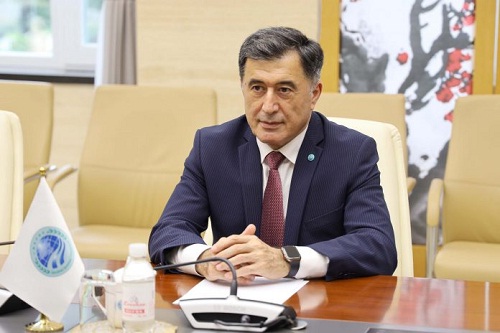
Social justice issues are constantly in the focus of SCO

Vladimir Norov

On 20 February, “World Social Justice Day” is celebrated every year since 2009 in accordance with a special UN General Assembly resolution A/RES/62/10 adopted on 26 November 2007.

The aim of The World Solidarity Day is to draw the world’s attention to the need to promote social justice, which includes joint efforts to address issues such as poverty, exclusion, gender inequality, unemployment, non-compliance with human rights and social insecurity.

The world summit, held in Copenhagen in March 1995, was the precondition for a new date, 20 February, and at which the social development of modern society was proclaimed. At the summit, more than 100 political leaders pledged to address poverty and unemployment, as well as to build stable, secure, and just societies.

However, 12 years have been passed before the General Assembly adopted the above-mentioned special resolution on the initiative of the Kyrgyz Republic, one of the founding members of the Shanghai Cooperation Organization. The document was co-sponsored by 76 UN Member States, including the SCO Families countries – Kazakhstan, China, the Russian Federation, Tajikistan, Pakistan, Mongolia, Belarus, Azerbaijan, Armenia, Nepal, and Turkey.

By adopting this important document, the UN Member States have recognized that social development and social justice are necessary to ensure and maintain peace and security within and between countries, and that, in turn, social development and social justice cannot be achieved in the absence of peace and security or in the absence of respect for all human rights and fundamental freedoms.

Member States have also recognized that large-scale and sustainable economic growth in the context of sustainable development is a prerequisite for social development and social justice.

It is also particularly important for the international community to recognize in the resolution that globalization and interdependence through trade, investment and capital flows, as well as advances in technology, including information technology, offer new opportunities for the growth of the world economy and the recovery and improvement of living standards around the world, while serious financial crises, insecurity, poverty, exclusion and inequality within and between societies, and obstacles to further integration into the global economy, and full participation of developing countries, as well as some countries in transition.

It should also be noted that UN Member States were unanimous in recognizing the need to further strengthen the international community’s efforts to eradicate poverty, ensure full employment, decent work, gender equality, social well-being, and social justice for all.

The International Labour Organization, which includes all SCO Families, adopted the ILO Declaration on Social Justice and Fair Globalization on 10 June 2008. The Declaration emphasizes the guarantee of equitable outcomes for all through employment, social protection, social dialogue and fundamental principles, and workplace rights.

The Declaration has been adopted at a crucial political moment and reflects the strong consensus that globalization needs to make a strong social sound to achieve greater and fairer outcomes for all. It also reflects the real prospects for development by highlighting the importance of viable enterprises in increasing employment and generating income opportunities for all.

The issues of ensuring and promoting social justice, removing barriers and obstacles of all kinds, including on the basis of gender, age, race, ethnicity or religion, culture or disability, have been and remain on the agenda of our countries of the large SCO Families, which are both active and active members of the United Nations and make a great contribution to this global international organization, whose commitment to social justice lies at the heart of all , the promotion and respect for human dignity.

Referring to the joint cohesive work of all UN Member States, culminating in the adoption by the UN General Assembly of the resolution on World Social Justice Day, I would like to emphasize the importance and timeliness of its adoption, because, in the course of time and in view of the raging pandemic of coronavirus infection, which is already going on as a “third wave” and has affected almost all corners of the world, it is social justice that is the fundamental principle of peaceful and prosperous coexistence in the countries themselves. so well between different countries.

The International Labour Organization stated that the COVID-19 coronavirus pandemic was experiencing the worst crisis since World War II. The quarantine measures have affected 3.3 billion people, or 81 per cent of the world’s workforce, in temporary full or partial closures. The loss of working hours during 2020 compared to the fourth quarter of 2019 was 8.8% and was equivalent to the loss of 255 million jobs, about four times more than during the global financial crisis of 2009.

The effects of the new coronavirus pandemic have increased the total sovereign debt of all countries by $24 trillion. last year, bringing it to a record of $281 trillion. This represents 355% of global GDP.

Twenty years ago, the member states of the Shanghai Cooperation Organization made a commitment to cooperate and engage in political, economic, and cultural and humanitarian spheres are guided by the noble principles and goals enshrined in the SCO Charter of 7 June 2002, the Treaty on Long-Term Neighbourhood, Friendship and Cooperation of SCO Member States of 16 August 2007, and the Shanghai Cooperation Organization Development Strategy until 20 July 2015.

The SCO Strategy stated that “there are preconditions for bringing the SCO to a qualitatively new level, characterized by increased cooperation in the fields of policy, security, economy, development of cultural and humanitarian ties, increased participation in the affairs of the region and the process of global regulation.” The SCO countries intend to encourage the international community to give equal importance to “all kinds of human rights, including the right to development.” Among the main goals and objectives of the SCO in the Strategy are “deepening trade, economic and investment cooperation, as well as joint project activities on the priority areas of cooperation for the sustainable development of member states, improving the well-being and standard of living of their population.”

One of the key elements of the fight against the pandemic is ensuring equitable, universal access to COVID-19 vaccines, which requires a portfolio of effective and safe drugs, and helping interested member countries deliver vaccines to those in need. At present, on the one hand, several positive results have been achieved in the development of COVID-19 vaccines, and many countries have approved plans for large-scale vaccination. On the other hand, the gradual rise of selfishness in this regard deals a serious blow to global cooperation in the fight against the pandemic.

It is necessary to ensure that all people can get vaccinated as soon as possible, said UN Secretary-General Antonio Guterish. “If the virus can spread in developing countries, it will mutate “again and again”, and its new species may become more contagious, more deadly,” the UN Secretary General stressed.

At a critical juncture in the global response to the epidemic, SCO member countries are showing that they are fulfilling their commitments to promote research and spread vaccines. For example, China’s accession to COVAX, which aims to ensure that all countries and regions of the world are fairly vaccinated against coronavirus, is solely aimed at promoting the equitable distribution of vaccines on a global scale. This is a de facto guarantee that the vaccines will be available to developing countries, as well as an important signal to other Powers, an active call to join the programme.

Like many other dates established by the United Nations Organization, World Social Justice Day has a new “theme” each year to focus on one aspect or another. For example, the theme of 2019 is “If you want peace and development, work for social justice.” In 2020, the theme “Bridging the gap in inequality to achieve social justice” was defined. The theme of the 2021 day is “Social Justice in the Digital Economy.”

The digital economy is fundamentally changing the sphere of work. Over the past decade, the spread of broadband, cloud computing and big data has led to the introduction of digital platforms in several sectors of the economy that have a significant impact on society. During the COVID-19 pandemic, the rapid onlineization of a large part of business life, the work of the most important government and educational services has shown the effectiveness of IT technologies.

The practice has shown not only the importance and demand of Internet platforms, but also reflected their successes in creating new jobs, forming a fundamentally new level of the relationship between supplier and consumer on a global scale, leveling geographical and socio-political boundaries.

The digital services that people relied on during the coronavirus epidemic in China, such as online marketplaces, non-cash payments, contactless shipping, remote workplaces, online education and consultation and video conferencing, are now ubiquitous. Digital technologies can play a crucial role in creating new sources of economic growth, improving productivity, and helping workers and businesses transition and adapt to the new world.

Digital literacy continues to be an obstacle to the adoption of the necessary digital services that enable remote lifestyles. In low-income countries, only 32% of the population has basic digital skills, such as sending e-mail. Even in higher-income countries, the number is only 62%.

By 2030, the world is expected to have about 30% of the world’s smart jobs, and the global economy will grow by 13.4 trillion, thanks to the widespread adoption of digital technologies. Euro.

As a result, hundreds of millions of people and, above all, young people will have to urgently learn new skills or even change their profession.

In this regard, it is more important than ever for sco countries to expand the use of digital technologies in education and training to prepare the younger generation for a changing economy and post-industrial society.

In this context, President Shavkat Mirziyoyev proposed at the SCO Moscow Summit to develop a program for the development of digital literacy. Chinese President Xi Jinping, to enhance cooperation in the digital economy, e-commerce, “artificial intelligence” and “smart city” proposed the holding of the China-SCO Digital Economy Forum in Chongqing in 2021, which will serve as a platform for innovative cooperation.

Following last year’s SCO Summit, the heads of the member states adopted the Statement on Cooperation in the Digital Economy, which notes that the consequences of the socio-economic crisis caused by the COVID-19 pandemic necessitate the acceleration of digitalization in various sectors of the economy, including the SCO space.

The enormous potential for cooperation in digital transformation has been highlighted and the importance of strengthening comprehensive digitalization cooperation to narrow the digital divide for economic growth has been highlighted. There is an interest in the development under the auspices of the UN of a broad exchange of experience and best practices in the digital economy.

In summary, I would like to point out the following points.

The founding principles of the SCO since its founding have been mutual trust, mutual benefit, equality, mutual consultation, respect for multiculturalism and the desire for joint development.

Strictly adhering to the principles of solidarity in accordance with the Shanghai Spirit, the Organization in its day-to-day activities is based on “the implementation of international cooperation in resolving international problems of economic, social, cultural and humanitarian nature”.

Social justice issues are complex. At this difficult time, scones countries demonstrate mutual support, solidarity, mutual assistance and work together both within our Organization, which is celebrating its 20th anniversary this year, and on the international stage, within the FRAMEWORK of the UN system.

Our countries are determined to overcome the dire consequences of the coronavirus pandemic, are advocating for overcoming political instability in different parts of the world, such as Afghanistan, Syria, other hotspots, and working to address global problems of poverty, climate disasters, terrorism, extremism, and other destructive factors that hinder good neighbourliness and joint development.

The Declaration of the MOSCOW SUMMIT emphasizes that member states will continue to strengthen the SCO as a pillar of the emerging more representative and just world order, based on the rule of international law, first of all, the UN Charter, respect for civilizational diversity and the independent choice by peoples of the path of their political and socio-economic development, equal partnership of states in order to ensure equal, joint, indivisibility, integrated and sustainable security, progressive growth and prosperity in the SCO space and the implementation of the Agenda for Sustainable Development for that period 2030.

There is no doubt that the successful implementation of the Shanghai Cooperation Organization’s 2021-2025 Development Strategy, approved by the Council of Heads of State of the Shanghai Cooperation Organization, in 2020, will enable our countries to make a major contribution to the issues of social justice and social well-being for all.

 The writer is the  SCO Secretary General

Centre for registration of new voters, correction in electoral lists setup in Bajaur

PESHAWAR, Feb 24  : Election Commission of Pakistan has setup a centre for registration of new voters and correction in electoral lists in Bajaur tribal district to facilitate its residents at their doorsteps.

District Election Commissioner Bajaur, Ajmal Hafeez, in a statement here Wednesday said the centre was established on direction of Election Commission of Pakistan (ECP) to facilitate people of Bajaur in registration of new voters, correction, shifting and expulsion of voters from the electoral lists.

He said people could also submit their applications for registration of new voters, shifting of votes and correction in electoral lists in the offices of registration officers’ setup in different areas of the district.

Hafeez said Form 21 can be used for registration and shifting of votes, Form 22 for expulsion and Form 22 for correction available with all assistant registration officers.

The office of district election commissioner can also be contacted for any information regarding their nearby centres and electoral related matters on phone number 0942-220789, he concluded.

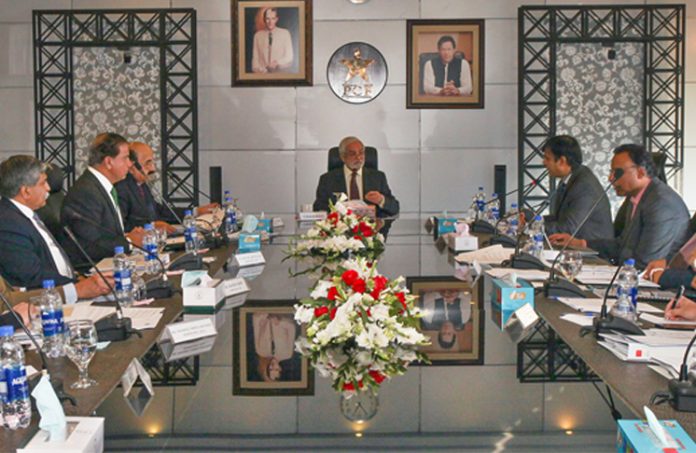
PCB calls Board of Governors (BoG) meeting on February 27

Lahore: The Pakistan Cricket Board (PCB) has called a meeting of the Board of Governors (BoG) on Jun 26 under the chairmanship of Ehsan Mani.

According to sources, the meeting will review PCB administrative matters, process of formation of interim committees of the Provincial Cricket Association.

BoG members will also seek an update on the ongoing Pakistan Super League (PSL) season six and an incident involving Peshawar Zalmi, who reportedly threatened not to leave the hotel on Sunday without Darren Sammy and Wahab Riaz after the two were quarantined for breaching bio-secure protocol.

The other matters which will be discussed in the meeting are the preparations of the national men’s team tour of South Africa, 2020-21 Domestic cricket season, and extension of CEO PCB Wasim Khan’s tenure.

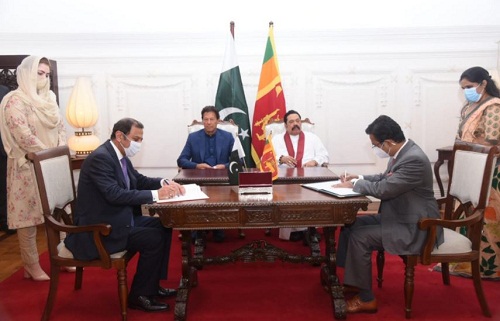
Pakistan, Sri Lanka sign MoUs in various sectors

Colombo : Pakistan and Sri Lanka have signed several Memorandums of Understanding (MoU) in various sectors including commerce, investment, education, science and technology and industrial cooperation.

The signing ceremony of MoUs was held in Colombo, in the presence of Prime Ministers of both countries.

The agreements were signed by departmental representatives from both countries.

Pakistan offered Sri Lanka $15m credit line for defence cooperation: FM Shah Mahmood Qureshi

Colombo : Defence and security cooperation to end the menace of terrorism are of equal importance to both Pakistan and Sri Lanka, says Foreign Minister Shah Mahmood Qureshi.

He said Pakistan has offered Sri Lanka a credit line of $15 million in this regard.

The foreign minister is currently visiting Sri Lanka with Prime Minister Imran Khan on a two-day official trip. He shared an update on reaching Colombo on his Twitter a day earlier.

The Sri Lankan foreign minister had said that Imran Khan’s visit will help strengthen bilateral ties and cooperation.

Later, Qureshi briefed the press over PM Khan’s visit to Sri Lanka.

Qureshi said Pakistan is standing side by side with Sri Lanka as a partner for the development of human resources, security cooperation, fighting terrorism, development and prosperity.

Qureshi said Pakistan has transformed its ego-political priorities into geo-economic priorities.

He said views were exchanged on enhancement of bilateral trade and investment with Sri Lanka.

We have decided to give 100 scholarships to Sri Lankan students in top medical institutes of Pakistan, Qureshi said.

CPEC to enhance Sri Lanka’s connectivity up to Central Asia: PM Imran Khan

During his two-day visit to Sri Lanka, PM Khan has said that the country could strengthen its connectivity up to the Central Asian States by benefiting from the China Pakistan Economic Corridor (CPEC) project.

Addressing a joint press conference with his Sri Lankan counterpart Mahinda Rajapaksa here after holding one-on-one and delegation-level talks, he said: “My visit is aimed at strengthening the bilateral relationship [with Sri Lanka], especially trade and economic ties through enhanced connectivity.

PM Khan and Rajapaksa also held wide-ranging discussions with a focus on reinforcing a broad-based and enduring partnership between the two countries to advance the shared objectives of peace, stability, and economic prosperity in South Asia.

Finding means to increase trade, economic relations

The premier asked his delegation to find ways and means to enhance trade and economic relations between the two countries through increased connectivity.

The prime ministers of both the countries also reaffirmed their resolve to work together across a broad range of areas during extensive consultations held here at the Temple Trees (Prime Minister’s Office).

The one-on-one meeting between the two prime ministers was followed by delegation-level talks between the two sides.

Rwanda’s Kagame faults ‘hypocrisy’ in vaccine supply

Rwanda’s President Paul Kagame has faulted the “hypocrisy and double standards” in the global distribution of Covid-19 vaccines.

President Kagame made the comments in a tweet after the World Health Organization (WHO) director, Tedros Adhanom Ghebreyesus, said deals between rich nations and vaccine manufacturers had made it hard to acquire vaccines for its Covax initiative.

The Covax is an initiative to ensure equitable distribution of the Covid-19 vaccine across all countries.

Wealthy nations have been accused of hoarding vaccines making it hard for poor ones to access any.

A coalition of campaign groups, People’s Vaccine Alliance, warned in December that nearly 70 lower-income countries will only be able to vaccinate one in 10 people.

It called on all pharmaceutical corporations working on Covid-19 vaccines to openly share their technology and intellectual property so that billions more doses can be manufactured and made available to everyone who needs them.

Stay Connected

64FansLike
60FollowersFollow

Latest Reviews

Exchange Rates

USD - United States Dollar
EUR
1.14
GBP
1.33
AUD
0.69
CAD
0.71