Home Blog Page 2891

AIR chief calls on Commander Sri Lankan Air Force

DNA

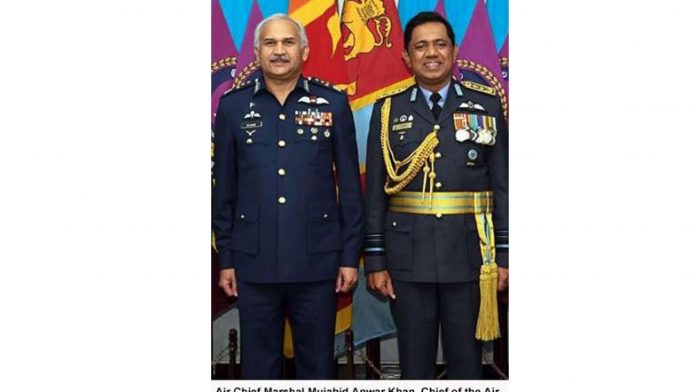
COLOMBO, MAR 5 – Air Chief Marshal Mujahid Anwar Khan, Chief of the Air Staff, Pakistan Air Force visited Sri Lanka Air Force Headquarters today. A smartly turned out contingent of Sri Lanka Air Force presented him the Guard of Honour.

Air Chief also called on Air Marshal Sudarshana Karagoda Pathirana, Commander Sri Lanka Air Force. Bilateral matters pertaining to mutual professional interest came under discussion during the meeting. Air Chief said that it was a moment of pride for PAF that Commander SLAF was trained in Pakistan. He further added that our armed forces in general and Air Forces in particular, have strong ties of friendship. The Sri Lankan Air Chief thanked Air Chief Marshal Mujahid Anwar Khan for sincere offer of cooperation and agreed to explore new avenues to enhance bilateral professional cooperation.

The Air Chief also attended SLAF’s 70th anniversary Parade as Guest of Honour at SLAF Base, Katunayke. The Air Chief extended his felicitations to Sri Lankan Force on completing 70 years of glorious service to the nation. He also congratulated No 5 Fighter Squadron and No 6 Helicopter Squadron of the SLAF on award of President’s Colours.

Later in the day, The Air Chief attended launching ceremony of a book titled Iron Wings of Glory.  President of Sri Lanka H.E Gotabaya Rajapaksa presented a copy of the book to Air Chief Marshal Mujahid Anwar Khan. The book relates to the evolution of Air Power in the context of SLAF in Indian Ocean Region and achievements of SLAF during the fight against terrorists. The Air Chief interacted with several senior civil and military dignitaries at the occasion, as well.=DNA

=============

President Huawei Middle East Region Charles Yang calls on PTA Chairman

DNA

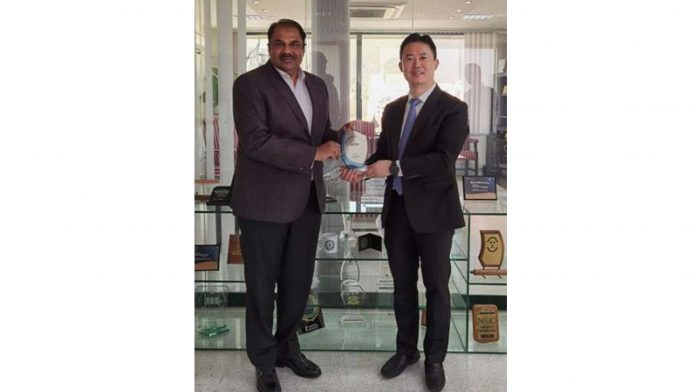
ISLAMABAD, MAR 5 – President (Middle East Region) of Huawei Technologies, Charles Yang, visited Pakistan Telecommunication Authority (PTA) Headquarters in Islamabad, accompanied by Mark Meng, CEO of Huawei Technologies Pakistan and Deputy CEO Ahmed Bilal Masud.

The delegation met Chairman PTA Major General (Retd) Amir Azeem Bajwa and discussed matters of mutual interest and investment opportunities. The two sides discussed future plans of Huawei Technologies in Pakistan and development of innovative digital and financial solutions to accelerate progress towards digital Pakistan.

According to a statement by the PTA Chairman, “In the next two to three months, Pakistan will reach a 100 million internet users.” He appreciated Huawei’s contribution for the ICT industry by providing leading solutions in Pakistan for the past 20 years.

Charles Yang, President of the Middle East Region added his opinions, stating,“ICT’s contribution to the GDP in China is more than 40 percent, Pakistan has a huge potential and an opportunity in its ICT Industry.”Furthermore, he stated,“Huawei is willing to share its global experience and provide technical support for digitalization in governance, education, health and other sectors in Pakistan.”

ANF seized 2698.085 KGs drugs valuing us$ 87.716 million

DNA

RAWALPINDI – Anti Narcotics Force Pakistan seized 2698.085 Kgs narcotics valuing US $ 87.716 Million internationally, arrested 24 culprits including two ladies and impounded 13 vehicles while conducting 23 counter-narcotics strikes throughout the country. The seized drugs comprised of 60 Kg Heroin, 1550.61 Kg Hashish, 1084.1 Kg Opium and 3.375 Kg Amphetamine.

ANF Balochistan, Police Station, Quetta intercepted a Toyota Corolla GLI Car and recovered 5 Kg Hashish from Parking area of AK Mover Bus terminal at Nawa Killi road District Quetta. 1 x accused namely Abdul Ghani resident of Nasirabad Zhob, Balochistan was arrested. In another operation, Police Station Quetta intercepted a Hino Truck and recovered 186 Kg Hashish from Mugha Faqirzai cross Kuchlak-Zhob Highway District Qilla Saifullah. In third operation, Police Station Gwadar in collaboration with Pakistan Navy, Karachi recovered 700 Kgs Hashish from Toyota Pickup Single Cabin parked at general area of Pishukan District Gwadar.
ANF Punjab, Police Station Sialkot raided near Cheema Hospital, Wazirabad road Daska and recovered 2.100 Kg Hashish alongwith motorcycle from personal possession of arrested accused persons namely Zahid Khan and Farooq Khan residents of Sialkot. In another operation, Police Station Sialkot intercepted 2 x suspected parcels from Couriers Service Company Wazirabad road Sialkot booked by Muhammad Shahzad Butt (Arrested) resident of Sialkot for Taiwan. The said parcel consisted of 14 x kitchen accessories (cooking pans) and recovered 2 Kg Amphetamine Ice which was tactfully concealed in both cartons. In third operation, Police Station, Lahore raided near Mohallah Ali Block Rehman City situated near Saggain bypass Lahore intercepted Suzuki Everi Car and recovered 130.800 Kg Hashish from arrested accused persons namely Ali Raza resident of Gujranwala and Muhammad Bilal resident of Sheikhupura. In forth operation, Police Station, Faisalabad raided near Darvaish Hotel Canal road Faisalabad and recovered 0.500 Kg Amphetamine Ice from secret cavities of Toyota Corolla Car. 2 x accused persons namely Yasir Shafi resident of Islamabad and Raidullah Khan resident of Mardan were arrested on the spot. In fifth operation, Police Station Multan raided near Shah Rukn-e-Alam/Makhdoom Rasheed Motorway Toll Plaza District Multan and arrested 1 x accused person namely Aman Ullah resident of Dera Bughti alognwith Double Cabin Hilux and 180 Kg Hashish recovered from secret cavities of the seized vehicle. In sixth operation, Pakistan Rangers Punjab handed over 1 x accused person namely Muhammad Shakeel resident of Lahore to Regional Directorate ANF Police Station, Lahore with recovery of 2 Kg Heroin. In seventh operation, Pakistan Rangers Punjab handed over 4 x accused persons namely Ali Asghar, Muhammad Shahbaz resident of Sheikhupura, Ansar Javed resident of Narowal and Samar Abbas resident of Lahore to Regional Directorate ANF Police Station, Lahore with recovery of 15 Kg Heroin. In eighth operation, Police Station Mianwali conducted a raid near Hamza Mill, Tehsil Piplan District Mianwali. 1 x accused person namely Zaheer Abbas resident of Gujranwala was arrested alongwith Toyota Corolla Car. During search 2 Kg Heroin was recovered from the seized vehicle. In ninth operation, Police Station Faisalabad raided near Saleem Chowk Satyana Road Faisalabad and arrested an accused namely Abdul Qayyum resident of Peshawar alongwith Honda Civic Car. During search 9 Kg Heroin was recovered from the seized vehicle.
ANF Sindh, Police Station Korangi conducted a raid at QICT Port Qasim, Karachi and seized a consignment of container. During search 198 Kg Opium was recovered from the said container. 1 x Vespa Scooter was also seized which was kept in the said container. The said container was booked by Exporter namely M/S Universal Logistic System, Karachi for Canada. In another operation, Police Station Sukkur in collaboration with 82 Wing Shahbaz Rangers local Police and District Administration conducted an operation at Goth Masjid, Goth Rahoo Ja Aithya and Goth Konkar Tehsil and District Qamber Shahadkot and destroyed 40 x Acres Poppy Crops and seized 1.500 Kg Poppy Sprout (Doday).
ANF KP, Police Station Peshawar visited at TCS Head Office on Ring road, Peshawar and checked a suspected parcel which was booked by Abdul Wahid for Gujranwala and seized 1 x Flask filled with 2 x Packets of Hashish weighing 1 Kg. In another operation, Police Station Peshawar intercepted a Hino Truck near Matni bypass Kohat road Peshawar and recovered 312 Kgs Hashish from secret cavity of said truck. 1 x accused namely Qat Ali Khan resident of Wazirstan was arrested on the spot. In third operation, Police Station DI Khan conducted an operation at Sheikh Yousaf road DI Khan and recovered 3.600 Kgs Hashish from the arrested accused namely Muhammad Junaid resident of DI Khan. In fourth operation, ANF Staff at Bacha Khan International Airport, Peshawar (BKIAP) apprehended an accused namely Numan Khan resident of Charsadda and recovered 0.875 Kg Amphetamine Ice, which was concealed in the wooden crate of Oranges. The said accused was travelling by Emirates Airline from Peshawar to Bahrain. In fifth operation, Police Station Kohat arrested an accused in front of Al Faisal YuTong Express Adda nearby Pindi Pul Kohat (Pindi road Kohat) and recovered 3.300 Kg Hashish from the arrested accused Muhammad Zeeshan resident of Charsadda. In sixth operation, PS ANF Peshawar conducted an operation on the house of notorious drug smuggler named Bakht Rawan resident of Nawan Kalay District Charsadda and recovered 11 x agricultural items. During search 881 Kg Opium was recovered which was concealed in said items. Moreover, 4 x Magazines of Ak-47, 55 x Rounds and 433 x Rounds of 303 Gun were also recovered. Accused and owner of the house Bakht Rawan was arrested on the spot.
ANF Rawalpindi, Police Station Attock established a Naka near Iqbal Shaheed Toll Plaza, G.T Road Attock and recovered 1 Kg Hashish from personal possession of lady accused namely Saima alias Sana resident of Mardan on the spot. In another operation, Police Station Rawalpindi during routine checking at Motorway Link Road, Islamabad, intercepted a Cuore Car and recovered 1.410 Kg Hashish which was concealed in right side rear indicator of said vehicle. 2 x accused including lady namely Jan Muhammad and Zolaida Bibi residents of Swabi were arrested on the spot. In third operation, Police Station Dina intercepted a Bed Ford Truck at Tarkai Toll Plaza, main G.T road Sohawa, District Jhelum, recovered 32 Kg Heroin, 24.400 Kg Hashish & 3.600 Kg Opium from the said truck and accused Ijaz Hussain resident of Peshawar was arrested on the spot.

All cases have been registered at respective ANF Police Stations under CNS Act 1997 and further investigations are underway.

PRCS celebrates ‘World Orphans Week’

DNA

ISLAMABAD, MAR 5 – Abrar ul Haq stresses the need to show respect to orphan children and eradicate discrimination and help them become valuable members of society 

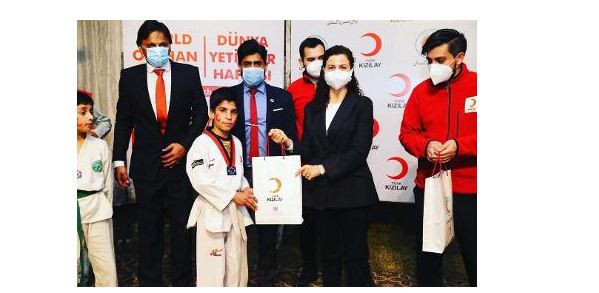
ISLAMABAD: Pakistan Red Crescent Society organized a ceremony to celebrate ‘World Orphans Week’ at the National Headquarters.  Mrs Zlatomira Yurdakul, wife of Ambassador of Turkey to Pakistan, was chief guest on the occasion, while Pakistan Sweet Home Patron-in-Chief Zamurd Khan was guest of honour. 

Speaking on the occasion, PRCS Chairman Abrar ul Haq said, “We have gathered here today to make these orphan children realize that they are not alone and that they are in fact a very important part of our society.” He said taking care of orphan and helpless children is our collective responsibility. “Everyone of us has to play his part to make these children a useful citizen of the society,” he said. “Involving these children in the nation-building activities by providing them with care, support and protection is need of the hour,” he added. 

Abrar ul Haq said the PRCS is endeavoring to support orphan children to ensure a better future for them. He said the PRCS has recently launched the ‘Smiling Children’ initiative in collaboration with the China Foundation for Poverty Alleviation, through which thousands of food packs are being distributed among school children in several cities. Last year, the PRCS implemented Panda Pack project, through which school bags and other stationary items were distributed among school children, he further said. “Children are very close to our heart. Let us join hands to show respect to these orphan children and advocate their rights to eradicate discrimination and help them become valuable members of this society,” he added. 

The PRCS chairman also appreciated Turkey’s support to Pakistan in the time of need. He said the Turkish Red Crescent Society has always been in the forefront of helping Pakistani people in difficult times. He hoped that the collaboration between PRCS and TRCS will grow in the times to come. He also appreciated the performance of Taekwondo Martial Arts by the Pakistan Sweet Home children. 

In her address, Zlatomira Yurdakul, wife of Ambassador of Turkey to Pakistan, said the steps taken by the Turkish Red Crescent Society for welfare of orphan children are praiseworthy. She said PRCS and TRCS are doing an exemplary work towards common goal of service to the humanity. 

PRCS Acting Secretary General Dr. Adeel Nawaz, Head of Delegation Turkish Red Crescent Society Ibrahim Carlos and staff and volunteers of PRCS and TRCS also attended the ceremony. 

Huge potential for Turkey-Pakistan cultural cooperation, says envoy

Staff Report

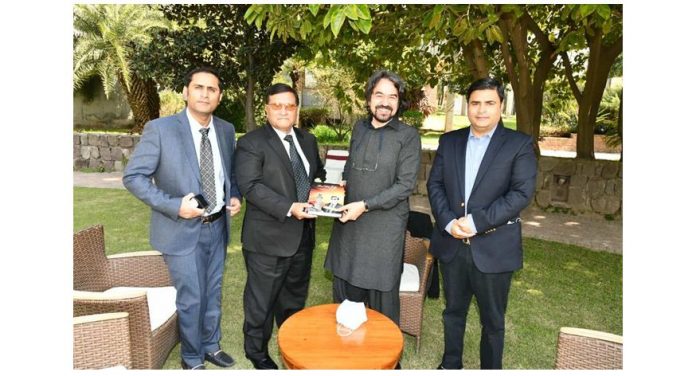
ISLAMABAD: There is a huge potential for cultural development between Turkey and Pakistan. These views were expressed by the Turkish Ambassador to Pakistan Ihsan Mustafa Yurdukal during a meeting with Pakistan Cultural Forum Chairman Zafar Bakhtawari, Ahsan Bakhtawari and Waqar Bakhtawari at turkish embassy.

Zafar Bakhtawari presented his newly published book ‘Jahan Dost’ to Turkish Ambassador . Turkish Ambassador said that at present there trade volume between two countries is 1 billion dollar which can be multiplied very easily through various means.

He further said that Turkish dramas have played an important role in introducing Turkish culture in Pakistan and bringing the two countries closer. Zafar Bakhtawari on the occasion briefed  him about the articles  written in his book about Pakistan and Turkey relations. He also called for the implementation of the Free Trade Agreement (FTA) between the two countries and the restoration of the cargo train between Pakistan, Iran and Turkey. He said there is a need to set up a joint forum to bring together the writers and intellectuals of both the countries regarding Allam Iqbal and Rumi ideology .

Waqar Bakhtawari said on the occasion that it takes 40 days for the imported goods to reach Pakistan from Turkey via sea route . The Turkish Ambassador said that after the cargo train, the goods will reach Pakistan in two days.

Ahsan Bakhtawari also stressed on the need to introduce Turkish food in Pakistan .

Strategic partners-Pakistan and Azerbaijan

RzaTalibov

Our country’s important partnership with Pakistan is based on mutual trust and fruitful cooperation.

The Islamic Republic of Pakistan, one of the largest countries in South Asia, is the sixth most populous country in the world and the second most populous Muslim country after Indonesia.

With an area of 803,940 square kilometers, Pakistan is one of the largest countries in South Asia, bordering the Arabian Sea in the south, Afghanistan and Iran in the west, India in the east and China in the northeast.

In international system, Pakistan successfully continues to operate as a member of the United Nations, the World Trade Organization, the Shanghai Cooperation Organization, as an active member of the G-33, Group-77 of developing countries.

Pakistan’s political history dates back to 1947, when Britain formally divided India into two parts and Pakistan gained independence.Today, the length of the border between India and Pakistan reaches 2912 km.The only crossing point between the two countries is the village of Wagah, whose eastern part is situated in India and western part in Pakistan.With the division of Kashmir into two, a territorial dispute has arisen between Pakistan and India.

The Islamic factor has a special status in Pakistan.Researchers consider Islam to be a key element of the cultural identity of the Pakistani people.Islam not only influenced Pakistan’s relations with India, but also played a leading role in shaping the country’s foreign policy.Pakistan’s current position in the international system is also linked to this ideology.

In general, the numerous military conflicts and the internationalization of the Kashmir issue have become history with several resolutions (1948, 1949) left on the UN table.Although these resolutions favored the free choice of the people of Kashmir, the claims of the parties further complicated the solution of the problem.Most countries preferred to approach to the conflict between Pakistan and India from their own political context. For example, the USSR considered Kashmir an Indian territory from the first years of the conflict and declared it “occupied”, while the United States mainly defended UN resolutions and Pakistan.In this sense, Pakistan’s international relations are determined by the attitude of the world community to the Kashmir conflict, and the country’s position in international relations is based on the principle of “my enemy’s friend cannot be my friend.”

Work is underway in order to build mutual trust between Pakistan and India.As an example,step in this direction the visit of Pakistan’s President Asif Ali Zardari to India on April 8, 2012may be mentioned.In response, Indian Foreign Minister S.M. Krishna visited Pakistan on September 7, 2012.The issue of visa facilitation was one of the main topics during the meeting.On October 20, 2013, Pakistani Prime Minister Nawaz Sharif proposed that the United States can act as a mediator in the Kashmir issue, but the Indian side strongly condemned the proposal.

It should be noted that the Islamic Republic of Pakistan is also known around the world as a country carrying out peacekeeping military missions.At present, Pakistan’s peacekeeping forces continue to carry out UN-defined military services in a number of countries in Europe, Asia and Africa.Overall, more than 13 percent of the world’s peacekeeping forces belong to the Islamic Republic of Pakistan.

Pakistan’s main partners in international relations are the United States, China, Saudi Arabia, Turkey and Afghanistan.The Islamic Republic of Pakistan continues to co-operate in close relations with Turkic-speaking countries.Relations between the Republic of Turkey and the Islamic Republic of Pakistan continue to expand in almost all areas. Among the post-Soviet countries, Pakistan is improving and strengthening its relations with Azerbaijan, Uzbekistan and Turkmenistan. Pakistan’s consistent support extended to the Republic of Turkey and the newly established Turkic states plays an important role in the year-by-year expansion of relations between this Asian country and the Republic of Azerbaijan.Pakistan does not officially recognize Armenia’s independence.This country unequivocally explains this stance by its support to Azerbaijan’s territorial integrity. Moreover, Pakistani officials state that they do not recognize the so-called “Armenian genocide.”

The Islamic Republic of Pakistan is one of the first countries to recognize the state independence of Azerbaijan.Thus, on December 12, 1991, Pakistan officially recognized the state independence of the Republic of Azerbaijan.This great Asian state made a decision to establish diplomatic relations with Azerbaijan on June 9, 1992, and opened its embassy in Baku on March 12, 1993. However, the history of Pakistan’s friendly and cooperative relations with Azerbaijan dates back to earlier times.Thus, the people of Pakistan have never forgotten that at a time when the plague was widespread in their country in the early twentieth century, a prominent Azerbaijani philanthropist Haji ZeynalabdinTagiyev received 300,000 ampoules of vaccines from Europe and sent them to help his Muslim brothers.

In general, the establishment of relations between Azerbaijan and Pakistan has become more intensive since the 60s of the 20th century.Ahmad Fana, a prominent Pakistani writer and winner of the International Lenin Prize, took part in the celebrations of the 150th anniversary of Mirza FataliAkhundzadeh in October 1962.In the same year, during a visit to the USSR, a group of Pakistani state officials led by the Speaker of the Pakistan’s National Assembly FazlullahQadar Chaudhry visited Azerbaijan and got acquainted with the life of the country’s people. The visit of the prominent Pakistani playwright, director and cinematographer Henry Chayase to Baku in April 1965 was received with great respect and esteem by the Azerbaijani film community.Prominent public figure Mirza Abel Hasan Ispahan’s book named “From Leningrad to Samarkand” at that time expressed his positive impressions about Azerbaijan as well.

At that time, a branch of the Soviet-Pakistani Cultural Relations Society was established in Baku to regulate Pakistan-Azerbaijan relations.In August 1967, a group of representatives of the East Pakistan Legislative Assembly, led by JamiruddinProdkhan, also got acquainted with the activities of cultural centers in Baku and Sumgayit cities.The organization of visits of Azerbaijani scientists, educators and artists to Pakistan also played an important role in the development of cultural relations. In those years, well-known figures of science and culture of Azerbaijan AshigPanahPanahov, head of the department of Azerbaijan State University, doctor of philological sciences, professorFarhadZeynalov visited Karachi.However, political differences between Pakistan and the USSR in the following years also damaged its relations with Azerbaijan.

A new stage in Azerbaijan-Pakistan relations began with the collapse of the USSR.As one of the first countries to recognize the sovereignty of Azerbaijan, Pakistan in 1992 tried to rebuild political, economic and cultural relations with our country in accordance with the new historical conditions.At a time when Azerbaijan was living in a difficult war situation over Karabakh, the calls of Pakistani officials on the world community, in influential organizations such as the UN and the OIC, to recognize Armenia as an aggressor country were very important. It is no coincidence that Pakistan was actively involved in the adoption of UN Security Council Resolution No. 822 on April 30, 1993, which called for the immediate withdrawal of Armenian forces from Azerbaijani territories and recognized this country as an aggressor state.Pakistan’s chairmanship of the meeting played a major role in the adoption of the resolution.

Since the first years of our state independence, National Leader Heydar Aliyev attached great importance to Pakistan-Azerbaijan relations.Evaluating the relations between the two countries, prominent statesman Heydar Aliyev described these relations as follows: “Pakistan and Azerbaijan enjoy very good and friendly relations.These relations are based on our past historical traditions.”

After the meeting of the National Leader of the Azerbaijani people Heydar Aliyev with the then Prime Minister of Pakistan, late Benazir Bhutto in Casablanca in December 1994, bilateral relations between the two countries started to improve at a higher level.In October 1995, President of Pakistan Farooq Ahmad Khan Legari paid an official visit to Azerbaijan. During the visit, the parties signed an “Agreement on cooperation in science, culture and humanitarian spheres”.In 1996, during the visit of National Leader Heydar Aliyev to Pakistan, the two countries signed memorandums of understanding on Friendship and Cooperation, as well as on Tourism Development.This brought Pakistanis and Azerbaijanis closer to each other.

In recent years, new achievements have been made for cooperation in the fields of science and education.Thus, the Pakistani side proposed to the Azerbaijani government to benefit from its rich experience in the fields of military education, information technology and telecommunications, and practical measures have already been taken in this regard. At the VII Summit of OIC countries which was held in Casablanca in 1994, National Leader Heydar Aliyev expressed his gratitude to Pakistan for its material, moral and political support extended to the people of Azerbaijan in difficult times.On October 14, 2002, at the VII Summit of the ECO Member States which was held in Istanbul, prominent statesman Heydar Aliyev again had a meeting with President of Pakistan Pervez Musharraf and took steps to further strengthen cooperation.

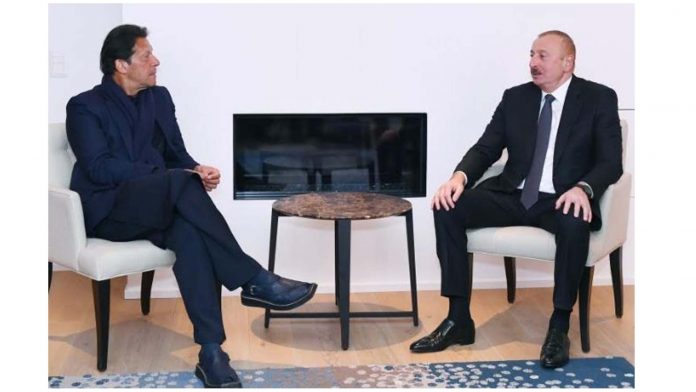
The intensive nature of relations between Pakistan and Azerbaijan is one of the priorities in the foreign policy of President IlhamAliyev as well.On July 8-10, 2004, President of Pakistan Pervez Musharraf paid an official visit to Baku.Following this, IlhamAliyev paid an official visit to Pakistan on April 12, 2005 at the invitation of President Pervez Musharraf.Experts observe that this visit has opened wide range of opportunities for further development of multilateral relations between the two friendly countries. Thus, during the visit, the heads of state of the friendly countries stated the existence of opportunities for the development of cooperation in the areas of communications and information technologies, culture, finance, education, transport, aviation and others, and signed the necessary documents. Moreover, during the visit, the possibilities of the assistance by the Defence Export Promotion Organization, which is under the Ministry of Defense of Pakistan, to Azerbaijan were discussed. During the visit, a number of important documents on military cooperation between the two countries were signed in Islamabad with the participation of the President of the Republic of Azerbaijan IlhamAliyev and the Prime Minister of the Islamic Republic of Pakistan Shovkat Aziz.Furthermore, in December 2005, a delegation of the MilliMajlis (Parliament) of the Republic of Azerbaijan paid an official visit to Islamabad and held official meetings in the Senate of Pakistan and in the country’s universities.Academician Isa Habibbayli’s books about JalilMammadguluzadeh, which were published in Urdu in Pakistan, were also discussed at the Art Museum in Islamabad.

On May 5, 2006, President of the Republic of Azerbaijan IlhamAliyev had a meeting with Prime Minister of the Islamic Republic of Pakistan Shovkat Aziz. During the meeting matters of economic, scientific, technological, regional cooperation, as well asthe importance of Azerbaijan’s experience in the oil and gas sector for Pakistan werewidely discussed.

Another significant event in 2006 was the visit of a delegation led by the Chairman of the Standing Committee on Human Rights of the Senate of Pakistan, Senator Seyed Muhammad Zafar.On May 6, Senator Seyed Muhammad Zafar presented the “Best Governed Muslim State” award to the President of the Republic of Azerbaijan IlhamAliyev.

The meeting between President IlhamAliyev and President of the Islamic Republic of Pakistan Asif Ali Zardari in Baku, in 2012, further expanded relations between the two countries.At the meeting, the Presidents expressed confidence that the XII Summit of the Economic Cooperation Organization, which was being held in Baku, will further contribute to the development of cooperation among the countries of the region, as well as emphasizing good prospects for further expansion of bilateral relations and the need for joint action in this regard.

President of the Islamic Republic of Pakistan Mamnoon Hussain paid an official visit to Azerbaijan on March 11-14, 2015.During the visit, he was awarded the title of Honorary Doctor of Baku State University.

Pakistan is one of Azerbaijan’s main military-strategic partners.Thus, on January 18, 2018, the 8th meeting of Azerbaijan-Pakistan working group between the Ministry of Defense of the Republic of Azerbaijan and the Joint Staff of the Islamic Republic of Pakistan was held in Baku.The current state and prospects of military cooperation, security in the region, strengthening relations and ties between the armies of the two countries, as well as holding joint exercises in 2018 were discussed at the meeting, and a relevant protocol was signed.

Representatives of Pakistan also took part in the 3rd Azerbaijan International Defense Exhibition “ADEX-2018”, which was held in Baku, on September 25-27, 2018.

During these years, close inter-parliamentary relations have also been established between Pakistan and Azerbaijan.On February 11-12, 2013, a delegation of the MilliMajlis of the Republic of Azerbaijan paid a working visit to Pakistan, during which a working group on Azerbaijan-Pakistan inter-parliamentary relations was formed. On February 1, 2012, the Committee on Foreign Affairs of the Senate of Pakistan recognized the events happened in Khojaly city of the Republic of Azerbaijan as genocide. In the adopted document, the Senate reaffirmed the territorial integrity of Azerbaijan and declared recognition of its internationally recognized borders.The next resolution on the Khojaly genocide was adopted on February 2, 2017, at the 32nd meeting of the Standing Committee on Foreign Affairs of the National Assembly of the Islamic Republic of Pakistan.In general, 30 official documents have been signed between the Republic of Azerbaijan and the Islamic Republic of Pakistan so far.

In the thirty-year history of mutual relations, extensive cultural ties have been established between Pakistan and Azerbaijan.The interest of the representatives of Pakistan’s scientific and educational community, as well as literature and media circles in Azerbaijan remains strong.On September 20, 2018, at the meeting of JeyhunBayramov with the Chairman of the Senate of the Islamic Republic of Pakistan Muhammad SadiqSanjari, the current state of relations in the field of education and future prospects for development were discussed. At present, the functioning of the Urdu language department at Baku State University is of great importance.The agreements signed between Nakhchivan State University and Quaid-e-Azam University and the National University of Modern Languages of Pakistan in 2012, the visit of representatives of these universities to Nakhchivanare considered as important pages of cooperation in the field of education.

With the initiative and support of the Heydar Aliyev Foundation, a modern school was built and put into operation in Rara settlement of Muzaffarabad, Pakistan.

Pakistani literature is studied and researched at the Department of Azerbaijani-Asian Literary Relations of the Institute of Literature, named after NizamiGanjavi, of the Azerbaijan National Academy of Sciences. In 2017-2018, the head of the department of Azerbaijani-Asian literary relations, doctor of philological sciences, professor BadirkhanAhmadov and researcher of the same department, doctor of philological sciences BasiraAzizaliyeva visited Pakistan several times and delivered lectures at conferences organized in different universities of this country. It should be noted that BasiraAzizaliyeva’s articles on Pakistani literature have been published in a number of journals and newspapers in Azerbaijan, Turkey and Pakistan.She is the author of a monograph about the national poet of Pakistan, Muhammad Iqbal.Researchers of Pakistan Institute of Islamic Studies have also delivered lectures at the conference dedicated to the great Azerbaijani poet ImadeddinNasimi, held at the Institute of Literature named after NizamiGanjavi.In addition, research on mutual literary and cultural relations conducted by Pakistan Research Center established at the NizamiGanjavi Institute of Literature continues.

Cooperation between the two countries in the field of sciences is also expanding.Thus, on September 19, 2018, experts of the International Atomic Energy Agency, researchers of the “Nuclear Institute for Agriculture and Biology” of the Atomic Energy Committee of Pakistan, Dr. Khalid Mahmoud and Dr. SajjadHaydar visited the Institute of Radiation Problems of the Azerbaijan National Academy of Sciences. The experts delivered lectures, provided information about the research areas of the Nuclear Institute and the projects implemented there, as well as issues of mutual cooperation were discussed during the visit.

On April 10, 1996, a joint declaration on the establishment of sister city relations was signed between Ganja and Multan cities.

Pakistani society is sensitive to the historical and political events taking place in Azerbaijan.One of the obvious examples of mutual interest was the seminar held on “National Leader of the Azerbaijani people Heydar Aliyev and Azerbaijan-Pakistan relations” and the establishment of Heydar Aliyev’s corner in the National Library of Pakistan in 2013, as part of a series of events dedicated to the 90th anniversary of prominent statesman Heydar Aliyev.Speaking at the event, Director of Quaid-e-Azam University for Politics and International Relations, Professor LubnaAbid Ali talked about Heydar Aliyev’s contribution to the improvement of Pakistan-Azerbaijan relations.

At present, Azerbaijan-Pakistan relations have entered into a new stage.It should be particularly noted that during the Second Karabakh– Patriotic War, Pakistan provided full political and resolute moral support to the just positionof our country.This year, the trilateral meeting of the Foreign Ministers of Azerbaijan, Turkey and Pakistan held in Islamabad, on January 14, 2021 opened up wider opportunities for further improvement of multifaceted cooperation in regional and international fields. The meeting of the Minister of Foreign Affairs of the Republic of Azerbaijan JeyhunBayramov with the President of the Islamic Republic of Pakistan ArifAlvi and the new agreement signed by the Foreign Ministers on mutual cooperation created conditions for the further expansion of bilateral relations. Moreover, the words of the Chief of Army Staff of the Islamic Republic of Pakistan, General QamarJavedBajwa stating “Pakistan has always stood by Azerbaijan and supported its rightful position” is an important indicator of trust between the two countries.

Thus, the great contribution of Pakistan, one of Azerbaijan’s most loyal partners and friends, to the improvement of relations with Azerbaijan in political, military and economic spheres deserves to be consideredas a real example in terms of inter-state relations at the international level.

Today, Pakistan, as one of the main partners of Azerbaijan on the Asian continent, makes a great contribution to the eastern partnership of our country.

RzaTalibov is Doctor of Philosophy in Political Science

NAHE holds E-Office Training for HEC Employees

ISLAMABAD, MAR 5 (DNA) – The National Academy of Higher Education (NAHE) organized a hands-on training for e-office to top-up virtual trainings provided on the subject in conjunction with the National Information Technology Board (NITB).

HEC staff was now able to benefit from a practical training with onsite instructors to answer questions and practically work through problems respective employees were facing. Members from the Faculty Affairs Division were trained in the first round – other HEC divisions will receive similar top-up training in the weeks to come.

Mr. Raza Chohan, Director General, Faculty Affairs appreciated NAHE for conducted this training as well as Mr. Saif ur Rehman from NITB for conducting an interactive and effective session.

E-office is an electronic system of office and operational management which will help make functions more efficient and improve accountability at HEC. The programme is being implemented across various ministries in the government and has been approved by the Federal Cabinet and the Nation e-Government Council.

The instructor was able to showcase unique features of the e-office system, inclusive of databases of all government offices, ministries, and officers. The potential benefits for this are environmental as well as practical because with its proper utilization, there will be flexibility in where employees can work from. This will help support staff as services increasingly move online and ensure efficiency, consistency, and transparency across the board.

NAHE is established as a stand-alone, autonomous institution operating under the auspices of HEC to improve the quality of teaching, research and governance in Higher Education Institutions (HEIs) across Pakistan. It is envisioned as the premier institution for quality research and teaching related to all aspects of higher education in Pakistan. This series of trainings is one of multiple ongoing NAHE endeavors at HEC.=DNA

===============

Jawad appointed as P&D Head of YPARD Pakistan

DNA

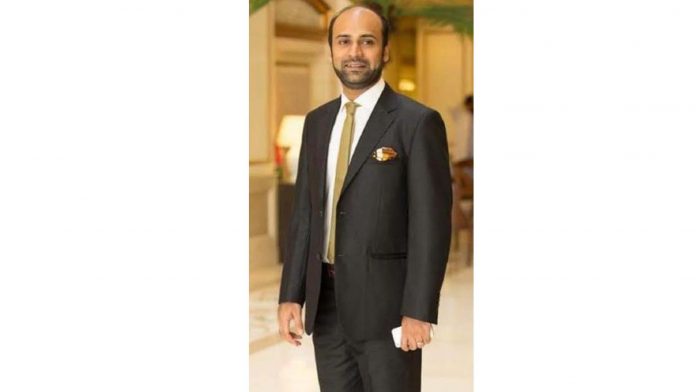
Karachi; The Young Professionals Platform for Agricultural Research for Development” (YPARD) Global Unit appointed Planning and Development (P&D) team for Pakistan under the command of Ahmad Jawad as Head of P&D. Similarly Dr Saira Begum appointed as Secretary P&D as well as Shahila Sultana, Ahmed Raza Kirmani and Adnan Arshad appointed as Senior Managers P&D Central Board. While Ramzan Rafique will perform the duties of Program Coordinator YPARD and Muhammad Ismail Kumbhar was appointed as Advisor P&D . The appointments of Regional Representatives and Regional Manager P&D’s for all provinces will formally announce later.

The Spokesman of YPARD also briefed that YPARD have a presence in 72 countries and founded in New Delhi on 8th November 2006. The structure of its governance was established based on an agreement between stakeholders of agricultural research for development (ARD) and a group of donors who supported the initiative.

Prior to its foundation in November 2006, YPARD traces its roots from the EFARD (European Forum for Agricultural Research for Development) meeting held in Zurich in May 2005. Thereafter, a number of occasions allowed several young professionals to congregate and define YPARD’s vision, mission, and first operational plans (Marrakech, December 2005; Wageningen, May 2006; Hannover, July 2007) of the cities of Switzerland and Germany.On this occasion; YPARD Head P&D Ahmad Jawad who previously served in FPCCI as Standing Committee Chairman on Agriculture for three years, said “we built a renewed strategic framework to respond accordingly to the new challenges and opportunities faced by the young professionals in agriculture, we all are glad to make part of this important process for the most beloved organization for the youth in the agriculture sector”.

He also said farmers are 65 percent of this country, but they are ignored. Jawad told I don’t know why government failed to take up agriculture sector in its almost three years, despite government knew that in the ongoing GDP performance, agriculture could play a sharp role provided with implementation package.

As Pakistani farmers demands, including the fixing of the minimum support price per maund (40 kilograms) of wheat at 2,000 rupees and sugarcane at 300 rupees, in addition to setting a flat electric power rate of 5 rupees per unit for farm tube-wells. Other demands include subsidies on seeds, fertilizers, and other expenses borne by the Pakistani farmers, which they maintain is making agricultural activities insufficient for their sustenance.

The seed control rate has gone from 7,500 rupees to 14,000 rupees. The minimum support price for wheat was 1,400 rupees – but they never got that. Fertilizer was at 2,500 rupees, now it’s 4,500 rupees; urea was 1,300 rupees, now it’s 1,800 rupees. There is so much input-output disparity for Pakistani farmers that our produce just cannot compete with other countries,”

“Jawad also said Agriculture is a profitable venture in India, not in Pakistan. Their agriculture is subsidized; our agriculture is taxed. Their realities are different”.

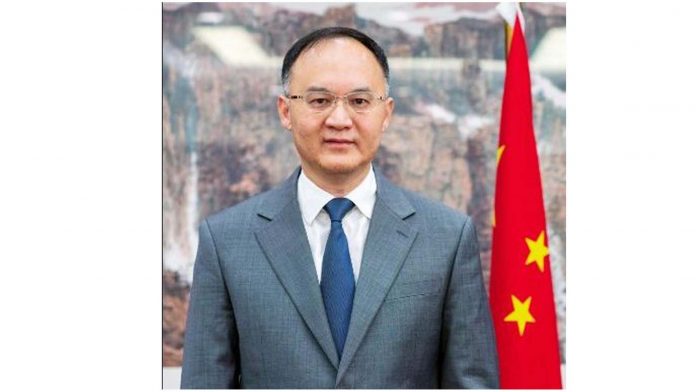
Chinese envoy seeks foreign investment in CPEC zones

Pakistan and China are mutually working to ensure security, visa facilitation, and other infrastructure facilities in Rashakai SEZ. “The Chinese embassy wants to work closely with BOI and any third party to promote CPEC development

Bureau Report

PESHAWAR: Chinese Ambassador to Pakistan Nong Rong has invited investors from across the world to invest in the Special Economic Zones (SEZs) being established in Pakistan under the China-Pakistan Economic Corridor (CPEC).

Addressing the CPEC Industrial Cooperation Investment Conference organised by the Board of Investment (BOI) in the provincial capital on Thursday, Nong Rong said that China would welcome the participation of other countries in the CPEC framework.

He said both Pakistan and China are mutually working to ensure security, visa facilitation, and other infrastructure facilities in Rashakai SEZ. “The Chinese embassy wants to work closely with BOI and any third party to promote CPEC development,” he added.

Speaking on the occasion, BOI Chairman Atif Bukhari said the second phase of CPEC has just commenced and the BOI would continue to take lead on investment promotion, facilitation, and industrial cooperation. The BOI chairman invited the business community from not only China but also from other countries to come and invest in Pakistan’s economic sectors.

He noted that the government has already launched conducive policies such as electric vehicle policy, mobile manufacturing policy, construction sector incentives, Special Economic Zone Regulations 2020, and SEZ Zone Enterprise Admin and Sale/Lease/Sub-lease of Plot Regulations 2021, to increase investment in Pakistan.

“Pakistan accords top priority to the development of SEZs under CPEC,” he said, adding that currently, out of the nine CPEC SEZs, two are in advance stage of development, including Rashakai SEZ in Khyber Pakhtunkhwa and Allama Iqbal Industrial City in Faisalabad, Punjab.

Bukhari informed that attractive fiscal incentives are being offered under SEZs such as 10-year tax holiday and custom duty exemption on import of capital goods to both the developer and enterprises housed in the SEZs.

KP Minister for Finance Taimur Jhagra said representatives from a number of countries including Switzerland, and Bosnia are present in the conference which indicates that a lot of countries are showing interest to join this mega multibillion dollar project. He invited the investors to also look into tourism opportunities in the province.

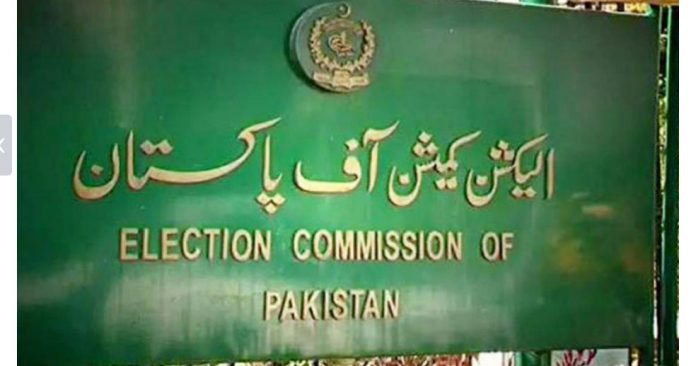
ECP rejects ‘discussion and unhappiness’ on Senate election

ISLAMABAD, MAR 5 – A day after Prime Minister Imran Khan criticised the Election Commission of Pakistan (ECP) for allowing “foul play” in the recent Senate elections, the commission issued a statement rejecting the “discussion and unhappiness” over the way polls for the upper house of parliament were conducted.

“It is a shocking matter that under the same staff in the same [election] under the same roof on the same day, [what they won] is acceptable and [what they lost] is unacceptable. Is this not open contradiction?” the commission questioned, adding: “The ECP rejects this.”

The statement came after a meeting of the ECP was held to discuss the rem­arks made by the prime minister during an address to the nation yesterday where he explained the political situation in the country that emerged after Wednesday’s Senate elections in which the opposition managed to stage an upset.

During his address, the premier called out the electoral body for “protecting those who made money by holding the Senate elections through secret ballot”.

In its statement, the ECP said: “This is democracy and free elections and the beauty of free elections which the entire nation saw and which is mandated by the Constitution.”

Every political party should have the courage to accept its defeat, it said.

The ECP said the Senate elections were held according to the law and the Constitution and were conducted in a “good way”. It said the statements and discussions that had come to the electoral body through media reports were “saddening” especially statements made by “some members of the federal cabinet and specifically what the prime minister said in his address yesterday”.

The ECP iterated that it was a constitutional and independent institution. “[The ECP] has to see what the law and the Constitution allow and what the standard has to be. We cannot ignore the law and the Constitution or bring an amendment for anyone’s favour,” it added.

If someone has objections to the body’s decisions or orders, it could take the constitutional way but let the institution work independently, the statement said.

“We have neither come under pressure from anybody and neither will we [do so in the future].”

Stay Connected

64FansLike
60FollowersFollow

Latest Reviews

Exchange Rates

USD - United States Dollar
EUR
1.14
GBP
1.33
AUD
0.69
CAD
0.70