Home Blog Page 716

Cost Paid by Heroes of 28th May

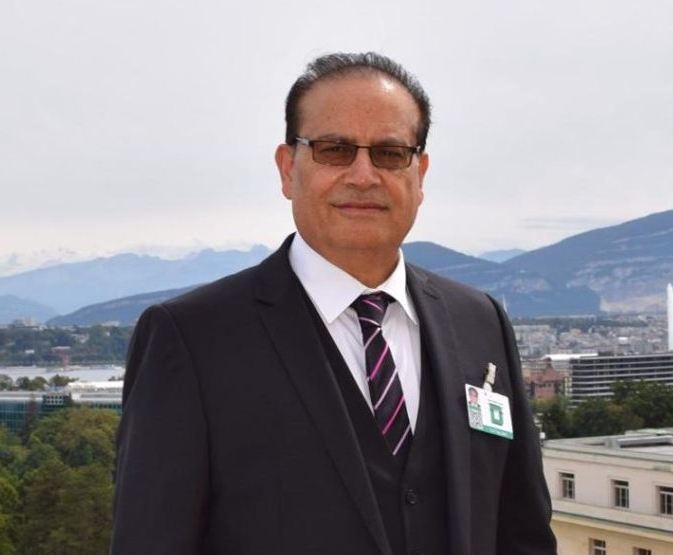
Qamar Bashir

By: Qamar Bashir

On May 28th, Nawab Kaifi, a distinguished veteran in the realms of production, acting, journalism, and media ownership, shared a poignant song commemorating the historic atomic bomb tests of Chagai. The song vividly depicted scenes of horsemen and common folk, adorned with flags, converging towards the blast sites, evoking a powerful imagery of unity and national pride. As a fellow producer hailing from Balochistan, I couldn’t help but query the portrayal of horsemen, seemingly transporting the event back to antiquity, and the depiction of missile firings in a setting devoid of missile launch facilities.

In response to my inquiry, Mr. Kaifi promptly clarified that the song, titled “MOJZA,” was a recipient of the National Award. It was a collaborative effort supported by ISPR and championed by Nawaz Sharif, the Prime Minister at the time of the nuclear tests in 1998.

In the video, two pivotal figures in orchestrating this historic achievement were depicted: Nawaz Sharif, the Prime Minister at the time, and Dr. Abdul Qadeer Khan. Both of these individuals played instrumental roles in realising this monumental feat, which fortified the defence capabilities of the nation. Remarkably, the very country which had endured the scars of three previous wars found itself transformed after May 29, 1998. With its newfound nuclear deterrent, Pakistan’s sovereignty and territorial integrity stood fortified, deterring any potential aggressors from daring to challenge its defences. Thus, the sacrifices and efforts of Nawaz Sharif, Dr. Abdul Qadeer Khan, and countless others ushered in an era of unparalleled security and resilience for the nation, forever altering its geopolitical landscape.

However, their contributions were soon overshadowed by the ominous spectre of retribution, serving as a cautionary tale for the 250 million citizens of Pakistan and the global community at large.

The tenure of first hero Mr. Nawaz Sharif’s as Prime Minister of Pakistan was abruptly interrupted on October 12, 1999, when General Pervez Musharraf orchestrated a military coup, relegating Sharif from the apex of power to the depths of political obscurity transforming him from head of the government to an alleged hijacker within the span of a single day. Mr. Nawaz Sharif was swiftly apprehended, stripped of his office, and incarcerated. Subsequent legal proceedings saw him convicted on charges of hijacking and terrorism in April 2000, resulting in a life sentence. The weight of this verdict, coupled with the ignominy of imprisonment, bore heavily upon Sharif, marking a stark reversal of fortune for the once-powerful leader. However, in December 2000 Sharif was granted clemency and permitted to go into exile thus teaching him a good lesson to portray as a hero.

The narrative of Dr. Abdul Qadeer Khan, often hailed as the father of Pakistan’s atomic bomb, is a poignant tale of heroism overshadowed by adversity. His unwavering dedication and groundbreaking contributions to Pakistan’s nuclear program earned him reverence and admiration across the nation, as his efforts culminated in Pakistan becoming the first Muslim country to possess nuclear capabilities. However, amidst the accolades lay a darker undercurrent of humiliation and persecution.

Dr. Khan’s legacy was marred by coerced confessions and relentless surveillance, casting a shadow over his towering achievements. In a moment of poignant reflection, he lamented returning from a life of comfort and acclaim in Holland to devote his intellect and energies to his homeland, only to be met with ingratitude and scorn. His words serve as a sobering reminder of how easily we can turn our heroes into zeroes, tarnishing their legacies with the weight of indifference and betrayal.

One person who was not in the video was Zulfiqar Ali Bhutto, a statesman of remarkable vision and determination who played a  pivotal role in laying the cornerstone of Pakistan’s nuclear research and development program. His unwavering commitment to national security was underscored by a resolute vow to pursue atomic capabilities, even at the cost of enduring profound sacrifices, famously stating that Pakistan would “eat grass” if necessary to attain nuclear power. Bhutto’s aspirations were abruptly curtailed by a military intervention by  General Zia ul Haq on 5th July 1977. On April 4, 1979, Bhutto met his tragic demise, as he was executed by hanging—a verdict that remains contested. Zulfiqar Ali Bhutto, the third most significant figure in Pakistan’s odyssey to nuclear prowess was deprived of his life, rather than to be cherished and held in high esteem.

Pakistan’s prime minister in the late 1980s and early 1990s was Benazir Bhutto. She was the first Muslim female Prime Minister and one of few worldwide. She was Prime Minister twice: 1988–1990 and 1993–1996 and relentlessly supported the nuclear programme. She ambraced Shahadat in a Rawalpindi political rally suicide attack on December 27, 2007.

Imran Khan is one of Pakistan’s most famous cricketers and regarded as one of the finest all-rounders in the sport’s history who founded the Tehreek-e-Insaf (PTI) in 1996, and after winning the general election in July 2018, became Pakistan’s 22nd Prime Minister and is now behind bars.

A nation that respects its heroes, both civilian and military, fosters a strong sense of unity, pride, and national identity. Honouring those who have made significant contributions through acts of bravery, innovation, or service reinforces the values and principles upon which a nation is built. This recognition encourages others to strive for excellence, promoting a culture of respect and admiration for those who positively impact the country’s progress.

Conversely, disrespecting heroes can lead to a loss of national pride and disillusionment and decline in motivation as future generations may be discouraged from pursuing paths of service and innovation.

To undo the harm caused by disrespecting heroes, a nation must publicly acknowledge past mistakes and offer sincere apologies, establishing systems to honour and commemorate their contributions.

Educational reforms should integrate the stories and achievements of national heroes into the curriculum, ensuring that future generations respect and learn from their legacies.

Community engagement, robust support for veterans and contributors, and promoting positive narratives through media and public platforms are essential steps.

By taking these measures, a nation can repair psychological and societal damage, fostering renewed unity, pride, and motivation for collective progress and development.

By: Qamar Bashir

Former Press Secretary to the President

Former Press Minister to the Embassy of Pakistan to France

Former MD, SRBC

Govt urged to increase tobacco tax by 40 pc to generate revenue, reduce consumption

Govt urged to increase tobacco tax by 40 pc to generate revenue

ISLAMABAD, May 28 (DNA): The health advocates have urged the government to increase tax on tobacco products by 40 percent to generate revenue, decrease consumption and bridging the gap in health costs associated with smoking.

It should be mentioned here the proposed increase would result into a substantial rise in government revenue, estimated to reach Rs 336 billion from the current Rs 240 billion. The intervention would also significantly impact health costs associated with smoking, projected to be reduced from Rs 615 billion to Rs 418.2 billion, effectively reducing the gap between revenue and health costs to Rs 82 billion.

Former caretaker minister for information and broadcasting, Mr. Murtaza Solangi stated that all stakeholders must cast their differences aside and unite to protect our children and youth from an industry which is causing billions of losses to the national exchequer. He said that increasing tobacco taxes was such a step which should be regularly implemented. The low cigarette prices are the reason why children and young people initiate smoking, he added

Solangi further stated that smoking-related illnesses and deaths incur substantial economic costs in Pakistan’s GDP every year. These increasing health cost burdens encompass healthcare expenses, productivity losses due to illness and premature death, as well as other indirect economic impacts, he noted.

Country Head Campaign for Tobacco Free Kids (CTFK), Malik Imran Ahmad said that the effectiveness of high tobacco taxation as a vital measure in combating tobacco consumption, as advocated by the World Health Organization (WHO). The industry can absorb at least a 40% increase in taxes, and the IMF and World Bank have recommended Pakistan introduce a single-tier tax structure for cigarettes.

He said that despite efforts to increase taxes, low cigarette prices persist, contributing to sustained high consumption levels. By adopting these reforms, Pakistan can make cigarette taxation more effective and align it more closely with international best practices, he maintained.

He further stated that the cigarette prices in Pakistan were still cheaper than in many parts of the world.

Malik Imran said that the illicit market share is exaggerated by multinational companies. The industry has been found to underreport production to evade taxes, violating tax laws and prioritizing profits over public health.

Managing Director of the Social Policy and Development Centre (SPDC), Muhammad Asif Iqbal said that smokers’ response to price changes suggests an enormous potential for taxation to discourage smoking in Pakistan. As a result of the recent hike in the FED on cigarettes and the corresponding increase in prices, cigarette consumption has declined by 19.2%, he added.

Nicotine Pouches – A New Menace

Nicotine Pouches – A New Menace

By: Muhammad Kashif

Under the guise of “Smoking Cessation” and “Reduced Harm” international tobacco giants have launched a new menace into society in the shape of nicotine pouches. Brands like ZYN and VELO have become extremely popular amongst the youth, considered to be the “it” product. Available in dozens of flavors, including recent additions, it is the latest edition to Big Tobacco’s portfolio of products marketed to the youth.

Nicotine pouches are extremely affordable and available at all shops, including corner markets or khokhas. Nicotine pouches are more commonly used by young adults aged 18 to 24. A study by Global Tobacco Control showed that 22% of tobacco vendors across 8 megacities have nicotine pouches displays at stores and 13% of tobacco vendors have advertisements for these products posted at their point of sale.

International Tobacco Companies have been using numerous marketing strategies to attract not only chronic cigarette consumers but non-smokers as well. These include but are not limited to free sampling at public spaces, hiring actors such as Fawad Khan and Mahira Khan, exuberant ad campaigns, and sponsoring music shows such as the VELO Sound Station with over 400 million views.

The use of deceptive marketing strategies is explicitly prohibited under Section 10 of the Competition Act 2010; hence these strategies are a blatant disregard of the law.

Moreover, on January 30, 2020, the Ministry of Health’s Tobacco Smoke Free Cities project issued SRO 72(1)/2020, prohibiting online and point-of-sale promotion of tobacco products. According to WHO, tobacco-derived NGTPs such as E-cigarettes and nicotine pouches are harmful to the lungs, pose a health risk, and require regulation.

However, alternate nicotine products, especially nicotine pouches, stay majorly unregulated with no proper taxation system and health warnings. Often, these items manage to evade scrutiny, circumventing existing regulations and posing further health risks to users. It is imperative to implement rigorous measures to curb the proliferation of such products and ensure the protection of consumers, especially youth, from potential harm.

Regulating nicotine pouches in Pakistan stands as a crucial public health imperative. Establishing a comprehensive regulatory framework entailing implementing vendor licensing and regulating all forms of smokeless tobacco, drawing insights from global practices, addressing the menace of unregulated nicotine pouches, and addressing addiction among children.

Prompt and resolute action by policymakers is imperative to safeguard the health of the people and mitigate the escalating health risks associated with nicotine pouch consumption in Pakistan.

Symposium and Exhibition on Pakistan’s Buddhist Heritage

Exhibition

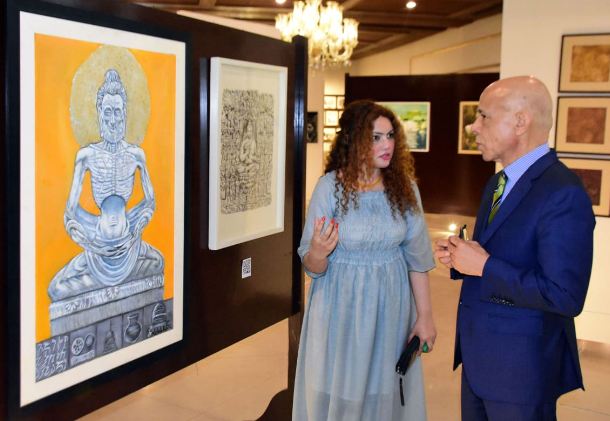
ISLAMABAD, MAY 28 /DNA/ – The Ministry of Foreign Affairs is organizing a symposium and an exhibition, titled “From Gandhara to the World”, on 28-29 May 2024. A large number of Islamabad-based diplomats, government functionaries, scholars, artists and art-lovers are attending the event, alongside around 25 foreign delegates, including some at the Ministerial level, from Sri Lanka, Nepal, Thailand and Vietnam.

The event is being organized in connection with the ‘Vesak Day’, which commemorates Lord Buddha’s birth, enlightenment and death. It is aimed at showcasing Pakistan’s rich cultural heritage, and underscoring the importance that the government attaches to inter-faith harmony.

Sri Lanka’s Minister for Buddhasasana, Religious and Cultural Affairs, Honorable Vidura Wikramanayaka was the guest of honor at the inaugural session, which took place earlier today. While the welcome remarks were delivered by Additional Foreign Secretary, Ambassador Maryam Madiha Aftab, prominent Buddhist monks and scholars also addressed the inaugural session. Their list included Most Venerable Thich Ductuan from Vietnam, Venerable Anil Sakya from Thailand, Mr. Om Charan Amatya, scholar-cum-politician from Nepal, Mr. Stefano Davide Bettera, President, European Buddhist Union and Mr. Li Xiguang, Director, Pakistan Culture and Communication Centre, Tsinghua University, Beijing.

A message from Venerable Dhimbulkumbure Sri Sarankara Vimaladhamma Thera, Chief Incumbent of the Ancient Rajamaha Viharaya of Kandy, Sri Lanka was also read out by Venerable Tempitiye Indawimala.

In his keynote address at the inaugural session, Federal Minister for Religious Affairs and Interfaith Harmony, Chaudhary Salik Hussain, emphasized the importance of building bridges between different communities, celebrating the shared values, and working together for a more peaceful world. He underscored that Gandhara, which brought together diverse cultural influences, is a powerful symbol of what can be achieved through understanding and collaboration.

The subsequent sessions of the symposium will explore various dimensions of Gandharan heritage that emerged, over three thousand years ago, in the northwest of Pakistan out of the interaction between Hellenistic and local philosophical and cultural traditions.

PM welcomes Spain’s announcement to recognise Palestine as a state

PM welcomes Spain's announcement to recognise Palestine as a state

ISLAMABAD, May 28 (APP): Prime Minister Shehbaz Sharif on Tuesday welcomed the announcement by Spanish Prime Minister Pedro Sanchez to formally recognise Palestine as a state.

The prime minister, in a statement, said that the recognition of Palestine as a state by Spain was a positive development in the international scenario which also manifested the rejection of Israeli barbarism against the unarmed Palestinians by the Spanish people and their Prime Minister Pedro Sanchez.

He strongly condemned the recent unprovoked Israeli bombing of Rafah which martyred another 45 Palestinian people, and reiterated his call for an immediate end to the genocide of Palestinian population being carried out by Israel.

He reiterated Pakistan’s resolve to continue extending moral, political and diplomatic support to the Palestinian people till the establishment of an independent Palestine state with Quds Al Sharif as its capital.

Nawaz Sharif elected PML-N president after 6 years

Nawaz Sharif

LAHORE, MAY 28: Nawaz Sharif has been elected “unopposed” as president of the Pakistan Muslim League-Nawaz (PML-N), once again after more than six years today.

No other PML-N leader submitted their nomination papers against the party supremo for the top post. Nawaz’s papers were approved for the party election.

The development came after his party nominated him as the party’s head.

Speaking to Geo News senior political analyst Mazhar Abbas said that Nawaz retaking the PML-N’s helm was expected.

However, he noted that the party decided to give back the presidency to Nawaz after the February 8 elections as previously he was aiming to be a candidate for the prime ministership if the party had secured a simple majority in the National Assembly.

Stressing that the PML-N faces a wide array of challenges in Punjab, Abbas underscored that it is to be seen what direction Nawaz will set as the party’s president.

According to The News, sources from the party had earlier said that Nawaz would be elected through an election for the party president which has been rescheduled from the second week of May to May 28, the day celebrated as Youm-e-Takbir. On this day in 1998, Pakistan had responded to India’s nuclear tests while Nawaz was prime minister.

Through a notification on Monday, Prime Minister Shehbaz Sharif has declared May 28, 2024, a public holiday.

On July 28, 2017, Nawaz lost both the prime minister’s office and the presidency of his party as a result of the Panama Papers ruling. Ever since, the PML-N has constructed a narrative centred around the catchphrase “Mujhy Kyun Nikala” (Why was I removed?).

At a news conference on Monday, PML-N Chief Election Commissioner Rana Sanaullah stated that the party leaders had the consensus that Nawaz should lead the party. He said that Shehbaz had resigned from his position as party president, but he was still permitted by the Central Working Committee to carry out his responsibilities until the election of a new leader.

As per the party constitution, the election commission was appointed by the Central Working Committee and the commission issued the election timetable, said Sanaullah.

Today’s timing for accepting nomination papers were from 10am to 12pm; they had to be examined at 1pm, and the final list had to be readied by 3pm. Any party member was allowed to submit nomination papers.

Sanaullah said each party had its own election procedures such as nomination papers were not submitted in Jamaat-e-Islami, where the Shura elected the ameer. He underlined that he was not against Jamaat-e-Islami’s approach.

He highlighted Pakistan’s success in becoming a nuclear power under Nawaz’s leadership, as well as his role in turning the PML-N into a party for the average man. Nawaz had always been involved in major party decisions and would remain so, he underlined.

He said that other party positions should be filled by different members and that Shehbaz remained a significant leader, especially noted for his efforts in restoring the economy. He mentioned that Shahid Khaqan Abbasi could also submit his candidature documents, which would be scrutinised for eligibility.

Sanaullah asserted that the PML-N was a party of dialogue and emphasised the importance of cooperation between the government and the opposition. He also expressed his hope that PTI’s founder avoided a fate similar to that of Mujeebur Rahman and stressed the need for dialogue.

He reassured that Nawaz Sharif was not angry with anyone and remained fully active. Fundamental decisions in the federal and Punjab governments involved Nawaz’s consultation and approval. Nawaz’s statements were expected to become more frequent over the time.

If no other candidate submits nomination papers, Nawaz will be elected unopposed; otherwise, the election will be decided by a show of hands. Party sources mentioned that besides the election of the party president, the PML-N meeting will also discuss various resolutions to be presented to the general council.

After roti, bread prices also reduced significantly in Punjab

bread prices

Lahore, MAY 28: After the price of roti, the rate of bread has also seen a notable decrease across Punjab. This price reduction follows a recent cut in the price of naan and roti, bringing much-needed relief to households.

The price of bread has been reduced by Rs50 to Rs70, with the new prices taking immediate effect as per the recently issued notification.

In Lahore, the price of 750 grammes of bread has been reduced from Rs230 to Rs180. The Lahore deputy commissioner has announced that the maximum price for bread weighing up to 400 grammes will now be Rs95.

Also Read: Maryam Nawaz reduces price of roti in Lahore to Rs14

Authorities have assured that these new prices will be enforced without delay, ensuring that the benefits of the reduction reach consumers promptly.

On May 23, Punjab Chief Minister Maryam Nawaz tweeted the new price of roti, which was further reduced and fixed at Rs14. Maryam said the Punjab government had further reduced the price of roti in the province.

The price of roti was fixed at Rs14 in several areas, including Lahore, while in Bahawalpur and Bahawalnagar, the price was fixed at Rs12.

Also Read: Multan’s nanbais refuse to comply with fixed price of roti

However, the naanbais in Multan rejected the government’s decision. Despite the government’s efforts to provide relief to citizens through cheap roti, naanbais in Multan were selling roti at the old price. The citizens demanded the government take action to implement its decision and provide relief to the people.

In Multan, naanbais were selling roti at Rs20 and naan at Rs25, despite the government’s fixed price.

Aurangzeb briefs US envoy Blome about fiscal reforms

Aurangzeb briefs US envoy Blome about fiscal reforms

The Federal Minister reiterated the Prime Minister’s commitment to privatizing State-Owned Enterprises (SOEs), which has sparked interest from local and foreign investors in the case of Pakistan International Airlines (PIA).

Faisal Sheikh

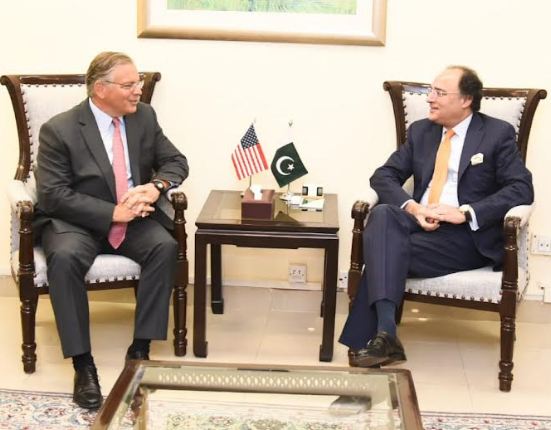
ISLAMABAD, MAY 27 /DNA/ – Ambassador of the United States of America to Pakistan H.E. Donald Blome called on Minister for Finance & Revenue Senator Muhammad Aurangzeb at the Finance Division today.

Finance Minister Muhammad Aurangzeb welcomed Ambassador Blome and underscored the long-term mutual relations between Pakistan and the USA. He informed the Ambassador about  successful completion of the Stand-By Arrangement (SBA) and that the Government of Pakistan is engaged with the fund to build upon the reforms under the SBA.

Senator Mr. Muhammad Aurangzeb highlighted the priority reform areas of the Government including increasing the tax-to-GDP ratio through end-to-end digitization, bringing the under-taxed sectors into the tax net, and tax administrative reforms.

The Federal Minister reiterated the Prime Minister’s commitment to privatizing State-Owned Enterprises (SOEs), which has sparked interest from local and foreign investors in the case of Pakistan International Airlines (PIA). On the energy sector reforms, he mentioned steps being taken to bring private sector experts to enhance efficiency. He also apprised the Ambassador of the potential investments from investors in the Agriculture, Mining, and IT sectors.

Ambassador Mr. Blome appreciated the Pakistani government’s efforts and initiatives to improve macroeconomic indicators. He assured the support of the United States in helping Pakistan achieve economic stability and sustainable growth.

FED rate hike essential to counteract smoking costs, claims SPDC Study

FED rate hike essential to counteract smoking costs

ISLAMABAD, MAY 27 /DNA/ – Anti tobacco activists have warned that the government would lost the revenue and benefit gained through tax reforms if the Federal Excise Duty (FED) rate is not increased in the upcoming budget.

A fact based study released by The Social Policy and Development Centre (SPDC) said, 31.6 million adults in Pakistan use tobacco, resulting in over 160,000 deaths annually. Smoking-related illnesses and deaths cost Pakistan at least 1.4% of its GDP annually.

However, the 2022-23 FED reforms on tobacco have generated good revenue, with collections reaching PKR 122 billion from July 2023 to January 2024.

Study said the reforms have not only increased revenue but also contributed to public health by reducing consumption and potentially recovering 17.8% of the total healthcare costs associated with smoking in Pakistan.

It said however, maintaining the current rate could result in a decrease in health recovery from 17.8% to 15.6% and to achieve similar health cost recovery levels observed in 2023-24, a 37% increase in the FED rate for the upcoming year is suggested.

Anti tobacco activists argue that a tax increase will not promote illicit trade, as research evidence shows that tobacco firms manipulate their reported production to influence tax policy and evade taxes. The recently initiated track and trace system is expected to reduce counterfeiting, curb illicit trade, and keep a check on front-loading.

Study said the proposed tax rates for the Budget 2024-25 aim to increase the FED share in retail price to 70%, generating additional revenue and promoting public health. The tax proposal is a clear ‘win-win’ in terms of health and revenue for the government and the people of Pakistan.

Pakistan in grip of worst individual dictatorship: PTI

PTI wants judicial commission to probe claims by Rawalpindi commissioner

System of tyranny won’t last for long, as it will soon meet a drastic end: PTI Spokesperson

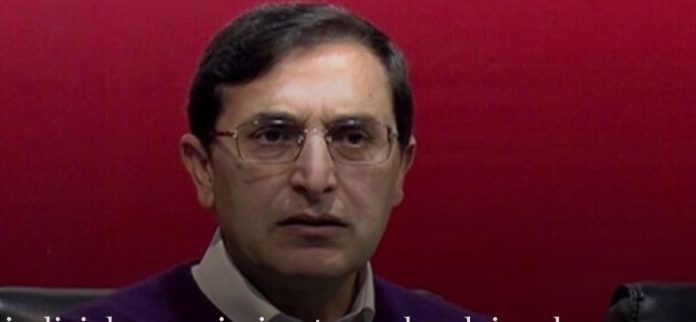
ISLAMABAD, MAY 27 /DNA/ – Pakistan Tehreek-e-Insaf (PTI) said that Pakistan was in the grip of the worst dictatorship of an individual in the aftermath of the regime change operation, as the country was deprived of its constitution and law.

Reacting to the statement of Malik Riaz Hussain, a well-known businessman, PTI Spokesperson said that not only politicians but also judges, journalists, lawyers, traders and businessmen and people from all walks of life were being targeted and harassed and forced to the will and the whims of an individual.

He said that in this system of giving oxygen to the power of individual, it has become a tradition to be forced into submission through bullying, coercion and oppression.

PTI Spokesperson stated that under the same chain of oppression, nearly 203 false, bogus and politically motivated cases were registered against PTI Founding Chairman Imran Khan, including the Al-Qadir Trust case.

He recalled that six judges of the Islamabad High Court (IHC) wrote a letter to the Supreme Judicial Council against this infamous series of bullying and oppression, exposing the practice of agencies’ meddling into state institutions.

PTI Spokesperson stated that no system of oppression and tyranny in the world could sustain for long, and if it was set up, it would eventually collapse.

He asserted that the clear cracks in the personal dictatorship were a sign of its impending end.

PTI Spokesperson expressed optimism that the time was nearing when PTI’s struggle would bear fruits and the system of oppression and individual dictatorship would soon meet a drastic end and would usher in a new era of rule of law and democracy in the country.

Stay Connected

64FansLike
60FollowersFollow

Latest Reviews

Exchange Rates

USD - United States Dollar
EUR
1.17
GBP
1.35
AUD
0.67
CAD
0.72