NAB’s anti corruption strategy started yielding excellent results. Chairman
DNA
ISLAMABAD, July 17, 2020: Justice Javed Iqbal, Chairman NAB has said that the present management of NAB has chalked out an effective and proactive Anti Corruption Strategy which has started been acknowledged by Transparency International (TI), Pakistan, World Economic Forum, PILDAT and Mishal Pakistan.
He said that the initiatives taken by the present management of NAB started yielding excellent results. Similarly Gilani and Gallop recent survey indicated that 59 percent people of Pakistan have full faith upon NAB which is ample evidence of NAB’s across the board accountability under the dynamic leadership of Honourable Justice Mr. Javed Iqbal, Chairman NAB.
NAB’s proactive Anti-Corruption Strategy, NAB’s overall conviction ratio is about 68.8 percent which is a remarkable achievement in investigation of White Collar Crimes in the world. He said that NAB has geared up and rejuvenated to eradicate corruption within all its forms and manifestations.
He said that NAB’s major focus is on corruption and corrupt practices i.e.; money laundering, cases of cheating the public at large, willful bank loan defaults, misuse of authority and embezzlement of state funds. Since NAB’s inception, one of NAB’s major achievements has been the recovery of around Rs.466.069 billion which is a great achievement as per the annual report of 2019 of NAB. Starting from the year 2017 which can be called basically a year of reinvigoration of NAB, we have moved with new zeal and effort after through detailed introspection and overhaul of procedures and all pillars of the organization i.e.
Operations, Prosecution, Human Resource Management, Training and Research and Awareness and Prevention have been reactivated.
He said that the overall complaints in 2019 were 53643 and processed 42760 whereas complaints in 2018 were 48591 and processed 41414. Increase in the number of complaints also reflects enhanced public trusted in the NAB. NAB during 2019, processed 1308 complaint verifications, 1686 inquiries and 609 investigations and recovered Rs 141.542 billion from corrupt elements in 2019. He said that NAB has introduced a new concept of Combine Investigation Team (CIT) in order to benefit from the experience and collective wisdom of senior supervisory officers, a system of CIT consisting of Director, Additional Director, Investigation Officer and a Senior Legal Counsel has been put in place. This is not only lending quality to the work. He said that NAB has established its state of the art Forensic Science Laboratory in NAB Rawalpindi. In 2019, 15747 questioned documents and 300 thumb impressions were analyzed in 50 cases and forensic analysis was carried out on 74 digital devices (Laptops, Mobile phones, Hard Disks etc). He said that NAB is the focal Organization of United Nations Convention against Corruption (UNCAC) which is pride for Pakistan due to NAB’s efforts. He said Pakistan is committed to United Nations Convention against Corruption (UNCAC) in eradicating corruption through its three pronged Anti Corruption Strategy of Awareness, Prevention and Enforcement which has started yielding excellent results under the dynamic leadership of Honorable Mr. Justice Javed Iqbal, Chairman NAB.
He said that NAB had initiated a dialogue of the anti-corruption authorities of the SAARC countries with a proposal to set up a SAARC Anti-Corruption Forum. NAB hosted the first meeting of its kind in Islamabad where the heads of SAARC anti-corruption authorities including India agreed for creation of SAARC Anti-Corruption Forum and NAB is the chairman of SAARC Anti Corruption Forum. This was a reorganization of NAB’s excellent work as NAB is considered as a role model among SAARC countries. He said that Pakistan’s Apex Anti Corruption Agency, NAB is the only Organization in the world with whom China has signed a Memorandum of Understanding (MoU) to oversee projects to be undertaken under CEPC in Pakistan. He said that signing of Memorandum of Understanding (MOU) between Pakistan and China. He said that NAB is committed to erdication from the country by utilizing all its resources in all its forms and manifestations.
Mayor urges youth to recite Quran
Staff Reporter
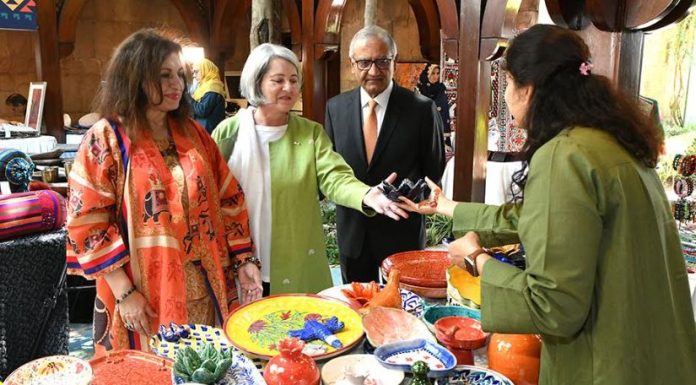
ISLAMABAD: Programs regarding the copies of the Holy Quran should be conducted so that the new generation can develop the habit of reciting the Holy Quran, said the Mayor Islamabad, Sheikh Ansar Aziz here on Friday. He expressed this while visiting an exhibition of old copies of the Holy Quran in a shopping mall in Islamabad. Mayor urged the new generation to develop the habit of reciting the Holy Quran.
He said that people are facing a number of issues in the current situation. The solutions of all the issues are available in the Holy Quran. But, the distance between people and the Holy Quran has been increased to an extreme level. The issues being faced by masses can be resolved by reciting the Holy Quran side by side following its teachings. One gets peace of heart by seeing the copies of the Holy Quran, he added.
Sheikh Ansar Aziz said that the incumbent government of PTI is continuously ignoring the MCI. The government is not providing funds to MCI, therefore no any mega project could be started in the city. However, MCI is giving its best by utilizing the available resources. The work done by MCI in current situation caused by the spread of coronavirus is in front of everyone. MCI played a remarkable role in resolving the water issue in Islamabad. But, the government is continuously creating hurdles for MCI, he further said.
Govt agencies to take action on sugar, wheat commission reports: Shahzad
ISLAMABAD, JULY 17 (DNA) – Government agencies will take action on the sugar and wheat commission reports, but none of them is bound to implement them as each agency has to review the information on its own, Prime Minister’s Special Assistant on Accountability Shahzad Akbar said Friday.
Addressing a press conference in federal capital Friday, Shahzad Akbar said as the Supreme Court of Pakistan has vacated stay order of Sindh High Court on the issue, the government will proceed into the matter. He said that SC had also directed the high courts to decide pending petitions relating to sugar commission within three weeks period.
He said the government proceedings include punitive action against the responsible of the sugar crisis, reforming sugar policy and rationalizing sugar price.
Shahzad Akbar has said some Rs 254 million of Ramzan Package 2018 had been misappropriated by 149 flour mills tasked to provide Atta to people on subsidised rates.
He told media persons that from out of Rs 254 million a sum of Rs 190 million has already been recovered and deposited into national exchequer. While action was also being taken against 156 officials of food department. The anti corruption department has started criminal proceedings against 70 officials of food department, who were directly involved in misappropriation of wheat subsidy.
He said 149 flour mills were involved in the embezzlement of wheat from out of a total of 687 mills. Right now, due to strict measures taken, a 20 kg flour bag was available at Rs 860. In case of complaint helpline of Punjab government could be contacted.
Over 100 stay orders regarding sugar mills were still pending in different courts since the last 11 years. The government had made public sugar inquiry commission report first time in the history. Islamabad High Court had also vacated sugar mills association’s stay order after vigorous persuasion by the government.
On receiving Sugar Inquiry Report, he said the federal cabinet had approved a strategy including roadmap of taking punitive action, introducing reforms and rationalising the price of sugar.
A committee headed by Minister for Industries Hammad Azhar has been constituted to finalise the reforms in sugar policy and rationalise prices of sugar. The committee has started negotiations with sugar mills association in this regard.
Provincial governments, Competition Commission of Pakistan, State Bank of Pakistan, Federal Investigation Agency (FIA) and Security and Exchange Commission of Pakistan (SECP) have been directed to investigate violations by sugar mills in accordance with their rules and report within a period of 90 days.
A reference has been sent to National Accountability Bureau (NAB) to investigate the misappropriation in subsidies given to sugar mills according to NAB ordinance 1999.
The Competition Commission of Pakistan (CCP) would probe last 10 years cartelisation in sugar industry, State Bank of Pakistan will investigate sugar mills wilful loan defaults, pledged sugar stocks according to their rules.
FIA will inquire the fake export of sugar to Afghanistan and report within 90 days period. Provincial governments have been asked to probe violations by sugar mills including paying less price of sugarcane to farmers and other violations. Responding to a question, he said the delay in action against sugar was due to litigation punitive actions. =DNA
============================
NPMC for removing price disparity, anti-market practices
ISLAMABAD, JULY 17 (DNA) – A meeting of the National Price Monitoring Committee (NPMC) was held here at the Finance Division with Additional Finance Secretary (Exp) in the chair to discuss the price trend of essential food items.
The meeting was attended by the representatives from the provincial governments, Islamabad Capital Territory, Ministries of Industries, Interior, Commerce, Planning, Development & Special Initiatives, National Food Security & Research, Federal Board of Revenue, Competition Commission of Pakistan and Pakistan Bureau of Statistics.
The Chair advised the relevant authorities and the provincial governments to ensure smooth supply of essential food items at affordable prices and remove price disparity. The Chair further directed the CCP to play a proactive role to check cartelization and other anti-market practices.
Earlier, the meeting was informed that CPI inflation year on year was recorded at 8.6 % in June 2020 over June 2019 and July-June CPI inflation on average rose to 10.7%. It was noted that inflation had been on declining trend till May 2020 but had been slightly up during the month of June 2020.
It was also observed that price trend in international market was also following a rising trend on account of higher demand due to ease of lockdown conditions.
The meeting was told that the government in consultation with all stakeholders was taking proactive measures to control the general price level of daily use items at the federal, provincial and district levels.
It was noticed that the Sensitive Price Indicator (SPI) which monitors the price movement of 51 essential items on weekly basis, had recorded an increase of 0.98% for the week ended on 09th July, 2020.
The Chair discussed the rise in prices of poultry products with all stakeholders and also examined the demand and supply dynamics. Provincial governments and ICT were directed to take necessary measures to ensure smooth supply of poultry products at reasonable prices.
The pre-Covid and post-Covid prices of face masks, sanitizers and oxygen cylinder were also came under discussion. The provinces and ICT Administration were asked to take necessary measures for provision of such items at reasonable prices.
The role of middle men was also discussed in detail being responsible for increase in general price level of commodities and need to check the high profit margins. The Chair also appreciated the ICT, Sindh and Punjab governments for online delivery system of essential food items on wholesale prices at the doorstep of consumer.
The Chair stressed that the same may be extended to other districts of the provinces. The Chair also urged that this model should be replicated by the Provinces of Khyber Pakhtunkhwa and Balochistan. =DNA
============================
Indonesian ambassador stresses joint initiatives to revive economies
Muhammad Tahir
FAISALABAD,: A steep decline of minus 4% in the Indonesian growth is expected due to COVID-19 and there was dire need to join hands with brotherly countries to revive the national economies immediately.
This was stressed by Mr Iwan Suyudhie Amri, ambassador of Indonesia, while addressing a zoon conference with the office-bearers of the Faisalabad Chamber of Commerce & industry (FCCI) here on Friday. He said that Indonesia was closely observing the World Health Organisation (WHO) situation reports on COVID-19 pandemic around the world.
He invited the FCCI office-bearers to visit Indonesian embassy and discuss issues related to bilateral trade. About starting direct flights from Jakarta to Lahore or Karachi, he said that he would take up the issue with the ministries concerned. However, he added, such flights were not viable financially in the prevailing circumstances.
Earlier addressing the zoom meeting, FCCI President Rana Sikandar Azam Khan said that Pakistan and Indonesia should transform their cordial relations into enhanced bilateral trade, investment and joint ventures.
Appreciating the recent economic rise of Indonesia, he said that both the countries had many similarities in their demographics, and the bilateral trade could easily be enhanced to US$5 billion from its current level of about $2.32 billion in 2019. “Pakistani exports to Indonesia are US$146 million, compared to Indonesia exports to Pakistan of US$2222 million,” he said and added that thus the balance of trade was in favour of Indonesia.
He said that Pakistan and Indonesia had signed a Preferential Trade Agreement (PTA) in 2012 and as a result of that the bilateral trade improved from $1.58 billion in 2011-12 to $2.32 billion in 2019. “It is good to note that both the countries are heading towards Free Trade Agreement, which needs to be further paced up,” he added.
He said Pakistan could help Indonesia expand its trade to the landlocked Central Asian Republics, China, India and Middle East. Similarly Indonesia, being member of the Association of Southeast Asian Nations (ASEAN), could provide easy access to Pakistan for over $2 trillion ASEAN market.
Indonesian ambassador stresses joint initiatives to revive economies
Muhammad Tahir
FAISALABAD,: A steep decline of minus 4% in the Indonesian growth is expected due to COVID-19 and there was dire need to join hands with brotherly countries to revive the national economies immediately.
This was stressed by Mr Iwan Suyudhie Amri, ambassador of Indonesia, while addressing a zoon conference with the office-bearers of the Faisalabad Chamber of Commerce & industry (FCCI) here on Friday. He said that Indonesia was closely observing the World Health Organisation (WHO) situation reports on COVID-19 pandemic around the world.
He invited the FCCI office-bearers to visit Indonesian embassy and discuss issues related to bilateral trade. About starting direct flights from Jakarta to Lahore or Karachi, he said that he would take up the issue with the ministries concerned. However, he added, such flights were not viable financially in the prevailing circumstances.
Earlier addressing the zoom meeting, FCCI President Rana Sikandar Azam Khan said that Pakistan and Indonesia should transform their cordial relations into enhanced bilateral trade, investment and joint ventures.
Appreciating the recent economic rise of Indonesia, he said that both the countries had many similarities in their demographics, and the bilateral trade could easily be enhanced to US$5 billion from its current level of about $2.32 billion in 2019. “Pakistani exports to Indonesia are US$146 million, compared to Indonesia exports to Pakistan of US$2222 million,” he said and added that thus the balance of trade was in favour of Indonesia.
He said that Pakistan and Indonesia had signed a Preferential Trade Agreement (PTA) in 2012 and as a result of that the bilateral trade improved from $1.58 billion in 2011-12 to $2.32 billion in 2019. “It is good to note that both the countries are heading towards Free Trade Agreement, which needs to be further paced up,” he added.
He said Pakistan could help Indonesia expand its trade to the landlocked Central Asian Republics, China, India and Middle East. Similarly Indonesia, being member of the Association of Southeast Asian Nations (ASEAN), could provide easy access to Pakistan for over $2 trillion ASEAN market.
SBP allows APPS for pilot operation of ecommerce payment gateway
State Bank of Pakistan grants approval for pilot operation to APPS for ecommerce payment gateway “PayFast”, which brings the ultimate and innovative solution to address the pain points of the digital payments industry of Pakistan.
Pakistan has over 80 million 3g / 4g subscribers, and a huge potential of ecommerce, the market value is estimated at USD 2 billion with a remarkable average yearly growth of 58%. Covid has evidently caused a boom in online payments as the customer’s preference from cash has started to shift towards cashless means. Nonetheless, the value can be far better if the concerns are addressed as it is still a Cash dominated economy with COD valuing 90% of online transactions.
We have more than 1,500 ecommerce enable merchants with a huge pie left out, this low number is primarily attributed to the dearth of cost effective, robust and secure online payment solutions compatible with multiple modes of integration such as Open APIs, plugins etc.
PayFast address these issues by providing payment acceptance via multi instruments with a User Centric UI/UX, these include cards noteworthy being, UnionPay and other card schemes, Mobile Wallets and now unveiling Bank account numbers as an easy payment instrument. They are also helping merchants to accept online payments at ease, by offering them digital sign up, Developer friendly APIs, plugins for ecommerce stores and the experience of future payments. PayFast is PCI-DSS compliant entity, coupled with a very dynamic Fraud and Risk Management System that will ensure security and compliance of transactions for the consumer and the merchant.
Another disruptive service PayFast is bringing to the table is digital invoicing. Payments can be accepted with just a unique link, ideal for FB merchants, Freelancers, etc as the link can be sent via WhatsApp, FB messenger, email and mobile number.
PayFast will fill the gap of the requirement of a payment gateway in the ecommerce industry. Its indigenous gateway’s services and features would be comparable with renowned international gateways like Stripe, Square and Razorpay.
Resolution of condemnation and solidarity with Kashmiris
DNA
ISLAMABAD, JUL 17 – The Senate Standing Committee on Interior in its meeting today on Friday unanimously adopted resolutions strongly condemning the illegal and immoral steps by Indian government to change the demography of Indian Occupied Kashmir by allowing citizenship of Indian on very easy terms. The Committee called upon the government to take more rigorous actions to counter the propaganda and illegal moves of the Indian government.
At the onset of the meeting, Senator A. Rehman Malik said that today is the 347th day of curfew in Indian Occupied Kashmir and since day first this committee has been marking these days as ‘Dark Days’ in the history of mankind and expressing solidarity with Kashmiri brothers and sisters who are struggling for their legitimate right of self-determination under UNSC Resolutions. He said that Indian Prime Minister Narendra Modi’s brutalities are not only limited to the IOK but through RSS he is persecuting Muslims across the India. He urged the international community to intervene and stop the ongoing massacre of Muslims in India and Indian Occupied Kashmir. He reads the resolution as “The Senate Standing Committee on Interior condemns the illegal and immoral steps being taking by Indian Prime Minister Narendra Modi for making demographic changes with the view to reduce the Kashmir population by allowing domicile on very easy terms enabling Indian citizens to show more Hindu population against the Muslims in the next census. The Senate Standing Committee on Interior calls upon the government to take up this matter with the United Nations and we also call upon the Prime Minister Modi to refrain from doing this illegal act in violation of United Nations Resolutions wherein right of self-determination has already been given to Kashmiri Muslim population of Indian Occupied Kashmir.” The resolution was unanimously passed by the Senate Standing Committee on Interior.
SPECIAL ARRANGEMENTS AGAINST CORONAVIRUS ON EVE OF EID UL AZHA
Chairman Committee Senator A. Rehman Malik expressed his fears that coronavirus cases will increase manifolds in upcoming days therefore the government to make strict and implementable SOPs for Eid-ul-Azha so that the spread of COVID-19 is controlled.
CONSIDERATION OF BILLS
The Provincial Motor Vehicle (Amendment) Bill, 2020 introduced by Senator Faisal Javed Khan was discussed in the meeting. The bill called for inserting a new section 112AA in the Ordinance XIX of 1965 regarding offences and penalties related to emergency vehicles. Section 1,2,3 of the amendments proposed calling for giving clear and uninterrupted passage to ambulances and fire brigades, imposing fines on failure to comply and punishing people who use warning devices without authorization respectively were approved while sections 4,5,6 were withdrawn by the mover. Chairman Committee Senator A. Rehman Malik while appreciating the Bill introduced by Senator Faisal Javed said that introduction of such laws is the need of the hour.
The Pakistan Penal Code (Amendment) Bill, 2020 (omission of 124-A) introduced by Senator Mian Raza Rabbani was also discussed in the meeting. The mover briefed the committee about the scope of amendment which will omit the section 124-A. terming it a part of the inherited colonial structure of governance that still continues in Pakistan. He said that today the relationship between rules and rulers is no longer one of master and subject and respect of government cannot be regulated like this. Chairman Senate Standing Committee on Interior Senator A. Rehman Malik raised questions regarding the amendments and said that since the Bill is of highest importance which needs a thorough deliberation. He said that we are living in 21st century world where wars are not fought with guns but other tools are being used. He asked the mover to brief the committee about proxy wars and waging wars. Chairman Committee decided to call federal secretary law and all provincial home secretaries in next meeting to further deliberate on the bill. He also expressed his dismay over the absence of Law Secretary and directed that his presence is mandatory while committee is carrying out important legislation.
The matter of relief packages for businesses especially hotels and restaurants raised by Senator Muhammad Javed Abbasi was discussed in detail. Chairman Committee Senator A. Rehman Malik said that Coronavirus has affected people from all sections of society adding that government must announce a general relief package covering all. He urged the government to announce relief packages for traders, businessmen and laymen that all could be compensated equally. The committee after hearing the mover and the relevant departments decided to give its recommendation in the House that government should take responsibility of helping small businesses in payment of rents and bills.
The Committee also sought a detailed briefing on the organisational structure of the Capital Hospital of CDA and the details of equipment available. Chairman CDA told the meeting that after COVID-19, 83 oxygenated beds were set up in the hospital and more arrangements for improving the facilities and infrastructure will be completed in six months. Chairman Senate Standing Committee on Interior Senator A. Rehman Malik directed the CDA to cancel its earlier advertisement for job and give the new advertisement per the directions of Ministry of Interior. He said that members’ quarries should be addressed properly in the next meeting of the committee.
Regarding lack of proper response by the police department in a car theft case, the Chairman committee asked Punjab police to look into the matter and inform the committee about reasons.
The meeting was held under the chairmanship of Senator Abdur Rehman Malik here at the Parliament House and was attended among others by Senators Faisal Javed Khan, Javed Abbasi, Mian Ateeq Shaikh, Mian Raza Rabbani, Kalsoom Parveen, Sardar Shafiq Tareen, Chairman CDA and other officials from ministry of Interior, Islamabad Police, Punjab Police.
Kazakhstan working closely with World Health Organisation to combat COVID-19
On July 17, in his video address for the press conference of the Ministry of Health of Kazakhstan in Nur-Sultan, Dr. Hans Kluge, the WHO Regional Director for Europe, noted the following: “Having received over the past few months new knowledge about the COVID-19 infection and measures to combat it, the WHO has introduced new codes to classify this disease. There have been reports from Kazakhstan of a marked increase in cases of pneumonia, one of the explanations of which is COVID-19.”
Dr. Kluge thanked Kazakhstan’s Ministry of Health for agreeing to confirm the possibility of testing in the WHO reference laboratories. As such, it has been confirmed that there is no new dangerous infection in Kazakhstan; all previously reported cases of detected pneumonia according to the WHO classification relate to COVID-19. Earlier, some foreign media outlets mistakenly indicated the appearance in Kazakhstan of some unknown disease. This caused a substantial commotion in the world.
Kazakhstan immediately turned to the World Health Organisation for assistance. After careful examination of the information, the WHO confirmed the summer outbreak of pneumonia in Kazakhstan as a result of COVID-19. The peculiarity of this pneumonia is that all cases have a negative PCR test result, but have clinical and epidemiological signs of coronavirus. Furthermore, according to the statement of Caroline Clarinval, the head of the WHO office in Kazakhstan, an additional group of experts of the Organisation will come to Kazakhstan.
Consequently, Kazakhstan is working closely with the WHO in the framework of the fight against the epidemic. Regular working consultations with the Organisation are helping Kazakhstan to adjust the methodology for reporting the development of the epidemic and to determine its various forms. Until now, only laboratory-confirmed cases of COVID-19 were recorded in Kazakhstan, as in most countries.
The situation is as follows – towards the end of June, a marked increase in viral pneumonia was observed in the country without specifying the pathogen, that is, unconfirmed in the laboratory. This, in turn, enhances the international practice of combatting the epidemic, as the new coronavirus has not yet been fully studied, and all of its possible signs are important for its treatment.
Kazakhstan’s experience is likely to be useful for those states where, according to WHO estimates, excess mortality is also currently observed, most likely due to COVID-19. Experts note that similar cases exist not just in Kazakhstan, however other places have their own specifics.
From 18th July, COVID-19 morbidity and mortality statistics in Kazakhstan will be compiled from two data sources: laboratory-confirmed cases of COVID-19 and unspecified viral pneumonia. This will automatically lead to an increase in the number of confirmed cases.
But this approach for reporting cases will make it possible to make correct forecasts of the incidence rate, adequately plan the necessary resources: medical personnel, beds, medical equipment, medicines, as well as ensure the transparency of statistics. A complete transition in Kazakhstan to the COVID-19 coding using the new codes of the international classification of diseases will be carried out from 1st of August.
The Government of Kazakhstan is well aware that this switch to a new methodology and the publication of new combined statistics will lead to a deterioration in Kazakhstan’s position in the international ranking of morbidity and mortality from coronavirus infections.
However, these Government measures emphasise the openness of Kazakhstan and its willingness to jointly confront the coronavirus pandemic and study its consequences in close cooperation with the international community.
There is no new explosive increase in the COVID-19 epidemic in Kazakhstan and no critical increase in new cases of illnesses. A sharp change in the country’s position in international statistics, for example by the Johns Hopkins University or worldometer.com, is associated with the technical addition of all cases of pneumonia associated with COVID-19, as per the WHO’s classification.
All cases of illness (confirmed COVID-19 and pneumonic cases) were initially recorded by the healthcare system of Kazakhstan. But due to the fact that there was no evidence of a connection to COVID-19, these cases were not included in the general epidemiological statistics.
Overall, the introduction of quarantine measures from July 5 to August 2 in Kazakhstan resulted in the noticeable stabilisation of the situation regarding the incidence of COVID-19 in the country; the dynamics of the growth of new cases currently remains at the level of 1700-1800 people per day.
According to Dorit Nitzan, the Regional Emergency Director at the WHO Regional Office for Europe, based on the available data, the epidemiological situation in Kazakhstan is noticeably improving. Today, the country is simultaneously carrying out a program of mass testing of the population and is monitoring the fulfilment by the population of basic requirements, such as wearing masks, social distancing and restrictions on group gatherings.