
Home Blog Page 3073

China is good – Russia is no less

Dr M Ali Hamza

It is not only Shanghai Cooperation Organization (SCO) where the Prime Minister Pakistan applauded the unmatchable progress of China in recent history. And there is indeed no exaggeration.  China earned and well deserves the appreciation.

We must not forget another close neighbor who once had crumbled political system, constitutional crises, hyperinflation, monetary overhang, increasing rate of poverty, short of revenue and printed money to finance its debt, almost collapsed economy, bankruptcy of much industry, and a deep credit crunch caused shut down of many industries and brought about a protracted depression. Yes the post-Soviet Russia. In December 1991 after the breakup of USSR, Russia had to deal with multiple challenges. It was the challenge of transition that required political reform, economic restructuring and the redrawing of political boundaries.Once the super-power, sank into deep economic depression by the mid-1990s due to poorreform efforts. And financial crash of 1998 was never less than a last nail in the coffin. The economic crises wereas harsh as of immediate economic consequence of World War I, the fall of Tsarism, and the Russian Civil War. A report by World Bank revealed that population living in poverty raised to 49% in 1993 from 1.5% in the late Soviet era.Due to economic downfall post-Soviet era experienced an immediate depletion in public health, decline in birth-rates due to economic disorder, life expectancy of men and women dropped from 64 years to 57 years and from 74 to 71 respectively. A sharp increase of unnatural deaths: suicides, accidents, and murders, was witnessed among youth. The skyrocketing price hike of medicine was one of the major causes of exponential increase in deaths. Besides, in the struggle to transform from a state controlled to a market-oriented system, large collective and state farms that were provided with state-guaranteed marketing and supply channelshad to contend with the sudden loss of state support. Resultantly in less than 10 years, livestock accountsdropped by half, feed grains demand declined, and the area planted to grains dropped by 25%.The reduction in purchasing power affectedthe purchases of mineral fertilizer and other agricultural inputs and crop yields went down. New machinery got expensive and sources of capital investments shrink. Overall the agriculture sector of Russia suffered the worst of the odds. Moreover, converting the world’s largest state-controlled economy into a market-oriented economy was an uphill task. Regardless of the brilliance of policy makers, such conversionwas extraordinarily difficult. Being a crisis-wracked country Russia had to ground her policies in the neoliberal Washington Consensus of the International Monetary Fund (IMF), World Bank and Treasury Department.There were three main policies opted: liberalization, stabilization, and privatization. Yes it was shock therapy and the outcome was in shape of self-centered greedyRussian oligarchs. These were the businessmen who rapidly accumulated wealth under the shadow of privatization policy of newly emerged state of Russia.  The dwindling Soviet state offered state owned assets those had to be sold out to private parties and thus the business magnates pulled out most of the assets and started controlling the rest of the system. The shift from USSR to Russia was only beneficial for the business oligarchs, they tried to hijack, and they did to good extent, but then Putin factor came in. That is quite another topic.

Beside these glimpses of the Russian crises, within 20 years Russia has well-functioning presidential democracy, international prestige has been re-gained, real GDP grew on average 6.7% a year, average income increased 11% annually, and a consistently positive balance of the federal budget enabled the government to cut 70% of the external debt. Today Russia is the 5thlargest national economy in Europe, the 11thlargest in the world in terms of nominal GDP, and the 6thlargest by purchasing power parity.Moreover life expectancy increased, mortality dropped, health care services covered.  A US-CIA estimate 99.7% literacy rate in Russia and according to a 2016 OECD report, 54% of Russia’s adults have attained a tertiary education making Russia the second-highest attainment of tertiary education among 35 OECD member-countries.In 2016 the US company Bloomberg rated Russia’s higher education as the third-best in the world. The Guardian reports Russia as the 6th most-popular destination for international students in 2014.In 2016 Russia exceeded Soviet grain production levels, and in that year became the world’s largest exporter of wheat.In 2018 Russia was among top ten producers of wheat, barley, sugar beet, potato, oats, maize, lentils, pumpkin, cabbage, pea, onion, apple, flax, rye etc. In the last years Russia has emerged as a big agricultural power again.

Pakistan seems to resemble Russia in many aspects. There was Stalinization resulted in rapid industrialization and other developments. We had Ayubization that caused industrialization, construction of dams, power stations, and other developments. Russia lost her land with the collapse of USSR, and we lost our land with fall of Dhaka. Russia converted from one party system to presidential democracy, and we are struggling for the true democracy. Russia came out of the worst economic crises, and we are trying to win-over the economic challenges. Russia had to crush the business and political oligarchy, and we are yet hijacked by oligarchy. Such similarities provide us the ground to benchmark Russia for socio-economic development as we benchmark China. Present Govt. seems keen to comprehend the method in which China progressed, but there will not be any harm to study additional case of another equally brilliantsuccess story.
Curbing the pandemic

By Muhammad Omar Iftikhar

It was expected that the second wave of the Covid-19 pandemic will affect Pakistan and the world in the latter parts of 2020. The cases across Pakistan are accentuating that is an alarming situation. Strict SOPs must be followed by the public. Any virus tends to spread during winters. While the first lockdown imposed across Pakistan in March this year was a commendable step, the second version of the lockdown should be implemented. The objective is to break the chain of the spreading of the virus. Doctors had suggested that the second wave will be deadlier than before. However, the federal government and the provincial government of Sindh are not on not the same page now, as they were not on the same page before. Saeed Ghani even went on to say that there will be no winter vacations this year as “students have been given more holidays than usual this year due to the coronavirus pandemic.” Such a response will not bode well for the nation. Parents may not be willing to send their children during such times when the second wave of Covid-19 has mutated and has become fierce. While the people on the streets are not willing to wear a mask or use hand sanitizers, they must do so to protect themselves from the virus. The reluctance of the government to take concrete measures including implementing SOPs in offices, marriage halls, public places, and educational institutes will only create chaos and confusion as it did during the days leading to the first lockdown in March. The government officials need to stand tall with a resolute mind to implement SOPs that prevent the spreading of the virus. The people in general have not shown any preventive measures and still consider Covid-19 to be a hoax. The virus is pretty much real and firm steps must be implemented to reduce fatalities.

Spark of rigging in GB!

Gilgit-Baltistan is a region of natural beauty, rich in resources and spread over a vast area. This area covers 28,174 square miles or 72,971 square kilometers. Due to its mostly mountainous terrain, the population is only 1.8 million. The Gilgit-Baltistan Assembly has 24 seats, on which party-based elections are held. Earlier, two elections were won by PPP and PML-N respectively, this is the third general election, this time in the Gilgit-Baltistan Legislative Assembly elections, the credibility of all the political parties was at stake. The PTI took the field and kept alive the tradition that in Azad Jammu and Kashmir and Gilgit-Baltistan, the same party that is ruling in the federation wins. Although the large gatherings of PPP Chairman Bilawal Bhutto Zardari and PML-N Vice President Maryam Nawaz had given hope to both the parties. However, only one visit of Prime Minister Imran Khan worked and PTI took the lead. The PPP and PML-N have traditionally accused the government of gross rigging, while PTI leaders say it is in fact a public rejection of the PML-N and PDM statements.

There is no doubt that the victory of PTI is an expression of confidence of the people of Gilgit-Baltistan in the leadership of Prime Minister Imran Khan, but the accusations and protests of the opposition parties cannot be ignored, because election rigging is a new thing in our country nor is it a new thing to make allegations of rigging after the elections. The losers have always made similar allegations against their opponents, but it is a very dangerous trend to steal votes and change the election results at will. Therefore, in view of the sensitivity of Gilgit-Baltistan, a transparent investigation should be carried out instead of keeping silent by declaring the allegations of the opposition as mere political rhetoric, so that everything becomes clear. Otherwise, the enemy of the country is already waiting for the opportunity, if the noise of protests and rigging increases, the enemy can take advantage.

It is clear that Gilgit-Baltistan is a sensitive area and the decision to integrate it into Pakistan is being taken in view of the security interests of the country. Due to the geographical importance of Gilgit, this area is very important for Pakistan’s security. For the completion of the Pak-China Economic Corridor project, the peace of Gilgit and ending the political sense of deprivation of the people here is crucial. During the election campaign in GB, some trends have come to light that there is a special love for Pakistani forces in the region. The people of Gilgit-Baltistan believe that in case of any difficulty or natural calamity, only soldiers come to rescue. In the recent election campaign, PML-N leader Maryam Nawaz has been discussing Nawaz Sharif’s statement instead of the problems of the local population. This statement was considered foreign and unrealistic for the people of GB, which is why the PML-N, despite being in power in the past, has failed miserably. The PPP has historically played a key role in the reform process for the region. The local population values these services, but joining the PDM and bad governance in Sindh has played a key role in defeating the PPP.

Some things have proved to be very important in the PTI’s victory, including the alliance with dynamic and active groups at the local level. In addition, promises were made to provide new bridges, hospitals and jobs to the local population. Residents of Gilgit-Baltistan have seen the performance of both the old parties and are confident that the PTI will take the process of constitutional reform forward and make GB the fifth province of Pakistan. The traditional reason for the PTI’s victory is that Gilgit-Baltistan is usually ruled by the party that is in power at the center. Given the election results, the PTI government is certain. It is to be hoped that CPEC, along with new economic plans in GB, will make people’s lives easier, the PTI will take timely steps to give GB the status of a province in response to the long-standing demand of the local population.

After the peaceful completion of the election process in Gilgit-Baltistan, what seemed to be a flurry of activity or results, was not very local, but the arrival of the major national political parties was a must, but the GB’s peaceful and civilized political circles, regardless of party or constituency, have to keep a close eye on it. The opposition should also get out of the politics of accusations and put the interest of the country and the nation before its own political interest. Defeat is part of the election, the opposition should not pave way for unrest in the region under the guise of protests, given the seriousness of the situation, important personalities from Gilgit-Baltistan have demanded the formation of a grand Jirga, so that a middle ground can be found.The Prime Minister Imran Khan has also called on the opposition to enact legislation to make the elections transparent, so as to ensure the prevention of electoral fraud. If the opposition really wants to address electoral weaknesses beyond self-interest, they will have to support the government in passing legislation in parliament. In this way the spark of iniquity can be extinguished before it ignites or if the spark of this rigging is set on fire instead of being extinguished immediately, then the peace of the country along with Gilgit-Baltistan will be ruined.

Written by

Attiya Munawer

Twitter: @AttiyaMunawer

NAB DG asked to explain why inquiries against Chaudhrys are pending for 2 decades

LAHORE : A probe into alleged assets beyond means of PML-Q leaders Chaudhry Shujaat Hussain and Chaudhry Pervaiz Elahi is in a final phase, the National Accountability Bureau (NAB) informed the Lahore High Court (LHC) on Wednesday.

A division bench headed by Justice Sadaqat Ali Khan was hearing a petition filed by the Chaudhry brothers who challenged the bureau’s inquiries into charges of misuse of powers, willful default, and asset beyond means against them.A NAB lawyer informed the judges that the bureau has decided to close its inquiry about alleged illegal appointments against Pervaiz Elahi. He said the cases against the Chaudhry brothers have been pending for the past 20 years.

The LHC directed the NAB Lahore director general to appear in personal capacity before it on next hearing to explain why the inquiries are pending for two decades. The hearing was adjourned until November 26.

The Chaudhry brothers moved the petition, stating that the bureau had initiated investigations against them back in 2000 but failed to find a shred of evidence to substantiate the charges.

Pakistan records 2,208 cases, 37 deaths in 24 hours: NCOC

ISLAMABAD : Pakistan has reported fresh 2,208 COVID-19 cases and 37 deaths due to the virus in the last 24 hours.

According to the National Command and Operation Centre (NCOC), with fresh inclusion of the infections in the country the national tally of cases now currently stands at 363,380, whereas, the active cases stood at 30,362.

In the past 24 hours, 37 more people succumbed to the disease, taking the death toll to 7,193.
A total of 38,544 tests were conducted across the country during this period. 325,788 people have recovered from the deadly disease while 5,018,483 samples have been tested thus far.

Earlier on Tuesday, amidst rising coronavirus cases, the Azad Jammu and Kashmir (AJK) government had decided to impose a complete lockdown across the region for a fortnight starting November 21.

The decision came during a meeting of the AJK cabinet that had met with Prime Minister Raja Farooq Haider in the chair. The meeting had been briefed that the coronavirus situation in the valley has worsened as Covid-19 positivity rate has gone up to 19 per cent.

There would be a complete lockdown in all AJK districts with a ban on weddings and other gatherings. All schools and businesses will remain shut during the lockdown. Strict screening at the entry points of the region would be ensured. Besides, the number of employees in government offices will be cut in half as only 50% of them would be allowed to come to offices while the rest would work from home.

In KP, the government had formed a cabinet coordination committee yesterday to apprise opposition leaders about rising Covid-19 infections in the province.

The KP Chief Minister Mahmood Khan had formed a five-member committee to convince the Pakistan Democratic Movement (PDM) to postpone its Peshawar rally owing to the second wave of coronavirus.

The members of the committee are Akbar Yakoob, Shaukat Yousufzai, Sultan Mehmood, KP Health Minister Taimoor Jhagra and Information adviser Kamran Bangash.

The committee had invited opposition parliamentary leaders to the Assembly Secretariat at 4 p.m on Wednesday (today) where it will convince leaders of opposition parties to postpone rallies due to rise in Covid cases.

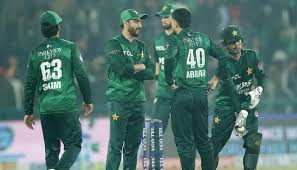
Babar Azam’s brilliant 63 leads Karachi to PSL 2020 title

Kings beat Lahore Qalandars by five wickets in final

KARACHI – Babar Azam’s outstanding innings led Karachi Kings to their maiden Pakistan Super League (PSL) title after a five-wicket win over Lahore Qalandars in the final at the National Stadium, Karachi on Tuesday.

While chasing a small target on a tricky pitch, Azam played a remarkable knock of 63 not out off 49 balls as Kings chased down the target in the 19th over at the expense of five wickets.

For Qalandars, pacers Dilbar Hussain and Haris Rauf were the most successful bowlers as they claimed two wickets each.

Earlier, Lahore captain Sohail Akhtar won the toss and elected to bat first.

His decision, however, proved a disastrous one as Qalandars managed to post a modest total of 134-7 in their 20 overs, despite having a 68-run opening partnership.

Tamim Iqbal finished the innings with the top score of 35 off 38 balls.

For Kings, pacer Umaid Asif, Waqas Maqsood and Arshad Iqbal claimed two wickets each.

Army chief says Balochistan’s development vital for growth of Pakistan

QUETTA, NOV 17 (DNA) – General Qamar Javed Bajwa, Chief of Army Staff( COAS) visited Quetta today. COAS interacted  with participants of National Workshop Balochistan .

The National Workshop  Balochistan is aimed  at enhancing understanding of participants about critical national security issues,  timely decision making process , national security management system  and elements of national power.

Speaking on the occasion,  COAS said that progress and stability in  Balochistan is critical to the prosperity of Pakistan.  All stakeholders including the army have synergized their efforts for socio -eco uplift of the people of Balochistan.

Dilating upon security situation , COAS highlighted measures like fencing of Pak-Afghan and PAK- Iran Border, effective articulation of security apparatus deployed  across the province, Quetta Safe City Project etc will have positive impact on the overall security paradigm of Balochistan.

Nefarious efforts of hostile elements to foment terrorism and create chaos in the largest province of Pakistan wont be allowed to succeed, COAS emphasised. Pakistan’s peace and prosperity is linked with commitment to democracy and its values COAS reiterated.

Later, COAS visited School of Infantry and Tactics( SI& T). COAS was briefed about new  training modules and online examination systems enacted for young leadership. COAS was also briefed about various innovative systems / techniques being incorporated in training regime.

While interacting with faculty and students  of SI&T,  COAS urged them to stay abreast with developments in modern warfare. COAS appreciated the hardwork and dedication of faculty and staff of SI & T in grooming the young officers and soldiers for taking on the future challenges befittingly .

Earlier,  on arrival at Quetta, Lieutenant General Muhammad Waseem  Ashraf, Commander Southern Command received COAS.

PDM announces 12-point ‘Charter of Pakistan’, rejects GB election outcome

Jamiat Ulema-e-Islam (Fazl) chief Maulana Fazlur Rehman on Tuesday announced the goals and principles of the 11-party opposition alliance — the Pakistan Democratic Movement (PDM).

The ‘Charter of Pakistan’, established by the opposition alliance, lists a dozen goals which include:

  • ensuring supremacy and protection of federal, democratic, parliamentary and Islamic constitution’s supremacy
  • independence of Parliament
  • distancing establishment and intelligence agencies from politics
  • establishing an independent judiciary
  • reforms for free and fair elections
  • protection of the public’s basic and democratic rights
  • protection of provincial rights and 18th Amendment
  • establishment of an effective mechanism for local governments
  • protection of freedom of expression and independent media
  • elimination of extremism and terrorism
  • introducing an emergency economic package to eliminate poverty, inflation and unemployment
  • protection and implementation of Islamic sections of Constitution

The charter was announced by Rehman after a meeting of the PDM in Islamabad.

Addressing the media after the meeting, the JUI-F chief said that the alliance had “rejected” the results of the Gilgit-Baltistan elections, adding that the polls were a “replay of 2018 general elections”. He declared that the elections were “stolen” from the masses and “state machinery and institutions were used freely”.

Rehman, who is also president of the PDM, said that the GB polls had proven the PDM’s stance on the 2018 elections as true and vowed that the alliance will not “sit back until this selected government goes home”.

The complete but unofficial results of all the 23 constituencies, where polling was held on Sunday, show that the PTI has emerged as the single largest party with 10 seats, followed by seven independents. The PPP won three seats, the PML-N two and the Majlis Wahdatul Muslimeen, which had a seat adjustment arrangement with the PTI, got one seat.

With the possible inclusion of four, out of six reserved seats for women, and two out of three reserved seats for technocrats, the total number of seats of the PTI and its allies will become 16 in the 33-member GBLA, indicating that it will need the support of only one more winning candidate to form the government.

In his press talk today, Rehman also said that PDM’s “momentum will be increased” and all rallies and public meetings will be held as per schedule.

“We reject the decision that is being taken to suspend rallies and public meetings in the garb of coronavirus,” he told reporters. The PDM, which has already held public meetings in Gujranwala, Karachi and Quetta, is now scheduled to hold public meetings in Peshawar on November 22, in Multan on November 30 and in Lahore on December 13. The PDM has already given the call for a long march to Islamabad in January next year to seek the resignation of Prime Minister Imran Khan.

However, the government has hinted at banning public meetings and rallies in light of rising coronavirus cases.

When asked about Prime Minister Imran’s announcement regarding the introduction of electoral reforms earlier today, Rehman said: “They (government) are used to rigging. They are trying to pressurise other members [of Parliament] and this will not happen. We are taking measures to block this but we won’t tell you about this at this stage.”

The premier had said that the government has decided to move a constitutional amendment in Parliament to introduce a ‘show of hands’ during voting in the Senate elections, instead of secret ballots, as part of its efforts to bring about electoral reforms in the country.

In response to another question, the JUI-F chief said that PDM will not hold talks with the government as the latter “does not represent masses”.

Lahore Qalandars win the toss, opt to bat in PSL V ‘dream final’ against Karachi Kings

Lahore Qalandars have won the toss and decided to bat first against Karachi Kings in the much-awaited finale of the 2020 Pakistan Super League at the Karachi National Stadium.

The final is being played after a gap of nearly eight months after the PSL’s fifth edition came to a halt due to the coronavirus pandemic.

“The way our momentum has been built up and the positive cricket we are playing means we’re confident of putting up a good show,” said Qalandars’ skipper Sohail Akhtar after winning the toss.

Karachi Kings captain Imad Wasim said: “We’ll just have to be at our best and hold our nerve. This is just cricket, not war, and we have to trust our process.”

On Monday, Wasim had noted what makes this PSL final stand apart. “Dream final has been talk of the town even before the playoffs began, and here we are about to realise that dream of not our two teams but the huge following from every nook and corner.”

The most alluring aspect of PSL is that each edition had provided different matchups in the title-decider, meaning no two same sides have confronted each other for the trophy in any of the five seasons. Two-time champions Islamabad United upstaged Quetta Gladiators and Peshawar Zalmi, respectively, in the finals of 2016 and 2018; Peshawar prevailed over a depleted Quetta to be crowned winners in 2017 before Quetta exacted sweet revenge by defeating Peshawar in the 2019 finale.

But this will be the biggest final in terms of rivalry because both Karachi and Lahore have a rich history on sporting fronts over the years at the domestic level, particularly in the period from the 1960s onward until the late 1990s.

Teams:

KARACHI KINGS: Imad Wasim (captain), Babar Azam, Sharjeel Khan, Alex Hales, Iftikhar Ahmed, Chadwick Walton, Sherfane Rutherford, Wayne Parnell, Mohammad Amir, Waqas Maqsood, Arshad Iqbal, Cameron Delport, Mohammad Rizwan, Umaid Asif, Usama Mir, Awais Zia, Aamir Yamin, Umar Khan.

LAHORE QALANDARS: Sohail Akhtar (captain), Fakhar Zaman, Tamim Iqbal, Mohammad Hafeez, Ben Dunk, Samit Patel, David Wiese, Mohammad Faizan, Shaheen Shah Afridi, Dilbar Hussain, Haris Rauf, Usman Khan Shinwari, Abid Ali, Farzan Raja, David Vilas, Maaz Khan, Jaahid Ali, Salman Irshad.

Stay Connected

64FansLike
60FollowersFollow

Latest Reviews

Exchange Rates

USD - United States Dollar
EUR
1.17
GBP
1.35
AUD
0.72
CAD
0.73




