Home Blog Page 2952

Agriculture, livestock major potential of GB region: Italian envoy

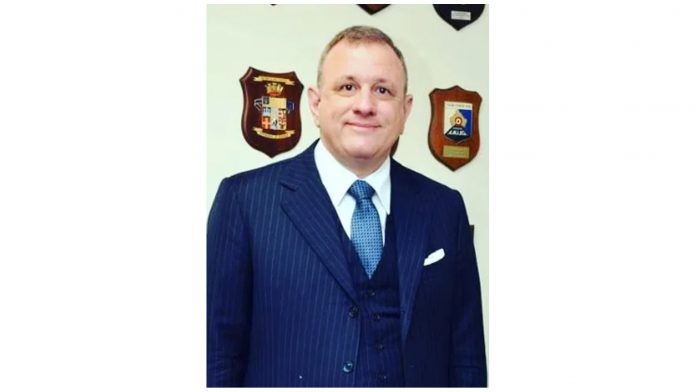
ISLAMABAD, Feb 07 (DNA): Ambassador of Italy to Pakistan Andreas
Ferrarese on Sunday said Gilgit Baltistan has huge potential in
agriculture and livestock and transfer of technology would be must to
promote the value addition in these sectors.

Gilgit Baltistan is potential region for promoting the agriculture, live
stock, horticulture and tourism and Italian government can cooperate to
enrich the true potential of these sectors, Ambassador, Andreas
Ferrarese said this in follow-up meeting to Chairman Pakistan Federation
Chamber of Commerce and industry (FPCCI) Capital Office, Qurban Ali
here.

The Ambassador said currently Italy was providing technical assistance
in Agriculture and horticulture upgradation through modern machinery,
value addition in agriculture, livestock and tourism sectors in the
region, said a news release.

He said Pakistan was working to expand it to Agricultural items
including dairy and livestock, olives and olive products, plastics,
processed food and construction sector in Italian market.

Andreas Ferrarese underlined the importance of promoting cultural
connectivity with Pakistan and regional cultures to promote bilateral
trade.

The Ambassador said that dairy and Agriculture and livestock, cherries
and cherries products, processed food and the construction sector were
the areas where Italy could extend its cooperation with Pakistan.

He also agreed to provide ease for the family VISAs to Pakistani
businessmen and traders to further promote business to business ties
between Pakistan and Italy.

“Simplification of the VISA process and procedure is the top priority of
the Italian embassy in Islamabad” he said.

He said that this would help business communities from both the
countries to enhance mutual interaction for exploring new avenues of
mutual businesses and investment to increase the bilateral trade between
both sides.

The Ambassador said that Chief Minister, Gilgit Baltistan Khalid
Khurshid is also ready to enhance cooperation in different potential
sectors for trade and investment.

He was of the view that Italy can extend its cooperation to equip and
train the local youth with modern skills and technology to enhance their
contribution in the local economy.

Andreas Ferrarese said that “We are living in the era of economic
diplomacy and economic trade relations are the assurance for peace,
harmony and stability between the countries.”

He said that both sides want to achieve their economic and trade
integration through the cooperation and exchange of culture and art to
cement bilateral relations.

The Ambassador said that green economy, transfer of technology for
industrial sector including livestock and agro industry, education and
health are major areas of focus to extend the bilateral cooperation with
Pakistan.

The ambassador said that through the green economy, Italy wanted to
cooperate with Pakistan for environment protection, circular
economy,resource saving and management, ecosystem protection and
recovery,water conservation and natural disaster prevention.

He said that in coming November,”We would initiate the upcoming derives
of the green economy in Karachi, where experts, business including
people from all walks of life to share their view applicable model for
the green economy and its due role in the country’s economy.

While meeting Chairman FPCCI, Capital Office Quran Ali said that local
business is committed to connect with potential economies like Italy and
other European Union (EU) countries.

He proposed the simplification of the Visa process for the business
community and exchange of business delegation to further enhance the
trade linkages between both sides. DNA

=======

Community empowerment is vital for sustainable development, say experts

Devcom-Pakistan Executive Director Munir Ahmed urged the government to develop a mechanism to engage all to work together even after the projects ended. The Chinese model of community development can be a role model for us where women empowerment is the focus

ISLAMABAD, FEB 7 (DNA) – Speaking at a webinar the participants urged the respective governments to develop a mechanism to ensure the use of collective wisdom and a joint platform to work together for social development. They said the mountain community leaders and political workers shall come together beyond their political, ethnic and regional divide to voice against the exploitation of natural resources, social and livelihood challenges.

Being far away from the centres of decision-making, the mountain communities and the region in totality suffer from inadequate decision-making. The mountain development and conservation plans of the government shall include the voices and concerns of the communities and other stakeholders.

Ill-planned infrastructure development and environmentally unfriendly interventions in the name of tourism promotion and livelihood are becoming nature hazards. Climatic conditions are worsening and communities are on the verge of socioeconomic collapse despite. A fistful of experts, government aides and external elements are taking undue advantage of the mountain resources.

The webinar “working together to empower mountain communities” was organized by the Development Communications Network (Devcom-Pakistan) and DTN on Sunday.

Speaking on the occasion the nature conservation advisor at the Italian organization EvK2CNR Ashiq Ahmad Khan said unfortunately we don’t have the culture of working together though it is necessary for the sustainability of the development. Sometimes people have lesser abilities but they don’t invite the better skilled persons to work on community based initiatives. Even, they feel reluctant in empowering the communities. They believe that after empowering communities, perhaps, they would become irrelevant.

He said the respective federal and provincial governments should develop an inclusive platform with the support of the private sector to continue with the development initiatives even after the project is over. This is not possible if it is not envisaged in the project at the initial stage and the community is not embedded in it.

Well-known mountaineer Nazir Sabir said mountain areas lack basic amenities and social infrastructure which is the prerequisite for the empowerment of communities. We need to provide them facilities at their doorsteps. Women in the mountain region are disadvantaged in many ways. They lack health, education and equal rights as a person.  In addition to the challenges of living in the mountains, like harsh climate and inadequate infrastructure they experience unequal treatment based on traditional gender relationships that deprives them from equal access to health, education, property and wellbeing. Focusing on women empowerment will ultimately improve the social and living conditions in the mountain parts of the country.

Devcom-Pakistan Executive Director Munir Ahmed we need to look into the factors that why several nongovernmental organizations and donor-driven government projects could not come up with the desired results of community empowerment. The vulnerability of communities is increasing due to climate impact, indiscriminate deforestation, over exploitation of natural resources and shrinking livelihood options.

Life is also under stress because of rapid social changes and local political conflicts and natural disasters. Male migration from mountains to urban towns for education and employment is causing a severe shortfall of human resources which is increasing more workload on women. He said Chinese model of community development can be a role model for us where women empowerment and engagement is the focus.

M. Iqbal, chairman Baltistan Association of Tour Operators (BATO) we have networks of travel and tourism organizations but they hardly join hands for collective promotions. Individualistic approach is against the collective good for the region and country but we are more interested in individual initiatives so have more vested benefits.=DNA

=================

FEBR calls for long-term policies for high industrial growth

ISLAMABAD, FEB 7 (DNA) – The Friends of Business & Economic Reforms (FEBR) President Kashif Anwar on Sunday said the government has to formulate long-term and consistent policies for high industrial growth and sizeable improvement in exports, as Pakistan’s export has been stagnant for a long time.

Kashif Anwar observed that the output of Pakistan’s large industries has improved by around 7.5% in the first five months of current fiscal owing to sustained growth momentum, which is a ray of hope for economic revival. He said that cut in interest rate and reduction in duties on raw materials is expected to further spur economic activities in the current fiscal year.

He said that the growth has now broken a cycle of constant contraction in past over one year. He was hopeful that present trend of positive growth in large-scale manufacturing (LSM) will help achieve the annual economic growth target, besides creating jobs for skilled and unskilled workers.  Unless attention is paid to all factors that hamper industrial and exports growth, the country might not be able to achieve the desired results, he warned.

He said that businesses had been bearing the brunt of very high interest rate, issues of the Federal Board of Revenue and high energy prices. The sectors which registered a dip in their production included iron and steel whose production fell 3.7%, electronics 18%, leather products 43%, engineering products 32.6% and wood products 65% during the July-November period.

He said that the World Bank released a new report, which showed a gloomy picture of Pakistan’s economy. On a month-on-month basis, the LSM sector showed only 1.4% growth in November over Oct 2020. Data collected by the Oil Companies Advisory Committee showed that 11 types of industries registered average growth of just 0.09% in the first five months of current fiscal year. He said that Pakistan needs 6-7% annual economic growth to reduce poverty and unemployment.

He said that the Large-Scale Manufacturing sector registered a cumulative growth of 7.5% in July-Nov of current fiscal year, but industry has not yet achieved the production levels seen before the first wave of the coronavirus hit the country in Feb last year.

He said that industrial production after suffering months of damage inflicted by the corona pandemic mainly in the construction, sugar, automobile, and pharmaceutical sectors is now clearly reflecting a revival in economic activities in the country.

For the current fiscal year the government had set the economic growth target at 2 percent, which will be better in the current economic situation but is not enough to create jobs for a growing population. Out of 15 major sectors, 10 sectors recorded positive growth while output of five sectors contracted in the first five months of current fiscal year.

The LSM sector recorded a 14.5% year-on-year growth in Nov, which is the highest LSM growth but it is also the fact the index was still below the level of 160 points recorded in March last year, as the index jumped to still 147 in Nov 2020.=DNA

====================

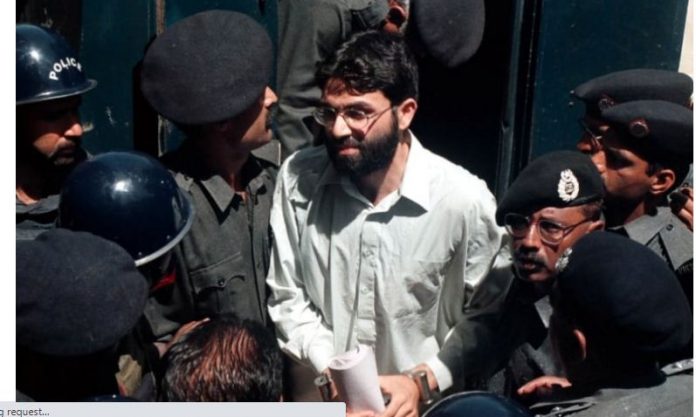
Daniel Pearl case: Omar Sheikh moved to Karachi jail

Ahmed Omar Sheikh, who was convicted of kidnapping and facilitating the murder of US journalist Daniel Pearl, has been moved to the Central Jail in Karachi.

Sheikh and four other suspects, Fahad Nasim Ahmed, Salman Saqib and Sheikh Muhammad Adil, named in the case were moved on Saturday night to a new building constructed in the prison.

Earlier this month, the Supreme Court instructed authorities to move him to a barrack from a death cell. They were told to find a suitable rest house for him, and shift him there on Kashmir Day (February 5).

Sheikh’s family will be able to meet him from 9am to 5pm and he will not have access to a mobile phone or internet service. The government has made arrangements for the stay of the suspects’ families at Qasr-e-Naz, the government’s rest house.

Sheikh’s family will meet him on February 8 [Monday], Sheikh Aslam, the brother of one of the suspects in the case, told SAMAA Digital.

On January 28, the Supreme Court ordered Sheikh’s release. The White House said it was “outraged” by this decision. Following this, the Sindh and federal governments filed a review petition against the verdict.

The men were kept in detention after their release orders were issued in April 2020. However, their lawyers challenged them. The court said that Sindh government was extending their detention “without lawful authority”.

Who was Daniel Pearl?

Pearl, 38, was the South Asia bureau chief for The Wall Street Journal when he was abducted in Karachi in January 2002 while researching links between militants in Pakistan and Richard C Reid, who is also known as the ‘shoe bomber’ for trying to detonate a shoe bomb while on a flight from Paris to Miami in 2001.

Pearl’s wife Mariane Pearl, a US national who was living in Karachi’s Zamzama, wrote a letter to the Artillery Maidan police on February 2, 2002, and said her husband disappeared on January 23, 2002. She said she received an email from the abductors saying that he has been abducted “in retaliation for the imprisonment of Pakistani men by the US government in Cuba and other complaints”.

A graphic video showing Pearl’s decapitation was delivered to the US consulate in Karachi nearly a month after he was kidnapped.

After this, a case was filed against the suspects and 23 witnesses were produced in the case by the prosecution. Sheikh was arrested by Pakistani security agencies in February 2002 and an anti-terrorism court convicted him and others on July 15, 2002.

An investigation, led by Pearl’s friend and former Wall Street Journal colleague Asra Nomani and a Georgetown University professor, claimed the reporter was murdered by Khalid Sheikh Mohammed, the alleged mastermind of the September 11, 2001 attacks, not Sheikh. Mohammed — better known as KSM — was arrested in Pakistan in 2003 and is being held at Guantanamo Bay.

Google moves away from diet of ‘cookies’ to track users

San Francisco, Feb 7  : Google is weaning itself off user-tracking “cookies” which allow the web giant to deliver personalized ads but which also have raised the hackles of privacy defenders.

Last month, Google unveiled the results of tests showing an alternative to the longstanding tracking practice, claiming it could improve online privacy while still enabling advertisers to serve up relevant messages.

“This approach effectively hides individuals ‘in the crowd’ and uses on-device processing to keep a person’s web history private on the browser,” Google product manager Chetna Bindra explained in unveiling the system called Federated Learning of Cohorts (FLoC).

“Results indicate that when it comes to generating interest-based audiences, FLoC can provide an effective replacement signal for third-party cookies.”

Google plans to begin testing the FLoC approach with advertisers later this year with its Chrome browser.

“Advertising is essential to keeping the web open for everyone, but the web ecosystem is at risk if privacy practices do not keep up with changing expectations,” Bindra added.

Google has plenty of incentive for the change. The US internet giant has been hammered by critics over user privacy, and is keenly aware of trends for legislation protecting people’s data rights.

Growing fear of cookie-tracking has prompted support for internet rights legislation such as GDPR in Europe and has the internet giant devising a way to effectively target ads without knowing too much about any individual person.

– ‘Privacy nightmare’ –

Some kinds of cookies — which are text files stored when a user visits a website — are a convenience for logins and browsing at frequently visited sites.

Anyone who has pulled up a registration page online only to have their name and address automatically entered where required has cookies to thank.  But other kinds of cookies are seen by some as nefarious.

“Third-party cookies are a privacy nightmare,” Electronic Frontier Foundation staff technologist Bennet Cyphers told AFP.

“You don’t need to know what everyone has ever done just to serve them an ad.”

He reasoned that advertising based on context can be effective; an example being someone looking at recipes at a cooking website being shown ads for cookware or grocery stores.

Safari and Firefox browsers have already done away with third-party cookies, but they are still used at the world’s most popular browser – Chrome.

Chrome accounted for 63 percent of the global browser market last year, according to StatCounter.

“It’s both a competitive and legal liability for Google to keep using third-party cookies, but they want their ad business to keep humming,” Cyphers said.

Cyphers and others have worries about Google using a secret formula to lump internet users into groups and give them “cohort” badges of sorts that will be used to target marketing messages without knowing exactly who they are.

“There is a chance that it just makes a lot of privacy problems worse,” Cyphers said, suggesting the new system could create “cohort” badges of people who may be targeted with little transparency..

“There is a machine learning black box that is going to take in every bit of everything you have even done in your browser and spit out a label that says you are this kind of person,” Cyphers said.

“Advertisers are going to decode what those labels mean.”

 He expected advertisers to eventually deduce which labels include certain ages, genders or races, and which are people prone to extreme political views.

A Marketers for an Open Web  business coalition is campaigning against Google’s cohort move, questioning its effectiveness and arguing it will force more advertisers into its “walled garden.”

“Google’s proposals are bad for independent media owners, bad for independent advertising technology and bad for marketers,” coalition director James Rosewell said in a release.

Gold price staggers as tola drops to Rs111,800

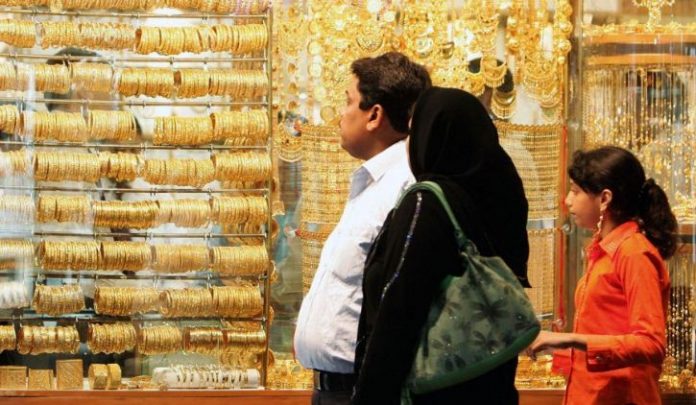
The price of gold has dropped by Rs1,500 in Pakistan in February so far. A tola now costs Rs111,800, according to rates shared by the All-Sindh Sarafa Jewelers Association on Saturday.

Gold prices in Pakistan respond to its international rate. Its price has been dropping internationally since the news of the successful development of the coronavirus vaccines and the start of the vaccinations globally.

According to a gold expert, people are now directing their investment to the equity markets, which are stock markets such as the Pakistan Stock Exchange (PSX).

The international price of gold was $1,815 by Saturday evening.

“The price of gold has been declining but it’s not as if the precious metal value will deflate considerably,” said Adnan Agar, a commodities expert. “The US think tanks are considering the stimulus package of $1.9 trillion. If that happens, it will weaken the dollar and gold [and other metals] are inversely proportional to the value of the greenback.”

“During February on a short-term basis, gold may not lose significant value,” he added.

The price of gold started increasing internationally as countries across the world went into lockdowns in March 2020. It rose from $1,471 to reach an all-time high of $2,063 per ounce by August 6.

“Whenever there’s a year of low economic growth, the next year is generally considered a year of recovery,” Agar said. “So, expectations are that economies will recover this year so the price of gold may go down.”

The prices of gold and other precious metals increase because of uncertainty as they are considered safe for investment. Their prices fall when stable times are expected ahead. Investors turn to gold when things don’t look in favor of the economy and subsequently in stocks.

As the economy starts improving, investors move to capital market from gold and other metals. The situation in America plays an important role in influencing gold prices globally.

ICCI organizes mega auto show to highlight potential of automobile sector

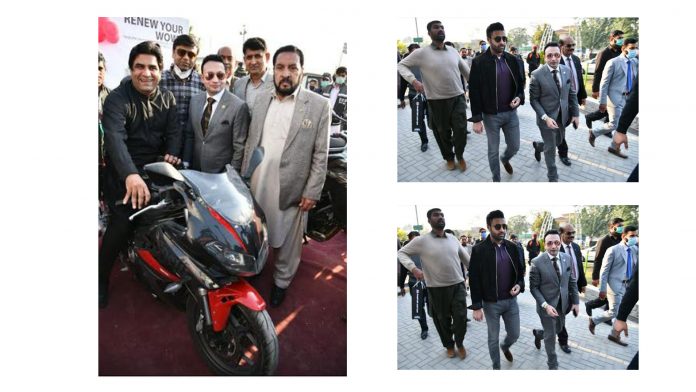
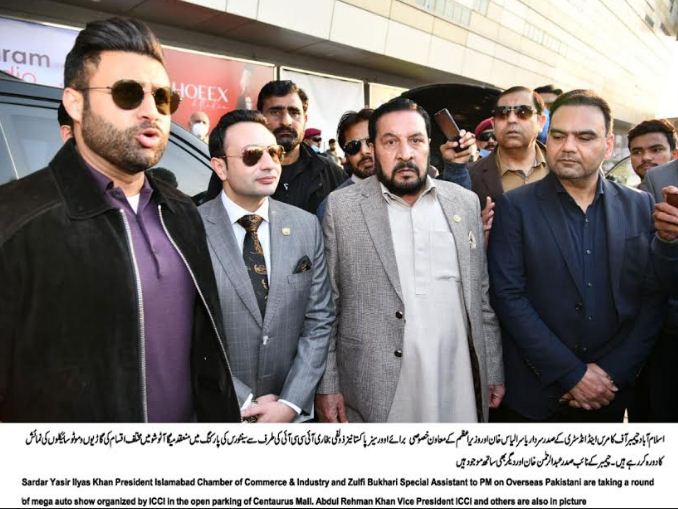
ISLAMABAD, FEB 7 (DNA) – The Islamabad Chamber of Commerce & Industry (ICCI) in collaboration with the Centaurus Mall, Islamabad organized a mega show of automobile brands in the open parking of Centaurus to highlight the potential of the automobile sector for economic revival of the country.

All major local and international auto brands like cars, SUVs, jeeps, heavy bikes, motorcycles including Toyota, Honda, Isuzu, Benelli, Aprilia, Changan Alsvin, Sigma, antique, vintage and exotic vehicles etc. were displayed for the interest of the visitors. Exclusive auto brands including Lamborghini, Ferrari, BMW, Range Rover, Audi, Mercedes were also on display.

This was the first of its kind auto show organized by the ICCI to cater to the needs of corporate and consumers markets. The auto show was free of cost while food stalls, and refreshment counters were also arranged for the convenience of the participants. At the conclusion, a musical concert was held for the entertainment of the people.

Zulfiqar Abbas Bukhari (Zulfi Bukhari) Special Assistant to PM on Overseas Pakistanis and HRD inaugurated the auto show as Chief Guest. Ali Nawaz Awan, Special Assistant to the PM on CDA Affairs was also present at the occasion. Fatma Azim Senior Vice President, Abdul Rehman Khan Vice President ICCI, Mian Akram Farid Chairman Founder Group and a great number of business community attended the auto show. A large number of people from all walks of life including some foreign nationals turned up to attend the auto show and they took keen interest in various types of auto brands.

DNA 7-3

Speaking at the occasion, Zulfi Bukhari SAPM on Overseas Pakistanis & HRD and Ali Nawaz Awan SAPM on CDA Affairs appreciated the initiative of ICCI for organizing an impressive automobile show in collaboration with the Centaurus Mall. They said that the Covid-19 pandemic has badly affected business activities across the world including Pakistan and after the reduction in coronavirus cases, organizing such events was very important to revive and boost the economy. They said that with the improvement of Covid-19 pandemic situation, the government would encourage more such initiatives as Pakistan needed to organize trade fairs and exhibitions on a regular basis to boost its trade & exports and stabilize its economy.

Sardar Yasir Ilyas Khan, President, Islamabad Chamber of Commerce & Industry (ICCI) in his welcome address said that the automobile sector was playing a vital role in the development of our economy in terms of revenue generation, foreign exchange, employment creation, and technology transfer, therefore, there was a great need to further promote it to steer the country out of current challenges. He said that the automobile sector was contributing nearly Rs.50 billion to the national exchequer, providing employment to around 3.5 million people besides playing a key role in the growth of the vendor industry and stressed further supporting this sector would help in creating more jobs, providing better auto solutions to people and generating additional tax revenue. He said that the government should focus on promoting the indigenous automobile industry so that instead of importing most of the vehicles and spare parts, all auto brands could be manufactured in the country. He said that for this purpose, the government should announce special tax incentives to attract maximum local and foreign investors in this important sector. He said that the purpose of organizing a mega auto show in Islamabad was to showcase the potential of the automobile sector and enable the general public of the region to find automobile brands of their choice at one location. He assured that the ICCI would continue to organize more expos/exhibitions in the coming months to highlight the potential of various sectors of our economy and generate more economic activities.=DNA

====================

Ruthless Medvedev, Rublev fire Russia to maiden ATP Cup victory

Melbourne, Feb 7  : A relentless Russia crushed Italy 2-0 to win their maiden ATP Cup Sunday with Daniil Medvedev and Andrey Rublev in ruthless, red-hot form leading into the Australian Open.

Russia were the only nation in the 12-team event to boast two top 10 players and they had swept past Japan, Argentina and Germany en route to the decider.

Italy were flattened by the same Russian juggernaut on Rod Laver Arena, with Rublev destroying Fabio Fognini 6-1, 6-2 in just 61 minutes before Medvedev overpowered Matteo Berrettini 6-4, 6-2 in 79 minutes.

“It’s unbelievable,” said Russia captain Evgeny Donskoy.

“If the level is going to be the same, these guys are going to see each other in the (Australian Open) quarter-finals because I saw the draw.”

World number four Medvedev and eighth-ranked Rublev have been the two hottest players on tour since last year’s US Open.

They kick off their Australian Open campaigns on Tuesday and are scheduled to meet in the last eight.

Medvedev is now on a career-long win streak of 14 matches, including his third ATP Masters title in Paris and victory at the season-ending ATP Tour Finals, with 10 of those victories over top 10 opponents.

“It’s a really big achievement … it’s a big boost in confidence,” said Medvedev of his run of wins against top-ranked players.

“Even when you lose, you know that you’re capable of playing this level, and it helps you for the next time to stand up.”

Rublev has been equally impressive, winning five ATP titles in a breakthrough 2020, more than anyone else, as he raced up the rankings.

He ended his season by beating world number three Dominic Thiem at the ATP Finals and has started 2021 with four straight wins at the ATP Cup, dropping just one set, to make him a contender at the Australian Open.

His sizzling form extended to world number 17 Fognini, who went into the match with a 5-1 record against the Russian but was blown away.

– Machine-like Medvedev –

Rublev dominated with his forehand and lost just seven service points in the entire match.

“I was playing really well all week since the first match and I was just going on court thinking that I needed to fight for every ball,” said Rublev.

“I knew it didn’t matter the score, he always has a chance. He always knows how to come back, so I was trying to keep going no matter the score.”

Medvedev faced a tougher assignment against Berrettini, the world number 10 who has also been in prime early season form, winning all his matches before meeting the Russian, including against world number three Dominic Thiem.

The 24-year-olds had only met once before, in 2018, when Medvedev won, and he took an early break in the opening set to go 3-1 ahead, holding on to serve out the set.

It followed a similar pattern in the second set with the machine-like Medvedev raising his game to another level to grind down Berrett

“He’s playing really good. He’s confident, you can tell. He’s a really tough player to beat,” said Berrettini of Medvedev. “These days, you just have to say bravo to him and think about the next matches.”

Serbia beat Spain in the final of the inaugural and hugely popular tournament last year in Sydney — launched as a rival to the Davis Cup.

It has been slimmed down from 24 teams to 12 this year due to the coronavirus over five days at Melbourne Park with $7.5 million at stake, rather than the multi-city format employed in 2020.

Kashmir-The Pearl in Peril

Uffaq Khalid

Research Associate, Islamabad Institute of Conflict Resolution (IICR)

Kashmir is usually referred to as “earthly heaven” for its scenic beauty. The mountainous valley has been a center of conflict between the two nuclear giants of South-Asia since the 1947 unjust partition of British India. Both the countries have fought two wars over their rival claims.The volatile region has long endured instability and political strife.

Kashmir, the majestic area in the shadow of Himalayas long stuck between India and Pakistan, has sunk into the state of suspended animation. Curfews have been imposed, lifted and then reimposed. An uneasy stalemate has prevailed for decades, shattered by sporadic military intrusions, crackdowns by Indian police and terrorist attacks.

The year 2019 is known for one of the dramatic political eruptions in Kashmir. The year started with India’s staged Pulwama attack which led further escalation when India broke diplomatic norms by crossing international borderssince 1971 war. Territorial breach by Delhi was well responded by Pakistan. The air skirmishes led to the kneeling down of Indian pilots and being captured by Pakistan. However, Pakistan quickly returned the captured pilots as a “goodwill gesture”.

A climax of sorts came to the Kashmir dispute on August 5th, when the Modi’s government amended its legislation to annex the part of Kashmir that it controls, leaving the world in awe. Prime Minister Narendra Modi revoked the Article-370, a 70 year old provision that had granted limited autonomy to the states of Jammu and Kashmir. The states went under the direct control of central government through a bill introduced by BJP’s administration. Kashmiris opposed dissolving the region’s autonomous status and Pakistan condemned the India’s moves globally.

Kashmir has been subject to unprecedented lockdown even a year after India abrogated the special status of Jammu and Kashmir. People are still bound to live under lockdowns, curfews and communication restrictions. The lockdown has brought a toll on Kashmir’s economy, infrastructure and mental health of people. The educational institutions have been closed in Kashmir for a year and children are not able to go out freely.

The repression policy of India in Kashmir has resulted in grave human rights violations by the Indian security forces. The United Nations’ report,“Children and Armed Conflict” has verified the brutal killing of 15 children during joint operations of Indian Army and Central Reserve Police Force. According to the report, 68 children have been detained by Indian forces in this year on National-security related charges. According to a Kashmir-based human rights activist, “The lives of Kashmiris are shaped by a sense of injustice and the tendency to accept violence increases with time. All these things have a negative impact on their mental health.”

There is widespread panic in Kashmir. Life remains hard in Kashmir with hundreds of check-posts and cyber curfew still in place. The BBC report revealed the use of pellet guns, tear-gas and electric shocks by the occupation forces. The Indian forces arrested more than 500 people since August 5, the report said.

“Kashmir is under siege at the moment” but women are the biggest victims of this inhumane siege. The women of IIOJK continued to face unending trauma and terror of being abducted and molested at the hands of Indian forces in the name of ‘Search operations’.

Modi’s aggressive Hindutva policy has brought the India and Pakistan at daggers drawn. The anti-Islamic rhetoric of BJP and Modi fostering Hindu nationalism is a clear move to integrate Kashmir and change the Kashmir’s demographics. The renewed tensions between the bitter nuclear-rivals over Kashmir dispute have been raising the global anxiety and putting the world on high alert.

The year 2021 marks the 74 years of Indian invasion in Kashmir. For more than seventy years’ protracted efforts by the UN officials and UNCIP have failed to settle the dispute. The international community and human rights watch-dogs are not breaking the silence on the massive human rights violations in the valley.

In order to look into the future, there cannot be a military solution to the Kashmir conflict. Both nuclear-rival states need to realize the destructive consequences of military confrontation. Otherwise the conflict would continue to hang over the whole region like the Sword of Damocles.

The both sides must sincerely move forward without any preconditions and grudges for peace initiative. Let the people of Jammu and Kashmir enjoy the opportunity to determine their future in fair and democratic atmosphere. Let humanity live.

Former world heavyweight champion Leon Spinks dead at 67

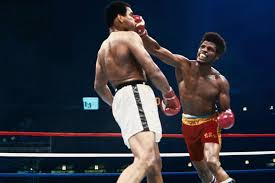
Los Angeles, Feb 7  : Former world heavyweight boxing champion Leon Spinks, who took the crown from Muhammad Ali in 1978 before losing a rematch, died on Friday, according to his publicists. He was 67.

Spinks had been hospitalized in December at Las Vegas before losing a five-year battle with cancer with his wife, Brenda Spinks, at his side, according to a statement from The Firm PR to Las Vegas television station KVVU.

“His final fight was fought with the same skill, grace and grit that had carried him through so many lifetime challenges,” the statement said.

“Leon fought his battle with numerous illnesses resiliently, never losing his trademark smile. Showing true Spinks determination, he never threw in the towel.”

Spinks finished his career 26-17 with three draws and 14 knockouts, but struggled to try and recapture the fame that came early in his career in one of the most shocking upsets in boxing history.

With a trademark gap-toothed grin, Spinks fought his way to Olympic gold in 1976 as a US light heavyweight in Montreal and turned professional six months later at age 23.

After only eight professional fights, seven wins and a draw, Spinks was sent into the ring against iconic Ali on February 15, 1978 at the Las Vegas Hilton.

Spinks captured a 15-round split decision over a 36-year-old Ali, who lost world crowns in the ring for the only time in his career, falling to 55-3 as Spinks claimed the heavyweight title in the shortest time of any fighter in history, only 13 months after his pro debut.

It would be the greatest moment of his career.

Seven months later, in a rematch before 70,000 at the Superdome in New Orleans, a fit and formidable Ali won a unanimous 15-round decision in what would be the final victory of his legendary career, making Ali the first three-time champion in heavyweight history.

Spinks had been stripped of the World Boxing Council crown for taking the rematch with Ali rather than face mandatory challenger Ken Norton, so the second fight was only for the World Boxing Association title.

Spinks lost his next fight as well but earned another shot at the crown in 1981 against Larry Holmes only to be stopped in the third round.

It took nearly five years for Spinks to gain another chance at a world crown but he fought for the WBC crusierweight title in 1986, stopped in the sixth round by Dwight Muhammad Qawi.

That began a run where he managed only one win and one draw in 10 fights. He lost five of his final eight fights before retiring in 1995.

Spinks’s son, Cory, was an undisputed welterweight champion from 2003-2005 and had brief junior middleweight reigns in 2007 and 2009.

Spinks’s younger brother Michael was a 1976 Olympic middleweight champion who was the undisputed light heavyweight champion from 1983-1985 and a heavyweight champion from 1985-1986.

Stay Connected

64FansLike
60FollowersFollow

Latest Reviews

Exchange Rates

USD - United States Dollar
EUR
1.14
GBP
1.33
AUD
0.69
CAD
0.70