Home Blog Page 2922

New Uzbekistan and electoral legislation

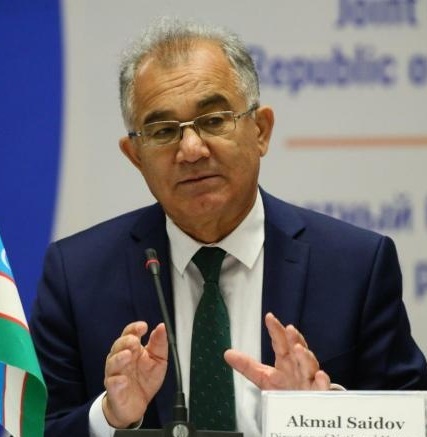
Akmal Saidov

As part of the large-scale and consistent reforms carried out in the country aimed at creating a new democratic and free Uzbekistan, special attention is paid to the implementation of the constitutional principle of democracy, ensuring the participation of citizens in government and society, as well as improving electoral legislation. For democratic and fair elections are considered the most important and necessary condition for democracy.

This is evidenced by the elections held in 2019, according to the President, based on the priority idea «New Uzbekistan – new elections – new parliament». They clearly demonstrated that a new political environment has formed in the country, which is necessary for raising democratic reforms to a new level. The elections, which were held for the first time on the basis of the Electoral Code of Uzbekistan, gained useful experience, however, some gaps in the legislation were identified. In accordance with the 2020 State Program, a draft law has been developed aimed at improving the electoral legislation. It was considered twice in the chambers of the Oliy Majlis with the participation of members of the Central Election Commission, senators and deputies. In May-June 2020, a public discussion was held.

«The path of democratic reforms is the only and surest path for us»

The priority tasks today are improving the national electoral legislation and the practice of holding elections, bringing them in line with generally recognized international standards, harmonizing with the ongoing democratic reforms, increasing the country’s political authority and its place in international ratings and indices.

First, it is necessary to convey to the international community the essence of the reforms being carried out in this direction by eliminating the shortcomings and problems that have arisen in the 2019 parliamentary elections, and by implementing certain acceptable recommendations of international organizations and foreign observers into national legislation.

Secondly, Uzbekistan ranks 157th in the World Democracy Index. Therefore, in accordance with the Decree of the President «On improving the position of the Republic of Uzbekistan in international ratings and indices, as well as the introduction of a new mechanism for systematic work with them in state bodies and organizations» from June 2, 2020, the goal was set – by 2022 to increase the indicators of our country in the direction «The electoral process and pluralism» sixfold.

Thirdly, increasing the electoral culture of the population, further improving the system of work of political parties with their electorate, and strengthening their political activity are of great importance in the consistent implementation of electoral legislation. For «The path of democratic reforms is the only and surest path for us».

What was paid attention to when developing the bill

In accordance with Article 83 of the Constitution, a group of deputies, on the basis of the right of legislative initiative, submitted for discussion to the Legislative Chamber a draft law «On amendments and additions to some legislative acts of the Republic of Uzbekistan in connection with the improvement of electoral legislation».

It was developed within the framework of the State Program for the Implementation of the Strategy of Action for Five Priority Areas of Development of the Republic of Uzbekistan in 2017-2021 in the Year of Development of Science, Education and the Digital Economy.

When developing the draft law, they relied on three sources:

  • national electoral legislation and practice;
  • experience of more than 20 foreign countries in holding elections;
  • international norms and standards regarding elections.

This bill proposes to make changes and additions:

  • Article 117 of the Constitution of the Republic of Uzbekistan;
  • Article 3 of the Constitutional Law «On the Results of the Referendum and the Basic Principles of the Organization of State Power»;
  • In 29 articles of the Electoral Code of the Republic of Uzbekistan;
  • In 6 articles of the Law on the financing of political parties.

The writer is the First Deputy Speaker of the Legislative Chamber of the Oliy Majlis (Parliament) of the Republic of Uzbekistan.
PSL 2021: Wasim, Gregory star as United beat Sultans

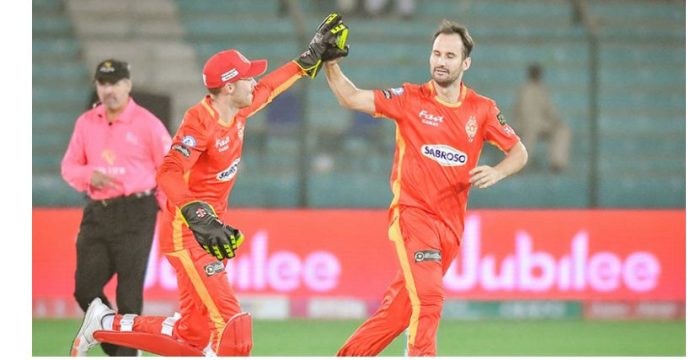
KARACHI, FEB 22: An inspirational bowling performance from young Mohammad Wasim and an all-round display from Lewis Gregory helped Islamabad United in securing a three-wicket win over Multan Sultans in the Pakistan Super League (PSL) 2021.

In the second match of the day and the third game of the competition, United captain Shadab Khan won the toss and elected to bowl first.

Sultans put a decent total of 150-8 in their allotted 20 overs, courtesy a sublime half-century from their new captain Mohammad Rizwan who scored 71 off 53 with the help of eight fours and two sixes.

For United, young pacer Mohammad Wasim was the pick of the bowlers as he registered figures of 3-29 in his quota of four overs.

Right-arm pacer Hasan Ali also had an impressive debut for United as he finished with figures of 1-16 is his four overs.

In reply, the winning team managed to chase down the target in 19 overs at the expense of seven wickets.

All-rounder Lewis Gregory, who claimed two wickets with the ball in hand, played an impressive knock of an unbeaten 49 off just 31 balls and took his team over the line.

For the losing team, veteran leg-spinner Shahid Afridi and pacer Carlos Brathwaite were the pick of the bowlers as they claimed two wickets each.

For his outstanding display, Gregory was named player-of-the-match.

Top Turkish diplomat to address UN Human Rights Council

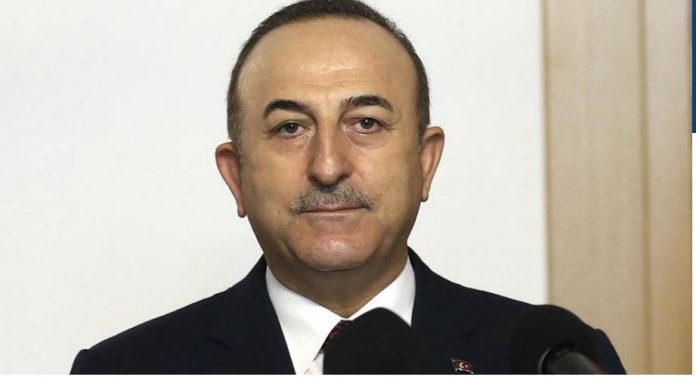
ANKARA, FEB 21 – Turkey’s foreign minister will address a meeting of the UN Human Rights Council on Monday, according to an official announcement.

Mevlut Cavusoglu will attend via video link the council’s 46th session in Geneva, which will last for three days, said a Foreign Ministry statement on Sunday.

In his address, said the statement, “Cavusoglu will point out the recent global issues concerning human rights and emphasize Turkey’s strong commitment to protecting and promoting fundamental rights and freedoms.”

The Human Rights Council is an inter-governmental body within the UN system made up of 47 states responsible for the promotion and protection of all human rights around the globe, according to the council website.

The council has the ability to discuss all thematic human rights issues and situations that require its attention throughout the year.

RCCI build expo and construction trade fair on Feb 26

RAWALPINDI, FEB 21 (DNA) – The Rawalpindi Chamber of Commerce and Industry (RCCI) is organizing the first Build 2021 Construction Trade Fair from February 26 to 28 at Topi Rakh Ayub Park. Construction and Developers  affiliates and companies will set up stalls.

RCCI President Mohammad Nasir Mirza in a statement said that more than 40 industries are connected with the construction sector.

The Chamber has welcomed the construction package from the Prime Minister and the extension at the last date would further accelerate the construction sector and create more employment opportunities.

He said that similar incentives should be announced for other sectors as well.  This will help the economy to grow rapidly and put the country on the prosperous and progress path. The boom in the economy will help in eliminating unemployment in the country.=DNA

==============

CDA starts drains clean-up campaign

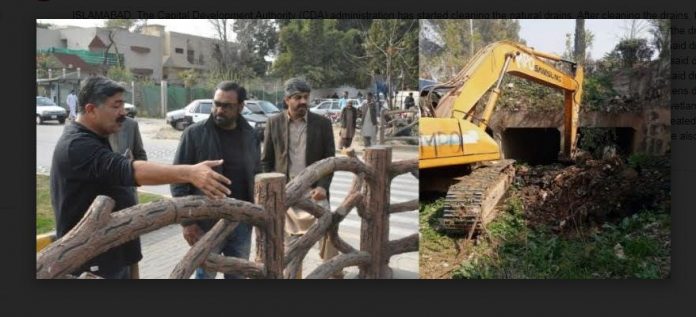
ISLAMABAD, FEB 21 (DNA) – The Capital Development Authority (CDA) administration has started cleaning the natural drains. After cleaning the drains, forests will be set up on their banks. According to details Member Finance, Director General Management, Deputy Director General of Civic Management visited the drains of F-6 and F-7 last day and a heavy machinery of the MPO department is being deployed here to clean the drains.

With the collection of garbage from the said drains, it is also being removed without any bend. Tenders have been issued to prevent the sewerage coming in the said drains. The work of cleaning the said drains will continue till the complete cleaning of all the drains of Islamabad. Along with the cleaning of drains, fences will also be installed on the banks of the said drains so that garbage and sewage from the edges cannot enter the drains.

Action will be taken against those who dump garbage and debris in the drains. Citizens dump their garbage in the natural drains near the slums. Instructions will be issued against them first, then notices will be issued and fines will be imposed.

A wetland is being set up in F-11 to control the garbage and stench coming from the drains near Golra so that the sewage coming from the population of Golra will be treated and its stench and waste will be removed and this water will be discharged into the drains again.

The wetland will also be completed in the next two weeks. He also appealed to them to cooperate with the institution and avoid dumping garbage and debris in the drains.=DNA

===============

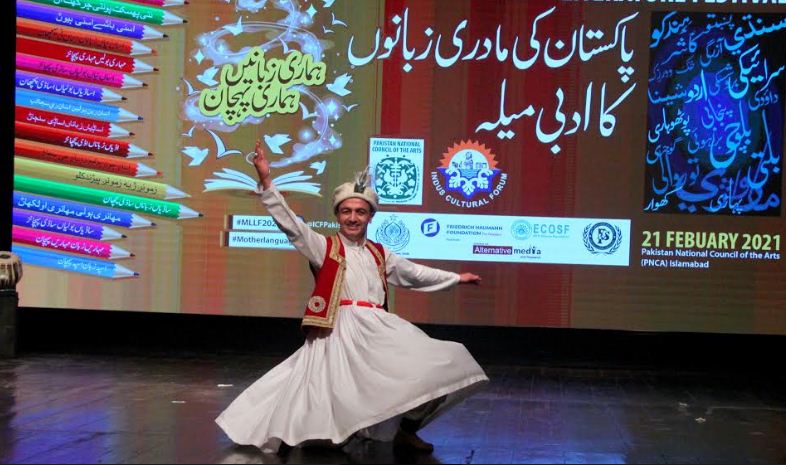
6th Pakistan Mother Languages Literature Festival at PNCA

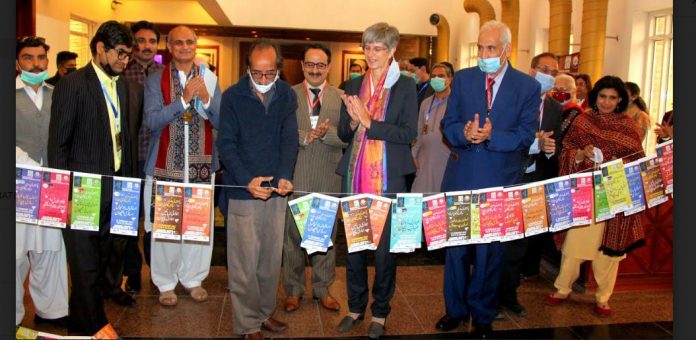
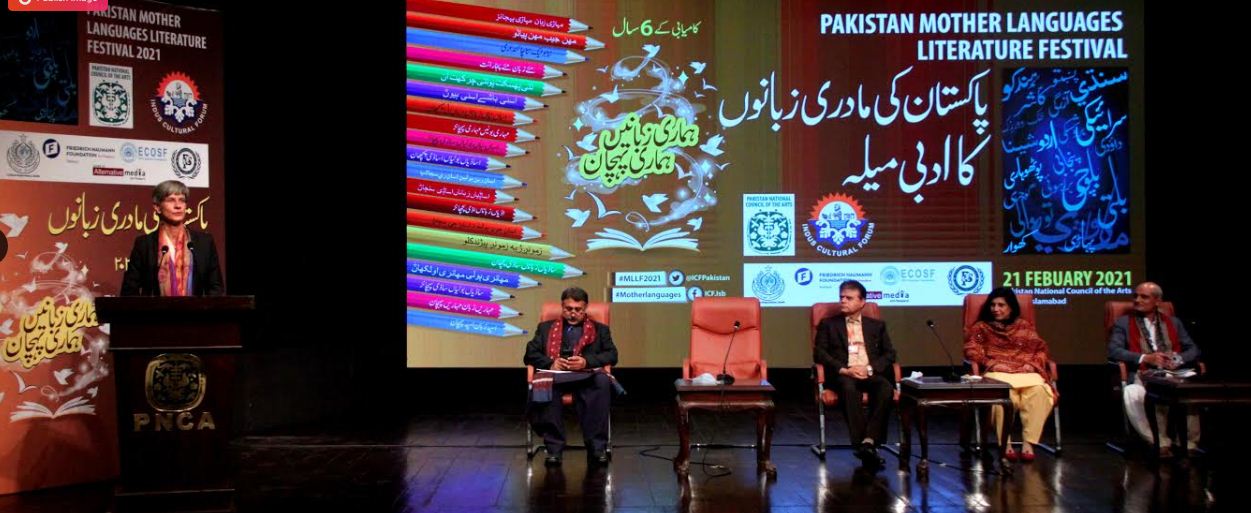
ISLAMABAD, FEB 21 (DNA) – Indus Cultural Forum in collaboration with the Pakistan National Council of the Arts continued with the legacy of celebrating linguistic and cultural diversity by arranging 6th Pakistan Mother Languages Literature Festival on Sunday at PNCA.

11 legends from different languages were awarded lifetime achievement awards for their lifelong services for promotion of languages and literature of Pakistan.

The legends were paid rich tributes by scholars and researchers for their legendary services. These included prominent researcher Dr Tariq Rahman, Ahmed Saleem (Punjabi) Dr Fahmida Husain (Sindhi), Hafeez Khan (Seraiki),  Aftab Iqbal Shamim (Urdu), Sadullah Jaan Barq (Pushto), Sultan Sukoon (Hindko), Ishaq Soz (Brahui), Munir Badini (Balochi), Hussain Yousifabadi (Balti), Rana Fazal Hussain (Gojri).

F23

In a separate session speakers highlighted the need for state to take measures for promotion of linguistic diversity in Pakistan. Speaking on the occasion, Indus Cultural Forum chairperson Munawar Hassan said that this year’s festival is reduced to one day due to Covid-19. He said we will continue the festival online after this one day. DG PNCA Dr. Fouzia Saeed said that Pakistan has a rich cultural tradition and colors of linguistic diversity should be celebrated in all forms.

F4

Secretary Culture Sindh Akbar Laghari said that Sindh government cooperates with other provinces and federal institutions to promote cultural interaction.

Country Director of Friedrich Nauman Foundation Birgit Lamm in her remarks said that she is thrilled by the enthusiasm which Pakistani people show for their languages and cultural identity.

Scholar and writer Jami Chandio said Pakistan is the only federal country which has only one national language where as in the federal spirit all major languages should be declared National languages.

Arieb Azhar, a prominent singer talked about the need for promotion of local music in the country.

Journalist Asma Shirazi talked about role of media and insisted that all major channels should allocate time for different Pakistani languages.

Amar Fayaz and Dr Manzoor Soomro talked about need to scientific and technological development of languages.

Nusrat Zehra presented an overview of creative writings written in the context of Covid.19 where as Khalil Raza talked about scientific response to Covid-19.

ECO Science Foundation arranged science fun activities for children.=DNA

====================

Shifa Int’l Hospital, Shifa Foundation organize ladies golf match

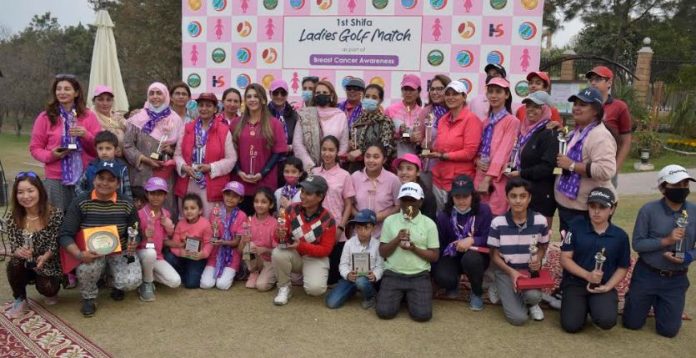
ISLAMABAD, FEB 21 (DNA) – Shifa International Hospital and Shifa Foundation collectively organized a successful First Ladies Golf Match at Margalla Green Golf Club Islamabad as partof the Breast Cancer Awareness Program.

The First Lady of Pakistan Mrs. Samina Arif Alvi was the chief guest of the event who is successfully leading the breast cancer awareness campaign in the country. She distributed the prizes among the winners and souvenir shields to the chief organizers of the golf match.

Mrs. Alvi lauded the efforts of Shifa Int.Hospital and Shifa Foundation for arranging the Ladies Golf Match as part of the breast cancer awareness program. She urged all the women to be cautious about any initial abnormality and complication and to women above 40 years of age to have mammography once a year to detect any abnormality at an early stage.

More than 65 players including ladies and children participated in the golf match. Matches were played in five different categories. The golfers were dressed in pink to create awareness about breast cancer, which is one of the leading causes of death in women. Free Mammography Coupons were offered to the participants of the golf match to highlight the importance of screening fordetection of breast cancer at an early phase.

Dr.Manzoor H. Qazi, Chief Executive Officer, Shifa International Hospital and Chairman, Shifa Foundation said that breast cancer is the most common cancer in Pakistan as one in nine women are at risk of developing breast cancer in their lifetime. He said Shifa Foundation and Shifa Int. Hospital have been supporting underprivileged women communities by providing breast cancer screening, diagnostic, and treatment facilities.

Mr. TaimoorShah, Chief Operating Officer, Shifa Int.Hospital saidthatthe aim to organize this ladies’ golf match was to empower women in the fight against cancer and encourage all women to get screened for breast cancer. Such activities are helpful to spread breast cancer awareness messages by word of mouth with the involvement of influencers and differentstakeholders.

Dr. Zeeshan Bin Ishtiaque, Medical Director at Shifa Int. Hospital highlighted the importance ofbreast cancer awareness in order to educate the masses because taboos associated with regular screening and breast examination lead to delayed diagnosis so women might ignore the initial abnormality, which can otherwise be cured.

Dr. Zeeshan also informed that Shifa Int.Hospital has a specialized and comprehensive Shifa Breast Clinic, a multidisciplinary team of professionals that provides personalized care to breast cancer patients by offering effective options for diagnosis and treatment under one roof.=DNA

=======================

APNS condemns attack on Jang Group premises

KARACHI, FEB 21 (DNA) – The APNS strongly condemned the attack on Jang Group premises by demonstrators who ranscked the offices and manhandled the employees of the group.

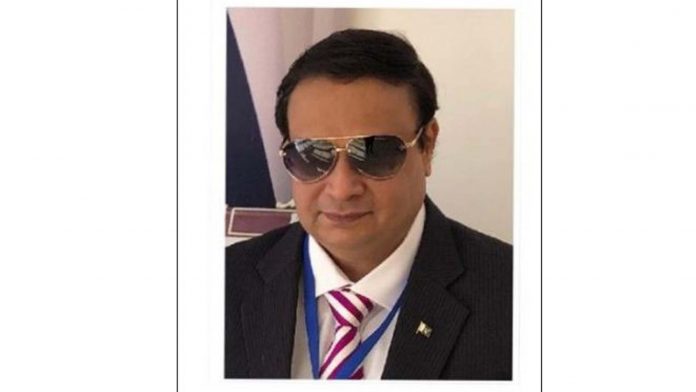
Mr Hameed Haroon President and Sarmad Ali Secretary General of All Pakistan Newspapers Society in a press statement have termed the incident as attack on the press and expressed their serious concern on the vandalism perpetuated by the demonstrators who in the garb of protest and sit-in gheraod the Jang Group’s main office in Karachi  and instead of stressing and raising  their demands, attacked and ransacked the office and harassed the staff including women workers and journalists.

They stated that every section of the society has a right to agitate its disagreement against any content, but it should not be allowed to take law into its hand and attack the premises of media organisations and intimidate media workers.

This attitude not only depicts the intolerance exacerbating in our society but also highlights growing lawlessness in the country. It is regrettable that the law enforcing agencies in the city remained silent spectators when the media house was being subjected to vandalism.

The APNS office bearers urged upon the Chief Minister Sind and the IG police to take immediate action against the culprits and provide security to media houses to prevent such heinious act against the media in future.=DNA

======

Nizomiddin Mir Alisher: A Larger than Life Personality

Dr. Mehmood Ul Hassan Khan

Nizomiddin Mir Alisher was a charismatic character who had unique human traits ranging from personal humility to service of larger humanity, compassion to immense community development, inner peace to robust people’s prosperity, harmony to sign of hope to depressed and dejected people, spirituality to sustainable economic development of general masses and philosophy to philanthropic projects (mosques, madrasas, hospices, bathhouses, guesthouses, bazaars) which ultimately transformed him into larger than life personality.

Alisher Navoiwas a great poet of Central Asia and of the greater Turco-Persian world. He advanced the use of Chagatai as the language of arts, challenging the undisputed role of Persian at that time.

He was maestro of human psychology and champion of conflict resolution through his everlasting literary works, motivational sermons and people-to-people contacts. He was vivid reflection of rare combinations ranging from genuine scholar to statesman craft-ship, fictions to hard facts of life, governance, human life, commercial equations, social reformer to immaculate administrator and last but not least, wisdom to wealth he remained beneficial, positive and productive to his people, community and of course state.

AlisherNavoiis a legendary personality of Central Asia. He left numerous spiritual heritages which is still the pride of world humanities and libraries. The republic of Uzbekistan celebrated his 580thbirth anniversary of the famous medieval poet, statesman and thinker Alisher Navoi.

AlisherNavoi is the glorious son of the Uzbek people.His biography has had been mesmerizing many historians and orientalists and literary critics. Since childhood he absorbed the beauty and refinement of literary language Farsi and utilized it up to perfection. While studying at school, he was fond of reading poetry, especially admiring the lines of Saadi’s “Gulistan” and “Bustan” and Farid ud-Din Attar’s poem “The conversation of the birds.”

AlisherNavoi was the first outstanding poet who was full of life, colors, excitement, aims, ad founder of the Uzbek language, its richness and elegance. He had nearly 30 poetry collections, major poems, prose, and scientific treatises.

AlisherNavoi’s creativity is still so attractive and relevant throughout the world. His work has been translated into English, French, German and many other languages.

At the initiative of the Head of State the Year of AlisherNavoi was declared in 1991. The complete works of the poet were published in twenty volumes. Numerous majestic monuments of ancestor were built over the past period in the country and abroad. A large number of international conferences, devoted to the works of AlisherNavoi were held in the republic, as well as in the countries such as France, Belgium, Japan, Russia, USA, Germany, Kazakhstan and many others.

Navoi wrote his greatest work “Hamsa” (“Quinary”), which consists of five poems “Abrar ul-Khairat” (“The confusion of the righteous”), “Farhad va Shirin” (“Farhad and Shirin”) “Layli va Majnun”, “Sabai Sayar” (“Seven Planets”) and “Saddi Iskandari” (“Wall of Iskandar”) in 1483-1485.

Navoi’s splendid works was full of prosperity of the people, the achievement of peace and tranquility of the Timurid state, the perfect system of upbringing the nation, and the spiritual and natural scientific and living manifestations of humanity and perfect morals at that time.

The holistic themes of humanistic patriotism in the works of Navoi  still inspired all worlds. He respected mothers and always said under the feet of mothers, the garden is a paradise and the soul.

He disseminated morals lessons in very simple and practical ways and tried to educate his people about good manners, decency, cooperation, forgiveness, sacrifice and submission. He upheld the need of rationality, fair-play, social justice and modesty while meeting with other people.

Navoi was dedicated to serving the people, the homeland, the development of science, art, and literature. Alisher Navoi in the book “Mahbub ul-kulub” categorized people into two main groups i.e. good and bad temper. He termed haughty man with anxiousness. He showcased that pearl of desire makes the poor person rich. He outlined salient features of a great man in “Compassion and Discipline,” having golden qualities of humbleness, generousness,lovingness, compassionatness, respectfulness, dignified and virtuousness.

Navoi considered arroganc, pride, boasting, humiliation, and insult bad for human relations. Alisher Navoi was motivational figure who encouraged people to work hard to achieve dreams, showed patience in times of crises and be ready for sacrifice to achieve eternal peace and harmony. He institutionalized human intelligence, rational thinking, independent thinking, spiritual awakening, or mental alertness to cope with challenges of life with zeal and zest. He hated ignorance, bad manners, greed and rebelliousness in the society. He was icon of modernization and purity of ethics.

He disliked human spirits of disharmony, distrustfulness, dishonesty, disloyalty, disorientation, despicableness and destruction. He termed bribery and corruption bad for community and state alike thus institutionalized spirits of transparency, honesty, checks and balances and good governance. Throughout his whole life he educated people about community development, and enlightenment.

He was a mystic, a Sufi poet, a travelogue writer, a play writer, a historian, a philosopher, an administrator and even a builder. He was father of modern Uzbek language and a beacon for poets, writers, linguistics, historians and philosophers of Central Asia as well as of South Asia.

He influenced almost every classic poet, play writer and story teller of Urdu language. Ghazal was actually a gift of Alisher to subcontinent literature. The Ghazal spread into India under the influence of the Mughals and mostly through Sufi mystics.

Classic Urdu writer Syed SajjadHaiderYaldram wrote travelogues by following technique of Alisher while play writers in Urdu and even in Hindi languages were very much under the influence of Navoistyle. Critics believed that most popular plays of Urdu language including “Rustom O Sohrab” written by Agha Hashar Kashmiri and “Anarkali” written by Syed Imtiaz Ali Taj followed scene writing style of Alisher Navoi.

Moreover, Sufi poets like Baba Bulleh Shah, KhawajaGhulamFarid, Mian Muhammad Baksh, Sultan Bahu, Shah Hussain and Waris Shah could not resist to get the influence of mystic poetry of Alisher Navoi because all classic poets of Urdu and Punjabi had knowledge of Persian and little knowledge of old Uzbek language therefore the work of Alisher Navoi was not unfamiliar to them.

He was introduced to subcontinent by Mughal Emperor Babur who was actually founder of the Uzbek dynasty of subcontinent. Babur wrote one of the first autobiographies among Islamic rulers, the epic “Baburnama”. He was influenced heavily by Navoi and even included his respect for the writer in this famous book.

Ali Shir Navoi was magician of words and great social reformer. He was champion of conflict resolution and master of human intimacy and interaction. He was great thinker and man of tenderness. He was stylish yet very simple to spend his whole life in simplicity. He was resourceful and responsible too.

He was ideal combination of human spirits and spirituality, poetry and human prosperity, imagination and structural realism, fictions and conflicting facts of the life, generosity and good governance, scholarship and statesmanship, creativity and massive community development, inspirations and interfaith, teamwork and tolerance, hope and harmony, dignity and development, positivity and productivity and connectivity and continuity.

To conclude Ali Shir Navoi preached message of humanity, hope, harmony, decency, development and service, submission and sacrifice. He was a great poet, thinker, philosopher and administrator who ruled on the hearts of his people and community through his philanthropic projects. He was the real son of the soil of Uzbekistan.

PNCA to set-up its Regional Culture Centre in Jamshoro, Sindh

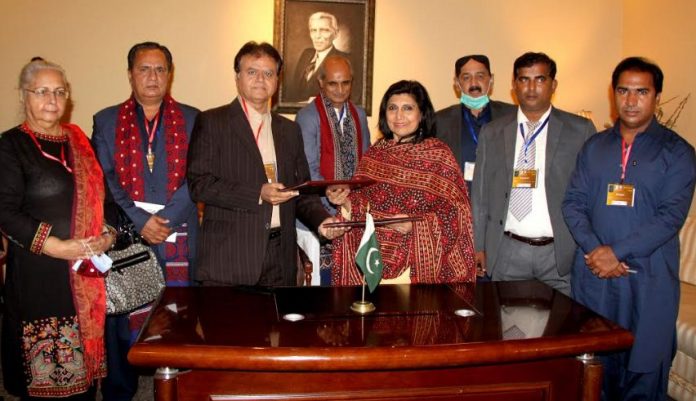
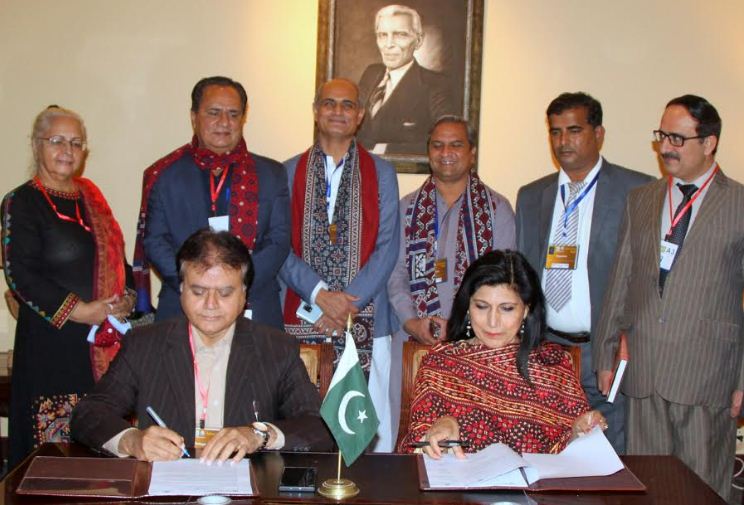
ISLAMABAD, FEB 21 (DNA)  – Pakistan National Council of the Arts (PNCA) is going to set-up its Regional Culture Centre in Jamshoro, Sindh. A Memorandum of Understanding with Department of Culture, Tourism, and Antiquities, Government of Sindh has been signed today. Dr. Fouzia Saeed, DG PNCA and Mr. Ghulam Akbar Leghari, Secretary, Culture, Tourism, and Antiquities, Government of Sind signed the agreement here in Islamabad.

This cultural cooperation between the two organizations allow PNCA to bring national level cultural program to Sindh and explore new avenues to engage the artist’s community of the region especially youth in a broader way.

Mr. Ghulam Akbar Leghari, Secretary, Culture, Tourism, and Antiquities, Government of Sind, Karachi termed this MoU a new beginning for the promotion of Sindhi art and culture at national and international level. He thanked Dr. Fouzia Saeed for taking this initiative and extending cooperation for the promotion of the art and culture of Sindh at National and International level.

DNA 21-5

For achieving the common goals, the Secretary said, there was a need for accelerating cultural activities to further promote the tangible and intangible culture and traditions of Sindh, through conducting training programmes for capacity building in the field of art and culture. Talking to journalists after signing the MoU, PNCA Director General Dr Fouzia Saeed said: “The arrangement will allow both the parties to initiate collaborative programmes of mutual interest and understanding to share a common mandate of promotion of the art, culture of Sindh.”

This will open new horizons for younger generation to learn about the power of cultural capital and indigenous knowledge in true perspective, she hoped. She was of the opinion that PNCA has been too Islamabad Centric and its time that it should reach out to the provinces and establish itself there in collaboration the provincial governments, as PNCA has a national mandate and is not an Islamabad Arts Council.

She also highlighted the role of Mr. Shafqat Mehmood, Federal Minister for National Heritage and Culture Division, government of Pakistan who is very keen to promote the regional as well as international cultural exchange to portray the true image of Pakistan and its centuries old cultural traditions.

The Culture Department of Sindh will provide space in the premises of Sindh Institute of Music & Performance Arts (SIMPA) for PNCA’s Regional Culture Centre. The Department will extend cooperation for undertaking joint cultural programs to promote further the culture of Sindh on a larger scale, nationally and internationally. The common goal of both organization is to accelerate the cultural activities to further preserve and promote the cultural traditions of the people of Sindh.

PNCA will extend its cooperation for cultural education, dissemination of related information including the transmission of knowledge and cultural development and training of human resource in the fields of art and culture. The main aspect of this kind of cooperation is to open new horizons for younger generation to learn about the power of cultural information with correct perception.

Stay Connected

64FansLike
60FollowersFollow

Latest Reviews

Exchange Rates

USD - United States Dollar
EUR
1.14
GBP
1.34
AUD
0.69
CAD
0.70