Home Blog Page 2913

Efforts to ensure water supply during summer continues: Chairman CDA

ISLAMABAD, FEB 23 (DNA) – The work of the Capital Development Authority (CDA) for ensuring the water supply during summer is continued. Old pipelines are being repaired, new pipelines are being installed and the work of repairing of tube wells, water tankers, filtration plants is underway. A new water project is also being considered.

According to detail, the administration of CDA is committed for providing basic facilities to the citizens. Planning for a new project of water supply is also underway.

The department of water supply repaired various pipelines, tube wells, motors during last few days. CDA has total 194 tube wells. 10 out of these tube wells are none functional. 19 are being repaired. Boring process is continued on 14 tube wells.

Repairing work is underway at Distribution Division South in sector I-9, I-10/1, I-10/2, I-10/3, I-9/4, and I-8. Pipe lines are being repaired at Distribution Division North in sector G-11/1, G-11/3, G-9, F-8, and G-10. Work of restoration and repairing of pipes is also underway in other areas.

17 tankers are being used to provide water in the areas where there is issue of water. Pipeline of the water works of sector G-10 has been made functional. New cable has been installed in sector G-9/3.=DNA

======================

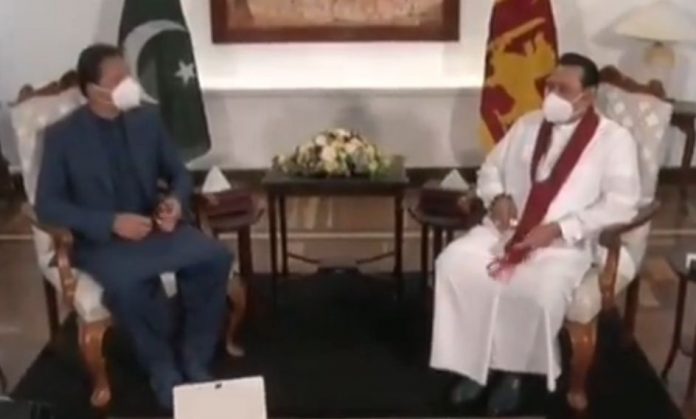
PM Imran Khan holds talks with Sri Lankan counterpart in Colombo

COLOMBO, FEB 23 – Prime Minister Imran Khan held a one-on-one meeting with his Sri Lankan Counterpart Mahinda Rajapaksa at Temple Trees in Colombo on Tuesday, and exchanged views on a wide range of issues with particular emphasis on further strengthening the bilateral relations in diverse fields.

The one-on-one meeting was followed by delegation-level talks.

The talks covered all areas of Pakistan-Sri Lanka bilateral cooperation including trade and investment, health and education, agriculture and science & technology, defence and security, and culture, and tourism.

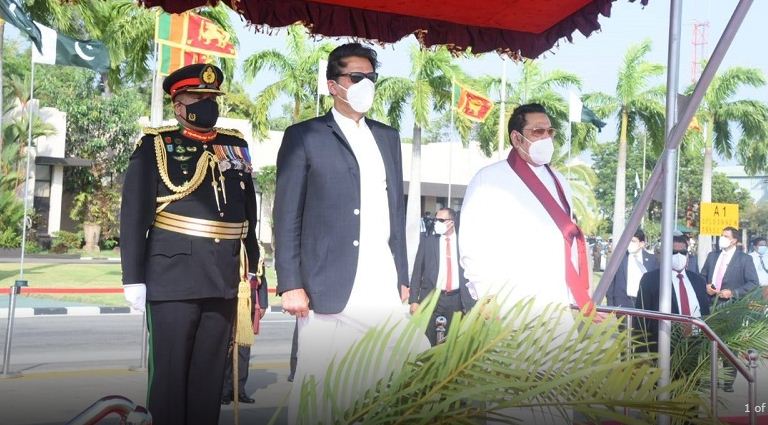
Earlier, Prime Minister Imran Khan reached Colombo where he was received by his Sri Lankan Counterpart Mahinda Rajapaksa along with his Cabinet Members at the Bandaranaike International Airport.

Accompanied by a high-level delegation including Members of the Cabinet and Senior Government Officials, Imran Khan was accorded a red-carpet reception upon arrival followed by a formal welcoming ceremony where he was given a 19-gun salute.

The prime minister also inspected an impressive guard-of-honor following which the national anthems of both Countries were played. He also signed the Visitors’ Book.

00

The High Commissioner of Pakistan to Sri Lanka and Officers of the High Commission were also present.

During the visit, Prime Minister Imran Khan will also hold talks with Sri Lankan President Gotabaya Rajapaksa and discuss issues of bilateral and regional significance.

During the visit, a number of Memorandum of Understandings (MoUs) will be signed to enhance the bilateral cooperation.

The prime minister will also participate in the Pakistan-Sri Lanka Trade and Investment Conference to be held on February 24 to promote trade and investment between the two Countries.

CCP, CMA launch capacity building programme

ISLAMABAD, FEB 23 (DNA) – The Competition Commission of Pakistan (CCP), in collaboration with the United Kingdom’s Competition and Market Authority (CMA), has launched a series of capacity building workshops wherein the CMA’s officials and experts will train the CCP’s staff on different enforcement techniques and methodologies.

As part of this renewed collaboration between the CCP and CMA, two sessions on ‘Generating Case Leads and Planning Cartel Investigations’ were held online, which were attended by 30 officers of the CCP enforcement team. Mr. Mujtaba Ahmad Lodhi, who is currently in charge of the Office of International Affairs and Mergers & Acquisitions, and other senior officials also participated in the sessions.

The CMA team comprising Mr. Alex Schofield (Principal Policy Advisor), Ms. Eva Nickel (Assistant Director, Cartels), and Gary Bracken (Assistant Director, Investigation), gave presentations in these sessions.

In the first session, Ms. Eva Nickel was the presenter who focused on the UK’s cartel regime and leniency program, stages of a CMA leniency application in practice, and ex-officio investigations and campaigns. Mr. Gary Bracken, Assistant Director, Investigation, was the presenter in the second session and briefed the participants on planning investigations, issues in delivering effective enforcement outcomes, and effective methods of conducting inspections and interviews.

The CCP acknowledged the CMA’s efforts in enhancing collaboration and building cooperation between the two agencies. Such a series of sessions for various other topics will be continued in near future.=DNA

===================

Japanese ambassador condemns terrorists Attack in North Waziristan

ISLAMABAD, FEB 23 (DNA) – Matsuda Kuninori, Ambassador of Japan to Pakistan, has condemned the terrorist gun attack in North Waziristan area which took place on Monday 22nd February, in which four female vocational trainers were shot dead and their driver injured while reportedly driving through a village to provide vocational training to local women.

In his message, Ambassador MATSUDA on Tuesday said, “I am deeply saddened and shocked by the killing of four innocent women in North Waziristan area. I extend my deepest sympathies and heartfelt condolences to the grieving families and pray for the speedy recovery of those injured in the cowardly attack targeting women.”

The Ambassador said that Japan strongly condemns terrorism in all its forms and manifestations and we will continue to support the efforts by the Government of Pakistan to combat terrorism.=DNA

===============

Masroor Khan assumes charge of Chairman OGRA

ISLAMABAD, FEB 23 (DNA) – Masroor Khan has assumed the charge of Chairman OGRA bringing 30 years of local and international experience notably in the field of Downstream Retail fuel, Engineering, Project Management, Oil Asset Management, Joint Venture Governance/Management, Cross Country Oil Pipeline, Downstream Assets acquisition portfolio projects, and operational experience in the oil and gas industry including LNG & CNG.

Masroor Khan’s vast experience in the energy sector includes Oil infrastructure development and formation of corporate alliances. He has both national and international industrial exposure, as he has had the opportunity to work in various markets including Pakistan, Malaysia, UK and the Philippines. Mr. Khan held regional roles for Thailand, Oman, Cambodia, Laos and Dubai as well.

Mr. Khan has a proven track record as a senior executive and is a strong strategic thinker. He remained part of the team responsible for transforming Pakistan Burma Shell network into the Shell Pakistan brand. Mr. Khan was formerly working as Operations Manager in Pakistan overseeing a widespread Shell Oil Assets across country , providing operational & technical assurance  and leading a large team of professionals.

He also remained Head of Distribution Engineering  for Pakistan, UAE & Oman and was responsible for company owned Oil Installations and depots, SBMs and Oil pipelines. He also served as Shareholder Representative for PAPCO (WOP – White Oil Pipeline Project) which is a  joint venture with PARCO. Mr. Khan also led a strategic growth LNG project from inception to EPCM final design & planning stage.

Moreover, Mr. Khan also held the positions of Network Manager for Pakistan and Oman in Shell Oil Company.

Other positions included Planning Manager for Pakistan, Thailand, Oman, Cambodia and Laos and Maintenance Advisor for Asia and Australia based at Malaysia.

During the initial stages of his career as ‘Planning Engineer’ and was deputed at Civil Aviation Authority for the Jinnah Terminal Project, New Quaid-e-Azam International Airport, Karachi.

Mr. Khan’s appointment as Chairman OGRA is reckoned as a step further towards the betterment of the organization and fair implementation of regulatory roles for all stakeholders in Pakistan=DNA

=======================

President Arif Alvi stresses further strengthening Pakistan-Uzbekistan ties

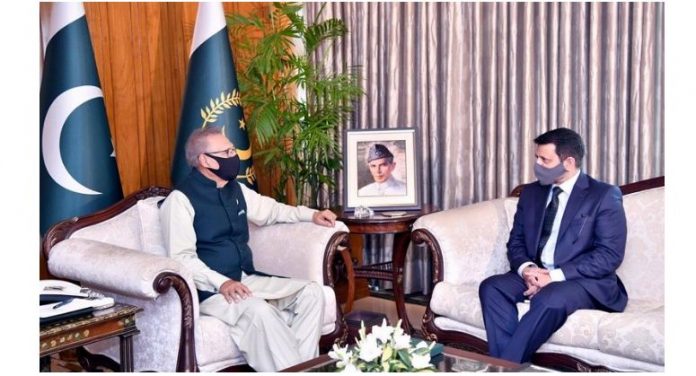
ISLAMABAD, FEB 23 – President Arif Alvi has underscored the need for further strengthening the existing bilateral relations with Uzbekistan in all areas of mutual interests including political, trade, economic and cultural fields.

While talking to Pakistan’s Ambassador to Uzbekistan Ali Asad Gillani at Aiwan-e-Sadr in Islamabad on Tuesday, the president said that it is essential to build political, economic, and cultural relations with Uzbekistan and interacts closely on issues of bilateral importance, regional developments, and international cooperation, especially through the exchange of high-level visits, parliamentary exchanges and ministerial interactions.

The president asked the ambassador to work for the promotion of trade and economic relations between Pakistan and Uzbekistan.

Dr. Arif Alvi emphasized the need to diversify Pakistan’s exports to Uzbekistan by including manufactured goods, finished products, pharmaceuticals, and services, etc.

President Arif Alvi also asked the ambassador to work for the promotion of tourism in Pakistan as well as strengthening cultural linkages between the two sides.

The president highlighted that parliamentary cooperation was highly essential to further deepen bilateral relations and stressed the need for promoting parliamentary exchanges between the two countries.

G-10 Markaz traders demand development works in market

ISLAMABAD, FEB 23 (DNA) – Sardar Yasir Ilyas Khan, President, Islamabad Chamber of Commerce and Industry (ICCI) said that business activities could be better revived by organizing trade fairs and festivals. He said that the Covid-19 pandemic has badly affected the business activities and ICCI was planning to hold a mega shopping festival in near future in the federal capital in collaboration with market associations for speedy revival of business activities.

He expressed these views while addressing a delegation of newly elected Office Bearers of Traders Welfare Association G-10 Markaz, Islamabad during their visit to Islamabad Chamber of Commerce and Industry.

Sardar Yasir Ilyas Khan congratulated the newly elected market association of  G-10 Markaz and expressed the hope that they would play an effective role in resolving the issues of traders in their market. He said that he was visiting various markets along with CDA Chairman Amir Ali Ahmed to identify the problems of the trading community so that they could be resolved with joint efforts.

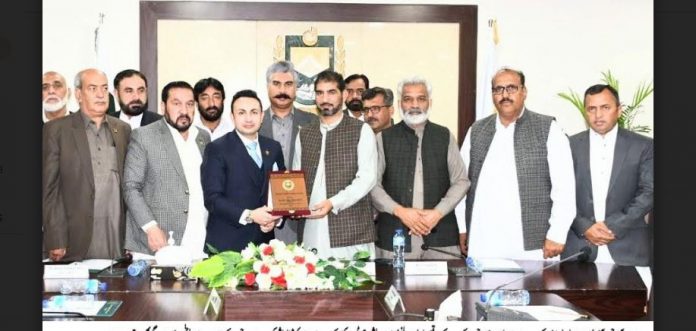
Speaking at the occasion, the newly elected President of Traders Welfare Association G-10 Markaz Abid Abbasi and Chairman Syed Kamran Kakakhel said that ICCI was playing an important role in resolving the problems of the business community and assured that their market association would fully cooperate with the Chamber in such efforts.

They said that no development work was done in the markets for the last several years and stressed that ICCI should cooperate for the provision of basic facilities in all major markets including G-10 Markaz.

Abdul Rehman Khan Vice President ICCI, Ajmal Baloch President All Pakistan Anjuman-e-Tijaran, PTI Traders Coordinator Chaudhry Nadeem ud Din, Khalid Chaudhry, Azhar Amin, Ashfaq Chatha, Chaudhry Irfan and others also expressed their views on the occasion and emphasized the need to early resolution of the key issues of trading community to facilitate the growth of trade activities.=DNA

=====================

Khojaly Genocide from Grief to Shining Azerbaijan

Dr. Mehmood Ul Hassan Khan

Unfortunately, The Republic of Azerbaijan faced severer genocides in the last two centuries which was indeed heartbreaking and bleeding wounds. Genocide was crime against humanity and humans/Azerbaijanis. It was act of state terrorism. It was act of ethnic cleansing. The “Khojaly genocide” was action of inconceivable cruelty during which inhuman punitive methods was used. Armenians chauvinists and their supportive forces violated the rights of Azerbaijani people, created the obstacles to get the education in native language and exerted a strong pressure upon them. The historical names of Azerbaijani villages were changed.

History of human evolution and civilization has been swinging between the pendulum of evilness and search of genuine equality, unlimited tragedies and tranquilities,     barbarism and vivid reflection of best human qualities, genocides and generosities, discriminations and diversities.

In this regard, Khojaly tragedy showcased momentum of evil energies whereas, The Center of Global & Strategic Studies, Islamabad is the hub of positive energy, channelizing human spirits towards greater resolution, infinite voyage of peace, harmony, dignity and development. We arranged this event “Cooperative Perspectives between Azerbaijani & Pakistani Youth Diaspora to the international recognition of Khojaly” to move forward from grief to greater socio-economic development, regional connectivity and above all qualitative life because human spirits are die-hard to conquer.

Azerbaijani population was repeatedly subjected to the gross human rights violations, ethnic cleansing and deportation accompanied by inhuman and degrading treatment by Armenian nationalists (in 1905-1907, 1918-1920, 1948-1953, 1988-1993). The most horrible one of such tragedies against the Azerbaijanis is the genocide committed 100 years ago, on March 31, 1918, and it differs for its severe atrocities. Since March of 1918, thousands of the Azerbaijani civilians have been killed on the ground of their nationality; people were burned alive; rare historical monuments, schools, hospitals, mosques were ruined.

It completely targeted the people of Azerbaijan and represented a barbarian act. The Khojaly genocide the tragedy of the 20th century was a result of Armenian aggressive and criminal policy. The Khojaly genocide was one of the most terrible and tragic pages of Azerbaijan history. Merciless and cruel genocide was the most dreadful mass terror act in the history of humankind. It was one of the most serious crimes not only against the people of Azerbaijan, but humanity as a whole. The Khojaly genocide is comparable to the genocides in Khatin, Hiroshima, Nagasaki and Songmi.

Khojaly reflected the history and traditions of Azerbaijan since the ancient times. Its culture is classified as Khojaly-Gadabay in the Azerbaijani history. Cromlechs, dolmens, Cyclops, tumulus’s of Khojaly, as well as different housing wares are the patterns of material culture that reflect the dynamics of social development. The destruction of all these material culture monuments and Khojaly graveyard one of the most ancient cemeteries in history after the Armenian occupation is are obvious examples of Armenian barbarism and aggression against the world culture.

Armenian military forces committed genocides in the town of Khojaly with the population of seven thousand people on February 26 1992. There were three thousand people in the town at the time of Armenian military forces’ attack. 613 people were killed, 1000 peaceful people of different age became invalid during Khojaly genocide. 106 women, 63 children, 70 old men were killed. 8 families were completely annihilated, 130 children lost one parents, while 25 both of them. 1275 peace residents were taken hostages the fate of 150 of them is still unknown.

Azerbaijan has had been victim of planned ethnic cleansing and genocide by Armenian for 200 years. The people of Azerbaijan were deported from their historical lands and became refugees and internally displaced persons (IDPs) because of

Armenian illegal occupation. Azerbaijanis were also forced from their historical lands during the Soviet period. 150,000 Azerbaijanis were deported from Armenia and placed in the Kur-Araz plain from1948-1953.  250,000 Azerbaijanis were forced from their historical territories in 1988 and Armenia became a mono-ethnical state. The Daghlig Garabagh events, which started in 1988 along with continuous efforts to implement the Armenian desire of building a state from sea to sea, led to the destruction of towns and villages, murder of thousands of innocent people, as well as the exile of hundreds of thousands of Azerbaijanis from their native lands.

To achieve dreams of great Armenian its nationalists expanded their illegal activities in the early 20th century. It was coined by the Dashnaktsutyun Party which systematically expelled Azerbaijanis from their historical lands and native homes and embarked on a policy of ethnic cleansing and genocide. For example, in 1905-1906 the Armenians committed massacres against Azerbaijani civilians in Baku, Ganja, Karabakh, Irevan, Nakhchivan, Ordubad, Sharur-Daralayaz, Tiflis, Zangezur, Gazakh and other places, perpetrated ruthless massacres against the local population, burned and destroyed cities and villages. Armenian armed forces destroyed more than 200 Azerbaijani villages in Shusha, Zangezur and Jabrayil region, Irevan and Ganja provinces, expelling tens of thousands of Azerbaijanis from their homes

Human bloods were everywhere and beasts were in search of innocent Azerbaijanis. Bloody events soon spread out covering the entire territory of Azerbaijan. In March-April 1918, about 8,000 civilians were slaughtered in Shamakhi. Armenian gangs stormed the city, setting houses on fire. Those who were trying to escape from the fire were shot. The majority of Muslim monuments of culture, including the Friday Mosque of Shamakhi, were set on fire and burnt to the ground with elderly, women and children hiding in it. People were buried alive, while some were brutally tortured before being killed.

Moreover, Armenian nationalists killed with utmost cruelty more than 16,000 people in Guba, the “valley of blood” in the first five months of 1918. The facts of mass extermination of the Azerbaijanis of Guba by Armenian-Dashnak gangs were proven again in the 21st century the discovery in 2007 of mass graves in Guba is a fact confirming the Armenian brutality. The study of the burial site revealed that people were subjected to unprecedented violence and killed with cruelty during the Armenian armed attack on Guba in 1918.

A ruthless massacre of the Azerbaijanis was also perpetrated in Shusha, Irevan, Zangezur, Karabakh, Nakhchivan, Kars and other regions. When committing these atrocities on historical Azerbaijani lands, the Armenians burned schools and mosques and destroyed samples of material culture of Azerbaijanis.

During genocides humanity was “bleed” and “beasts” were everywhere in different cities of Azerbaijan but it could not strike-down the true spirits of interfaith harmony, patriotism, national pride and communal unity and people having diversity of faith, belief and origin stood fast to fight against all odds. Cities were sieged and darkness was everywhere. Men were arrested. Media was blocked and the people were deprived of the right to access information. There was complete chaos. Azerbaijanis were determined to protect their territorial integrity and did not step back, showing their sacrifice and vigor for the national freedom.
Genocides against Azerbaijanis also uphold “grief” which has enduring human befitting propositions. It united the people of Azerbaijan despite ethnic diversity and strengthened their resolve to achieve that independence. Ultimately, it sustained values of faith, courage, and the strength of human spirits which are universal and everlasting.  It was act of perseverance and will to move on and move forward with a better life, a life of freedom, fairness, tolerance and peace and it had also left an even stronger and even greater impression in daily lives of people to centralization of command to national politics to the regional geopolitics.

To conclude, genocides against Azerbaijan achieved nothing but widespread condemnation. Rather it fueled concepts of self-defense, self-reliance, economic sustainability, protection of national pride, safety of heritage and unbending passions for territorial sovereignty.

Khojaly grief shadows has been converted into shining Azerbaijan due to which it has now achieved and secured a miraculous victory and de-occupied Nagorno karabakh and others areas from Armenia after 30 years.

Let us pray for all the martyrs of Khojaly because our survival is dividend of their sacrifices. Long live Azerbaijan and Pakistan friendship and brotherhood.

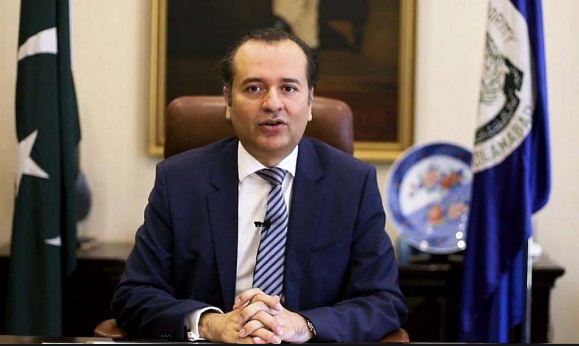
Hamid Asghar Khan elected Vice President of ICDT

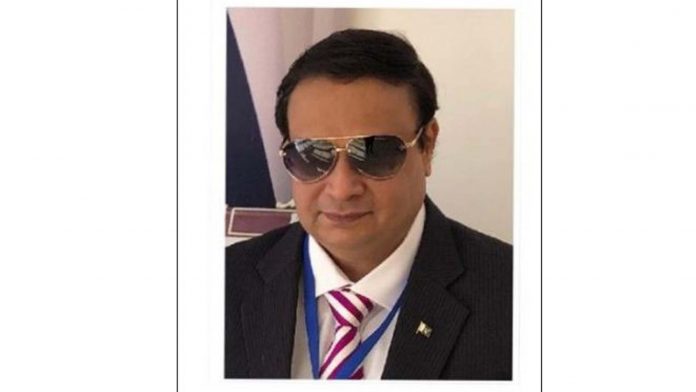
ISLAMABAD, FEB 23 (DNA) – Ambassador Hamid Asghar Khan of Pakistan elected Vice President of the Islamic Center for Development of Trade, Casablanca at the Annual Board of Directors meeting held on 23 February  2021.

Pakistan will host OIC Trade Fair with ICDT to be attended by over 35 countries in 2022 at Karachi.

Mofa, M/O Commerce and TDAP will work together to ensure success of this mega event.

DG ICDT to visit Pakistan to meet with FM, Advisor Commerce,Secretary Foreign Affairs, Commerce and Chairman TDAP. =DNA

=========================

Political parties reject policy of interference in other affairs

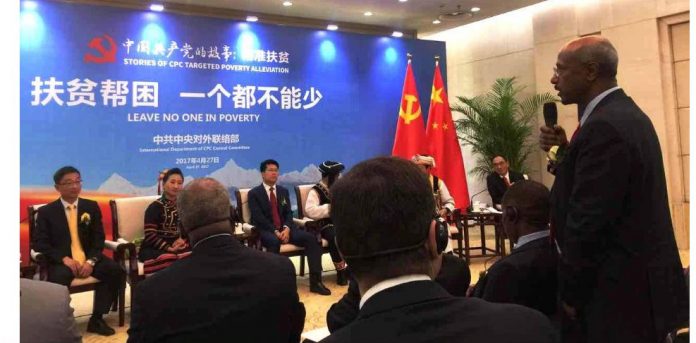
BEIJING, Feb. 23 (DNA): Political parties from around the World have strongly reacted against some Western countries’ policy of interfering in other countries’ internal affairs under the pretext of human rights.

They opposed the policy while participating in an event, arranged here by the International Department of the CPC Central Committee (IDCPC) and the CPC Xinjiang Uygur Autonomous Regional

A total of over 310 leaders and prominent personages representing more than 190 political parties and organisations from 80 plus countries participated in an in-depth discussion on the theme of “A Better Life for All” and reached broad consensus.

All parties were of the view that it is the common goal and responsibility of political parties of all countries to work towards a better life for the overwhelming majority of the people.

They stressed that political parties of all countries should take the improvement of people’s wellbeing as their mission and strive to uplift the sense of fulfilment, happiness, and security thereof.

They have noted that COVID-19 has hit over 200 countries and regions, affected more than 7 billion people around the world and claimed over 2 million lives.

They urged all countries to continue to put the lives, safety and health of the people above everything else by deploying medical expertise and critical supplies to places where they are needed the most, saving lives with all might and main, and further promoting global joint epidemic response so that the pandemic is brought under control at an earliest possible date and the vision of building a global community of health for all appears on the horizon.

They noted that COVID-19 has plunged over 200 million people globally into extreme poverty and inflicted serious impact on the economic and social development of most countries, casting a dark shadow on the prospects of the United Nations 2030 Agenda for Sustainable Development.

They called on all countries to continue to strengthen coordination on macroeconomic policies, remain steadfast in maintaining the stability of the global financial market as well as that of industrial and supply chains, and to take measures to reduce debts and boost the flow of trade, so that the world economy could soon recover and grow, which will help bring global poverty reduction back on the right track as speedily as possible.

While subscribing to the protection and development of human rights, they pointed out that the right to subsistence and the right to development are principal and fundamental. Poverty constitutes the chief obstacle to the realisation of human rights.

They emphasised that the interests of the people should be placed in the paramount position and development should deliver greater benefit to the entire population in a more equitable manner.

They added, as there is no one-size-fits-all model to advance and protect human rights, the diversity in the path of human rights development should be respected and any attempt to politicise human rights, apply double standards thereof, or to interfere in the internal affairs of other countries under the pretext of human rights should be opposed.

They called for the concerted efforts of all countries to promote the establishment of a global governance architecture on human rights that is more equitable, just and inclusive.

They acknowledged that the Thematic Briefing has enabled them to acquire a comprehensive and in-depth understanding of China’s system of regional ethnic autonomy and the development of areas with large ethnic minority populations, including the actual situation in Xinjiang, where social stability as well as equality and unity among various ethnic groups prevail, people’s livelihood keeps improving and the economy develops constantly.

They expressed appreciation of what the Chinese government has done to promote economic and social development of areas with large ethnic minority populations, and to respect and protect the right of people of all ethnic groups to freedom of religious belief and to use their own spoken and written languages.

They firmly opposed the odious behaviour of a crumb of individuals from certain countries in misleading the international perception and smearing other countries with distorted and fabricated facts and disinformation of cooked-up rumours of so-called China’s “ethnic cleansing” in Xinjiang.

Extending their best wishes to the CPC and the Chinese people on the eve of the centenary of the CPC, they applaud the CPC for its commitment to the original aspiration and founding mission of seeking happiness for the people and rejuvenation for the nation, for its leadership under which the Chinese people have created the miracle of rapid economic development together with the miracle of long-term social stability, and most recently, the major achievements in both COVID response and economic and social development.

They commended the important help China has offered to the global fight against the virus, in particular the honouring of its commitment to make vaccines a global public good.

They expressed their willingness to strengthen exchanges and mutual learning with the CPC on governance experience, and to promote the deepening of mutually beneficial cooperation among countries towards the building of a community with a shared future for mankind.

Stay Connected

64FansLike
60FollowersFollow

Latest Reviews

Exchange Rates

USD - United States Dollar
EUR
1.14
GBP
1.33
AUD
0.69
CAD
0.70