Home Blog Page 2903

Commission on missing persons disposes of 4976 cases

ISLAMABAD, MAR 1 (DNA) – The Commission of Inquiry on Enforced Disappearances has disposed of 4976 cases upto February 28, 2020 as per the monthly progress report of February 2021 released by Secretary, Commission of Inquiry on Enforced Disappearances (ColoED) on cases of alleged enforced disappearances.

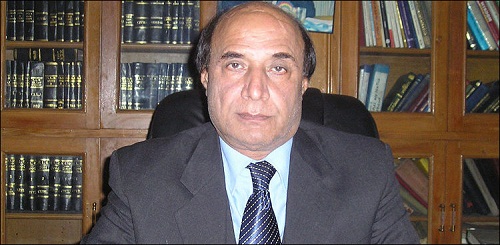
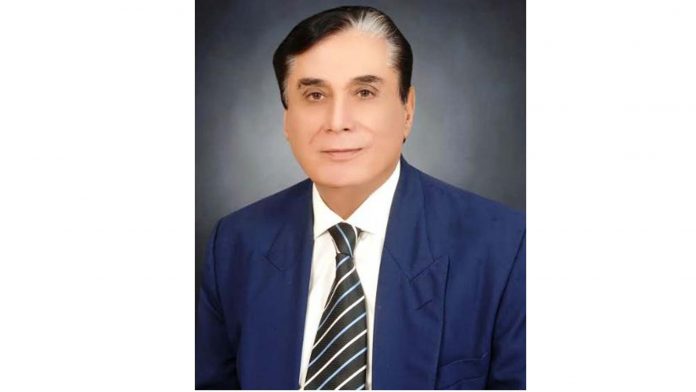
The Commission under the dynamic leadership of its Chairman, Honorable Mr. Justice Javed Iqbal continued its efforts to trace the whereabouts of the Missing Persons. The Commission always feels conscious about the distress of families of the Missing Persons. Mr. Justice Javed Iqbal, Hon’ble Chairman had two meetings with such families who came from Balochistan. Consequently, efforts have been accelerated with special attention towards the cases of Missing persons of Balochistan.

During the month February, 2021, the Commission conducted hearings at Quetta and Karachi in addition to simultaneous hearings at Islamabad. During these hearings, the Commission disposed of 112 cases of Balochistan, 28 cases of Sindh, 01 case of the Punjab, 08 cases of KP and 05 cases of ICT, thus the total disposal during February, 2021 remained 154 cases. During this month, the Commission registered 144 new cases. Accordingly, the total number of cases received by the Commission from March, 2011 to February, 2021 works out to be  7088 cases, out of which the  Commission has disposed of  4976 cases upto February, 2021, which works out to be 70.20% of the total cases. The remaining 2112 cases are under investigation.

The Commission is determined to put in extraordinary efforts to trace the whereabouts of Missing Persons as per its mandate. The families whose Missing Persons have been traced, paid tributes and thanks for Mr. Justice Javed Iqbal for his untiring efforts. Honorable Mr. Justice Javed Iqbal, Chairman, Missing Persons Commission is serving Missing Persons Commission in an honorary capacity and is drawing no salary and availing other faculties which are admissible as per law.=DNA

===============
China’s maize-soybean strip intercropping technology led to high yield

DNA

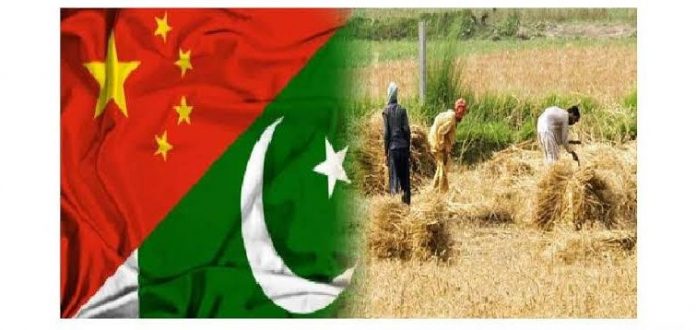
ISLAMABAD, MAR 1 – Maize-soybean strip intercropping technology, an advanced Chinese agricultural technology created high yield of both crops while not occupying extra land, finished its first-phase sowing on 30-acre land of Pakistan, says a report published by China Economic Net (CEN)

Once the second phase completes in March, this spring the total area of demonstration plots will reach 100 acres, making a giant leap of about 270.4% in comparison with last season’s area.

“In the last one and half months, we traveled 18,000 km across the country to complete sowing. Until now we have demonstrated our technology on 30 acres of land, and in March 70 more acres of land will be sown with soybean varieties from China,” said Muhammad Ali Raza, the post-doc from Sichuan Agricultural University.

Raza promotes the Chinese agricultural technology under Prof. Yang Wenyu and Yang Feng’s support and guidance together with Muhammad Hayder Bin Khalid, another post-doc from the same university.

This season the team has built larger-scale cooperation especially with universities, institutes and local farmers.

Four universities, i.e. Sindh Agricultural University, Tandojam, Bahauddin Zakariya University, Multan, University of Agriculture, Faisalabad, and PMAS-Arid Agriculture University, Rawalpindi, and Nuclear Institute for Biotechnology and Genetic Engineering (NIBGE), Faisalabad have joined this season’s demonstration.

Moreover, the technology has applied to five farmers’ fields in Sindh and Punjab. Distributed in Hyderabad, Tandojam, Nawabshah, Bahawalpur, Vehari, Multan, Faisalabad, and Chakwal, etc., the aggregated area of the demonstration plots has touched 30 acres of land.

Besides the massively expanded demonstration area, another breakthrough for this season is that some high-yielding soybean varieties from China will arrive Pakistan in the coming month.

Then 70 acres of land at Muzaffar Abad and Okara will be sown with those varieties, which are separately provided by NIBGE and Nizami Industries.

Initiated from the year of 2018, maize-soybean strip intercropping technology is becoming increasingly well received in Pakistan, which has attracted widespread attention from both countries’ governments, universities and farmers.

“Dr. Gu Wenliang, Agricultural Commissioner of the Chinese Embassy in Pakistan helped us at each and every step for the promotion of this technology.

We are in need of Chinese high-yielding soybean varieties, and he is typing hard to bring these seeds from China to Pakistan,” Muhammad Ali Raza said.

With the speedy development of maize-soybean strip intercropping technology in Pakistan, more Pakistani universities and enterprises intend to join the technology’s demonstration.

“Prof. Athar Mehboob, Vice Chancellor of The Islamia University of Bahawalpur, praised Sichuan Agricultural University’s work in Pakistan and expressed his willingness to support the technology’s promotion especially in the irrigated areas of Punjab where we have obtained the highest crop yields of maize and soybean under the intercropping system.

An memorandum of understanding (MoU) on student and faculty exchange between the two universities is expected to reach in the near future,” Muhammad Ali Raza told CEN.

China, Pakistan to jointly protect the wildlife species

DNA

ISLAMABAD, MAR 1 – China, Pakistan are needed to work jointly to protect the wildlife species and to combat their illegal trade.

This was stated by Dr. Tariq Mahmood from PMAS Arid Agriculture University Rawalpindi, on the occasion of “World Pangolin Day”, according to Gwadar Pro.

He emphasised that the two countries must collaborate to save the Pangolins, one of the most trafficked species in the world.

“World Pangolin Day 2021” was celebrated at the PMAS Arid Agriculture University Rawalpindi, with the collaboration of WWF-Pakistan and different government organizations.

“One good innitiative taken by China during the COVID-19 is that selling and purchase of pangolin products including its scales, has been banned by the Chinese government”, said Dr. Tariq.

He further said that the population of the Indian Pangolins has been decreasing at an alarming rate.

In such a scenario and in the context of the China-Pakistan Economic Corridor (CPEC), Pakistan and China can work together to combat the illegal trade of Indian pangolin more effectively.

“Universities in Pakistan and China, as well as relevant wildlife departments of the two countries, should develop strong bonding for collaborative research in such animal species and make monitoring process more vigilant to effectively counter the issue of poaching and illegal trade in Indian pangolin,” he mentioned.

Dr Tariq further said that the Indian pangolin has got a history of being poached from different areas of Pakistan, and smuggled in different countries for being used in traditional medicines.

Many of such illegal traffickers have been caught up by Custom departments.

On the occasion, speakers said that the animal has a covering of keratinized hard scales over its body, which can protect it from its predators.

But on the other hand, these scales have got a high demand in the illegal black market, where these are used in traditional medicines and are thought of having medicinal values.

The speakers also stated about the huge international trade volume of pangolins and emphasized on conserving all 8 pangolin species of Africa and Asia including Indian pangolin from Pakistan.

ICCI hails govt decision to lift time restrictions on businesses

ISLAMABAD, MAR 1 (DNA) – The Islamabad Chamber of Commerce & Industry (ICCI) has hailed the government decision to lift the time limit from commercial activities and termed it a positive development as it would allow businesses to operate without restrictions, recover from losses and play a role for economic revival of the country.

Sardar Yasir Ilyas Khan, President, Islamabad Chamber of Commerce & Industry said that the government has taken a proactive approach for businesses as with the decline in the cases of Covid-19 pandemic, it has lifted the time limits from commercial activities, which was a laudable move.

He said that the businesses have suffered huge losses due to lockdowns and limitations on timings enforced to curb the spread of coronavirus and hoped that the lifting of restrictions on commercial activities would help businesses in reviving business activities and making some recovery of losses.

He expressed special thanks to the ICT Administration, Deputy Commissioner Hamza Shafaat and Chief Commissioner Amir Ali Ahmed for their cooperation and support to the businesses in these tough times and hoped that they would continue to facilitate the business community similarly in future as well.

The ICCI President further commended the decision of the government to allow the indoor wedding ceremonies from 15th March 2021 with stringent COVID SOPs. He said that thousands of people were employed in marquees and wedding halls, but the closure of these businesses had rendered them jobless putting their families in great financial difficulties.

He said that the growth of business activities of many sub-sectors including poultry, meat, fruits & vegetables etc. was dependent on marquees and wedding halls, therefore, closure of these businesses was multiplying the problems of all allied businesses. Therefore, he hoped that allowing indoor wedding ceremonies would be helpful in reviving the business of multiple sectors.

Welcoming the government decision to life time limit from commercial activities, Fatma Azim Senior Vice President and Abdul Rehman Khan Vice President Islamabad Chamber of Commerce and Industry appealed to the business community of all sectors to ensure strict compliance of SOPs while running commercial activities and extend a helping hand to the government’s efforts in controlling the spread of Covid-19 pandemic so that with the normalization of COVID situation, all business activities could get back to the normal routine and play positive role in stabilizing the economy.=DNA

=========================

Govt ordinance stands void with Supreme Court opinion: Khosa

ISLAMABAD : The government’s ordinance stands void with the Supreme Court’s opinion over the Presidential Reference seeking open ballot for Senate election, Sardar Latif Khosa said.

The Election Commission of Pakistan has authority and responsibility to ensure transparent elections, Latif Khosa said while commenting on the Supreme Court’s opinion over the Presidential Reference.“The Supreme Court when gives a decision it determines the direction,” Khosa commented.

Khosa, a former Attorney General, said that it will be upto the election commission to decide the mechanism for scrutiny of the ballot in the Senate election.

“The government had sought the advice of the apex court over the matter and the court has given its opinion,” he said. “The court’s advice goes against the government,” he said.

“The court has given its ruling under the Article 226 and all institutions are bound to accept the supreme court’s decision,” he further said.

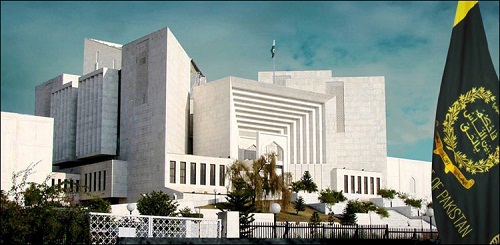
The Supreme Court ruled today that the forthcoming Senate elections are to be held through secret ballot under Article 226 of the Constitution.

The apex court’s 4:1 majority decision, however, held that the Election Commission of Pakistan (ECP) is empowered to take all measures, including the use of the latest technology, to hold free and fair elections and curb corrupt practices under Article 218 of the Constitution.

A five-judge larger bench of the apex court, headed by Chief Justice of Pakistan Gulzar Ahmed pronounced the reserved opinion.

Myanmar protesters march again after bloodiest post-coup unrest

In Myanmar, protestors marched again today after bloodiest crackdown and demanding the restoration of Aung San Suu Kyi’s government.

Police with water cannon and military vehicles are mobilized at protest hotspots in Yangon while demonstrators marched in Kale, in northwest Myanmar, holding up pictures of Suu Kyi.

Meanwhile, at least eighteen people were killed and over thirty injured when police opened fire on crowd protesting against the military coup yesterday.

Court turns down bail plea of Haleem Adil in two cases

KARACHI : An anti-terrorism court on Monday turned down a bail plea of Opposition Leader in the Sindh Assembly Haleem Adil Shaikh in two cases.

The court announced its verdict after hearing arguments of both defence and prosecution sides.

One of the two cases pertained to attempted murder, interference in government duties and disruption during an anti-encroachment drive while the other related to violence, firing and causing terror during the by-polls in Karachi’s PS-88.
On Feb 16, he was arrested for allegedly violating law and order during the by-polls. Subsequently, the two cases were registered against him. The court had sent Haleem Adil Sheikh and his aides to jail on judicial remand.

India’s premier takes first dose of COVID-19 vaccine

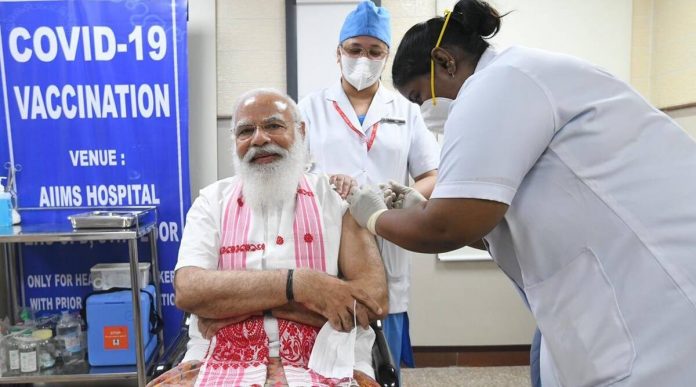
NEW DELHI, Mar 1  : Indian Prime Minister Narendra Modi received his first dose of a COVID-19 vaccine Monday as the country kicked off the second phase of a vaccination drive.

Announcing the news on social media, Modi said he took the first shot at New Delhi’s All India Institute of Medical Sciences (AIIMS).

“Took my first dose of the COVID-19 vaccine at AIIMS. Remarkable how our doctors and scientists have worked in quick time to strengthen the global fight against COVID-19,” he wrote on Twitter, while appealing to all those who are eligible to take the vaccine.

“Together, let us make India COVID-19 free!” he added.

Modi received the Covaxin vaccine produced by India’s Bharat Biotech on the same day the country began the second phase of its vaccination drive, in which people aged above 60 and those aged 45 and above with any of 20 specified comorbidities are eligible to register for vaccination.

While government institutions will not charge anything for the vaccination, the government last week announced that private health facilities cannot charge more than 250 Indian rupees (around $3.50) per dose per person.

Many Indian citizens are looking forward to getting vaccinated in the second phase.

“The cases have started to increase again. I have decided I will get my father vaccinated,” said Sanjay Chauhan, a Delhi resident, referring to an increase in COVID-19 cases in several Indian states that have raised concern.

Local experts believe the country’s vaccination drive has not gone as expected. According to India’s Health Ministry, over 14 million vaccine doses have been administered across the country so far, to mostly health care workers.

“Bad design, no public education, no openness about adverse reactions, no clarity on choice between two vaccines, vaccines not yet licensed but under restricted emergency use — hence apprehension among people,”

According to the Health Ministry, the total number of cases in the country stands at 11,096,731, with the death toll at 157,051 and recoveries at 10,775,169.

Govt respects SC decision on Senate election: Sheikh Rashid

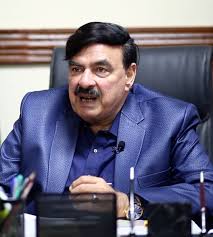
ISLAMABAD, Mar 1  : Minister for Interior Sheikh Rashid Ahmed Monday said the government  fully respected the Supreme Court’s decision to conduct the forthcoming Senate elections through secret ballot under Article 226 of the Constitution.

The government was committed to ensure free, fair and transparent elections and expecting to clinch the majority seats in the senate polls, he said while talking to a private news channel.

He said that the Election Commission of Pakistan (ECP) was fully empowered to take all necessary steps including the use of the latest technology for conducting transparent elections to discourage horse trading and corrupt practices.

Replying to a question, the minister expressed the hope that Dr Abdul Hafeez Sheikh would win the election with thumping majority from the federal capital against former prime minister Yousaf Raza Gilani.

Supreme Court has settled contentious matter for all time: Dilshad

ISLAMABAD : The Supreme Court has settled the contentious matter for all time, Kanwar Dilshad commenting on the court’s opinion over the presidential reference said on Monday.

“The government was opined that the Senate elections not held under the constitution but the supreme court endorsed that the election in the upper house held under the constitution and the law,” talking to ARY News, former secretary election commission said.

“With the apex court’s opinion over the matter the government’s relevant ordinance now stands dissolved,” Dilshad said.

“”The court has rejected the stance of the Attorney General”, he said. The election commission has now got an opportunity to ensure transparency in the Senate election,” the former ECP secretary further said. “Now it is upto the election commission to take substantial steps to wipe out corrupt practices in the electoral process,” he added.

Replying a question Dilshad said, “The success of Yousaf Raza Gillani in election will pose no threat to the government, but will weaken its legal rationale.”

The Supreme Court Monday morning ruled that the forthcoming Senate elections are to be held through the  secret ballot under Article 226 of the country’s Constitution.

The apex court’s 4:1 majority decision, however, held that the Election Commission of Pakistan (ECP) is empowered to take all measures, including the use of the latest technology, to hold free and fair elections and curb corrupt practices under Article 218 of the Constitution.

A five-judge larger bench of the apex court, headed by Chief Justice of Pakistan Gulzar Ahmed and comprising Justice Mushir Alam, Justice Umar Ata Bandial, Justice Ijazul Ahsan and Justice Yahya Afridi pronounced the reserved opinion. Justice Afridi dissented to the majority opinion.

Stay Connected

64FansLike
60FollowersFollow

Latest Reviews

Exchange Rates

USD - United States Dollar
EUR
1.14
GBP
1.34
AUD
0.69
CAD
0.70