Home Blog Page 2859

PAKISTAN HIGHLY VALUES ITS RELATIONS WITH SRI LANKA: PRESIDENT ALVI

ISLAMABAD, MAR 19 (DNA) – President Arif Alvi has said that Pakistan highly values its relations with Sri Lanka as both countries have unanimity of opinion on regional and international issues and enjoy excellent relations in all areas of mutual interests.

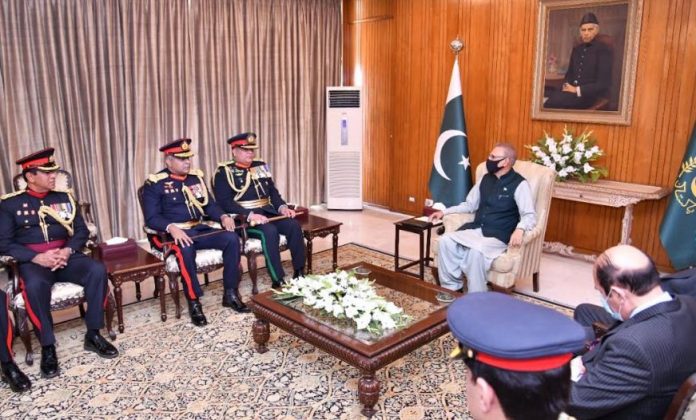
The President underlined the need for further enhancing economic, cultural and defence relations between the two countries. He made these remarks while talking to the visiting Chief of Defence Staff and Commander of the Sri Lankan Army, General Shavendra Silva, who called on him, at Aiwan-e-Sadr, today.

The President said that Pakistan was attractive destination for the Buddhist tourists and people from Sri Lanka needed to be encouraged to visit the religious and scenic sites in Pakistan. He briefed the visiting dignitary about the successes achieved by Pakistan against the war on terror.

He also highlighted the ongoing atrocities and human rights violations by Indian Security Forces in the Illegally Indian Occupied Jammu & Kashmir. The President urged that International community should play a positive role to resolve the Kashmir issue in accordance with UN Security Council Resolutions.

The Chief of Defence Staff & Commander of Sri Lankan Army said that Pakistan was a close and dearest friend and his country wanted to further improve bilateral ties with Pakistan.

He said that the recent visit of the Prime Minister of Pakistan Mr. Imran Khan to Sri Lanka would boost bilateral relations.  He deeply thanked Pakistan for its support which stood by Sri Lanka in difficult times.

JAPAN, PAKISTAN DISCUSS WAYS TO FURTHER STRENGTHENING TRADE TIES

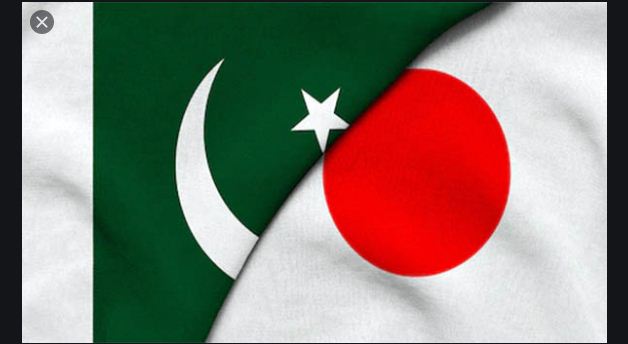
ISLAMABAD, MAR 19 (DNA) -The 7th Japan-Pakistan High-Level Economic Policy Dialogue was held virtually on March 19, 2021. Mr. SUZUKI Hiroshi, Senior Deputy Minister for Foreign Affairs of Japan, and Mr. Noor Ahmed, Secretary of Ministry of Economic Affairs of Pakistan represented respective sides. The Ambassadors of two countries and officials from related Ministries and agencies also attended the dialogue.

In the dialogue, Japan and Pakistan exchanged views on the current state and issues of Pakistan’s economy, the promotion of investment in Pakistan and trade between Japan and Pakistan, and the possible areas of cooperation, in which both countries can work together for the social, economic and infrastructure development in view of Pakistan’s needs.

Mr. SUZUKI highlighted that Pakistan was the largest recipient country of Japanese grant aid throughout the world this fiscal year. H.E. MATSUDA Kuninori, Ambassador of Japan to Pakistan, said, “It was a great pleasure to have this dialogue today in this difficult situation due to COVID-19 and it proved the strength of cordial relations between our countries. The Embassy will follow up on the matters we discussed in coordination with Pakistani authorities”.

Particularly, Pakistan requested Japan’s cooperation on expanding exports from Pakistan to Japan for the correction of the trade imbalance between the two countries. In response, Japan requested Pakistan to further improve its investment environment to promote investment from Japan.

Both sides agreed to hold the 8th High-Level Economic Policy Dialogue in Tokyo face to face if the COVID-19 situation allows.=DNA

==============

FIRST DEPUTY DIRECTOR OF THE ISRS: THE RESULTS OF THE ONLINE SUMMIT TESTIFY TO GERMANY’S UNWAVERING SUPPORT FOR THE NEW COURSE OF DEMOCRATIC TRANSFORMATIONS IN UZBEKISTAN

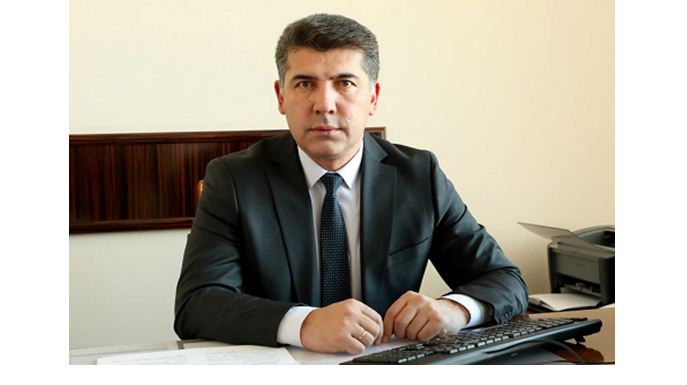
First Deputy Director of the Institute for Strategic and Regional Studies under the President of the Republic of Uzbekistan (ISRS) Akramjon Nematov

The online talks, held on 12 March between President of Uzbekistan Shavkat Mirziyoyev and German Chancellor Angela Merkel, became a logical continuation of the consistent development of Uzbek-German cooperation, which in recent years has acquired a progressive, dynamic character, – said Akramjon Nematov, First Deputy Director of the Institute for Strategic and Interregional Studies(ISRS) under the President of the Republic of Uzbekistan. This was also a confirmation of the high level of mutual trust between the leaders of the two countries, which has developed thanks to the regular political dialogue, which began with the meetings of President Shavkat Mirziyoyev, held in Berlin and Tashkent in 2019, with German Chancellor Angela Merkel and Federal President Frank Walter Steinmeier.

Undoubtedly, the agreements reached during the current negotiations will give a powerful impetus to the comprehensive expansion and deepening of Uzbek-German cooperation in all areas of mutual interest.

Already today, the partnership between our countries is multifaceted, covering the trade, economic, investment and technological spheres. Fruitful interaction is underway in the field of security, protection of human rights, environmental protection, science and education, expansion of cultural ties and tourist exchange.

Germany actively supports the policy of our country to strengthen relations of friendship, good-neighborliness, trust and partnership in Central Asia, is stepping up joint efforts to facilitate the peace process in Afghanistan, to promote regional infrastructure projects in the transport and energy sectors for this purpose.

The indicators in the areas of trade and investment, where Germany has traditionally been our key partner, speak most eloquently about the high level of interaction between our countries.

So, today Germany has become the main trade and economic partner among the countries of the European Union. In the period from 2016 to 2019, mutual trade reached its maximum indicators and grew by almost 87%, amounting to US$990 million.At the end of 2020, due to the coronavirus pandemic, trade slightly decreased to US$829 million. However, taking into account the forecast in both countries this year of economic growth is expected that the turnover may exceed the US$1 billion mark.

In 2020, within the framework of the implementation of about 110 investment projects, the volume of utilized German investments increased by 25% compared to 2019 and exceeded US$710 million. At the end of 2020, Germany has become one of the leading investors in the economy of Uzbekistan after Russia and China, and its share is about 14% of the total volume of foreign investments.

This year, more than 20 large projects with a total value of about US$1 billion in the automotive, chemical, pharmaceutical and electrical industries, as well as in the production of building materials, are planned for implementation together with German investors.

Active bilateral investment cooperation contributes to the expansion of the presence of German business in our country. If, in 2016, 120 enterprises with the participation of German investors operated in Uzbekistan, today their number has reached 193. Such well-known German companies as MAN, Claas, Knauf, Papenburg are actively working in Uzbekistan. For the first time, Volkswagen and Viessmann entered the market, after a long break, Siemens and Bosch returned.

It is expected that the regular meeting of the Uzbek-German Business Council, scheduled for May this year, will give impetus to cooperation in such new areas as the development of industrial clusters, digitalization and the “green economy”, promotion of projects in the field of renewable energy.

The increased support of Germany for political and socio-economic reforms in the republic is also evidenced by the increase in the volume of financial and technical assistance provided in such areas as agriculture and water management, development of the legal system, education, health care, trade. In particular, in 2019-2020, the German government allocated 202 million euros to Uzbekistan in the form of concessional loans and grants. This is five times more than in 2017-2018.

Against the background of the intensification of Uzbek-German cooperation, the interest of our citizens in the study of the German language and education in Germany is growing. Today in Uzbekistan more than 300 thousand schoolchildren, 19 thousand students study the language of Goethe, Schiller and Kant. About 600 Uzbek students, postgraduates and doctoral students study at various universities in Germany.

In general, the results of the online summit testify to Germany’s unwavering support for the new course of democratic transformations in Uzbekistan, the emergence of bilateral relations to a qualitatively new level, a characteristic feature of which is the desire of the parties to mutually beneficial cooperation based on the principles of mutual respect and interests of each other.

Against this background, it becomes obvious that the strategic partnership between Uzbekistan and Germany is designed for the long term and is designed to ensure joint actions at the international and regional levels.

MINORITIES HAVE EQUAL STAKE IN & LOVE FOR PAKISTAN: SPEAKERS

ISLAMABAD, MAR 19 (DNA) – The minorities of Pakistan love the country as much as the Muslim majority does, and they have the equal stake in the vision of Pakistan, said the speakers during the second day of a series of webinars entitled, “Nurturing Peaceful, Respectful and Inclusive Societies in Pakistan: Seerat Counters Hate Speech through Decisive Action”. Representatives of different Pakistani minorities, including Christians, Hindus, Sikhs, Buddhists, Kalashas, Parsi and Baha’i communities addressed the webinars, being jointly organised by the Higher Education Commission (HEC), Pakistan and the United Nations Office on Genocide Prevention and the Responsibility to Protect.

Dr. Amineh Hoti, former Project Director Seerat Chairs, HEC, moderated the webinars. She stressed the need for promoting empathy and respect for each other. She said the majority must include and respect the minorities, adding that the majority and minorities must joint hands to fight hate speech and all the negative and discriminative attitudes and behaviours to marginalise specific groups of people. She emphasised measures to ensure justice and inclusivity in the society of Pakistan.

Dr. Simona Cruciani, Political Affairs Officer at the UN Office on Genocide Prevention, shared the definition of hate speech, saying that there was no international legal definition of hate speech, and the characterization of what is ‘hateful’ is controversial and disputed. In the context of the UN document, the UN Strategy and Plan of Action on Hate Speech, the term hate speech is understood as any kind of communication in speech, writing or behaviour, that attacks or uses pejorative or discriminatory language with reference to a person or a group on the basis of who they are, in other words, based on their religion, ethnicity, nationality, race, colour, descent, gender or other identity factor. This is often rooted in, and generates intolerance and hatred and, in certain contexts, can be demeaning and divisive.

She reiterated that the UN was committed to countering hate speech globally with the cooperation of its partners. She said that the UN Secretary-General was very much concerned about the ‘tsunami of hate speech’, especially the online trends of spreading hatred during the pandemic. She said that the UN was struggling to foster an environment of tolerance towards diversity, social cohesion, and dialogue wherein freedom of opinion and human rights were honoured. The UN was closely working with the victim groups to cope with stigmatization, discrimination, and targeting of specific groups, she revealed.

In his remarks, Dr. Safdar Ali Shah said that Pakistan was a land of diversity, as its people accepted, respected, and embraced the existence of diverse religious and ethnic communities. “The soil of Pakistan inherited diversity.” He shed light on the ancient civilizations homed by the land of Pakistan, including Mehr Garh, Indus Valley Civilization, and Gandhara Civilization. He said that Sikhism flourished in the presence of Islam and Hinduism in the united India, while four relics of Buddha were also found in the soil of Pakistan. Regarding Taxila, a significant archaeological city in Punjab, he said that the city witnessed many cultures prospering and expanding. He said that Sufi saints of the land promoted the philosophy of humanism.

Addressing the webinar, Mr. Isphanyar Bhandara, a former Member of Parliament, who represented the Parsi community of Pakistan, said that the minorities of Pakistan decided at the time of independence in 1947 to become Pakistanis by choice. He said that the minorities had equal stake in Pakistan and they equally loved the country. He said that t Muhammad Ali Jinnah, firmly believed in religious tolerance, diversity, and acceptance of all religions.

Mr. Bhandara said there were some people, who had gone astray and fueled discrimination between the majority and minorities, yet it was “never too late” for them rectify. He underlined a few factors, including the geopolitical situation of the region and deficiencies in the school education system, that caused the segregation and discrimination. He emphasised that the Government must take practical measures to create awareness about the importance of minorities and their contribution to the development of Pakistan. He proposed to the Government to increase job quota, in addition to increasing seats in the legislature, for the minorities. He stressed the need for naming roads and highways after minority leaders to acknowledge their services to the country. The teachers must be trained and the curricula must be reviewed to promote religious tolerance and respect for minorities, he emphasised. He noted that media had a very powerful role in the society, so the media houses should be mandated to give some time to educate about people about various religions, portraying positive picture of the minority groups. “I firmly believe that protecting and accepting minorities will help project a good of image of Pakistan.”

Representing the Christians, Dr. Sara Safdar, former Dean at Peshawar University, highlighted the role of Christian community in the development of Pakistan, the rights of minorities, and the challenges being faced by the minorities. She said the Christian community had a great contribution to the foundation of Pakistan, as it fully supported Mr. Jinnah at the time of his struggle for an independent homeland. “Special attention must be paid to address the gaps in protection of minorities’ rights.” She added that steps must be taken to facilitate dialogues between the Government and minorities so that the minorities were enabled to express themselves. She also underlined the importance of unbiased media reporting to promote interfaith harmony.

Major Harchan Singh from the Sikh community shared a presentation on the philosophy of Guru Nanak Dev Ji, the fostering of Sikhism in Pakistan, his love for Pakistan, and the Kartarpur Corridor as a bridge of peace. He said that the Guru of Sikhism was strongly against all the artificially created divisions and discrimination. He quoted the Guru as saying: “caste of a person is based on what he does.”

He said that a significant part of the Sikh history was linked to places located in Pakistan, including historical Gurdwaras, associated with different events of Guru Nanak’s life. He said that there were around 20,000 Sikhs scattered across Pakistan. He said that he inherited patriotism and nationalism from his father. He also highlighted the importance of opening the Kartarpur Corridor to the Sikhs living in India who could now easily offer pilgrimage to Nankana Sahib, the birthplace of Baba Guru Nanak.

Dr. Seema Nake, who represented Baha’i community, a staunch advocate of interfaith harmony, said that one must treat others the way one wanted oneself to be treated. She said that Pakistani youth had great abilities and they could play a positive role in combatting hate speech and discriminative segregation and isolation. She emphasised that the well-being of mankind was unattainable until unity was firmly established.

She said that the human beings were duty bound to build the essential relationship that were binding them as one family. She hoped that the discussions in the webinars would find expression in action. She also presented a few recommendations to make the HEC-UN efforts more productive, like steps to engage all the concerned, including youth, in a dialogue process for the cause. “We have to reflect on moral character development and spiritual empowerment of every child in Pakistan.” She asserted that diversity could become a means for social development in Pakistan.

Gul Kalasha, a representative of Kalasha community, depicted the history of Kalash, and said that the community had been living in Kalash, Chirtal, for the past 3000 years. She said that the majority of Muslims living over there loved and respected them. “We can perform our rituals and follow our customs and traditions in peace and harmony.” She said that hate speech never eliminated hate, rather love and compassion brought peace and harmony in the region. She stressed the need for teaching of tolerance towards religions from schools. “The madrassahs, schools and media can play an important role to eliminating hatred in the society,” she concluded, while laying emphasis on practical steps. 

Pushpa Kumari, a representative of Hindu community, said that the white colour in the Pakistani flag depicted the diversity and the rights of minorities. She said that the Hindus celebrated Holi, Diwali, and Eid, together with their country fellows without any hurdles. She urged that the people must be sensitised about the basic human rights and the constitutional rights through curricula. She said that the customs and cultures of diverse communities needed to be promoted, as this would help promoting peaceful coexistence. “We have to show the world that the Pakistanis, whichever religion and ethnicity they belong to, are a one nation.”

A Buddhist by religion, Rajkumari Troya Roy Khisa, highlighted salient aspects of Buddhism, saying that non-violence was the highest moral virtue. She said that the Government of Pakistan was always supportive of Buddhist tourism, adding that the Buddhist sites reflected the rich cultural heritage of Pakistan. She said that Buddhism preached its followers to avoid creating sufferings and problems for others. She affirmed that everyone was responsible for his or her deeds, as every action brought results. “Let’s try to live in harmony and help humanity to live together.”

The series of webinars aim at encouraging peaceful, inclusive, and empathetic communities in Pakistan through tools like active and continuous intersectional participations, dialogue, and collaboration. It is linked to the implementation of the Plan of Action for religious leaders and actors to prevent incitement to violence that could lead to atrocity crimes and the UN Strategy and Plan of Action on Hate Speech. It also aims to contribute to achieving the Sustainable Development Goals (SDGs), in particular SDG16 on building peaceful, inclusive and just societies.=DNA

==========================

Indonesia urges ASEAN leaders to hold summit on Myanmar coup

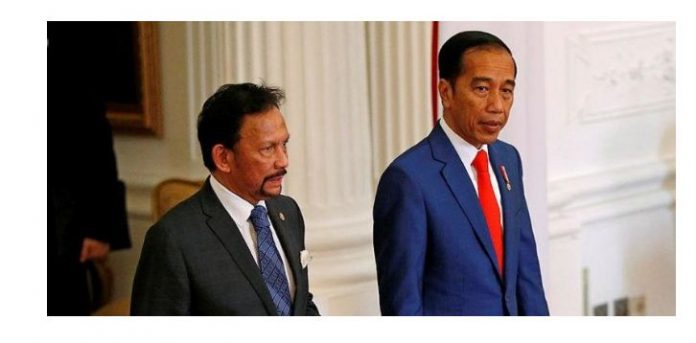
JAKARTA, MAR 19: Indonesian President Joko Widodo on Friday urged a halt to violence in Myanmar and asked the fellow leaders of Southeast Asia countries to hold a summit on the crisis.

Indonesia urges that the use of violence in Myanmar be stopped immediately to avoid more victims,” Widodo told a televised address, offering his condolences to the victims and their families.

More than 200 people have been killed by security forces since the Feb. 1 coup, according to credible tallies. Nearly 2,000 have been jailed.

Widodo, the leader of Southeast Asia’s largest economy, said that he will immediately contact the sultan of Brunei, which holds the rotating presidency of the 10-member Association of Southeast Asian Nations, to set up an ASEAN summit to address Myanmar’s turmoil.

Widodo’s comments came after ASEAN foreign ministers held their first meeting early this month since the coup, which deposed Myanmar leader Aung San Suu Kyi and her allies.

Brunei issued its own chairman’s statement after the ministers apparently failed to agree on a declaration in the meeting where Myanmar’s top diplomat briefed them during a video conference. It said the ministers called on all parties in Myanmar to refrain from instigating further violence and start talks on a peaceful solution.

ASEAN includes Brunei, Cambodia, Indonesia, Laos, Malaysia, Myanmar, the Philippines, Singapore, Thailand and Vietnam.

BIDEN URGES UNSC TO ACT ON ETHIOPIA, SYRIA, YEMEN, LIBYA AND MYANMAR

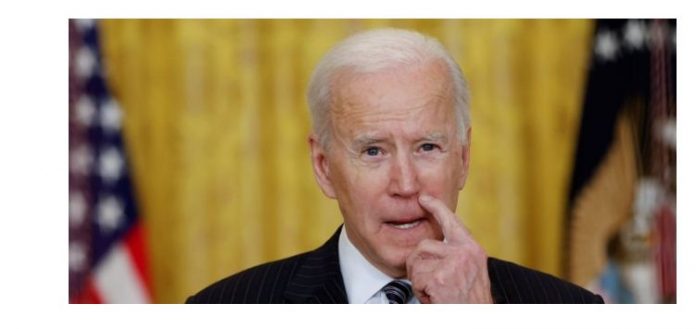
WASHINGTON, MAR 19 – US President Joe Biden met virtually with permanent representatives of the UN Security Council, calling for its action on regional crises, the White House said Thursday.

During the meeting, Biden reaffirmed the US commitment to values-based global leadership and re-engagement with international institutions, in particular the UN, the White House said in a statement.

“The president also noted the need for UNSC action on a range of regional crises, including those in Burma, Ethiopia, Libya, Syria and Yemen,” said the statement.

Biden and the UN diplomats also discussed the COVID-19 pandemic and global health security.

“The President reiterated the importance of working with global partners and through multilateral institutions to end the pandemic, improve global health security, and ensure that our nations drive an equitable and sustainable economic recovery,” it said.

Biden told the permanent representatives of the U.N. Security Council that the United States will join the international body’s Group of Friends on Climate and Society.

The group was launched in 2018 with a focus on the impact that national security policy has on climate change.

Biden has vowed that the U.S. will consider climate issues in nearly all policy-making and has committed to the U.S. cooperating on multilateral efforts on addressing climate change. That’s a marked departure from his predecessor, Donald Trump, who largely ignored scientific consensus about the need for nations to take action to curb rising temperatures.

SHANIERA AKRAM: YOU CAN’T JUST SELECTIVELY PLAY THE CULTURE CARD

ISLAMABAD – Shaniera Akram was among many celebrities who came under fire for supporting University of Lahore’s students, who were expelled after their proposal video went viral.

“We can’t just hold the culture card and then choose when we want to play it,” said Shaniera.

She posted a series of stories on Instagram, calling out her detractors for “hypocrisy and ignorance”.

“Can everyone stop throwing me under the bus here?” said Shaniera. “You have to understand that I have been brought up in a different country and see things a little differently.”

Shaniera remarked there are reports of honour killings, children being abandoned in garbage and abuse in Pakistan, which is not the culture here but “it still happens”.

“Spread love, not hate,” she said. 

Actor Mansha Pasha came out in the couple’s support and hoped the university would revise its decision. 

Last week, the University of Lahore expelled two students after their video, showing the girl proposing to the boy on campus, went viral. The couple embraced after the boy accepted her proposal.

PIAF FOR STRENGTHENING AGRI SECTOR AS FOOD IMPORT BILL INFLATING

LAHORE, MAR 19 – /DNA/ – The Pakistan Industrial and Traders Association Front Chairman Mian Nauman Kabir has called for strengthening the agriculture sector, as the import bill of eatables has inflated by over 50% to $5.35 billion during the first eight months of 2020-21 to bridge the shortfall in domestic production of agriculture produce. 

The PIAF Chairman, in a joint statement with vice chairman Javed Siddiqi, observed the country needs to enhance the areas of research to encourage indigenous technological innovations and modernize its agriculture sector, as this has the potential source of employment for the people of the country. Moreover, the higher food import bill due to lower domestic produce will also trigger trade deficit, causing uneasiness on the external side for the government. He said that the share of food items in the total import bill has now reached 15.76% this year, making the country dependent on imports to ensure food security. 

Mian Nauman Kabir said that the trade deficit is widening as the overall import bill of the country has been on the rise since November last year, mainly due to an increase in the import bill of food items.  

Mian Nauman said that the food import bill of all products posted a growth in value and quantity during the period under review, a clear indication of shortage in domestic production. Within food group import, the major contribution came from wheat, sugar, edible oil, spices, tea and pulses. Edible oil import witnessed a substantial increase during the period under review in quantity, value and per value terms. 

Mian Nauman Kabir said that Pakistan needs to move from traditional to modern agriculture to overcome its trade deficit and meet its socio-economic targets. He noted that during 2008 to 2018 Pakistan agriculture production increased by 56% against the average increase of 72% in the South Asian region, while the average rise was more than 90% in the lower middle-income countries. He was of the view that Pakistan can quickly embark on the road of rapid development and get rid of poverty and backwardness by focusing on its agriculture sector. 

To improve export capacity, the most important thing is to accelerate the development of the China-Pakistan Economic Corridor, especially the construction of the nine special economic zones in the second stage, so that Pakistan can enter the track of rapid economic development, and strive to realize the industrialization and modernization of the nation. Pakistan is an agricultural country, and agriculture is the lifeline of Pakistan’s economy. 

The development of Pakistan’s agriculture is behind the world and South Asia, as it has not realized the leap from traditional agriculture to modern agriculture, and has not realized the mechanization, scale production, technicalities and modernization of agriculture.  

PIAF vice chairman Javed Siddiqi said that besides introduction of new varieties, reducing post-harvest losses, renovation of existing orchards, improving value chain and development of rural industries are major proposed interventions. 

Javed Siddiqi remarked that farmers were the major stakeholders of agriculture sector, and it is a matter of concern that seeds of various crops were not being provided to farmers on time. He suggested that bottlenecks need to be removed to ensure fair and timely distribution of crops seeds to the farmers so that by resolving farmers’ issues agricultural productivity could be enhanced. 

He was also of the view that the vast potential of agriculture sector if exploited prudently and effectively will vehemently alter the socio-economic landscape of our country, bring lasting economic benefits and strengthen the process of industrialization. 

JORDAN ENVOY VOWS TO PLAY ROLE FOR DEVELOPING STRONG COOPERATION WITH PAK

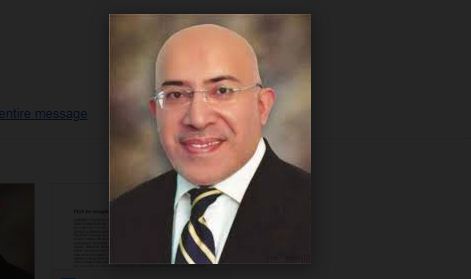
ISLAMABAD, MAR 19 (DNA) – Ibrahim Almadani, Ambassador of the Hashemite Kingdom of Jordan vowed that he would play a role for developing strong cooperation of his country with Pakistan in the pharmaceutical sector as both countries have great potential to share expertise and learn from each other for producing high quality pharmaceutical products and enhance exports.

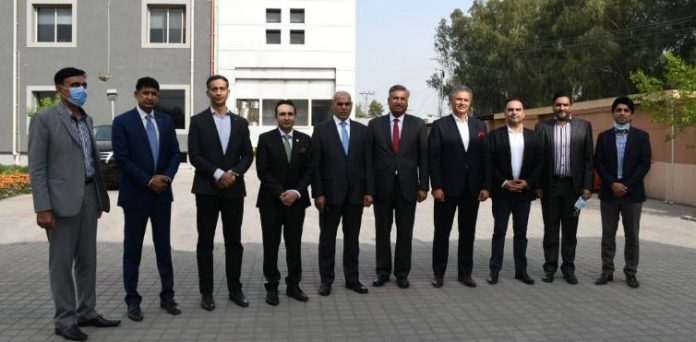
He expressed these views while paying a visit to various local pharmaceutical industries including Global Pharma, AMSON Pharma, Paramount Pharmaceuticals and Focus & Rulz Pharmaceuticals at Kahuta Industrial Triangle, Humak, Islamabad. Sardar Yasir Ilyas Khan President Islamabad Chamber of Commerce & Industry, Shamim Ahmed Khan owner of AMSON Pharmaceuticals, Nasir Qureshi owner of Paramount Pharmaceuticals, Fazl e Hanan owner of Focus & Rulz, ICCI Executive Members Usman Khalid, Umar Hussain, Omais Khattak and others were also present at the occasion.

Ibrahim Almadani along with Sardar Yasir Ilyas Khan and others took a round of the production units of pharmaceutical companies and appreciated their latest technology and modern manufacturing facilities. He said that the pharmaceutical factories in Jordan were also producing quality products and close cooperation between the pharma companies of Jordan and Pakistan would be mutually beneficial for them as it would help them to share expertise and technology and produce world class pharmaceutical products for exports.

Speaking at the occasion, Sardar Yasir Ilyas Khan, President, Islamabad Chamber of Commerce & Industry briefed the Jordanian envoy about the potential of Pakistan’s pharmaceutical industry. He said that Pakistan was now emerging as a key player in the global pharmaceutical industry due to excellent quality of its medicines.

He said that over 750 pharmaceutical units including MNCs were doing successful business in Pakistan and were meeting around 70 percent needs of the country’s medicines demand. He said that many of them were exporting products around the world as Pakistan’s pharmaceutical exports have witnessed an increase of around 23 percent during the first quarter of FY 2020-21, which showed its great future prospects.

He said that by developing close cooperation in the pharmaceutical sector, Pakistan and Jordan could achieve significant benefits for their economies and boost exports. He assured that ICCI would fully cooperate in developing strong business linkages between the private sectors of Pakistan and Jordan for achieving mutually beneficial results.

Nasir Qureshi, Fazl-e-Hanan and Shamim Ahmed Khan gave presentations about their production facilities to the Ambassador and said that they would like to enhance export of their pharma products to Jordan and through Jordan to other regional countries.

They urged that the government should streamline the registration process of medicines and facilitate better growth of the pharma industry by addressing its key issues so that this industry could boost exports and contribute towards strengthening the economy.

They emphasized that the government should provide zero-rated tax on the import of pharma plants and equipment, give relaxation in GST and get it registered with the FDA. They said that the government should provide support for producing raw material of medicines in the country that would boost the pharma industry and bring down prices of medicines as well.=DNA

====================

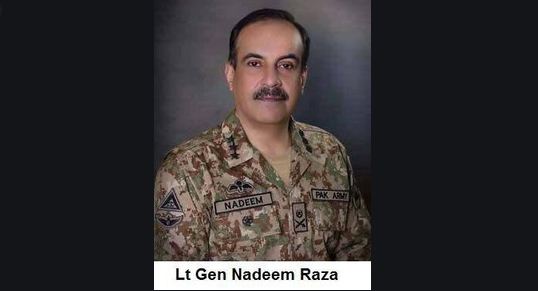
CJCSC GEN. NADEEM RAZA MEETS DEFENCE MINISTER OF IRAQ

RAWALPINDI, MAR 19 (DNA) – General Nadeem Raza, Chairman Joint Chiefs of Staff Committee, who is on official visit to Iraq, called on H.E. Mr Juma Enad Sadoon Khattab Al Jibori, Defence Minister of Iraq. Chairman JCSC also held separate meetings with General Abdul Ameer Rasheed Yar Allah Al Lami, Iraqi Chief of Staff and Lieutenant General Shahab Jihad Ali, Commander Iraqi Air Force. 

During the meetings, both sides deliberated upon various areas of interest including security, defence cooperation and prevailing regional environment. The dignitaries dilated upon measures to enhance the level and scope of bilateral military engagements/cooperation between both countries and reaffirmed to continue to forge deeper ties.

Chairman JCSC also visited Defence University for Higher Military Studies (DUFHMS) and called on its Rector Lieutenant General Saad Mizhir Muhsin Hashim Al Allaq. During the interaction, CJCSC highlighted the positive role of Pakistan in countering violent extremism and also shared Pakistan’s efforts for regional peace and stability especially in Afghanistan.

Earlier upon arrival at Ministry of Defence, Chairman JCSC was presented Guard of Honour by a smartly turned out contingent of Iraqi Armed Forces.=DNA

===============

Stay Connected

64FansLike
60FollowersFollow

Latest Reviews

Exchange Rates

USD - United States Dollar
EUR
1.14
GBP
1.34
AUD
0.69
CAD
0.71