Home Blog Page 2843

Reforms in Kazakhstan: Implementations & Achievements (Part-II)

Dr. Mehmood Ul Hassan Khan

Ours is the age of “e-governance” and “smarter state” which has become an essential part of modern living. In this context, Kazakhstan President H.E. Kassym-Jomart Tokayev introduced numerous “structural reforms” to “modernize” public administration in the country which has now actually “reinforced” eternal relation between the dynasty and dynamics due to which spirits of “transparency”, “accountability”, “service”, “checks & balances” and last but not least “good governance” have been truly institutionalized.  

Kazakhstan President Tokayev prioritized improvement in the efficiency and quality of work of the state and its internal & external agencies in managing the country’s affairs and interacting with citizens as legitimate consumers of public services. By introducing various executive changes in the structure of the government he held accountable all the government agencies.

Civil services have become one of the “vital” forces to transform state, its agencies and civility alike. “French Revolution”, “Magna Crata”, “US Civil Liberties Act” and even Kazakhstan’s own concept of “Listening State” all uphold undeniable importance of efficient civil services. Even anti-corruption drive has become hot topic in the world because corruption has already damaged even basic core of moralities and government structures around the globe. Corruption is anti-development and humanity alike due to which visionary leadership of Kazakhstan institutionalized various anti-corruption plans and programs in the country.    

In order to “reenergizing” the civil services & its affairs the anti-corruption agency was reorganized and divided into the Civil Service Affairs Agency and the National Anti-Corruption Bureau (Anti-Corruption Service) on June 13, 2019.

Economic stability and sustainability are the two important factors of socio-economic prosperity of modern economic discipline in the world. Trade and exports oriented policies bring further foreign reserves and enhance current account surplus. To further enhance the modern trade policies and integration of various economic stimulations a new Ministry of Trade and Integration was established on June 17, 2019. The Ministry was responsible for the formation and implementation of domestic and foreign trade policies, international economic integration, consumer protection, technical regulation, standardization and ensuring the uniformity of measurements, coordination of activities in the export promotion.

World has already witnessed “devastating” consequences of imbalanced economic and industrial growth during which elements of bio-diversity, environmental protection and climate change has been in the line of fire. There has been a high ratio of carbon footnotes around the globe which actually has now endangered the very basic survival of humanity on earth.

To pursue a “holistic” policy and maintain a “strategic” balance between massive industrialization and protection of environment the President of Kazakhstan formed a new Ministry of Ecology, Geology and Natural Resources on June 17, 2019. The main functions of this agency were  governance and coordination of management processes in environmental protection, green economy development, waste management, protection, control and supervision of the rational use of natural resources, state geological exploration, mineral replacement, use and protection of water resources, forestry, wildlife and conservation areas.

Ours is the age of “digitalization” and “artificial intelligence” and ideal combination of both has now become “guarantor” of even national sovereignty and territorial integrity in the world. To speed-up the development of digitalization, computerization, ICT, and AI the Ministry of Digital Development, Defense and Aerospace Industry was transformed into the Ministry of Digital Development, Innovation and Aerospace Industry on June 17, 2019 with the addition of functions in geodesy and cartography, innovation, scientific and technological development of the country. Moreover, the Syrbar Foreign Intelligence Service was merged and strengthened on June 17, 2019 with the National Security Committee of the Republic of Kazakhstan.

Dissemination of true soft image of the country and formation of national narratives the Central Communications Service (CCS) was established under the President of the Republic of Kazakhstan on July 22, 2019.

Furthermore, the Division for Monitoring the Consideration of Appeals of the Administration of the President of the Republic of Kazakhstan was created on July 22, 2019. The Agency for Regulation and Development of the Financial Market was created on November 11, 2019 through reorganization of the National Bank of the country.

Qualitative human resources have now become necessity of modernization of state, civility and economic stability around the world. In this regard, the President gradually renewd the management staff and initiated the formation of the Presidential Youth Personnel Reserve on a competitive basis.

A set of reforms has now enabled the government of Kazakhstan to overcome sever pandemic of COVID-19. A new set of institutional reforms was implemented in 2020 to improve the public administration system based on the lessons of the pandemic. President of the Republic of Kazakhstan decree ensured on March 16, 2020 socio-economic stability. Pandemic of COVID-19 has been diminished and journey of prosperity has re-surfaced and re-started in Kazakhstan.

The President created the Supreme Council for Reforms on September 14, 2020 consisting of 10 people. He established Agency for Strategic Planning and Reforms of the Republic of Kazakhstan on September 92020 that which was directly subordinated and accountable to the President of the Republic of Kazakhstan.

Moreover, creation of the Ministry for Emergency Situations of the Republic of Kazakhstan on September 9, 2020 further had further enhanced state’s response and preparedness against all natural calamities and non-state actors.

In this context the Agency for Protection and Development of Competition of the Republic of Kazakhstan was formed on September 9, 2020. The mission of said body was to create equal conditions for market participants by protecting and promoting competition, limiting monopolistic activities and preventing unfair competition

Transparency in regional and national statistics reorganization of the Committee on Statistics of the Ministry of National Economy into the Bureau of National Statistics of the Agency for Strategic Planning Reforms was ordered on October 5, 2020.

The President of Kazakhstan reduced 25 percent total strength of civil servants by adopting of the constitutional Law on Amendments to the Constitutional Law on the Government of the Republic of Kazakhstan dated December 30, 2020.

All modern prominent economists of the world indicate “colossal” implications of black/parallel or shadow economy which has multiplier consequences to national treasury, development of domestic industrial enterprises and even waste of national talent and human capital too. The President strengthend the fight against the “shadow” economy, with the aim to reduce its level to 15 percent by 2025.

For achieving this goal a new State Planning System (SPS) was designed to build a more flexible architecture of program documents, increase the interconnectedness of strategic and budget planning, and clearly establish the direct responsibility of the heads of state bodies and organizations for the implementation of plans and programs. In this connection, a Concept of Public Administration Development (PAD) of the Republic of Kazakhstan through 2030 was consequently designed to ensure the transition from an administrative and control orientation.

We live in the age of economic liberalization in which private sector plays an important role. The President introduced meaningful structural  economic reforms in the country in which positive and participatory  taxation system, optimal use of land management and foreign labor remained main focus which actually reduced state participation in business activities and created conditions for the development of the private sector, exemption of micro and small business entities from paying taxes, postpone the introduction of mandatory payment by employers of a 5 percent contribution to the Unified Accumulative Pension Fund until 2023.

The widespread introduction of non-cash payments and the development of non-bank payment systems with appropriate regulatory rules were also institutionalized. Order to seize unused agricultural land from irresponsible landowners, tax laws, laws on public administration, Implementation of a pilot project for satellite monitoring of agricultural land in Akmola, Kostanay, East Kazakhstan and Mangistau regions during 2020 and a 40 percent reduction in the quota for attracting foreign labor was also announced. A new system of conducting annual inspections at enterprises that attract foreign labor, development by the Ministry of Finance and the National Bank of the Unified Register of external debt in the form of a digitized database was announced and implemented.

Development and adoption of the Law on Industrial Policy was designed to define the basic principles, goals and objectives of the development of the manufacturing industry. On February 5, 2021, this draft law was presented in the Mazhilis of  Parliament. Development of a new national project to develop the agro-industrial complex through 2026 was established which provided for the formation of at least seven ecosystems for the production and processing of agricultural raw materials around major investment projects, a package of measures to stimulate cooperation in rural areas, the formation of human capital in agriculture, etc.

Development of a new regulatory framework for small and medium-sized business activities was aimed at changing the regulatory policy, implementation of the export accelerator program was aimed at supporting medium-sized non-resource enterprises in order to expand access to foreign markets.

Comprehensive measures were announced to reorient the excess liquidity of second-tier banks to lending to small and medium-sized businesses and to stop currency speculation. New tax regime with new tax code and regulations were patronized. Profound simplification of the execution of tax obligations, including through digitalization, implementation of the expanded budget covering the activities of extra-budgetary funds, including the State Social Insurance Fund, the Social Health Insurance Fund, and the Unified Accumulative Pension Fund was designed.

Social development is must for politico-economic stability due to which the Decree on Measures was promulgated to reduce the debt burden of citizens of the Republic of Kazakhstan on June 26, 2019, according to which the government and the National Bank were instructed to repay the debts on loans of low-income citizens in second-tier banks and microfinance organizations.

Development by the Ministry of Labor and Social Protection of Population of the draft Law on Amendments and Supplements to Certain Legislative Acts of the Republic of Kazakhstan on issues of social protection of certain categories of citizens was aimed at strengthening measures to support persons with disabilities. The introduction of mechanisms for subsidizing rent payments with the reorientation of part of the funds provided for the construction of rental housing in the regions (with coverage of at least 100,000 families) through the “Otbasy Bank”, was created on the basis of “Zhilstroysberbank”, as well as subsidizing the costs of employers in the construction of rental houses in rural areas.

The President ordered to create the unified digital healthcare space with the inclusion of 90 percent of medical organizations and the introduction of electronic health passports. A special program “Ansagan Sabi” was commencd from 2021 with the provision of 7000 quotas for In Vitro Fertilization (IVF).

Initially, Kazakhstan President H.E. Kassym-Jomart Tokayev revolutionized the concept of governance by introducing diversified but integrated structural reforms in public administration and civil service. Sincere efforts have been initiated to bring healthy, positive, productive and participatory politicization and democratization in the country. Due to which women participation has been further enhanced. Scope, utility and composition of genuine opposition have been institutionalized.

Concepts of responsibility, transparency, accountability and interconnectivity was introduced and consequently implemented. Now Kazakhstan has become a Listening State. Special focus was given to anti-corruption legislation and practices which actually, transformed its politics, administration, society, judiciary and all the agencies of the government.

Meaningful socio-economic reforms has brightened its overall economic stability and promoted elements of sustainability. It also lessened ratios of poverty and deficits of energy and food supplies in the country. Small and medium enterprises have been further activated to assist the rural economy and its people in Kazakhstan.

Being prominent regional expert of Kazakhstan I really appreciate comprehensive structural reforms initiated by Kazakhstan President Jomart Tokayev which has now actually drastically changed its economic outlook, political orientation, societal make-up, administrative utility, judicial scope and last but not least legislative make-over.     

Over 644,660 children to get anti-polio drops

KASUR, Mar 26 :  A five-day anti-polio campaign would begin in the district from March 29 with the target to vaccinate over 644,660 children up to five years age.

Chief Executive Officer (CEO) district health authority Kasur ,Dr. Iqbal Javed said that 1586 teams were constituted to administer the vaccine.

As many as 3444 polio workers, district health officers (DHOs), deputy DHOs, zonal supervisors, area incharge,

would work for the campaign. Vaccine would be provided at all rural health centers and basic health units,it was learnt.

CEO said that he would monitor the campaign, and ensure strict compliance with regards to coronavirus SOPs.

He urged the citizens, particularly the parents, to come forward and play their role for elimination of the crippling disease.

Pakistan won’t compromise on Kashmir issue, Syed Fakhar Imam

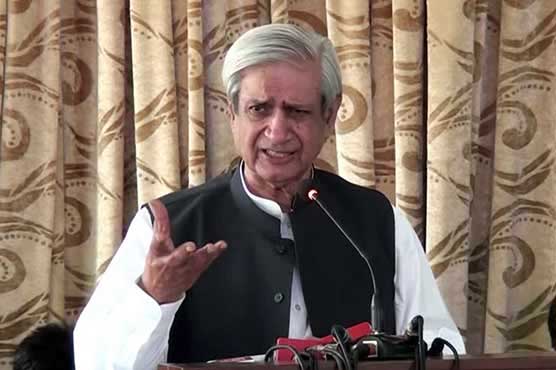
ISLAMABAD, Mar 26  : Federal Minister for National Food Security and Research Syed Fakhar Imam on Friday said that Pakistan would never be a compromise on Kashmir cause.

Kashmir was the country’s jugular vein and no compromise would be made on the Kashmiris’ right to self-determination.

He said that Pakistan has made extensive efforts to highlight the gross human rights violations of Indian government in the occupied valley at the diplomatic level.

He reiterated that India must immediately end the continuing lockdown, communications blockade and media blackout in IOK, and release the incarcerated Kashmiri leadership and innocent Kashmiri youth, many of whom are held at undisclosed locations away from their families.

Pakistan has always believed in peaceful coexistence,he said.

Pakistan’s desire for peace should not be taken as weakness.

He said the people of Kashmir have the right to decide their fate.

India illegally changed the special status of Kashmir in contravention of the UN resolutions, he highlighted.

Fakhar said Pakistan has a clear and transparent stance that Kashmir is an international dispute and no unilateral decision can change its special status.

We have one point agenda that the issue of Kashmir must be resolved in accordance with the will of Kashmiri people, he added.

He regretted that the Modi has highly militarized the whole valley and converted IIOJK into the largest prison of the world.

Broadsheet- the ultimate cost of corruption

Mahroo Arshad

Since the Broadsheet scandal surfaced a few weeks ago, it has been wrongly perceived from a narrow skewed lens. Mossauvi capitalised on the opportunity provided by the lack of comprehension to command the media airwaves and set a narrative that presented everyone involved from the Pakistani side in a bad light.

The government did the right thing by making the arbitration award documents public. However, this is just the beginning; the whole broadsheet episode calls for accountability and for fixing responsibility of this fiasco. Historically, the Broadsheet dispute is tied up with Pakistani politics and its battle with corruption. The NAB, formed in 1999, hired Broadsheet in 2000 to trace and recover assets allegedly stolen by influential figures, including former Prime Minister Nawaz Sharif. In late 1999’s, NAB began negotiations with Trouvons (Colorado based company) for recovery of assets and plundered money outside of Pakistan. At that time, Jimmy James represented and was part-owner of Trouvons, whose business included the kind of investigations and recovery assets that NAB would require to be carried out.

 He had some previous business experience in Pakistan. His business associates included a Colorado lawyer Ronald Rudman and an English Barrister William Pepper. James represented to NAB that Trouvons had the necessary expertise and experience to undertake the work of investigation and recovery of assets on behalf of NAB internationally, outside Pakistan. Contrary, NAB ended up signing an agreement with Broadsheet whose ultimate beneficiary was also Jimmy James but it was a shell company, registered in the Isle of Man (IoM) just a month before signing of the agreement.

It is interesting to note that the agreement was signed on the basis of qualification of Trouvons as it is near to impossible that Broadsheet having been formed a month earlier could have any kind of experience which was expected of it. The point to note is that NAB totally failed to take in to account, that why Jimmy James (also main beneficiary of Trouvons) established a new company just one month before the agreement with NAB. Had it been attentive, the agreement with broadsheet may have not been signed.

The suggested and unchallenged reason for the change from Trouvons to Broadsheet as a contracting party under the ARA (Asset Recovery Agreement) was that Ronald Rudman had been suspended from his membership of Colorado Bar on grounds of dishonesty. James knew that if NAB became aware of it, there would be no further negotiation. Therefore, he caused Broadsheet to be incorporated so that it rather than Trouvons could enter into the proposed agreement with NAB, as it did on 20th June 2000.

Moreover, a parallel and separate agreement was signed between NAB and International Assets Recovery firm (IAR), represented by William Pepper on 15th July 2000. The agreement signed between Broadsheet was intended is to be limited to investigations and recovery of assets in USA, Europe and Asia and IAR was to cover other parts of the world With NRO underway between Musharraf and Nawaz family, NAB terminated the agreement unilaterally with Broadsheet in October 2003 without going through the proper termination procedure.

 NAB had terminated ARA alleging Broadsheet of misrepresentations made during pre-contractual negotiations and commitment of repudiatory breaches. To which, Broadsheet contended that any shortfall in its performance of the ARA was caused by NAB’s breaches of its own obligations and it claimed damages in respect of those. To the misrepresentation plea taken by NAB, the arbitrator noted that the alleged representations were made on behalf of Trouvons not Broadsheet. Another key issue in this whole saga was the correct interpretation of clause 4 of ARA, which gave Broadsheet right to claim compensation.

The scope of ARA was intended to be limited to investigations and recovery of assets in the USA, Europe and Asia, not worldwide. But that was achieved not by express provision, but by limiting its scope to specific registered persons or entities or targets. Its scope was defined as reference to target list and there were no geographical limits. The arbitrator noted that neither party has raised the question of possible rectification of the written agreement (a remedy that might be available under English Law if the document mistakenly failed to record what was in fact agreed).

 Therefore, the advantage of this misrepresentation went in favour of Broadsheet’s claim. In April 2007, Broadsheet was dissolved by the court. Unaware of the fact, NAB entered into settlement agreements with International Assets Recovery firm (IAR) and Broadsheet in 2008. Under these agreements, NAB undertook to pay USD 1.5 million to Broadsheet and USD 2.25 million to IAR.

Mr. James signed the agreement as chairman of Broadsheet LLC Gibraltar (a misnomer) , as a manager of Steeplechase and also on his own behalf describing himself as shareholder and beneficiary of Broadsheet LLC under winding without giving any regard to the fact that the Broadsheet (Isle of Man) has already been dissolved in April 2007. During this period, NAB totally failed to find out that Broadsheet IoM was under liquidation and Jimmy James was not entitled to sign any agreement on behalf of Broadsheet IoM.

The fact that settlement worth USD 1.5 million was paid in two instalments to Broadsheet Colorado instead of Broadsheet IoM displays height of negligence. At the time, when poor taxpayers of Pakistan were paying the price of elite corruption and incompetence of its institutions, Mossauvi was gearing up to milk this sad state of affairs. During his meeting with Ahmer Bilal Soofi in April 2007, Mossauvi learned that the later was meeting Jimmy James to settle the Broadsheet claims in his personal capacity without involving Mossauvi, who thought himself to be 50% claimant of the settlement proceeds. Backdrop to this 50% claim was his meeting with Jimmy James back in early 2000’s, where he offered James that in return for funding Broadsheet’s costs of bringing a claim against NAB , they would share the proceeds 50/50 . Knowing that Jimmy James settlement with NAB had no legal standing, as Broadsheet was under liquidation, he created his financial stakes in Broadsheet by contacting an unpaid creditor of Broadsheet, Oakfield Corporate Services whose claim was for a modest sum of 4000 pounds.

 IAR funded by Mossauvi acquired the debt from Oakfield on terms which included paying the balance from the proceeds of any recovery from NAB. In a further transaction, IAR acquired the beneficial interest in Broadsheet from two Panamanian companies that were its original members and moved court to declare the liquidation null and void. From November 2009 onwards, Broadsheet has been controlled by Mossauvi. Having Mossauvi in control, Broadsheet went in to arbitration against NAB. The hearing on Liability Award took place in August 2016 by London Court of International Arbitration. Owing to lack of interest showed by then government, a liability award was issued in favour of Broadsheet. Subsequently the Quantum Award hearing took place in July 2018 and the court awarded Broadsheet USD 21.59 million plus interest as damages for the breach and repudiation of the agreement.

The appeal against the Quantum award got dismissed in July 2019. The incumbent government tried its level best to use all available legal remedies to salvage the situation, until the UK High Court ceased the account of Pakistan High Commission in London. Left with no choice and to save the national honour and dignity, the government finally approved USD 28.7 million payments to Broadsheet. In a nutshell, Pakistani taxpayer has paid the price of elites’ corruption and malafide intention on part of negligent individuals.

Now, the best government can do is to uphold its manifesto of accountability and fix responsibility. The key areas of inquiry may revolve around process of selection and appointment of Broadsheet and IAR, officials responsible for drafting a flawed contract (article 4 of ARA), reasons and effect of cancellation of agreements with Broadsheet and IAR in 2003, justification of settlements agreements, wrong payment and interest of successive governments in arbitration proceedings. The moral of the story is simple – there needs to be no compromise on corruption, otherwise Pakistani nation will keep paying for elites’ corruption and tyranny as in case of Broadsheet.

The author is an Australia Awards alumna and is a graduate of University of Melbourne in Development Studies

Rookies steer New Zealand to Bangladesh ODI series sweep

Wellington, March 26 : Maiden centuries for Devon Conway and Daryl Mitchell set up a crushing 164-run win for New Zealand in the third one-day international in Wellington on Friday, giving the hosts a series clean sweep.

Conway blasted 126 from 110 balls and Mitchell finished on 100 not out after New Zealand won the toss and elected to bat, making 318 for six.

Bangladesh were never in the hunt for the 319 target, all out for 154 after 42.4 overs, with Mahmudullah’s unbeaten 76 the only highlight as eight batsmen failed to reach double figures.

Jimmy Neesham and Matt Henry did the damage for New Zealand with the ball, taking five for 27 and four for 27 respectively.

Paceman Rubel Hossain was the pick of the Bangladesh bowlers, with three for 70, but the tourists’ attack struggled on a green Basin Reserve wicket.

“We were just not good enough,” Bangladesh skipper Tamim Iqbal said.

“No doubt the Black Caps played unbelievably well but we didn’t perform. Sometimes the small things can hurt you, the (dropped) catches and the run-out chances.”

Conway capitalised on the tourists’ woes and his century was just reward for the South Africa-born batsman, who has been in outstanding form since he was first selected for the Blacks Caps late last year.

His performances include 72 in the second Bangladesh ODI and an unbeaten 99 when he was left stranded in a Twenty20 match against Australia last month.

Mitchell looked like he would suffer a similar fate in Wellington before scrambling home to bring up his century on the last ball of the innings as wicketkeeper Mushfiqur Rahim tried to stump him.

“I was just trying to swing as hard as I could, there were a few played and missed in there,” Mitchell said.

“I’ll take them any way they come. It’s just nice to get the job done.”

Both Conway and Mitchell were making only their third ODI appearances for New Zealand after debuting in the series opener against Bangladesh in Dunedin last week.

New Zealand were looking shaky before their arrival after losing three wickets within 13 balls to slump to 57 for three.

Tom Latham and Conway consolidated with a 63-run partnership before the New Zealand skipper departed for 18.

That was the cue for Conway and Mitchell to go on the attack, combining for a 159-run stand that put the match beyond Bangladesh’s reach.

Openers Tamim Iqbal and Soumya Sarkar were dismissed in the first five overs and a steady stream of wickets prevented any meaningful partnerships forming. The teams will met next in a three-match Twenty20 series opening in Hamilton on Sunday

Kamran directs HED to finalize E- transfer policy to facilitate teachers

Peshawar : Special Assistant to Chief Minister Khyber Pakhtunkhwa on Information and Higher Education, Kamran Khan Bangash has directed Higher Education Department to finalise E- transfer policy in a week time to facilitate teachers. 

He was chairing a meeting held in Peshawar to review and finalize e-transfer posting policy.

He directed the concerned officials to finalise the E- transfer and posting policy within a week as the provincial is committed to resolve all issues of teachers and giving them facilities.

He said that E-transfer policy is being implemented to get rid of paperwork and expedite the entire process through use of technology and digitization. He said that domicile , experience and performance of teachers should be taken into consideration while finalizing the policy.

CPEC to provide employment opportunities to youth of province: Yasinzai

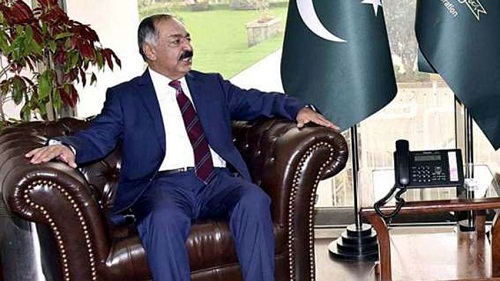
Quetta : Governor Balochistan Amanullah Khan Yasinzai says China-Pak Economic Corridor project would provide employment opportunities to the youth of the province.

He was talking to German Consul in Pakistan Holiger Ziegler in Quetta.   

He said despite, the economic and trade activities would be launched throughout the region of completion of the CPEC and in this regard, Balochistan link was an important. 

He expressed the confidence that Germany’s cooperation in different fields including education, health technology for enhancing capacity building of sectors in Balochistan would be very helpful in teaching young people modern skills.

More than 300 people killed since Myanmar’s coup

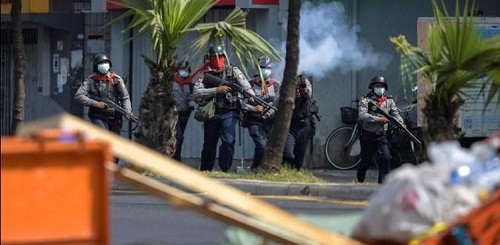
Myanmar’s security forces have killed more than 300 people in attempts to crush opposition to a Feb. 1 coup, with nearly 90% of victims shot dead and a quarter of them shot in the head, according to data from an advocacy group and local media.

A junta spokesman said 164 protesters and nine members of the security forces had been killed as of Tuesday. Reuters could not independently verify all the accounts.

The killings have drawn outrage and prompted some sanctions from Western countries, including the United States. The use of lethal force against civilians had also been condemned by some Southeast Asian neighbours, which tend to be restrained in their criticism.

“Crimes against humanity are committed daily,” said the non-profit Assistance Association for Political Prisoners (AAPP) group, which has been recording the deaths as well as nearly 3,000 people arrested, charged or sentenced since the coup.

The group had recorded 320 deaths by March 25.

Its data show at least 25 percent of those who were killed died from shots to the head, raising suspicions they were deliberately targeted for killing. Full data is not available for every death.

“Everything points to troops adopting shoot to kill tactics to suppress the protests,” Amnesty International said earlier this month.

The junta denies using excessive force and says that its actions have met international norms in the face of a situation it says is a threat to national security.

Nearly 90% of the dead were male. Some 36% were aged 24 or under.

The youngest victim, seven-year-old Khin Myo Chit, was shot dead in the second city of Mandalay on Tuesday. She was at her home with her father when she was killed.

Win Kyi, 78, is the oldest person recorded to have been killed and was among around 50 people killed in Yangon’s Hlaing Thayar district on March 14, the bloodiest day so far.

Pakistan records 4,368 Covid cases, positivity rate rises to 10.29 pc

ISLAMABAD : Coronavirus has claimed 63 more lives in Pakistan during the past 24 hours, taking the overall death toll to 14,091.

The latest statistics of the National Command and Operation Centre (NCOC) showed the COVID-19 has claimed 63 more lives and 4,368 fresh infections were reported during the period.

The total count of active cases is 40,120 and the positivity rate stands at 10.29 per cent.

A total of 42,418 tests were conducted across the country during this period. Since the detection of the first COVID-19 case in the country, overall 9,976,791 tests have been conducted so far.

2,758 patients are in critical condition across the country, whereas, 2,170 people recovered from the deadly disease during the last 24 hours. Overall 591,145 have regained their health from the COVID-19.

Shibli greets new APNS office-bearers

Special Correspondent

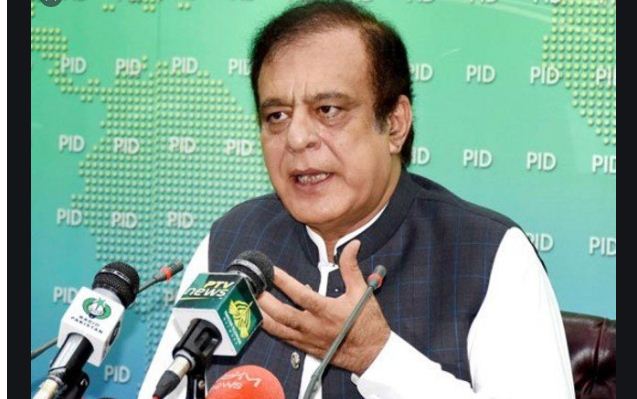
ISLAMABAD: Senator Shibli Faraz has congratulates newly elected APNS President Sarmad Ali and Secretary General Naz Afreen.

Other office bearers include Jamil Athar Qazi as Senior Vice President, Shahab Zubair as Vice President, Mohsin Bilal and Owais Khushnood as Joint and Finance Secretaries.

The selection of newly elected officials is a testament to their leadership abilities and the confidence of the media industry in them, said Senator Shibli Faraz.

Senator Shibli Faraz further said that the PTI government fully believes in the fundamental and democratic right to freedom of expression, Article 19 of the Constitution of Pakistan protects freedom of expression.  We will strive for the promotion of independent and responsible journalism in the country.

Shibli Faraz said we will pursue joint efforts, including the development of the media and all possible measures to address the challenges facing the media industry.  Hopefully, the newly elected officials will play their responsible role in solving the problems of journalistic community and media workers.

Stay Connected

64FansLike
60FollowersFollow

Latest Reviews

Exchange Rates

USD - United States Dollar
EUR
1.14
GBP
1.34
AUD
0.69
CAD
0.71