Home Blog Page 2760

Graduate of Azerbaijan’s Baku Higher Oil School marries Pakistani student from same university

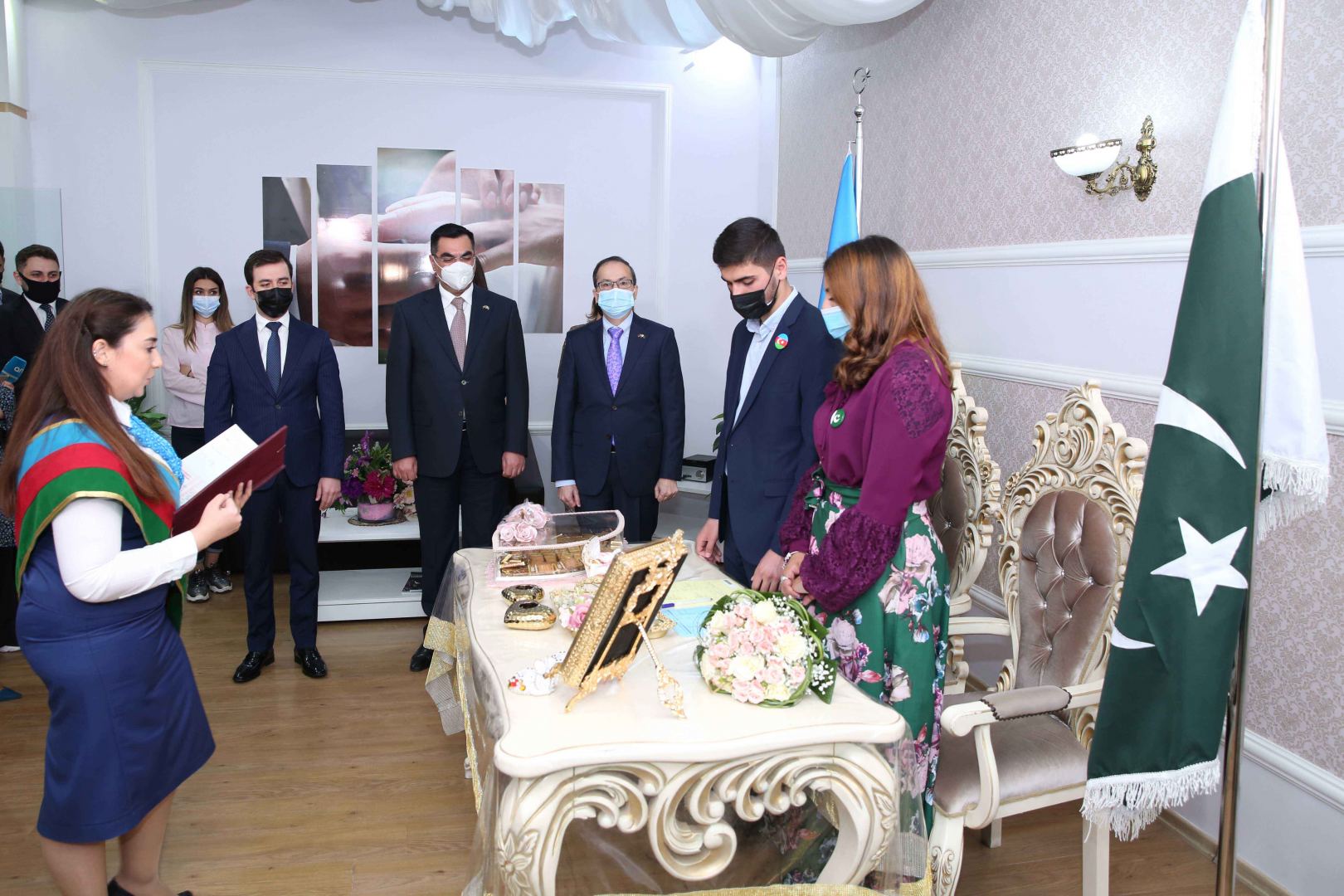
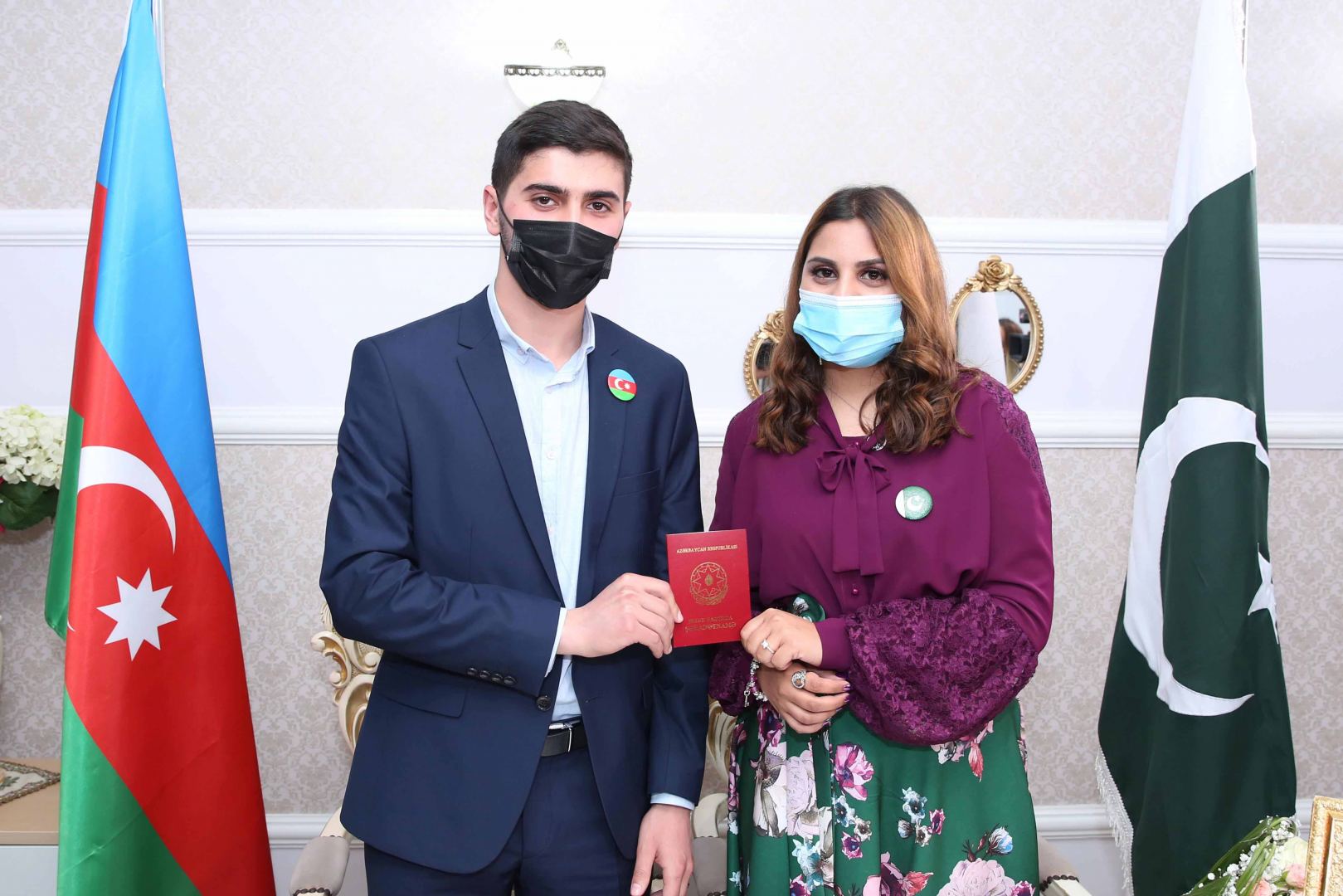
Baku , 04 May 2021 : Two students of Baku Higher Oil School (BHOS) got married in the Baku “ASAN service” center No.5.

Elvin Ismailov, a graduate of the BHOS Petroleum Engineering Department, married a third-year student of the same department MasumeRizji, who is originally from Pakistan.

Rector of Baku Higher Oil School ElmarGasimov and Ambassador Extraordinary and Plenipotentiary of Pakistan to Azerbaijan Bilal Hayee acted as witnesses at the wedding ceremony of the citizens of the two friendly countries.

The rector and the ambassador congratulated the young people and wished them a happy family life based on warm and strong relations, similar to those that exist between the two countries.

The newlyweds were presented with gifts.

Although the wedding ceremony was held in accordance with the traditions of both countries, a small number of close relatives of the couple attended it, according to the quarantine rules.

Elvin Ismailov and MasumeRizji lived in the BHOS Student House during their study at the university. During the same period, they met and fell in love.

On ElmarGasimov’s instructions, all necessary conditions have been created for young people at the BHOS Student House so that they could continue living there.

Elvin Ismailov says that the support provided to our country by Pakistan during the war was an example for them. It was these fraternal ties between the two countries that encouraged them to quickly formalize the marriage relationship.

Note that before the wedding ceremony, the families of the young people met each other via the Internet and blessed them.

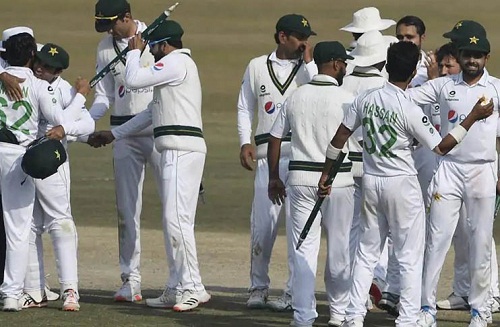
Pakistani players miss out on Wisden’s World Test Championship XI

KARACHI: Wisden released their World Test Championship XI as the final of this newly-introduced challenge is just around the corner.

The list includes three players from India, three from Australia, two from New Zealand, two from England, and one from Sri Lanka. No players from Pakistan, South Africa, West Indies and Bangladesh were included in the list.

The list includes

Rohit Sharma, Dimuth Karunaratne, Marnus Labuschagne, Steve Smith, Kane Williamson (c), Ben Stokes, Rishabh Pant (wk), Kyle Jamieson, R Ashwin, Pat Cummins, Stuart Broad

Future of next generation under digital imperialism & cyber space education: Weighing the pros & cons

By: Zahra Ali Khan Qazalbash

As the world grapples with responding to current crisis, in the midst of global COVID-19 pandemic, we are first-hand reflecting in real-time on how systems undergo large-scale transformations & Paradigm shifts, how government, cities, businesses, schools, and communities adapt and make fundamental changes to existing ways of studying and working. As Pakistan sees yet another surge in the rise of the novel corona virus cases, the Government has further adopted stay-at-home orders to curtail the pandemic. The disruption to most people’s lives has been drastic and abrupt, and perhaps one of the most disturbing shift was the education sector move to a virtual setting. Prior to the spread of COVID-19, we had been reflecting on how difficult it is to change a system keeping in view the fact that systems usually prefer the status quo and more often than not necessitate it for a crisis to transform. We are certainly watching this play out today— many countries including Pakistan, have been imperceptive to respond to the global pandemic despite considerable data and advice available from experts on what measures should be taken and regarded as priority—and have only leapt into action once the magnitude of the virus was apparent.

To address schools closure, the first and foremost thing for consideration is the variable effect. School system is generally regarded as uniform but in reality schools are widely different in their operations and their impact on students, just as students themselves are very different from one another. As a matter of fact, students come from different socio-economic backgrounds and have very different resources, opportunities, and support outside of school. Now that entire learning lives, as well as actual physical lives, are outside educational institutions, those differences and disparities have come into vivid view. Some students have been fine during this crisis because of having the privilege of high-quality learning opportunities coupled with advanced tech-equipments available to them, other students thus far, are still struggling to have an access to anything of quality because of minimal to no resources, and consequently seem to be at an enormous setback.

Science, Technology, education and mathematics have always had a critical standing and known poor fate in Pakistan, all the more during these unprecedented times as they must include or be taken accompanying ‘laboratory’ and ‘experimentation’ and. The importance of giving the skills and knowledge to students within STEM for them to be at the forefront cannot be emphasised enough nor should ever be undermined or played down as it has been within the country for over decades. Both the federal and provincial governments should pay attention to the problems of engineers. According to current statistics, more than a hundred thousand engineers are unemployed in Pakistan. STEM subjects underpin the world we live in and directly impact many areas of the society including Robotics, Electronics, Aerospace, Biomedical science, Ecology, Genetic engineering, Data science, Marine biology, Civil and Mechanical engineering. Artificial intelligence professionals, software developers and food technologists all work in STEM disciplines and should be highly rewarded with the opportunity to be part of cutting-edge developments, research projects, discovery of scientific breakthroughs and solutions to societal problems, such as the public health crisis we are currently facing. For example, Technology allowed China to build two hospital facilities for corona virus patients in just 10 days and allowed airdrop test kits onto cruise ships. It allowed the Johns Hopkins Center for Systems Science and Engineering to build a corona virus mapping tool. This dashboard kept millions abreast of the latest data from the World Health Organization (WHO), the Centers for Disease Control and Prevention (CDC) and other sources, to visualise how the virus is spreading around the world. The South Korean molecular biotech company Seegene started developing test kits before the country had even confirmed its first case of COVID-19. In addition, the development of self-driving cars has started an interesting debate on the morals and ethics of autonomous vehicles.

The most economically challenged in our society are most vulnerable in this crisis, and the wealthier households are most likely to endure it without losing too much ground. Prior to the pandemic, we were already experiencing a learning crisis that is likely to be made more severe by prolonged school closures. 40% of the children of the total population of Pakistan particularly in the peripheral regions of Gilgit-Baltistan, Balochistan and the tribal districts of Khyber Pakhtunkhwa, have been out of schools or had no access to any kind of education. Identifying which children are vulnerable to disproportionate learning loss should be a matter of great concern to the Government. Without targeted, evidenced interventions, the gap between rich and poor children—which will have widened considerably during the months of school closure—will continue to grow. Addressing learning loss and implementing large-scale catch-up programs in the remote areas and marginalised communities should be a top priority. Moreover, on part of students, they must find themselves responsible for adhering to intervention. Now more than ever, the Realisation and understanding of the fact that Education is “necessity” to Pakistan and not an option should be the front and center of every individual’s mind.

Additionally, the ways in which students and educators respond to Internet‐related environments also prompts consideration towards Gender-digital divide. A research carried out by a non-profit organization known as Media Matters for Democracy published its most recent findings on women’s access to the internet in a report titled Women Disconnected: Feminist Case Studies on the Gender Digital Divide Amidst Covid-19. As many as, 215 women across Pakistan were interviewed, including tribal districts, it has been noted that six out of ten women faced some form of restriction from their families when accessing the internet, including for carrying out simple tasks such as attending online classes or plain discussions post lectures with male counterparts via standard method of learning and teaching for many during the pandemic i.e. Zoom, Microsoft teams, or communicating on WhatsApp.

In addition, when it comes to cultural attitudes, many Pakistanis in the rural areas continue to regard women’s access to the internet with suspicion, and more than half of the respondents mention concerns from family members.

Another survey on mariginalised communities of KPK and Punjab found a quarter of the girls in education feeling unsafe at school, with some having been sexually harassed by teachers, or pressured for sex for grades or even to sit for an exam, and have been subject to corporal punishment. Not only in educational institutions that happens, but also within joint families due to less awareness & frustrations. Meanwhile the digital stark made 4 in 10 girls become victim of cyber harassment and assault. Women and girls disproportionately share the burden and care of family members and relatives. This affects not only whether they can attend school but also the time and energy they can devote to schoolwork. Economic shock during COVID-19 leapt into significant increase in school fees, extra costs such as buying tech-equipments, overpriced books and transport, and the need to work to boost family income have forced many girls into child marriages, to drop out of school or preventing them from getting an education. Child marriage also means girls have early and frequent pregnancies, which accounts to higher rates of girls dropping out of school. A study by the World Bank says that child marriage will cost developing countries trillions of dollars by 2030. Given the high rate of child marriage before 18 years of age in Pakistan which is 6th highest in the world (UN women report), it is important for the Government to ascertain in peripheral regions the cost of little to no education facilities, child marriage and early pregnancies, and its adverse impact on the economy which is all the more rampant during COVID-19 pandemic due to numerous reasons including deeply entrenched customs, poverty, lack of awareness and/or access to education, and lack of security. In humanitarian emergencies, including natural disasters, increased poverty for families and lack of employment opportunities means girls are at higher risk of early marriage or ending up in prostitution.

If potential risks related to design and delivery of Educational activities are not thought through and safety (both in-person or online) is ensured, it is likely that any intervention can go very wrong. The challenge is not only to scale up education but also ensuring that it is SAFE and effective.

If done well & timely check-and-balance is made, educational reforms and activities can grant a routine that gives young people a sense of steadiness amid a hurried change. Addressing barriers mentioned above would be a significant part of helping children’s process of education and adjust to their shift of external environment and develop new strategies for coping. The safety and public health information usually addressed through educational activities can demystify the crisis and help children feel more in control of their environment, to be able to make informed choices from a far better range of options. During long-lasting crises, education fosters hope for a better future, an important feature of supporting natural resilience.

Nevertheless, minimal to no access to technology and broad-band facility could be an obstacle in the quest to achieve resilience. While “Digital Pakistan” was an initiative taken by the Government and intended to be a long-term and effective project, a year after its launch there is very little evidence of a time-bound plan to realise its objectives. Thus there is a need to bridge the digital divide by investing in digital infrastructure. It is worth remembering here that access to technology and internet alone isn’t a panacea for future crises—but the risks of technology further exacerbating inequities must also be addressed. We are a nation still at risk and certainly do not require another paradigm shift to look at our goals and aspirations for education that sum up phrases like “No Child Left Behind,” “Every Student Succeeds,” and “All Means All”. What seems clear is that we need to respond rapidly and robustly from both a technological and educational perspective to cyber education which creates a myriad of challenges for both students and teachers and to figure out how to build a system that has the capacity to deliver on the promise of equity and excellence in education for all students, and all means all. Both novice and experienced computer users alike must be offered trainings to master the use of internet tools, while also working to overcome conceptual misunderstandings about the technology and its root metaphors. We have that opportunity now and hope we do not fail to take advantage of it in a misguided rush to restore the status quo.

Email: [email protected]

Webinar held to promote Sino-Pak cooperation in animal husbandry sector

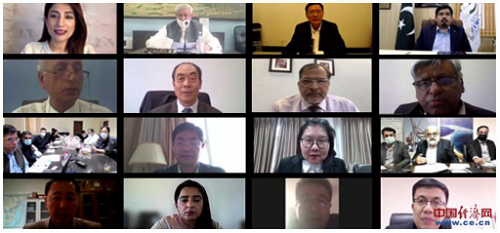
BEIJING, May 4 : A webinar on Chinese and Pakistani animal husbandry and fishery cooperation was held to achieve future targets in this sector, accoding to a report published by Gwadar Pro.

Leading experts and companies in livestock and fishery sectors from both countries discussed bilateral cooperation in the educational and industrial programmes in this regard, and possible measures to enact such cooperation.

Syed Fakhar Imam, Federal Minister for National Food Security and Research, pointed out “multiple challenges” in tapping the rich repertoire of livestock and fishery resources in Pakistan.

He urged Pakistan to modernise its livestock and fishery industries by upgrading infrastructure and building a substantial supply chain through joint enterprises with China, technology transfer and talent cultivation.

The challenges are echoed by Dr Muhammad Akram, President, Fisheries Development Board, Ministry of Pakistan National Food Security and Research (MNFSR), and Dr Khurshid Ahmad, Animal Husbandry Commissioner, MNFSR.

According to Dr Ahmad, Pakistan is home to 208 million food animals with an annual milk yield exceeding 60 million tons and an annual production of 20 billion poultry eggs.

He said, the quality and yields of such livestock and fishery products can be further improved with Chinese technologies to build capacity, and with joint research efforts in genetic improvement and other animal and fishery sciences.

Experts and businesses discussed current and future cooperation in the research, industry, and trade developments in the two sectors.

In terms of the livestock sector, Li Jinhui, Deputy Secretary General of China Animal Agriculture Association and President of China Broiler Alliance, said, “China is the largest importer of beef and a major importer of mutton and chicken. This presents enormous opportunities to Pakistan to enhance its beef and mutton exports.”

Despite huge potential of exports, Pakistan’s livestock division is plagued by animal diseases, notably the Foot-and-Mouth Disease (FMD), an infectious and sometimes fatal viral disease that affects cattle and goats etc., according to Zhang Baozhong, Chairman of China Overseas Ports Holding Company.

The concern of FMD was shared by Chen Yiyi, CEO of China’s Royal Group. Mr Chen displayed strong interest in working with Pakistani universities and companies to develop the buffalo industry through semen and embryo cooperation. But FMD poses a serious threat to the effort.

Shen Jin, Deputy General Manager of QYH Biotech Co., Ltd., cited FMD-free zones as an effective countermeasure against FMD. Under the MoU on combatting FMD signed between China and Pakistan in 2019, China will help Pakistan establish FMD-free zones in Punjab and Balochistan to ensure the health of the food animals.

Further measures include building animal vaccine plants and establishing a certification system. According to Dr He Cheng, Professor at College of Veterinary Medicine, China Agricultural University, said that the FMD free zones will boost Pakistan’s meat exports up to $12-15 billion.

In addition to FMD-free zones, Dr Masood Rabbani, Professor at University of Veterinary and Animal Sciences, sees great potential in academic and research cooperation such as genetic research in buffaloes and talents cultivation.

“Now we have (some) expertise available in the university, which can facilitate the private sector in adopting new technologies,” said Dr Masood Rabbani. Dr Ahrar Khan, Ex-dean at Faculty of Veterinary Science of University of Agriculture, Faisalabad, introduced several MoUs and programmes between Chinese and Pakistani universities to cultivate animal sciences talents and collaborate on the pharmaceutical industry.

Cooperation in the fishery sector is also promising. Ma Zhuojun, Director of International Cooperation at Chinese Academy of Fishery Sciences showed how China has achieved the sustainable aquaculture through the Aquaculture Improvement Projects (AIP). Mr Ma emphasised that the AIP project should be adapted locally and that it has great potential of application in Pakistan.

Huang Tianqing, Representative of Salmon Farming Innovation team at Heilongjiang River Fisheries Research Institute, Chinese Academy of Fishery Sciences, introduced how Pakistan can develop its salmon sector with Chinese breeding and cultivation technologies.

Dr Rehana Kauser, Director of Animal Sciences Institute at Pakistan Agriculture Research Council, elaborated on current cooperation projects with Chinese research institutes in fishing breeding and cultivation techniques, and expected broader collaboration with Chinses institutes in freshwater products processing and storage.

To facilitate bilateral cooperation in the animal husbandry and fishery sectors, Li Bijian, Consul General of China to Karachi, advised Chinese companies to conduct training and capacity building “on equal footing” with Pakistan, and he also urged Pakistan to ensure a safe and favourable business environment to attract more Chinese investments.

Farman Ullah Zarkoon, CEO of Balochistan Board of Investment and Trade (BBoLT), introduced the favourable business conditions including its highway network, three major international airports, and a very well-spread railway network.

He also pointed out the investment regime and incentives including tax reduction or exemption and licensing facilitation in the SZEs “which allows any kind of cooperation between the government and the private investors from other countries.”

Baboo Gulab, Former Chairman of Gwadar City Council, and Sadar Shoukat, President of Balochistan Economic Forum, also participated in the event.

PM urges OIC to work together for making world understand deep love of Muslims for Holy Prophet (SAW)

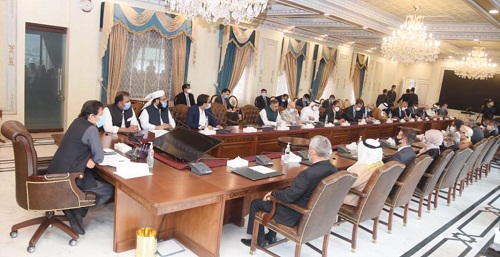
Islamabad : Prime Minister Imran Khan has urged the Organization of Islamic Cooperation to work together to make the international community understand the deep-rooted love and reverence of all Muslims for the Holy Prophet Sallallaho Alaihe Wa Sallam Khatamu-un-Nabiyeen and the Holy Quran.

Talking to the Islamabad-based Ambassadors of the countries belonging to the OIC in Islamabad, the Prime Minister underlined the need for instituting legal safeguards to protect the sensitivities of all religious groups and OIC’s collective efforts to project the true image of Islam, and its message of peace and tolerance.

Imran Khan recalling his two letters addressed to the leaders of the Islamic world last year, briefed the envoys on Pakistan’s efforts at the international level to create awareness about Islamophobia and commitment to dialogue with International community to promote mutual respect, peace and coexistence.

Imran Khan called for addressing the underlying reasons for the rise in Islamophobia incidents, which cause religious divide worldwide and emphasize that Pakistan initiatives are aimed at promoting interfaith harmony.

The Prime Minister also emphasized that the vilification of Islamic precepts and religious personalities, wrongly justified under the garb of the right to freedom of expression, hurts the sentiments of 1.5 billion Muslims around the world.

Pakistan registers 161 more COVID deaths, 3,377 new cases

ISLAMABAD: The novel coronavirus has claimed 161 more lives across Pakistan over the previous 24 hours, taking the death toll from the disease to 18,310.

According to the National Command and Operation Centre (NCOC) data, 3,377 new infections emerged when 37,587 samples were tested during the same period. The positivity rate of new cases was recorded at 8.98%, the NCOC said.

The countrywide tally of confirmed cases currently stands at 837,523 with the addition of 3,377 new cases. Thus far, 733,062 patients have recuperated from the disease with 5,018 in the past 24 hours.

The number of Covid-19 patients in critical care across the country has witnessed a minor drop and currently recorded at 5,326.

Thus far, Punjab has reported 308,529, Sindh 286,521, Khyber Pakhtunkhwa 120,590, Islamabad 76,492, Balochistan 22,664, Azad Jammu and Kashmir 17,397 and Gilgit Baltistan 5,330.

Pakistan would start getting the batches of coronavirus vaccines from COVID-19 Vaccines Global Access (COVAX) from this week, said sources on Monday.

Sources prior to the development told that Pakistan is likely to receive 1.2 million doses of AstraZeneca’s COVID-19 vaccine on May 7, its first batch under the GAVI/WHO COVAX vaccine initiative.

COVID-19 claims 79 more lives

ISLAMABAD, MAY 03 (DNA) – The national tally on Monday of total active COVID-19 cases recorded 87,953 with 4,213 more people tested positive for the deadly virus and 5,842 people recovered from the disease during the last 24 hours.

Seventy-nine corona patients have died during past 24 hours, 73 of whom were under treatment in hospital and six out of the hospital in their respective quarantines or homes, according to the latest update issued by the National Command and Operation Centre (NCOC).

During the past 24 hours, most of the deaths have occurred in Khyber Pakhtunkhwa followed by the Punjab. Out of the total 79 deaths occurred in the last 24 hours, 24 of them had died who were under treatment on ventilators. The maximum ventilators were occupied in four major areas including Lahore 70 percent, Multan 74 percent, Gujranwala 57 percent and Mardan 80 percent.

The maximum Oxygen beds (alternate oxygen providing facility other than ventilator administered as per medical requirement of COVID patient) were also occupied in four major areas of Lahore 59 percent, Mardan 70 percent, Peshawar 65 percent and Swat 63 percent.

Around 670 ventilators were occupied elsewhere in the country while no COVID affected person was on ventilator in Gilgit Baltistan (GB) and Balochistan. Some 45,954 tests were conducted across the country on Sunday, including 16,469 in Sindh, 16,307 in Punjab, 7,794 in Khyber Pakhtunkhwa (KP), 3,815 in Islamabad Capital Territory (ICT), 558 in Balochistan, 385 in GB, and 626 in AJK.

Around 728,044 people have recovered from the disease so far across Pakistan making it a significant count with over 90 percent recovery ratio of the affected patients.

Finance minister slams IMF’s ‘grave injustice’

ISLAMABAD: Newly-appointed Finance Minister Shaukat Tarin on Monday said that the International Monetary Fund (IMF) committed grave “injustice” against Pakistan in terms of the Extended Fund Facility offered to the country.

Tarin remarks came during a meeting of the National Assembly’s Standing Committee on Finance, Revenue, and Economic Affairs. The meeting was chaired by the committee chairman, Faiz Ullah Kamoka.

“IMF did injustice to Pakistan, the demand to increase the electricity tariff is unjustified,” said the minister, adding that due to the move, the economy has stopped moving forward, while corruption is on the rise.

The minister told the lawmakers that if the current government is not able to take the GDP growth to 5%, then the country will be at “God’s mercy for the next four years”. He assured the lawmakers that he is trying to explain the situation to the IMF.

“The increase in tariff is leading to a rise in inflation. We have told the IMF that we will reduce the circular debt but increasing the tariff is unexplainable,” said the minister. 

He also told the lawmakers that even though the revenue has risen in the last two months, the government still has to make tough decisions to revive the economy.

“Instead of introducing taxes, there is a need to increase the tax next. Our country lacks short-term, medium-term and long-term policies,” deplored Tarin. He cited the example of China, Turkey, and India where there are consistent economic policies in place.

The minister said he is of the view that there is a need to improve policies in agriculture, industries, the housing sector, and price control.

Tarin told the lawmakers that mortgage in the country is at 0.25%, adding that if the housing sector is revived, then 20 other industries will start working. “The government should privatise all institutions that it is unable to run,” Tarin said, adding that there very little amount is spent on education and health.

Pakistan eyes vaccinating 70mn people in 2021

ISLAMABAD: SAPM on Health Dr Faisal Sultan Monday announced on Monday that the government has planned to vaccinate 70 million people by the end of 2021 and efforts are underway to acquire coronavirus vaccines so that it is able to do so.

In a media briefing, Dr Faisal Sultan said due to the agreement on the transfer of technology, the National Institute of Health (NIH) will be able to produce three million doses per month which will significantly reduce the country’s dependence on other countries.

He said China was a strong partner and had gone out of its way in keeping up a supply chain and transferring technology to Pakistan.

The SAPM said the government had planned to vaccinate 70 million people by the end of this year.

“The population of Pakistan which was currently eligible for vaccination was 100 million out of 220 million as the vaccines had only been approved for those above 18.”

He added that for the first half of the year, January to June 2021, the government had received and expected to receive 19.82 million doses. He added 91% of these doses were purchased, which clearly shows the country is not dependent on donations.

Dr Faisal said, “In totality, we have signed deals for over 30 million doses so the fact that we have already secured 30 million doses and will continue to procure more for the rest of the year should be very reassuring.”

He said Pakistan was now vaccinating nearly 150,000 people daily while the target was to reach 300,000. 

“The government has started vaccination for 40 years and above and in this regard, the registration was opened last week.”

Dr Faisal said, “Our procurement is a result of proactive efforts. The government initiated the conversation with vaccine manufacturers and GAVI in July 2020 which is well before any vaccine had been fully developed and approved.”

While explaining the government’s efforts to acquire vaccines, he said the Economic Coordination Committee approved $150 million dollars for vaccine procurement on November 20, 2020, while the Cabinet confirmed this on December 1, 2020.

He said it was important to note that vaccines did not get approved for use until mid or late December as Pfizer approved on December 11, 2020, AstraZeneca approved on December 30, 2020, while Sinopharm was also in late-stage Phase III trials in December. He said that manufacturers like Astra Zeneca and Moderna have been unable to meet demand while some of the world’s largest vaccine manufacturing countries have imposed embargos on exporting vaccines until their local demand is met.

Stay Connected

64FansLike
60FollowersFollow

Latest Reviews

Exchange Rates

USD - United States Dollar
EUR
1.14
GBP
1.34
AUD
0.70
CAD
0.71