Home Blog Page 2756

EU CONCERNED OVER STATE OF FREEDOM OF PRESS IN PAKISTAN

ISLAMABAD, MAY 5 – The European Union (EU) has expressed deep concern over the lack of freedom of the press and violence against journalists in Pakistan.

The EU said it is concerned about the frequently reported cases of violence, intimidation, abduction, and killing of journalists in Pakistan.

Over the past couple of years, restrictions on media in Pakistan have grown and backtracking by the government in this area is having a detrimental impact on the overall climate of freedom of expression in Pakistan. Such acts are also reflecting negatively on Pakistan’s image abroad.

The EU is also concerned about widespread and systematic harassment online, especially of female journalists, through coordinated campaigns that include abusive language and threats of violence.

The Union said it actively advocates the importance of the freedom of expression and the need for protection of journalists around the world, including those in Pakistan.

In the fifth EU-Pakistan Strategic Dialogue with Foreign Minister Qureshi on November 3, 2020, HR/VP Josep Borrell reiterated concerns over the state of freedom of expression and the press in Pakistan.

The European Union External Action (EEAS) has a regular dialogue on human rights with the Pakistani government, where the issues of freedom of expression and media are important points on the agenda.

The forum also expressed concern about the recent attack on Absar Alam, a senior journalist in Pakistan.

These kind of attacks threaten Pakistani citizens’ rights to freedom of expression and freedom of media, and underline the importance of adequate protection of journalists and their work, said the EU.

Meanwhile, the Council of Europe Secretary General Marija Pejčinović Burić urged European governments to show stronger political will to protect journalists and independent journalism in order to put a stop to the deterioration of media freedom.

“Media freedom is an essential pillar of our democracies which is too often taken for granted. Respect for freedom of the media is in decline in many countries. In the last [couple of ] years, we have witnessed an increase in the number of cases of violence and intimidation against journalists,” she said.

During the Covid-19 pandemic, there was a strong rise in reports of violence against journalists as well as censorship and reprisals for questioning government policies in many countries of the world. At the same time, media houses have also been facing serious economic challenges and many journalists have lost their jobs due to the adverse economic impacts of the coronavirus pandemic.

The Council of Europe stands ready to support its member states to create and promote an environment where plural, diverse and independent media can perform their role and contribute to making our democracies more robust, said Burić.

The secretary-general also expressed concern at the findings of the annual report of the Council of Europe’s Platform for the Protection of Journalism and the Safety of Journalists.

The annual report of the Platform for the Protection of Journalism and the Safety of Journalists, released today by 14 international media freedom organisations, lists 201 serious cases of threats to media freedom in the 47 Council of Europe member states in 2020, a 40% increase compared to 2019.

A record number of alerts concerned physical attacks (52 cases) and harassment or intimidation (70 cases).

The report analyses serious threats to press freedom including those posed by the impunity of crimes against journalists – with 24 cases of impunity for the killing of journalists still pending, the state capture of independent media, judicial harassment, political pressure on public service media, and surveillance of journalists.

The report underlines specific threats to media freedom in 2020, the extraordinary restrictions imposed on journalists’ activities by emergency laws and regulations in response to the Covid-19 pandemic.

===========
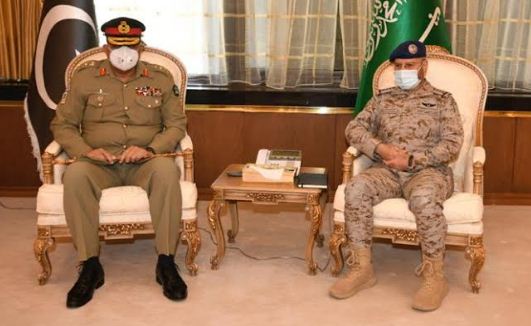
ARMY CHIEF MEETS CGS SAUDI ARMED FORCES IN RIYADH

RIYADH, MAY 5: General Qamar Javed Bajwa, Chief of Army Staff (COAS) called on Lieutenant General Fayyad Al-Ruwaili, Chief of General Staff (CGS), Saudi Armed Forces at Riyadh.

During the meeting, matters of mutual interest, regional security situation including Afghan Peace Process, defence & security and military to military cooperation were discussed.

COAS emphasized the need to further enhance military to military cooperation between the two Armed Forces and said that Pakistan-KSA cooperation will have positive impact on peace and security in the region.

CGS KSA thanked the COAS for his sentiments and assured of full cooperation and support from KSA in all initiatives aimed at improving regional cooperation, peace and stability.

SAUDI ARABIA RELEASES NEW DETAILED IMAGES OF MAQAM IBRAHIM IN MECCA’S GRAND MOSQUE

DNA

RIYADH – Saudi Arabia released never-before-seen detailed images of the Maqam Ibrahim, or the Station of Abraham, located in Mecca’s Grand Mosque.

The General Presidency for the Affairs of the Two Holy Mosques captured the details of the Station of Abraham with a new technique that uses stacked panoramic focus.

A day earlier, authorities released similar high-definition pictures of the Black Stone– known as the Hajar Aswad in Arabic.

Maqam Ibrahim is the stone that bears the imprint of where the Prophet Ibrahim stood while building the Kaaba when the walls became too high.

The stone is enshrined with a gold, silver, and glass frame to preserve the prophet’s footprints.

Muslims believe that the stone in which the footprints are imprinted descended directly from heaven along with the famous Black Stone.

Detailed Pictures of Maqam e Ibrahim (Station of Abraham) taken recently.

General information:

Shape: a square, with the footprints of the Prophet Ibraham – peace be upon him – which are two oval pits in the middle

 • Color: between white, black and yellow.

 • Size: Wwidth, length and height are of 50 cm.

Location: In front of the Ka’bah Gate,

10-11 meters east of the Kaaba, in the part leading to Safa and Marwah.

 • The archaeological stone upon which Ibrahim – upon him be peace – stood was built when building the Holy Ka’bah.

BIDEN’S WORST: FRAMING TURKEY FOR ARMENIANS ‘GENOCIDE’

Munir Ahmed

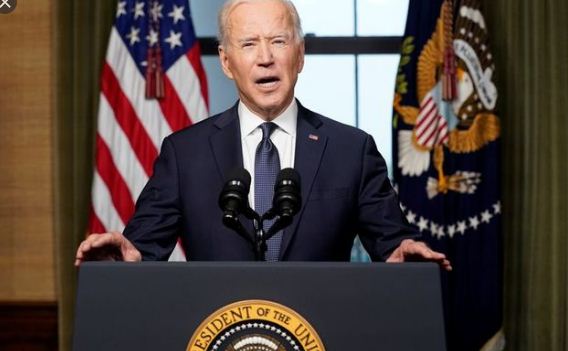
United States President Joe Biden is briskly realizing his political promises made during his election campaign. No segregation, whether the promises were logical or merely politically motivated to win from the unconventional States for the Democrats. In the last two weeks, he has taken up three of his promises being termed very significant globally. The most important one is to pull out the NATO and the US troops from Afghanistan. It began this weekend without finalizing any roadmap for a sustainable solution for peace in the region.

All stakeholders genuinely fear that it would lead to talibanization of Afghanistan once again. All the years-long hectic efforts go uncultivated. The question is if the pullout is being done in haste to charm the Taliban or it is a deliberate action for some hidden strategic reasons for the region? This part of the story needs to be discussed at length. Maybe next time.  

The United States has returned to the Paris Agreement 2015 with an online Biden’s Climate Conference on April 22-23, 2021. Indeed a rational decision that culminated with an outline for the US interventions on climate change and a roadmap to COP 26. It is much appreciated globally.

Another globally weighty step President Biden has taken is to formally recognize the mass killing of Armenians in the Ottoman Empire during World War-I as a “genocide”, a move that was immediately rejected by Turkey. Pakistan has also shown its solidarity with Turkey immediately after the US president made his decision public.

In a statement on last Saturday April 24, Biden became the first US president to formally recognize “the killings of an estimated 1.5 million Armenians” in the Ottoman Empire, which began in 1915, as an act of “genocide”.

Armenians mark April 24 as “Armenian Genocide Remembrance Day” to remember the lives of all those who died in the Ottoman-era terming it ‘genocide’ and recommit themselves to preventing such an atrocity from ever again occurring.

Biden’s declaration that “the American people honour all those Armenians who perished in the genocide that began 106 years ago today.” It comes amid strained ties between the US and Turkey, which had earlier warned that recognizing the killings as a genocide would further harm relations between the NATO allies.

The US recognition of Armenians’ ‘genocide’ is not a sudden decision based on an election campaign commitment. The Armenians campaigned for years to force the US and other countries around the world to recognize the killings as a genocide. In a letter written by more than 100 members of the US Congress a week before the decision was taken urged Biden to recognise the killings as genocide. It shows a political pressure was built on the US president.

Armenian Prime Minister NikolPashinyan has termed it “the US unwavering commitment to protecting human rights and universal values”. A US-based Armenian advocacy group, The Armenian Assembly, also called it “a watershed moment in U.S. history”.

Turkey has fairly acknowledged the deaths of Armenians in the Ottoman Empire during World War-I, but has steadfastly denied that the killings were systematically orchestrated and constitute a genocide. In a statement, Turkey’s foreign ministry has rejected Biden’s statement as being without any “scholarly and legal basis” and said the conditions required to describe the events as a “genocide” are not met under international law. 

“The nature of the events of 1915 does not change according to the current political motives of the politicians or domestic political considerations. Such an attitude serves only a vulgar distortion of history.”

Framing Turkey for the Armenians “genocide” after 106 years without any scholarly research is being termed President Biden’s worst decision in the first 100 days of his regime. The decision is being clearly judged as politically motivated to pressurize Turkey for his independent decision-making. Turkey has also been raising voice against the blasphemous acts and actions of the West and the United States very bluntly for quite long now. Promoting and propagating Islamic values and traditions of the Ottoman Empire globally, and taking steps for gradual transformation of Turkey to a more Islamic environment are said to be the other reasons.

US-Turkish relations have been strained in recent years over a number of strategic issues including closing ties with Russia and China. Ankara’s purchase of Russian-made S-400 missile defense systems is being considered as a big bump. Surprisingly, Biden while informing Erdogan of the planned “Armenian genocide” recognition during a phone call also conveyed his interest in building “a constructive bilateral relationship with expanded areas of cooperation and effective management of disagreements”. Well conveyed. 

The two presidents also agreed to hold a bilateral meeting on the sidelines of a NATO summit in June. So, Turkey has about two months for his lobbying across the friendly and like-minded countries and to get the ‘symbolic decision’ reversed or its impact defused. The Muslim leadership and the independent media shall stand united against the US decision to defuse pressure that is mounting on Turkey at the moment. Indeed an urgent counter narrative needs to be developed and propagated against the US, the EU and the UN statements against the Muslim sentiments and religious prejudices. 

Turkey needs to have more dynamic and active ambassadors leading from the front in mobilizing political and diplomatic support from their respective stations through advocacy, media and communication interventions. I hope the Turkish embassy in Islamabad would also be more active and responsive in the days to come.   

The writer is a freelance journalist and broadcaster, Director Devcom-Pakistan, a policy advocacy and outreach think tank in Islamabad. His email: [email protected] Twitter Handle: @EmmayeSyed 

ENHANCED CHINA-PAK B2B IRRIGATION COOPERATION IS NEEDED: CHINESE EXPERTS

BEIJING, May 5 (): Enhanced China-Pak B2B irrigation cooperation is needed, this was emphasised by the Chinese experts, accoding to China Economic Net (CEN).

The experts noted that the International Monetary Fund, Pakistan has been ranked third among countries facing acute water shortage. The availability of water is only compounded by the conventional and highly wasting way of irrigation.

To resolve this issue, Pakistan has tried to export advanced irrigation products and technologies from overseas to empower the agriculture sector, the mainstay of the Pakistani economy.

After two failed attempts to introduce efficient irrigation solutions from European countries and Israel, Pakistan turned to China for help in terms of efficient irrigation products and technologies.

In 2004, Xinjiang Tianye Group, a leading Chinese enterprise specialising in efficient irrigation and water saving drip irrigation technologies, initiated the first-of-its-kind irrigation cooperation between China and Pakistan by setting up drip irrigation demonstration zones in Pakistan and holding training sessions in drip irrigation for the Pakistani people at the invitation of the Pakistani government.

Due to successful pilots of the project, bilateral cooperation was expanded to research institutes. The China Institute of Water Resources and Hydropower Research (IWHR), for example, was responsible for the design for efficient irrigation for onions in 2011 in Punjab and held training sessions on the theoretical and operational know-how of efficient and water-saving irrigation for the Pakistan Water and Power Development Authority (WAPDA) in 2012.

The 14 years of cooperation has corroborated the efficiency and efficacy of Chinese high efficient irrigation technologies in Pakistan. However, high irrigation solutions have merely been used in parts of Pakistan on an experimental basis, which takes a heavy toll on Pakistan’s embattled “more crop per drop” efficient irrigation campaign.

What are the hurdles between China-Pak cooperation in efficient irrigation? What can be done to expedite the popularisation of efficient irrigation in Pakistan? To debunk these myths, China Economic Net (CEN) interviewed two experts to shed a few insights.

“Chinese irrigation solutions promoted by Tianye have proved a success in demonstration zones in Pakistan. But a lack of investments has made it hard to popularise the efficient irrigation solutions.” commented Li Huijuan, senior engineer at National Water-saving Irrigation Engineering and Technology Research Center (Xinjiang).

This view is echoed by Dr Gong Shihong, Deputy-Director of Department of Irrigation and Drainage, China Institute of Water Resources and Hydropower Research (IWHR).

A single company is too fragile to transform the entire sector. The Pakistani government should incentivise more companies to invest in the popularisation of efficient irrigation solutions, said Dr Gong, who led a delegation to hold training sessions on high efficient irrigation in Pakistan in 2012.

A second factor lies in the limited range of efficient irrigation solutions available in Pakistan, Ms Li told CEN. Although the government of Punjab has worked with World Bank to subsidise small-scale farmers to install sprinklers and drip irrigation systems, enormous farmers still refrain from adopting such efficient irrigation systems because of the high maintenance costs ensued.

Ms Li explained, Pakistani farmers tend to use irrigation accessories such as drip tapes and drippers from Israeli and European countries, which is six times the cost of Chinese solutions and is beyond the price range of the farmers.

To motivate more farmers to use efficient irrigation solutions and further popularise the “more crop per drop” efficient irrigation campaign in Pakistan, more affordable and desirable high efficient irrigation solutions should be introduced to the Pakistani market.

The key lies in boosting the communication between Chinese and Pakistani irrigation companies, said Dr Gong. “Chinese high efficient irrigation solutions hold great potential to help popularise the drip irrigation in Pakistan.

Cooperation between Chinese and Pakistani irrigation companies in this regard will familiarise more farmers with affordable, desirable Chinese irrigation solutions and motivate more farmers to adopt efficient irrigation.

Realising the importance of B2B communication, Xinjiang Tianye signed a strategic memorandum of understanding with the Fatima Group in October, 2019, Ms Li revealed.

With the support of the Fatima Group, Tianye’s irrigation technologies have been introduced to Bela, Balochistan and are likely to find their way in more farmlands in the future, said Ms Li.

Dr Gong told CEN, an International Cooperation Office has been recently established by a Chinese water-saving association to facilitate and promote more such cooperation.

The office will serve as a bridge between Chinese and Pakistani irrigation enterprises by exploring the needs of Pakistani people and companies and communicating them to Chinese companies so that they can provide customised irrigation solutions for Pakistan, commented Dr Gong.

Government-level promotion will also be part of the answer to an efficient irrigation-oriented future.

“In China’s case, the government promotes the efficient irrigation technology and encourages the investments from companies which in return introduce irrigation technologies to farmers.

STAYING SAFE THIS EID

By Muhammad Omar Iftikhar

The second wave of the pandemic is sweeping across the country. While the doctors and healthcare staff are diligently working to help patients recover, the virus is spreading – this is an alarming situation indeed. With the Eid al-Fitr right around the corner, people need to decide how to keep themselves safe. Eid festivities do elate us as people go shopping. However, the pandemic and the continuous deaths caused by it have certainly made the situation ever too gloomy. In such a situation, one needs to remain cautious and protective.

There is no harm in celebrating Eid by wearing an old wardrobe. There is no harm if one decides not to visit the market for shopping. Indeed, to buy essential items is necessary and one can strategically plan the visit to the market. It can be done swiftly in the morning when there are fewer people in the market. The Eid shopping, however, must be contained for the greater good.

The members of the family must think about their children and elders – parents and grandparents – who may contract the virus from them. With such an uncertain situation and a possible lockdown to be implemented, we need to careful when planning to go out of our homes. If it is extremely necessary to leave the house, one must wear a mask and keep sanitizing hands after every ten minutes.

After returning home, they should sanitize themselves and leave their shoes out in the open for a while before spraying them with a sanitizer and then bringing them inside. Eid is an occasion that we celebrate to cherish our prayers and efforts done during Ramazan. Children enjoy Eid the most for obvious reasons. This time, parents and elders must protect themselves and their children by staying at home.      

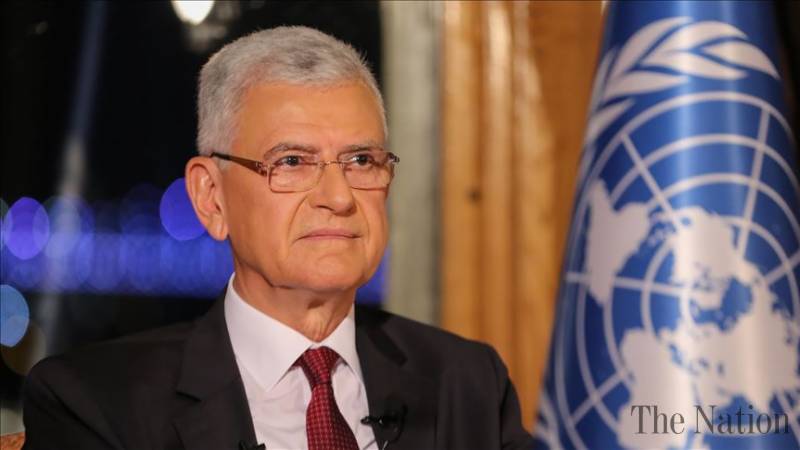
UNGA President Volkan Bozkir to visit Pakistan ‘later this month’

UNITED NATIONS, May 05  : The UN General Assembly President, Volkan Bozkir, will be visiting Pakistan and Bangladesh during a trip to South Asia “later this month” at the invitation of the two governments.

Addressing a press conference at UN Headquarters the other day confirming his visit, Volkan Bozkir said that he was also scheduled to visit India during the upcoming trip but had to postpone the trip because of the serious situation created by the coronavirus pandemic.

It will be the second visit to Pakistan of  President Bozkir, a veteran Turkish diplomat.  He paid a visit to Pakistan in August 2020, ahead of the opening of the 75th session of the 193-member Assembly.

Replying to questions, he said he was visiting Pakistan to honour the country for its “great contribution” to the UN peace-keeping operations around the world aimed at promoting international peace and security. Pakistan is one of the largest troop contributors to the peacekeeping missions.

Asked whether the situation in Jammu and Kashmir would be discussed with the Pakistani leaders, Bozkir said his position was that the dispute should be resolved through dialogue governed by the United Nations Charter and applicable Security Council resolutions.

He also cited the 1972 Simla agreement between India and Pakistan that calls for the final status of Jammu and Kashmir is to be settled by peaceful means, in accordance with the Charter, and that all parties refrain from taking steps that could affect the status of the disputed territory.

The president said that he will convey the same message to the Pakistani leadership this time also.

In Bangladesh, the president, besides holding talks with the country’s leaders, will visit refugee camps sheltering Rohingya Muslims who have escaped from attacks in Myanmar.

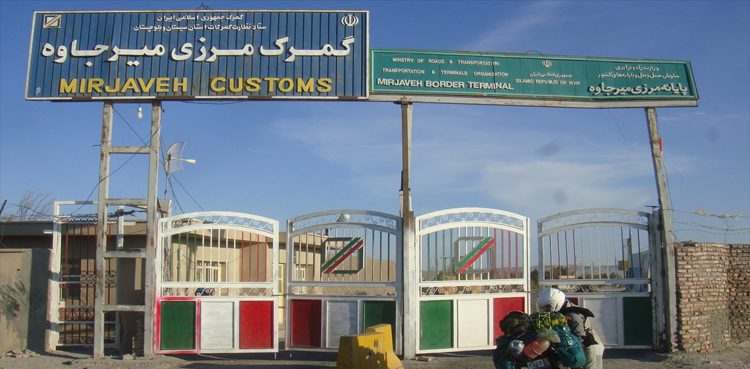
Covid fears: Pakistan seals land borders with Iran and Afghanistan

CHAGAI  , May 5  :  Pakistan has sealed its land borders with Iran and Afghanistan over apprehensions regarding transmission of new variants of the coronavirus to the country.

“The routes to the border have been completely sealed,” border sources said.

Pakistan had on Sunday announced to revise its land border management policy with neighboring Iran and Afghanistan.

In view of the recommendations of the National Command and Operation Centre (NCOC) competent authorities have taken the decision in order to halt the transfer of new variants of coronavirus from the neighboring countries with revision in the land border management policy.

The revised land border management policy came into force from the midnight between 4 and 5 May.

The new border policy will remain in force until the midnight of 19 and 20 May, according to the NCOC.

The new policy being implemented over the people who will cross the border on foot.

The new rules of the policy will not be implementable over the cargo, bilateral trade and the Afghan Transit Trade, the NCOC stated.

Iran, Afghan border terminals will remain open for the entire week, according to the NCOC statement.

The authorities have also decided to enhance the number of the health staff and the law enforcement personnel at the border.

The tally of border personnel being increased to ensure enforcement of the testing protocols, officials said.

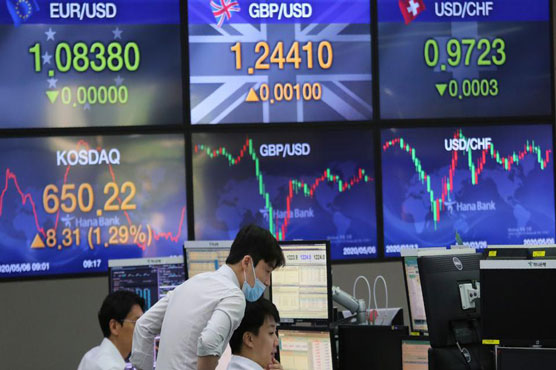
Asian markets swing after Yellen spooks Wall St, eyes on US jobs

HONG KONG , May 5 :   Asian markets fluctuated Wednesday after Treasury Secretary Janet Yellen’s suggestion that US interest rates might need to be hiked, as government spending measures fan inflation and the economy surges.

The comments appeared to be a deviation from the united front top officials have put up in trying to reassure investors that the Federal Reserve’s ultra-easy monetary policies will remain in place until the recovery is well on track.

Investors are also awaiting the release of data on private jobs creation later in the day, which will give clues about Friday’s key non-farm payrolls report which in turn is closely watched for an idea about the state of the economic recovery.

Former Fed chief Yellen also raised eyebrows as the Treasury secretary usually avoids talking about central bank matters.

In a pre-recorded conversation with The Atlantic she said borrowing costs might have to be lifted “somewhat” to temper inflation if Joe Biden’s latest spending plans — which are worth more than $4 trillion — are enacted and the economy heats up.

That threw a spanner in the works on Wall Street where all three main indexes fell sharply, led by the Nasdaq as tech firms are more at risk from higher rates.

However, Yellen later clarified the comments and said she was not predicting nor suggesting the Fed tighten rates, which tempered losses on the S&P 500 and helped the Dow end slightly higher. But the Nasdaq ended sharply down.

Analysts said they still expect the central bank to keep its policies accommodative for some time.

“Yellen’s comments did not specify a timeframe for rises and she clarified her comments by saying that she was not recommending FOMC rate hikes,” said Kim Mundy, at the Commonwealth Bank of Australia.

“We still expect the (policy board) will be very patient as economic data improves.”

– More room for gains –

Asian markets started on a negative note, though some bounced back as the morning wore on. Hong Kong, Sydney, Taipei and Jakarta were all up but Wellington and Manila were in the red. Singapore led the losers as traders fret about a fresh spike in infections in the city.

Tokyo, Shanghai and Seoul are closed for holidays.

Deborah Cunningham, at Federated Hermes, added: “While price pressures are increasing and many consumers are itching to spend stimulus cheques, the Fed has been deflecting every suggestion of tightening.

“Investors don’t seem to believe that the Fed wants the economy to be piping hot and that it considers the recent rise in activity as lukewarm. We think it could start to taper (bond) purchases this year, but no indication yet. These days, the Fed seems happy to make everyone wait.”

And while there is growing concern that the more than year-long rally in equities may have gone a little too far — to record or multi-year highs — there is a general feeling that investors can still push further gains thanks to the recovery, government spending and central bank largesse.

“With the month of May just beginning — and already getting plenty of scrutiny as to whether investors should ‘sell in May and go away’ — it seems pretty clear to me that, based on how well a number of fluid factors are playing out, the S&P 500 is ripe for advancing another 10 percent from its April 30 level of 4,181,” said market strategist Louis Navellier.

“Sure, a five percent pullback below 4,000 is quite possible — and more likely probable, in that the narrative of the past week was to sell on the earnings news, regardless of the blowout numbers crossing the tape.”

Oil prices rallied more than one percent, extending a two-day rally, on demand optimism as major markets slowly reopen and vaccinations are rolled out, and also following a report showing a drop in US stockpiles.

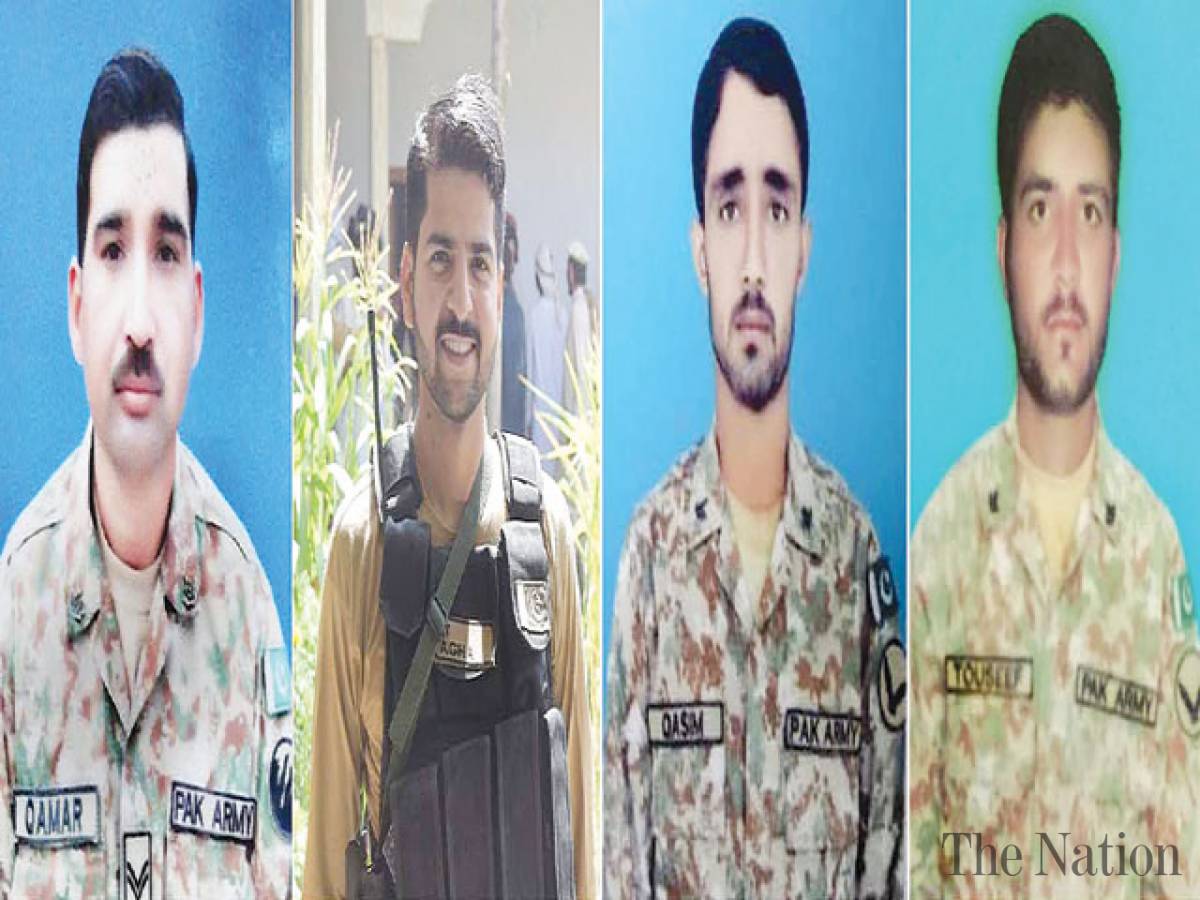
4 soldiers embrass shahadat

Rawalpindi , May 5 : Today during fencing activity in Manzakai Sector, Distt Zhob , Balochistan along Pakistan – Afghanistan Border, Terrorists from across Afghanistan ambushed FC troops moving for fencing. 4 FC soldiers embraced shahadat while 6 got injured. FC troops responded promptly.
The injured are being evacuated to CMH Quetta .
Those shaheed include Havaldar Noor Zaman, Sepoy Shakeel Abbas, Sepoy Ehsan Ullah and Naik Sultan.

Stay Connected

64FansLike
60FollowersFollow

Latest Reviews

Exchange Rates

USD - United States Dollar
EUR
1.14
GBP
1.34
AUD
0.70
CAD
0.71