Home Blog Page 2748

TASK TEAM LEADER WORLD BANK FRANCOIS ONIMUS EMPHASIZED ON ENVIRONMENT FLOW DOWNSTREAM OF KOTRI BARRAGE IS ESSENTIAL

By Rehan Ali Khushik

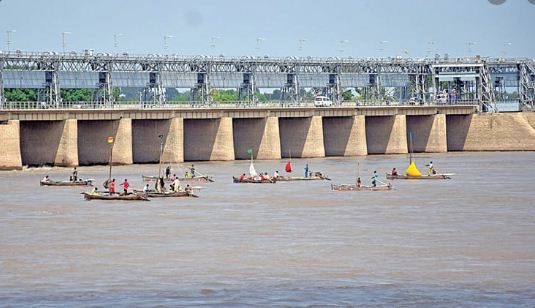
HYDERABAD/ SUKKUR TTL – Task team leader World Bank Francois Onimus emphasized that environment flow downstream of Kotri Barrage is essential not only for surviving Hilsa (Pala) but is very important for controlling sea intrusion in the river, sustaining the mangrove ecosystem.

He highlighted the Ecosystem system for fish species said that the Mangrove not only provides Ecosystem for fish species and aquatic life but also defense lines from Tsunami which affect not populous areas but destroy the economy of the country.

  TTL – Task team leader World Bank Francois Onimus who is renowned water expert as well as in World Bank was presiding over virtually meeting of Sindh Barrages Improvement Projects  related to review progress of Sindh Barrages Improvement Projects – a modernization and rehabilitation project of Guddu and Sukkur Barrages.

  This meeting of the high-level forum of the World Bank reviewed the progress of barrages and its components.

World Bank TTL- Task Team Leader Mr François Onimus appreciated the progress of rehabilitation of barrages at Guddu and SukKur and further said that these barrages are the backbone of the economy of Sindh. He said that if any kind of damages in barrages, its barrage structure and river training works may cause billions of billion dollars to the economy of Sindh. He said that the rehabilitation works at Guddu and Sukkur Barrages will enhance capacity of water supply to their command areas, consisting not only irrigated land but also livestock, Industrial sectors and drinking purposes.

 He said that the command area of offtaking canals of Guddu barrage, ground water is brackish and saline which is not drinkable so the overall population depends on canal water. He said that also in the command area of offtaking canals of Sukkur Barrage ground water is almost brackish but due to recharge of ground water through irrigation network recharge which develop shallow lances, near that is used for drinking purpose through hand pumps.

Mr Takeaki Sato, renowned environmentalist of the World Bank briefed that the population of Indus Dolphin should be done between Guddu to Sukkur reach which declared a sensitive area RAMSAR site. 

He briefed that this species was endangered which was observed in Indus River,  Ganga River and Rivers in China. He showed keen interest in the rescue of stranded Indus Dolphin in canals. He further mentioned that the initial survey was conducted by Sindh WildLife Department found 132 Indus Dolphin in 1972 while 1490 was found in 2019 which shows continuous growth of Indus Dolphin in Guddu to Sukkur reaches. He further emphasized that at least Indus Dolphin surveys must be carried out on a yearly basis because this species is rare and endangered at Global level. He mentioned that waste and effluent/ toxic water from different locations from upstream of Guddu Barrage, waste water Guddu power plants, Rohri, Sukkur and at different locations downstream of Sukkur which affect not only endangered Dolphins but also fish species as well as aquatic lives. 

 Dr Asghar Mahesar deputy director environment SBIP-Sindh Barrages Improvement Project briefed the world bank team regarding studies of environmental flow downstream of Kotri and fish migration specially Hilsa ( Pala) from Urban sea to Multan.

He briefed regarding ToRs-Terms of reference of both studies like environment flow and fish migration. He said that three studies regarding releasing downstream of Kotri environment flow was done by the federal government and the International Panel of experts have recommended releasing 5000 cusecs of water downstream of Kotri consecutively.

He further briefed the World Bank that Hilsa (Pala) was migrating from Urban Sea to Multan covering 1000 kilometers but after construction of barrages in Indus River, movement of Pala is confined between urban sea and Kotri Barrage.

In Keeping of view of endangered Hilsa (Pala) is becoming extinct, therefore there is need surviving this endangered species to survive and sustain the Ecosystem of Coastal area through releasing environment flow.

Dr Mahesar said that annually Hilsa catch of in 1953 was 10000 tons while in 2012 reduced 266 tons as per survey. He said that therefore, there is need for further detailed survey not only indigenous species Pala but also local fish species which are rich in nutrition for the health of common people. He urged the effluent releasing from polluted water of Manchhar Lake to stop releasing in Indus River which further degrades water which is used for drinking purposes not only Hyderabad city and associated cities and towns and also metropolitan  city Karachi, it can cause waterborne diseases. He suggested to stop releasing effluent of Industrial and Pharmaceuticals and power houses at up and down stream of Kotri barrage as he called it is dangerous for human lives and fish species.

Mohi U Ddin Mughal Project director Sindh Barrages Improvement Project presented a detailed progress regarding ongoing works of Guddu Barrage.

Briefing to the World Bank team, Mr Mughal said that replacement of gates of three canals off taking canals from Guddu Barrage have been completed, while main barrages gates are under fabrication of Rona Makina facility in Turkey.

PD SBIP Mohi u Ddin Mughal briefed regarding 92 years aged Sukkur Barrage that replacement of six gates such as gate numbers 39,40,35,33,32,31 have to be replaced on emergency basis.  He said that the gate numbers 39, 40 have been replaced while replacing work at 35 is going on, while gate numbers ,33,32 and 31 are under fabrication and their 80 percent average work is completed.

Furthermore, he briefed regarding replacement of 50 main barrage gates of Sukkur Barrage and 56 gates of offtaking canals will be replaced through SBIP/ S-1 contract which is to be awarded up to June 2021.

Mr Chirshall chief resident engineer project implementation consultants further briefed the team of the World Bank that 10 gates of main Guddu Barrage have been fabricated out of 65 gates in Turkey. He stated that six gates fabricated will arrive at the project site of Guddu Barrage before the end of week of  May month 2021.

He described that these gates will be replaced at Guddu Barrage before the coming monsoon floods in Sindh.

Meeting was also attended by Sajid Ali Bhutto Deputy Project Director SBIP, Abdul Razak Memon deputy director procurement SBIP, water experts, ex Secretary Irrigation Junaid Memon, ex Additional secretary irrigation Aslam Ansari, member of Sindh for IRSA Zahid Ali Junejo, Rubina Wahaj Dr Maria and Mr Momoir from FAO,  Ghulam Hyder Qureshi, Miss Maryam Minhas ,Ms Fareeha from Project Coordination Monitoring unit of planning and development department government of Sindh.
US WELCOMES ARRIVAL OF 1.2 MILLION COVID-19 VACCINES FROM COVAX

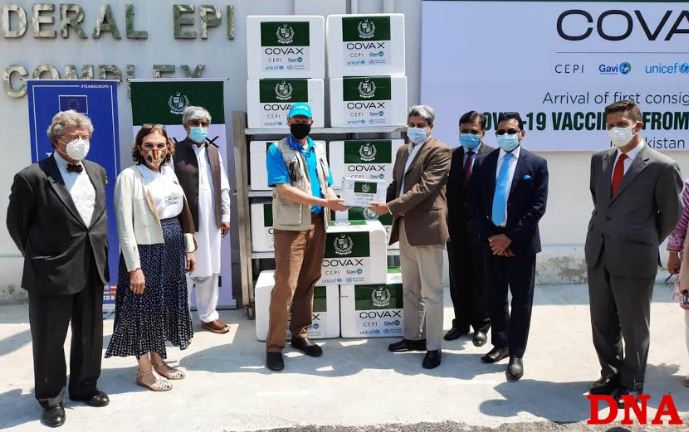
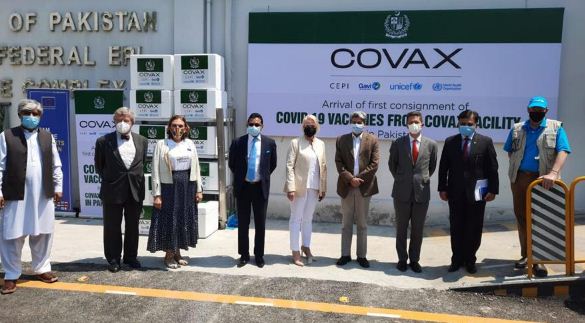
ISLAMABAD, May 08 (DNA): The United States Government welcomes the successful arrival in Pakistan of 1.2 million doses of the AstraZeneca COVID-19 vaccine, which landed at Islamabad International Airport Saturday. 

This vaccine shipment was made possible through the COVAX Advance Market Commitment, a global initiative to support equitable access to COVID-19 vaccines.  The United States contributed $2 billion and will contribute an additional $2 billion through 2022 to Gavi, the Vaccine Alliance to support COVAX, making the United States the single largest contributor to global COVID-19 vaccine access.

“This is an extremely difficult time for Pakistan and the rest of the world, and we are proud to stand with the Government of Pakistan as partners in addressing the devastating effects the COVID-19 pandemic has had on the country,” said U.S. Embassy Chargé d’affaires Angela P. Aggeler.  “The United States has been standing side-by-side with our Pakistani counterparts throughout this challenging period to help stop the spread of COVID-19, and we will continue to work together until this deadly disease is under control.”

The U.S. contributions to COVAX, through the U.S. Agency for International Development (USAID), support the purchase and delivery of safe and effective COVID-19 vaccines for the world’s most vulnerable and at-risk populations in 92 low- and middle-income countries.  This support is critical to controlling the pandemic, slowing the emergence of new variants, and helping to restart the global economy.

The United States is working with other donors to make further pledges to ensure the equitable and accelerated delivery of COVID-19 vaccines and is committed to collaborating with partners and governments to support global vaccination efforts.

Building on our long-standing partnership in the health sector, the United States has worked closely with Pakistan throughout the pandemic to protect public health and strengthen the COVID-19 response. DNA

============

EU ENVOY WELCOMES COVAX INITIATIVE

DNA

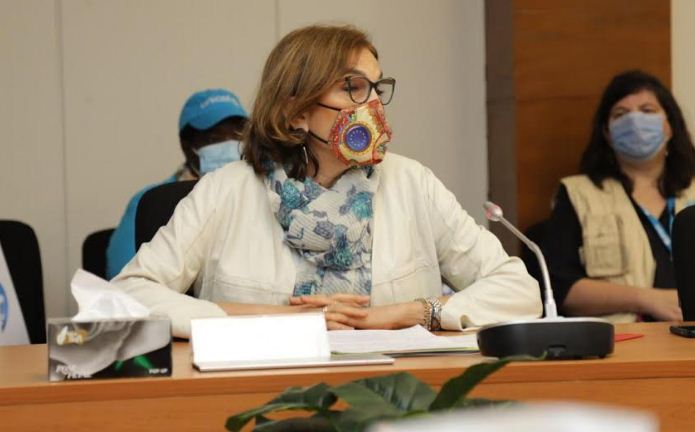
ISLAMABAD:  Ambassador of European Union to Pakistan Androulla Kaminara has welcomed the opportunity to concretely show our solidarity with the Government of Pakistan and support its efforts to fight the corona virus through this important delivery of vaccines. She added they were proud to play our part in the global COVAX initiative, alongside our partners, as it helps to complement efforts where vaccines are needed. For the time being SOPs still need to be followed,” .

“The United States has also welcomed the successful arrival in Pakistan of 1.2 million doses of the AstraZeneca COVID-19 vaccine. We remain committed to working bilaterally and multilaterally to support access to vaccines for the world’s most at-risk populations,” said U.S. Embassy Chargé d’affaires Angela P. Aggeler. “This pandemic has shown the importance of partnerships, such as the longstanding partnership between the United States and Pakistan, which has enabled us to more effectively respond to this health crisis together.”

“I’m proud of the UK’s role in developing the Oxford University AstraZeneca vaccine that Pakistan is receiving today. The UK is one of the world’s biggest contributors to the COVAX facility – donating £548m to make sure countries get the vaccines they need, including Pakistan.”,” said Dr. Christian Turner, British High Commissioner to Pakistan.

“Today’s arrival of the first COVAX batch in Pakistan is an important milestone for fighting this pandemic together. It is also a strong token of multilateralism and international solidarity at its best. Germany, as second largest donor, is proud of contributing to the COVAX facility more than 1.5 billion EUR because we are convinced: An inclusive global access to vaccines is the need of the hour and nobody is safe until everyone is safe!” said Dr. Philipp Deichmann, Charge d’Affaires /DHM, Embassy of Germany in Pakistan.

PAKISTAN RECEIVES FIRST CONSIGNMENT OF COVID-19 VACCINES VIA COVAX FACILITY

More than one million doses of Oxford-AstraZeneca COVID-19 vaccine delivered by COVAX to support Government’s efforts to vaccinate high-risk people across Pakistan

Staff Report

ISLAMABAD, Pakistan has received its first shipment of Oxford-AstraZeneca COVID-19 vaccines (SII-AZ AZD1222) from the COVAX Facility.

The consignment of 1,238,400 doses of vaccines, which will be followed by another of 1,236,000 in a few days, will support the Government of Pakistan’s ongoing historic drive to bring the pandemic to an end. Further allocations from June onwards will be confirmed in due course. The goal of the COVAX Facility is to supply Pakistan with enough doses to vaccinate 20% of the population depending on availability.

Dr. Faisal Sultan, Special Assistant to the Prime Minister on National Health Services, Regulations & Coordination, welcomed this first consignment together with representatives of COVAX technical and funding partners at the headquarters of the National Emergency Operations Center (NEOC).

“In this unprecedented crisis, we appreciate COVAX and GAVI’s contribution to the collective effort to fight COVID-19 in Pakistan,” said Dr. Faisal Sultan, Special Assistant to the Prime Minister on National Health Services, Regulations & Coordination. “Sometimes, such crises propel innovation and to this end, we were able to quickly expand the capacity of EPI’s facilities to vaccinate our eligible population against COVID. Recently, we’ve been administering almost 200,000 doses a day and we will be able to increase to 0.5 million doses a day very soon. I urge everyone above the age of 40 to register get vaccinated so we can continue our mission to immunize our fellow citizens, especially the ones who fall in the high-risk and vulnerable groups. Very soon, we will be able to expand the campaign to other age groups and demographics.”

The Oxford-AstraZeneca vaccines will supplement the vaccines purchased by the Government of Pakistan and help boost the drive to immunize frontline health workers, senior citizens and other priority groups identified in the National Deployment and Vaccination Plan developed under the leadership of the National Command Operation Center.

More than 3.3 million vaccine doses have been administered to healthcare workers and citizens at large.  The Ministry of National Health Services, Regulations and Coordination also ramped up the cold chain capacity of the Expanded Program on Immunization (EPI) to meet the requirements of the vaccine deployment plan. This also includes ultra-cold chain facilities in 15 large cities. Currently, citizens above the age of 40 can register and get vaccinated by following an easy process. Citizens above the age of 50 can walk into the nearest center and get vaccinated. Some districts are also providing at-home services for senior citizens. Sinopharm, Sinovac, CanSino-Bio  and Sputnik doses have been administered in Pakistan so far.

The 2.47 million doses of Oxford-AstraZeneca COVID-19 vaccine will be used to immunize about 1.24 million high-risk people against the virus.

Oxford-AstraZeneca’s COVID-19 vaccine was developed in collaboration with Oxford University and is manufactured by AstraZeneca and COVISHIELD, licensed to and manufactured by AstraZeneca-SKBioscience (AZ-SKBio) in South Korea. It has gone through rigorous processes to ensure safety and efficacy and has been given the greenlight by the World Health Organization to be rolled out globally.

“Over the past year, WHO has been standing side by side with the Government of Pakistan providing technical guidance and new tools needed to prepare for, prevent, detect and respond to the spread of this new virus. Today, we are delighted to receive the COVID-19 vaccine that will safely and effectively prevent needless suffering. This vaccine has gone through clinical trials and has been approved for use in Pakistan and around the world,” said Dr. Palitha Gunarathna Mahipala, WHO Representative in Pakistan. “Right now, WHO’s focus is on supporting Pakistan to end the pandemic, including with these new vaccines and the public health measures that have been the bedrock of the response for 15 months. We thank the Government of Pakistan for their commitment to ensure these vaccines are swiftly administered all across Pakistan and our health care workers for their hard-work and dedication during the fight against the COVID-19 pandemic.”

COVAX, a global partnership, is co-led by the World Health Organization (WHO); Gavi, the Vaccine Alliance; and the Coalition for Epidemic Preparedness Innovations (CEPI), along with the United Nations Children’s Fund (UNICEF). It is funded thanks to generous support from partner governments, foundations and private sector corporations.

The goal of the COVAX Facility is to ensure that safe, effective COVID-19 vaccines are rapidly available to all countries around the world regardless of income level, to help end the acute phase of the pandemic as quickly as possible. It aims to provide at least 2 billion doses of approved COVID-19 vaccines by the end of 2021, enabling the protection of frontline health care and social workers, as well as other high-risk and vulnerable groups in what will be the largest immunization campaign in history.

“UNICEF is proud to be leading efforts to procure and supply safe, effective and affordable COVID-19 vaccines on behalf of the COVAX facility which aims to quickly reach people in low and middle-income countries and ensures that no one at risk is left behind. UNICEF commends the Government of Pakistan for its leadership in the national response to the pandemic, including the successful roll-out of the national vaccination programme, and thanks the COVAX partners for their generous contribution.  Solidarity is key to ending the pandemic. No one is safe until everyone is safe”, said Aida Girma, UNICEF Representative in Pakistan. “I urge all those who are eligible to get vaccinated and appeal to everyone to strictly comply with COVID-19 safety measures to curb the spread of virus.”

“This delivery – the first of many – is the product of an unprecedented global partnership to ensure no country is left behind in the global race for COVID-19 vaccines,” said Alexa Reynolds, Gavi Senior Country Manager for Pakistan. “These vaccines are safe, they are effective, and they will play an important role in helping the country to end this pandemic.”

850,131 cases of COVID-19 have been reported in Pakistan since the start of the outbreak and 18,677 people have succumbed to the disease so far.

Key preventive behaviours against the coronavirus include regularly washing hands with soap for at least 20 seconds or use a sanitizer; wear a mask; remain at least six feet away from other people; avoid crowded places; and stay home when having COVID-19 symptoms.

COVAX technical and funding partners will continue to work with the Government through the pandemic to ensure that no one is left behind.

CRISIS & PANDEMICS COULDN’T BE DEALT IN ISOLATION IN GLOBAL VILLAGE

By: Sher Zada

The world is global village, the term coined by a Canadian thinker Marshall McLuhan in 1960 become very popular and since had has been pitching everywhere, not only on virtual media but nowadays people living in Far East, Asia and other remote corners of the world are used to say” the world is a global village”.

Technological advancement, boom and boast of internet via cellular phones played a vital role in the spread of making a world a quickly connected, touched and heard through modern gadgets. Europe, America, Australia could considered the continents that not only virtually mobilized themselves with the term but practically showcased what ought to be called being a part of global village. These continents developed their infrastructures, transportation, urban mobility, life style, business deals etc. in accordance to the principles of global village; moreover they moved their ideas, innovations, and products in other continents such as Africa, Asia, and influenced people through direct and indirect soft technological invasions while getting control on nerves and vibes of the masses in third world countries.

Not only simply this happened, the people started moving from third world countries to the developed continents hunting better wages and availing lush lifestyle, but the people in advanced countries launched racist tags about Asians and Africans and labelled them with different annoying titles.

However, China ,Japan  could be pin pointed  technologically more equipped countries in Asia, Nigeria, South Africa , Egypt in Africa . But the most wondering fact about these third world’s leading economies that they rarely favor their neighboring countries in the times of crises. China the country with 1,443,995,000 populations and $16.64 trillion GDP is one of the most economically powerful and technologically advanced country has been unequally playing its role in helping its neighbors faced with challenges of poverty, climate change and other economic crisis, nonetheless China is supporting Pakistan a country that is rival of India an ultimate opponent of China, similarly Japan that comes second economically strong power, often has rivalry with China and has been helping rarely Philippines  that is on the surge of extreme poverty. Likewise India and Pakistan the two atomic powers have been combating against one another and paying less attention to help their neighboring countries i.e. Nepal and Bhutan and Afghanistan, instead of helping them they use the underdeveloped countries as shields against one another .

Due to these facts the neighbors are less valuable than the far lying donors and aiding countries from other continents which stretched their hands for help with intentions serving their designed interests in the region. These factors have been paralyzing the notions of mutual cooperation and self- reliance to coop with challenges, natural calamities ,droughts, earthquakes where the lack of preparedness and improper mechanism to tackle with causes high death toll and economical loss ,taking an account the current Covid-19 pandemic ,where India the boasting economy has high daily positive Covid-19 patients and plumbing death toll due to unavailability of ventilators , ambulances and proper check and balance, while its counterpart Pakistan has shortage of Oxygen .The race for controlling the continental power bridles both have been spending a huge amount on arsenals ,weapons and military growth while spending less  for developing their health structures and good governance etc.

That has been destroying the concept of productive globalism and essence of a welfare global village. However, the recent medical assistance to craving India for medical equipment and emergency services, by a Pakistani charity called Edhi could be counted as gesture of global humanity and positive aspect of global village.  Instead of damaging and rising troubles for neighbors if the positive culture of helping neighbors in the times of crisis is equally revived then the world could be saved from disasters and pandemics and be placed on track of fast growing development, where nobody would be spared from basic foods, health and living a standard lifestyle .It will not only propel the spirit of equal development but will helpful in building prosperous future for coming generations. 

The writer is an Islamabad based Journalist

He can be reached at [email protected]

COUNTRY NEEDS 7% ECONOMIC GROWTH TO REDUCE DEBT, CREATE JOBS

DNA

KARACHI – The Federation of Pakistan Chambers of Commerce and Industry’s Businessmen Panel Chairman Mian Anjum Nisar, appreciating the positive growth in large-scale manufacturing (LSM) in first nine months of current fiscal year, emphasized the need for reforms agenda to achieve 7% economic growth rate annually to create two million jobs per annum and reduce the public debt, which has already become unsustainable.

He said that the low GDP growth in Pakistan may result in pushing 20 million people below the poverty line as with such a growth rate job opportunities are not creating. He added that Pakistan’s economy needs up to 7 percent growth rate to avoid falling of more people below the poverty line.

Mian Anjum Nisar observed that the government had expected 2.5% contraction in the LSM sector in the current fiscal year, which will now be positive at the end of the year, also contributing to the overall economic growth that is now projected at around 3%. Big industries posted 9% growth during the first nine months of current fiscal year but the index slid for the second successive month, suggesting an uneven growth momentum due to disruptions caused by the pandemic.

He said the government has to formulate long-term and consistent policies for high growth of industry and considerable improvement in exports, as contrary to regional countries, Pakistan’s exports have remained stagnant for a long time, and unless attention was paid to all factors that hamper industrial and exports growth, the country might not be able to achieve desired results.

FPCCI former president said that the industrial sector has a major contribution to the tax collection and the sector’s share in revenues is almost triple than its contribution to the overall economic output.

Mian Anjum Nisar called for out-of-the-box solutions for economic growth, as COVID-19 has adversely impacted the world’s economy as well as Pakistan’s trade and industrial sectors.

He said the government has already missed its annual export target for the first two years. For the current fiscal year, the export target was reset at $27.7 billion, requiring at least 6 percent growth.

He said that the country has a fiscal space to lower the electricity tariffs instead of increasing, saying that the continuous increase in power tariff can endanger industrial growth momentum, which contributes around 60-70 percent of tax revenue. He said that Pakistan’s inability to fulfill the conditionalities of the IMF programs will have serious financial consequences for the country as in the next three years the country has to pay $40 billion.

He said that the country’s economic situation requires huge spending on the Public Sector Development Program  but within past nine months of the ongoing fiscal year, the government has only released Rs277 billion to the PSDP projects against 494 billion demands. He said that completion of developmental works is a key to provide job opportunities to the masses.

The FPCCI former chief said that the country’s economy is witnessing an unprecedented damage under the government’s controversial agreement with the International Monetary Fund, as it has wreaked havoc on the industry by unleashing a slew tsunami of unbearable hike in prices of utility.

The BMP Chairman said the country’s total debt had reached Rs44 trillion, which is around 90 percent of the GDP, while circular debt is likely to reach a whopping Rs4.6 trillion in 2023, with Foreign Direct Investment (FDI) declining by 30 percent and the World Bank’s GDP growth forecast of just 1.3% this year, the lowest in the region.

The Businessmen Panel chairman said that during pre-Covid time the economy was on the track with 2.4 percent growth rate till March 2020. However, after May 2020, it witnessed a decline by 1.5% as resources were diverted towards Covid-19 mitigation and containment. In the current situation and amid the third wave of the pandemic, growth is projected at 1.5% of the GDP and inflation will remain volatile.

He emphasized the need for structural reforms as well as widening of tax base through ambitious tax policies and broad-based fiscal structural reforms for high economic growth and employment generations.

PAKISTAN BENEFITS FROM CHINESE MAIZE-SOYBEAN STRIP INTERCROPPING TECHNOLOGY: VC

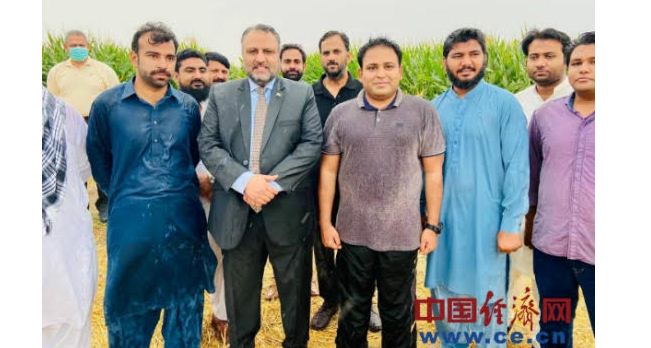
ISLAMABAD, May 8 (DNA): Vice Chancellor of the Islamia University of Bahawalpur (IUB) Athar Mehboob visited demonstration of maize-soybean strip intercropping technology at Khairpur Tamewali, Bahawalpur.

According to China Economic Net (CEN), he explored all the demonstrative plots to check both crops’ growth and greenness. “We need to learn from our Chinese brothers how they modernize their agriculture and how they increase the yields with less resource,” he added.

Seeing Chinese agricultural technology’s successful localization in Pakistan, “here I want to say thanks to the Chinese President Xi Jinping who introduced China-Pakistan Economic Corridor (CPEC) to Pakistan,” Athar Mehboob said.

He also expressed gratitude to Professor Yang Wenyu of Sichuan Agricultural University, and Dr. Gu Wenliang, Agricultural Commissioner, Chinese Embassy in Pakistan, for their generous support.

Dr. Gu twitted about the visit that “I also have full confidence that this technology would change the edible oil production in Pakistan soon.”

“We desperately want to sign MoUs with Chinese universities to learn from their high-yielding experience.

We are ready to provide all the facilities to Chinese professors and scientists if they are interested to do any research in Pakistan.

We welcome Pak-China collaboration in all fields because it will finally benefit both peoples,” Athar Mehboob said. Besides maize and soybean, intercropping technologies are expected to be applied to cotton as well.

While taking with farmers, Athar Mehboob said they will provide help to farmers who are using and learning this intercropping technology. It’s learned that farmer days and field visits for farmers will be arranged soon.

PAKISTAN CONCERNED AT SEIZURE OF URANIUM IN INDIA

DNA

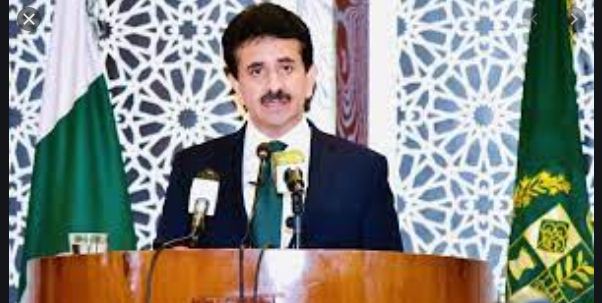
ISLAMABAD: Responding to media queries on the seizure of natural uranium in India, the Spokesperson said: We have noted with serious concern the reports about seizure of more than 7 Kg natural uranium from unauthorised persons in India.

Security of nuclear materials should be the top priority for all countries. There is a need for thorough investigation of the matter as to how such sizeable quantity of uranium could become available outside any state control and identify the gaps which made this possible.

PAKISTAN CONDEMNS ATTACK ON WORSHIPPERS IN PALESTINE

ISLAMABAD: Pakistan strongly condemns the attacks on innocent worshippers in Al-Aqsa Mosque by the Israeli Occupation Forces, that led to a number of injuries.

Such attacks, especially during the Holy Month of Ramadan are against all humanitarian norms and human rights laws.

We pray for the speedy recovery of the injured, reiterate our steadfast support to the Palestinian cause, and once again urge the international community to take prompt action to protect the Palestinian people.

For lasting peace in the region, we once again underscore the need for a two-state solution in accordance with the relevant United Nations and OIC resolutions, with the pre-1967 borders, and Al-Quds Al-Sharif as the capital of a viable, independent and contiguous Palestinian State.

Stay Connected

64FansLike
60FollowersFollow

Latest Reviews

Exchange Rates

USD - United States Dollar
EUR
1.14
GBP
1.34
AUD
0.70
CAD
0.71