Home Blog Page 2747

JOINT STATEMENT FOR THE VISIT OF PRIME MINISTER IMRAN KHAN TO THE KINGDOM OF SAUDI ARABIA

DNA

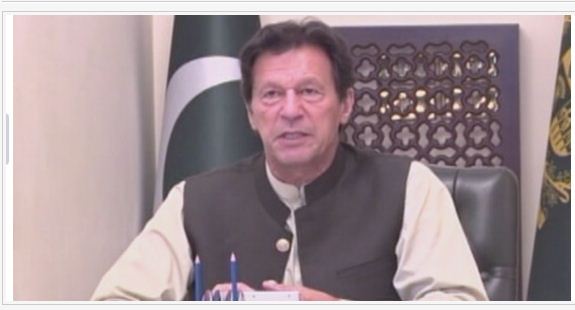
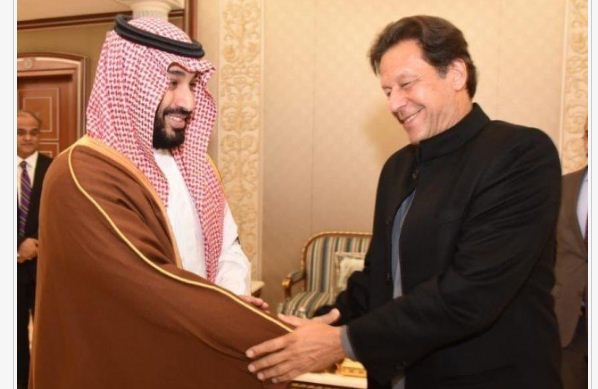
ISLAMABAD, MAY 8 – On the kind invitation, extended by Crown Prince, Deputy Prime Minister and Minister of Defence, the Prime Minister of the Islamic Republic of Pakistan, Mr. Imran Khan paid an official visit to the Kingdom of Saudi Arabia on 7-9 May 2021, corresponding to 25-27 Ramadan 1442/AH. His Royal Highness, the Crown Prince, warmly welcomed the Prime Minister of Pakistan.


2.The two leaders reaffirmed the historical and fraternal ties between the Kingdom of Saudi Arabia and the Islamic Republic of Pakistan, reviewed all facets of bilateral cooperation and discussed regional and international issues of mutual interest. The two sides discussed ways to strengthen relations of the two brotherly countries in all fields, and agreed to intensify contacts and cooperation between government officials and the private sector in the two countries with the aim of promoting bilateral relations to the benefit of both countries.


3.His Excellency Prime Minister Imran Khan praised the leadership role of the Custodian of the Two Holy Mosques King Salman bin Abdulaziz Al Saud in promoting Islamic unity, and the positive role of the Kingdom in resolving the issues facing the Islamic world, as well as its endeavours for regional and international peace and security.


4.The Prime Minister recalled his visits to the Kingdom in 2018 and 2019, as well as the historic visit of His Royal Highness, the Crown Prince, Deputy Prime Minister, Minister of Defence to Pakistan in February 2019, during which the two leaders jointly announced the launch of the Saudi-Pakistan Supreme Coordination Council, to further enhance bilateral cooperation based on mutual trust, benefits and common interests of the two countries. The Crown Prince assured the Prime Minister of the Kingdom’s continued support to Prime Minister’s vision to transform Pakistan into a modern developed and welfare state.

5.The two sides discussed ways to strengthen and enhance economic and trade relations by exploring areas of investment and opportunities available in light of the Kingdom’s 2030 vision and Pakistan’s development priorities emanating from a shift from geo-politics to geo-economics. The discussions also focused on increasing cooperation in other fields, including energy, science, technology, agriculture and culture. Both sides expressed satisfaction at existing cooperation in bilateral military and security relations, and agreed to further augment collaboration and cooperation to achieve mutually agreed goals.

6.The two leaders also discussed issues pertaining to the Islamic world. They stressed the need for concerted efforts by the Muslim countries to confront extremism and violence, reject sectarianism, and strive to achieve international peace and security. They also stressed the importance of continuing joint efforts to combat terrorism, in all its forms and manifestations. They reaffirmed that terrorism cannot and should not be associated with any religion, nationality, civilization, or ethnic group.

7.In the constructive spirit of discussions, the two sides reaffirmed their full support for all the legitimate rights of the Palestinian people, especially, their right to self determination and establishment of their independent state with pre-1967 borders and East Jerusalem as its capital, in accordance with the Arab Peace Initiative and relevant UN resolutions. They also expressed their support for political solutions in Syria and Libya, as well as the efforts of the United Nations and its envoys in this regard.

8.The two sides also stressed the importance of supporting efforts to reach a comprehensive political solution to the conflict in Yemen based on the Gulf Initiative and its implementation mechanism, the outcomes of the comprehensive national dialogue, and the relevant Security Council resolutions, including Resolution (2216). They condemned the attacks of terrorist groups and militias, including Houthi militias, by ballistic missiles and drones on the territory of the Kingdom of Saudi Arabia against vital installations and civilian objects. They expressed serious concern at the threats posed to the security of oil exports and the stability of energy supplies, which was vital for the progress and development of the region and its peoples. The Prime Minister praised the role of Kingdom of Saudi Arabia for the resolution of crisis in Yemen which aims at achieving peace and security in Yemen which will result in prosperity and development of the region and its people.

9.Discussing the situation in Afghanistan, the Crown Prince acknowledged Pakistan’s facilitative role in the Afghan peace process. The two sides, underlining that an inclusive, broad-based and comprehensive political settlement is the only way forward, urged the Afghan parties to realize the historic opportunity for achieving a political settlement in Afghanistan. The two leaders agreed to continue mutual consultations on the Afghan peace process.

10.Pakistan and Saudi Arabia agreed to continue supporting each other at multilateral fora. They agreed to further deepen coordination and cooperation to safeguard mutual interests and uphold the principles of fairness and justice. The two sides also stressed the importance of the commitment by all States to the United Nations Charter, the principles and decisions of international legitimacy, as well as adherence to the principles of good neighbourly relations, respect for the unity and sovereignty of states, non-interference in their internal affairs, and the endeavour to resolve disputes by peaceful means.

11.His Royal Highness, the Crown Prince, welcomed the recent understanding reached between the military authorities of Pakistan and India regarding ceasefire at the Line of Control (LoC), which is based on a 2003 understanding between Pakistan and India. The two sides emphasized the importance of dialogue between Pakistan and India to resolve the outstanding issues between the two countries, especially Jammu and Kashmir dispute, to ensure peace and stability in the region.

12.The Prime Minister congratulated the government of the Kingdom of Saudi Arabia for successfully organizing and holding the G20 summit meetings and the positive decisions that resulted from it in economic, developmental, environmental, health, energy and other fields.

13.Acknowledging the leading role of the Kingdom in addressing international issues, in particular the challenge posed by climate change, the Prime Minister welcomed “the Saudi Green and Middle East Green Initiatives” launched by His Royal Highness Prince Mohammed bin Salman bin Abdulaziz Al Saud and hoped that the initiatives will have a positive impact on the region, its inhabitants and beyond. The Crown Prince appreciated the Prime Minister’s “Clean and Green Pakistan” initiative, as well as the successful “10 Billion Tree Tsunami” initiative.

14.The Prime Minister appreciated the efforts of the Kingdom and its leadership in serving the Two Holy Mosques, their pilgrims, Umrah performers and visitors, especially in organizing the Hajj season for the past year 1441 AH, despite the challenges posed by the Corona pandemic.

15.In order to further strengthen and diversify bilateral relations, the following agreements and Memoranda of Understanding were signed;
i. Agreement on Establishment of Saudi-Pakistan Supreme Coordination Council (SPSCC);
ii. MoU in Combating Illicit Traffic in Narcotics, Drugs, Psychotropic Substances and Presursor Chemicals;
iii. Framework MoU between SFD and Islamic Republic of Pakistan for financing projects in Energy, Hydropower Generation, Infrastructure, Transport & Communication and Water Resource Development;
iiii. Cooperation Agreement in the Field of Combating Crimes; and
v. Agreement on Transfer of Convicted Prisoners.

16.The Prime Minister expressed gratitude and offered his best wishes to His Majesty King Salman bin Abdulaziz Al Saud, Custodian of the Two Holy Mosques, His Royal Highness Crown Prince Muhammad bin Salman bin Abdulaziz Al Saud, Deputy Prime Minister and Minister of Defence, and the brotherly people of the Kingdom of Saudi Arabia. His Royal Highness the Crown Prince warmly reciprocated with best wishes for health and wellbeing of the Prime Minister, and prayers for the progress and prosperity of the brotherly people of the Islamic Republic of Pakistan.

INTERNATIONAL UNION FOR MUSLIM SCHOLARS CALLS FOR PEACEFUL ANTI-ISRAEL DEMONSTRATIONS

RAMALLAH, MAY 8 – The International Union for Muslim Scholars (IUMS) has called for worldwide protests against Israeli violence in Palestine.

In a Facebook statement, the union urged the Muslim ummah and the humanity at large to support Palestinians amid days-long tensions in Jerusalem, especially in the Sheikh Jarrah neighborhood, due to Israeli plans to evacuate Palestinians.

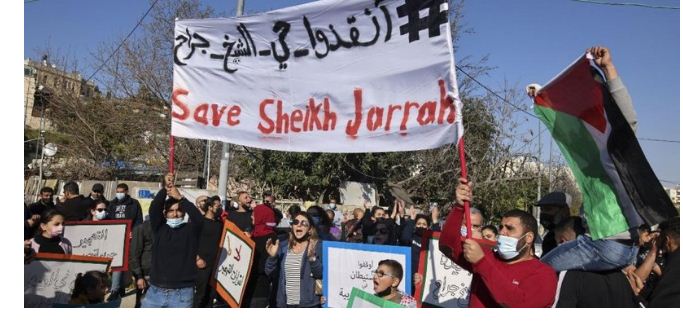
Protests in solidarity with the residents of Sheikh Jarrah neighborhood have taken place across Jerusalem prompting clashes with Israeli police.

On Friday, Israeli police’s violent storming of Al-Aqsa Mosque led to the injury of more than 205 Palestinians sparking widespread condemnation.

The union urged Muslim and Arab governments “to take practical steps to prevent the crimes of the [Israeli] occupiers and their attacks on Al-Aqsa Mosque.”

PM IMRAN PRAISES SAUDI LEADERSHIP FOR PROMOTING ISLAMIC UNITY

DNA

ISLAMABAD, MAY 8: On the kind invitation, extended by His Royal Highness, Crown Prince, Deputy Prime Minister and Minister of Defence, the Prime Minister of the Islamic Republic of Pakistan, Mr. Imran Khan paid an official visit to the Kingdom of Saudi Arabia on 7-9 May 2021, corresponding to 25-27 Ramadan 1442/AH. His Royal Highness, the Crown Prince, warmly welcomed the Prime Minister of Pakistan.

‎‏2. The two leaders reaffirmed the historical and fraternal ties between the Kingdom of Saudi Arabia and the Islamic Republic of Pakistan, reviewed all facets of bilateral cooperation and discussed regional and international issues of mutual interest. The two sides discussed ways to strengthen relations of the two brotherly countries in all fields, and agreed to intensify contacts and cooperation between government officials and the private sector in the two countries with the aim of promoting bilateral relations to the benefit of both countries.

‎‏3. Prime Minister Imran Khan praised the leadership role of the Custodian of the Two Holy Mosques King Salman bin Abdulaziz Al Saud in promoting Islamic unity, and the positive role of the Kingdom in resolving the issues facing the Islamic world, as well as its endeavours for regional and international peace and security.

‎‏4. The Prime Minister recalled his visits to the Kingdom in 2018 and 2019, as well as the historic visit of His Royal Highness, the Crown Prince, Deputy Prime Minister, Minister of Defence to Pakistan in February 2019, during which the two leaders jointly announced the launch of the Saudi-Pakistan Supreme Coordination Council, to further enhance bilateral cooperation based on mutual trust, benefits and common interests of the two countries. The Crown Prince assured the Prime Minister of the Kingdom’s continued support to Prime Minister’s vision to transform Pakistan into a modern developed and welfare state.

‎‏5. The two sides discussed ways to strengthen and enhance economic and trade relations by exploring areas of investment and opportunities available in light of the Kingdom’s 2030 vision and Pakistan’s development priorities emanating from a shift from geo-politics to geo-economics. The discussions also focused on increasing cooperation in other fields, including energy, science, technology, agriculture and culture. Both sides expressed satisfaction at existing cooperation in bilateral military and security relations, and agreed to further augment collaboration and cooperation to achieve mutually agreed goals.

‎‏6. The two leaders also discussed issues pertaining to the Islamic world. They stressed the need for concerted efforts by the Muslim countries to confront extremism and violence, reject sectarianism, and strive to achieve international peace and security. They also stressed the importance of continuing joint efforts to combat terrorism, in all its forms and manifestations. They reaffirmed that terrorism cannot and should not be associated with any religion, nationality, civilization, or ethnic group.

‎‏7. In the constructive spirit of discussions, the two sides reaffirmed their full support for all the legitimate rights of the Palestinian people, especially, their right to self determination and establishment of their independent state with pre-1967 borders and East Jerusalem as its capital, in accordance with the Arab Peace Initiative and relevant UN resolutions. They also expressed their support for political solutions in Syria and Libya, as well as the efforts of the United Nations and its envoys in this regard.

‎‏8. The two sides also stressed the importance of supporting efforts to reach a comprehensive political solution to the conflict in Yemen based on the Gulf Initiative and its implementation mechanism, the outcomes of the comprehensive national dialogue, and the relevant Security Council resolutions, including Resolution (2216). They condemned the attacks of terrorist groups and militias, including Houthi militias, by ballistic missiles and drones on the territory of the Kingdom of Saudi Arabia against vital installations and civilian objects. They expressed serious concern at the threats posed to the security of oil exports and the stability of energy supplies, which was vital for the progress and development of the region and its peoples. The Prime Minister praised the role of Kingdom of Saudi Arabia for the resolution of crisis in Yemen which aims at achieving peace and security in Yemen which will result in prosperity and development of the region and its people.

‎‏9. Discussing the situation in Afghanistan, the Crown Prince acknowledged Pakistan’s facilitative role in the Afghan peace process. The two sides, underlining that an inclusive, broad-based and comprehensive political settlement is the only way forward, urged the Afghan parties to realize the historic opportunity for achieving a political settlement in Afghanistan. The two leaders agreed to continue mutual consultations on the Afghan peace process.

‎‏10. Pakistan and Saudi Arabia agreed to continue supporting each other at multilateral fora. They agreed to further deepen coordination and cooperation to safeguard mutual interests and uphold the principles of fairness and justice. The two sides also stressed the importance of the commitment by all States to the United Nations Charter, the principles and decisions of international legitimacy, as well as adherence to the principles of good neighbourly relations, respect for the unity and sovereignty of states, non-interference in their internal affairs, and the endeavour to resolve disputes by peaceful means.

‎‏11. His Royal Highness, the Crown Prince, welcomed the recent understanding reached between the military authorities of Pakistan and India regarding ceasefire at the Line of Control (LoC), which is based on a 2003 understanding between Pakistan and India. The two sides emphasized the importance of dialogue between Pakistan and India to resolve the outstanding issues between the two countries, especially Jammu and Kashmir dispute, to ensure peace and stability in the region.

‎‏12. The Prime Minister congratulated the government of the Kingdom of Saudi Arabia for successfully organizing and holding the G20 summit meetings and the positive decisions that resulted from it in economic, developmental, environmental, health, energy and other fields.

‎‏13. Acknowledging the leading role of the Kingdom in addressing international issues, in particular the challenge posed by climate change, the Prime Minister welcomed “the Saudi Green and Middle East Green Initiatives” launched by His Royal Highness Prince Mohammed bin Salman bin Abdulaziz Al Saud and hoped that the initiatives will have a positive impact on the region, its inhabitants and beyond. The Crown Prince appreciated the Prime Minister’s “Clean and Green Pakistan” initiative, as well as the successful “10 Billion Tree Tsunami” initiative.

‎‏14. The Prime Minister appreciated the efforts of the Kingdom and its leadership in serving the Two Holy Mosques, their pilgrims, Umrah performers and visitors, especially in organizing the Hajj season for the past year 1441 AH, despite the challenges posed by the Corona pandemic.

‎‏15. In order to further strengthen and diversify bilateral relations, the following agreements and Memoranda of Understanding were signed;

‎‏i. Agreement on Establishment of Saudi-Pakistan Supreme Coordination Council (SPSCC);

‎‏ii. MoU in Combating Illicit Traffic in Narcotics, Drugs, Psychotropic Substances and Presursor Chemicals;

‎‏iii. Framework MoU between SFD and Islamic Republic of Pakistan for financing projects in Energy, Hydropower Generation, Infrastructure, Transport & Communication and Water Resource Development;

‎‏iv. Cooperation Agreement in the Field of Combating Crimes; and

‎‏v. Agreement on Transfer of Convicted Prisoners.

‎‏16. The Prime Minister expressed gratitude and offered his best wishes to His Majesty King Salman bin Abdulaziz Al Saud, Custodian of the Two Holy Mosques, His Royal Highness Crown Prince Muhammad bin Salman bin Abdulaziz Al Saud, Deputy Prime Minister and Minister of Defence, and the brotherly people of the Kingdom of Saudi Arabia. His Royal Highness the Crown Prince warmly reciprocated with best wishes for health and wellbeing of the Prime Minister, and prayers for the progress and prosperity of the brotherly people of the Islamic Republic of Pakistan.
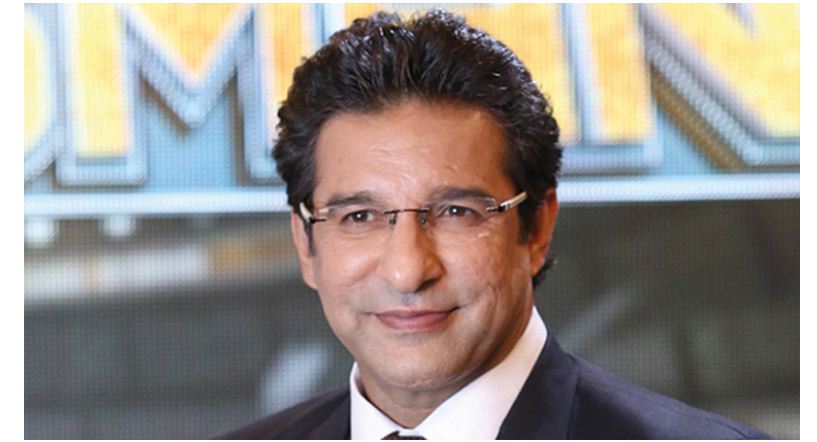
BRITISH DIPLOMAT CLEANS TRASH IN ISLAMABAD, LEAVES WASIM AKRAM ’EMBARRASSED’

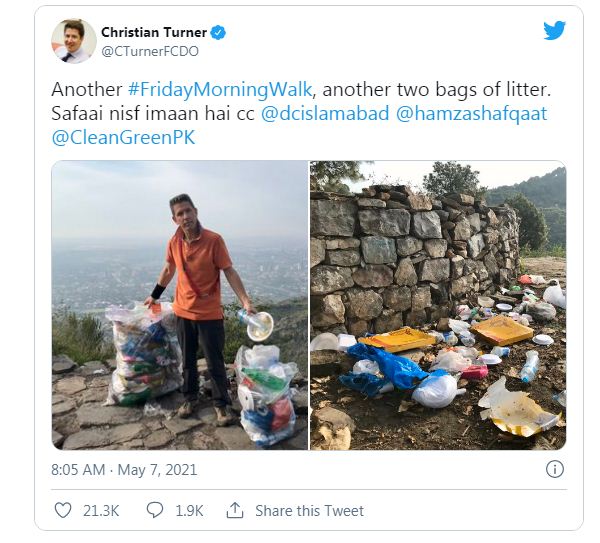
ISLAMABAD – Photos of British High Commissioner Christian Turner cleaning the trash in Islamabad are doing the rounds on social media.

“Another Friday morning walk, another two bags of litter,” Christian tweeted, posting photos showing himself carrying large plastic bags. “Cleanliness is half of faith.”

The diplomat’s photos were widely appreciated, but some people pointed out that it was a shame that a foreigner had to pick trash in the country’s capital. Hamza Shafqaat, the Islamabad deputy commissioner, left Twitter surprised after he praised Christian and commented: “Great.”

Hamza was criticised by many people, who remarked it was indeed shameful that someone from a different country had to clean a city that is the public officials’ responsibility. Hamza later defended his tweet by saying that it was “grossly misunderstood”.

Wasim Akram called it an embarrassment and questioned where Pakistan is heading as a nation.

“Now this is really embarrassing,” he said. “And thanks to Mr Turner for doing this almost every week.”

Wasim and his wife Shaniera have been vocal about climate change and poor solid waste management, especially in Karachi. Shaniera called out hospitals and authorities concerned after medical waste and plastic washed up on the shore in Karachi.

PAKISTAN STRONGLY CONDEMNS ATTACKS AT A SCHOOL IN KABUL, AFGHANISTAN

DNA

ISLAMABAD, MAY 8 – Pakistan strongly condemned reprehensible attacks at a school in Kabul, Afghanistan which led to loss of many precious lives and injuries.

The Government and the people of Pakistan offer heartfelt condolences to the Government and the people of Afghanistan and pray for quick recovery of the injured.

Pakistan condemns terrorism in all forms and manifestations. At this moment of grief, Pakistan stands by Afghan brethren in their struggle against the scourge of terrorism. Pakistan will continue to support Afghanistan on its path to peace, progress and prosperity.

BOMB KILLS AT LEAST 25 PEOPLE NEAR SCHOOL IN AFGHAN CAPITAL

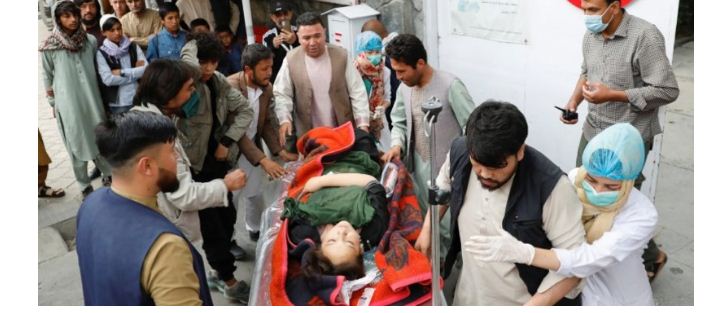
KABUL, MAY 8 – A bomb exploded near a school in a Shiite district of west Kabul on Saturday, killing at least 25 people, many them young students, Afghan government spokesmen said. The Taliban condemned the attack apparently aimed at civilians, and denied any responsibility.

Ambulances were rushing to evacuate wounded from the scene of the blast near Syed Al-Shahda school, in the Shiite majority neighborhood of Dasht-e-Barchi, Interior Ministry spokesman Tariq Arian said.

Angry crowds attacked the ambulances and even beat health workers, said Health Ministry spokesman Ghulam Dastigar Nazari. He implored residents to cooperate and allow ambulances free access to the site.

Images circulating on social media purportedly showed smoke rising above the neighborhood.

At one nearby hospital, Associated Press journalists saw at least 20 dead bodies lined up in hallways and rooms, with dozens of wounded people and families of victims pressing through the facility.

Outside the Muhammad Ali Jinnah Hospital, dozens of people lined up to donate blood, while family members checked casualty posted lists on the walls.

Both Arian and Nazari said that more than 50 people were also wounded, and that the casualty toll could rise. The attack occurred just as the fasting day came to an end.

No one immediately claimed responsibility for the attack, and Taliban spokesman Zabihullah Mujahid told reporters in a message that only the Daesh [ISIS] terror group could be responsible for such a heinous crime.

The extremist group has previously claimed attacks against minority Shiites in the same area, last year claiming two brutal attacks on education facilities that killed 50 people, most of them students.

Even as the Daeash [ISIS] has been degraded in Afghanistan, according to government and US officials, it has stepped-up its attacks particularly against Shiite Muslims and women workers.

Earlier the group took responsibility for the targeted killing of three women media personnel in eastern Afghanistan.

The attack comes days after the remaining 2,500 to 3,500 American troops officially began leaving the country. They will be out by Sept. 11 at the latest. The pullout comes amid a resurgent Taliban, who control or hold sway over half of Afghanistan.

The top U.S. military officer said Sunday that Afghan government forces face an uncertain future and possibly some “bad possible outcomes” against Taliban insurgents as the withdrawal accelerates in the coming weeks.

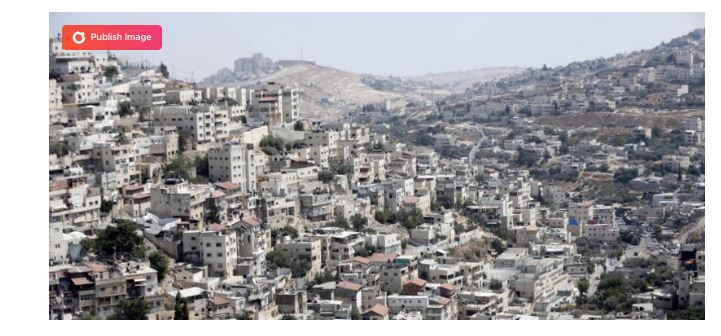
SHEIKH JARRAH NEIGHBORHOOD IN JERUSALEM: THE FULL STORY

In the aftermath of the 1948 expulsion of Palestinians by Zionist gangs to pave the way for the creation of the state of Israel, hundreds of thousands of Palestinians were forced to flee their homes in historical Palestine to neighboring countries.

Following these events, which came to be known to the Palestinians as “Nakba”, or the Catastrophe, 28 families settled in the Sheikh Jarrah neighborhood in East Jerusalem in 1956, hoping that would be the last time they are forced out of their homes.

But these families, whose number has grown to 38 since then, say they are experiencing a renewed Nakba on a daily basis.

The Israeli Central Court in East Jerusalem approved a decision earlier this year to evict four Palestinian families from their homes in Sheikh Jarrah neighborhood in favor of right-wing Israeli settlers.

Israel’s Supreme Court was scheduled to issue a ruling on the evictions on Thursday amid heated demonstrations and clashes between Palestinians and Israeli settlers, but the decision was delayed until May 10.

In the event that the court rules in favor of the settlers, the Palestinian families will lose their homes. Other families will face a similar fate.

Beginning of tragedy

In 1956, the 28 refugee families who lost their homes during the Nakba reached an agreement with the Jordanian Ministry of Construction and Development and the UN refugee agency UNRWA to provide housing for them in Sheikh Jarrah neighborhood.

At that time, the West Bank was under Jordanian rule (1951-1967).

According to the Civic Coalition for Palestinian Rights in Jerusalem (CCPRJ), the Jordanian government provided the land while UNRWA covered the cost for constructing 28 homes for these families.

“A contract was concluded between the Ministry of Construction and Reconstruction and Palestinian families in 1956, with one of the main conditions stating that the residents pay a symbolic fee, provided that ownership is transferred to the residents after three years from the completion of construction,” the CCPRJ said in a statement.

This, however, was interrupted by the Israeli occupation of the West Bank, including Jerusalem, in 1967 which prevented the registration of the houses under the names of families, the statement said.

Jordan’s reaction

Last week, Jordan’s Foreign Ministry said it had provided the Palestinian Ministry of Foreign Affairs with 14 ratified agreements meant for the people of the Sheikh Jarrah neighborhood in East Jerusalem which support their claim of their lands and property.

In a statement, the ministry said it handed over a certificate to the residents proving that the Jordanian Ministry of Construction and Development had concluded an agreement with UNRWA to establish 28 housing units in Sheikh Jarrah to be delegated and registered in the names of these families.

According to the statement, the process, however, was interrupted as a result of the Israeli occupation of the West Bank in 1967.

The ministry said it had previously provided the Palestinian side with all the documents that could help Jerusalemites maintain their full rights, including lease contracts, lists of beneficiaries’ names and a copy of the agreement concluded with UNRWA in 1954.

Suffering renewed in 1972

Muhammad al-Sabbagh, a resident of the neighborhood, told Anadolu Agency that the suffering of the Palestinian families began in 1972, when the Sephardic Committee and the Knesset Committee of Israel claimed that they owned the land on which the houses were built in 1885.

In July 1972, the two Israeli associations asked the court to evict four families from their homes in the neighborhood accusing them of land grab, according to the CCPRJ.

The Palestinian families appointed a lawyer to defend their rights, and in 1976 a verdict was issued by Israeli courts in their favor.

“However, the court, using a new registration made in the Israeli Land Registry Department, decided that the land belongs to the Israeli settlement associations,” al-Sabbagh said.

Apartheid law

In 1970, the Law on Legal and Administrative Affairs in Israel was enacted, which stipulated, among other things, that Jews who lost their property in East Jerusalem in 1948 can reclaim their property.

The Israeli Peace Now movement says the law does not allow Palestinians to reclaim their property they lost in Israel in 1948, a move that proves the existence of a separate law for Jews and Palestinians.

According to al-Sabbagh, residents of Sheikh Jarrah were deceived by an Israeli lawyer assigned to defend them.

“In 1982, the Israeli settlement associations filed an eviction case against 24 families in the Sheikh Jarrah neighborhood,” al-Sabbagh said, adding that 17 families assigned Israeli lawyer Tosia Cohen to defend them.

As the legal battle continued, al-Sabbagh said the lawyer in 1991 signed an agreement, without the knowledge of the families, that the ownership of the land belongs to the settlement associations.

“The residents of the neighborhood were instead granted a tenant status,” al-Sabbagh added.

The lawyer, according to the CCPRJ, put Palestinian families “under the threat of eviction if they failed to pay the rent to the settlement associations”.

Meanwhile, Israeli courts continued to hear rival cases from residents and settlement associations.

In 1997, Suleiman Darwish Hijazi, a local resident, filed a lawsuit with the Israeli Central Court to prove his land ownership, using title deeds issued by the Ottoman Empire, which were brought from Turkey. The move, however, backfired when the court rejected the claim in 2005.

The court said the papers did not prove his land ownership and Hijazi’s appeal in the following year was rejected.

Evictions begin

For years, Israeli courts have heard cases submitted by settlement associations against Palestinian residents, as well as Palestinian appeals against court rulings issued in favor of settlers.

In November 2008, however, the al-Kurd family was evicted from their home, followed by the eviction of the Hanoun and al-Ghawi families in August 2009.

Their homes were taken over by settlers who were quick to raise Israeli flags on them, marking a new phase for the suffering of the Palestinians in Sheikh Jarrah neighborhood.

So far, 12 Palestinian families in the neighborhood have received eviction orders issued by the Israeli central and magistrates courts.

Most recently, four Palestinian families filed a petition with the Supreme Court, Israel’s highest judicial body, against a decision to expel them from their homes. The court is set to rule on the issue on Monday.

Al-Sabbagh, who has a 32-member family including 10 children, is afraid that the court verdict will make him and his family refugees again.

In 1948, al-Sabbagh’s family had fled their home in Jaffa, which is now inhabited by Israelis.

The Palestine-Israel conflict dates back to 1917, when the British government, in the now-famous Balfour Declaration, called for “the establishment in Palestine of a national home for the Jewish people.”

ANKARA CALLS ON ISRAEL TO HALT ILLEGAL SETTLEMENTS IN EAST JERUSALEM

ANKARA – Turkey on Friday called on Israel to abandon its policy of building illegal settlements in Eastern Jerusalem. Foreign Minister Mevlüt Çavuşoğlu‘s remarks came at a news conference with his Palestinian counterpart Riyad al-Maliki in the Turkish capital Ankara.

The Turkish official said Israel maintained its “occupation policy” in Eastern Jerusalem and West Bank without a pause, and it was taking new steps to expand illegal settlements or transfer Palestinian houses to illegal settlers, which could pave the way for further destabilization in the future.

Ankara is ready to offer any support needed for elections to be held in Palestine in line with international standards, said Çavuşoğlu.

Stressing that Turkey would not abandon its vision of a two-state solution, Çavuşoğlu went on to say that the projected elections in Palestine, first in the past 15 years, but Israeli acts hampered this.

We have no doubt that the election to be held in Palestine will be conducted in a democratic and transparent manner just like it was in 2006, he said, adding the international observers had confirmed this back then.

Furthermore, Çavuşoğlu stressed that his country did not abandon Palestinians and their cause, and Ankara would continue to support Palestine in the future.

On Turkey’s improving ties with Egypt, he said Thursday’s meeting with Cairo between deputy foreign ministers was held in a “positive atmosphere” and that he might later hold a meeting with his Egyptian counterpart.

Recent talks with the Egyptian authorities focused on regional developments along with bilateral issues, Çavuşoğlu noted, adding Turkey sought to deepen relations in the coming days as instructed by President Recep Tayyip Erdoğan.

According to the minister, Egypt stands as an important country both in the region and for Islamic World, and Turkey’s political normalization with Egypt would correspond to bettering coordination to assist Palestine.

Maliki, for his part, said Turkey surpassed all others in its support and called on the international community to press Israel to allow for Palestinian elections to be held in East Jerusalem.

The Palestinian foreign minister arrived in Turkey on Friday, according to the Turkish Foreign Ministry, which said the two would discuss ways to improve bilateral ties, along with recent developments in Palestine and Jerusalem.

Last week, Palestinian President Mahmoud Abbas announced the postponement of elections until Israeli authorities permit holding the polls in Eastern Jerusalem.

The parliamentary polls were expected to be held on May 22 and the presidential election on July 31, while the Palestinian national council elections would have been on Aug. 31.

TURKEY IN 200+ HOURS

BY:  ZAINAB GILANI

Turkey, my third foreign destination, after Holy Cities of Makkah& Medina and Beijing, began on the 15th of March from Istanbul. I visited Kusadasi, Izmir, Koniya, Antalya and lastly Cappadocia. I managed to fully utilize my luggage allowance and the flight to Istanbul was really smooth. Passing over the high mountain ranges of Iran and Eastern Turkey, I enjoyed an aerial view of Van Lake. Turkey at first glance is the perfect blend of ancient culture, religious belief and lively modernity that encapsulates the ambiance of the nation. 

I had heard so much about Turkey from my late grand father who travled Turkey more then six times under RCD (Regional Cooperation for Development) Pakistan Iran & Turkey join hands for developmental activities this was decads ago &my  father about its culture, heritage that it seemed like déjà vu after just spending a day in the captivating.Istanbul felt like a great mix of people and cultures, which is exclusive to the city and is difficult to be seen elsewhere. Most of the people I came across seemed in good spirits and kind except for a few rude cab drivers and I would not blame them as they offer rides to tourists of all kinds. Although March is the start of the spring time yet it was really cold over there.

Turkey is an arguable contender for the title of ‘most fascinating country’ at the cross roads of Asia and Europe.I believe travel experiences can become truly unforgettable owing to the country’s rich history, remarkable and mesmerizing natural landmarks and exuberant cities. I was deeply charmed by what Turkey had to offer and I tried my best to capture my vacation but for the first time in my life I felt limited going by the camera because I wanted to feel completely present for the beauty of this amazing city. On the very first day we got on board the highly praised ‘Bosphorus.

Cruise’. It turned out to be a memorable experience yet I was a bit scared (case in point, the famous Hollywood’s Titanic). I loved the diverse feel of the city including both the European and the Asian sides.

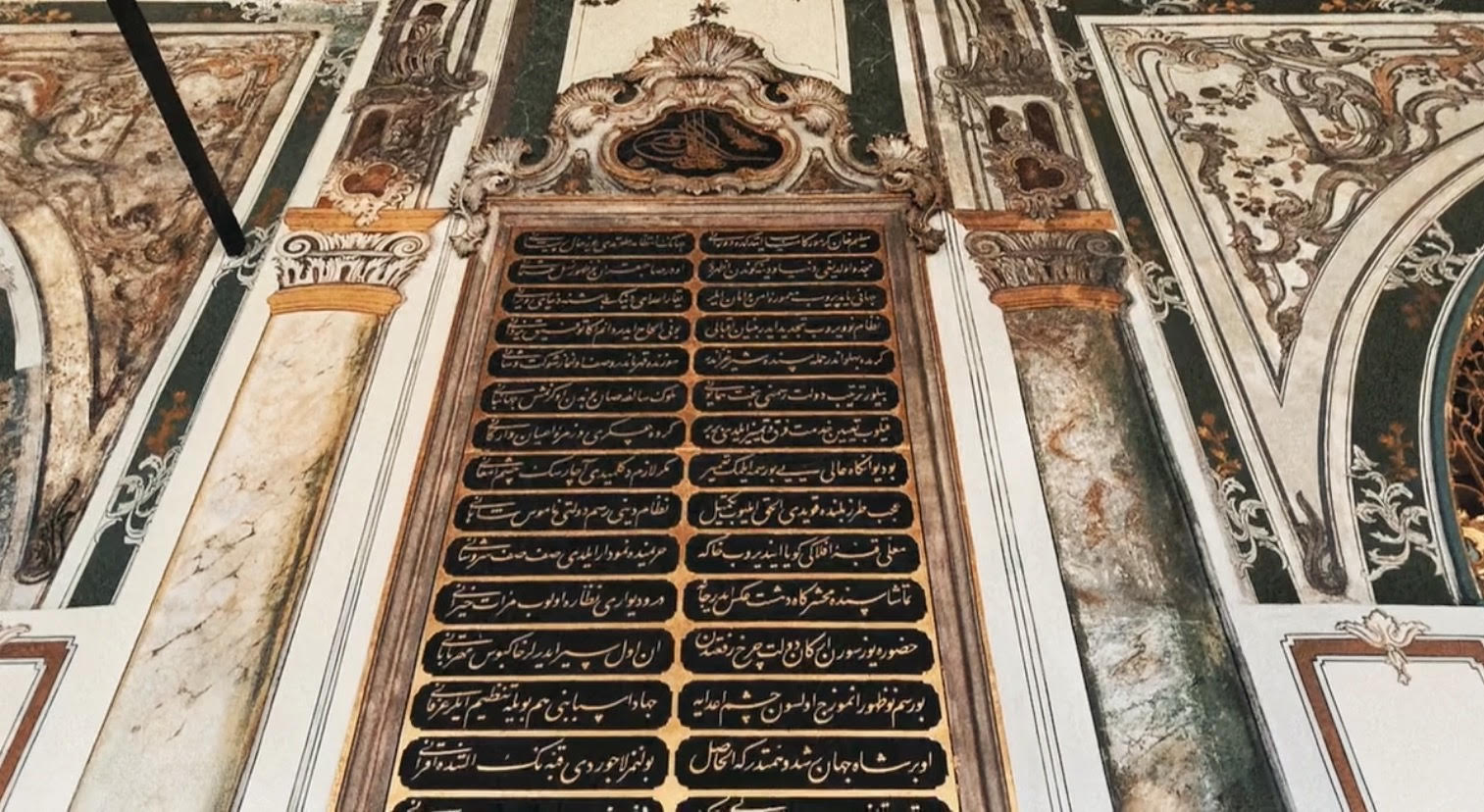
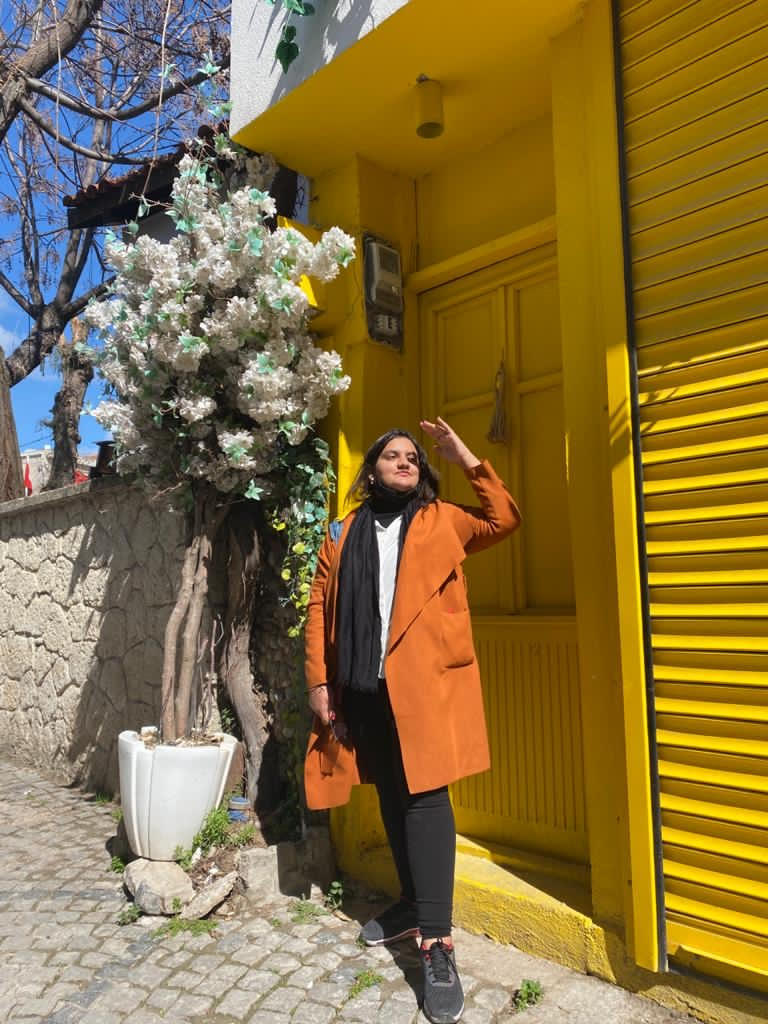
Next on the travel agenda was the Dolmabahce palace, which I expected to be another version of the Topkapi Palace, but to my amazement, it was much bigger. It is the biggest palace in Turkey with 285 rooms, 46 halls, and 6hamam (baths). If you perceive the exterior to be extensively detailed then you have not experienced the inside of this beautiful palace. The interior of Dolmabahce has been designed by the same architect as that of the Opera Palace in Paris, giving its structure a contrasting look, which is European in essence. The Palace is simply stunning owing to its ornateness and sheer magnitude. I remember having to strain my neck to take this picture. Taking photographs and videos is strictly prohibited inside the Palace, but I secretly managed to snap a few (Guilty!!).

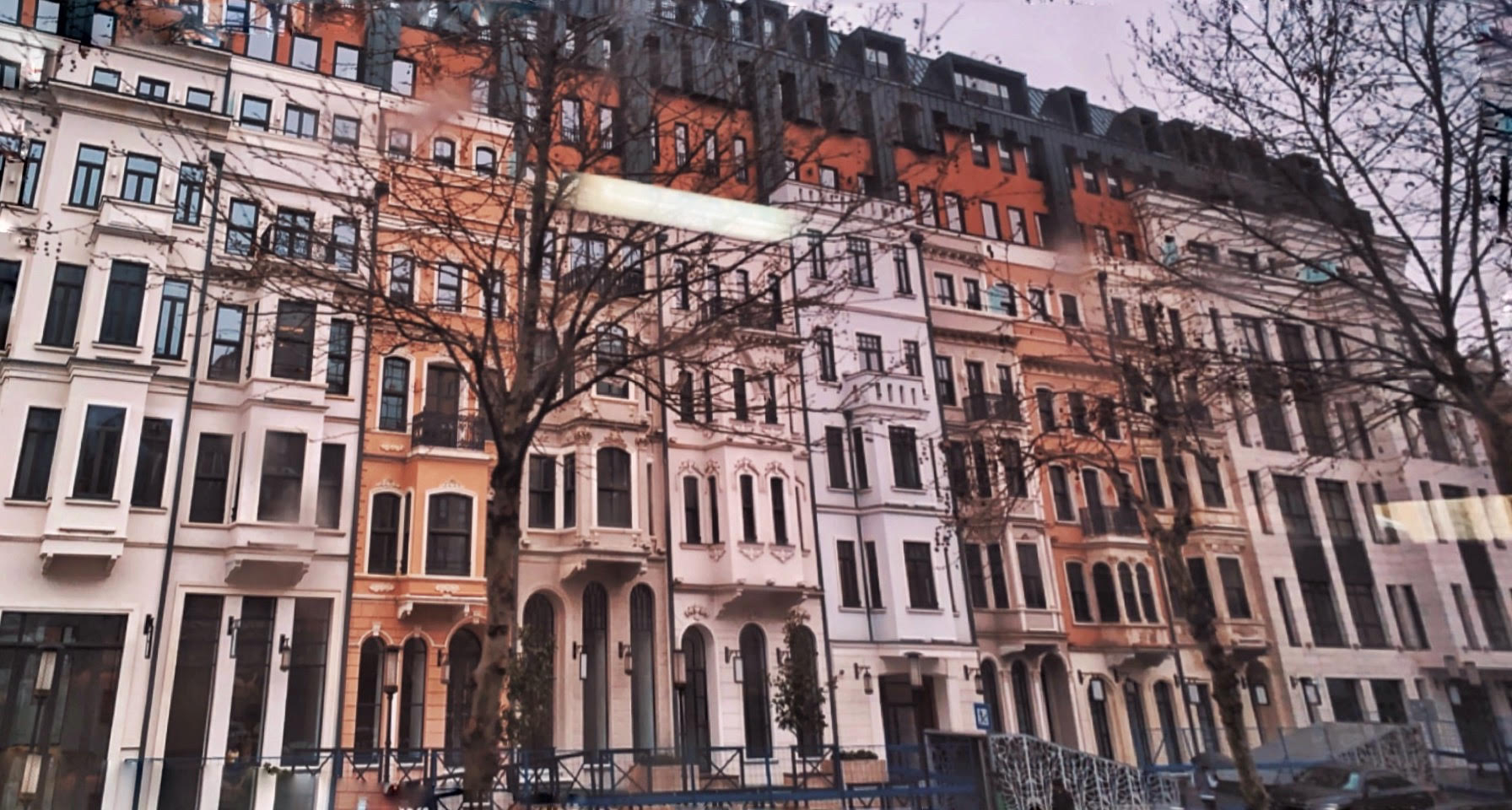
We were lucky enough to have our accommodations always in each destination at the central locations, all thanks to our trip organizer Mr. IjlalKhattak (CEO of Baydaar Travels). In Istanbul we stayed right in front of the Taksim Square, next to the famed ‘Istiklal Street’ this gave us the opportunity to experience the unique energy and spirit of Istanbul at its most organic. Long stretch of shops with every product imaginable, cafes and restaurants, live music, bars, cinemas and much more but I believe that my trip would not have been complete without boarding on those beautiful ruby red trams, wandering in the street having a juicy doner kebab wrapped in lavash was everything. 

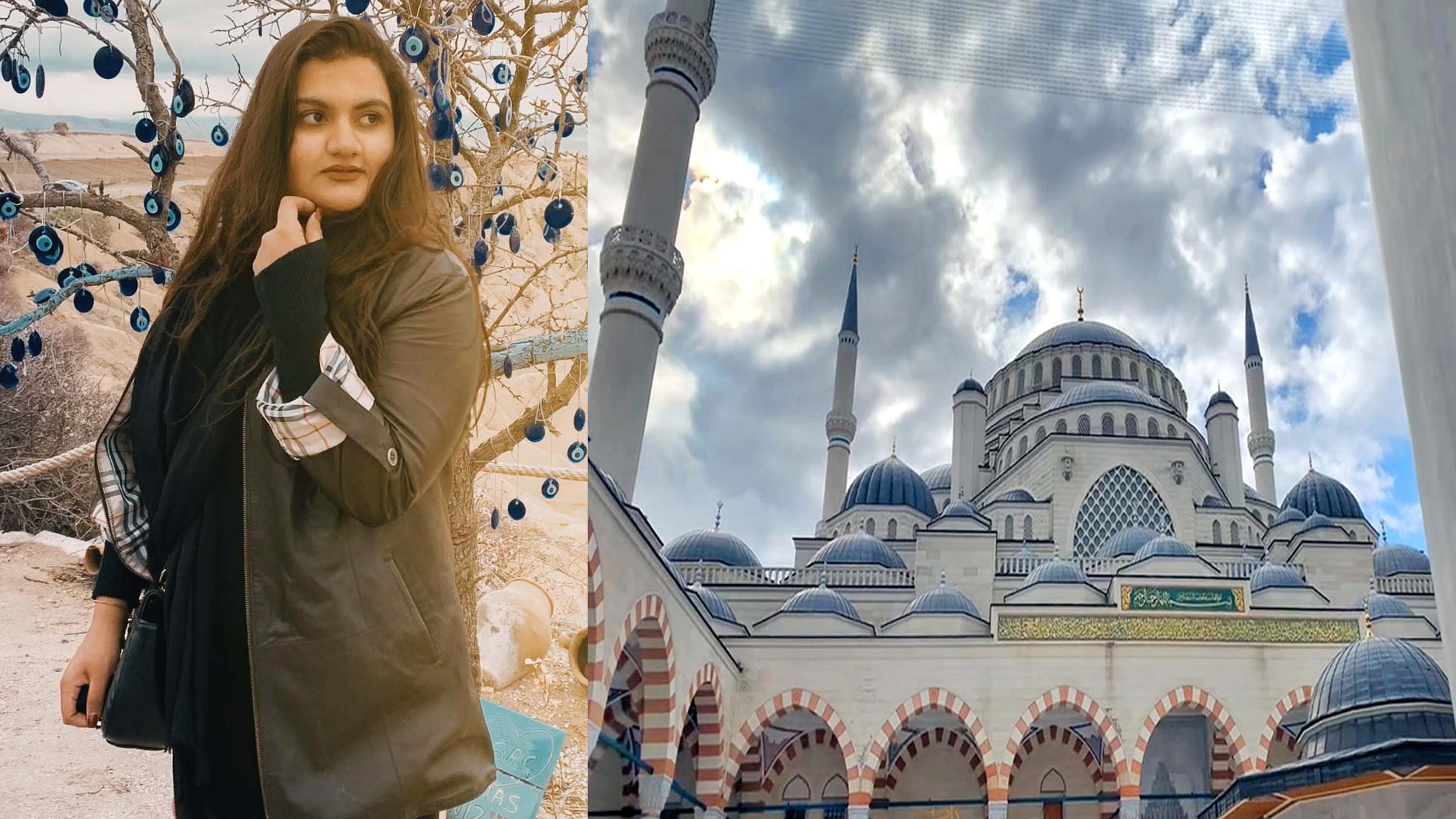
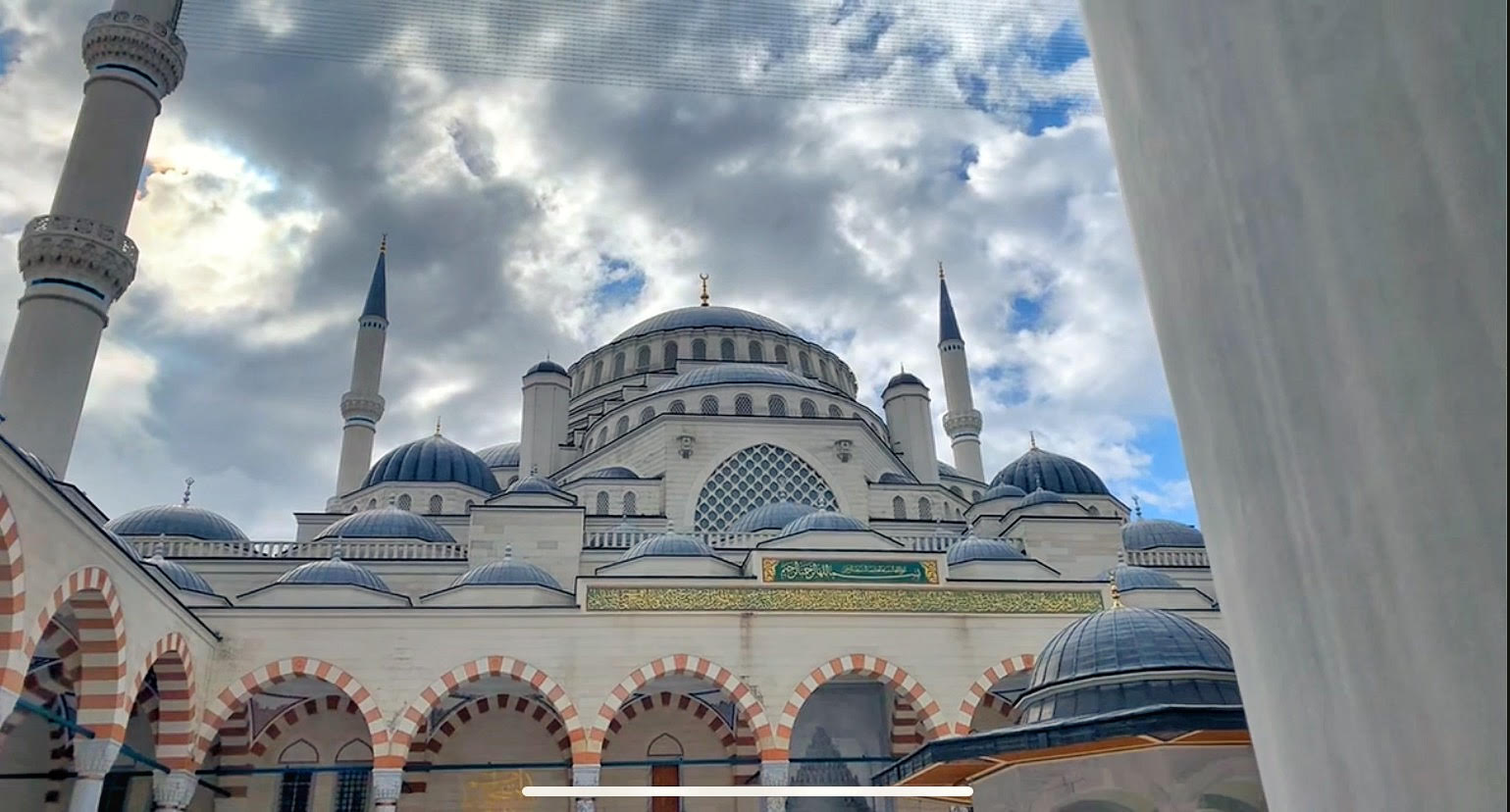
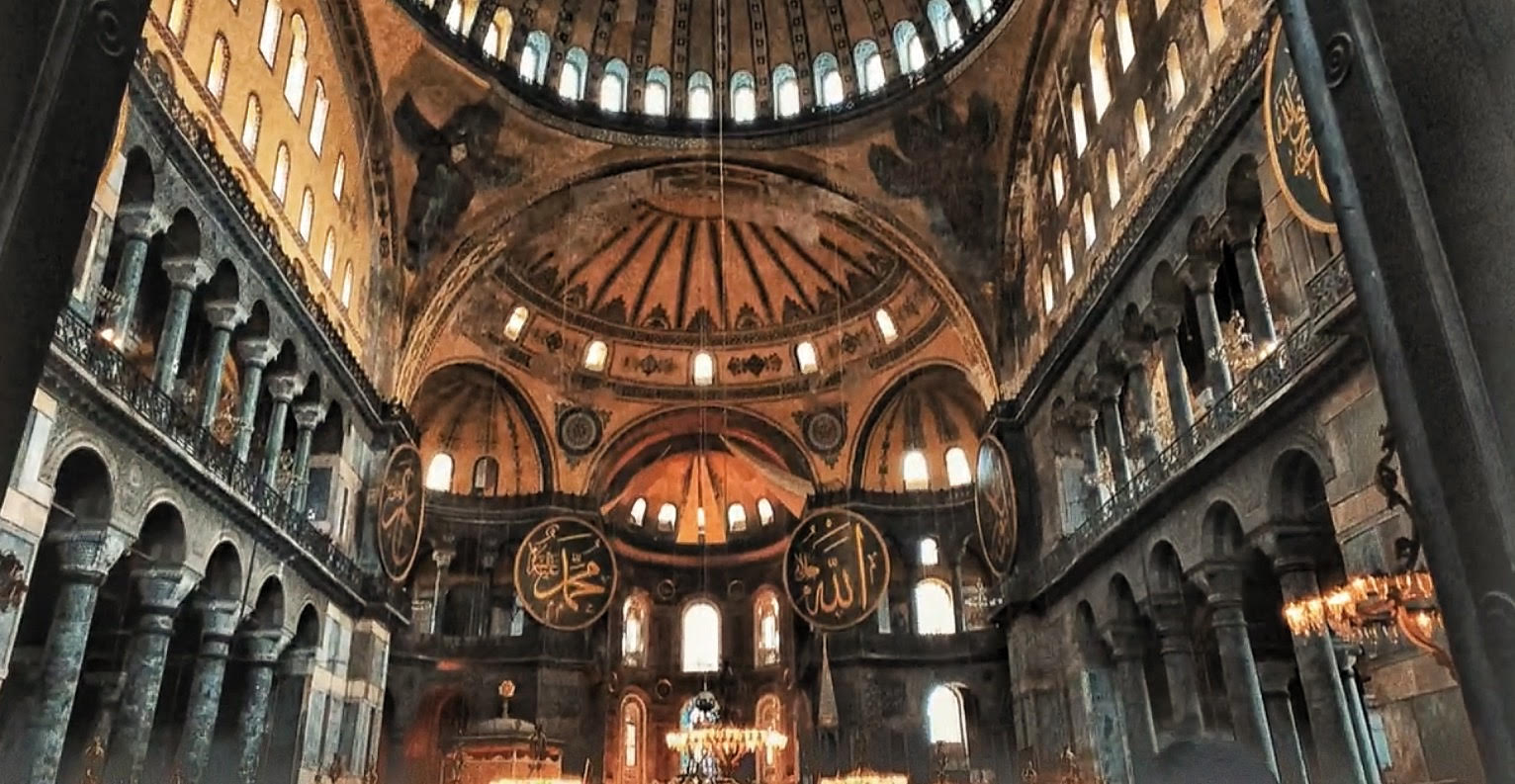
We also visited the iconic Hagia Sophia. This structure is considered the epitome of Byzantine architecture and is said to have “changed the history of architecture.” All these comments came true when I saw it for myself. I also came across the much celebrated Grand Bazaar and fell in love with it. This short visit was fun as I got a chance to meet a lot of interesting people who were willing to chat, help and drink and even offered me tea.It’s the city of lights and colors at the crossroads of Asia and Europe that reminded me of rich historical importance of the city of Istanbul which I heard from my father adding further that his grand father, Syed Sultan Muhammad Shah, was a member of save Khilafat Movement. This movement was established by MoulanaShaukat Ali to save the Ottoman Empire, people of undivided subcontinent were very keen to play their role to save the Ottoman Empire and showed their gesture of good well with Turkish people by putting their limited means of lives on risk as they were under the British Raj in India. Although, the Ottoman Empire could not succeed at that time but the gesture of the people of this part of the Indian subcontinent is still recognized in the memory of Turkish people and their elders still cherish the memories of brotherhood like a valuable gem.

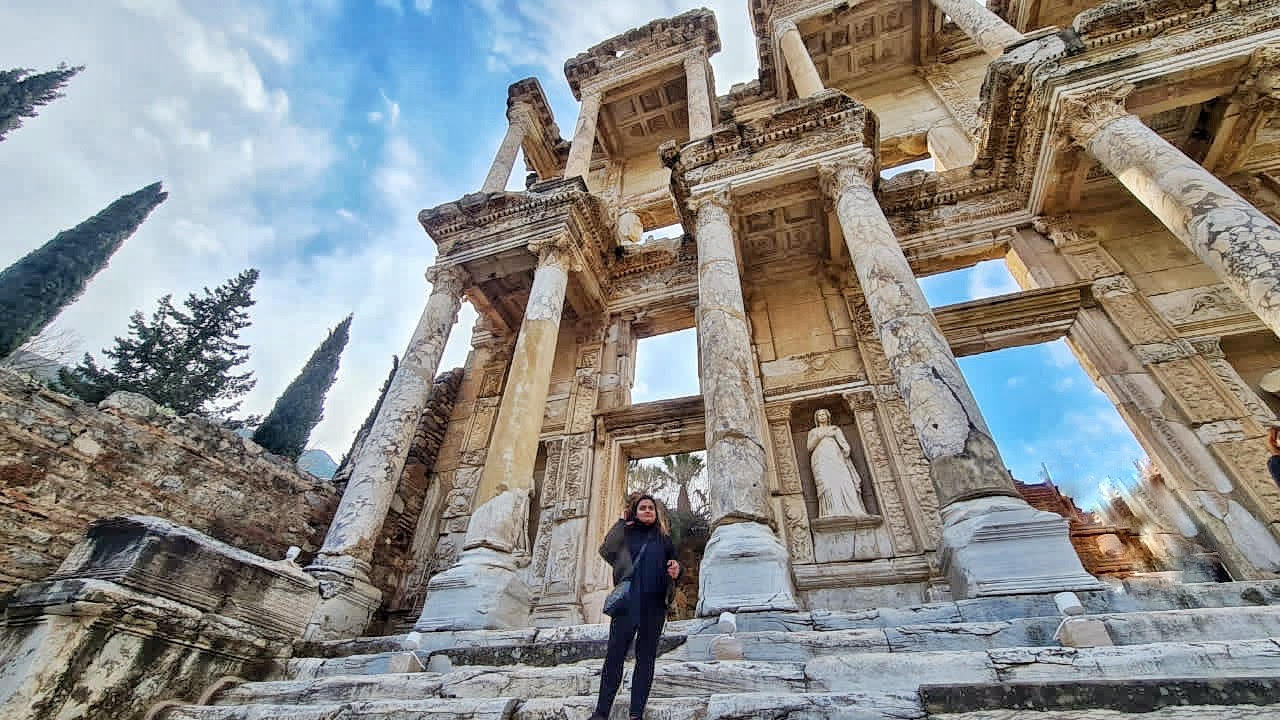
Our trip wasn’t all about Istanbul and I believe that other parts of Turkey were equally rewarding ,and included a visit to Kusadasi where we booked an excursion to the ancient city of Ephesus, which is located on Turkey’s western coast near Selcuk. There, we toured the Library of Celsus, which was originally built to serve as a monumental tomb for Celsus, a Greek philosopher, but later became the largest library of the ancient world. The builders here used an optical illusion to make the building look large. Another quirk of the building is that the outside shows a two-story building but inside the reading area is surrounded by three floors. 

Another incredible structure in Ephesus is the theatre which was built during the reign of Lysimachos during the 3rd century BC. It was used for plays, political and religious discussions. Gladiators fought in this arena and walking through the ancient city of Ephesus was truly extraordinary. The site is so well preserved that it’s easy to imagine today how they lived there in the past. Up in the hills around 4 miles away from Ephesus in the House of Virgin Mary, it’s a small chapel in Bulbul mountain, built on foundations of a humble dwelling where Hazrat Maryam RA was believed to have spent her last days. I left a prayer in the form of a burning candle, as it was customary to the place. I believe that you don’t have to belong to a particular religion to appreciate this serene setting. Kusadasi will always have a very special place in my heart because I celebrated my birthday on the edge of the Aegean Sea; it was a memorable moment for me.

Next, we embarked to discover Antalya, a city overflowing with history, culture, flowers and friendly faces. It was pretty inspiring to walk over the same roman walkway, which Hadrian once took. I witnessed the deep grooves created by the countless carts that must have passed through the city gate. Our guide told us about its history and that it was made for Hadrian namesake, when he visited the city in 130AD.

Throughout my trip I was super excited to visit Konya, regarded as the heart of Turkey, a city of a million souls and an endless prairie. Then, we made our way to the tomb of HazartMolana Rumi, who was a mystic, a Sufi saint who loved all religions and whose own religion was love. I would not be amazed if you lose yourself like I did as in trance and dance, sometimes spinning like tops for hours on end. This is Turkey’s second most-visited tourist attraction after the Topkapi Palace. Here you join the awestruck, the curious and the fervent walls that are embroidered with calligraphy and the ceilings give a beautiful kaleidoscopic effect. Moulana Rumi’s tomb is covered in a vastly embroidered cloth of gold and seems to radiate light, peace and mercy. Some people weep here silently, some laugh out loud, people who meditate for hours on end, and people who hurry through. All are moved here for love. I believe it’s very true when people often say that Come to Konya and you come to Turkey’s soul. In Rumi’s words: “Whoever you may be, comeEven though you may bean infidel, a pagan, or afire worshipper, comeour brotherhood is not one ofdespairthough you have brokenyour vows of repentance a hundredtimes, come”. I can still hear that sound playing inside the tomb, quietly and insinuating itself into our consciousness like a reed flute, it is really the sound of fire, which rises and falls inside us our hearts ,it’s soul music.

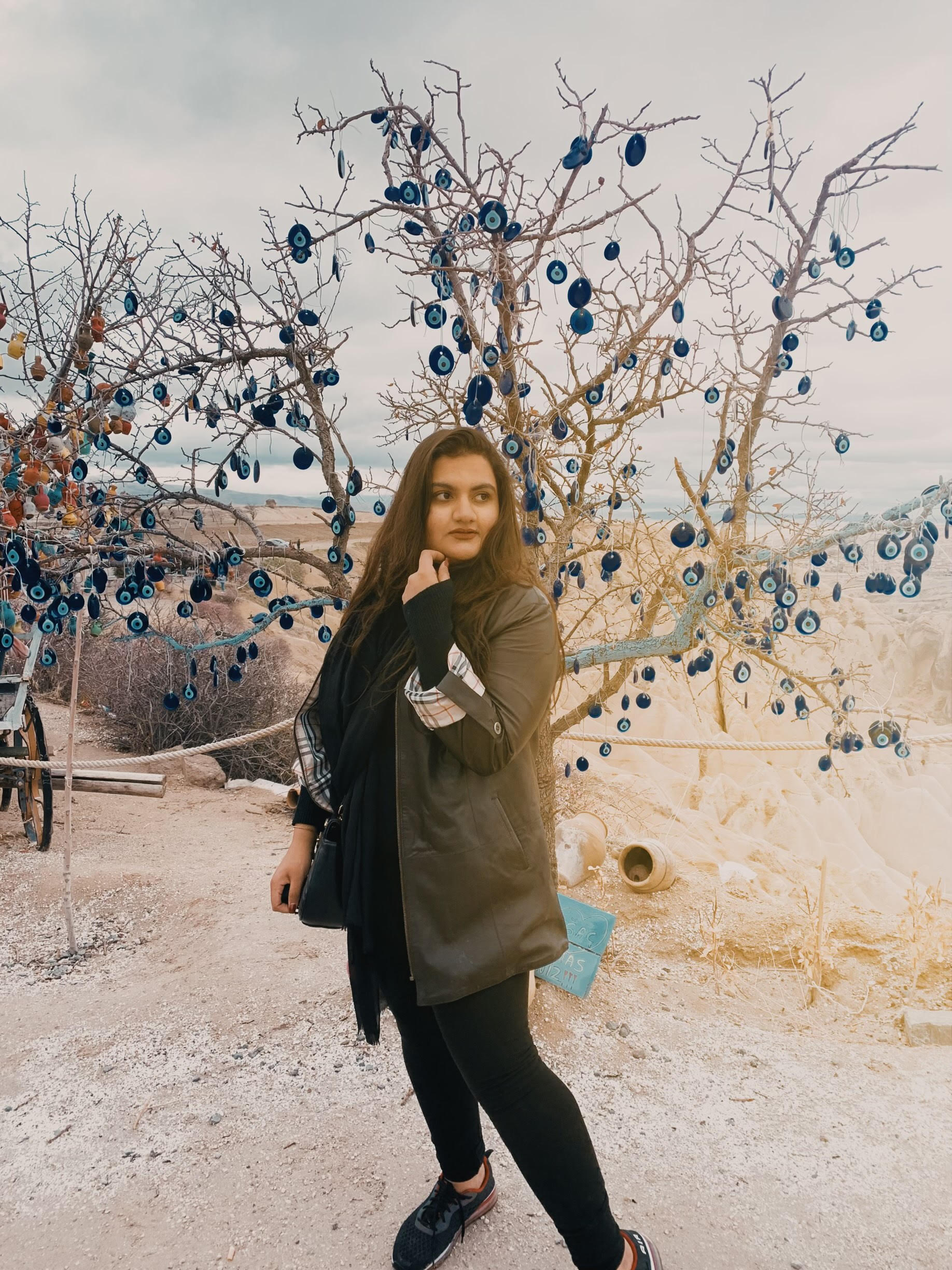
After paying a tribute, we continued our road trip from Konya to Cappadocia covering almost 224 kilometers we reached Cappadocia at 9pm in the evening. We dragged our luggage to the hotel room as we were exhausted after traveling from Antalya to Cappadocia within a day but when I saw the landscape, the rock colors

and vivid formations made by nature’s force chipping away for thousands of years, it was well worth it. I loved the cave hotel’s hospitality and amazing food.

On the last day what I saw made me stand transfixed, for the first time in my life watching little flurries of snow falling, with perfect synchronization making a thick comforter on the roofs. I would not have experienced it if I weren’t in Cappadocia at that time. It was one of the best moments of my life! We missed our hot air balloon ride due to snow but I guess the view of Cappadocia’s unsymmetrical caves covered with snow made up for it. Nevertheless, a hot air-balloon ride still remains on my bucket list. From Cappadocia, I flew back home with a backpack full of wondrous memories and incredible experiences, which I will always cherish. I can not wait to go visit again to the home of breathtaking architecture, some of the warmest and most genuinely hospitable people I have come across in my life, I miss you Turkey!

(The writer is studying law at University of London, her email: [email protected])

TROOPS’ DRAWDOWN FROM AFGHANISTAN WITHOUT PEACE DEAL TO DENT REGIONAL SECURITY: EXPERTS

Devcom-Pakistan webinar highlights the repercussions of hurriedly drawdown of the US-NATO troops from Afghanistan without finalizing any peace deal for the stakeholders. The experts believe that 20-year efforts, sacrifice of lives and huge capital and strategic investments are likely to go uncultivated for any sustainable solutions besides putting the region at security risk again.

DNA

Islamabad, MAY 8 – The geopolitical experts from different countries in the region have warned of the worst consequences of pulling out the US-Nato troops from Afghanistan without any sustainable peace deal. It would lead the region to geopolitical chaos, instability and rise of insurgency as seen on the first day of the drawdown from the Kandahar airfield. About 150 lives perished in an armed fight between the Afghan soldiers and Taliban to capture the vacated airfield.

They said the investment made for almost 20-years in Afghanistan against terrorism and lives sacrificed are likely to go waste in hurriedly withdrawal of the troops. Somehow, it seems intentional and strategic on part of the US and Nato to dent the ever increasing Chinese, Russian and Iranian strategic and economic interests in the region. Economically weaker, Pakistan has to suffer more with the rise of insurgency particularly on its border areas with Afghanistan.

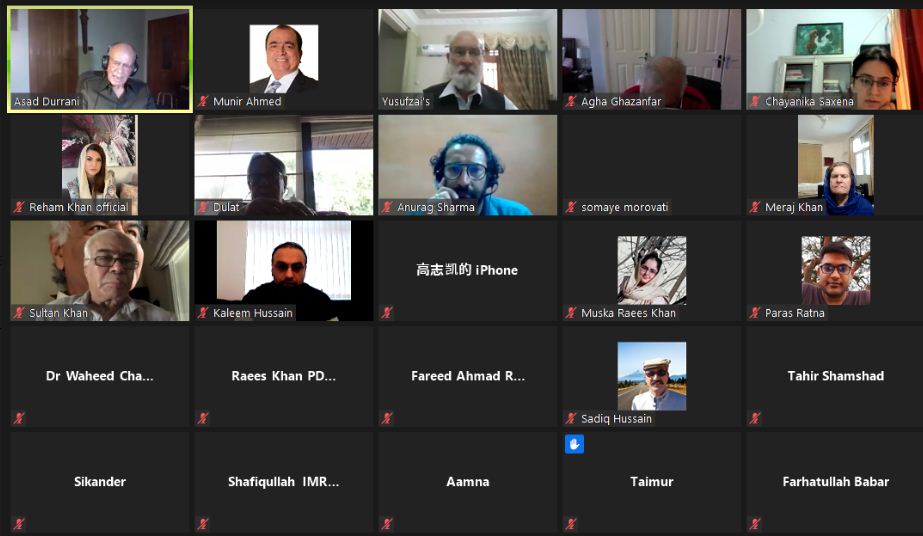
Development Communications Network (Devcom-Pakistan) and DTN organized the regional webinar on “Pulling out the US-NATO troops from Afghanistan without any sustainable peace mechanisms – Repercussions for the Region” on Saturday. The guest speakers included former ISI chief and geopolitical analyst retired Lt. General Muhammad Asad Durrani, former senator Farhatullah Babar, senior journalist from Pakistan Rahimullah Yousafzai, Beijing-based China Centre for Globalization chief Victor Gao, senior journalist from Washington Anwar Iqbal, geopolitical commentator and broadcaster from UK Reham Khan, PhD scholar on Afghanistan affairs from India Chayanika Saxena, and Dr. Somaye Morovati, an expert from Iran on Afghanistan and Pakistan. Devcom-Pakistan Executive Director Munir Ahmed conducted and hosted the webinar.      

Lt. General (retd) Muhammad Asad Durrani said a sustainable peace mechanism post the US withdrawal from Afghanistan is indeed desirable but also an uphill task. Several rounds of talks were managed but the parties could not agree to the mechanisms proposed. Taliban were not convinced on the power-sharing as proposed and discussed in the larger perspective.  

He said foreign occupation creates some serious contradictions, and the polity gets divided between the freedom-fighters, a warrior class and the opportunist collaborators. Same has happened in Afghanistan about two decades of war against terrorism. A prolonged war of resistance gives rise to a war economy, and its beneficiaries were unlikely to be pro-peace. The resistance believes it won against a powerful external aggressor, who understandably strives to get a good post-exit deal for its client regime. Victors of war too split over the spoils of victory. Some might favour a general amnesty – the others would rather hang the “traitors”.

He said the onus is thus on the neighbours with stake in the stability of the war ravaged country and on credible figures within, to restore peace. Pakistan and some others in the Region had plenty of time to position themselves for this purpose. It’s all up to them now.

Rahimullah Yousafzai said the 20-year war is not won by the US and Nato but Taliban won the Doha negotiations, the pull out is the result of that. Without ensuring their fair role in the future of Afghanistan, Taliban will not accept anything but may join the Istanbul talks afterwards. There is fear of a surge in the radicalization in Afghanistan and its spillover to neighbouring countries. So, all the countries and stakeholders in the region shall join hands for a consolidated peace deal.  

Farhatuulah Babar said only a political solution would ensure peace in the region. The big players of the region such as Russia, China, and also India have to play their positive role. otherwise the spillover of racialization would not spare anyone at all. 

Victor Gao suggested urgently the UN Security Council meeting to discuss the issue as the US cannot leave Afghanistan in such an irresponsible way. There is a huge task of reconstruction and rebuilding of the economy by engaging natives and Taliban. America shall allocate sufficient funds for post drawdown development in Afghanistan. He said China is also the victim of spillover of the radicalization emerging from Afghanistan to some parts of China. The Chinese government would be willing to contribute to the economic development and engagement of the natives including Taliban.    

Reham Khan said the war that was started to end terrorism has ended rather unceremoniously with America leaving those they accused of terror activities, the Taliban, with a dominant role in Afghanistan. While the US is selling the withdrawal of American troops at home as their success in bringing their boys back home safely and honouring campaign promises of the Trump manifesto, the fact is that it is a crushing defeat of the narrative of eradicating terrorism peddled years ago by America. Afghanistan and its neighbours, Pakistan, India and regional big players Russia and China would bear the brunt of the destruction left behind.

Anwar Iqbal said America cannot stay in Afghanistan for a lifetime to manage the forces there. They need to strike a win-win situation while the regional peace should be taken up by all other stakeholders too. Pakistan is likely to suffer the most post-drawdown of the troops. It may offer US airfields in Pakistan for good bucks to support its nose-dived economy if desired by the Biden government.

Chayanika Saxena said the impending US-Nato withdrawal from Afghanistan has come when the entire world is reeling under the impact of a contagious virus. It comes as no surprise then that both the wherewithal and interest of the international actors, including the US, to deal with the simmering conflicts in Afghanistan have taken a hit. Thus, while it is only rational to have expected an eventual American departure, it could not have come at a worse time than this.

She said in the circumstances of increasing attacks against the Afghan National Defense and Security Forces (ANDSF) to killing of young representatives of progress and peace and media persons, it is crucial for the international and regional powers to shore up their support for the Afghanistan government. The High Council for National Reconciliation shall make sure to bring Taliban back to the table of talks to give the ongoing conflict a sustainable end.

Dr. Somaye Morovatti said Iran’s role is very crucial in the post withdrawal but always undermined. Iran can play a strategic role in bringing Taliban to a meaningful peace solution and to abide by the defined parameters. A larger agreement to work together is required in the given circumstances.  

Stay Connected

64FansLike
60FollowersFollow

Latest Reviews

Exchange Rates

USD - United States Dollar
EUR
1.14
GBP
1.34
AUD
0.70
CAD
0.71