Home Blog Page 2743

Pakistan Business Community Stands with Gaza; Israel provocation is intolerable

DNA

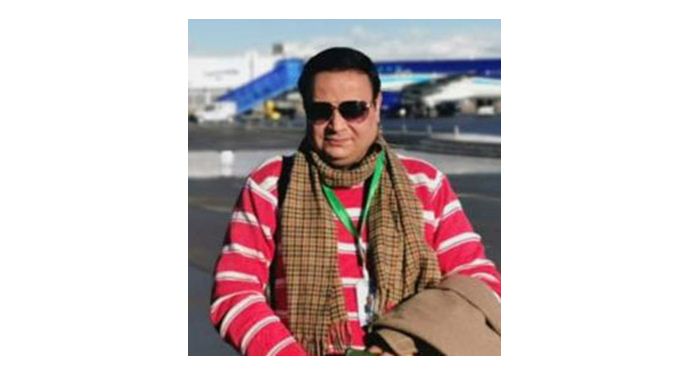
Islamabad, MAY 12 – Pakistan Tehreek-e-Insaf Vice President and former FPCCI Regional Chairman, Fehmida Jamali said Israeli violations in Jerusalem, and the government’s tolerance of Jewish extremists hostile to Palestinians and Arabs, is what led to the ignition of the situation in this dangerous way.”

She said Israeli government must finally understand that it will not be able to suppress the Palestinian people’s legitimate rights and demands by using indiscriminate and disproportionate power.
President, Pakistan Businesses Forum (PBF) Sahibzada Usman Zulfiqar declared total rejection and condemnation of these oppressive Israeli practices.
Zulfiqar said seeing footage of Israeli airstrikes kill men, women and children in Gaza, I send my solidarity, my love and my prayers to the Palestinian people.

Chairman Businessmen Panel (Federal), Riaz Khattak said the actions have caused concern in the Muslim world as the site is one of the most religious in Islam. We strongly condemns the attacks carried out by the occupation forces at Al-Aqsa mosque transgressing the safety and security of the worshippers, the statement said.

Vice President, Pakistan Businesses Forum Ahmad Jawad said the indiscriminate use of force by Israeli forces against defenceless Palestinians, causing death and injuries, defies all humanitarian norms and human rights laws. Pakistan business community calls upon the international community to put an end to the blatant use of force and flagrant violation of human rights of the Palestinian people.
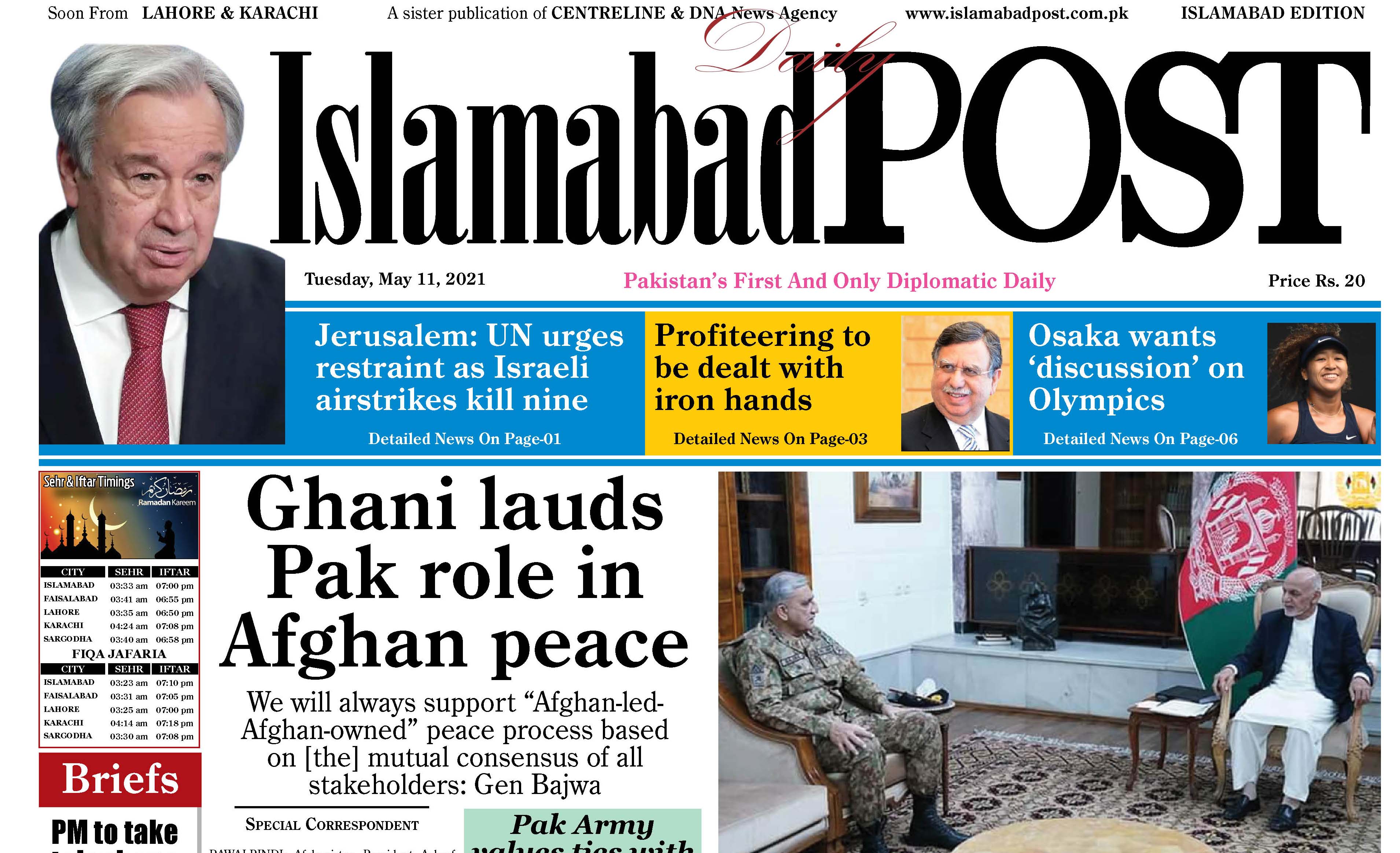
He also called on the United Nations to act immediately to stop the violence, saying continuing “Israeli provocations” were an affront to Muslims on the eve of the Eid holiday at the end of the holy month of Ramadan.

A WORLD BEYOND ROTE LEARNING

By Muhammad Omar Iftikhar 

Our educational system compels students to memorize text line-by-line and reproduce it as replies to the questions asked during an examination. This method of study has been observed and followed for decades. Instead of broadening the students’ mental horizon, the education system or the methods of pedagogy are refraining the students to explore their minds.

Rote learning, therefore, is an easy way out from the challenge of securing grades or at least passing the examinations. At the university level, students are asked to share concepts and principles and rote learning is reduced. However, students in the primary classes and especially in the eleventh and twelfth standard seem to have no other option but to rote learn. This practice explains a lot about our age-old educational system.

The textbook boards of provinces seem to be revising the same content but not adding value to it. Instead of adding content that has been there for ages, the concerned authorities should add content that resonates with the changing times. One can pursue the higher authorities to empower faculty to teach about life, society, and science in a way never taught before. Students must learn the society they live in and not rote learn the dates of events that happened centuries ago.

The learning they receive must enable them to step into the future and not keep pondering over history. While a holistic learning approach is necessary that blends the past with the future, the idea is to equip the students to become thinkers, leaders, readers, and doers. The syllabus must be changed or if this too much to ask for, the teaching methodology and the paper pattern must be altered. Students need to express themselves to earn grades and not earn them based on reproducing the same information present in textbooks. 

CHINA TARGETS MUSLIM WOMEN IN PUSH TO SUPPRESS BIRTHS IN XINJIANG

Across much of China, the authorities are encouraging women to have more children, as they try to stave off a demographic crisis from a declining birthrate. But in the Xinjiang region, China is forcing them to have fewer; Beijing has accused its critics of pushing an anti-China agenda

XINJIANG : In most of China, women are being urged to have more babies to shore up a falling birthrate. But in Xinjiang, they are being forced to have fewer.

When China’s government ordered women in her mostly Muslim community in the region of Xinjiang to be fitted with contraceptive devices, Qelbinur Sedik pleaded for an exemption. She was nearly 50 years old, she told officials. She had obeyed the government’s birth limits and had only one child.

It was no use. The workers threatened to take her to the police if she continued resisting, she said. She gave in and went to a government clinic where a doctor, using a metal speculum, inserted an intrauterine device to prevent pregnancy. She wept through the procedure.

“I felt like I was no longer a normal woman,” Ms. Sedik said, choking up as she described the 2017 ordeal. “Like I was missing something.”

Across much of China, the authorities are encouraging women to have more children, as they try to stave off a demographic crisis from a declining birthrate. But in the Xinjiang region, China is forcing them to have fewer, tightening its grip on Muslim ethnic minorities and trying to orchestrate a demographic shift that will diminish their population growth.

Birthrates in the region have already plunged in recent years as the use of invasive birth control procedures has risen, according to reports by a noted researcher, Adrian Zenz, along with The Associated Press.

It is part of a vast and repressive social re-engineering campaign by a Communist Party determined to eliminate any perceived challenge to its rule, in this case, ethnic separatism. Over the past few years, the party, under its top leader, Xi Jinping, has moved aggressively to subdue Uyghurs and other Central Asian minorities in Xinjiang, putting hundreds of thousands into internment camps and prisons. The authorities have placed the region under tight surveillance, sent residents to work in factories and placed children in boarding schools.

While the authorities have said the birth control procedures are voluntary, interviews with more than a dozen Uyghurs, Kazakhs and other Muslim women and men from Xinjiang, as well as a review of official statistics, government notices and reports in the state-run media, depict a coercive effort by the Chinese Communist Party to control the community’s reproductive rights. The authorities pressured women to use IUDs or get sterilized. As they recuperated at home, government officials were sent to live with them to watch for signs of discontent; one woman described having to endure her minder’s groping.

If they had too many children or refused contraceptive procedures, they faced steep fines or, worse, detention in an internment camp. In the camps, the women were at risk of even more abuse. Some former detainees say they were made to take drugs that stopped their menstrual cycles. One woman said she had been raped in a camp. To rights advocates and Western officials, the government’s repression in Xinjiang is tantamount to crimes against humanity and genocide, in large part because of the efforts to stem the population growth of Muslim minorities. The Trump administration in January was the first government to declare the crackdown a genocide, with reproductive oppression as a leading reason; the Biden administration affirmed the label in March.

Ms. Sedik’s experience, reported in The Guardian and elsewhere, helped form the basis for the decision by the United States government. “It was one of the most detailed and compelling first-person accounts we had,” said Kelley E. Currie, a former United States ambassador who was involved in the government’s discussions. “It helped to put a face on the horrifying statistics we were seeing.” Beijing has accused its critics of pushing an anti-China agenda. The recent declines in the region’s birthrates, the government has said, were the result of the authorities’ fully enforcing longstanding birth restrictions. The sterilizations and contraceptive procedures, it said, freed women from backward attitudes about procreation and religion.

“Whether to have birth control or what contraceptive method they choose are completely their own wishes,” Xu Guixiang, a Xinjiang government spokesman, said at a news conference in March. “No one nor any agency shall interfere.”

To women in Xinjiang, the orders from the government were clear: They didn’t have a choice.Last year, a community worker in Urumqi, the regional capital, where Ms. Sedik had lived, sent messages saying women between 18 and 59 had to submit to pregnancy and birth control inspections.

“If you fight with us at the door and if you refuse to cooperate with us, you will be taken to the police station,” the worker wrote, according to screenshots of the WeChat messages that Ms. Sedik shared with The Times. ( New York Times)

UZBEKISTAN, PAKISTAN IMPLEMENT TRANS-AFGHAN LOGISTICS PROJECT

DNA

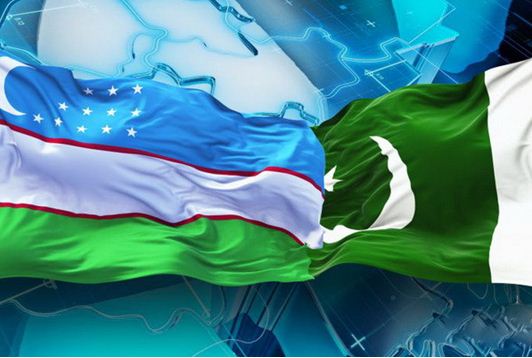
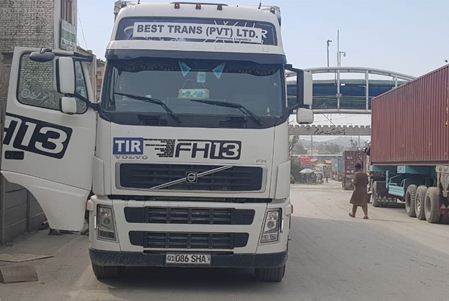
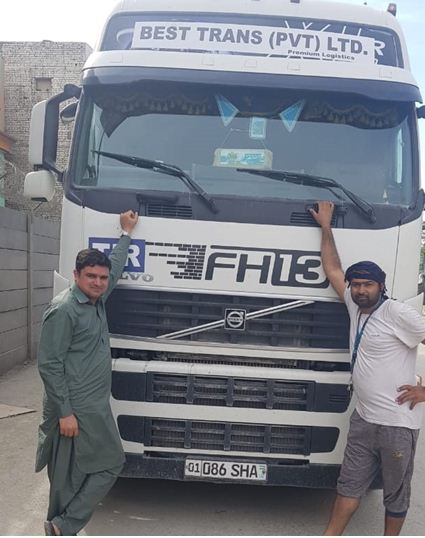
ISLAMABAD: The Embassy of Uzbekistan in Pakistan together with Pakistani transport company “Best Trans Pvt. Ltd.” and Uzbek freight forwarding company “Asad Trans” for the first time implemented pilot trans-Afghan logistics project for the direct delivery of Uzbek export goods to Pakistan through the territory of Afghanistan.

As the joint action of the Embassy of Uzbekistan in Islamabad with the support of the Ministry of Commerce of Pakistan, the partners of “Asad Trans” and “Best Trans Pvt. Ltd.” since January of this year began working on a project for direct delivery (through Afghanistan) of Uzbek goods to Pakistani cities according to the “supplier’s warehouse – importer’s warehouse” scheme.

The implementation of the specified transit transportation of Uzbek goods is the implementation of trans-Afghan transport and logistics projects initiated by the President of Uzbekistan.

Successful implementation of the project provides to significantly reduce of the cost of transportation of Uzbek goods, including shipping at Uzbek-Afghan border, and subsequently at Afghan-Pakistani border in accordance with TIR CARNET Convention dated on 1975, members of which are Uzbekistan, Afghanistan and Pakistan.

On May 11 this year a cargo vehicle with Uzbek license plates safely crossed the Afghan transit route in two days and reached the Torkham checkpoint in Peshawar. After the completion of customs clearance, the truck will reach the importer in Faisalabad.

The vehicle transports from Uzbekistan processed leather products (wet blue) for Pakistani leather factories. Further, have been planned regular direct delivery of Uzbek export goods (coal, mineral fertilizers and textiles) to the Pakistani cities Lahore, Karachi, Taxila and Faisalabad.

Partners of “Best Trans Pvt. Ltd.” and “Asad Trans” are planning to increase the number of freight vehicles up to 50 units by the end of the year to ensure the smooth circulation of goods by Uzbek trucks.

According to the chairman of “Best Trans Pvt. Ltd.” Mr. Ramiz Rabbani, the entry of the first Uzbek truck into the territory of Pakistan is a historical event, since before that, in the Uzbek-Pakistani economic relations, the delivery of Uzbek export goods directly to Pakistan through the freight transport of the Republic of Uzbekistan was not implemented.

According to him, the expected signing between Uzbekistan and Pakistan of intergovernmental agreements on preferential and transit trade will be an impetus for the development of interregional freight circulation through the trans-Afghan route.

IRAN’S PRESIDENTIAL ELECTION: A REALITY CHECK

Dr. Mehmood Ul Hassan Khan

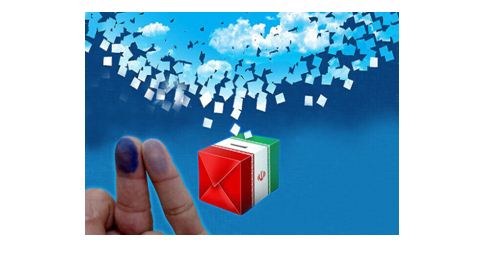
Electioneering is getting “momentum” in Islamic Republic of Iran because of upcoming 13th Presidential Election to be held on June 18, 2021. It would be one of Iran’s most “significant” elections that could determine Iran’s future “directions” of foreign, economic and military policies in the region and beyond.

However, the elections in 1997, 2005, and 2013 yielded surprising results, signaling unexpected changes but this time it seems that there will be no surprise and presidential election will be closely “contested” between reformists and hardliners. 

Furthermore, Iranians will be voting in “four different elections” on June 18. Presidential elections and balloting for local councils will be held across the country while there will be by-elections for parliament and the Assembly of Experts, a group of clerics that theoretically chooses the next Supreme Leader which has further enhanced its strategic orientation, utility and importance too.

There will also be various by-elections for Iranian parliament, which lost some of its members to COVID-19 and others due to the rejection of credentials for some successful candidates after last year’s election. In the Tehran constituency, there is one vacant seat.

Unfortunately, the Assembly of Experts (AEs) has also lost a few members since its last election in March 2016. This by-election is crucial for Supreme Leader Ayatollah Ali Khamenei and those who aspire to succeed him.

Officially, Iran has opened registration for potential candidates in the country’s June presidential election. Registration will end on May 15, 2021. The Guardian Council (GC) will announce a final list of candidates by May 27, and a 20 day campaign begins the following day. Several candidates have already officially announced their presidential bids, while others have only signaled that they would be seeking to contest.

Mostly, presidential candidates must be outstanding political and religious figures. Every candidate must have Iranian origin, a national of the Islamic Republic, prudent and capable of taking on leadership duties, holder of at least master degree, with minimum age 40, and also be religious with a strong belief in the Islamic Republic’s principles and its official religion.

According to its “unique” historical, traditional, religious and cultural “hangover” Iranian political “polity” divides candidates into two “distinctive” categories which include “conservatives” or “hard-liners” and reformists.  The conservatives want  to expand Iran’s nuclear program and confront the world, moderates who hold onto the status quo and reformists who want to change the theocracy from within.

Historical analysis of Iranian political system reveals that “radical candidates” have not been “accommodated” by its system and various important organs of the “ultimate discretion” mainly office by the Guardian Council (GC) comprising of a 12 member panel that vets and approves candidates under the watch of Supreme Leader Ayatollah Ali Khamenei. The collapse of nuclear deal provided political/electoral comparative advantage to hard-liners which even secured majority in the Iran’s parliament.

It is believed that in case of hard-liner or a conservative candidate victory in the upcoming election especially someone with a military background, there is a likelihood of “intensification” of the standoff with the West.

On its part, prominent reformist leaders have been striving hard to form a political coalition to unite a single banner. But many reformists have termed the body undemocratic, signaling stay away from such unity efforts. Moreover, some other reformist leaders have also shown interest in running for the presidency but it remains unclear if the Guardian Council will approve their candidature.

Conversely, the reformist camp has various subgroups consisting of radicals and pragmatists orientations. Incumbent president Rouhani has always been labeled as a pragmatist, who was roped in by the camp in 2013 to contest polls. There have been serious differences between Rouhani and radical reformist politicians to the point that they have regretted backing him for two terms in office, which has further added to their woes.

On the contrary, conservatives, also face a similar struggle with many contenders in the presidential election race. But it seems hardliners may be in the driving seat in the upcoming presidential election 2021 because of so many complex and complicated internal and external reasons.

Undoubtedly, there are some new faces have now joined the race, hoping to spring a surprise but their chances of victory are limited. It hopes that a close electoral contest between conservatives and reformists will further strengthen process of politicization and democratization in Iran during which potential winner may have the support of non-traditional political polity.

In this context, both camps have their own strengthens and weakness which may also play an important role in the upcoming presidential election. Critical analysis upheld that conservatives always struggled to pick a consensus candidate, something which used to help the reformists.

But it seems that constant economic meltdown of Rouhani’s regime because of the sever US socio-economic sanctions, high inflation, price hikes, limited new jobs and declining state’s space to assist and rescue the people from the deep seas of poverty may spoil the chances of a reformist to win the electoral race of presidency on June 18.

Moreover, reformists or moderates defeat in the parliamentary elections of 2020 would also be a stumbling block for the victory of any reformist candidate to win the election this time.

However, as consensus evades in both camps to decide about candidates, many familiar and unfamiliar names have joined the fray to invite attention and seek candidacy.

Despite Western routine propaganda and fake media campaigns it hopes that the upcoming Iranian 13th Presidential election would be more momentous, simply because it will be held in much more different circumstances. The ongoing human sage of deadly coronavirus pandemic will require the Iranian government to put into place new SOPs to protect voters from Covid-19. Economic challenges will be decider.

Although Rouhani’s regime desires to reach a break through on the JCPOA but these efforts seem to be difficult making the next presidential election even more important as it will produce the next Iranian government that will lead the efforts to lift socio-economic sanctions. 

Several possible candidates have emerged from Iran’s powerful Revolutionary Guard (RG). They include Mohsen Rezaei, an outspoken former top commander; Hossein Dehghan, an adviser to Khamenei; Rostam Ghasemi, a former oil minister; and Mohammad Bagher Qalibaf, the speaker of Iran’s parliament known for his support of a bloody crackdown on students in 1999.

A young generation of Guard leaders is in the mix as well, led by 53 year-old Saeed Mohammad, who once headed the paramilitary force’s Khatam al-Anbiya Construction Headquarters, which is one of Iran’s biggest business conglomerates.

Outside of the Guard, hard-line judiciary Chief Ebrahim Raisi has had his name mentioned as well. Raisi ran unsuccessfully against Rouhani in 2017 despite winning 15.8 million votes, but the cleric remains popular among many as he’s led a publicized anti-corruption push. Former parliament speaker and special China envoy Ali Larijani also has been suggested as a candidate.

Iran’s 2020 parliamentary vote witnessed only a 42.5 percent turnout, the lowest ever since 1979. Official surveys suggest June’s vote may see only a 39-40 percent turnout. Iran’s 2017 presidential election saw a 73 percent turnout.

Statistical analysis of Iranian population upholds that roughly 35 percent of the Iranian population lives in rural areas where village councils play a crucial role in people’s daily lives due to which a high turnout up to 70 percent is expected in the upcoming elections.

Moreover, 20 percent of the Iranian population lives in smaller towns where council turnout has usually been around 60 percent. The politicization of these populations occurred in the midst of the December 2017 to January 2018 protests.

In bigger cities and in provincial capitals people have mostly voted according to political and social preferences there will likely be very low turnout, which could guarantee an easy victory for the hardliner camp, especially for city council members.

In Tehran, this means the politically influential post of Tehran mayor could change hands soon. This post has been a launching pad for national office in the past; Mahmoud Ahmadinejad ran successfully for president in 2005 after having served as Tehran mayor. It means that geographical presentations of Iran will play an important role in the upcoming elections to be held on June 18, 2021.

It seems that Saeed Mohammad, the former head of IRGC’s construction wing Khatam al-Anbiya would be dark horse in the upcoming presidential election. Like former Iran President Mahmoud Ahmedinejad, who pulled a big upset in 2005, Mohammad has also emerged as a dark horse who could upset the plans of other relatively stronger and more popular contenders.

Being prominent regional expert on Iran & GCC I guess presidential election campaign will be contested on economic sanctions, the nuclear deal, and the ongoing economic crisis. The reformists will blame the national economic meltdown because of the US sanctions which left no choice for them to protect the economic interests of the people. On the other hand hardliner held mismanagement and inefficiency of the government for constant economic poor performance.

Opening of national economy resulting from sanctions relief and the revival of the Joint Comprehensive Plan of Action (JCPOA) has the potential to mitigate the hardliners justifications. On the contrary, it seems that the fundamentalist camp is in no rush to facilitate either of those two things while the Rouhani team is pushing the Biden administration to act on them as soon as possible.

Rapidly emerging socio-economic strategic deals in the region and beyond (China-Iran Strategic Deal for US$ 400 billion, opening of new trade routes with Pakistan, along with promising socio-economic integration/partnership under flagship project of the BRI & CPEC), bright prospects of regional geopolitical reconciliation (Iran-Saudi sincere efforts for diplomatic diffuse) and last but not least geostrategic realignment especially on the US-Iran nuclear deal etc. all indicate strategic importance of upcoming Presidential Election of Iran.

Let us hope that democracy will not be compromised because of any invisible concession or contradiction. Let Iranian people decide their fates through ballots in which every vote counts and matters.    

NAIMAL KHAN WANTS PEOPLE TO FOCUS ON THEIR MENTAL HEALTH

ISLAMABAD – Pakistan actor Naimal Khawar Khan gave tips on how to battle mental health issues. The Verna star suggested that people should spend time on activities which make them happy, adding that they should enjoy mother nature.

Naimal, who is married to actor Hamza Ali Abbasi, urged the people to pay attention to themselves and realise their own values.

“Sometimes your desire to keep everyone happy can consume your need to look after yourself,” she said. “Especially after becoming a mother, one tends to tire oneself physically and mentally.

“So here’s a reminder that you are important too. Never forget that. Take care of YOU and your mental health and do what makes you feel like your best self.”

Journal of Pakistan Medical Association said that mental health issues are prevalent in the country due to increasing insecurity, terrorism, economical problems, political uncertainty, unemployment, and disruption of the social fabric.

Many Pakistan celebrities including Momina Mustehsan, Nouman Javed, and Juggan Kazim have also spoken on mental health issues in the past.

DEPARTING BAYERN MUNICH BOSS FLICK AGREES TO COACH GERMANY: REPORT

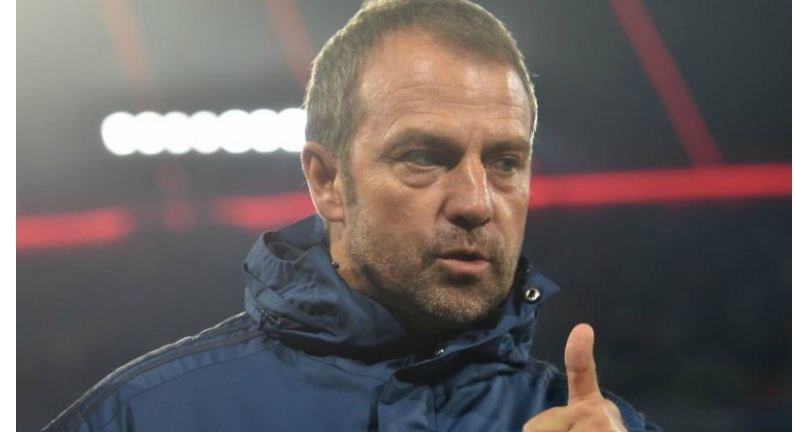
BERLIN – Hansi Flick will take over the German national team after this summer’s Euro, a German newspaper reported on Monday.

The 56-year-old is stepping down as Bayern Munich coach at the end of this season.

Flick is expected to sign for three years, according to the Abendzeitung, a Munich newspaper, allowing him to lead the national team at the 2022 World Cup in Qatar and Euro 2024, which is scheduled to take place in Germany.

Flick, 56, has long been considered the preferred candidate for the post of national coach by the German Football Association (DFB).

He was assistant to Joachim Low, who is standing down after 15 years, between 2006 and 2014, when Germany won the world title.

Flick took over at Bayern in 2019 and has won seven trophies, including two Bundesliga titles and a Champions League.

Flick feuded with sporting director Hasan Salihamidzic over recruitment and asked for his contract, which was due to run until 2023, to be terminated at the end of the season. 

The club agreed to the request and has already announced that 33-year-old Julian Nagelsmann, who is at rivals RB Leipzig, will take over. 

Parker ‘gutted’ as Fulham’s relegation from Premier League confirmed

Bayern board member Oliver Kahn told Sky television on Saturday, after the Bavarians won their ninth Bundesliga title in a row, that “yes, everything is settled” with the DFB.

But he added that “no financial compensation” had been agreed with the DFB for the last two years of Flick’s contract.

As compensation, the two institutions are considering organising an exhibition game between the German national team and Bayern Munich, with the profits from the ticket sales going to the German champions.

US-NATO TROOPS’ DRAWDOWN SANS PEACE DEAL TO PROVOKE RE-TALIBANIZATION

Munir Ahmed

The chosen policy is to bait re-talibanisation in order to roll back 20 years’ worth of human sacrifice, capital and investment. And, then, who will take the lead in belling the Taliban cat? The US has washed its hands of the entire Afghan quagmire, including reconstruction and rehabilitation, despite experts warning of geopolitical chaos

The unilateral decision to drawdown US and NATO troops from Afghanistan was not entirely anticipated by other parties and stakeholders to the decades-old conflict. Even more disconcerting is that this process began on May 1 when the US vacated Kandahar Airfield (KAF), the primary target of Taliban attacks since 2001; sparking clashes between Afghan forces and the Talban that left 100 militants dead. That the military base was the first to be ‘handed over’ to the Afghan government was perhaps an exercise to test both Kabul and the Taliban. It appears that the latter lost this round. 

Since then, however, there has been no let-up in violence. Last week alone saw the targeted killing of well-known television journalist Newat Rawan, just a day after the Taliban warned the Afghan media against “biased reporting”. This was followed by fresh carnage over the weekend when bombs were planted outside a girls’ school in a Kabul suburb that is largely populated by the Shia Hazara community, leaving 68 dead and 165 injured. The Taliban denied involvement in the attack. The Hazara had also been routinely attacked by ISIS. Elsewhere, a bus was bombed in the country’s southern Zabul province. Pakistan also suffered a spillover effect when four soldiers were killed and six wounded in Balochistan while fencing part of the border the border with Afghanistan. 

Thus, in the space of a single week all enemies of peace have been let out of the bag. This should come as no surprise since the US and NATO were unable to defeat militants despite spending two decades on the Afghan battlefield. International forces only managed to dismantle some of their own strategic assets, including Bin Laden. The troop pullout is therefore viewed as an American plan to intentionally dent the region. This is reinforced by President Biden stressing that the region should take remedial responsibility for the conflicts in its backyard, including Afghanistan. All this despite the fact that the US and NATO created this regional discord for their own vested interests. 

Afghanistan has been caught in the crosshairs for four decades. This war without end has consumed an enormous chunk of the world’s resources. Untold lives have been lost and billions of dollars’ worth of infrastructure have been damaged or destroyed. In addition, prolonged military offensives have gifted the world the worst ever global economic crunch and massive migration; thereby negatively impacting global poverty indexes. The biggest beneficiaries remain weapon manufacturers and their patrons while the Muslim world has suffered the most.    

This looks set to continue. Indeed, the carefully crafted fallout of the US exit from Afghanistan will be the loosening of the militant noose across the region with a view to undermining regional security, the peaceful infrastructural growth of BRI (Belt and Road Initiative), as well as bilateral and multilateral cooperation. The ever-expanding US-India strategic alliance against China, Iran and Russia is resulting in the development and strengthening of Cold War strategies. It remains unclear as to whether this would be sufficient to curtail the economic growth of China. Yet, seemingly, the chosen policy is to bait re-talibanisation in order to roll back 20 years’ worth of human sacrifice, capital and investment. And, then, who will take the lead in belling the Taliban cat? The US has washed its hands of the entire Afghan quagmire, including reconstruction and rehabilitation, despite experts warning of geopolitical chaos. 

Certainly, economically weak Pakistan has more to lose in the event of increased militancy, particularly, along its border areas with Afghanistan. It is most unfortunate, both for this country and the whole region, that the US could not even secure the Doha peace talks and effectively lost the game to the Taliban – despite all facilitation and support from abandoned ally Pakistan. History has shown that the US can neither win wars on the battlefield nor at the negotiating table. It is time that the US learned this lesson. 

The writer is a freelance journalist and broadcaster, Director Devcom-Pakistan, a policy advocacy and outreach think tank in Islamabad. He can be reached at [email protected] and tweets @EmmayeSyed 

WELL DONE MR. PRIME MINISTER

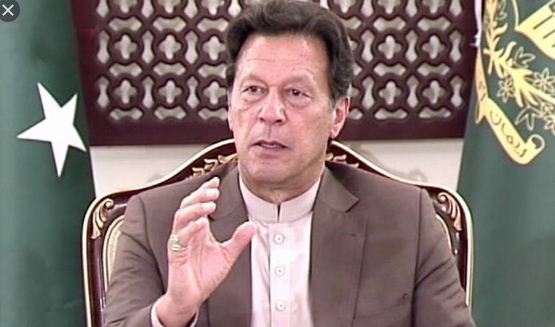
Prime Minister Imran Khan on Tuesday May 11, 2021 talked to people live on the national hook up. The Prime Minister not only listened to complaints and issues of the people from within the country but he chose to entertain a number of calls from the overseas Pakistanis as well. People shared with the prime minister their woes and grievances which had not been addressed by the quarters concerned. Most of the calls that emanated from abroad, related to qabza groups and land grabbers. The poor overseas Pakistanis had purchased a piece of land with the hard earned money but influential people in Pakistani grabbed their land forcibly.

The prime minister not only ordered immediate action but assured the overseas Pakistanis that even in future the government will extend maximum possible help to them. Then, overseas Pakistani also complained about the nonchalance attitude of the Pakistani missions abroad. A caller from German particularly shared his ordeal as to how he had been literally humiliated by the Embassy staff. The prime minister again ordered immediate action.

It was pointed out a few days ago in this newspaper that our missions abroad by and large exercise slackness in addressing problems of Diaspora. Some instances were also quoted in this regard. But now when the prime minister has taken personal interest in this matter therefore it is hoped that issues will be settled. As announced by the prime minister, the Ministry of Foreign Affairs shall establish a helpline just like the PM portal, where overseas Pakistanis could lodge their complaints.   This is indeed a praiseworthy step and will help mitigate sufferings of the Diaspora.

The prime minister also listened to complaints regarding housing issues. There is no doubt that the procedure to get loans from banks is a cumbersome process. And especially if you happen to be a poor folk then your problems are multiplied. This procedure needs to be simplified so that more and more people benefit from this scheme.

The prime minister rightly said that he would do his best to net all mafias, especially the sugar mafias. He assured people shall soon reap benefits of people friendly policies of the incumbent government. He said Shaukat Tareen’s main task was to bring down prices and improve the growth rate. Let us hope the new finance minister is able to live up the expectations because the price hike has really taken a heavy toll on the hapless people of Pakistan.

Summing up, the prime minister’s interaction with people has really paid the dividends and thus this practice should continue. People have rightly demanded to not only increase the duration of this interaction but frequency as well so that more and more callers are entertained.

Stay Connected

64FansLike
60FollowersFollow

Latest Reviews

Exchange Rates

USD - United States Dollar
EUR
1.14
GBP
1.34
AUD
0.70
CAD
0.71