Home Blog Page 2728

Inclusive Pak-Iran diplomacy urged for trade and cultural collaboration

ISLAMABAD, MAY 23 (DNA) – The experts from both sides noted that Pakistan-Iran diplomatic relations are based on the commonalities of language, literature, culture and religion that can enhance bilateral strategic and trade collaboration for a win-win situation. Post withdrawal of the US troops from Afghanistan, the two countries should have a mutually agreed strategy to handle the emerging situation of security and peace in the region.

They said the enhanced cultural collaboration and heritage tourism can bring the people from both sides closer to each other beyond the ethic and religious divide. Youth engagement in a variety of sectors is imperative. The CPEC could be another economic and trade bond for closer ties between Iran and Pakistan. A youth expedition from Chabahar to Gwadar would lead to much better understanding between the people of both sides, and will open many vistas of collaboration.  

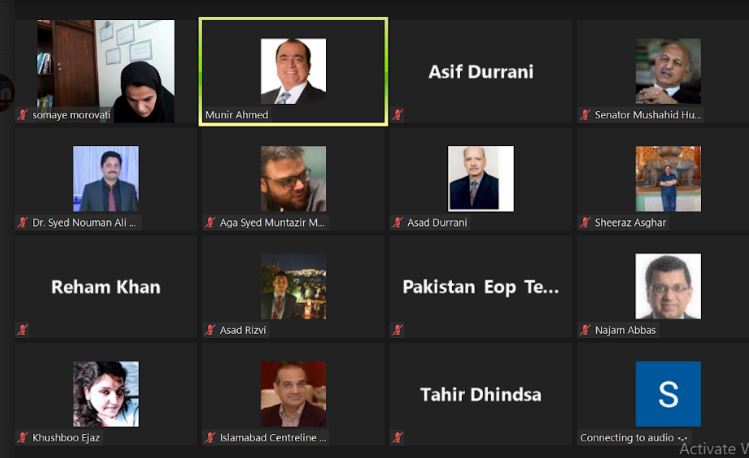
Development Communications Network (Devcom-Pakistan), DTN and Tehran International Studies and Research Institute (TISRI) jointly organized the webinar on “Iran-Pakistan diplomatic relations: opportunities for cooperation and convergence” on Sunday.

The panel of experts included Chairman Senate Standing Committee on Foreign Affairs Senator Mushahid Hussain Sayed, former ISI chief and geopolitical analyst Muhammad Asad Durrani, research analyst and former ambassador to Iran Asif Durrani, Iran’s former ambassador to Pakistan Dr. Mashaallah Shakeri, Iran’s Cultural Counsellor Ehsan Khazaei, Director South Asian Studies at TISRI Dr. Somaye Morovati, and Devcom-Pakistan Executive Director Munir Ahmed who also moderated the discussion.

Senator Mushahid Hussain Sayed said three factors will promote ties between Iran-Pakistan in the near future. First, CPEC and regional connectivity are key to the economic future of both Pakistan and Iran, with the Iran-China deal a plus for Pakistan, securing Pakistan’s Western flanks and good for development of Gwadar Port. Second, with instability likely in Afghanistan post-US withdrawal, counter-terrorism border cooperation and border management will bring the two countries closer as both seek lasting peace, stability and security in Afghanistan as well as on their border. Third, with pressures from the Biden Administration on both Iran and Saudi Arabia, Pakistan can play the role of a bridge between Tehran and Riyadh, especially on issues like Palestine and Kashmir.

He said Pakistan also supports revival of Iran’s nuclear deal and removal of all sanctions on Iran as Pakistan too once faced discriminatory sanctions from the West. One new plus point is a closer rapport between the military and security establishments of both countries, with greater trust among them.

Lt General (retd) Muhammad Asad Durrani said Pak-Iran relations have generally been good – ranging from close to correct – at their peak before the Revolution. During the Khomeini era, the US, then our close ally in Afghanistan vacated, wanted our relations downgraded because of the siege of its Embassy in Tehran, but we refused and have ever since represented Iranian interests in Washington.

He said after the American invasion of Afghanistan, the two countries started addressing irritants like Jandullah and with Russia, China, and Turkey joined hands to manage the chaos post the US withdrawal. Balancing our relationship with Saudi Arabia and Iran has been a challenge – mostly met with finesse. Post 2003 instability in the Region, especially after Mohammed Bin Salman foolishly invaded Yemen, it became more complex but was still taken care of. Some bigots have at times aired sectarianism, but the deep commonality of interests prevailed.  

Ambassador (Retd) Mashaallah Shakeri said Pakistan and Iran enjoy centuries-long relations in cultural, social, politics and economic and trade spheres. However, the historical developments, however, resulted in the alteration of geopolitics in Persia and the subcontinent as well. But the drastic consequences regardless of their implications on geography or geopolitics of the region could never change the principle ties between the relevant territories and Societies. Persian Culture, language and literature once were the elements by virtue of which the religion of Islam was introduced to some part of South Asia particularly to the region that is now known as Pakistan.

Ambassador (retd) Asif Durrani said the strength of Pakistan-Iran relations is that they have no dispute, although they may differ in perceptions on specific issues. Both have always cooperated bilaterally and at the international forums. In 2008, Pakistan supported Iran in the International Atomic Energy Agency (IAEA) while India cast a negative vote against Iran. Pakistan fully supports Iran’s right to access to nuclear technology for peaceful purposes.

Ambassador Durrani said both countries face terrorism and separatism, at times foreign-inspired. Both live in insecure neighbourhoods and face varying degrees of external pressures. While from the beginning of its revolution, Iran had to face the wrath of the Americans, and Pakistan has been facing Indian hostility and external pressures due to the Afghanistan situation. On the other hand, Iran-Saudi rivalry has come as a big challenge for Pakistan’s diplomacy. Iran has appreciated Pakistan’s neutral stance on Yemen, but it caused irritants in Pakistan-Saudi relations. A Saudi-Iran rapprochement is urgently needed to lower tensions in the Middle East.

Reham Khan suggested perception management to both foreign offices and to engage youth for cultural collaboration and joint ventures in many fields including cinematography. The good things shall be shared from both sides to negate the differences and propaganda. The CPEC would bring more opportunities for interaction and joint business ventures where culture and tourism could be the focus.

Dr Somaye Morovati said Somaye Morovati Iran and Pakistan have a long history of cooperation with regional organizations which would provide a good experience of economic, commercial and political relations between two countries. The US has been a most influential foreign actor in Iran-Pakistan relations. The issue of India-US strategic partnership and the crisis in Afghanistan requires Pakistan to maintain a superficial relationship with the US despite tensions. Iran’s foreign policy in the face of sanctions is to strengthen relations with its neighbors despite the US designs against it.

She said Iran’s capacity to connect Pakistan across western borders and access Europe and the Middle East can boost is trade links. The Zahedan- Quetta railway is now connected with the national rail-grid of Iran which is linked to Turkey and beyond.=DNA

===============
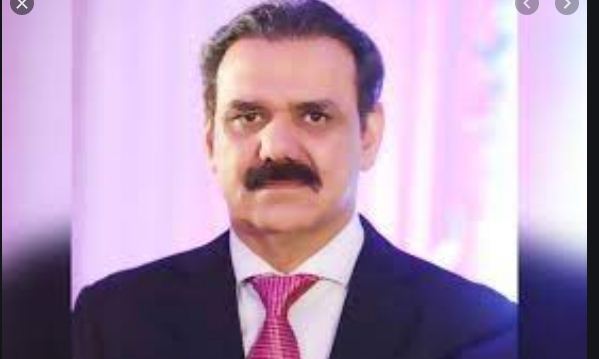
Work on 103km Nokundi-Mashkhel Road started: Asim Bajwa

ISLAMABAD, May 23 (DNA): Chairman of China Pakistan Economic Corridor (CPEC) Authority Lt. General (retd) Asim Saleem Bajwa on Sunday said that work on 103km Nokundi-Mashkhel Road has been started.

In a post on social-networking platform Twitter, the CPEC chairman said that the detailed design of Mashkhel-Panjgur Road (200 km) in process.

He said the entire remote region of Balochistan would be opened by connecting N-40 with N-85 and M-8 (Western Route of CPEC)-linking the Chagai-Nokundi Sector with Gwadar.

The Chairman said Gwadar port was becoming a hub of economic activities under the mega project of CPEC.

Meanwhile, an official of CPEC Authority said that the development of roads in South Balochistan was a key priority of the government to improve connectivity of Gwadar with North. He informed that about 60 percent construction work of Basima-Khuzdar road had been completed while construction of Hoshab Awaran road had also been started.

“Prime Minister’s vision of uplifting remote areas especially South Balochistan is being realized,” he added.

The 146 kilometers Hoshab-Awaran project is an integral part of China Pakistan Economic Corridor (CPEC) Central Alignment which connects Gwader Port with the Sindh Province. The project is expected to be completed in three years at an estimated cost of Rs 20 billion.

Similarly the Basima-Khuzdar road (N-30) is 106 KM long having a cost of Rs11.749 billion. This project is expected to be completed by end of current year.

With respect to the completed road projects under CPEC, the official told APP that the 449 KM Quetta to Hoshab road (N-85) had been completed and was operational while the 235 KM long Surab-Quetta (N-25) road had also been completed and was operational.=DNA

==============

CHAIRMAN CDA INSPECTS VARIOUS DEVELOPMENTAL SITES

DNA

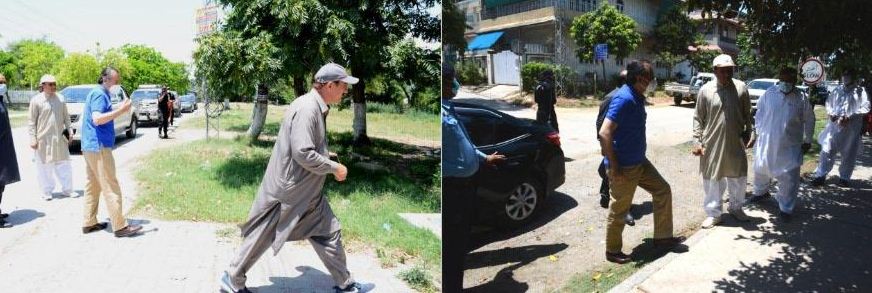
ISLAMABAD: Chairman, CDA visited Srinagar Highway , Sector I-10 and steel Market I 10/3to inspect the progress on various development, rehabilitation works related to roads, parks, Sanitation,  sewerage, sanitation and water supply in these areas.

 During the visit, the Chairman CDA directed to increase the number of garbage trolleys .He further issued orders to place waste  bins along water filtration plants.

 DDG water was further  directed to ensure availability of water to the residents and proper functioning of filtration plants also be ensured.

 Chairman CDA also inspected the ongoing Nullah cleaning drive. DG Civic  Management was instructed to expedite the nullah cleaning works besides completion of works related to connection of sewerage lines to the main trunk.

During the inspection, The Chairman showed displeasure on non-resumption of carpeting works and directed the concerned formation that the same must be started immediately.

Overall progress of  various formations was found satisfactory,however, the chairman  directed that the pace of works should continue and all out efforts be made to provide better  services to the residents.

PALESTINE ENVOY INDEBTED TO PAKISTAN FOR HUGE SUPPORT

Ansar Bhatti

ISLAMABAD, MAY 23 (DNA) – Ambassador of Palestine to Pakistan Ahmed Rabei has expressed his gratitude to the people and govt of Pakistan for extending whole-hearted support to Palestine during war with Israel.

In a special message issued on Sunday Ambassador Ahmed Rabei said on behalf of the Palestinians I express my sincere gratitude to the brotherly People of Pakistan, all respect to the Prime Minister, Foreign leaders of the parties, for their courageous efforts to support Palestine.

He said he wanted to convey his heartfelt gratitude for their support to the Palestinian people. ‘Your efforts are greatly admired regarding convening of the emergency session, cease-fire, de-escalation and an end to atrocities’.

This historical act will be remembered, not only by the entire world, but it will be a history to remember for generations.

He expressed gratitude for Pakistan’s remarkable role while urging the international community to take concrete and immediate steps for resolution of the issue.

The ambassador greatly appreciated Pakistan foreign minister for speaking up and pushing for an emergency session of the OIC meeting and UN General Assembly. Pakistan played an important role in building, steering the discussion and building a consensus.

He said Palestine will never forget the Soidarity Day observed on May 21 on the call of the Prime Minister of Pakistan Imran Khan, when the entire Pakistani nation expressed solidarity with Palestine. He said they owe a great deal to the Prime Minister of Pakistan.

The Ambassador also thanked all those delegates hailing from various walks of life that visited the Palestine embassy and expressed solidarity. He especially thanked the parliamentarians who came to see him to express unity. The ambassador said it was indeed a great brotherly gesture, which the people of Palestine will never forget.

Ambassador Rabei said though war in Gaza has ended, yet our struggle for two-state solution shall continue. He hoped Al Aqsa mosque shall been free from occupation and we shall inshallah pray together in the Mosque, which is our Qibla-e-Awwal.=DNA

============

EXPERTS DISCUSS TALIBAN ROLE IN FUTURE AFGHAN GOVT

CGSS ED Khalid Taimorr moderates the session

Mahnoor Ansar

ISLAMABAD: Prof. Mehmet SukruGuzel, ANKASAM Representation in Geneva (Switzerland) has stated that from a terrorist organization to a Non-state armed group there must be some changing. He elaborated in detail about the United Nations Security Council (UNSC) resolutions on Afghanistan, Taliban and US-Taliban peace deal of 2020. Mr. Mehmet stated that Taliban accepted the binding of UNSC resolutions. However, the legal team of Afghanistan are making mistakes by not fulfilling the agreed resolutions of the accord.

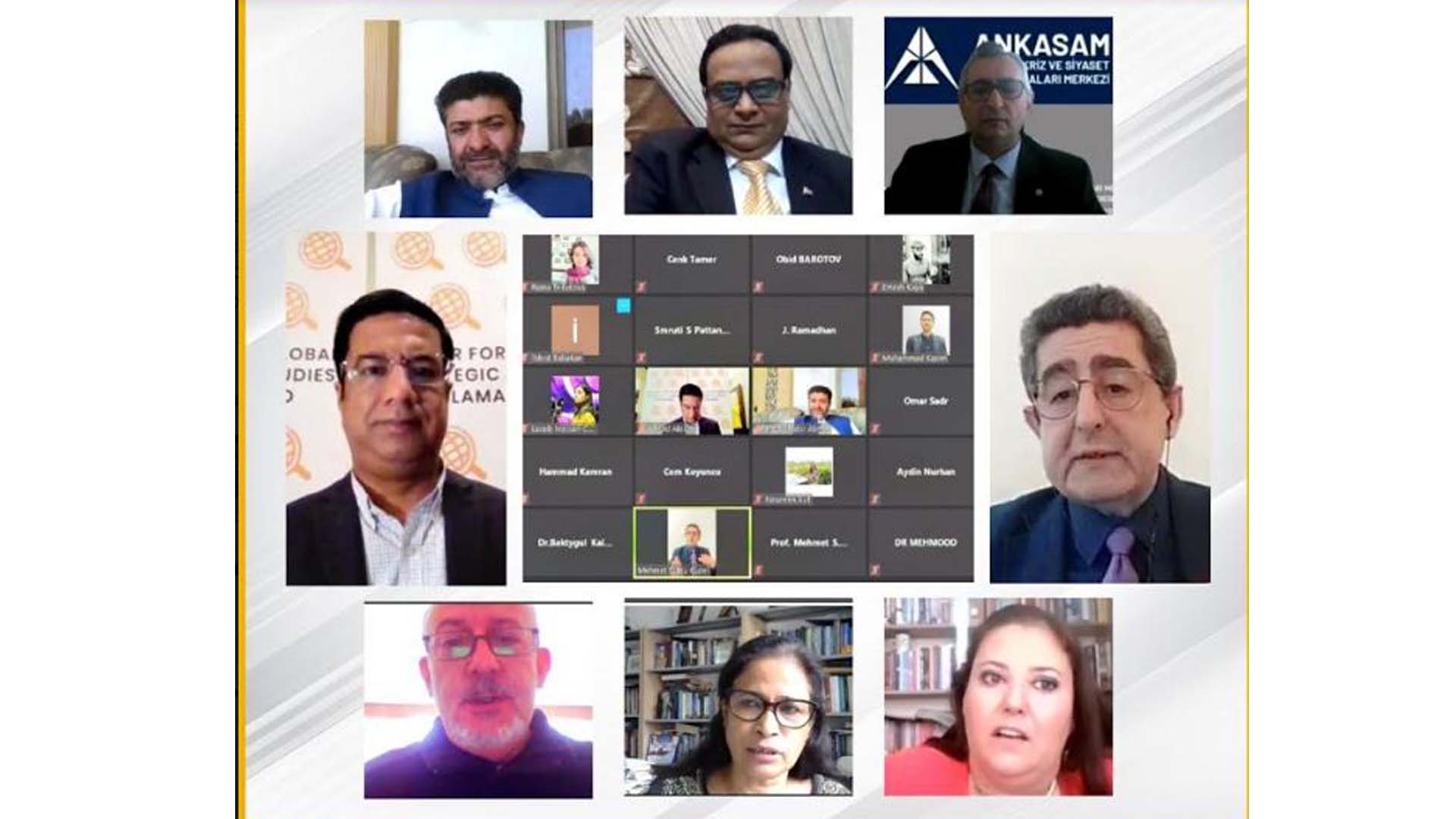
He expressed these views during the Second Session of the Two-Day Online International Conference on ‘’ The Rise of Asian Geopolitics and Terrorism at the Threshold’’ Conducted by Ankara Center for Crisis and Policy Research (ANKASAM),Turkey

While briefing on two preambles of UNSC, Prof. Mehmet explained that in first preamble the Taliban are defined as the terrorist organizations and in second preamble, Para 6, they are put into the peace negotiation. He concluding by stating that the Taliban need to understand and have to obey the UNSC resolutions as it is binding and they have to fulfill their responsibility for a better solution.

Asst. Prof Ali BilginVarlik, Colonel ®, Istanbul ArelUniveristy (Turkey) discussed ‘’Afghanistan, Towards Reconciliation or a failed state?’’. He gave brief presentation on the topic and discussed historical and contemporary perspective of Afghanistan. He stated that Afghanistan has been a country of power struggle between the regional and global powers. Therefore, the reconciliation process will change the position of country. There are geostrategic, geopolitics, energy-politics and cultural dimensions of Afghanistan. He stated that it can be consider a potential country as it has colorful human geography. Mr. Ali comprehensively discussed the economic indicators of Afghanistan. He stated that the all the fundamental indicators are interrelated in Afghanistan. Therefore,themain indicators according to him will be the vacuum authority as US withdrawal its forces. Mr. Ali stated that in the absence of secular political life, a state always fails. Therefore, with the rise of Taliban,irreversible conditions will likely to prevail. He concluded by saying that complete US withdrawal would make Afghanistan a total fail state. There would be consequences of the withdrawal, however, can provide short to medium-term benefits.Regional instability may hamper China’s BRI or create internal issues that may trigger security problems for adjacent countries.

Dr. Mehmood ul Hassan Khan, Member Board of Experts, CGSS, (Pakistan) talked about ’Central Asia and Afghanistan in the Rise of Asian Geopolitics’. He explained in detail about the changing dynamics of the region. He gave profound analysis on the US incumbent government’spolicies regarding the complete withdrawal. Dr. Mehmood highlighted the role of Pakistan to support the Afghan cause and playing a pivotal role in the socio-economic reconstruction of Afghanistan.He explained that dream of regional connectivity has been battling out in Afghanistan during last decades.

Prof. Dr. Shabir Ahmed Khan, Member Board of Experts, CGSS & Director, Area Study Center (Pakistan) shared analysis on ‘’peace prospects in Afghanistan’’. While elaborating the prospects, Prof. Shabir stated thatthe Doha peace process has provided historical opportunities to the Afghans to reach a consensus for power sharing and achieve sustainable peace. Dr. Shabir elaboratedthree main options for resolving the power sharing issue. First, the incumbent government should become a part of the Taliban dominant government as an inclusive political settlement with modifications in present constitution not entirely replacing it with new one. Second, an interim setup in consensus through intra-Afghan negotiation for a specific period followed by election. Third, Taliban become part of the current government. Dr. Shabbir stated that among these options, the third one seems quite difficult as the emboldened Taliban may not opt for becoming part of the current government. According to Dr. Shabbir, Taliban are inspired by forcing US/NATO to come to negotiations.  They consider the US/NATO and Kabul regime intend to win a war on table which they have lost on grounds. Therefore, Taliban seems not averse to first and second options. Prof. Shabbir, while concluding his speech stated if any of these options agreed upon by the Afghan new political setup and ceasefire to end the violence, shall be declared and practiced upon simultaneously. It is obvious that without reaching to a consensus on a new political setup there will be no end to violence.

Earlier, Khalid TaimurAkram, Executive Director, Center for Global & Strategic Studies (CGSS), Session Chairperson and Moderator, extended his appreciation and gratitude for the Ankara Center for Crisis and Policy Research (ANKASAM) for timely organizing the conference and highlighting crucial matters of concern for the international community.

Khalid during his speech on ‘’Central Asia, Pakistanand Afghanistan in the Rise of Asian Geopolitics’’ briefly discussed the significant imperatives. He stated that regional connectivity is the main element of changing states’ alignments and partnerships. In this multipolar world, the states are more inclined to cooperate and, therefore, avoid confrontations as it hampers economic development, peace and security. Mr. Taimur gave his analysis on the major shifts in the Asian geopolitics. He stated that with the rise of Asian geopolitics, different aspects of cooperation have emerged. Wider regional collaborations and realignments are now shaping bilateral or multilateral relations among countries. He comprehensivelyhighlighted the role of Turkey and Central Asian states in the socio-economicdevelopment of Afghanistan and praised their extensive support to bring peace in to region.Mr. Khalid stated that the Afghan endgame is now precipitating significant re-alignments and repositioning by major powers at the regional level and beyond.Mr. Taimur also suggested three main aspects related to the comprehensive work in the Afghan peace process that can be arranged in three areas.

While concluding, Mr. Khalid stated that the cooperation that began with economic assistance can lead to partnership and collaboration in many other domains. Therefore, exploring grounds for joint ventures and enhanced cultural exchanges would curtail differences and prejudices, increase people-to-people contacts, and benefit all states.

RESUMPTION OF WORK ON PAK-IRAN GAS PIPELINE PROJECT WILL REVOLUTIONIZE ENERGY SECTOR: KHWAJA RAMEEZ

ISLAMABAD, May 23 – PM L-Q Punjab Deputy Secretary Information Khawaja Rameez Hassan while addressing a video link meeting on Pak-Iran relations said that US sanctions are a conspiracy to weaken the region.

Economic ties with existing friendly countries need to be further strengthened. He said that resumption of work on Pak-Iran gas pipeline project would bring about a revolutionary change in the energy sector. The opening of new borders with Iran will further improve.

THE EFFECT OF CYBER THREATS IN E-BANKING

Wajeeul Hassan Rizvi

There is a cyber war happening from last few years across the globe. Everyone is trying to gather as much data as they can to use it for their benefits. This all is happening due to the rapid growth in technology across the world. Technological advancement has been observed in every field of life across the globe, no matter whether it is manufacturing, retail or Service Company. One will find the technology there; same is the case of financial sector.

Due to the ongoing pandemic of Covid 19, everyone is looking for the modes which do not involve human interaction physically. The financial sector has been introduced with the paper less transaction like micro finance banks and online payments for almost everything. We all know that every new advancement comes with both advantages and disadvantages, the major problem arose in the financial sector is the cybercrime in which many people have faced severe monetary losses.

Cyber crime has become one of the major concerns for financial institutions in 21th century, especially when everyone is using the e-banking options for their respective banks that can impact both reputation and customers reach of the financial institutions. The report of the world cybercrime expected the cost of $100 Billion yearly and it is expected to increase up to $25 Trillion in next ten years. There are many ways used by the hackers for the crime. In Pakistan, increased number of cases has been reported during the pandemic.

Pakistan does not have that much of advancement in the financial sector but still there are many problems faced by the e-banking users in which scammers took a lot of money from them by using the tools of e-banking services. The main victims of these crimes observed are the labor class or illiterate class of the society. Micro – finance platforms like JazzCash, EasyPaisa etc. are the main targets of the hackers to take money out of the accounts.  Financial institutions must take measures to make the users feel safe, otherwise many micro-finance banking users will be keeping the cash in liquid form that does not help the economy to grow.

To prevent this crime, regulatory bodies and financial institutions must work together. The first step must be educating the user about the security protocols and how their security can be breached like OTP and Security verification code etc.  The labor class or most of the users of micro finance does not have the confidence to use the platform in Pakistan that leverage the scammers with a good opportunity to perform the crime also the password strength and its importance should be communicated to the user by the financial institutions.

The cyber crime cannot be eradicated completely from any sector because of the rapid change in information technology all across the world but the risk can be minimized on the individual level by taking the appropriate steps. These steps should be communicated with the user.

The writer is a student

PERFORMANCE OF MICRO, SMALL AND MEDIUM ENTERPRISES

Qurat-Ul-Ain Siddiqi

MSMEs are backbone of many economies worldwide as they provide income and employment generation to a large number of people around the globe. In the case of Pakistan, MSMEs are considered as crucial for economy as they contribute 40% of the GDP with over 40% to export earnings.

These businesses represent a significant portion of manufacturing, retail, wholesale, trade, agriculture and service sectors and spread all over Pakistan in urban and rural areas. Due to COVID-19 lockdowns and outbreaks, Pakistani firms are facing unusual adverse effects on their businesses. According to United Nations Conference on Trade and Development report, Pakistan is the hardest-hit by the global pandemic of COVID-19. The ongoing pandemic crisis is severely hampering the operations of MSMEs businesses because they are highly dependent on cash economy which has been adversely affected by the pandemic. Besides this, the shortage of raw materials, the unavailability of labors, slowdown of productions and transportation restrictions will have major impact on the national economy as a whole.

 Pakistan has also witnessed several similar crisis in past such as climate change, earth quakes, flood and draught that severely affected many businesses. MSMEs have limited resources and capabilities to recover from such crisis especially those in developing countries like Pakistan with economic and political instability and high poverty rate. The first case of COVID-19 in Pakistan as reported on February 26th 2020. From March 15-25, 2020 the number of confirmed cases has started rising rapidly. Since then, the cases are growing exponentially day by day in different areas of the country. It has been reported that Pakistan has lost one-third of its revenue and exports dropped by 50% due to COVID- 19 outbreak and lockdown.

The World Bank also warns that Pakistan might fall into a recession. Due to ongoing crisis caused by COVID-19 pandemic, Pakistan’s GDP growth for FY20 may contract by 2.2% before just recovering to 0.3% growth in FY21. Due to lockdown, out of 2700 factories in Karachi, less than 50 were operating on the first working day.

There are around 05 million people in Pakistan who live just at or below the subsistence line while there are a large number of unskilled or low-skilled people such as labor, construction workers, transport and domestic workers who works in different industries, agriculture and services sectors that rely on daily wages to meet their needs.

These daily wagers have been hardest hit by the lock downs. After them, there is a class of micro enterprises such as shop owners, street vendors and household businesses who heavily rely on their micro business. These micro enterprises are considered as a part of informal economy and they are facing severe outbreak of COVID-19. After micro enterprises, many small and medium enterprises are also facing huge issues. For instance, textile and apparel industry has been affected mainly due to imposition of lockdown.

In the same way the agriculture sector is no exception. Due to non availability of transport and labor, this sector also faced several issues. The closure of businesses and disruption of national supply chains have a major impact on wholesale, retail, transport, warehousing and communications services. Most importantly clothing, saloons, food, electronics and shoes businesses among others are severely affecting due to this pandemic. These small and medium businesses are expected to face liquidity issues and hardly hit by ongoing crisis.

Those firms that are still operating their businesses are facing extra cost to buy gloves, masks and sanitizers among others in terms of managing health and safety of employees. Further, due to COVID-19, Pakistan’s currency has been devalued which poses another threat for the businesses.

 Due to the ongoing crisis and lock down, the unemployment rate in Pakistan is expected to reach 5% by the end of year 2021. The impact of corona virus on the global and Pakistani economy will leave deep scars.

Embassy of Indonesia explores Digital Diplomacy with RINSTRA Technologies

Staff Report

ISLAMABAD: Ambassador Adam Tugio met CEO RINSTRA Technologies, Mr. Jahangir Amir on May 21, 2021. During the discussion collaboration between the Embassy and RINSTRA to jointly produce documentaries, organize film festivals for digital viewing and content competition on various thematic areas involving academic institutions of Pakistan and Indonesia were explored.

CEO RINSTRA Technologies informed the Ambassador that RINSTRA was Pakistan’s first short-form digital media platform for on-demand streaming and for creation of user generated original content on iRINSTRA. “RINSTRA also provided entrepreneurship opportunities to emerging and established content creators and film makers in Pakistan and beyond”, Mr. Jahangir Amir added.

Ambassador Adam Tugio expressed his pleasure to meet CEO RINSTRA Technologies, Mr. Jahangir Amir and underscored the importance of Information Technology platform not only for business communities but also for bringing Indonesian and Pakistani to get more closer during the pandemic. “IT platform will allow constant and intensive communication between people of the two countries, particularly millennials of the two countries who are technology savvy and active social media users”, Ambassador Tugio added. He further underlined that digital platforms and technology solutions were imperative for growth in economic ties between countries around the world. The Embassy has just organized Virtual Trade EXPO last month and were pleased by the positive response it gained from business communities, and outcome of this Virtual EXPO.

The Embassy and RINSTRA will continue discussion to identify digital contents to start collaboration.

PAKISTAN STRONGLY CONDEMNS CONTINUOUS USE OF AFGHAN SOIL BY TERRORISTS

RAWALPINDI, MAY 22 (DNA) – Terrorists from inside Afghanistan across the International Border, opened fire on a military post in North Waziristan District.

Own troops responded in a befitting manner. However during exchange of fire, Sepoy Umar Daraz, age 32 years, resident of Jhang, received a bullet injury and embraced shahadat.

Pakistan has consistently asked Afghanistan to ensure effective management and control on their side of the Pak-Afghan Border. Pakistan strongly condemns the continuous use of Afghan soil by terrorists for activities against Pakistan.

Stay Connected

64FansLike
60FollowersFollow

Latest Reviews

Exchange Rates

USD - United States Dollar
EUR
1.14
GBP
1.34
AUD
0.70
CAD
0.71