ISLAMABAD – In response to media queries regarding the statement made by the Indian State Minster for External Affairs in the Indian Parliament, regarding the Jammu and Kashmir dispute, Situation in Afghanistan and the China Pakistan Economic Corridor (CPEC), the Spokesperson stated:
We categorically reject baseless and irresponsible remarks made by the Indian State Minister for External Affairs.
Regurgitation of false and fabricated claims by India can neither change the facts nor divert attention from India’s illegal occupation and human rights violations in the Indian Illegally Occupied Jammu and Kashmir (IIOJK).
Jammu and Kashmir remains an internationally recognized dispute, pending resolution in accordance with the UN Security Council resolutions and the wishes of the people of Kashmir.
India has no locus standi whatsoever on the China Pakistan Economic Corridor (CPEC), which is a flagship project under the Belt and Road Initiative (BRI). It promises socio-economic uplift and regional connectivity. No amount of Indian machinations or propaganda can undermine the significance of CPEC for peace, development and prosperity of the region.
As for Afghanistan, rather than expressing fake concern for the country, India would be well-advised to stop peddling the delusional ‘contiguous neighbor’ fiction; to remind itself that its role as a ‘spoiler’ in Afghanistan is well-established; and to focus on course correction.
KARACHI, JUL 24 /DNA/ – “Sarmad Ali, President and Nazafreen Saigol Lakhani, Secretary General of the All Pakistan Newspapers Society have expressed profound grief on behalf of APNS Office Bearers and members of the Executive Committee over the sad demise of mother of Sheikh Iftikhar Adil, Chief Editor, Asas Group of Newspapers and grandmother of Barrister Sheikh Danish Iftikhar.
The APNS offered condolence to the bereaved family and prayed that Almighty Allah rest the departed soul in eternal peace and give them courage and patience to bear the loss. DNA
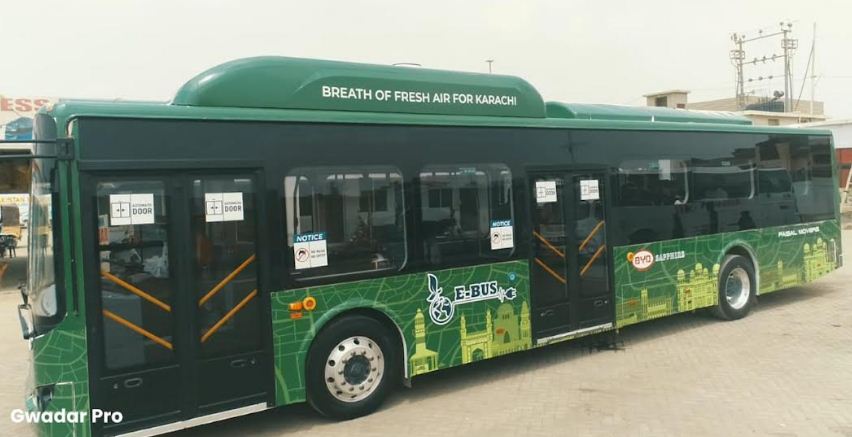
Islamabad, July 24 (DNA): BYD China, the world’s leading electric vehicle manufacturer, has joined hands with Pakistan’s Sapphire Group for market development and manufacturing of electric vehicles in the country.
According to a Gwadar Pro’s report, the first electric bus was imported in Oct 2020 to Pakistan from BYD, and the E-bus has made its debut and started operations in Karachi in March this year.
Sapphire is running this bus in partnership on a 36 km two-way existing route. The idea is to scale up the number of EV buses to 100 in Karachi.
Talha Tariq, Project Manager (Business Development) Sapphire Energy Pvt, said that electric vehicles were introduced due to global warming and climate change.
“In Pakistan, we have introduced them and this is the future. This is a way to switch Pakistan from hydrocarbon fuel to electric vehicles for transport,” he said.
Since several months have passed after E-bus started operation, the 12-meter-long bus, with 35 passenger seats, has received positive feedback from local passengers.
According to a passenger, “The bus is air-conditioned and the handicapped with a wheelchair can easily sit here. It is a unique thing that we have not seen in other buses.
“As the climate of Karachi is very hot so there is AC in the bus. The mask and hand sanitizer are available on the bus. The service is good,” a passenger Mushtaq Ahmad said.
“There is no tiredness felt in it. There is no pollution of any type. There is no smoke, no diesel, no noise. It is such a silent vehicle that we perform our duty peacefully,” said Afaq Ahmad, an E-bus driver.
As per Sapphire Group, the operational cost is going to be lower than half of the routine buses running in Karachi. The bus has an improved capacity of 324 kWh (kilowatt-hours) and a range of 250 km in one charge with full load under regular city traffic. At a cost of Rs20/Kwh, the running cost will come at Rs26/km and will do six rounds in full charge.
As in Lahore, Karachi, Islamabad, Rawalpindi, there is transportation congestion going on, the way diesel buses are functioning is again being reviewed. Some believe the rise of E-bus in the city can be a solution to transport jams as well.
What E-bus has brought to Pakistan is more than a better life for locals. As Ahmed Jaudet Bilal, director of strategy and special projects, Sapphire Group, put it, “basically what we are trying to do is that we want to electrify the transport system in Pakistan as a strategy.”
Pakistan’s annual import of oil and gas accounts for about 80%. “If all 240,000 buses in Pakistan were changed into electric ones, it would save a lot of fuel, and the dependence on imports will be largely reduced. 40-50% of traffic emissions pollution can be lessened,” said Liu Xueliang, General Manager of Asia Pacific Auto Sales Division, BYD
With regards to renewable energy, Liu particularly mentioned the potential in solar energy. Pakistan enjoys sunlight more than 3,000 hours a year on average, with Baluchistan getting sunlight 8 to 8.5 hours per day, which stands out in global terms.
Liu also mentioned E-bus’s function as a tool for balancing power networks. Now the E-bus can run 250 to 300 kilometers on a full charge which requires about four hours.
As the country’s overall electricity usage is at a peak during the day and low at night, charging at night can help keep a balance, and in return can send out power when an emergency occurs.
“Thus the EVs not only affect your travel but also change living habits, providing a good tool for a comprehensive energy structure of the country,” he said.
Rather than offering a single product, BYD aims to provide a full range of technologies and products for national industrial development. “With electrified public transportation in place, a new ecological chain will be developed.”
“We have a plan to add more buses on our routes and other different routes as well. Similarly, we will look at Lahore, Peshawar, Sialkot, Multan, and other big cities and will start electric buses there,” he said.
Liu Xueliang, on the other hand, mentioned that after E-bus’s running for some time, they’ll adjust facilities according to market feedback. Besides, after-sales service such as spare parts supply and maintenance will be improved.
ISLAMABAD, JUL 24 (DNA) – Sardar Yasir Ilyas Khan, President, Islamabad Chamber of Commerce & Industry (ICCI) emphasized the government to improve the taxation system to increase the number of taxpayers instead of putting more burden on the existing taxpayers. He said that the business community is contributing significantly in the tax revenue generation and as a result this year FBR achieved a historic level of tax revenues of Rs.4732 bn in 2020-21 – surpassing the target of Rs 4691 bn which is 18% higher than last year.
The President ICCI said that the government should fully automate the taxation system to reduce people to people contact and take initiatives to make the taxation system easier for the taxpayers. He said that businessmen are paying huge amount of taxes but their contribution to the economy is not acknowledged and they are also not incentivized accordingly. Sardar Yasir said that with easing out of the taxation system and giving incentives to taxpayers, the tax net could be increased manifolds which would also help in releasing the pressure on the existing taxpayers.
President ICCI said that in order to incentivize the taxpayers and to increase the tax base, the government should allow self-assessment programs and mechanism, in which people would be willing to pay taxes based on their own comfort level. He added this will allow several taxpayers to become a part of the tax net which will increase the tax base.
He said that Islamabad Chamber of Commerce & Industry has been recommending to the Government time and again for introducing the fixed tax policy linked with self-assessment scheme, which was the only way to decrease the trust deficit. The President said that the POS system is unfortunately creating distrust among the traders which were installed in good faith, and recommended that government through chambers of commerce and industry should take the business community on board and FBR must conduct seminars to give orientation to taxpayers for filing tax returns, Weboc system and several other aspects etc.
Sardar Yasir Ilyas Khan stressed that FBR should facilitate the taxpayers by introducing special counters for business community at airports, NADRA, CDA, RDA and important government departments to give them priority and preferential treatment, and as a business community will feel honoured that they are being treated with respect and their contribution in the economy is acknowledged. He further suggested that the government should also introduce special cards like Gold, Silver and Platinum for different slabs of taxpayers to give them respect and treatment like Federal Ministers.
President ICCI said that for better and sustainable outcome of policies, the government should keep the Chambers of Commerce and Industry & Associations in loop in the consultative process. Sardar Yasir Ilyas Khan President ICCI assured the cooperation of the business community to the government for achieving the next year’s tax revenue targets. However, he emphasized that FBR should be businessmen friendly and provide incentives to taxpayers and make timely payments of refund cases.=DNA
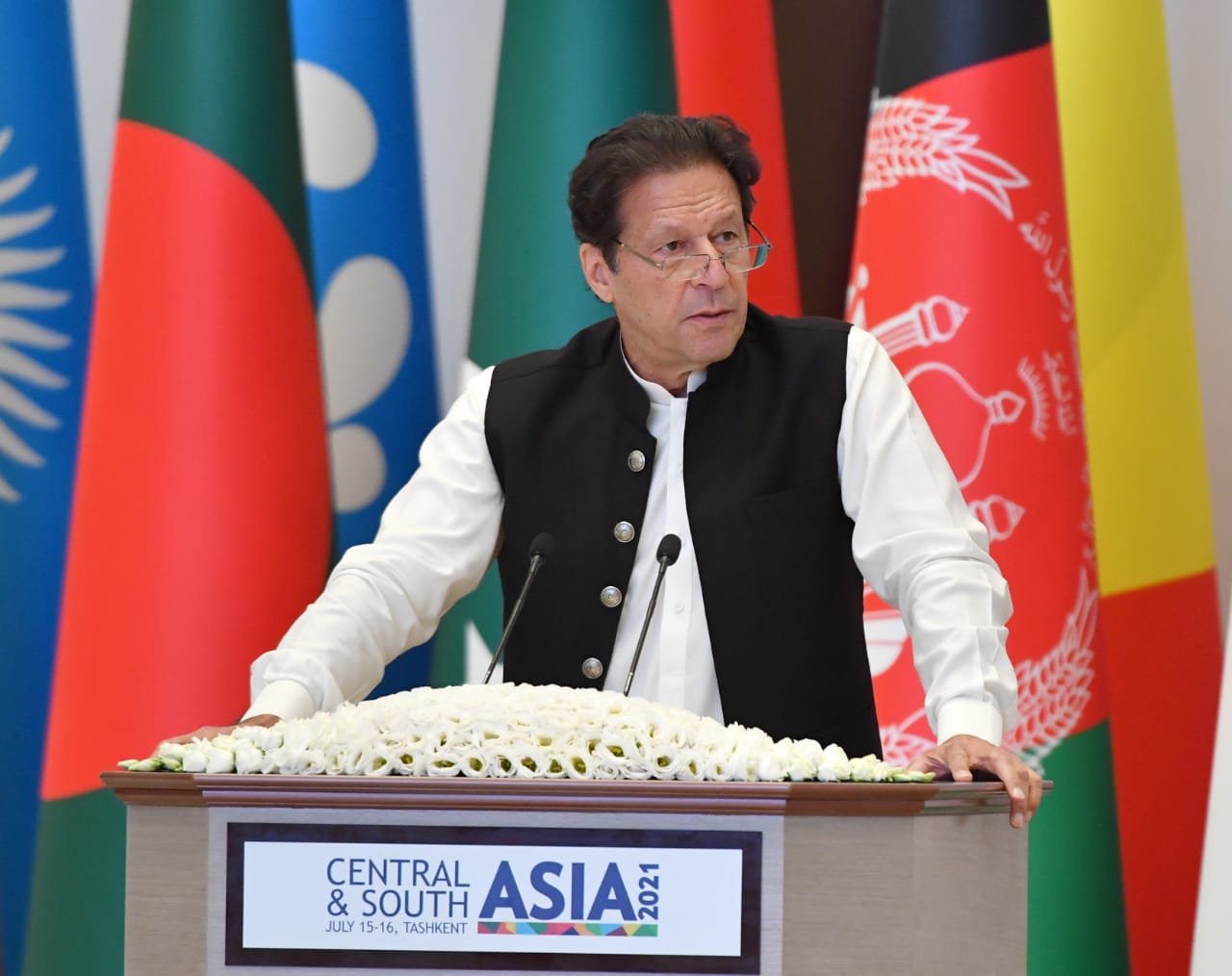
On July 15-16, 2021, a high-level International Conference “Central and South Asia: Regional Connectivity. Challenges and Opportunities” was held in Tashkent, organized on the initiative of the President of the Republic of Uzbekistan.
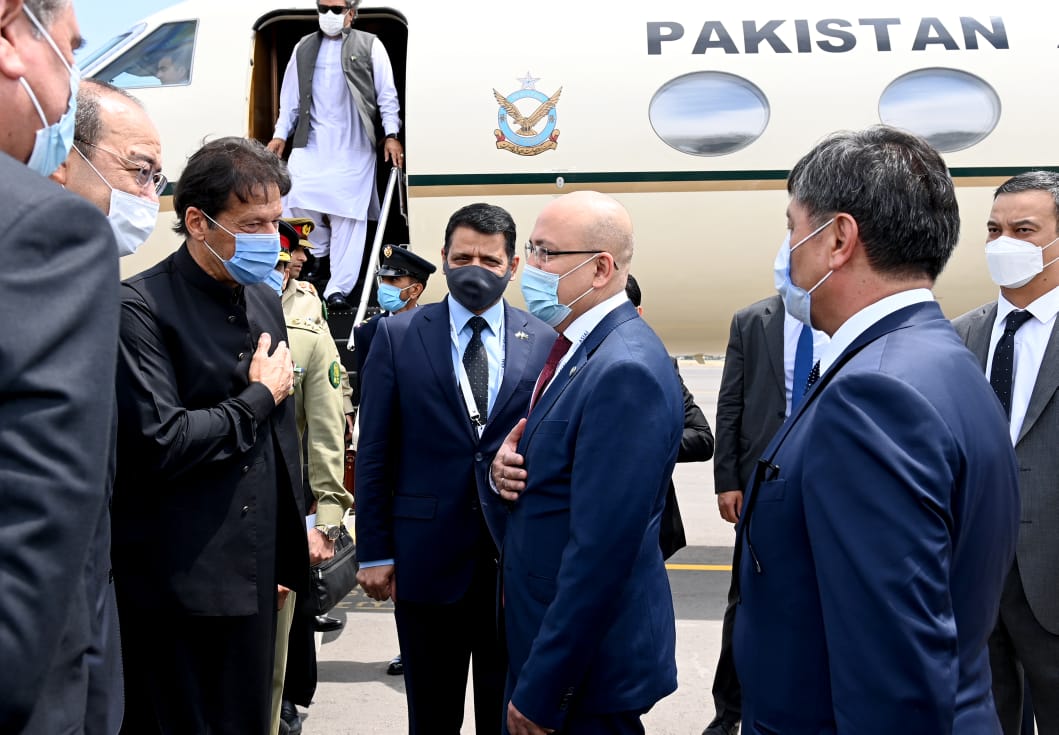
The conference was attended by Prime Minister of Pakistan Imran Khan, President of Afghanistan Ashraf Ghani, heads of foreign ministries of Central and South Asia and other regions of the world, heads of leading international organizations, financial institutions, investment funds and companies, as well as world research and analytical centers.
Deputy Minister of Foreign Affairs of Uzbekistan Furkat Sidikov spoke about the main goals and objectives of the conference, as well as the significance and results of the official visit of Prime Minister of Pakistan Imran Khan to the country
– First of all, I would like to emphasize that the first official visit of Prime Minister of Pakistan Imran Khan to Uzbekistan and his participation in a major international forum on the interconnectedness of Central and South Asia opened a new era of bilateral partnership and interregional cooperation.
As President of Uzbekistan Shavkat Mirziyoyev stressed during the talks in Tashkent, Pakistan is our time-tested and reliable partner. The relations between the two States are based on mutual respect and trust. Despite the current difficult situation, our cooperation is developing at a dynamic pace, and we are interested in further expanding ties in all areas.
During the exchange of views on topical issues of the regional and international agenda, the heads of the two states confirmed the coincidence or proximity of the positions of the parties. It was stressed that Uzbekistan and Pakistan, as close neighbors of Afghanistan, are interested in establishing peace and stability in this country, which will contribute to the formation of transport routes, accelerated development of trade and economic ties in the region. The issues of increasing mutual trade turnover, establishing air cargo transportation, providing mutual benefits and preferences were discussed. The issues of ensuring regional security and strengthening military-technical cooperation were also considered.
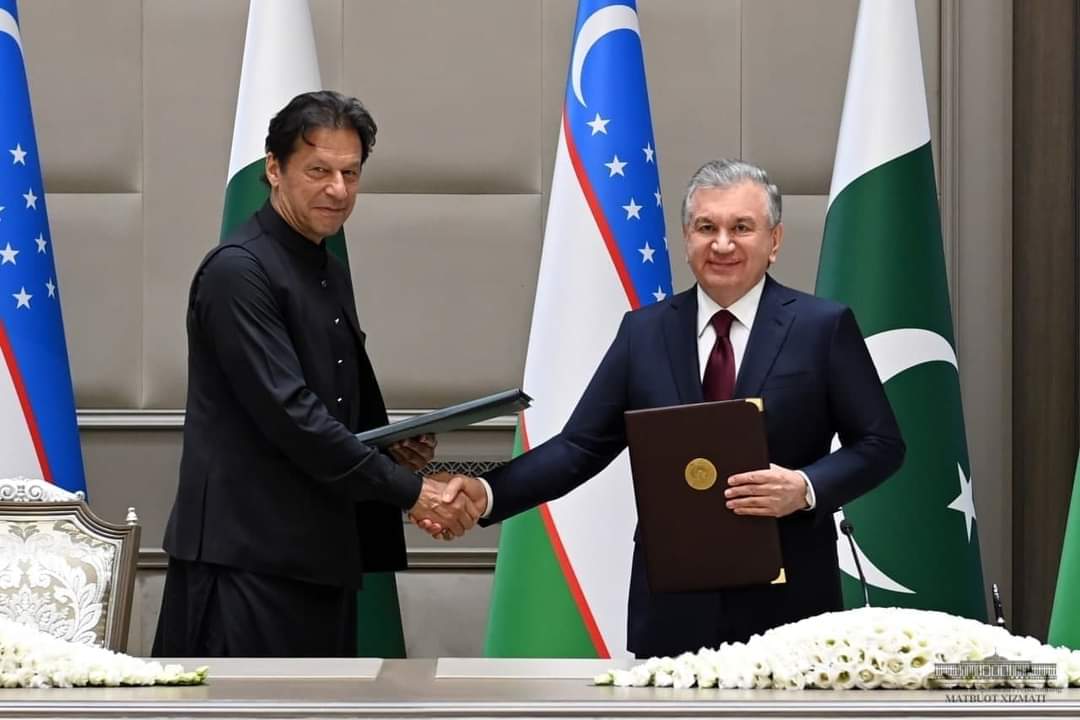
Following the talks, President Shavkat Mirziyoyev and Prime Minister Imran Khan signed a Joint Declaration on the establishment of a strategic partnership between the Republic of Uzbekistan and the Islamic Republic of Pakistan.
8 documents were also signed, including intergovernmental agreements on transit and trade, simplification of visa procedures for representatives of business circles and tourist groups. They also signed a protocol on cooperation in the field of military education between the Ministries of defense of the two countries, a Program of cultural exchanges for 2021-2026, a Memorandum of understanding on tourism, a protocol on the exchange of preliminary information on goods and vehicles crossing the state border, as well as a Memorandum of Understanding between the University of World Economy and Diplomacy and the Pakistan Academy of Diplomatic Service, an agreement on the establishment of the Uzbek-Pakistani Business Council.
In addition, following the meeting of the Intergovernmental Commission and the Uzbek-Pakistani business forum, held on the eve of the visit of the head of Pakistan to Tashkent, agreements worth $ 500 million were signed.
It is worth noting that in recent years, the bilateral dialogue and contacts have noticeably intensified. The meetings of the President of Uzbekistan Shavkat Mirziyoyev and the Prime Minister of Pakistan Imran Khan in Beijing and Bishkek in 2019, the online summit of leaders in April this year opened new prospects for interstate cooperation. As a result of mutual visits at the level of governments and regions, bilateral relations are filled with practical content.
Participation of the two heads of state in the international conference ” Central and South Asia: Regional Interconnectedness. Challenges and opportunities ” was a confirmation of the high mutual interest in the development of investment and economic cooperation, the implementation of the transport and transit potential of the countries of the two regions, the strengthening of cultural and humanitarian cooperation.
The initiative to strengthen regional connectivity was proposed by President Shavkat Mirziyoyev in the context of Tashkent’s new foreign policy strategy aimed at turning Central Asia into a region of security, stability and sustainable development integrated into the world economy.
As you know, South Asia is a region that is historically closely connected with Central Asia in economic, social, cultural and civilizational dimensions. Located at the crossroads of the Great Silk Road, these two regions have contributed to an active dialogue between peoples and civilizations for many centuries. Unfortunately, in the nineteenth century, due to historical circumstances, the interconnectedness of the two adjacent regions was violated.
Today, when the world has entered the era of global geopolitical transformations that bring both challenges and new opportunities, the revival of mutual relations between Central and South Asia is becoming an even more popular and objective process.
As the President of Uzbekistan stressed at the opening of the conference, the time has come, based on the huge historical, scientific, spiritual and cultural heritage of the peoples of the two regions, the complementarity of the economies, the availability of intellectual potential, to consolidate joint efforts, which will undoubtedly give a powerful synergy effect.
At the same time, it is important to note that the growth of trade turnover with Pakistan and other South Asian countries largely depends on the creation of reliable routes for the delivery of goods. Following the results of the Uzbek-Afghan-Pakistani high-level talks held in February 2021 in Tashkent, a Joint Action Plan (“Road Map”) for the construction of the Mazar-i-Sharif-Kabul-Peshawar railway was signed. This railway project occupies a special place and will significantly reduce the transport costs for the delivery of goods between the countries of the region.
Thus, the main promising areas of cooperation between the countries of Central and South Asia are new transport corridors that provide access to the southern seaports of the countries of Central Asia, cooperation in the energy sector (electricity exports), promotion of mutual investments, as well as the expansion and diversification of foreign trade.
The implementation of transport and energy projects on the territory of Afghanistan, which is a bridge between the two regions, will create conditions for expanding opportunities for building trade, economic and investment ties, strengthening transport and communication cooperation between the countries of Central and South Asia.
In general, the practical implementation of Uzbekistan’s plans for interconnectedness can create a new economic reality in two regions at once, creating the most favorable soil and all the necessary conditions for the inclusive economic development of the Central and South Asian states.
The writer is the Deputy Foreign Minister of Uzbekistan. He has also served as Uzbek ambassador to Pakistan.
ISLAMABAD: The Association of Former Ambassadors (AFA) strongly condemns the gruesome killing of the daughter of former Ambassador Mr. Shaukat Ali Mukaddam and calls for an exemplary punishment for the murderer of Ms Noor.
In a Press Release over 100 former Ambassadors, members of
AFA noted with disgust and horror the brutal and heinous crime and called upon the
Chief Justice of Pakistan to take a notice of it to ensure that justice is done.
Meanwhile, Police and Prosecutor should get hold of all previous medical and
criminal record of the culprit. Supervision of this case would help reduce alarmingly
high crime against women in Islamabad.
The Association appreciated the personal message of support from the Foreign
Minister to the bereaved family that the culprit would be brought to justice. The
Foreign Secretary lent his support by attending the funeral. Nevertheless, the
Association apprehends that the murderer may be made to escape the country using
his dual nationality. Therefore, the Association demands that his name should be
placed on the ECL to ensure that he does not use his family influence and power to
slip away from the country. It is imperative that justice be served.
ISLAMABAD, JUL 23 (DNA) – The bodies of nine Chinese engineers who were killed in Dasu bus tragedy have been sent back to China.
Sources said that on Friday that Interior Minister Sheikh Rasheed Ahmed and Chinese Ambassador to Pakistan Nong Rong were present at the airport when the bodies were flown back to China in a special plane of a Chinese airline.
On this occasion, Sheikh Rasheed also expressed his heartfelt condolences to the Chinese envoy over the loss of precious lives in the Dasu bus blast. Soon after the incident, China Gezhouba, the company working on the Dasu Hydropower project, halted its operation and terminated and Pakistani staff.
However, later the China Gezhouba Group Corp. nullified its decision to terminate Pakistani employees and said will resume construction on the Dasu Hydropower project. China last week expressed shock over the bus tragedy and called on the South Asian country to protect projects valued at tens of billions of dollars. = DNA
ISLAMABAD, JUL 23 (DNA) – Pakistan has strongly condemned India s state-sponsored, continuing and widespread surveillance and spying operations in clear breach of global norms of responsible state behaviour.
Foreign Office Spokesperson Zahid Hafeez Chaudhri said this while responding to media queries regarding India’s use of Israeli spyware – Pegasus – to hack the phones and computers of journalists, judges, diplomats, government officials, rights activists, and global leaders including Prime Minister Imran Khan.
He said we have noted with serious concern recent international media reports exposing Indian government s organized spying operations against its own citizens, foreigners as well as Prime Minister Imran Khan, using an Israeli origin spyware
The spokesperson said keeping a clandestine tab on dissenting voices is a long-standing textbook ploy of the RSS-BJP regime to commit human rights atrocities in Indian Illegally Occupied Jammu and Kashmir and peddle disinformation against Pakistan.
He said the world has seen the true face of the so-called Indian “democracy” when the reports of EU Disinfo Lab, Indian Chronicle, surfaced earlier last year. He said we are closely following these revelations and will bring the Indian abuses to the attention of appropriate global platforms.
Zahid Hafeez Chaudhri said in view of the gravity of these reports, we call on the relevant UN bodies to thoroughly investigate the matter, bring the facts to light, and hold the Indian perpetrators to account. = DNA
ISLAMABAD: Interior Minister Sheikh Rasheed on Wednesday said that nothing can sabotage the time-tested friendship between Pakistan and China.
Rasheed was speaking to the Chinese ambassador to Pakistan Nong Rong as the latter visited him at his residence to discuss matters of mutual interest between the two countries.
The ambassador appreciated Pakistan’s efforts to ward off conspiracies aimed at damaging the diplomatic relations between the two states. He also expressed satisfaction at the ongoing investigation related to the Dasu incident.
KARACHI: The APNS has expressed profound grief over the sad and sudden demise of its former President and veteran editor Mr Arif Nizami.
Mr Sarmad Ali President and Ms Nazafreen Saigol Lakhani Secretary General All Pakistan Newspapers Society have stated that Arif Nizami Chief Editor Daily Pakistan Today and President CPNE was a seasoned and prominent editor and publisher of Pakistan and had always stood for the freedom of press and expression. He fought against all forms of curbs on freedom of press and remained amongst the vanguard against dictatorial policies to strangulate the independent media by various governments.
The APNS office bearers stated that the services of Mr Arif Nizami will always be remembered in the annals of national press and It will not be easy to fill the vacuum created by his demise. The APNS office bearers expressed their condolences to the grieved family and his colleagues in Pakistan Today and prayed that Allah may rest the departed soul in eternal peace