Home Blog Page 2562

Pakistan, Turkey enjoy exemplary relations from decades

DNA

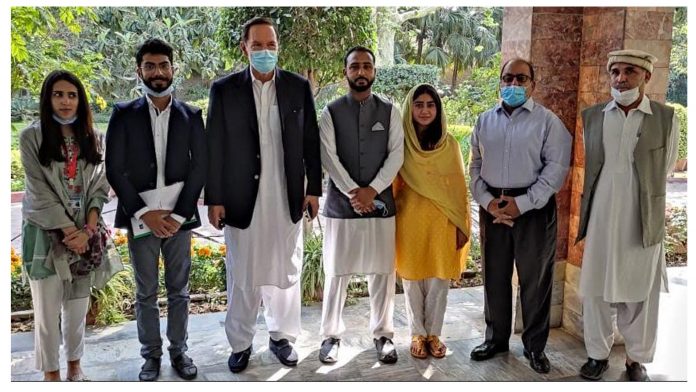
Peshawar, MAR 9 – Pakistan & Turkey relations enjoy the very cordial friendship and relation goes date back generations before the establishment of the two states, to further enhance peoples to peoples interactive relations, a Pak-Turk Friendship Association formed and shortly a proper launching ceremony will be held, this was stated by Mr. Salim Saifullah Khan, Honorary Consul-General of Turkey while talking with group of students of University of Peshawar lead by Mr. Muhammad Abbas Jehan including Ms. Aiman Bashir, Umar Khan & Ms. Laraib Farhat.

The visiting Students brief Turkish Honorary Consul General Mr. Salim Saifullah than about proposed Pak-Turkey Youth Club (PTYC) under the auspicious of Community Services Programme University of Peshawar for further strengrhening Pakistan and Turkey relations in education, cultural and establishment of Research Institute.

Mr. Salim Saifullah Khan appreciate the idea and offer all possible support to the cause and advise the visiting Students to further work on the modalities on order to achieve the desired results and taken these relations to new heights of understanding each other.Mr. Salim Saifullah Khan while appreciating the initiative of visiting Students, advised for more organized efforts. There are many opportunities for collaboration between the two brotherly nations.

All opportunities can be explored by improving people to people contacts, intellectuals, academicians, traders and industrialist of the two countries. Media can play even more important role to bridge the both sides. Hope, the fruits of these interactions  will be trickled down and people of two nations will be end beneficiary.

Uzbek Foreign Minister to arrive Pakistan

Staff Report

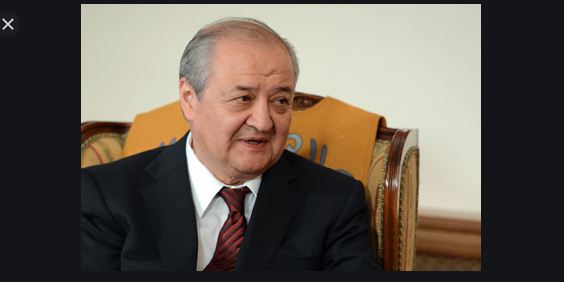
ISLAMABAD: Foreign Minister of the Republic of Uzbekistan, Abdulaziz Kamilov, will visit Pakistan for bilateral consultations.

Foreign Minister Makhdoom Shah Mahmood Qureshi will hold consultations with Foreign Minister Kamilov, covering the entire gamut of bilateral relations and exchanging views on regional and international issues.

Consistent with the leadership’s vision, Pakistan’s focus would be on building an enhanced economic partnership centered on peace, development and connectivity.

Relations between Pakistan and Uzbekistan are based on common faith, shared history and cultural affinities. These linkages provide a strong foundation for increased bilateral cooperation in myriad fields. Both countries have been closely collaborating at regional and international fora, especially at the UN, OIC, ECO and SCO.

The two countries are also closely cooperating to enhance regional connectivity, especially by early construction of Trans-Afghan Railway Project between Pakistan, Afghanistan and Uzbekistan.

The Adviser to the Prime Minister on Commerce and Investment, Mr. Razzak Dawood, visited Tashkent on 1-3 February 2021. During the visit, a Roadmap on construction of Trans-Afghan Railway Project was signed by the three countries.

The visit of Foreign Minister Kamilov will add to the momentum created by the recent high-level bilateral interactions and provide an opportunity to further strengthen and deepen the existing bilateral cooperation in all areas of common interest.

Education situation in Tharparkar: Dr Ramesh Kumar calls on Chief Secy Sindh

DNA

KARACHI, MAR 9 – Patron-in-chief of Pakistan Hindu Council Dr Ramesh Kumar Vankwani has sought the attention of Sindh government towards the poor education situation in Tharparkar. In a letter submitted to the Chief Secretary Sindh, prominent member parliamentarian Dr Ramesh Vankwani requested the authorities for taking necessary action in the best interest of the public. According to details, the meeting was held in a pleasant and cordial atmosphere.

Dr Ramesh Kumar, while sharing details of the meeting with the media, informed that previously the situation of health throughout Tharparkar was too critical. “As a result of my appeal, the Supreme Court has taken notice, and now I am glad to say that today the condition of public hospitals in Tharparkar is very much satisfactory,” he stated, lauding the contributions of Justice Amir Hani Commission, constituted by the Supreme Court. Dr Ramesh Vankwani was of the view that due to the positive role of the Supreme Court, today every corner of Tharparkar consists of qualified doctors, available to serve patients. “I am quite hopeful that the Chief secretary will take action on my request and issue directions accordingly for the promotion of education in the Tharparkar district,” he said, adding that the option of approaching the Supreme Court in this regard is still available. Dr Ramesh further highlighted that unqualified and blue eyed elements, having political influence, are responsible for poor condition of education. According to him, all appointments must be on merit purely on the basis of ‘right person at right place’ principle.

Dr Ramesh Vankwani also emphasized that Tharparkar district, consisting of 1.6 million population, is spread in the largest geographical desert area of Sindh. However, he regretted that Pakistan’s largest desert area population is 90% poor and all basic social indicators are lowest amongst other districts of Sindh. “Unfortunately, Tharparkar district is also facing the worst situation of girl’s education, and it is on the lowest priority of the public sector institutions,: he wrote. Most girl’s schools of the Government of Sindh are closed in Tharparkar and have very little priority than boy’s schools. Dr Ramesh stated.

Dr Ramesh, in his letter, highlighted that according to SEMIS Census 2013-14, the district has a total of 4,045 schools, out of which 973 are closed. Out of a total of 3,751 primary schools in the district, there are 1,758 mixed schools, 1,399 boy’s schools and only 594 girls’ schools. Similar disparities are observed in the number of female vis-à-vis male teachers. While there are 3,649 male teachers in primary schools, the number of female teachers is only 508. The rural part of the district has the largest number of schools, most of which are single-teacher schools in addition to a large number of closed and dysfunctional schools. For instance, out of the total number of 587 girls’ schools in rural Tharparkar, 243 schools are closed.

According to Dr Ramesh Kumar, the baseline reports of different organizations depict the key reasons of dysfunctional schools (Boy’s and Girl’s) are given as under; a)- Lack of school basic physical infrastructure and student sitting facilities. b)- The Student Teacher Ratio STR is not being properly followed by district authorities. c)- The concerned authorities have allowed teachers to work on nearby schools instead of the original place of posting using the terms of deputation, allowed to work, work detailement or local arrangements. d)- Because of above mentioned favor to teachers by district authorities, far flung area’s schools are either closed or disturbed as majority of schools are single-school teachers. e)- Female teachers who are not performing their jobs at their original place of posting are accommodated in cities and nearby towns.

“I sincerely hope that you will look into the matter on priority basis and issue directions accordingly,” Dr Ramesh concluded in his letter to the Chief Secretary Sindh.

Govt’s decision to reduce turnover tax and WHT to 0.25 percent lauded

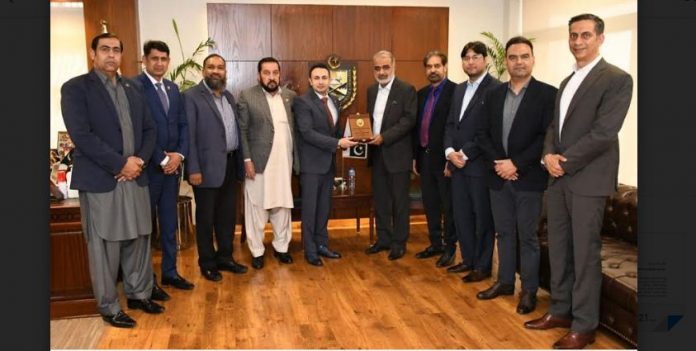
ISLAMABAD, MAR 9 (DNA) – Tariq Mehboob, Chairman, Chainstore Association of Pakistan (CAP) along with a delegation visited Islamabad Chamber of Commerce & Industry and held a meeting with Sardar Yasir Ilyas Khan President and his team to discuss options for making collaborative efforts to resolve the key issues of the business community and push the government for formulating more conducive business and economic policies. Asfandyar Farrukh Senior Vice Chairman, Members Irfan Iqbal Sheikh and Mardan Ali Zaidi, Shafiq Ahmed Secretary General CAP, and others were in the delegation.

The CAP delegation informed that they have held productive meetings with FBR and FBR has reduced the WHT from 4.5 percent and 2.5 percent to 0.25 percent and turnover tax from 1.5% to 0.25 percent for retailers, wholesalers, distributors, and dealers of FMCG, sugar, cement, edible oils and fertilizer sectors, which would provide great relief to the business community of these sectors and help in accelerating the pace of business activities.

Addressing the delegation, Sardar Yasir Ilyas Khan, President, Islamabad Chamber of Commerce and Industry welcomed the positive decision of the Federal Government, especially FBR, and hoped that the tax department would make reductions in other high taxes that would bring down the cost of doing business and help in generating more economic activities.

Sardar Yasir Ilyas Khan said that high tax rates in Pakistan and complicated tax system were the major hurdles in promoting business and investment activities up to the real potential of the country and emphasized that FBR should rationalize tax rates in consultation with chambers of commerce & Industry and other trade bodies. He said that tax-to-GDP ratio was quite low and one of its main reasons was high tax rates that were encouraging tax evasion in the country. Therefore, rationalization of taxes was the way forward that would help in broadening the tax base and improving the overall tax revenue of the country as with low tax rates, more people would come into the documented economy.

Both sides also stressed that the government should focus on formulating a new tax strategy to give a clear direction to the business sector so that businessmen could make plans for business expansions and make new investments with more confidence.

ICCI President took CAP delegation on board for organizing Islamabad Shopping Festival in the coming months and invited them to take active part in this important event. The delegation assured that they would participate in the Festival by making sure that all 200 of their retail members would extend all possible cooperation and would participate in the event.=DNA

==================

35 Pakistani, French Universities showcase research programmes

ISLAMABAD, MAR 9 (DNA) – “It is high time to usher a new era of collaboration with the partner countries to promote tertiary education, joint research endeavours, and student exchange programmes.”

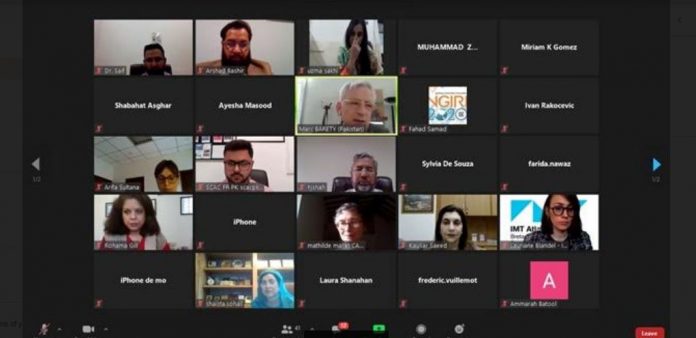
This was stated by Executive Director Higher Education Commission (HEC) Dr. Shaista Sohail while addressing opening ceremony of the 4th Edition of Higher Education and Research Online Meeting of the Franco-Pakistani Institutions, a four-day event organised by the Embassy of France.

The event features thematic webinars on the topics of Engineering Sciences, Agriculture, Environment, Information Technology, Economics, Business and Management, Political Sciences, Social Sciences, Art, Design, Fashion, Gastronomy, and Tourism. As many as 18 top-ranked French universities and 17 Pakistani universities are participating in the event to showcase their research programmes.

Dr. Shaista welcomed the participating delegates from French educational institutions and hoped that the mutual collaboration will turn into a strategic partnership to gain broader benefits for Pakistani universities and scholars. She underlined that HEC was executing three scholarship programmes, including Overseas Scholarship Programme, Master’s and Doctorate scholarships for Engineering students, and scholarships for students of Balochistan, with an aim to enhance access to higher education for young Pakistanis.

She informed the participants that HEC, since 2007, facilitated 815 scholars to earn their Master’s and Doctoral degrees from top-ranked French universities. Out of 815 scholarship awardees, 653 have completed their doctoral and master degrees in last 11 years. “The higher education and research work are of vital importance for socio-economic development of a country in this modern era,” she stated.

Addressing the ceremony, Ambassador of France Mr. Marc Barety said that the Franco-Pakistani cultural, scientific and academic and technical cooperation was long-standing. He noted that higher education and research were the essential elements of bilateral cooperation between Pakistan and France. He underlined that France was determined to strengthen the academic relations with Pakistan, as mutual academic and scientific development will help ensure better understanding of each other.

The Ambassador highlighted the role and efforts of Campus France, a French public institution under the dual supervision of the Ministry of Europe and Foreign Affairs and the Ministry of Higher Education, Research and Innovation, to enhance the educational cooperation. He said that Campus France promote French higher education in Pakistan, implemented scholarship and mobility programmes, facilitated the arrival of Pakistani students and researchers in France, animated the network of Pakistani alumni in French higher education, and offered Pakistani students a path to success through higher education in France.

He also mentioned the scholarship programmes funded by the French Embassy and managed by the Cooperation and Cultural Affairs Department. He also shed light on the services of Hubert Curien Péridot partnership, Pak-France Alumni Association (PFAN) and France Alumni Pakistan. He said that France and Pakistan had also been cooperating in the archaeological field since the late 1950s.

The session also contained a presentation on the HEC scholarship programmes by Adviser Human Resource Development, HEC, Dr. Hassan Jalil Shah. Dr. Shah highlighted the HEC’s human resource development initiatives, including the details of HEC’s partnership with the French higher education institutions. This was followed by presentations on study in France, scholarship and research programmes; PHC Peridot Research Programme; Erasmus+ Programme; and, the PFAN Alumni Association.=DNA

===============

PTC wins 6 global diversity and inclusion awards

DNA

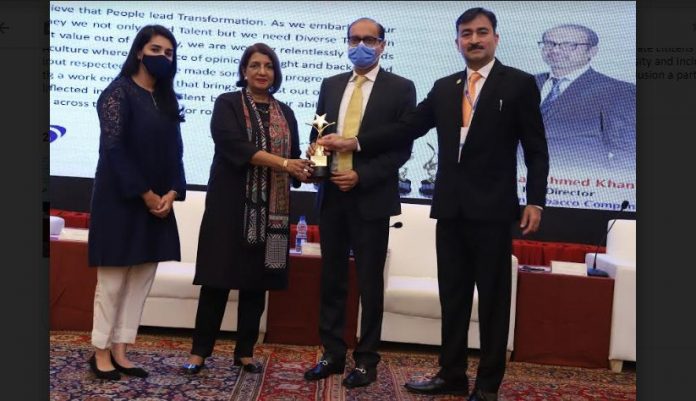
KARACHI, MAR 9 – Pakistan Tobacco Company Limited (PTC) was awarded 6 Global Diversity and Inclusion Awards in the Global Diversity & Inclusion Benchmarks (GDIB) conference held in Karachi. The award was received by Waqas Ahmed Khan, Head of Human Resources, PTC and Beenish Kajani, Senior Human Resources Manager.

These awards are conducted by Diversity Hub Pakistan annually and their core objective is to encourage progressive organizations who align Diversity and Inclusion (D&I) with organizational policies and process for sustainable financial and social performance and recognize organisations which fulfil GDIB’s rigorous standards and benchmarks in the D&I space.

Last year PTC was awarded 5 GDIB Awards, however, This year, PTC won 6 awards in the following D&I categories: Vision, Leadership, Structure, Recruitment and Development, Learning and Education, and Communication and out of the 30 companies, which were evaluated, including multinational organizations operating in the country, Pakistan Tobacco Company Limited was ranked 5th nationally.

At the ceremony, Waqas Ahmed Khan, stated that in order to get the right value out of diversity, we are working relentlessly towards building an inclusive culture where difference of opinion, thought and background is not only accepted but respected. “We have made some great progress in Gender Diversity and creating the right work environment that brings the best out of our diverse talent. This is reflected in our strong talent brand and our ability to export great talent from PTC across the globe in senior roles.”, he added.

Ali Akbar, Managing Director PTC, shared his views on winning these awards and mentioned that as responsible corporate citizens in Pakistan, we play our role in creating inclusion by providing employment opportunities to people from different cultures and backgrounds. Diversity and Inclusion is one of our key Ethos that drives the transformation of PTC towards a Better Tomorrow. “My personal aspiration is to make Diversity and Inclusion a part of our DNA and a way of life.”, he added.

CPEC helps Pakistan to alleviate poverty: Economists

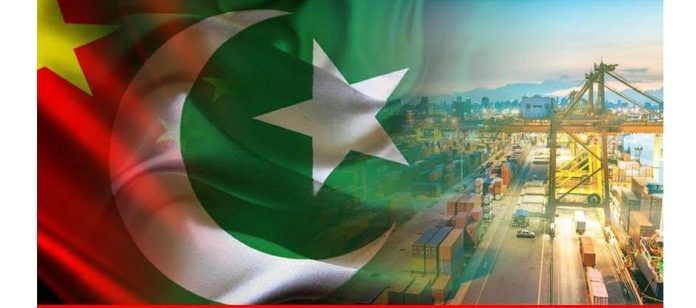
ISLAMABAD, Mar 9 (DNA): CPEC has provided Pakistan with an excellent opportunity to transform from an Agriculture-based economy to an industrial-based that can help decreasing poverty to a significant level.

According to Gwadar Pro, Economists in Pakistan believe that CPEC to provide solid support to the industrial sector to modernize itself and become more efficient and competitive for achieving the desired goals.

The various energy projects, coupled with improvements in infrastructure and road networks have already addressed some of the key constraints to growth and for poverty allivation.

Various projects completed under the CPEC have employed more than 100,000 Pakistanis.

More importantly, the development of Special Economic Zones (SEZs) would enable industries to smooth supply chains, enhance collaboration and innovation capabilities, and help reap significant economies of scale.

Analysts believe Pakistan will be the biggest beneficiary of CPEC.
It has already won hearts in Pakistan. This project has emerged on Pakistan’s horizon as the biggest source of jobs for Pakistani youth.

The experts added, Pakistan also needs to learn a lesson from China’s five-year plan policy.

As the building of SEZs takes pace, Pakistani authorities expect the transfer of technology and spillovers from China into Pakistan in a few years.

While China has already transferred coal and road construction technology to Pakistan, authorities here are expecting the transfer of technology in the pharmaceutical, auto sector, and chemicals industry which will boost the economic activity here employing a great number of people.

Authorities are expecting the relocation of Chinese firms making pesticides and synthetic fertilizers to Pakistan.

The relocation of such firms to Pakistan becomes a possibility and CPEC envisions joint ventures in fertilizer and pesticide manufacturing between the Pakistani and Chinese enterprises which will open job opportunities for thousands of graduates of Agriculture sciences.

The plastic industry can see a boom in terms of investment and technology transfer under CPEC.

Pakistani also needs to learn from iron friend China which has introduced “made-in-China 2025”. Pakistan needs to offer incentives to encourage local and foreign companies to set up factories and plants in Pakistan which can employ a huge number of local labor both skilled and unskilled.

Independent analysts and experts in Pakistan believe, Pakistan can not achieve desired growth unless the manufacturing sector and exports are strengthened. Pakistan needs an export-driven growth strategy following China’s vision.

UK, PAK discuss matters of mutual interests

RAWALPINDI, MAR 9 (DNA) – General Sir Nicholas Patrick Carter, Chief of Defence Staff (CDS) UK Army called on General Qamar Javed Bajwa, Chief of Army Staff (COAS).

During the meeting matters of mutual interests including Afghan Peace Process, security & defence cooperation as well as evolving global geo-strategic environment were discussed. The visiting dignitary acknowledged Pakistan’s continuous efforts for peace and stability in the region and pledged to further enhance bilateral relations between both countries.=DNA

============

Ambassador M Hassan presents credentials to ASEAN Secretary General

JAKARTA, MAR 9: Ambassador Muhammad Hassan presented his Letter of Accreditation as “Ambassador of Islamic Republic of Pakistan to ASEAN” to Dato Lim Jock Hoi, Secretary General of ASEAN. Due to Covid-19 pandemic, the credential ceremony was held virtually.

Appreciating the ASEAN’s role in addressing economic, security, political and social issues in the region, Ambassador Muhammad Hassan reiterated that Pakistan placed high importance to its association with ASEAN. Being a Sectoral Dialogue Partner of the organization since 1993, Pakistan was determined to extend its cooperation with ASEAN in all areas of mutual interest.

The Ambassador further noted that in line with its “Vision East Asia” policy, Pakistan was desirous of further expand its cooperation with ASEAN, and in this regard had requested for “Full Dialogue Partner” status with the organization. He hoped that Pakistan’s request would be favorably considered once the moratorium on new members was lifted.

On economic front, the Ambassador noted that Pakistan- ASEAN trade during 2020 was US$ 5.8 Billion, which was far below the existing potential. He underlined the need for both sides to further strengthen their economic and trade relations. In this regard, he said, Pakistan had a unique position as a connectivity hub between ASEAN and other regions. He invited ASEAN to extract maximum benefit out of this position, especially by joining development projects under China-Pakistan Economic Corridor. In this regard, he conveyed Pakistan’s full support to any such initiative.

The Secretary General, in his remarks, congratulated the Ambassador on presenting the credentials. He welcomed Pakistan’s commitment to strengthen ASEAN as its oldest Sectoral Dialogue Partner, and hoped that the relationship will be further strengthened in coming years.

He urged the need for the both sides to work together, identify more cooperation projects and take advantage of each other’s comparative advantages, especially in line with the ASEAN’s master Plan for Connectivity (MPAC-2025), and Pakistan’s CPEC initiative.

Applauding Pakistan for arranging three diplomatic courses for ASEAN diplomats in near future, the Secretary General expressed hope that more cooperation projects would be implemented utilizing Pakistan-ASEAN Cooperation Fund. He also lauded Pakistan’s active participation in the meetings of ASEAN Regional Forum (ARF).

Pakistan was accorded the status of Sectoral Dialogue Partner (SDP) at the 26th ASEAN Ministerial Meeting on 23 July 1993. The Sectoral Dialogue Relations were institutionalized through the convening of the First Meeting of the ASEAN-Pakistan Joint Sectoral Cooperation Committee (APJSCC) on 5 February 1999 in Bali.

Following the Sixth AP-JSCC Meeting on 2 November 2017, ASEAN and Pakistan have adopted the updated Terms of Reference of the AP-JSCC and the ASEAN-Pakistan Sectoral Dialogue Partnership: Practical Cooperation Areas for 2019-2021, which serves as a practical guide to further substantiate the cooperation between both sides. The two sides have agreed to expand cooperation in a whole range of areas including Counter terrorism, Violent Extremism and Transnational Crimes, Economic cooperation, Food and Agriculture, Science and Technology, Information and Communication Technology, Tourism, Disaster Management, Culture, Human Resource Development, Connectivity, Narrowing Development Gap and initiative for ASEAN integration.

Legendary folk singer ‘Pathanay Khan’ remembered

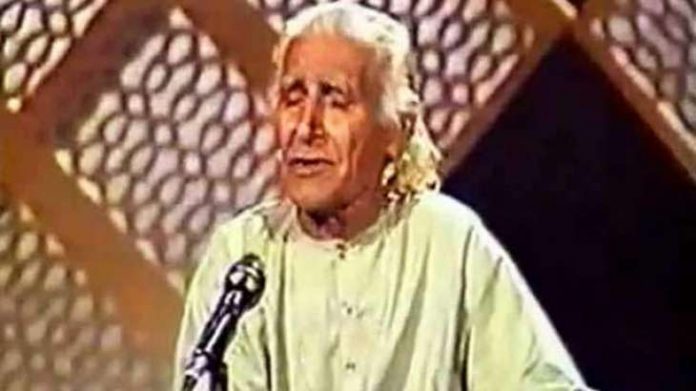
ISLAMABAD, Mar 9  : Nation remembered legendary Saraiki folk singer ‘Pathanay Khan’ on his 21th death anniversary to pay homages for his lifetime services for entertainment industry.

Famous for his “Kafi” singing in mystical circles in Pakistan and India, Pathanay Khan also sung ghazals of legendary Urdu poets. His specialty was folk singing in Saraiki and Sindhi languages.

Late Khan sung poetry of Baba Bullay Shah, Khuwaja Ghulam Fareed Mithankoti, Mehar Ali Shah and many other sufi poets during his long career of singing, electronic channels reported.

He was born in 1926 in the village Basti Tambu Wali, situated in the heart of the Thal Desert, several miles from Kot Addu.

He had left his studies in class seven and raised by his mother alone who had changed his birth name from Ghulam Muhammad to Pathanay Khan on the instructions of her spiritual guide. He was given his new name due to his fair colour.

His first album was released in 1984 which was named as ‘Mein Vee Jana Jhok Ranjhan’.

His last album released in 1999 with the title ‘Kaafi’. His popular hits on television still mesmerized people. ‘Meeda Ishq Vee Toon’ is still among the favorites of people.

In recognition of his contributions he was awarded Pride of Performance Award in 1979. Pathanay Khan died after a protracted illness at his native town of Kot Addu on March 9, 2000.

Stay Connected

64FansLike
60FollowersFollow

Latest Reviews

Exchange Rates

USD - United States Dollar
EUR
1.17
GBP
1.34
AUD
0.67
CAD
0.73