Home Blog Page 2543

N. Korean diplomats leaving Malaysia after ties are severed

KUALA LUMPUR, MAR 21 – North Korean diplomats vacated their embassy in Malaysia and prepared to leave the country Sunday, after the two nations cut diplomatic relations in a spat over the extradition of a North Korean criminal suspect to the United States.

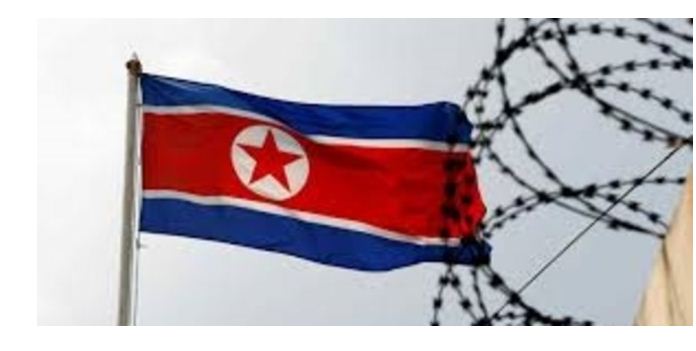
The North Korean flag and embassy signage have been removed from the premise in a Kuala Lumpur suburb. Two buses ferried the diplomats and their families to the airport, where they were seen checking in for a flight to Shanghai.

Ties between North Korea and Malaysia have been virtually frozen since the 2017 assassination of the estranged half brother of North Korean leader Kim Jong Un at Kuala Lumpur International Airport.

Two days after Kuala Lumpur extradited a North Korean man to the U.S. to face money laundering charges, a furious North Korea on Friday announced it was terminating ties with Malaysia. Malaysia denounced the decision and in a tit-for-tat response, gave North Korean diplomats 48 hours to leave.

Kim Yu Song, the chargé d’affaires and councilor in Kuala Lumpur, said Malaysia had “committed an unpardonable crime.” Echoing Pyongyang’s earlier statement, he accused Malaysia of being subservient to the U.S. and being part of a U.S. conspiracy aimed at “isolating and suffocating” his country.

“The Malaysian authority delivered our citizen to the U.S. in the end, thus destroying the foundations of the bilateral relations based on respect of sovereignty,” he said in a short statement outside the embassy, before heading to the airport.

North Korea has called the money laundering charges an “absurd fabrication and (a) sheer plot” orchestrated by the U.S. and warned Washington will “pay a due price.”

Some experts say cutting ties with Malaysia was North Korea’s way of showing anger with President Joe Biden’s administration, without jeopardizing an eventual return to nuclear negotiations with Washington.

North Korea has insisted it won’t engage in talks with Washington unless it abandons what Pyongyang’s perceives as a “hostile” policy. But experts say North Korea will eventually seek to return to diplomacy to find ways to get sanctions relief and revive its moribund economy.

Malaysia has defended its move to extradite Mun Chol Myong, saying it was carried out only after all legal processes have been exhausted. A top court ruled Mun can be extradited after rejecting his appeal on grounds that the U.S. charges were politically motivated.

Mun, who lived in Malaysia for a decade and arrested in May 2019, has denied U.S. accusations that he was involved in supplying luxury goods from Singapore to North Korea in violation of U.N. sanctions while working in the city-state. He denied laundering funds through front companies and issuing fraudulent documents to support illicit shipments to his country.

North Korea has long used Malaysia as a crucial economic hub where it handled trade, labor exports and some illicit businesses in Southeast Asia, but their relations suffered major setbacks over the 2017 killing of Kim Jong Nam.

Two women — one Indonesian and the other Vietnamese — were charged with colluding with four North Koreans to murder Kim Jong Nam by smearing his face with VX nerve agent. The four North Koreans fled Malaysia the day Kim died. The two women were later released.

Malaysian officials never officially accused North Korea of involvement in Kim’s death, but prosecutors made it clear throughout the trial that they suspected a North Korean connection.

North Korea denied the victim was Kim Jong Nam and disputed it had any role in the man’s death. Longtime North Korea watchers believe Kim Jong Un ordered his brother’s killing as part of efforts to remove potential rivals and cement his grip on power.

REFORMS IN KAZAKHSTAN: IMPLEMENTATIONS & ACHIEVEMENTS (P-I)

Dr. Mehmood Ul Hassan Khan

Economic sustainability heavily rests on institutionalization of constant structural reforms which paves the way towards immense socio-economic prosperity, poverty eradication, good governance and above all qualitative life.

Right from the beginning Kazakhstan President H.E. Kassym-Jomart Tokayev introduced comprehensive reforms in all sectors of the economy and civility alike due to which now its economy is flourishing despite ongoing human sage of the COVID-19. Its national politics is stable despite regional political uncertainties. Its society is united despite widespread disunity. Its state is functional despite global dysfunctional parameters. 

It provided a strategic road map for its successful implementation. It was indeed a gigantic step towards achieving the goals of smarter economy, e-governance, and massive industrialization, widespread of SME, Micro-financing facilities, poverty eradication, immense social development and above all development of social entrepreneurship in the country. It was a strategic orientation for further politicization and democratization in Kazakhstan in which genuine opposition has a greater participation, utility, scope and recognition in the political affairs of the country.

It was a first step in right direction to achieve strategic goals of vision 2050, the achievement of key national indicators of the 2025 Strategic Development Plan which aims to position the country to become one of the 30 most developed countries in the world, and the continued implementation of the “100 Concrete Steps” Plan to implement the Five Institutional Reforms of the Leader of the Nation, further diversity of the macro-economy, green energies, export oriented policies, inflows of FDIs, and last but not least, people and business friendly investment policies along with attractive tax incentives.

Series of structural reforms initiated by Kazakhstan President H.E. Kassym-Jomart Tokayev actually consolidated its socio-economic  achievements and further enhanced the relationship between the state and society and a resetd the country’s political system, leading to implementation of those political, social, and economic transformations necessary to face a new generation of modern challenges.

It was indeed a first major policy shift to change the predominance of commodity production, low competitiveness of the manufacturing sector of the economy, lack of access for small and medium-sized enterprises to long-term lending, and disproportionate social and economic development of the country’s regions. It actually started the concept of a balanced regional economic development in the country. Thus Kazakhstan’s government has shunned the widening distrust among the regions and promoted regional harmony and peace. 

In the past, local people and communities of different regions suffered from unequal access to utilities and state services, particularly in the urban-rural areas which have now been ratified and all far-flung areas have been included in the national development programs.

Human capital has now become foremost priority of Kazakhstan government. Provisions of primary and higher education have been streamlined. Numerous structural reforms have been initiated to achieve the desired goal of zero-corruption in the state’s affairs and society alike. The concepts of public administration have been revolutionized because of set-up of spirits of good governance.

Kazakhstan President H.E. Kassym-Jomart Tokayev chalked out three pronged policy i.e.  continuity, justice, progress for maturing political course, preservation of true and pursuing functional social justice by protecting the basic human rights, equal right, welfare and re-shaping and re-designing of social development in the country. All these principles have been elaborated in the “Well-being for all! Continuity. Justice. Progress” Action Plan for the Implementation of the Election Program of the President of the Republic of Kazakhstan. This document identifies 106 actions to be implemented in 19 thematic areas in the short and medium-term.

Kazakhstan President H.E. Kassym-Jomart Tokayev outlined main attributes of the reforms which provided a holistic approach to revolutionize the concept of structural reforms by pragmatism and quality, to advance further development and ensure its continued stability, as a consequence, avoiding unsystematic reforms and the manifestation of populism, which may risk destabilization of the internal political situation or even loss of statehood. It also upheld the concept of modern political philosophy of “universality” protecting the rights of majority by strengthening national unity and social cohesion. It also protected the concept of modern civilization and development based on continuity and gradualism.

The President of Kazakhstan Tokayev announced various political reforms to institutionalize concept of a functional and liberal democracy in the country. He has implemented the concepts of checks & balances and separation of powers by a strong presidency, an influential parliament and an accountable government”. It laid the foundation for the transformation of the extensive presidential system in the country.

Further diversity, pluralism of opinions and alternative points of view, as well as the formation of a new political culture through constructive dialogue have been introduced which included development of a multi-party system, political competition, and the improvement of legislation on peaceful assemblies.

Visionary Kazak President Tokayev reaffirmed the strategic importance of the “Listening State” which provided an ideal platform to introduce people’s friendly policies, programs and decrees to achieve optimal level of statehood, transparency, accountability and corruption free public administration and society alike. Somehow, deadly COVID-19 forced the state to bring some changes in the ongoing structural reforms but overall Kazakhstan remained on the track.

Kazak President Tokayev focused to connect socio-economic reforms by increasing the well-being of its people and an equitable distribution of national income. The Head of State outlined key principles of the country’s new economic course which was based on comprehensive overall hauling of national economy, greater role of private sector and beneficial role of the state by equitable distribution of benefits and responsibilities, the leading role of private enterprise, fair competition, opening up markets for a new generation of entrepreneurs, increased productivity, increased complexity and technological effectiveness of the economy, development of human capital, investment in a new type of education, green economy, protecting the environment and public accountability.

Role of state has been announced and consequently implemented too which has now changed its role as an owner and regulator which entaild the creation of favorable conditions for doing business, including the introduction of the principle of “regulation from scratch” and the creation on its basis of a qualitatively new system of “smart regulation” of business, continuation and completion of the privatization program implemented since 2016, revision of the mission, role and the functions of the quasi-public sector.

Sincere efforts are being carried out to change the social dimension of Kazakhstan government through the unification of laws and regulations governing this area and the development and adoption of a Social Code of Kazakhstan. It also included the system of social protection towards promoting work and self-reliance and preventing the manifestations of dependency and paternalism among citizens. It consisted of development of human capital through teaching the values of tireless work, discipline, responsibility, justice, honesty, frugality and solidity.

Kazakhstan President Tokayev also introduced a new organ “National Council of Public Trust (NCPT)” which played a deceive role in the further socio-economic development of the country through better execution, cooperation, collaboration and coordination among the different organs and departments of the state. It was established on June 12, 2019.

It was envisaged to develop proposals and recommendations on topical issues of state policy based on a broad discussion with representatives of the public. It was responsible for conducting public expert review of draft concepts, government programs and regulatory legal acts; considering significant strategic issues taking into account the views of civil society; and ensuring a constructive dialogue between representatives of the public, political parties, the non-governmental sector and government agencies. It was the new shape of earlier mechanisms of political dialogue, further democratization and development of civil society (2002-2003), the National Commission on Democracy and Civil Society (2004-2005) and the State Commission for the Development and Specification of the Program of Democratic Reforms (2006-2007).

Political reforms have been one of the key priorities of incumbent president of Kazakhstan who announced urgent political and socio-economic transformations in 2019. The political reforms consistd of three comprehensive plans. The first package of political reforms announced by the Head of State on December 20, 2019 at the second meeting of the NCPT has been fully implemented and is reflected in the adoption in various laws, the Law on the Procedure for Organizing and Holding Peaceful Assemblies, dated May 25, 2020 which laid the legal foundation for a qualitatively new culture of relations between society and the state and constitutional right of citizens, the Constitutional Law on Amendments to the Constitutional Law of Kazakhstan on Elections in Kazakhstan dated May 25, 2020 which established a 30 percent quota for women and youth representatives on electoral party lists. Similar amendments were made to the Law on Political Parties.

Moreover, the Law on Amendments to the Law of the Republic of Kazakhstan on Political Parties dated May 25, 2020, reduced the number of members required for the establishment of political parties from 40,000 to 20,000 people. The Law on Amendments to the Constitutional Law of the Republic of Kazakhstan on the Parliament of the Republic of Kazakhstan and the Status of its Members dated June 2, 2020 and the Law on Amendments concerning Parliamentary Opposition to the Law of the Republic of Kazakhstan on Committees and Commissions of the Parliament of the Republic of Kazakhstan dated June 2, 2020 further strengthened the role of parliament and opposition alike.

On the contrary, the Law on Amendments to Some Legislative Acts of the Republic of Kazakhstan on Improving Enforcement Proceedings and Criminal Legislation was incorporated on June 29, 2020 which removed all imperfections in criminal laws of the country. Interesting, death plenty has been abolished on January 2, 2021 through the Law on Ratification of the Second Optional Protocol to the International Covenant on Civil and Political Rights.

The second package of political reforms was announced by the President of Kazakhstan on September 2, 2020 which included the designing a new concept for the development of local self-government, gradual differentiation of the powers of local government and local self-government, expansion of property rights and increase in the revenues of the budgets of rural districts, strengthening control over the process of approving local budgets, strengthening the audit commissions of maslikhats, raising the status of local community gatherings and assemblies and taking into account by regional maslikhats of their opinions on pressing local issues for making specific decisions, direct elections of akims of rural villages in 2021. In this regard, the authorized government agencies developed a Draft Constitutional Law on Amendments to the Constitutional Law of Kazakhstan on Elections.

The development and adoption of the Law on Public Oversight designed to ensure greater openness and accountability of government agencies and quasi-public sector to society paved the way towards greater accountability and transparency.

The 2nd political reforms also cared about basic rights of children from cyberbullying, and joining the Optional Protocol to the Convention on the Rights of the Child on a Communications Procedure, improving national legislation to combat torture and bring it in line with the provisions of the Convention against Torture and Other Cruel, Inhuman, or Degrading Treatment or Punishment.

Lastly, on January 15, 2021, Kassym-Jomart Tokayev announced a third package of political reforms which outlinedpolicy changes to reduce the threshold for political parties to enter the Mazhilis of Parliament from 7 percent to 5 percent, introducing the “None of the above” ballot option for elections of all levels, introducing the elections of district akims to build on the elections of rural akims,  adoption of a separate law on the Human Rights Ombudsperson, defining their status, powers and streamlining their activities in various areas and sectors; strengthening the office of the Human Rights Ombudsperson, including the establishment of regional offices, further improving the public oversight system, legislating online petitions, introducing the Youth Development Index and expanding measures on encouraging charity, including the provision of tax and other benefits to enterprises and individuals participating in charitable events and volunteer projects. Some menaingul addition measures were also announced and thereafter implemented for the civil society development in the country. Some anti-money laundering laws were also promulgated on May 15, 2020.

Pakistan Day to be celebrated mostly virtual amid COVID-19

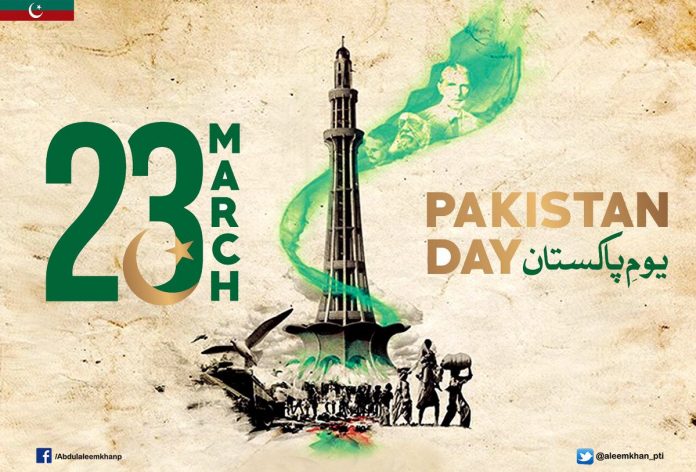
ISLAMABAD, Mar 21 : The upcoming celebrations of Pakistan Day, March 23, will be held across the country mostly virtual by different public and private departments amid the recent intense wave of the COVID-19 pandemic.

The nation’s patriotic spirit, however, has not been dampened as the people throughout the country are gearing up to mark the day with the same enthusiasm and fervor shown in the past along with renewing their pledge to foster unity among their ranks, paying tributes to the national heroes, and praying for the prosperity of Pakistan.

Pakistan Day Parade, which is the main feature of the celebrations, will be held on March 23 in Islamabad with compliance of all the anti-COVID Standard Operating Procedures (SOPs).

It will be the public holiday on Pakistan Day, which is celebrated annually to commemorate the ‘Lahore Resolution’ of 1940 that eventually led to the creation of Pakistan.

There will be early morning military and civilian parades in Islamabad with gun salutes in the federal and provincial capitals.

The National Flag will be hoisted atop all government buildings and departments, while the many important ones will be decorated with lights and buntings. The flag hoisting ceremonies will be held at different diplomatic missions of Pakistan abroad.

The educational and literary institutions in the Federal Capital like rest of the country, which are closed due the COVID-19, have planned to arrange different virtual activities, including debate, painting, poetry, articles writing and other competitions with an objective to invoke the interest of younger generation to learn about the sacrifices of their ancestors for the creation of Pakistan.

Pakistan National Council of the Arts (PNCA) has planned a musical event to mark the Day. A number of renowned singers and artists representing all the four provinces, including Gilgit Baltistan and Azad Jammu & Kashmir will present national songs.

National Puppet Theatre of PNCA will also arrange a puppet show where different characters will present folk tales, skits and national songs to educate and induce patriotism and love for the country.

PNCA will also hold “Youm-e-Pakistan” Children show on March 23, featuring national songs and speeches highlighting the significance of the Day and freedom movement.

Famous brands in the Federal Capital have started offering sales on dresses, shoes and other accessories to mark the Day.

It has become a common practice for the brands, online retailers, eateries and even the cab-hailing and salon services to offer good discounts on different occasions and important days that get overwhelming response from the citizens.

The trend of online shopping from the websites of famous brands is already in vogue in order to avoid the risk of COVID-19.

Youth and children have started buying national flags, badges, models and stickers at the stalls set up at different corners of the city to decorate their houses and vehicles.

Sino-Pak olive production- technology cooperation imperative: Says Prof Cheng

BEIJING, March 21 : Technical cooperation in olive cultivation and olive oil production should be the focus of agricultural cooperation between China and Pakistan, said Chinese scholar Prof. Cheng Xizhong, according to China Economic Net (CEN).

Cheng who is visiting Professor at Southwest University of Political Science and Law noted that both China and Pakistan attach great importance to deepening and expanding cooperation in the agriculture sector under the framework of China-Pakistan Economic Corridor (CPEC).

Prime Minister Imran Khan recently said large-scale olive cultivation would prove to be the best investment for Pakistan in terms of earning valuable foreign exchange, creating employment opportunities and ensuring food security while addressing the launch of nationwide olive cultivation drive starting from Nowshera.

Prof. Cheng added, Pakistan has immense potential in cultivation of olive trees owing to suitable topography and climate from north to south.

Olive is a subtropical evergreen tree, cold and drought resistant, as well as a long-lived tree with strong growth capacity.

Therefore, water scarce areas such as Suleiman Mountains near Waziristan, plains in Balochistan and diverse terrain in Punjab offer environment for low-irrigation olive farming.

If olives are planted on all arable land in Pakistan, the country could become one of the world’s leading olive oil producers and exporters.

Prime Minister Imran Khan has repeatedly stressed the importance of national security, including food security.

The Prime Minister had empasised thay it was time for Pakistan to get a stronghold of national security by expanding its domain inclusive of climate change, economic stability and food security, besides focusing on defense preparation.

In the post-pandemic era, food security is a global challenge, and all countries in the world attach great importance to it.

As one of the most populous countries in the world, Pakistan puts more emphasis on food security. This is a manifestation of the forward-looking and strategic thinking of the Pakistani government.

In recent years, Guangyuan City of Sichuan Province has planted more than about 7,000 hectares of olive trees, which has become an important olive planting base in China.

China’s olive tree planting and olive oil production technology is leading in the world, and China and Pakistan can carry out extensive cooperation in this regard.

With a population of 1.4 billion, China is the most populous country in the world. China’s olive oil is mainly imported.

According to the data of the General Administration of Customs, China’s olive oil imports in 2019 were 53,699 tons, up 35.64% year on year.

Currently, olive brands from Spain and Italy are highly recognized in the Chinese markets. With the large-scale cultivation of olive trees in Pakistan and the close technical cooperation between China and Pakistan in this regard, China could be one of the potential markets for Pakistani olive products in the future, which could also help reduce trade deficit between the two countries, Prof. Cheng said.

Beware of skeptics of COVID vaccine as they know not: President

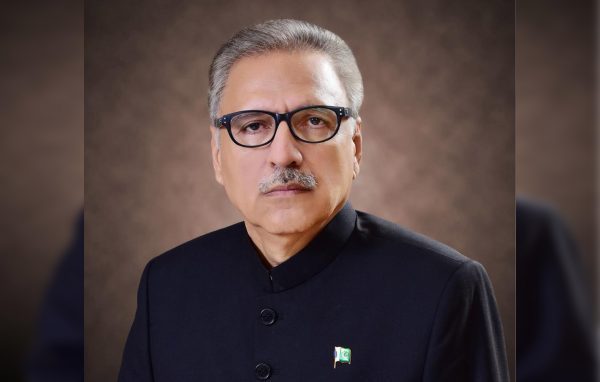
ISLAMABAD, Mar 21  : President Dr Arif Alvi Sunday said that COVID-19 vaccine was “a must” advising people to beware of skeptics of vaccine as they were ignorant.

“Beware of those who who create doubt, as they know not. Covid-19 vaccination is a must,” he said on Twitter.

The president’s remarks came after skeptics raised questions on efficacy of vaccine after Prime Minister Imran Khan was tested positive on Saturday two days after getting jab.

He clarified that the vaccine was given in two doses and it took a few weeks to become effective.

The president explained that in most cases the vaccine was 100% effective and in remaining, it greatly reduced severity of infection which increased survival rate.

On March 15, President Alvi and spouse Begum Samina Alvi also got their COVID-19 vaccine as government was vaccinating people of aged 60 and above in initial phase.

On his official Twitter handle, the president said he had personally wished Prime Minister Imran Khan and the First Lady good health after they tested positive of COVID-19.

“May Allah grant them full and early recovery,” the president prayed.

77% registered people vaccinated in Islamabad: health official

ISLAMABAD: In the capital city 77 percent registered persons have been administered COVID-19 vaccine, quoting a health official.

District Health Officer (DHO) Islamabad Dr. Zaeem Zia has said that 26,676 registered persons have inoculated with the coronavirus vaccine.

“In Pakistan Institute of Medical Sciences (PIMS) 7,871 people have been administered vaccine, while in Polyclinic 2,944 people have been vaccinated,” DHO said.

Moreover, 3,743 people have been administered vaccine in CDA Hospital, in Tarai Rural Health Centre 4,818 persons, in Federal General Hospital 2,337 people and at the Isolation Hospital 201 registered persons have been administered coronavirus vaccine, Dr. Zaeem Zia said.

Overall 47,167 people have registered themselves for Covid-19 vaccination in the federal capital territory so far, according to the DHO.

The National Command and Operation Centre (NCOC) on Saturday announced that the COVID-19 vaccination centres will remain closed on Sundays and public holidays across the country.

The NCOC in a statement advised citizens not to visit the vaccine centres for vaccination on Sundays and public holidays.

The NCOC also lauded the efforts of the federating units for large-scale corona vaccination arrangements.

Travel Advisory: Pakistan bans travel from Cat C countries, as Covid-19 spikes

ISLAMABAD, Mar 21 : Amidst a spike in the Covid-19 cases, Pakistan’s Civil Aviation Authority again updated its travel advisory putting a complete travel ban for international travelers from 12 Category C countries.

Civil Aviation Authority withdrew all earlier exemptions given to Pakistani passport holders, Pakistan Origin Cardholders, and those having National Identity Card for Overseas Pakistanis (NICOP).

“The temporary measure is being introduced in continuation to the steps being taken to contain the spread of Covid-19 in Pakistan,” the revised letter said.

The Civil Aviation Authority modified the list of the countries placed in Categories A, B, and C for all international passengers, or all those arriving on chartered private aircraft flights, in view of the third wave of the deadly pandemic.

A CAA letter available with the Revised Categorized Country List would be effective from March 23, 2021, 0001 hours up to April 05, 2021.

Category A countries: (20) includes; Australia, Bhutan, China, Fiji, Japan, Kazakhstan, Laos, Mauritania, Mongolia, Morocco, Myanmar, Nepal, New Zealand, South Korea, Saudi Arabia, Sri Lanka, Singapore, Trinidad and Tobago, Tajikistan, and Vietnam. International travelers from Category A countries can travel to Pakistan and do not require a Covid19 PCR Test to enter the country.

Category B includes all those countries not included in either Category A or C, fall in Category B. Travelers from all these countries require a Covid19 PCR Test before the commencement of travel to enter Pakistan, and it should not be more than 72 hours old, the CAA instructions say.

Category C countries: (12) includes; Botswana, Brazil, Colombia, Comoros, Ghana, Kenya, Mozambique, Peru, Rwanda, South Africa, Tanzania, and Zambia.

“There will be a complete travel ban on inbound travel to Pakistan from Category C countries including withdrawal of exemptions earlier provided,” the Travel Advisory says.

Match-winner Kohli to stay as T20 opener after India success

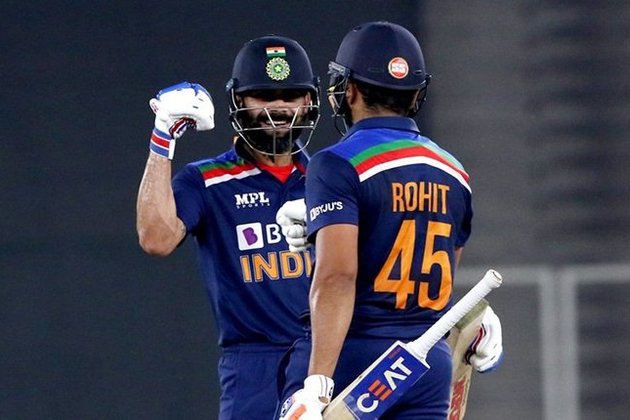
Ahmedabad, India, March 21 : Skipper Virat Kohli said he will continue to open the batting in Twenty20 cricket after his unbeaten 80 set up India’s series-clinching win over England.

Kohli was promoted up the order to partner Rohit Sharma for the first time in the shortest format and the move proved key as they put on a blazing stand of 94 to lay the foundation of India’s 224-2, their highest Twenty20 score against England.

Sharma blasted 64 before departing and Kohli, who started cautiously, finished with a flourish in his 52-ball knock in Ahmedabad.

“I am going to open in the IPL as well,” said Kohli, who captains Royal Challengers Bangalore in the Indian Premier League, after India’s 36-run win on Saturday gave them a 3-2 series victory.

“Look I have batted at different positions, but I feel we do have a very solid middle-order now. And now it’s about your two best players getting maximum number of balls in T20 cricket. So I would definitely like to partner Rohit at the top.”

Kohli anchored the innings after being invited to bat first by England captain Eoin Morgan, while Sharma blazed away with four fours and five sixes in his 34-ball blitz.

Once Sharma fell to Ben Stokes, Kohli took the lead and finished with seven fours and two sixes.

“As I rightly said, if we have a partnership and we both are set then you know that one of us is going to cause some serious damage,” said Kohli.

“And the other guy feels much more confident when one of us is still in and they know that they can play freely.

“So it augers well for the team. I would like this to continue and hopefully continue this form through to the World Cup.”

India are scheduled to host the T20 World Cup in October and November.

Kohli finished as the leading scorer over the five matches with 231 runs, including three half-centuries, and was named player of the series.

The teams will now contest a three-match one-day international series next week before the IPL starts on April 9.

Morgan said he wants his players to improve and shine in  the IPL with the T20 World Cup looming later this year.

“Taking advantage of the up-and-coming IPL is going to be huge. As a team and individuals we don’t want to stand still but move forward,” said Morgan, who captains Kolkata Knight Riders.

“Any opportunity guys get at the IPL you want to try to make the most of it, because we are going to be playing at home all summer and then we go to Bangladesh and Pakistan.”

UNDP Pakistan builds Gilgit Baltistan Judiciary’s capacity with Human Rights and Rule of Law trainings

Gilgit, 21 March 2021 : Amid many other responsibilities, justice sector professionals are responsible for ensuring citizen’s their basic human rights. It is for this reason that UNDP Pakistan’s Amn-o-Insaf Programme organized two five-day trainings on Human Rights and Rule of Law for the District Judiciary

of Gilgit Baltistan at the Judicial Academy, Gilgit. Held between 8 March to 17 March 2021 while observing strict Covid SOPs, the first round of the training was for judges from Gilgit Division while the second round will be held for judges from Skardu Division. Led by Professor Niaz. A. Shah from University of Hull and trained as a barrister at the Lincoln’s Inn, London, the target of these trainings was to strengthen the capacity of Gilgit Baltistan’s entire district judiciary.

Honourable Chief Justice GB Chief Court inaugurated the training and also the GB Judicial Academy. This will be the first training in the newly established Judicial Academy of Gilgit Baltistan. Judges from Punjab and Khyber Pakhtunkhwa Judiciary also delivered guest lectures via zoom/team.

The training focused on sensitising the District Judiciary on human rights and the rule of law and to enable judges to deliver human rights–based judgements protecting fundamental rights of people. The purpose was to sensitize judges on implementation of international human rights laws, independence of judiciary, the right to fair trial, children and women human rights and equality and non-discrimination in the justice system.While highlighting the importance of Human Rights and a strong Rule of Law, Professor Niaz said countries and communities with strengthened rule of law give their citizens the stability of knowing that all rights are respected and  E-mail: [email protected], Web: pakistan.un.orgprotected. “Human Rights and Rule of Law are intertwined. There is no rule of law within societies if human rights are not protected and vice versa; humanrights cannot be protected in societies without a strong rule of law. The rule of law is the implementation mechanism for human rights, turning them from a principle into a reality”.

This training on Human Rights and Rule of Law for Gilgit’s senior judiciary is a key component of UNDP Pakistan’s Amn-o-Insaf Programme that works withthe government, rule of law & justice institutions and communities in promoting rule of law through provision of support to the justice and security sectors in four provinces of Pakistan, Islamabad Capital Territory, Gilgit Baltistan (GB) and AJ&K.

The programme aims to promote an enabling environment, which will deepen the on-going efforts to secure peace and stabilization. Amn-o-Insaf is also assisting institutional and capacity development of rule of law institutions to ensure effective and speedy provision of justice and security services.

Ali Raza Syed praises wise stance of an EU’s legislator on human rights in occupied Kashmir

Brussels, 21 March 2021 : Chairman Kashmir Council Europe (KC-EU) Ali Raza Syed has lauded a wise stance of chair of European Parliament Sub committee for criticizing India over worse situation of human rights in occupied Kashmir and rights of the minorities and other oppressed sections of masses in India.

It is important to mention that Maria Arena, chair of the EU’s parliament sub committee for Human rights while addressing a recent online session of the parliament expressed her grave concerns over the worse situation of human rights in occupied Kashmir and as well rights of the minorities in India.

Talking about upcoming EU-India summit on 8th May in Portugal, she said, this meeting is an important opportunity for EU authorities to talk about human rights in India because civil society, journalists, students and the members of the minorities are under pressure in India, particularly India has forcibly closed the office of amnesty international which is condemnable. 

Chair of EU parliament sub committee further advised the European Union to ask India to release the political prisoners, remove sanctions on freedom of expression, and allow the human rights organizations to work specially end the lockdown and other restrictions in occupied Kashmir.

In a statement while welcoming the statement of European legislator Ms. Maria arena, chairman of Kashmir Council Europe Ali Raza Syed said, she has correctly defended the human rights in occupied Kashmir and India and correctly raised the issue of human rights before the EU.

Ali Raza Syed stated that EU should prefer the human rights in its trade dialogue with India and trade and investment agreements should be conditioned with the Indian promise to protect human rights.

He said, Kashmiris are suffering for last seven decades, but their hardships and miseries have been increased as Indian authorities took direct control of Jammu and Kashmir and imposed severe restrictions on the people of this disputed territory.

Chair of KC-EU added, several arrests of the political workers, constant lockdown, suspension of internet service and restriction on social media, forced disappearances of the youth and their killings created a harsh panic among the masses. Occupied Kashmir is witness of brutal state terrorism committed by the Modi government and there are many international reports concerning the poor  situation of human rights and brutalism by the Indian forces but Indian atrocities are continued such criminal acts without any hurdle.

Ali Raza Syed also lauded former Member of European parliament Dr Sajjad Karim, who always supported rights of people Jammu and Kashmir.

Chair of KC-EU said, in its talks with India, the EU should stay on the decision of 2008 by European parliament which emphasizing over the safeguard of human rights.

Stay Connected

64FansLike
60FollowersFollow

Latest Reviews

Exchange Rates

USD - United States Dollar
EUR
1.17
GBP
1.35
AUD
0.67
CAD
0.73