Home Blog Page 2531

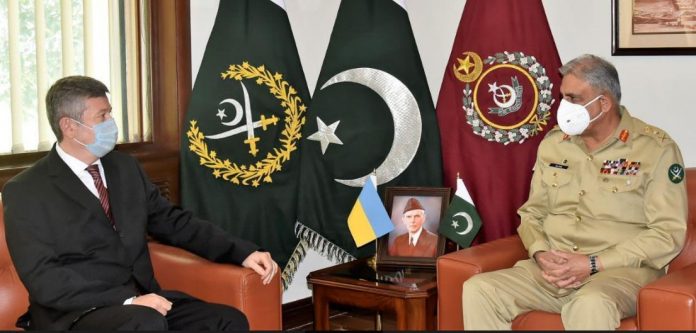
UKRAINE AMBASSADOR MEETS COAS GEN. BAJWA

DNA

RAWALPINDI, MAR 31 – Markian Chuchuk, Ukrainian Ambassador to Pakistan called on General Qamar Javed Bajwa, Chief of Army Staff (COAS) at GHQ, today. 

During the meeting matters of mutual interest, regional security and enhanced bilateral & defence cooperation came under discussion.

COAS said that Pakistan attaches great importance to furthering bilateral relations with Ukraine in all domains. The visiting dignitary appreciated Pakistan’s sincere efforts for bringing peace and stability in the region, especially the Afghan Peace Process.

Both sides reiterated the commitment for expanding bilateral engagements through structured forums and regular exchanges, particularly with respect to defence cooperation.

CGSS ORGANIZES CONFERENCE ON “EVOLVING GLOBAL SECURITY CHALLENGES IN THE POST-COVID WORLD”

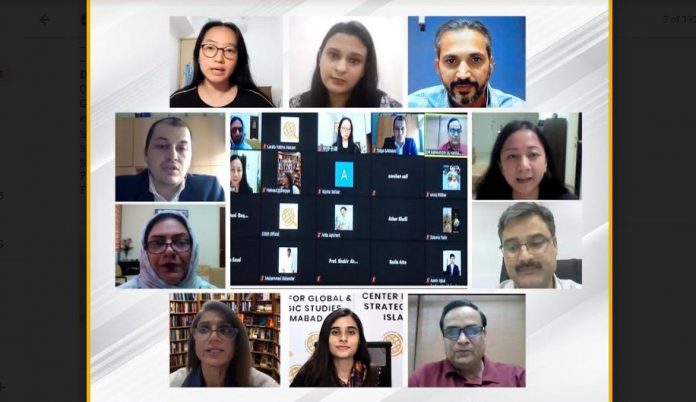
ISLAMABAD, MAR 31 (DNA) – An Online International Conference on “Evolving Global Security Challenges in the Post-COVID World” was organized by the Center for Global & Strategic Studies (CGSS), Islamabad.

The conference commenced with the opening remarks of Dr. Mehmood Ul Hassan Khan, Member Board of Experts, Center for Global & Strategic Studies (CGSS), Islamabad& Regional Geopolitical Analyst.

He stated that the COVID 19 pandemic has further disorganized existing global challenges, further exposing the underlying causes of insecurity, social and economic inequality with overtones of racial tension and nationalism. Furthermore, it is the knowledge that must be provided to decision-makers in-charge of internal and civil security to shift from forecasts to informed actions.

Mr. TolgaSakman, Chairman, Center for Diplomatic Affairs and Political Studies (DIPAM), Istanbul, Turkey discussed re-evaluating the international security architecture in the Post-Covid-19 era, potential areas, and policy options for Eurasia.

He further highlighted that the post-covid era has altered the security architecture. In recent years central Asia, East Asia, andthe Baltic sea have become crucial as Russia and China work on post-liberal political and economic arenas. Post covid security architecture has resulted in new consequences as the global supply chains have high effects on how democratic establishments can rescale peoples’ employment. He mentioned the idea of Global Partnership Cooperation to be the most essential ingredient for this new change.

Prof. Dr. Iram Khalid, Chairperson, Department of Political Science & IR, University of the Punjab, Lahore, Pakistan emphasized the impact of COVID-19 on the security dynamics of Asia

According to Dr. Iram, there are three major components to security dynamics that first and foremost include compartment reservation of Asia. It has become challenging to practice nontraditional security power. She emphasized the contemporary concepts where national security depends greatly upon the tangible and non-tangible interests and elements.  Furthermore, keeping in view the concept of commonality on an international scale, paradigms of new discussions have opened for foreign policymakers. She also mentioned that interconnectivity has altered the designs of traditional security into non-traditional security. Therefore, orthodox paradigms need revision to facilitate the worldwide new connections.

Dr. Adam Saud, Dean, Faculty of Humanities & Social Sciences, Bahria University, Islamabad, Pakistandiscussed the shifting of focus from the War on terror towards the strategic competition between the US, China, and Russia.

He further commented that the post-cold war political scenario changed as the US wanted to establish its global might. War on terrorism dominated global politics previously but post 2008, as the US underwent an economic crisis China began to revitalize the geo-economics realm. He emphasized that on the creation of geopolitical capital there is a gap to know who is the great power coefficient of the future? According to Dr. Adam Saud, the economic crisis and problems arising from lack of consensus can be tackled if the US recognizes China’s strategic competitiveness. Furthermore, in the contemporary era,the position holders will be visible as per their positive role.

Dr. Shafiah F Muhibat, Director of International Relations, Center for Strategic and International Studies (CSIS), Jakarta, Indonesia discussed the Security Challenges and Alignments in East Asia.

She further elaborated some major areas to illustrate the regional security challenges; maritime security, great power politics, humanitarian challenges, and challenges posed by Covid-19. She believed that further assistance and cooperation of regional states can enhance Maritime security. Dr. Shafiah further added to the discussion by signifying the cooperative role of hyper-potential countries like Korea in peacefully settling clashes. She also emphasized that despite the great power politics and tensions South Asia carries huge potential to smoothen the scenario by setting regional order as the top priority. This can be done by establishing trust and covering relations by efficiently responding to the challenges.

Dr. Aiysha Safdar, Head of International Relations Department, Kinnaird College For Women University, Lahore, Pakistan shared her views on redefining national security in the context of Pakistan

She also discussed that the arrival of Covid-19 has exposed the vulnerabilities on several fronts. Human security is a huge part of the national security caused by poverty, terrorism, economic downturns, etc. As the insecurities overlap they expand and take roots in several domains of societal strata. Highlighting the issues faced by the educational institutions she mentioned that the education sector has suffered due to lacking sustainable developmental goals as traditional learning shifted to online learning. Hence, the heavy long-term changes and challenges to mankind require a reinvention of new paradigms of national security and geo-strategies and heavy investments in human health.

Mr. Shakeel Ahmed Ramay, Director, China Study Center, Sustainable Development Policy Institute (SDPI), Islamabad, Pakistan highlighted how the Covid-19 pandemic is reshaping the China-US competition

He also discussed that given the global pandemic future changes are introducing new competitions in two major areas i.e. in the economy and the mobility capacity. In the present-day globalization process, technological emergence leads to competition in the better mechanized technological supply chains. Thus, having technology as the key area there is serious increasing competitiveness between China and the US. Therefore, the advantage can only be gained by countering the negative impacts of this growth and securing positive productive outcomes.

Dr. Naheed S. Goraya, Assistant Professor, Centre for South Asian Studies, University of the Punjab, Lahore, Pakistan discussed the collaborative approach worldwide to counter Non-Traditional Security Threats.

She further discussed that keeping in view rising Islamophobia it is important to give rise to cohesion and economic cooperation. We have to understand that the lack of knowledge is hindering integration and resulting in a rise to the vulnerability of isolation. If the issue is not addressed in time it will generate identity-based extremism because of politicizing of religion. We have to understand the main drivers of Islamophobi as and its relation with radicalism. To counter this symbiotic relation, Muslim leaders must actively promote Islamic theologies, to create trust and understanding. This would create harmony on inter-cultural grounds.

Prof. Sun Lu, Associate Professor, School of Government &  Public Affairs, Communication University of China, Beijing, Chinadiscussed China’s approach in the context of rising Multi-polarity and the Emerging geopolitical environment

She also highlighted that from the historic content of almost a hundred years ago, it can be seen that the various wars like the Iraq war and the Syrian war are the practical depiction of the Clash of Civilizations approach. In the past pandemic times and changing world dynamics, Sino-US relations are splitting the world into geopolitical groups. Therefore, China in efforts of introducing the new ideals aims to resolve this potential division. She further mentioned the idea of a community with a shared future and the potential positive impacts on the global community.

The conference was moderated by Ms. Laraib Fatima Hassan, Communication & Coordination Manager, Center for Global & Strategic Studies (CGSS), Islamabad, and was attended by 100 participants including regional experts, members of academia, and students of International Relations and related fields.

The conference was also viewed live on various social media platforms by 200 viewers.=DNA

=========================

STUDY FINDS POOR STATE OF PROTECTIONS FOR FREEDOM OF EXPRESSION IN PAKISTAN

Pakistan scored only 30 out of 100 points on the Freedom of Expression Assessment Index, which monitored the country’s performance with 60 indicators for the year 2020 ● Threats of legal and regulatory action on the basis of expression were compounded by issues related to the online harassment of journalists, Covid-19 disinformation, the digital divide, and restrictions on media access during the pandemic

Staff Report

ISLAMABAD, MAR 31 – Pakistan performed poorly with respect to legal and practical protections for the right to freedom of expression of its citizens during 2020, according to a new assessment report published by Media Matters for Democracy. 

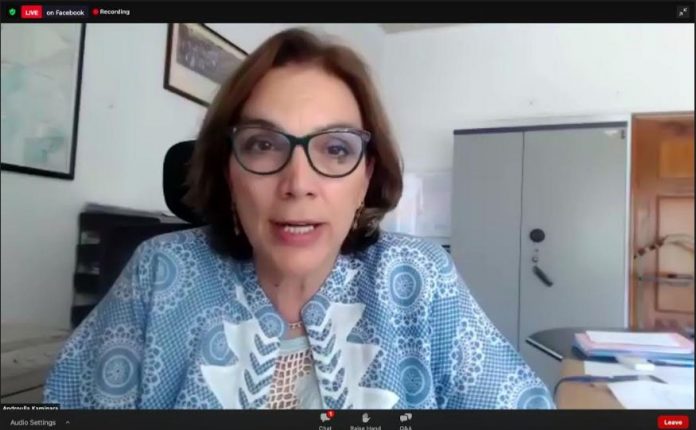
The Pakistan Freedom of Expression Report 2020 was launched through a webinar on Wednesday. Speaking at the report launch, the European Union (EU) Ambassador to Pakistan Androulla Kaminara said, “Today’s report provides a comprehensive analysis of the state of freedom of expression in Pakistan and highlights some concerning trends. Freedom of Expression is enshrined in the European Charter of Fundamental Rights. It is also one of the important aspects of Pakistan’s GSP+ commitment to uphold international Human Rights Conventions and a key priority in the Strategic Engagement Plan between EU and Pakistan.” Ambassador Kaminara said, “As this report confirms, the situation of journalists and documentation of threats they face through attacks, intimidation and harassment is particularly concerning. 

Disinformation is another area of concern, and one, which the European Union is working to address both at home and abroad. Misleading or false information can put lives in danger. It is crucial to resolutely counter disinformation with transparent, timely and fact-based communication and thus reinforce the resilience of societies.” The report documents the situation of freedom of expression in Pakistan with a new index based on six dimensions namely the legal environment, press freedom, digital expression, pluralism, the socioeconomic and political situation, and protection from threats to expression. The indicators for these dimensions were measured through a survey of a panel of experts from the fields of politics, media, academia, law, and human rights advocacy, as well as statistics collected through desk research. Pakistan scored low on all six dimensions to provide an overall score of only 30 points out of a total of 100 points on the assessment index. This cumulative score fell in the range of “poor” protections for freedom of expression in the country. 

The report found that during the year 2020 Pakistan’s media and Internet regulatory authorities continued to exert arbitrary legal and regulatory restrictions on speech and online content, by ordering bans, suspensions, and advisories against social media apps, entertainment content, and news discussions of social and political issues. Journalists remained vulnerable to physical, legal, and digital threats in the absence of longawaited legislation on journalists’ safety, according to the study. The report found that at least eight individuals connected with the media were killed, at least 36 journalists were attacked in the line of duty, 10 were arrested, and as many as 23 instances of arbitrary detentions in connection with news reporting and online expression were recorded across Pakistan during the year. Women journalists were especially targeted with coordinated online attacks as they reported on political issues and the government’s pandemic response. The report noted that the Covid-19 pandemic intensified the challenges to freedom of expression and access to information in Pakistan.

 Internet users were consistently exposed to disinformation while journalists reporting on the pandemic faced physical safety risks and restrictions on access to information sources, and many young citizens without Internet services found themselves abandoned as education systems shifted online, according to the report. The online report launch also featured a panel discussion with press freedom advocate Owais Aslam Ali, journalist Asad Hashim, digital rights activist Farieha Aziz, and MMfD Co-founder Sadaf Khan. The panelists spoke about the impact of the pandemic on free speech in the country. Mr. Owais Aslam Ali said the professional solidarity among journalists against press curbs has weakened, which means individual journalists have little support when they face threats.

 Mr. Asad Hashim said Pakistani journalists have remained vulnerable throughout the pandemic and now they are under increased risk of online attacks and being subjected to cybercrime cases for their online expression. Ms. Farieha Aziz shared her opinion that the social media rules threaten the online freedom of expression. She said the rules should be withdrawn formally in order to have a meaningful conversation about the legal and constitutional status of the cybercrime law’s content blocking provision. Ms. Sadaf Khan said disinformation affects the public’s ability to access credible information and make informed decisions, so it is important to raise awareness among the masses about how to evaluate information critically. The research study was prepared as part of the EU-supported Civil society for Independent Media and Expression (CIME) initiative undertaken by the Centre for Peace and Development Initiatives and partner organisations Media Matters for Democracy and the Pakistan Press Foundation.

TURKISH BASKETBALL CLUBS ADVANCE TO EUROLEAGUE PLAYOFFS

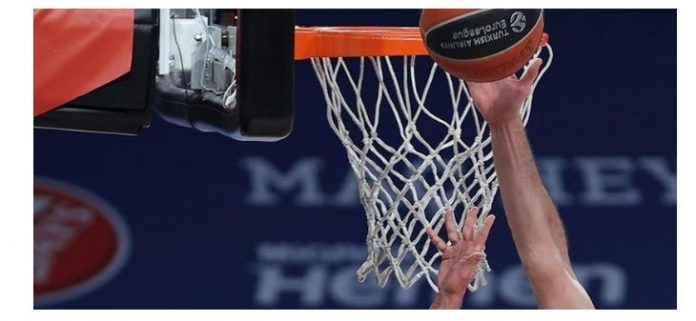
ANKARA, MAR 31: Turkish basketball powerhouses Anadolu Efes and Fenerbahce Beko secured a place in the 2021 playoffs of the Turkish Airlines EuroLeague on Tuesday.

Both Istanbul clubs chalked up road wins as Anadolu Efes hammered their Spanish opponents Real Madrid 108-83 and Fenerbahce Beko beat Germany’s Bayern Munich 77-68.

Turkish center Sertac Sanli was Anadolu Efes’s top scorer with 17 points. Playmaker guard Shane Larkin scored 16 points to contribute to the large win in Madrid.

Anadolu Efes’ Krunoslav Simon added 15 points.

Trey Thompkins scored 19 points for Real Madrid while Spanish star Rudy Fernandez produced 13 points for the Whites.

Anadolu Efes bagged 21 wins in 32 games to qualify for the next stage. Meanwhile, their city rivals Fenerbahce Beko improved to 20 victories in the regular season.

French playmaker Nando De Colo led Fenerbahce Beko to score 21 points against Bayern Munich in Germany. Marko Guduric produced 18 points for Fenerbahce Beko as well.

The Turkish club’s Czech star Jan Vesely racked up 15 points.

Bayern Munich’s American guard Wade Baldwin IV was his team’s highest scorer with 20 points.

Anadolu Efes and Fenerbahce Beko are guaranteed to join Spain’s Barcelona, Russian team CSKA Moscow and Italian club AX Armani Exchange Milan in the playoffs.

Only the best eight teams will be in the 2021 playoffs, so three others are awaited.

The EuroLeague regular season will end after the Round 34 matches on April 8-9.

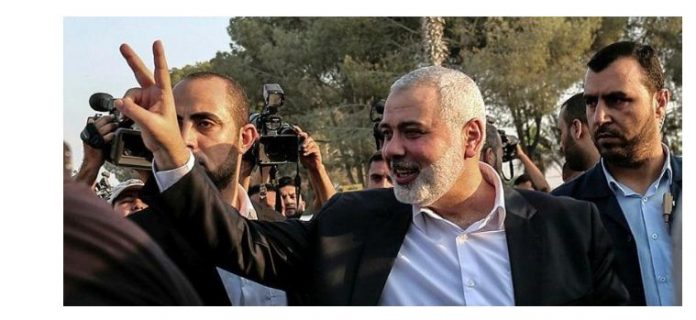
PALESTINIAN RIGHT TO RETURN ‘SACRED’ THAT NO ONE CAN ABANDON OR NEGLECT: HAMAS CHIEF

ISTANBUL, MAR 31 – Hamas political chief Ismail Haniyeh has stressed that the Land Day is an affirmation of the Palestinian right to return to their homeland.

In exclusive statements to Anadolu Agency in Istanbul, on the 45th anniversary of the Palestinian Land Day, marked on March 30, Haniyeh said the occasion affirms adherence to “the homeland and the right of return. It is a sacred right that no one can abandon or neglect.”

The Palestinian Land Day is a commemoration of the killing of six Palestinians during protests against an Israeli decision to expropriate about 21,000 dunams of land on March 30, 1976.

“The Land Day is an eternal day in the memory of the Palestinian people. It marks a direct confrontation between the people of the land occupied in 1948 and the Zionist occupation, which was trying to control and settle in a precious part of our occupied Palestinian land,” Haniyeh said.

“During [the confrontation], a number of people were wounded and martyred. The Palestinian people celebrate this memory every year because it carries many symbols, the most important of which is that the land is the core of the conflict between us and this occupation,” he said.

Haniyeh went on to say that the Palestinian people do invaluable and precious sacrifices “in order to protect the land and the homeland and to confront the annexation and settlement plans that the occupation has been trying to implement since it occupied blessed Palestine.”

The Hamas chief considered that “when we talk about this day, it is from the memoir of the people inside occupied Palestine as it is a confirmation that the Palestinian people are united in Gaza, in the West Bank, in Jerusalem, in the 48 territories, and in exile and diaspora.”

“Our adherence to the homeland and the right of return is a sacred right that no one can abandon or neglect. Therefore, I pay special greetings to the people in occupied Palestine in 1948 and I assure them that the battle is one and the destiny is same,” Haniyeh said.

“The Palestinian people will have their political entity, their land and their state on the land of Palestine, God willing,” Haniyeh stressed.

ISLAMABAD SAYS STABILITY IN SOUTH ASIA LINKED TO KASHMIR ISSUE

ISLAMABAD, MAR 31 – Pakistan‘s Prime Minister Imran Khan has said that peace and stability in South Asia is linked to the resolution of all outstanding issues, mainly the long-smoldering Kashmir dispute, which has been a bone of contention between the two nuclear-armed rivals.

Responding to a congratulatory message from his Indian counterpart, Narendra Modi on the occasion of Pakistan Day, which was celebrated on March 23, Khan said on Tuesday his people also desire “peaceful, cooperative relations with all neighbors, including India.”

In his message, Modi had said his country desires “cordial relations with the people of Pakistan.”

“We are convinced that durable peace and stability in South Asia is contingent upon resolving all outstanding issues between India and Pakistan, in particular the Jammu and Kashmir dispute,” Khan went on to say.

Creation of an “enabling environment“, he further said, is imperative for a constructive and result-oriented dialogue. He was referring to Modi’s call for an “environment of trust, and devoid of terror and hostility” between the two countries.

“I also take this opportunity to convey our best wishes for the people of India in the fight against the COVID-19 pandemic,” Khan added.

Relations between the two sides plummeted to a new low following India’s scrapping of the longstanding special status of Jammu and Kashmir in August 2019.

The two neighbors, however, last month agreed to honor the 2003 cease-fire along the Line of Control — a de facto border that divides the picturesque Himalayan region between the two countries.

Kashmir is held by India and Pakistan in parts and claimed both in full. A small sliver of Kashmir is also held by China.

Since they were partitioned in 1947, the two countries have fought three wars — in 1948, 1965, and 1971 — two of them over Kashmir.

Some Kashmiri groups in Jammu and Kashmir have been fighting against Indian rule for independence, or unification with neighboring Pakistan.

According to several human rights organizations, thousands of people have reportedly been killed in the conflict in the region since 1989.

ICCI ASKS FBR TO DEFER TAX COLLECTION FROM BUSINESSES

DNA

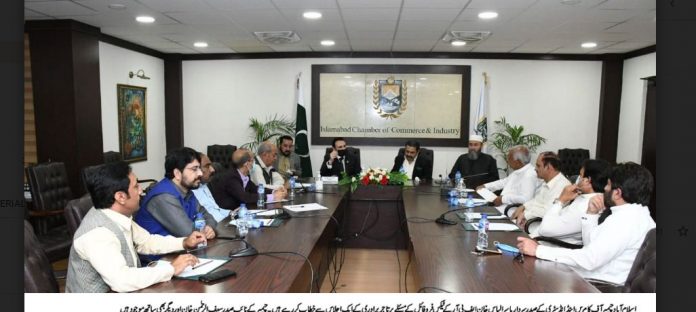
ISLAMABAD, MAR 31 – Sardar Yasir Ilyas Khan, President, Islamabad Chamber of Commerce & Industry (ICCI) lauded the decision of FBR for extending the deadline to furnish the taxpayer profile  up to 30th June 2021 as it would reduce pressures on taxpayers by giving them more time for preparation of their profiles. However, he urged that FBR should simplify the taxpayer profile as it required extensive information including mandatory submission of bank account detail, business premises detail and utility connections detail that would be a very cumbersome exercise for the taxpayers and would consume a lot of their time in its completion. He said this while presiding over a meeting of the business community at ICCI.  

Sardar Yasir Ilyas Khan said that the business community has been demanding of the FBR since long for developing a simplified and easy taxation system to enhance tax compliance as the current complicated tax system was a major hurdle for many potential taxpayers to come into the tax net. However, instead of focusing on simplifying the tax regime, FBR has developed a tax profiling system, which has made the tax payment obligation more difficult for taxpayers. He said that many members of the business community were already finding it very difficult to complete the filing of online income tax returns and were demanding for the development of a one pager tax return form in Urdu to facilitate them. He said that instead of making things easy for taxpayers, FBR has come up with the requirement of taxpayer profile that would make their job more difficult to complete. He stressed that FBR should revise its decision and focus on a simple and short version of taxpayer profile for promoting ease of doing business.

ICCI President said that due to the 3rd wave of Covid-19, the government has banned the operation of many businesses including weddings halls, marquees, indoor dining in restaurants, besides reducing business days for retail and timings that have caused great losses for the business community. Therefore, he urged that FBR should defer the collection of taxes from the business class during the 3rd wave of coronavirus or allow them to pay income and other taxes of current financial year in easy instalments that would provide them some relief in these turbulent business conditions.

Fatma Azim Senior Vice President and Abdul Rehman Khan Vice President ICCI said that the GST rate was quite high in Pakistan and was an important source of high cost of doing business and high inflation. Therefore, they emphasized that the government should bring down the GST rate to a single digit level in the upcoming budget that would reduce production cost and inflation and facilitate the growth of business and industrial activities.

AIOU commences online examinations in Middle East today

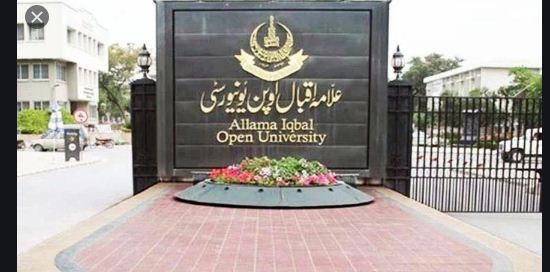
Islamabad, March 31(DNA). Allama Iqbal Open University (AIOU) is commencing online examinations today for its students settled in various countries of the Middle East including KSA, Kuweit, Qattar, UAE, Oman and Bahrin for the programs offered in autumn 2020 semester including matriculation and intermediate. Roll number slips and date sheet have been dispatched to the students  as well these are uploaded on the university website (www.aiou.edu.pk) for quick access and downloading.


It is pertinent to mention here that AIOU, as a prestigious national institution, is offering educational services, ranging from matriculation to bachelor level, to the Pakistanis settled in Middle East so that they can empower themselves through education and training to explore better employment opportunities.AIOU is striving hard to extend these educational services to other countries too. Conducting online examinations in Middle East is, undoubtedly, a significant milestone achieved by AIOU as a result of untiring efforts of Prof Dr Zia Ul- Qayyum in digitalizing key administrative and academic operations of the university since he assumed the charge of his office as the Vice Chancellor, AIOU.


For any further information, the students may contact Directorate of Overseas, Educational Programs and E- Learning, Room no: LG-08, ICT Building, AIOU, Islamabad. They can, also, dial these numbers in case of any query: +929057165-51, +929057175-51. 

AZERBAIJAN INDEBTED TO PAKISTAN FOR SUPPORT: COL MEHMAN

The Azerbaijan defence attaché especially thanked the government of Pakistan that took a bold stand on the issue thus sending a loud and clear message to Armenia that Pakistan was with Azerbaijan and will extend all possible support

Special Correspondent

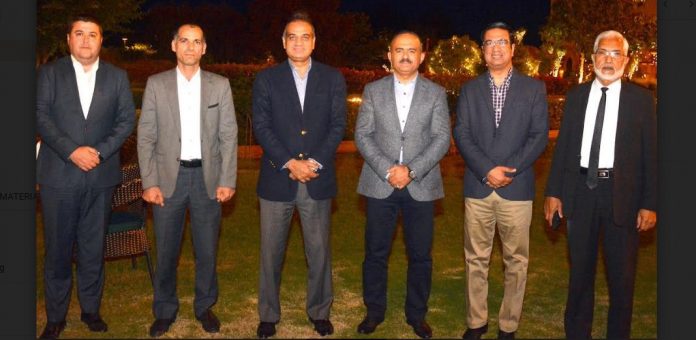
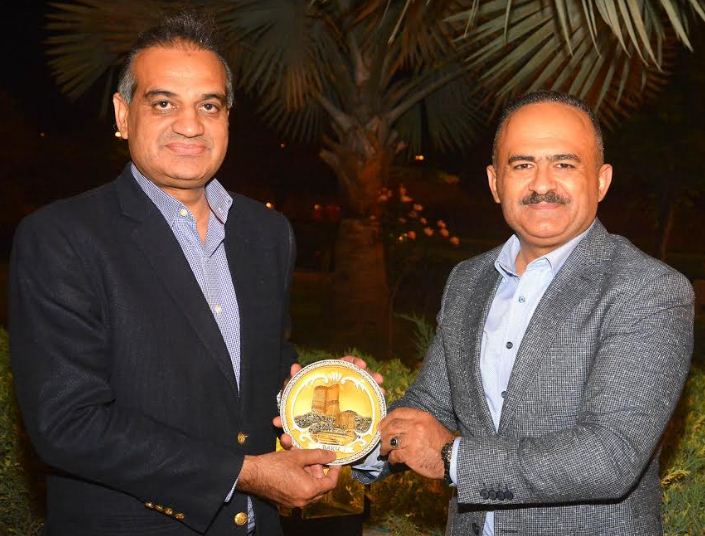
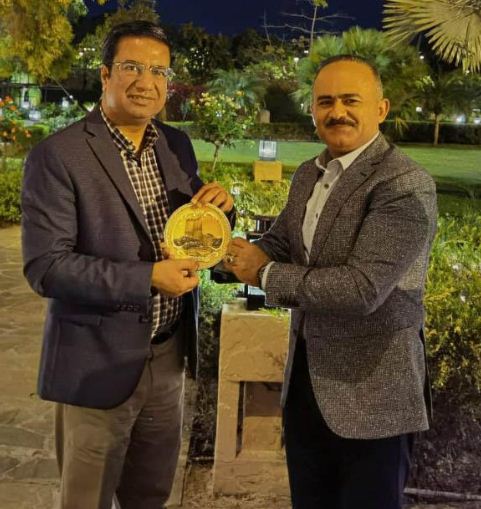
ISLAMABAD: Col. Mehman Novruzlu the Defence Attache of the Azerbaijan has said his country was greatly indebted to Pakistan and people of Pakistan for extending whole-hearted support during 40-days war with aggressor Armenia.

He expressed these views during a dinner he hosted for friends from media and think- thank CGSS.

Col. Mehman further said that the Armenian aggression had left for them with no option but to respond to the aggression adding by the grace of God and with the help of friends, Azerbaijan successfully liberated the occupied territories from the aggressor.

The Azerbaijan defence attaché especially thanked the government of Pakistan that took a bold stand on the issue thus sending a loud and clear message to Armenia that Pakistan was with Azerbaijan and will extend all possible support.

Col. Mehman also thanked people of Pakistan saying Pakistani people have a unique love and affection for their Azerbaijani brothers and sisters and vice versa. He said Azerbaijani people keep Pakistanis in very high esteem.

It may be mentioned here that relations between Pakistan and Azerbaijan have touched new heights. The Azerbaijan embassy spearheaded by Ambassador Ali Alizade is actively taking part in various humanitarian as well other social and welfare projects in Pakistan.

Besides, various high level delegations from Pakistan have visited Azerbaijan in recent days. The Pakistan Air Force delegation is still in Azerbaijan to explore difference avenues of cooperation.

The Azerbaijan government has invited Pakistani companies to take part in the rebuilding of the newly liberated areas. The Azerbaijan leadership on a number of occasions expressed its earnest desire to engage Pakistani companies in order to further strengthen bilateral relationship.

Fwd: Fpcci And Saarc Chambers Greet Hammad Azhar

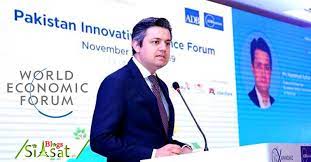
LAHORE,  March 31  :  Federation of Pakistan Chamber of Commerce and Industry and SAARC Chamber of Commerce and Industry Wednesday congratulated Hammad Azhar for assuming the portfolio of federal finance minister and hoped will restore  the confidence of business community.

In a joint statement President SAARC Chamber Iftikhar Ali Malik ,FPCCI Vice Presidents FPCCI Raja Muhammad Anwar,Muhammad Nawaz,Adeel Siddiqui and Muhammad Asif Yousaf Jeewa urged Prime Minister now  to focus on his party  manifesto and live up the aspirations of the people who voted him to power besides special focus on economic growth with specific direction for pursuing export oriented policies.He said what business community badly needed is peaceful atmosphere,business friendly environment and export oriented policies coupled with judicious and prudent economic policies for strengthening the national economy on sound footings.

Iftikhar Ali Malik said Hammad Azhar is highly educated politician having spark to deliver the goods. He said it’s good omen that Prime Minister selected a right politician for right job and he will help steer the country out of economic crunch. He said his father former Governor Punjab and Lord Mayor Lahore Mian Muhammad Azhar is a one of the seasoned and polished politician. He hoped that Hammad Azhar will follow the footprints of his illustrious father by becoming the most successful and highly competent finance minister.

Raja Muhammad Anwar said  “Pakistan has tremendous potential as we have enormous talent. What we need is the consistency in the government policies and a clear roadmap to move forward,” he added  which he said is only possible through sustained  prudent economic policies.

Muhammad Nawaz said Hammad Azhar must attach great importance to MSMEs which always play a key role in the economy of the advanced and developed countries worldwide.

Adeel Siddiqui said that now business community across the country pinned high hopes on Hammad Azhar for better package of incentives to accelerate the economic activities and stimulate the growth on sound footings.

Muhammad Arif Yousaf Jeewa said that survival of the country rested on sustained economy so now PM must take non controversial trade leaders into confidence in policy making process to yield better results otherwise we can never compete the world even our neighbors.

Stay Connected

64FansLike
60FollowersFollow

Latest Reviews

Exchange Rates

USD - United States Dollar
EUR
1.17
GBP
1.34
AUD
0.67
CAD
0.72