Home Blog Page 161

Bennett urges Taliban to release detained journalists ahead of press freedom day

Bennett urges Taliban to release detained journalists ahead of press freedom day

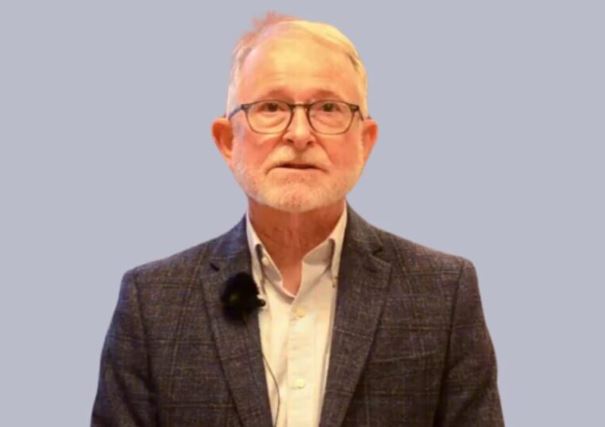
NEW YORK: Richard Bennett, the UN special rapporteur for Afghanistan, has called on the Taliban to immediately release detained journalists and ease restrictions on the media, warning that press freedom in the country continues to deteriorate.

Bennett made the appeal ahead of World Press Freedom Day, urging Taliban to allow journalists to work without fear of arrest, harassment or retaliation.

He said press freedom has eroded significantly since the Taliban returned to power in 2021, with independent reporting increasingly constrained by censorship, surveillance and legal restrictions.

The UN special rapporteur pointed to measures including rules linked to the Taliban’s law on the promotion of virtue and prevention of vice, which he said have contributed to a restrictive environment for media workers.

Journalists face growing risks even when carrying out routine reporting, particularly when covering sensitive issues such as women’s rights or criticizing authorities, Bennett said.

He cited data from the Afghanistan Journalists Center indicating that at least 34 journalists were detained in 2025.

According to media advocacy groups, at least four journalists are currently detained in Taliban prisons. They include Shakib Nazari, Abuzar Sarem, Hamid Farhadi and Bashir Hatef.

Bennett said threats, intimidation and accusations of collaborating with foreign media have become more common, contributing to a climate of fear and widespread self-censorship.

He added that not only journalists but also their sources face pressure, with reports of threats, surveillance and detention of individuals speaking to the media.

The situation is particularly difficult for women journalists, who face additional restrictions on movement, dress and access to work, as well as unequal treatment in newsrooms, he said.

Bennett said the decline in press freedom is part of a broader contraction of civic space in Afghanistan, where activists, civil society members and critics of Taliban policies face increasing risks.

He also raised concerns about censorship of books and publications, restrictions on access to information and legal provisions that criminalize criticism using vague definitions.

Despite the challenges, Bennett said Afghan journalists continue to report under difficult conditions, both inside the country and from exile, playing a key role in documenting human rights issues.

He warned that declining international funding for independent media is further weakening the sector, limiting journalists’ ability to operate safely and sustain reporting.

Bennett called on the international community to increase financial and technical support for Afghan media and to strengthen protections for journalists at risk.

“A free and independent press is indispensable for Afghanistan’s future,” he said.
Moroccan Sahara: Germany Reaffirms Centrality of Autonomy Under Moroccan Sovereignty, Intends to Act According to this Stance on Diplomatic & Economic Fronts

Moroccan Sahara: Germany Reaffirms Centrality of Autonomy Under Moroccan Sovereignty, Intends to Act According to this Stance on Diplomatic & Economic Fronts

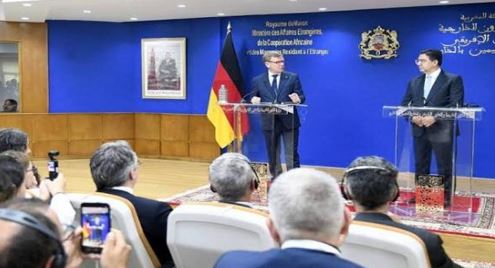
Rabat: Germany reaffirmed the centrality of autonomy under Moroccan sovereignty regardingthe Sahara issue and intends to act in accordance with this stance on the diplomatic and economic fronts. This position was expressed in the joint declaration adopted at the close of the second session of the “Morocco-Germany Multidimensional Strategic Dialogue“, held Thursday in Rabat between Minister of Foreign Affairs, African Cooperation, and Moroccan Expatriates Nasser Bourita and his German counterpart Johann Wadephul.

The Federal Republic of Germany also welcomed Resolution 2797 adopted by the UN Security Council on October 31, 2025, affirming that “genuine autonomy under Moroccan sovereignty could represent the most feasible solution” to the regional dispute over the Moroccan Sahara. Germany further reaffirmed the centrality of the Autonomy Initiative presented by the Kingdom of Morocco, stating that it considers the autonomy plan presented by Morocco “a serious and credible basis for negotiations” toward a just, lasting, and mutually acceptable resolution of this regional dispute.

Reiterating its full and unwavering support for the UN Secretary-General and his Personal Envoy in conducting and facilitating negotiations “based on the Moroccan autonomy plan”, Germany welcomed Morocco’s willingness to “explain what shape autonomy under Moroccan sovereignty would take,” the joint declaration notes. Under the terms of the same joint declaration, Germany committed to “act in accordance with this stance on the diplomatic and economic fronts” in compliance with international law, the text concludes.

Voicing concern over Korean tensions, Pakistan urges dialogue

Voicing concern over Korean tensions, Pakistan urges dialogue

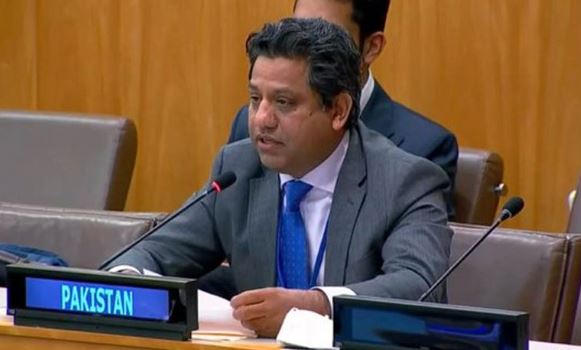
UNITED NATIONS, 01 MAY (DNA) —    Amid growing concern over North Korea’s expanding nuclear and ballistic-missile programmes, Pakistan has called for diplomatic engagement and dialogue to address the challenges confronting the Korean Peninsula. “We strongly support the calls for revival of talks among the relevant parties.”

Ambassador Usman Jadoon, deputy permanent representative of Pakistan to the United Nations, told the UN Security Council debate on ‘Non-proliferation/Democratic People’s Republic of Korea (DPRK)’. “Coercive or provocative actions as well as threats and heated rhetoric must come to an end,” the Pakistani envoy said, adding, “These developments are detrimental to regional and international peace and security.”

Pakistan, he said, supported the objective of denuclearization of the Korean peninsula, the implementation of the relevant UN Security Council resolutions and the goals of global non-proliferation and disarmament. “Recent overtures may be reciprocated and followed up with resumption of diplomatic engagement to address underlying disputes”, Ambassador Jadoon said, urging the Security Council to act with unity to promote peace and stability in the Korean peninsula.

“The Council must find ways to contribute to stabilizing the situation in the region through supporting a robust political process and exploring all possible confidence building measures.”  The Pakistani envoy said a critical function of the 1718 Committee is processing humanitarian exemptions.  “We believe that humanitarian exemptions should continue without political considerations,” he said.

“We will continue to support the Committee’s efforts to facilitate humanitarian assistance to DPRK through a robust exemptions mechanism.”  Earlier, the UN Under-Secretary-General in the Departments of Political and Peacebuilding Affairs and Peace Operations, Rosemary DiCarlo, told the 15-member Council that DPRK has continued to conduct ballistic-missile launches, including ballistic and cruise missiles.  “In the past month, the DPRK has also tested ballistic missiles equipped with what it calls cluster-bomb and fragmentation-mine warheads,” she added.

Recently, the International Atomic Energy Agency (IAEA) warned of a “very serious increase” in the country’s fissile material production capacity at the Yongbyon nuclear site. She urged Pyongyang to comply with international safeguards and ratify the Comprehensive Nuclear-Test-Ban Treaty.

 Noting that this year marks the beginning of the Democratic People’s Republic of Korea’s new Five-Year Military Development Plan for 2026-2030, she said this plan includes the introduction of “new secret arsenals and special strategic assets”.— DNA

Uzbekistan delegation visits Pakistan Tanners Association to boost leather trade and regional connectivity

Uzbekistan delegation visits Pakistan Tanners Association to boost leather trade and regional connectivity

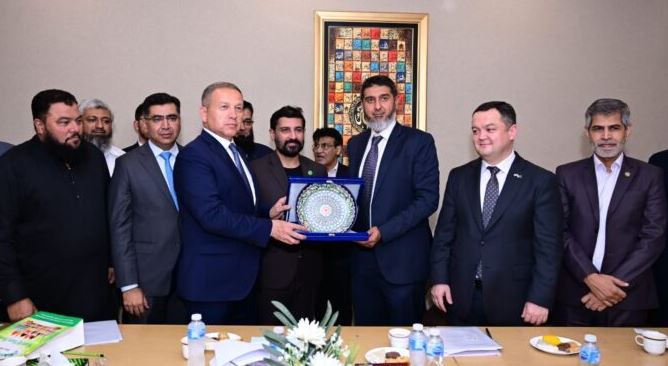
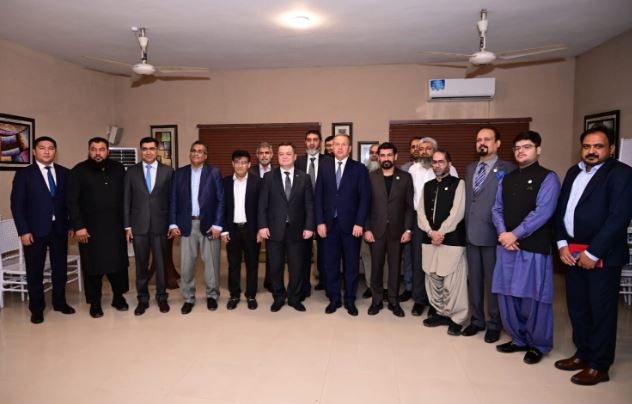
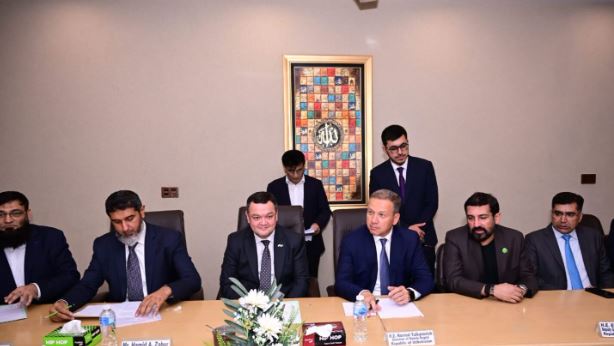
KARACHI, MAY 1: A high-level delegation from Uzbekistan, led by Governor of Navoiy Region Normat Tursunov, visited the Pakistan Tanners Association (PTA) to explore new avenues of trade cooperation and industrial collaboration in the leather sector.

London Meeting Highlights Media Dialogue Between Pakistani Journalist and Chevening Fellow. The delegation also included Alisher Tukhtaev, who accompanied the visit aimed at strengthening bilateral economic relations between Pakistan and Uzbekistan.

The visiting delegation was received by PTA leadership, including Chairman PTA Central Hamid Zahur and Chairman PTA South Zone Dr. Danish Aman, along with other senior members of the association.

During the meeting, PTA Chairman Hamid Zahur emphasized the significant potential for expanding bilateral trade in the leather industry. He noted that Pakistan’s tanners could benefit from Uzbekistan’s livestock resources, while Uzbekistan could serve as a strategic export gateway for Pakistani leather goods such as garments, footwear, handbags, and gloves into Central Asian and Russian markets.

Governor Normat Tursunov briefed participants on investment-friendly opportunities in Uzbekistan’s Navoiy Region, highlighting its livestock capacity and industrial potential that could support Pakistan’s leather manufacturing sector.

Ambassador Alisher Tukhtaev shared updates on improved air connectivity, noting that six weekly flights currently operate between Lahore and Islamabad to Tashkent. He also announced efforts to launch two weekly direct flights between Karachi and Tashkent in 2026, aimed at further enhancing trade, tourism, and business connectivity.

He also extended an invitation to PTA members to visit Uzbekistan and assured full facilitation through the Embassy of Uzbekistan in Pakistan for future business engagements.

The meeting concluded with a vote of thanks by Dr. Danish Aman, who appreciated the delegation’s visit and expressed optimism about strengthening long-term industrial and trade cooperation between the two countries.

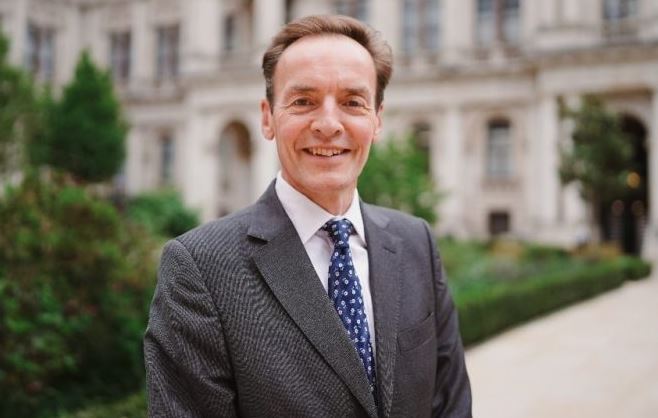
UK Envoy Richard Lindsay Urges Taliban-Pakistan De-escalation in Kabul Visit

UK Envoy Richard Lindsay Urges Taliban-Pakistan De-escalation in Kabul Visit

KABUL: Richard Lindsay, the United Kingdom’s Special Representative for Afghanistan, has emphasized the need to reduce tensions between the Taliban and Pakistan, reopen border crossings for the passage of humanitarian aid, and improve the human rights situation during his recent visit to Kabul.

The UK Foreign Office said in a statement on Thursday, April 30, that Lindsay met with senior Taliban officials, representatives of the Taliban-controlled Red Crescent, and members of civil society during the visit.

According to the statement, the UK’s Special Representative stressed the necessity of de-escalation and a return to dialogue with Pakistan, warning that the continued closure of border crossings is preventing life-saving assistance from reaching more than one million women and children.

He also raised the United Kingdom government’s serious concerns regarding restrictions imposed on women and girls in Afghanistan, stating that without the participation of half the population, Afghanistan cannot achieve stability and prosperity.

Lindsay further underlined the importance of constructive dialogue within the framework of the United Nations-led process and called for practical measures in the areas of human rights, inclusive governance, and cooperation to counter terrorist threats.

He added that the United Kingdom remains committed to supporting the people of Afghanistan and has allocated £151 million in humanitarian assistance for the years 2025 to 2026.

President witnesses signing of joint venture agreement

President witnesses signing of joint venture agreement

SANYA, May 1: President Asif Ali Zardari on Friday witnessed the signing of one Joint Venture Agreement and two memorandums of understanding between Pakistani and Chinese organisations, covering construction machinery, animal health and medical technology.

The engagements are aimed at advancing practical cooperation in key sectors, a Presidency’s news release said.
A memorandum of understanding was signed between Al Hassan Trade Establishment, Sany International Development and Hainan Jiaolong International Technology on cooperation in high-end equipment, manufacturing and construction machinery.
The trilateral collaboration focuses on supporting work related to the China Pakistan Economic Corridor, strengthening cooperation in the supply of complete construction machinery and equipment, development of a professional talent training system and provision of after-sales operation and maintenance services.
The parties will also explore investment opportunities for establishing factories in Pakistan and advancing localised production of construction machinery. The MoU was signed by Senator Saleem Mandviwalla, Vice President of Sany Group Li Qin, and Chairman of Hainan Jiaolong International Trade Company Hao Jiaolong.
A Joint Venture Agreement was concluded between the Livestock & Fisheries Department, Government of Sindh and Luoyang Modern Biology Group, China for the distribution and supply of animal vaccines in Pakistan, including Foot-and-Mouth Disease vaccines.
The agreement also provides for exchange of technology and future cooperation on the introduction of track and traceability systems for animals in Pakistan.
The Agreement was signed by Senior Provincial Minister Sindh, Sharjeel Inam Memon and Chairman Luoyang Modern Biology Group Wang Shanpu.
Another memorandum of understanding was signed between Dr Ziauddin Hospital and Shenzhen Weibang Technology to develop a cooperation model based on “product + service + solution” in the field of medical technology.
The understanding focuses on the innovative application of medical intelligent robots in clinical medicine, with a view to supporting the development of Pakistan’s medical and health system.
The MoU was signed by Dr Anoop Kumar Dawani from Dr Ziauddin Hospital and Deputy General Manager of Shenzhen Weibang Technology Mr Deng Haitao.
On this occasion, a short documentary tracing 75 years of friendship between Pakistan and China was also screened.
Ali Hassan Brohi; Syed Qasim Naveed Qamar, Special Assistant to the Chief Minister of Sindh for Investment and Public-Private Partnership Projects; Chief Secretary, Sindh and Pakistan’s Ambassador to China Khalil Hashmi were also present on the occasion.

ICCI, GICC Ink MoU to Boost Pakistan-China Business Cooperation

ICCI, GICC Ink MoU to Boost Pakistan-China Business Cooperation

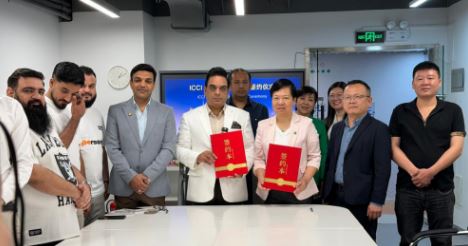
Guangzhou, MAY 1 /DNA/ – In a significant step towards deepening economic integration between Pakistan and China, Sardar Tahir Mehmood, President of the Islamabad Chamber of Commerce and Industry, signed a strategic Memorandum of Understanding (MoU) with the Guangzhou International Cooperation Center (GICC)during his official visit to Guangzhou.

Accompanied by Imran Minhas, the Executive Member and head of Foreign Delegations Committee,  the ICCI leader is actively engaging Chinese stakeholders to unlock new avenues of trade, investment, and industrial collaboration.

The MoU establishes a structured framework for institutional cooperation, enabling Pakistani and Chinese enterprises to explore joint ventures, expand market access, and benefit from a one-window facilitation mechanism. Islamabad is being positioned as a strategic hub for incoming investment, supported by ICCI’s coordinated platform aimed at ensuring ease of doing business.

The ICCI delegation held high-level B2B engagements with leading Chinese firms, particularly in construction, infrastructure development, and real estate—sectors critical to Pakistan’s economic expansion. Further meetings with companies specializing in artificial intelligence, smart solutions, and global supply chain management highlighted growing interest in technology-driven partnerships.

In a forward-looking move, ICCI has invited top Chinese companies to Islamabad, where structured B2B sessions will be organized following pre-screening of credible Pakistani counterparts to ensure meaningful and productive engagements.

Sardar Tahir Mehmood underscored that these efforts are designed to translate diplomatic goodwill into tangible economic outcomes, paving the way for sustained investment, technology transfer, and long-term industrial cooperation between Pakistan and China.

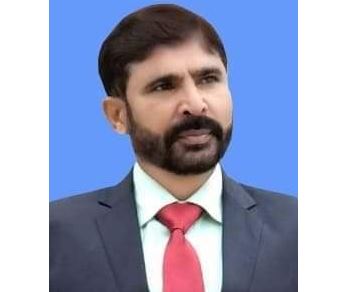
The Challenge before Rana Sikandar Hayat

The Challenge before Rana Sikandar Hayat

Dr. Muhammad Akram Zaheer

In the evolving landscape of Punjab’s governance, the role of the education minister carries both symbolic and practical weight. It is a portfolio that not only shapes policy but also influences the intellectual future of millions. In this context, Rana Sikandar Hayat stands out as a prominent political figure, particularly rooted in the constituency of Pattoki, whose rise reflects a blend of local political grounding and provincial ambition.

Rana Sikandar Hayat’s political identity is closely tied to Pattoki, a region often described as politically vibrant yet developmentally uneven. His emergence from this locality is not merely incidental; rather, it reflects the enduring importance of constituency politics in Punjab. Leaders who maintain a strong connection with their electorate often carry that sensibility into provincial governance. In Hayat’s case, his familiarity with grassroots issues—ranging from school infrastructure deficits to teacher shortages has shaped his public narrative as a minister who understands the system from the bottom up. The education sector in Punjab has historically been both a success story and a persistent challenge. While previous administrations have introduced reforms in enrollment, digitisation, and monitoring, systemic issues continue to linger. It is within this complex terrain that Rana Sikandar Hayat has assumed office. His tenure, therefore, is being closely watched not just for policy innovation but for continuity and consolidation of earlier gains.

One of the defining features of Hayat’s political persona is his emphasis on administrative efficiency. Observers note that his approach tends to favour measurable outcomes—attendance rates, examination performance, and school functionality—over rhetorical commitments. This aligns with a broader trend in Punjab’s governance model, where data-driven oversight has increasingly replaced traditional bureaucratic inertia. However, the challenge lies in ensuring that such metrics translate into meaningful learning outcomes rather than merely statistical improvements. Critics, however, argue that the education ministry requires more than managerial competence. It demands a vision that addresses deeper structural inequalities—urban-rural divides, gender disparities, and the persistent gap between public and private schooling systems. In this regard, the expectations from Rana Sikandar Hayat remain high. His ability to move beyond administrative reforms and articulate a long-term educational philosophy will likely define his legacy.

Another dimension of his role is political balancing. As a well-known figure in Pattoki, Hayat carries the weight of local expectations alongside provincial responsibilities. Constituents often expect tangible development new schools, upgraded facilities, and employment opportunities. Balancing these demands with broader policy priorities is a delicate task, one that tests the political acumen of any minister. In Punjab’s highly competitive political environment, maintaining this equilibrium is crucial for both governance and electoral viability. Furthermore, the education sector in Pakistan is increasingly influenced by global trends. From digital learning platforms to curriculum reforms aligned with international standards, the pressure to modernise is constant. Rana Sikandar Hayat’s ministry must navigate these demands while remaining sensitive to local contexts. The introduction of technology in classrooms, for instance, cannot succeed without addressing basic infrastructural gaps such as electricity and internet access in rural areas.

There is also the question of curriculum and ideological orientation. Education in Pakistan has long been a site of contestation, reflecting broader societal debates about identity, history, and modernity. Any attempt at reform inevitably invites scrutiny from various quarters—political, religious, and civil society. How Rana Sikandar Hayat approaches this sensitive domain will be indicative of his political skill and policy clarity. Supporters of the minister point to his accessibility and engagement with stakeholders as a positive sign. Teachers, administrators, and local representatives often emphasise the importance of a responsive leadership style in addressing day-to-day challenges. If sustained, this approach could help bridge the gap between policy formulation and implementation, a persistent weakness in the education sector.

Yet, the scale of the challenge cannot be overstated. Punjab’s education system serves millions of students across diverse socio-economic backgrounds. Issues such as dropout rates, quality of instruction, and resource allocation require sustained attention and innovative solutions. Short-term interventions, while necessary, are insufficient without a coherent long-term strategy. In assessing Rana Sikandar Hayat’s performance, it is important to recognise the broader institutional constraints within which he operates. The education ministry does not function in isolation; it is part of a larger governance ecosystem that includes finance, planning, and local government departments. Effective coordination among these entities is essential for meaningful reform. The minister’s ability to navigate this پیچیدہ administrative landscape will significantly influence outcomes.

Ultimately, the significance of Rana Sikandar Hayat’s role extends beyond his individual political trajectory. As Punjab’s education minister, he occupies a position that directly impacts the province’s human capital development. Education, after all, is not merely a sectoral concern; it is the foundation upon which economic growth, social cohesion, and democratic stability are built. For Pattoki, his leadership represents a source of local pride and political visibility. For Punjab, it is an opportunity to advance educational reform at a critical juncture. Whether this opportunity is fully realised will depend on a combination of vision, execution, and political will.

 Rana Sikandar Hayat’s tenure offers a telling case study of contemporary governance in Punjab where local roots intersect with provincial responsibilities, and where the promise of reform must contend with the realities of implementation. The coming years will reveal whether his stewardship of the education ministry can translate ambition into lasting impact.

‘Pentagon is lying’: Netanyahu’s gamble cost US four times official estimate, Araghchi says

'Pentagon is lying': Netanyahu's gamble cost US four times official estimate, Araghchi says

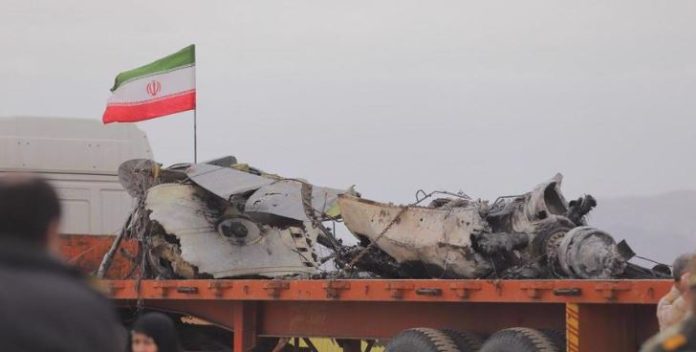
TEHRAN, MAY 1: Iranian Foreign Minister Abbas Araghchi says the Pentagon is lying about the financial toll of the war on Iran, noting that the aggression has directly cost the United States $100 billion so far—four times the official estimate.

“The Pentagon is lying. Netanyahu’s gamble has directly cost America $100b so far, four times what is claimed,” Araghchi wrote on X Friday.

“Indirect costs for U.S. taxpayers are FAR higher. Monthly bill for each American household is $500 and rising fast,” he added.

“Israel First always means America Last,” he said, referring to the Israeli role in dragging the US into a war of aggression against the Iranian nation.

Israel dragged US into war against Iran, State Department confirms
The US State Department has admitted that Israel pushed Washington into a war of aggression against Iran.
His comments come as the Pentagon’s $25 billion cost estimate faces mounting scrutiny from multiple quarters.

According to a CNN report citing three unnamed sources familiar with internal assessments, the figure presented by a senior Pentagon official to lawmakers on Wednesday significantly underestimates the true financial burden.

The sources revealed that the $25 billion figure excludes extensive damage inflicted on US military bases across the region during Iran’s defensive strikes.

When reconstruction and replacement of destroyed assets are factored in, one source noted, the cost likely ranges between $40 billion and $50 billion.

Academic experts paint an even grimmer picture. Professor Linda Bilmes, a public policy expert at the Harvard Kennedy School, projects the Iran war could ultimately cost US taxpayers $1 trillion.

“I am certain we will reach $1 trillion for the Iran war,” Bilmes said in an interview, estimating short-term costs at around $2 billion per day during the 40 days of the war.

Bilmes argued the Pentagon’s accounting methods mask the true expense, as figures are based on historical inventory values rather than current replacement costs—which are typically far higher.

Long-term expenses include reconstruction of damaged facilities, replenishing military inventory, rebuilding bases in the Persian Gulf, and potential lifetime disability benefits for roughly 55,000 deployed troops exposed to Iran’s retaliatory attacks.

Meanwhile, an online tracker monitoring the war’s cost to American taxpayers shows the figure has reached $67 billion.

Veteran Senator Bernie Sanders issued a warning Wednesday, criticizing the Trump administration for funneling massive public funds into what he called a pointless war instead of addressing domestic needs.

“War in Iraq: $2.1 trillion. War in Afghanistan: $2.3 trillion. Projected cost of the war in Iran: $1 trillion. Somehow, there is always money for war, but never enough money for housing, education or the needs of working people. We must and will change our national priorities,” Sanders wrote on X.

The criminal US-Israeli aggression against Iran began on February 28 with airstrikes that assassinated senior Iranian officials and commanders and targeted the country’s infrastructure, including economic facilities. Over 3,300 Iranians have lost their lives in the aggression, according to the latest data.

Iranian armed forces responded with daily missile and drone operations targeting locations in Israeli-occupied territories and US military bases across the region.

Iran also closed the Strait of Hormuz to ships belonging to the US and its allies that participated in or supported the aggression, triggering a significant spike in oil prices.

A Pakistan-brokered temporary ceasefire took effect on April 8, forty days into the war. Negotiations in Islamabad subsequently stalled amid Washington’s excessive demands and unreasonable positions.

Tehran says the illegal US blockade on Iran’s ports should be lifted before the next stage of talks for ending the war begins. Iran has also asserted it has no intention of reopening the Strait of Hormuz as long as the blockade remains in place.

Meanwhile, the US blockade of Iranian ports has failed to achieve its stated aim of cutting off Iran’s oil revenues.

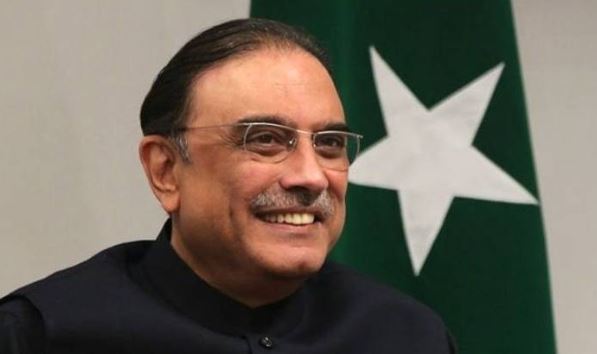
President condemns interception of Gaza-bound humanitarian flotilla in int’l waters near Greece

President condemns interception of Gaza-bound humanitarian flotilla in int'l waters near Greece

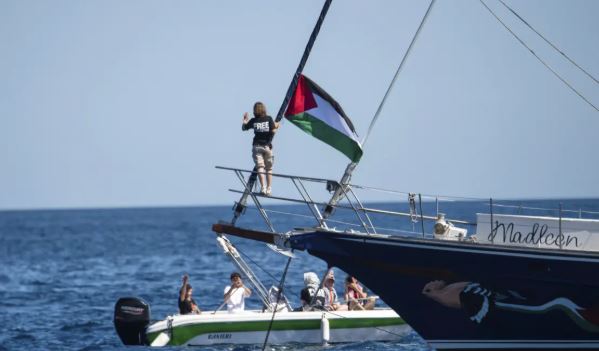
ISLAMABAD, May 1 (DNA): President Asif Ali Zardari on Friday strongly condemned the interception of a Gaza-bound humanitarian flotilla by Israeli forces in international waters near Greece, and described it as a deeply troubling development amid an already grave humanitarian crisis in Gaza.

The president expressed concern over the safety of all detained activists and urged that their rights and well-being be fully respected, a Presidency’s news release said.

He emphasized that humanitarian assistance must never be obstructed and called for the immediate facilitation of aid delivery to affected civilian populations in Gaza.

He also urged the international community to play its role in preventing further escalation and in safeguarding the principles of humanitarian access and freedom of navigation.

Stay Connected

64FansLike
60FollowersFollow

Latest Reviews

Exchange Rates

USD - United States Dollar
EUR
1.14
GBP
1.34
AUD
0.70
CAD
0.71