Home Blog Page 1420

Govt castigates Imran for ‘backtracking’ from foreign conspiracy narrative

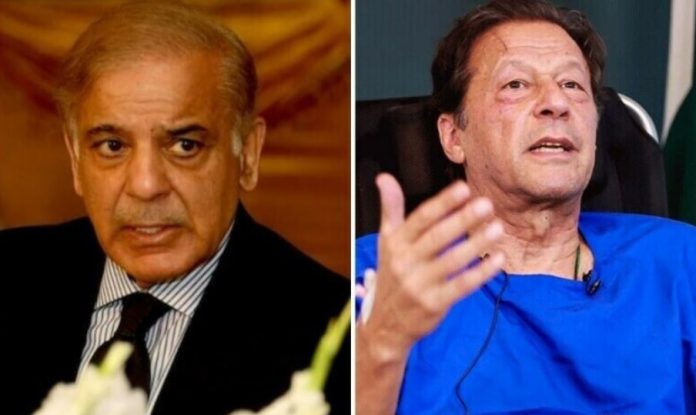
ISLAMABAD: Prime Minister Shehbaz Sharif said on Monday that PTI chairman Imran Khan’s rebuttal of the foreign conspiracy narrative was a reminder of the “vicious role he played to harm Pakistan’s external relations while pursuing his own petty politics”.

In an intervie w with British newspaper Financial Times, Imran — who has repeatedly claimed that a US-backed conspiracy was behind his ouster in April — said he no longer “blamed” the US administration for his removal from power.

The PTI chief also said he wanted a “dignified” relationship between Washington and Islamabad.

“As far as I’m concerned it is over, it’s behind me,” the newspaper quoted Imran as saying. In a tweet today, the premier said that the nation was shocked by Imran’s “deceit and treachery inflicting irreparable damage on Pakistan”.

Meanwhile, Information Minister Marriyum Aurangzeb, in a series of tweets, said that the former premier will have to provide an answer for the apparent change in his narrative.

She addressed Imran and said that putting the matter behind him would not suffice.

“You will have to give an answer for the narrative on the basis of which lies and chaos were spread in the country,” she said, adding that withdrawing the claims without giving an explanation would not be enough.

“Today is a question mark for all those who believed what Imran said.”

Lambasting Imran for “playing with national interest”, the information czar said the former PM cannot get rid of all the accusations by saying “it’s behind me”.

“After destroying the country with his lies, Imran is now telling everyone to forget the US conspiracy narrative,” she said.

“Does Imran think his supporters are sheep and goats?”

The PML-N minister said the PTI chief is backtracking from his narrative of US conspiracy, imported government and the regime change operation because it never existed in the first place.

“Today, Imran Khan has given up on his narrative of imported government and regime change,” Marriyum added, saying that the real face of the party’s so-called Haqeeqi Azaadi had been “completely exposed”.

The information minister accused Imran of putting the country’s foreign relations in grave danger for the sake of power.

“Imran played a dirty game with national interests in his lust for power. He pulled off tricks and put the country and its people at stake. After teaching lies to the nation, Imran now says that the US conspiracy is over.”

She questioned how Imran could tell everyone to leave the US conspiracy narrative behind when he had kept appealing to the Supreme Court to take notice of it.

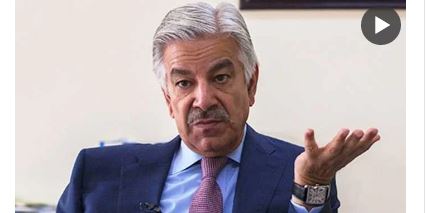
Climate Change Minister Sherry Rehman also termed Imran’s recent claims as the “mother of all U-turns”.Separately, addressing the parliament later in the day, Defence Minister Khawaja Asif said Imran should not be allowed to go scot-free after the series of allegations levelled against the “imported” government for coming into power through a “US conspiracy” and a “regime change operation.”

Govt not in favour army chief extension law

Discussions underway to do away with the legislation, claims Interior Minister Rana Sanaullah

DNA

ISLAMABAD: The PML N government intends to change the law that seeks to give extension to the Chief of the Army Staff in order to defuse any confusions, said the Interior Minister Rana Sanaullah while speaking in a TV show on Monday.

The interior minister further said the government was already in contact with its allies on this issue and wants to do away with it sooner rather than later. He said the high command of the PML N discussed these issues during recent meetings.

Rana Sanaullah further said the purpose of doing away with the extension system is to avoid any confusion and unnecessary controversies. He said, respective army chiefs may try to get extension which may create institutional problems therefore the government wants to amend this provision. He hoped the military establishment would also support the initiative.

To a question he said the summary for the appointment of new army chief shall be initiated as per law. He said the prime minister will make the selection keeping in view the larger interest of the country.

He said, there were unnecessary rumors being spread about this appointment. He also dispelled the impression as if this appointment were discussed in London. He said, Prime Minister Shehbaz Sharif is well aware of the sensitivity of this appointment there he would never discuss it publicly. He avoided the question when he was asked whether the current DG ISI was also in the run for the coveted slot. He made it clear that no government high officials had ever met with the candidates being discussed for the top post.

The Interior Minister said, “people should wait and see and avoid speculations”. He however asserted that everybody would be satisfied with the selection the prime minister will make, at the end of the day. He also ruled out divergent views among the party leaders on various names being discussed for the said post.  

Pakistan remain committed to safety of Chinese workers: FO Spokesperson

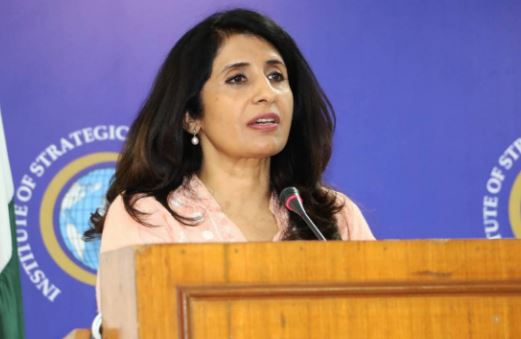
ISLAMABAD, NOV 14 (DNA) — Foreign Office spokesperson Mumtaz Zahra Baloch while responding to a question regarding the verdict in last year’s terrorist attack on Chinese engineers working on the Dasu hydropower project said the Foreign Office has noted the judgement passed by the relevant Court and details released by the local police.

“While specific queries may be directed to the relevant authorities, the proactive investigation, prosecution and judgment in this case have once again demonstrated Pakistan’s abiding commitment to counterterrorism,’ added Baloch.

“We again extend our deepest condolences to the victims’ families and remain committed to the safety and security of Chinese workers, projects and institutions in Pakistan. The ironclad Pakistan-China All-Weather Strategic Cooperative Partnership will never be undermined by hostile forces.”

Last Friday, a special Anti-Terrorism Court (ATC) has handed over death sentence to two accused of a terrorist attack on a bus carrying Chinese engineers working at Dasu Hydropower Project.

On July 14, 2021, 120 Chinese engineers and three Pakistanis workers were traveling to the Dasu Hydropower Project construction site when their bus was targeted by terrorists with a car driven by a suicide bomber. The bus got out of control of the driver due to the impact of the blast and plunged into a deep ravine. The incident led to the death of at least 13 people, including Chinese engineers, two FC officers, and two laborers.

Abbottabad police and the CTD of a premier intelligence agency and a special team not only solved a completely blind case but also took it to its logical conclusion.

Unfolding Food Security in AJ&K

Dr. Shahid Hameed

Food security in Azad Jammu & Kashmir is one of the paramount issue that needs to be considered at both the institutional and community levels. When it comes to struggling to makes ends meet, people frequently blame hoarders and the governments for the rise in the cost of basic food items. As the economy worsens and the majority of people struggle to afford basic essentials of life, anxiety increases and creates a sense of insecurity, which culminates into negative opinions.

This unrest in society develops when the issue grows and spreads both vertically and horizontally. With the passage of time, this societal unrest stemming from individual frustration to societal dissatisfaction becomes source of polarized political and philosophical approaches. At this point, it also gets an easy task for other states to exploit the situation and wage psychological and hybrid warfare. In short, a deteriorated social structure may be detrimental to the national security of a state and thus requires securitization. 

Statistics from the AJK Planning and Development Department show that as of the 2017 Census, there were 4.045 million people living in the 1768 villages that make up the AJK area. Intriguingly, there are not any overcrowded districts in AJK, however approximately 30% of people are unemployed. Despite this unemployment, there is a decline in agricultural employment in rural areas.

Dependence on non-productive and non-technical services as well as excessive resource waste are the main causes of the region’s declining economic conditions, which fuel social dissatisfaction. Azad Jammu & Kashmir was self-sufficient in staple foods such as maiz, rice, and vegetables a few decades ago. Even wheat has been grown as a necessary crop, and a considerable section of the population was able to meet its needs.

 When people were effectively using land and other natural resources for production, a sizeable chunk of the needs of the rural population were also being fulfilled by locally grown brinjal, beans, chillies, mustard, spinach, garlic, tomato, potato, coriander, turnip, carrot, radish, and other crops. In different parts of AJK, there are many medicinal plants, including shrubs and herbs, but no effective management has yet been put in place.

Better oversight, instruction, and processing capabilities may be advantageous to the people of AJK because they may not only enhance employment opportunities but also considerably enhance their domestic needs. The economic and social strength in AJ&K eventually declined as a result of the societal inclination to towards a non-agricultural lifestyle, especially after the 2005 earthquake.

With respect to the numerous facets of food security, such as its production, availability, usage, quality, safety and health, AJK was significantly affected, with subsequent psychological and political implications. An increased crime rate, a culture of bribery in public sector workplaces, violence, and most importantly, a decline in national integration  have become an essential part of our society. To evaluate differences and changes in these socially important traits that ultimately weaken intra-national bonding, a careful analysis is needed. Universities, institutions, and individual scholars must concentrate on these specific concerns that are harming national integrations, religious harmony, and giving informational warfare a platform. All of these social evils are essentially connected to stress and anxiety on an individual and societal level, which is a result of the adjustments we made to change our cultural and historical posture.

In AJK, a substantial portion of the land has now turned into wasteland. When compared to the period before the 1990s, agricultural and vegetable production fell by 70%. The state’s economy is heavily dependent on non-technical jobs and the diaspora in Europe and the Middle East. On the one hand, these non-technical job holders lack the qualifications to contribute in almost any manner to industrial development, while a major section of the diaspora is not a resident of any foreign country and, as a result, lacks future food security when they return home.

The national security policy (2022-26) is the most valid instrument that tackles this important topic. The portion of the policy document that is not classified demonstrates that we are aware of the significance of these overlooked facts, which are critical for maintaining national security. However, immediate and efficient action must be taken to restore the AJK society’s shattered portions, particularly food security playing a key role. Existing systems for ensuring food security need to be improved.

Assessment of production and use on a village-by-village basis is the initial important prerequisite. Even though AJK’s agricultural, livestock, and natural resource potential has been studied widely, the refined and comprehensive plan is still necessary to achieve the intended outcomes. The micro-financing should be extended and youth and students should be given small loans for specific agricultural and food production projects.

Infact, ensuring the food security in AJK will ensure the national security. Engaging and supporting students, young people, and non-technical workforce in proper resource usage to improve economic conditions will have profound impacts. Additionally, it calls for appropriate instruction and significant reforms in primary education. The responsible authorities should introduce trainings for practical capacity management and sustainable resource at village, school and college level.

There is also a dire need for intra-departmental coordination with respect to the food security in AJK. The linkage between public offices, the university researchers and local markets is still missing and thus needs a serious attention. If the government becomes able to successfully address the problems with food security in AJ&K, this will have a positive impact on intra-state political and social environment as well as national integration.

Dr. Shahid Hameed is Director Research at Center of International Strategic Studies (CISS) AJK.

Istanbul’s beating heart reels from deadly blast

Monitoring Desk
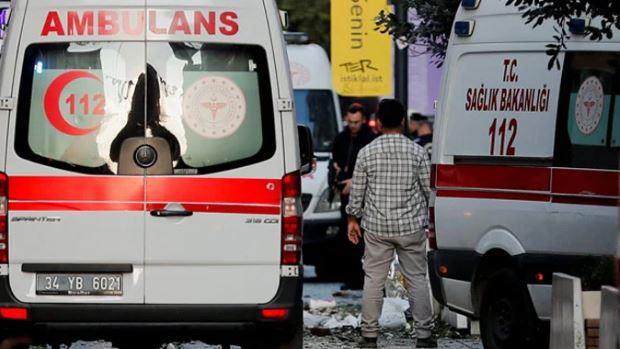
ISTANBUL: The video was short, but graphic. Sunday-afternoon crowds suddenly scattered by the sound of an explosion. Orange flames and black smoke rising into the air as people ran for their lives.

Hours later, Istiklal Street is busy again. Two tables have been placed on either side of the street, draped with cloths and heaped with red carnations. These islands make people slow down, and pause to look. The videos showed them exactly what happened here on Sunday. The mood now is solemn.

Already, the grey pavement tiles have been scrubbed clean. At ground level the physical signs of the carnage have been swiftly removed.

A low velvet-covered podium has replaced the shattered bench where police believe the attacker hid the bomb before walking away. But when you look up, shattered windows tell the story of what happened here.

Istiklal Street often feels to me like the very definition of life. It is crowded from morning until night, and you often have to weave your way through groups of strolling shoppers.

It is a real focus for tourists, who come to buy boxes of sweet baklava from traditional shops. The clanking sound of a traditional Turkish ice cream seller is never far from your ears.

It is a focal point for Turkish families, too, to watch the street entertainment, and to shop. The alleys that radiate out are filled with bars and restaurants. It is the main artery of the beating heart of this city.

This is not the first time that Istanbul has known terror. Between 2015 and 2017 more than five hundred people were killed in attacks in Turkey by Islamist militants and Kurdish separatists.

Even Istiklal Street suffered a devastating suicide bombing. In the hours after yesterday’s explosion, old footage from that blast started to circulate online once again.

Turkey’s Interior Minister Suleyman Soylu said initial findings showed the PKK Kurdish separatist group was behind Sunday’s attack, though no organisation has yet claimed responsibility. He promised Turkey would “retaliate soon” against whoever carried out the bombing.

The PKK – the Kurdistan Workers’ Party – denied any role in the blast, saying “we will not directly target civilians”.

The blast has created a fresh nervousness on the streets of Istanbul. “I believe in what the minister says, 100%,” says Burhan Kizilkaya. He runs a small restaurant just off Istiklal Street. “It’s clearly a terrorist attack. They killed innocent people, and children. They should all be executed. I think though security here is much tighter, thanks to our government, so I don’t think the darkest times will return.”

Nesim Celik is a Turkish citizen, but with Kurdish heritage. He doesn’t believe that the PKK were responsible for the attack.

“Now everybody is concerned that the period of heavy violence might come back here,” he tells me. “They say as the elections approach next June the bombs will return. I didn’t feel like that. But after yesterday, now I do.”

Memories here are still fresh, and raw. Mecit Bal’s son was in the street outside their small family kiosk, just 20 metres away from the blast. The force knocked him to the ground, his father said.

Khawaja Asif rejects reports of consultation between Nawaz, Shehbaz on COAS appointment

ISLAMABAD: Defence Minister Khawaja Asif Monday maintained that the army chief’s appointment will be done on the prime minister’s discretion.

Speaking with journalists outside the National Assembly, the minister said: “The prime minister has discretion regarding the army chief’s appointment; therefore, the prime minister will make a decision on the appointment.”

When questioned if a decision on army chief’s appointment has been made, the defence minister responded in the negative.

Responding to another question about the role of PML-N supremo Nawaz Sharif in the appointment, Khawaja Asif said that it will be done on the “premier’s discretion” and he will decide.

When asked if Nawaz Sharif was not being consulted on the matter, the minister said: “Consultations have not yet taken place on the army chief’s appointment. These are just newspaper reports.”

Last week, PM Shehbaz flew to London — after returning from his visit to Egypt to attend and co-host the United Nations’ COP27 — where he met the PML-N supremo and party’s senior leadership.

It was reported that discussions during these high-level meetings revolved around crucial political matters in Pakistan including the new army chief’s appointment.

Meanwhile, after extending his visit twice following health reasons, the prime minister returned to Islamabad earlier today; however, the decision on the important appointment — according to the defence minister — is yet to be taken.

Commenting on the U-turn taken by PTI chief Imran Khan on the United States-backed conspiracy — in relation to his ouster in April this year following a no-confidence motion in the parliament, Asif asked if it was the first time that Khan has denied something.

“He denies everything. In the past four years, he has talked so much. Has he stood by any of his statements?”

After spending months giving statements about a cypher from the US which allegedly meant to topple his government, PTI chief Khan — in an interview with the Financial Times a day earlier — signalled the desire to mend ties with the US through cooperation with Washington in the future.

The minister added that the former prime minister himself does not remember the state he is in and what he says.

“Yesterday, Imran Khan said that the FIR [first information report] of his murder has not been registered. This man does not know what he says. If some people are ready to believe his words, it is their matter,” Khawaja Asif said commenting on the contradictory statements by the PTI chairman.

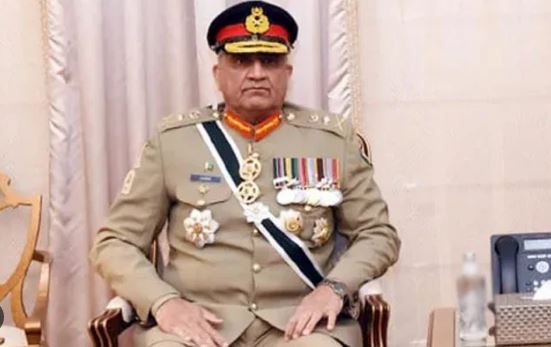
It should be noted that the PML-N leadership had resolved to appoint the senior-most officer whose name is at the top of the list that would be sent to the government, as per reports; while incumbent Chief of Army Staff (COAS) General Qamar Javed Bajwa will retire on November 29.

EU-Pakistan: Launch of a comprehensive dialogue on migration and mobility

DNA

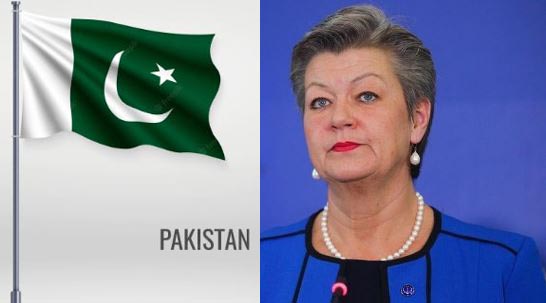
Islamabad, NOV 14: Ylva Johansson, European Commissioner for Home Affairs, paid a two-day visit to Pakistan to discuss with the Government, law enforcement bodies and UN agencies a broad spectrum of bilateral questions on migration and security. Pakistan and the EU wish to strengthen their cooperation in all migration related areas, including from a regional point of view.

In a first, the European Union and Pakistan agreed to launch a comprehensive dialogue on migration and mobility. This will encompass all relevant aspects of migration management, including legal pathways for migration to Europe and addressing irregular migration and migrant smuggling and, continued enhanced cooperation on return, readmission and reintegration, through the full and effective implementation of the Pakistan-EU readmission agreement.

Commissioner Johansson and Minister of State for Foreign Affairs, Hina Rabbani Khar agreed to intensify preparations for the launch of a Talent Partnership with Pakistan to facilitate working and living in interested EU Member States for suitably qualified Pakistani nationals.

Commissioner Johansson thanked the Pakistani Government for their generosity in hosting 3 million Afghans, 1.3 million of whom are refugees.

She stated that it is a continental solidarity that the European Union has recently experienced, with the hosting of 4.5 million Ukranian refugees in the course of this year.

The Commissioner held discussions with Federal Ministers and Secretaries of Interior; Overseas and Human Resource Development; and Education and Professional Training, about possibilities for legal and safe pathways of migration to Europe.

With Minister Rabbani Khar, Commissioner Johansson agreed to intensify the concrete bilateral cooperation in security, including counterterrorism and fighting criminal networks, including the fight against smuggling of migrants.

The Commissioner visited Peshawar, where she exchanged views with the Frontier Corps and the Federal Investigation Agency (FIA). She was briefed about fight terrorism and against organised crime and on border management activities.

Commissioner Johansson agreed with the Minister of State that the first EU-Pakistan counterterrorism dialogue since 2018 will be held in the beginning of 2023 in Islamabad.

A broad exchange of views on migration and Afghan refugees with several UN agencies completed the Commissioner’s first visit to Pakistan.

Experts fear Shaheen Afridi’s career in jeopardy, criticise PCB’s medical panel

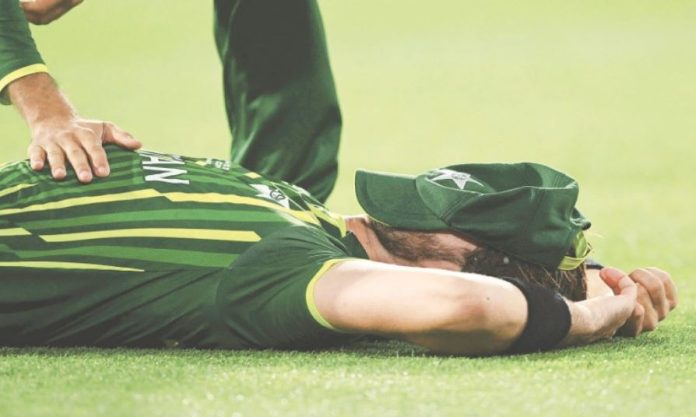
LAHORE: Pakistan pace spear­head Shaheen Shah Afridi’s career might be in jeopardy. The left-armer was forced to abort his third over — the 15th of the innings — in the T20 World Cup final loss against England at the Melbourne Cricket Ground on Sunday after an awkward landing on his right knee while taking a catch to dismiss Harry Brook.

Although Shaheen came back to bowl after the impact, all he could manage to produce was just one delivery, that too far from his full effort.

The lanky fast bowler was coming into the World Cup following what was an accelerated rehabilitation of his knee ligament injury that he picked up in July. Another scare during the final, according to medical experts, could mean his career may well be in danger at just 22 years of age.  “If the injury doesn’t result in more injuries, it would take Shaheen three to four months to recover,” former Pakistan Cricket Board chief medical officer Dr. Sohail Salim told Dawn after the final.

“If the PCB’s medical board chooses to treat it through surgery, Shaheen will be out for six, seven months.”

Either way, according to Sohail, Shaheen is set to miss two crucial upcoming home Test series against England and New Zealand, which he said raised questions over the performance of the current medical panel of the PCB.

“An inquiry should be held to determine if the PCB medical panel went wrong in their approach to treat Shaheen’s injury,” said Sohail.  SARFRAZ LAMENTS INCLUSION

Meanwhile, former Pakistan fast bowler Sarfraz Nawaz was hopeful Shaheen would be available again soon, but lamented the PCB’s decision to include the pacer in the World Cup squad despite him not getting any prior match practice.

“You have put him in directly in the high profile World Cup without him playing any match since July,” Sarfraz told Dawn.

“His fitness could have been better judged if he played a game before the World Cup and he shouldn’t have been selected without proving it.”

Sarfraz believed the tri-series in New Zealand ahead of the T20 showpiece was a good chance to test Shaheen.

“The Pakistan team had played a tri-series in New Zealand before the World Cup, so Shaheen should have been tested in any of those matches,” he said.

Sarfraz criticised the PCB’s decision to keep Shaheen with the national squad in the series against the Netherlands and the T20 Asia Cup after his injury during Pakistan’s first Test against Sri Lanka

“.. the PCB wasted 40 days of rehab by making a decision of keeping Shaheen with the national team,” remarked the 73-year-old.

Sarfraz hoped the PCB’s medical panel would this time avoid rushing Shaheen back into the Pakistan squad.

Shaheen Afridi’s inclusion in England Test series doubtful

ISLAMABAD: Pakistan pacer Shaheen Shah Afridi might not be able to participate in the opening Test of the three-match series against England which is set to start on December 1 at the Pindi Cricket Stadium, The News reported Monday.

Shaheen’s right knee injury re-emerged during the T20 World Cup final on Sunday after he “landed awkwardly” during the match and couldn’t continue his over.

“The same right knee which troubled him of late hit the ground when he took Brook’s catch. It definitely is a sort of recurrence of the same injury. The seriousness of his injury is yet to be determined. The team management has decided to judge the seriousness of his injury on the team’s return to Pakistan,” a team management official told the publication.

“Now we are on our way to Pakistan and have no time left to form a panel of doctors to look into the seriousness of Shaheen’s injury in Australia. A panel of doctors will look into his status on the team’s return to Pakistan and a further update will be available once they go through all the tests.”

The News learned from sources within the team that Shaheen would be in no position to spearhead Pakistan’s attack at the outset of the three-match Test series.

“I fear that Shaheen could well be seen missing the entire Test series against England. He requires a lengthy rest and treatment to overcome his knee problem once and for all,” a source said.

“So it would be too risky to even think of playing him in the series at all — what to talk about the first Test,” it added.

In all probability, Pakistan will go into the Test series against England with a changed attack. When contacted, one of the former Pakistan Cricket Board doctors opined that Shaheen could miss the entire season.

“If you want a fit and ready Shaheen for the next World Cup (2023, 50-overs aside), you have to give him at least three to four months’ break to make him completely fit injury,” he said.

In the T20 World Cup final against England, the 22-year-old fast bowler dismissed Alex Hales and later helped Shadab Khan get Harry Brook’s wicket and caught the ball right on time, but fell on his right knee.

In the 16th over, Shaheen came in to bowl his first delivery but appeared visibly in pain with very few chances to continue in the game. The pacer had to walk off the field due to knee discomfort and was replaced by Khushdil Shah in the field while Iftikhar Ahmed finished his over. 

The Men in Green lost to England in the final match of the shortest format of the game which took place at Melbourne Cricket Ground.

IK softens his stance towards America. Will it help?

Comment

Ansar M Bhatti

ISLAMABAD: In an unexpected yet judicious move, the PTI Chairman Imran Khan has softened his stance towards America by not blaming the US administration for his ouster anymore. Now, instead of taking the USA name he just says that his government was removed as a result of a conspiracy. The IK postures appears to be an attempt to mend his fences with the super power albeit nobody knows whether this bonhomie would be something permanent or transitory in nature. Ever since his ouster the PTI chairman and the party have been selling the idea to the people that Americans played a key role in dislodging their government. Interestingly, that narrative helped PTI a lot in amassing public support. In that background, some analysts believe the recent shift in policy towards the USA may cost the PTI dearly. Those who had extended whole-hearted support to the PTI simply because it had challenged the super power may be a bit disappointed yet continue to support Imran Khan for there is no better option for them at the moment.

Imran Khan is told by ‘wise men’ that if you want to come to power and sustain in power you have to have good relations with the national as well as the international establishment. Goodwill gestures towards America seem to be an effort towards this end. Imran Khan’s latest interview to a powerful American media house namely CNN was perhaps a first step towards that direction. In normal circumstances, it was simply impossible to see a person deadly against the US administration and still appearing on the most influential national hook up. Of course it was because of some arrangement, which unequivocally showed willingness on the part of the US administration as well to engage with Imran Khan.  Things are moving smoothly since then in terms of bilateral relations between the PTI and the US. Nevertheless, there are still doubts hovering over this arrangement whether this relationship would be strengthened or otherwise in the coming days.

It has been my consistent view that countries like Pakistan cannot afford to have estranged relations with the super power despite the fact that Chinese would never like this idea. Pakistan therefore had to walk always on a tightrope when it has to keep a balance between its relations with the USA and China. The respective governments ultimately prefered to have close ties with China because of the huge economic interests involved. During the PTI government however relations between Pakistan and China became tense since the Imran Khan government wanted a review of all CPEC projects with the contention that ‘massive irregularities’ were committed in those projects. That stance virtually brought all projects to a halt and during those three and half years no work was carried out on even a single CPEC project. Historically Chinese always felt comfortable while working with the PML N governments —- an approach, which many analysts believe had not really helped Beijing.

Regarding PTI-US relations, both sides seem to have realized that a peaceful co-existence suits them both. The US administration has been told that Imran Khan happens to be a reality in Pakistan and perhaps the most popular leader as well. People listen to him despite the fact that he may not always be speaking the whole truth. Therefore whatever he utters about America people would tend to believe him blindly. Realistically speaking, no country can afford this kind of situation especially when it intends to be relevant in that particular country and the region as well. It is an open secret that Americans have huge interests in this region. Afghanistan still remains a source of concern for them. Then to contain China and Iran in this region also makes it incumbent upon them to have friendly relations with countries like Pakistan.

To begin with, the US administration may have expressed Jim jams over the removal of the Imran Khan government, even if it had no role in its removal, but gradually it realized that the move to remove him had backfired. He emerged as a more powerful man. Another factor that went in Imran’s favour was the dismal performance of the PML N and its allies. In a few months they had driven the country to such a pass that people started saying in public the PTI government was much better. The performance of the ruling alliance probably forced the national as well international establishments to review their alignments.

 Imran Khan’s fresh approach towards the US has perturbed the PML N and other allied parties. They know very well that if PTI and the US administration become friends then they might be out of the game, therefore all PML N leaders are seen slamming Imran Khan for the shift in his US policy. I think they should not over react to this development. It would expose the futility of the alliance at one hand and on another send a single to their opposite camp as if they had been hit right on the target. They should simply wait and see.

The PTI should keep in mind that friendship with the super power can be counterproductive as well if not taken forward judiciously.  The PTI used to draw all its strength from the narrative it had built against America knowing the fact very well that the anti-American narrative sells quite easily and quickly in Pakistan. So the party needs to handle this sudden shift rather prudently in order to avoid any backlash.

Stay Connected

64FansLike
60FollowersFollow

Latest Reviews

Exchange Rates

USD - United States Dollar
EUR
1.17
GBP
1.34
AUD
0.67
CAD
0.73