Home Blog Page 107

Solarization helped cut import bill, RCCI tells PM

Solarization helped cut import bill, RCCI tells PM

ISLAMABAD, JUN 2: The business community has expressed high expectations from the upcoming Budget 2026–27, emphasizing the need for an industry- and export-oriented, business-friendly fiscal framework that supports sustainable economic growth.

Concerns were also raised regarding recent media reports about proposed taxation on electric vehicles and solar energy solutions/panels. The business leadership urged the government to reconsider the proposed policy and adopt a two-tier approach, under which electric two-wheelers and scooters should remain exempt from taxation. They further called for incentives and protection for local manufacturers operating in these emerging sectors. It was also highlighted that solarization has significantly helped reduce Pakistan’s import bill during recent global energy and geopolitical disruptions.

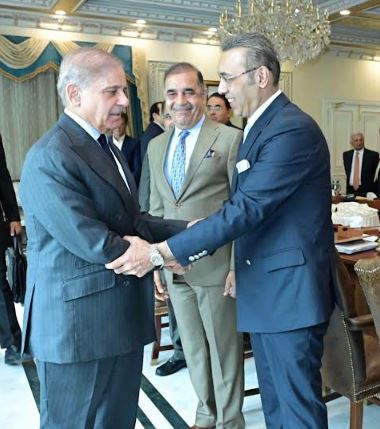
These remarks were made by President of the Rawalpindi Chamber of Commerce and Industry (Rawalpindi Chamber of Commerce and Industry), Usman Shaukat, accompanied by Group Leader Sohail Altaf, during a luncheon meeting with Prime Minister Shehbaz Sharif at the Prime Minister House, Islamabad.

The meeting was attended by federal cabinet ministers, presidents of leading chambers of commerce and industry, and senior government officials. During the interaction, participants discussed key issues facing the business community and presented recommendations for the upcoming federal budget.

The RCCI President emphasized the need to broaden the tax base instead of increasing the burden on existing taxpayers. Referring to the government’s vision of an export-led growth strategy, he stressed that meaningful incentives should be extended to exporters. He also proposed the establishment of a Pharma Export Council along with sector-specific incentive packages to enhance Pakistan’s export competitiveness in international markets.

Usman Shaukat further called for effective measures to reduce the cost of doing business and highlighted the importance of promoting Small and Medium Enterprises (SMEs) as a key driver of economic growth, employment generation, and innovation.

Group Leader Sohail Altaf raised concerns regarding business operating hours during the ongoing heatwave and requested relief for traders in areas affected by smart lockdowns. He also proposed extending business timings and facilitating commercial activities in tourist destinations during the summer season. The Prime Minister responded positively to the suggestions and informed participants that a decision would be taken soon.

He further advocated for reducing taxes on the retail sector and emphasized the need for a comprehensive industrial policy. He also called for relief measures for the construction sector and accelerated development of industrial zones along the Ring Road to attract investment and promote industrial expansion.

The RCCI leadership appreciated the establishment of the Tax Policy Office, noting that it would strengthen stakeholder engagement and improve coordination between policymakers and the business community, ultimately leading to more effective and business-friendly tax policies.
Iran studying deal to halt war with US as stalemate persists

Iran studying deal to halt war with US as stalemate persists

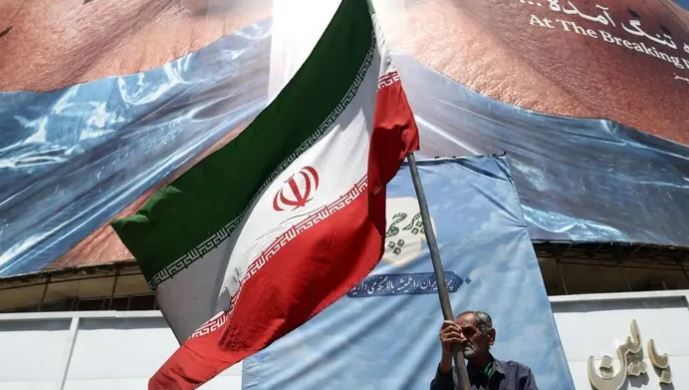
TEHRAN, JUN 2: Iran is reviewing a proposed agreement with the US to halt their war, Iranian media reported on Tuesday, after US President Donald Trump said talks to reach a deal were continuing.

More than three months after the US and Israel launched strikes against Iran, the conflict has hardened into a stalemate while efforts to negotiate an interim deal have proved inconclusive, leaving the Strait of Hormuz largely shut.

Iran has not yet responded to a proposed final text of the temporary deal, and was taking a “stern” approach given what it sees as a history of US non-compliance and longstanding mistrust, the semi-official Mehr news agency cited a source as saying.

Trump said on Monday that negotiations with Iran were continuing and there would be a deal over the next week to extend a ceasefire agreed in early April and reopen the Strait of Hormuz.

Since mid-March, Trump has repeatedly said he is close to signing a peace agreement, though any such deal would postpone thorny issues including the future of Iran’s nuclear program. A ceasefire has largely held since early April, but Iran and the US have exchanged strikes several times over the past week.

Oil prices fell more than 1 percent on Tuesday, paring the previous day’s sharp gains. A senior International Energy Agency official warned that global oil inventories could hit historically low levels.

Israel keeps up strikes in Lebanon
The war that began on February 28 has killed thousands of people, mainly in Iran and Lebanon. It has caused global economic pain by pushing up energy prices since Iran effectively closed the Strait of Hormuz, which previously carried about a fifth of global supplies of oil and liquefied natural gas.

It also triggered the latest round of conflict between Israel and Lebanese militant group Hezbollah, with Israel pursuing its deepest incursion into Lebanon in 25 years.

On Tuesday, Israel kept up strikes on a string of towns in southern Lebanon, Lebanese security sources said, a day after US mediation appeared to have averted an immediate escalation of that war.

A partial ceasefire announced by Lebanon on Monday would entail Israel refraining from strikes on Beirut and Hezbollah-controlled southern suburbs of the Lebanese capital, while the Iran-aligned group would halt its attacks on Israel.

But the announcement failed to reassure many Lebanese, 1.2 million of whom have been displaced, and the din of an Israeli drone over Beirut kept residents on edge on Tuesday.

Lebanon said it would seek to expand the ceasefire in talks with Israel in Washington on Wednesday.

Israeli Prime Minister Benjamin Netanyahu is facing criticism domestically over any agreement to hold back from further attacks on Beirut, ahead of an election later this year that he is projected to lose.

Iran pushes for limited deal
In the wider war, Iran is pushing for a limited interim agreement as it tries to ease mounting economic pressure while avoiding major concessions on its nuclear program, according to Iranian sources.

As part of any deal, Tehran is seeking an end to hostilities across all fronts including Lebanon, access to billions of dollars in oil revenues, waivers on crude exports, a lifting of a US blockade on its ports, and continued leverage over the Strait of Hormuz.

Trump is under pressure to reopen the strait and curb US fuel prices while not making concessions to Iran.

Iran’s Islamic Revolutionary Guard Corps (IRGC) said on Tuesday that 24 vessels had transited the strait in the past 24 hours, after obtaining permission from the IRGC’s navy.

Iran threatened on Monday to expand its blockade to the Bab al-Mandeb Strait, another chokepoint at the mouth of the Red Sea, if Israel resumed strikes on Beirut.

Highlighting the risk at sea, the world’s largest shipping group MSC said on Tuesday that one of its vessels was struck by two projectiles while in Iraq’s Umm Qasr port the previous day.

Iran’s IRGC claimed responsibility for the attack, saying it was carried out in retaliation for a US attack on an Iranian vessel in the Gulf of Oman.

With Reuters

PU students visit SK Hydropower station to gain practical insight into clean energy technologies

PU students visit SK Hydropower station to gain practical insight into clean energy technologies

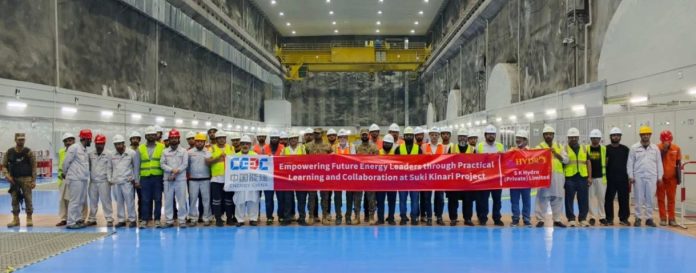
ISLAMABAD, Jun 2: The SK Hydropower Station hosted an academic exchange and on-site learning session for a delegation of faculty members and electrical engineering students from the University of the Punjab, providing them with firsthand exposure to modern hydropower technologies and project management practices.

According to a statement issued on Tuesday, more than 20 faculty members and students participated in the visit, which was organized by SK Hydro (Private) Limited, the owner of the project.

During the visit, technical experts briefed the delegation on the hydropower station’s core technologies, project design, construction methodologies and operational management systems.

The visiting group spoke highly of our advanced construction solutions and intelligent management framework, as well as the efficient collaboration and harmonious teamwork between Chinese and Pakistani on-site staff. The project also shared its achievements in corporate social responsibility and ecological conservation, demonstrating our commitment to driving local development and protecting regional ecological balance.

The guests expressed sincere gratitude for the thoughtful reception and professional knowledge sharing. They remarked that the visit had broadened their professional horizons and improved practical skills, and helped them fully recognize the important role of the China-Pakistan Economic Corridor (CPEC) in boosting the sustainable development of clean energy across Pakistan.

SK Hydropower Station is mainly invested, constructed and operated by China Energy Overseas Investment Co., Ltd., who also serves as the major shareholder of SK Hydro (Private) Limited. The station officially commenced commercial operation on September 14, 2024. To date, it has produced more than 3.5 billion kilowatt-hours of clean electricity.

As a flagship green energy project under CPEC, it has continuously underpinned Pakistan’s economic growth and energy security. Going forward, the project will further deepen cooperation with local Pakistani partners and prioritize talent training. We will continue to act as a professional training platform for Pakistan’s hydropower sector and consolidate the long-standing friendly cooperation between China and Pakistan in the energy industry.

ANF seizes 231 kg of hashish

ANF seizes 231 kg of hashish

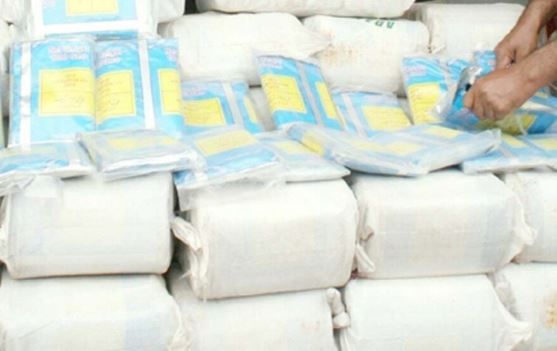
RAWALPINDI, 02 JUN (DNA) —    The Anti-Narcotics Force (ANF) conducted two operations in different parts of the country and arrested two suspects, recovering 231.2 kilograms(kgs) of hashish worth more than Rs 7.3 million here on Tuesday.

According to an ANF spokesperson, the operations were carried out as part of ongoing efforts to curb the trafficking and distribution of narcotics.In the first operation, ANF recovered 230 kgs of hashish from a vehicle near Ghaza Band Road in Quetta district and arrested the suspect.

In a separate operation near Iqbal Shaheed Toll Plaza in Attock, 1.2 kgs of hashish were seized from a passenger, who was subsequently taken into custody. The spokesperson said cases had been registered against the accused under the Control of Narcotic Substances Act (CNSA) 1997, while further investigations were underway. — DNA

PIDE proposes Rs 45,000 minimum wage benchmark

PIDE proposes Rs 45,000 minimum wage benchmark

ISLAMABAD, JUN 2 /DNA/ – The Pakistan Institute of Development Economics (PIDE) has unveiled a landmark policy proposal aimed at transforming Pakistan’s minimum wage determination from a symbolic annual announcement into a transparent, evidence-based, and rules-based wage governance system.

In Policy Viewpoint No. 62, titled “Reforming Minimum Wage Determination in Pakistan: From Wage Announcements to Wage Governance,” PIDE scholars propose a hybrid framework aligned with International Labour Organization (ILO) principles. The proposed methodology balances purchasing-power protection, worker-family adequacy, labour-market affordability, partial productivity sharing, and provincial implementation realities.

Applying this framework to official data from the Pakistan Bureau of Statistics (PBS) and the Ministry of Planning, Development and Special Initiatives, the study recommends a national minimum wage reference benchmark of Rs. 45,000 per month for FY2026–27 — representing a 12.5% increase over the current notified wage of Rs. 40,000.

Speaking on the significance of the initiative, Dr. Nadeem Javaid (SI), Vice Chancellor, PIDE and Member, Planning Commission of Pakistan, stated:

“Minimum wage policy cannot remain a ceremonial annual exercise disconnected from economic realities and labour welfare. Pakistan now requires a credible wage governance system that balances worker protection, productivity, business sustainability, and macroeconomic stability within a transparent institutional framework.”

He further emphasized:

“A country aspiring for export-led growth and social stability cannot afford working poverty, wage uncertainty, and fragmented labour market governance. Sustainable economic reform must also translate into dignity, predictability, and economic security for workers.”

The proposed architecture rests on four interconnected pillars: transparent evidence-based wage setting, bounded provincial calibration, credible enforcement mechanisms, and annual reporting on implementation outcomes. Under the proposed “national reference benchmark with provincial calibration” model, provinces would retain constitutional authority to notify wages at or above the national floor in accordance with local economic conditions.

Indicative provincial calibrations suggest Rs. 45,000 for Punjab and Khyber Pakhtunkhwa, Rs. 46,000 for Sindh due to relatively higher urban living costs and formal-sector concentration, and Rs. 45,500 for Balochistan reflecting geographic and market access vulnerabilities.

Dr. S. M. Naeem Nawaz, Professor of Economics at PIDE and co-author of the study, stated:

“A credible wage floor must be one that workers can realistically receive and provinces can realistically enforce. That requires moving beyond CPI-only or poverty-line-only approaches toward a hybrid methodology that respects affordability, compliance capacity, and the reality that nearly 80% of Pakistan’s employment remains informal.”

He added:

“Our framework prioritises phased and realistic enforcement — beginning with public procurement, outsourced government contracts, and large registered establishments before gradually extending compliance coverage to SMEs, agriculture, and domestic work.”

The study argues that minimum wage policy today carries implications far beyond labour departments, directly influencing household purchasing power, poverty vulnerability, labour informality, domestic demand, productivity incentives, and broader social stability.

With period-average inflation recorded at 6.19% (July-April FY2026), April 2026 year-on-year inflation reaching 10.9%, and household food insecurity increasing to 24.35% in 2024–25 compared to 15.92% in 2018–19, the study notes that the urgency for credible wage governance has significantly intensified.

PIDE has forwarded the proposed framework to the Planning Commission of Pakistan for consideration and further necessary action toward developing a coordinated, transparent and sustainable minimum wage governance architecture for Pakistan.

Key recommendations of the policy framework include:

• Adopting the Rs. 45,000 national reference benchmark for FY2026–27 as the current-year application of the proposed annual governance framework.

• Introducing enforceable minimum wage compliance clauses in public procurement and outsourced service contracts.

• Implementing phased enforcement beginning with formal sectors before extending coverage to SMEs, agriculture, and domestic work.

• Requiring provinces to publish annual Minimum Wage Implementation Reports to improve transparency, accountability, and policy monitoring.

The full Policy Viewpoint, including technical annexes, estimation methodologies, sensitivity analysis, and provincial calibration indicators, is available at the PIDE website: www.pide.org,pk

NBP partners with Charter for Compassion for employee mental health

NBP partners with Charter for Compassion for employee mental health

KARACHI, JUN 2: The National Bank of Pakistan (NBP) has signed a Memorandum of Understanding (MoU) with Charter for Compassion Pakistan, under its employee wellness initiative, NBP Wellness First 2.0.

The collaboration aims to strengthen mental health awareness and improve access to professional well-being support for NBP employees and their dependents through structured engagement and consultation services.

Under this partnership, employees will benefit from a series of nationwide virtual awareness sessions focused on stress management, emotional resilience, mental well-being, anxiety management, healthy boundaries, and sustainable self-care practices.

In addition, employees and their dependents will also have access to confidential tele-consultation and physical consultation support through qualified mental health professionals associated with Charter for Compassion Pakistan.

The MoU signing ceremony was attended by representatives from both organizations, reaffirming a shared commitment towards promoting emotional well-being, healthier workplace practices, and a more supportive work environment.

Through NBP Wellness First 2.0, NBP aims to encourage awareness, balance, and accessibility to support systems that contribute towards a healthier and more resilient workforce.

Writ petitions maintainable against any person or body for enforcement of fundamental rights, rules FCCP

Writ petitions maintainable against any person or body for enforcement of fundamental rights, rules FCCP

ISLAMABAD, Jun 2: : The Federal Constitutional Court has ruled in a significant constitutional judgment that under Article 199(1)(c) of the Constitution, High Courts have the authority to issue appropriate directions for the enforcement of fundamental rights against ‘any person’, ‘institution’, or ‘regulatory body’.

According to the detailed judgment, a two-member bench comprising Justice Aamer Farooq and Justice Rozi Khan Bareech issued the verdict, which had been reserved on March 31, 2026, in appeals filed by the Peshawar High Court Bar Association.

The court observed that a review of the constitutional history of the High Courts’ writ jurisdiction, from the Government of India Act, 1935, to the Constitutions of Pakistan of 1956, 1962, and the present Constitution, showed that the power had consistently remained broad and was never confined solely to government authorities.

The judgment stated that the purpose of Article 199(1)(c) is to ensure the protection of fundamental rights. Therefore, where the rights of a citizen are affected by the actions of a private individual, a private institution, or an autonomous regulatory body, the High Court is competent to intervene.

The court emphasized that fundamental rights cannot be treated as merely theoretical rights and that constitutional courts are duty-bound to ensure their effective enforcement.

Referring to various judicial precedents, including the Pakistan Olympic Association case, the court held that the phrase “any person” used in Article 199(1)(c) carries a wide meaning and includes bodies corporate, autonomous institutions, and other organizations. It observed that a violation of fundamental rights need not necessarily originate from a government entity.

Citing Article 5 of the Constitution, the court noted that loyalty to and obedience of the Constitution is obligatory upon every citizen.

According to the facts of the case, the Khyber Pakhtunkhwa Bar Council had passed a resolution barring lawyers from representing a police officer accused in the murder case of a young lawyer. Subsequently, disciplinary proceedings were initiated against Supreme Court lawyer Shabbir Hussain Gigyani, while Advocate Ali Azeem Afridi’s licence was suspended for appearing before a court during a lawyers’ strike.

The affected lawyers challenged the actions before the Peshawar High Court, which set aside the Bar Council’s measures and held that lawyers have the right to practise their profession independently and to represent their clients. The Bar Council then filed appeals before the Federal Constitutional Court.

The Constitutional Court ruled that no lawyer can be penalized merely for representing an unpopular or controversial accused person. It observed that a fundamental principle of the justice system is that every accused person has the right to be defended by counsel of his or her choice, and lawyers should not face disciplinary action for performing their professional duties.

Upholding the judgment of the Peshawar High Court, the Federal Constitutional Court dismissed all appeals filed by the Peshawar High Court Bar Association.

Morgenthau in Contemporary US Foreign Policy

Morgenthau in Contemporary US Foreign Policy

Dr. Muhammad Akram Zaheer

The debate over the direction of American foreign policy has rarely been as contested as it is today. Between renewed great-power rivalry, regional conflicts, and the strain on the international order, policymakers in Washington find themselves navigating a world that is neither fully cooperative nor entirely chaotic. In this unsettled environment, the intellectual legacy of Hans J. Morgenthau once again finds renewed relevance. Writing in the aftermath of the Second World War, Morgenthau offered a sober interpretation of international politics that continues to echo through contemporary strategic thought. At the heart of Morgenthau’s argument lies a simple but powerful claim: international politics is governed not by moral aspirations, but by power and national interest. States, regardless of their ideological claims, pursue survival and influence in an anarchic global system. Moral rhetoric may decorate foreign policy, but it rarely determines it. This tension between ideals and interests remains visible in the conduct of the United States in the twenty-first century.

In the current global landscape, the most significant challenge to American primacy comes from the rise of China. Economic interdependence between Washington and Beijing has not prevented strategic rivalry from intensifying. Competition over technology, maritime influence in the South China Sea, and the restructuring of global supply chains all point toward a shifting balance of power. From a Morgenthauian perspective, this is not an ideological confrontation but a structural one. As power diffuses across the international system, states naturally adjust their policies to preserve advantage. American foreign policy responses reflect this logic with increasing clarity. The strengthening of alliances in the Indo-Pacific, the revitalization of groupings such as the Quad, and restrictions on sensitive technologies are all expressions of strategic calculation. Even when articulated in the language of democracy and human rights, these measures are fundamentally shaped by the imperatives of power competition. Morgenthau would likely recognise in this a classic case of balance-of-power politics in action.

A similar dynamic is visible in relations with Russia. The deterioration of ties following conflicts in Eastern Europe has revived concerns reminiscent of Cold War geopolitics. Sanctions, military deterrence, and NATO’s expanded posture reflect a return to traditional realist logic. The emphasis is not merely on punishment or ideology, but on constraining a rival state’s capacity to alter the regional order. Morgenthau’s insistence that diplomacy must be grounded in an understanding of power distribution appears particularly relevant in this context. Yet Morgenthau was not an advocate of reckless interventionism. On the contrary, he was one of the earliest critics of American overreach during the Cold War. His opposition to the Vietnam War stemmed from a belief that American policymakers had misjudged both the limits of military power and the complexity of local political realities. In his view, foreign policy failures often arise not from a lack of resources, but from an excess of confidence.

This caution resonates strongly with the experiences of the United States in the post-9/11 era. The long wars in Afghanistan and Iraq exposed the difficulties of reshaping societies through external force. Despite overwhelming military superiority, political outcomes proved fragile and often unstable. Morgenthau’s warning about the limits of power projection appears, in retrospect, remarkably prescient. The gap between strategic ambition and political reality remains one of the central dilemmas of American foreign policy. Another key element of Morgenthau’s thought is prudence. He regarded it as the highest virtue in international politics, requiring leaders to carefully balance moral intentions with practical consequences. Prudence does not reject ethics, but it insists that ethical goals must be pursued within the constraints of power. In contemporary Washington, however, this balance is often difficult to maintain. Domestic political pressures, ideological divisions, and media narratives frequently shape foreign policy debates in ways that complicate long-term strategic thinking.

The contemporary international order is also more complex than the one Morgenthau directly analyzed. Globalization has deepened economic interdependence, while technological transformation has introduced new domains of competition such as cyberspace and artificial intelligence. Non-state actors, multinational corporations, and transnational movements now influence outcomes that were once the exclusive domain of states. These developments suggest that while Morgenthau’s realism remains foundational, it requires adaptation to fully capture the complexity of modern global politics. Critics of classical realism argue that it underestimates the role of international institutions, norms, and cooperative frameworks. Institutions such as the United Nations and global trade regimes have, at least partially, moderated state behaviour and provided platforms for negotiation. Yet even these institutions function within the broader constraints of power politics. Their effectiveness often depends on the willingness of major powers to support or ignore them. In this sense, Morgenthau’s central insight that power underlies all political arrangements continues to retain explanatory force.

For the United States, the challenge is not simply to preserve its global influence, but to define the limits of its commitments. Overextension remains a persistent risk, particularly as domestic economic pressures and political polarization constrain foreign policy options. Morgenthau’s emphasis on national interest suggests a disciplined approach: prioritizing essential strategic regions, avoiding unnecessary military entanglements, and recognizing the limits of transformative ambitions. At the same time, a purely realist approach may not fully address emerging global challenges such as climate change, pandemics, and financial instability. These issues require degrees of cooperation that transcend narrow calculations of power. The tension between necessity and cooperation defines much of today’s international discourse, and it is here that Morgenthau’s legacy is both instructive and incomplete.

Ultimately, Morgenthau’s enduring contribution lies not in providing precise policy prescriptions, but in offering a framework for thinking about international politics with clarity and restraint. His realism demands that policymakers confront the world as it is, rather than as they wish it to be. In an era marked by uncertainty and strategic rivalry, this discipline of thought remains essential. As the United States navigates its evolving role in a shifting global order, Morgenthau’s warnings against moral excess, strategic overreach, and analytical complacency continue to resonate. Whether dealing with rising powers, regional conflicts, or global crises, the fundamental lesson remains unchanged: foreign policy is an exercise in balancing power, interest, and prudence in a world that offers no easy choices.

Dr. Muhammad Akram Zaheer

Assistant Professor Pakistan Studies ICBS Lahore

[email protected]

President felicitates Italian President

President felicitates Italian President

Mahnoor Ansar

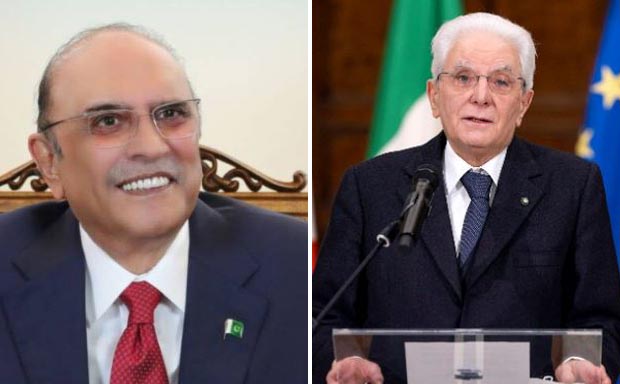
ISLAMABAD, JUN 2 (DNA): President Asif Ali Zardari on Tuesday extended felicitations to the President of the Italian Republic Sergio Mattarella, and the people of Italy on Republic Day, annually observed on June 2.

The president, in a statement, said that Pakistan deeply valued its long-standing and friendly relations with Italy, which were marked by mutual trust, cooperation and a shared commitment to peace and prosperity.

He expressed confidence that bilateral ties between the two nations would continue to grow in strength and substance in the years ahead.

President Zardari said that Pakistan attached great importance to its engagement with the European Union (EU) and highly valued Italy’s constructive role within the EU in promoting cooperation, dialogue and international peace and stability.

He also reaffirmed Pakistan’s commitment to further strengthening Pakistan-EU relations in areas of mutual interest.=DNA

============

Nabih Berri guarantees Hezbollah will honor global ceasefire with Israel

Nabih Berri guarantees Hezbollah will honor global ceasefire with Israel

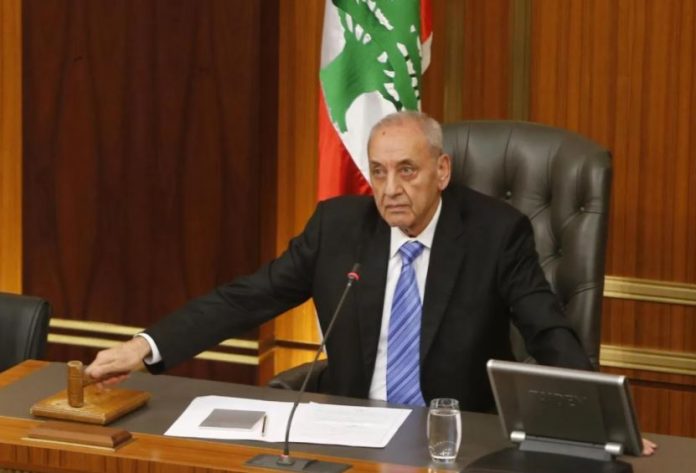
BEIRUT, JUN 2 – Lebanese parliament speaker Nabih Berri, a Hezbollah ally, will guarantee the Iran-backed group’s adherence to a “global ceasefire” with Israel, his adviser told AFP on Tuesday.

Berri, who heads the Hezbollah-allied Amal party, has long acted as an intermediary between the group and the United States, which considers Hezbollah a “terrorist” organization.

US President Donald Trump said late Monday that Israeli Prime Minister Benjamin Netanyahu had agreed to call off a military raid on Beirut while Hezbollah agreed “all shooting will stop.”

Adviser Ali Hamdan told AFP that “speaker Berri’s main demand is a global ceasefire. If a global ceasefire deal is reached, he will guarantee Hezbollah’s respect for it.”

Hamdan said a “global ceasefire means a halt to Israeli strikes by air, land or sea, and that it will not carry out detonations or demolitions” in the south, where Israel is accused of razing entire villages.

Trump had said that “through highly placed Representatives, I had a very good call with Hezbollah, and they agreed that all shooting will stop — That Israel will not attack them, and they will not attack Israel.”

Netanyahu said late Monday that he had told Trump “that if Hezbollah does not cease attacking our towns and our citizens, Israel will strike terrorist targets in Beirut.”

Hezbollah has not released a statement on the announcement.

Lebanon’s embassy in the United States said on Monday that Hezbollah had accepted a US proposal on a “mutual cessation of attacks.”

“Under the proposed arrangement, Israeli strikes on Dahiyeh would cease in exchange for Hezbollah refraining from launching attacks against Israel, with the ceasefire framework to be expanded to encompass all Lebanese territory,” the embassy statement released by the Lebanese presidency added, referring to Beirut’s southern suburbs.

Iran has insisted that a ceasefire in Lebanon remains a key condition for any deal with the United States to end the Middle East war.

Iran’s parliament speaker Mohammad Bagher Qalibaf, who is also the country’s chief negotiator, said on Monday night that he and Berri had spoken by phone.

Ghalibaf told his Lebanese counterpart that “if the Israeli aggression on Lebanon continues, we will not just stop the negotiation process, but we will be in a direct confrontation with the enemy,” he said on X, referring to Israel.

Iran’s Tasnim news agency reported on Monday that Tehran was no longer engaging in talks with Washington because of Israel’s offensive on Lebanon, although there was no official confirmation of this.

Stay Connected

64FansLike
60FollowersFollow

Latest Reviews

Exchange Rates

USD - United States Dollar
EUR
1.14
GBP
1.34
AUD
0.70
CAD
0.71