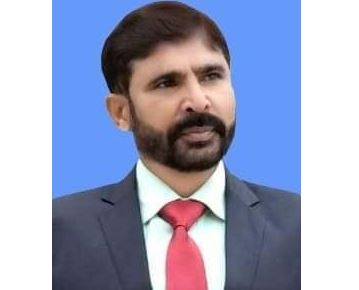
Dr. Muhammad Akram Zaheer
The debate over the direction of American foreign policy has rarely been as contested as it is today. Between renewed great-power rivalry, regional conflicts, and the strain on the international order, policymakers in Washington find themselves navigating a world that is neither fully cooperative nor entirely chaotic. In this unsettled environment, the intellectual legacy of Hans J. Morgenthau once again finds renewed relevance. Writing in the aftermath of the Second World War, Morgenthau offered a sober interpretation of international politics that continues to echo through contemporary strategic thought. At the heart of Morgenthau’s argument lies a simple but powerful claim: international politics is governed not by moral aspirations, but by power and national interest. States, regardless of their ideological claims, pursue survival and influence in an anarchic global system. Moral rhetoric may decorate foreign policy, but it rarely determines it. This tension between ideals and interests remains visible in the conduct of the United States in the twenty-first century.
In the current global landscape, the most significant challenge to American primacy comes from the rise of China. Economic interdependence between Washington and Beijing has not prevented strategic rivalry from intensifying. Competition over technology, maritime influence in the South China Sea, and the restructuring of global supply chains all point toward a shifting balance of power. From a Morgenthauian perspective, this is not an ideological confrontation but a structural one. As power diffuses across the international system, states naturally adjust their policies to preserve advantage. American foreign policy responses reflect this logic with increasing clarity. The strengthening of alliances in the Indo-Pacific, the revitalization of groupings such as the Quad, and restrictions on sensitive technologies are all expressions of strategic calculation. Even when articulated in the language of democracy and human rights, these measures are fundamentally shaped by the imperatives of power competition. Morgenthau would likely recognise in this a classic case of balance-of-power politics in action.
A similar dynamic is visible in relations with Russia. The deterioration of ties following conflicts in Eastern Europe has revived concerns reminiscent of Cold War geopolitics. Sanctions, military deterrence, and NATO’s expanded posture reflect a return to traditional realist logic. The emphasis is not merely on punishment or ideology, but on constraining a rival state’s capacity to alter the regional order. Morgenthau’s insistence that diplomacy must be grounded in an understanding of power distribution appears particularly relevant in this context. Yet Morgenthau was not an advocate of reckless interventionism. On the contrary, he was one of the earliest critics of American overreach during the Cold War. His opposition to the Vietnam War stemmed from a belief that American policymakers had misjudged both the limits of military power and the complexity of local political realities. In his view, foreign policy failures often arise not from a lack of resources, but from an excess of confidence.
This caution resonates strongly with the experiences of the United States in the post-9/11 era. The long wars in Afghanistan and Iraq exposed the difficulties of reshaping societies through external force. Despite overwhelming military superiority, political outcomes proved fragile and often unstable. Morgenthau’s warning about the limits of power projection appears, in retrospect, remarkably prescient. The gap between strategic ambition and political reality remains one of the central dilemmas of American foreign policy. Another key element of Morgenthau’s thought is prudence. He regarded it as the highest virtue in international politics, requiring leaders to carefully balance moral intentions with practical consequences. Prudence does not reject ethics, but it insists that ethical goals must be pursued within the constraints of power. In contemporary Washington, however, this balance is often difficult to maintain. Domestic political pressures, ideological divisions, and media narratives frequently shape foreign policy debates in ways that complicate long-term strategic thinking.
The contemporary international order is also more complex than the one Morgenthau directly analyzed. Globalization has deepened economic interdependence, while technological transformation has introduced new domains of competition such as cyberspace and artificial intelligence. Non-state actors, multinational corporations, and transnational movements now influence outcomes that were once the exclusive domain of states. These developments suggest that while Morgenthau’s realism remains foundational, it requires adaptation to fully capture the complexity of modern global politics. Critics of classical realism argue that it underestimates the role of international institutions, norms, and cooperative frameworks. Institutions such as the United Nations and global trade regimes have, at least partially, moderated state behaviour and provided platforms for negotiation. Yet even these institutions function within the broader constraints of power politics. Their effectiveness often depends on the willingness of major powers to support or ignore them. In this sense, Morgenthau’s central insight that power underlies all political arrangements continues to retain explanatory force.
For the United States, the challenge is not simply to preserve its global influence, but to define the limits of its commitments. Overextension remains a persistent risk, particularly as domestic economic pressures and political polarization constrain foreign policy options. Morgenthau’s emphasis on national interest suggests a disciplined approach: prioritizing essential strategic regions, avoiding unnecessary military entanglements, and recognizing the limits of transformative ambitions. At the same time, a purely realist approach may not fully address emerging global challenges such as climate change, pandemics, and financial instability. These issues require degrees of cooperation that transcend narrow calculations of power. The tension between necessity and cooperation defines much of today’s international discourse, and it is here that Morgenthau’s legacy is both instructive and incomplete.
Ultimately, Morgenthau’s enduring contribution lies not in providing precise policy prescriptions, but in offering a framework for thinking about international politics with clarity and restraint. His realism demands that policymakers confront the world as it is, rather than as they wish it to be. In an era marked by uncertainty and strategic rivalry, this discipline of thought remains essential. As the United States navigates its evolving role in a shifting global order, Morgenthau’s warnings against moral excess, strategic overreach, and analytical complacency continue to resonate. Whether dealing with rising powers, regional conflicts, or global crises, the fundamental lesson remains unchanged: foreign policy is an exercise in balancing power, interest, and prudence in a world that offers no easy choices.
Dr. Muhammad Akram Zaheer
Assistant Professor Pakistan Studies ICBS Lahore