Home Blog Page 989

CM Maryam announces three months remission in punishment of prisoners

CM

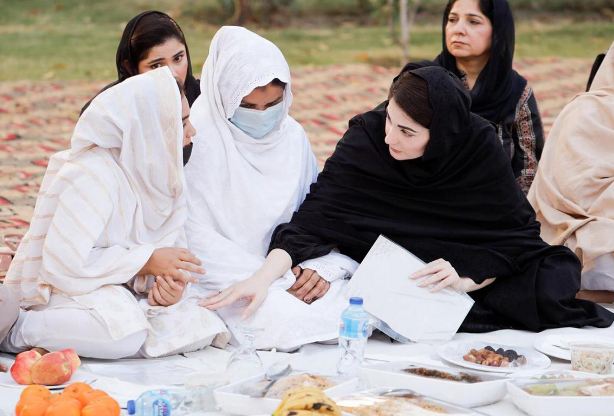
LAHORE, MAR 17: /DNA/ – Chief Minister Punjab Maryam Nawaz has announced three months remission in the punishment of prisoners and release of 155 prisoners across the province. CM while addressing the iftar dinner ceremony organised in the Kot Lakhpat Jail stated that 155 prisoners are being released after paying a diyat amount of rupees 15 crore with the collaboration of philanthropists. A video call facility will be provided in all the jails of Punjab very soon.

CM stated that she herself remembered the time spent during her period of imprisonment while coming to the Central Jail today. ” I was imprisoned in the Death Cell Chakhi and faced a difficult time. My father was also imprisoned in the same Jail but was denied permission for meeting him. I used to meet my father once a week only. Once I received a hand written letter of my father which stated that he after being arrested is being taken to the NAB. Someone in the jail told me that your father is feeling unwell and is being taken to the hospital. It was a time of great difficulty.”

CM stated that she used to query as what wrongful act she has committed for which she is kept in the jail and then used to sit on the praying mat. I used to wait for the appeal when I came to know that the Judge went on three weeks leave. I couldn’t talk with my cancer patient mother in the Adiala Jail. I used to talk with my children for 20 minutes only. I was greatly worried about my 15 years old daughter as she also underwent a difficult time. Someone in the court told my father about the state of illness of my mother and despite his repeated saying, no one allowed his conversation with his wife. I spent the difficult jail time with patience and perseverance.

 A person gets 24 hours to think and ponder in the jail.” CM said that few persons go to jail due to their faults and few due to their circumstances adding that even the innocent have to face punishments due to shortcomings in the justice system.We would definitely bring improvements  in the jail system along with provision of possible ease for the prisoners. We are aware about the difficulties of prisoners and we would bring improvements in their food and other essential needs. A video call facility for the prisoners has been launched. I felt pleased to witness a youth prisoner talking with his wife and daughter via video call. A prisoner is provided with a moment of rejoice while talking with his family members via video call.

CM further directed to adopt a respectable and dignified practice for arranging a meeting of the prisoners with their family members. We want to bring reforms in the jails so as to make every prisoner a useful citizen of the society. We would let the prisoners to stand on their feet by imparting them various skills in the jails. 04 doctors will perform their duties in the Central Jail Hospital and an operation theatre is also available. I am pleased that the prisoners can keep their fast and spend Eid at home after the payment of their diyat. It is prayed that improvements come about in the justice system so that no innocent can be put to unjust  imprisonment. Former Senator Pervez Rasheed, Provincial Minister for Information & Culture Azma Bokhari, Chief Secretary,  Secretary Home, Special Secretary Home, IG Prisons and other concerned officials also accompanied.

PM sends Air Chief Zaheer Babar’s extension summary to president

Air Chief Zaheer Babar

ISLAMABAD, MAR 17: Prime Minister Shehbaz Sharif submitted on Sunday summary to President Asif Ali Zardari, proposing the extension of Pakistan’s Air Chief Marshal Zaheer Ahmed Babar Sidhu’s tenure by one year.

The tenure of Air Chief Marshal Sidhu, the four-star officer and 16th Chief of Air Staff of the Pakistan Air Force (PAF), was slated to end on Saturday, with his retirement scheduled for March 18.

Assuming command on March 19, 2021, from his predecessor ACM Mujahid Anwar Khan, Air Chief Marshal Sidhu has exhibited exemplary leadership during his tenure.

As per the military protocol, the appointment of the Chief of Air Staff is a statutory office held by an Air Chief Marshal in the PAF. This appointment is made by the Prime Minister of Pakistan and confirmed by the President of Pakistan, signifying the importance of this role in the country’s defence establishment.

Air Chief Marshal Sidhu’s career trajectory is marked by a deep commitment to service and excellence. Joining the PAF’s GD (Pilot) branch in 1986 as a fighter pilot, he has served in various capacities, including in fighter squadrons, operational airbases, and regional commands.

His pursuit of academic excellence led him to attend prestigious institutions such as the Combat Commanders School, Air War College, and Royal College of Defense Studies in the United Kingdom, further enhancing his strategic vision and leadership capabilities.

His diverse experience within the PAF includes serving as Assistant Chief of the Air Staff for Operations Research and Development, Assistant Chief of Air Staff for Training Officers, Director-General of Projects at Air Headquarters Islamabad, and additional secretary in the Ministry of Defence.

In recognition of his meritorious service, Air Chief Marshal Sidhu has been decorated with the Sitara-e-Imtiaz (Military) and Tamgha-e-Imtiaz (Military) awards, highlighting his invaluable contributions to the nation’s defence.

Attack on Mir Ali Check Post: Enemy will face a strong response: Mohsin Naqvi

Attack on Mir Ali Check Post: Enemy will face a strong response: Mohsin Naqvi

Lahore, MAR 17 /DNA/ – Federal Interior Minister Mohsin Naqvi has strongly condemned the attack on Mir Ali Check Post, stating that the nation assures that such a cowardly act will be dealt with a strong response that the enemy will remember forever.

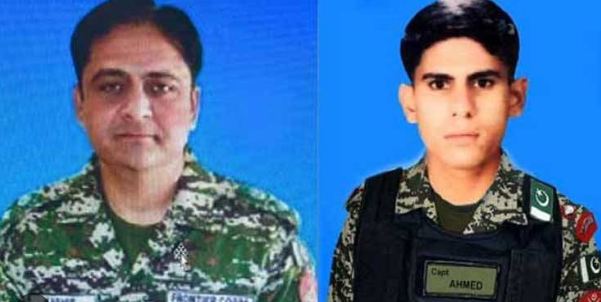
Federal Minister For Interior Mohsin Naqvi said that  now is not the time for the enemy to attack and for us to only condemn silently.  Federal Minister  Mohsin Naqvi said that the way the enemy is attacking, a strong response will be given. The entire nation is united in the war against terrorism and stands with the Pakistani army. We  all will give a strong response to the cowardly actions of the enemy. He said that Lieutenant Colonel Kashif Ali,  Captain Muhammad Ahmed Badar and other soldiers

who embraced martyrdom while defending their motherland against the scourge of terrorism in Mir Ali, North Waziristan are heroes of the nation, and the Pakistani nation salutes its brave soldiers. The brave sons of the Pakistani army made the nefarious designs foiled  of terrorists   by sacrificing their precious lives. Federal Minister Mohsin Naqvi said that the officers and jawans of the Pakistani army have made history in the war against terrorism with their valuable sacrifices.

He further said that the unprecedented sacrifices of the martyrs are unforgettable. The martyrs are our pride, and their great sacrifices will not be forgotten.

Islamabad United down Peshawar Zalmi to set up PSL 9 final with Multan Sultans

Islamabad United down Peshawar Zalmi

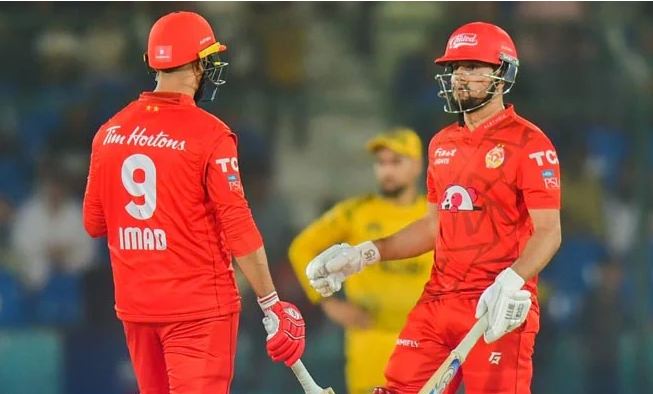
KARACHI, MAR 17: Imad Wasim and Haider Ali starred as Islamabad United beat Peshawar Zalmi by five wickets in the Eliminator 2 of the Pakistan Super League (PSL) season at Karachi’s National Bank Cricket Arena.

This is United’s first PSL final since 2018 and they will face Multan Sultans on March 18 at the same venue.

The chase started with Zalmi’s spinners dominating with early dismissals. Saim Ayub had the better of Alex Hales (1) while he cleaned up Salman Ali Agha (5) in his following over.

Emerging left-arm spinner removed United skipper Shadab Khan on a duck. Martin Guptill (34) went berserk on Saim Ayub, scoring 22 runs but his knock came to an end in the final over of the powerplay with United reeling on 50/4.

United needed an anchor and Imad Wasim stepped up. First, he formed a partnership with Azam Khan and later with Haider Ali.

Azam scored 22 off 17 balls with the help of a four and a six with Luke Wood ending a 41-run stand

Haider arrived with a mission and attacked Zalmi bowlers from the start. The duo took calculated risks while keeping up with the required run rate and formed a 98-run stand for the sixth wicket.

Imad scored his first fifty of the season, remaining unbeaten on 59 off 40 balls while Haider smashed 29-ball 52 with five massive sixes and two fours.

Earlier, Saim Ayub’s flamboyant 73-run innings, coupled with Mohammad Haris’ 40, propelled Zalmi to 185/5.

Sent in to bat first by United, Zalmi made a strong start to their innings with their in-form opening duo of Babar Azam and Saim once again laying the groundwork for a substantial total.

Saim took charge during the opening partnership while Babar played a more cautious innings until he was dismissed by Naseem Shah after scoring 72 runs.

Attempting to attack a length delivery from Naseem, Babar couldn’t connect properly and was caught brilliantly by Shadab Khan.

Babar managed a scrappy 25 off 22 deliveries, including two boundaries and a six.

Haris joined Saim in the middle, and together they ensured the momentum continued with a 59-run partnership until Saim departed in the 15th over.

Saim Ayub emerged as the top-scorer for Peshawar Zalmi with a blistering 44-ball 73, featuring six boundaries and four sixes.

In the following over, Haris fell victim to Naseem with a soft dismissal. He contributed with three boundaries and two sixes on his way to a quickfire 25-ball 40.

Subsequently, brisk innings from Tom Kohler-Cadmore and Aamer Jamal pushed Zalmi’s total beyond the 180-run mark.

Naseem Shah led the bowling attack for United, claiming figures of 3/30 in his four overs, while Shadab and Obed McCoy chipped in with one wicket each.

Geopolitical Conflicts: A Quest to Understand the Struggle of Influence

Geopolitical Conflicts: A Quest to Understand the Struggle of Influence

Dr. Muhammad AkramZaheer

The book “Geopolitical Conflicts: A Quest to Understand the Struggle of Influence” explore thedepth of the geopolitical theories forms the foundation for comprehending the intricate interplay between geography, politics and international relations. We all know that the “Geopolitics”, as a discipline, seeks to unravel the complex interactions that shape the behavior of nations on the global stage. It involves thorough analyses of the relationships among countries, the distribution of resources and power, and the impact of global and regional factors on political decision-making. Essential considerations encompass borders, natural resources, military capabilities and economic strength, converging to determine a nation’s strategic interests and foreign policy. Additionally, historical, cultural and ideological factors are incorporated into geopolitical analyses, recognizing their profound influence on international relations. Similarly, we all, as the student of political and social sciences, realize that the Geopolitical theories serve as frameworks facilitating an understanding of why nations cooperate or compete and unveil the stability or volatility of specific regions.

During describing distinct geopolitical approaches and theories, this book also looks at one prominent geopolitical theory, the Heartland Theory posited by Sir Halford Mackinder. This theory propounds that control over Eastern Europe, or the Heartland, translates to global dominance. Despite its historical significance, the theory faces limitations in the contemporary era due to technological advancements and shifts in global power dynamics. Likewise, this book also finds another seminal theory, Sea Power, which emphasizes a state’s influence derived from its ability to utilize the sea for military and civilian purposes. Alfred Thayer Mahan’s insights, in this regard, underscore the significance of naval power in shaping geopolitical dynamics, offering a lens to analyze historical struggles and predict future conflicts. Furthermore, the Rimland Theory introduced by Nicholas Spykman delineates the coastal regions around the Eurasian landmass as pivotal geopolitical areas, challenging the centrality of the Heartland and reinforcing the importance of maritime influence.

Moving beyond theoretical frameworks, the discourse extends to contemporary geopolitical issues, such as the AUKUS alliance and its implications in countering China’s influence in the Indo-Pacific region. AUKUS, a trilateral security agreement between Australia, the United Kingdom and the United States, signifies a strategic alignment aimed at bolstering security, technological capabilities and intelligence sharing. However, this alliance introduces geopolitical challenges, potentially fueling a Cold War mentality and exacerbating ideological divisions.

In the context of South Asia, the evolving Pak-Russia relationship presents a paradigm shift with geopolitical ramifications. Traditionally viewed as adversaries, both nations are recalibrating their ties to capitalize on shared interests and regional stability. Pakistan seeks strategic diversification amid its evolving relationship with the United States, while Russia aims to counterbalance alignments between India and the West. The multifaceted dynamics of this emerging partnership reflect a broader geopolitical chessboard where states navigate opportunities and challenges in pursuit of national interests.

In essence, the evolving landscape of global geopolitics demands deep analyses and critical examinations of theoretical frameworks and contemporary alliances. This book tries to unveil these complexities, offering a scholarly journey through geopolitical theories, major power dynamics, and emerging trends that define the complex embroidery of our ever-changing world.

City comes together to provide free Iftar meals during Ramazan

Iftar meals during Ramazan

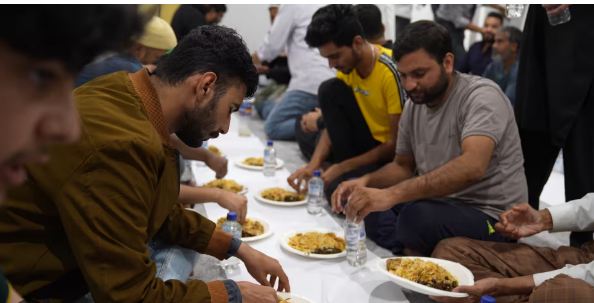
RAWALPINDI, MAR 17 (DNA) — The traditional activity of providing free charity meals during the holy month of Ramazan to the needy continues in the city, as traders communities, individuals, and Non-Government Organizations (NGOs) come together to serve Iftar meals.

Various ‘Dastarkhwans’ and ‘Langars’ (free Iftar food spots) have been set up in different parts of the city, with banners and posters displayed on main roads near the prescribed locations to invite those fasting during Ramadan.

One large free food spot has been set up in Namak Mandi, Raja Bazar area, where a considerable number of people including labourers and daily wagers are being served with food at Iftar time.

“This is only to seek Allah Almighty’s pleasure, a way to show our compassion to those who are needy,” said Faisal Malik, a cloth shopkeeper, emphasizing the importance of serving those in need.

Similar arrangements have been made by the business community in Purana Qila and College Road to serve deserving people, while another dastarkhawan is active near Benazir Shaheed Hospital on Murree Road, catering to both laborers and travelers.

In addition to community-based dastarkhawan arrangements, NGOs and welfare organizations have also organized daily Iftar dinners at their prescribed locations to support those in need.

A volunteer at a Langar Khana mentioned the increase in the number of individuals attending the meals each year, noting that the economic situation has led to more deserving visitors during the holy month of Ramazan. — DNA

PIDE’s bold vision for commercial partnerships and enhanced revenue

PIDE's bold vision for commercial partnerships and enhanced revenue

PIDE’s call to action targets a broad audience, including policymakers, educational institutions, and the private sector, urging them to deliberate on the study’s findings and recommendations

DNA

ISLAMABAD, MAR 17: In a pioneering move, the Pakistan Institute of Development Economics (PIDE), a Premier National Think Tank, has made public its investigative report titled “GORs Everywhere: University Land for Public Housing.” Authored by Nadeem Ul Haque, Vice Chancellor, Pakistan Institute of Development Economics (PIDE), M. Jehangir Khan, and Iram Nadeem, this study embarks on a critical analysis of the conventional utilization of university lands, predominantly allocated for housing within educational institutions’ premises. It advances a transformative outlook proposing the allocation of these tracts for commercial endeavours through Public-Private Partnerships (PPP), aiming at amplifying universities’ revenue streams whilst augmenting local economies and societal well-being.

According to the Press Release issued from the PIDE, Islamabad office, the report states that Universities globally have evolved from their traditional roles to become contemporary, business-oriented centres of education and research, enjoying greater autonomy and financial independence. This shift comes as higher education faces the dual challenges of growth and sustainability, prompted by the scarcity of tax dollars and diminishing societal support. In response, institutions are increasingly adopting entrepreneurial approaches, including self-promotion, forging partnerships, and embracing technological innovations, to thrive in the knowledge economy and align themselves as competitive entities in both domestic and international arenas.

In Pakistan, universities confront similar financial challenges and debates over resource allocation, particularly concerning the construction of housing colonies on campus lands. Such practices are criticized for squandering valuable assets that could be more strategically utilized to enhance the institutions’ financial viability and fulfil their educational missions more effectively.

Central to the study’s findings is an insightful comparison between the land use strategies employed by globally renowned universities such as Harvard, Princeton, and Yale, and their counterparts in Pakistan. This contrast not only sheds light on the successful financial models adopted by these international institutions—stemming from strategic investments in commercial ventures on their campuses—but also underscores the significant potential for Pakistani universities to replicate such success. Through meticulous analysis, the report brings to the fore the extensive opportunity costs entailed by the maintenance of residential colonies on university lands, underpinned by the examination of high property values across major cities including Islamabad, Lahore, and Peshawar.

Emerging from these observations, PIDE posits a series of policy reforms aimed at reimagining the use of university lands. Key among these is the suggestion to monetize residential perks for faculty and staff by introducing market-rate rentals for university-owned properties, thereby creating a new income stream. Furthermore, the institute advocates for the development of high-rise residential and commercial complexes, a move anticipated to optimize land use and maximize revenue generation. Central to realizing these visions is the establishment of PPP ventures, characterized by clearly defined profit-sharing models and ownership structures, ensuring that universities retain land ownership over the long term.

PIDE’s call to action targets a broad audience, including policymakers, educational institutions, and the private sector, urging them to deliberate on the study’s findings and recommendations. By embracing these innovative land-use strategies, Pakistani universities stand on the brink of achieving financial independence, reducing their reliance on government funding, and significantly contributing to the country’s economic growth and social development.

CM condemns terrorists attack on a checkpost in north Waziristan

LAHORE, MAR 17 /DNA/ – Chief Minister Punjab Maryam Nawaz has  condemned terrorists attack on a checkpost at Mir Ali in the area of North  Waziristan. CM has paid tribute to the martyred officers and sepoys of Pakistan Army.CM expressed her heartfelt sympathy with the family members of the martyrs.

Maryam Nawaz paid salute to the valour of Lieutenant Colonel Kashif for consigning the terrorists to hell. CM acknowledged that the officers and sepoys of Pakistan Army by sacrificing their precious lives for our dear homeland has written a history of bravery adding that the officers and jawans of the Pakistan Army are a pride of the whole nation.

Lieutenant Kashif of Pakistan Army consigned six terrorists to hell and became immortal. CM lauded that our brave soldiers safeguarded our dear homeland by foiling intrusion of the terrorists adding that the precious sacrifices being laid down by the officers and jawans of the Pakistan Army further strengthen our unflinching resolve against the terrorists.

Disagreements between PML-N, PPP on the issue of privatization

Disagreements between PML-N, PPP on the issue of privatization

A significant political negotiation looms over the distribution of the NFC (National Finance Commission) award, spurred by the IMF’s push for a return to pre-18th amendment allocations

Ansar M Bhatti

ISLAMABAD: Tensions are brewing as the coalition partners brace for a looming showdown over the contentious issue of privatizing key state-owned enterprises, including Pakistan International Airlines (PIA) and the Steel Mills. This clash is expected to come to a head amid discussions surrounding the National Finance Commission Award (NFC), presenting yet another formidable challenge for the coalition.

The Pakistan Peoples Party (PPP) leadership has taken a firm stance against the privatization of the national flag carrier, PIA. Their opposition is not solely rooted in concerns over potential declines in PIA’s performance post-privatization, but rather in the fear of mass layoffs that could affect tens of thousands of employees. These employees, many of whom were hired during various tenures of the PPP government, now face the prospect of unemployment should privatization proceed unchecked.

The Pakistan International Airlines (PIA) is facing significant challenges due to its excessive staffing levels and longstanding financial losses. This over-staffing has contributed substantially to the airline’s inefficiency and financial woes over the years. Many positions within the organization are filled based on political affiliations rather than merit, resulting in a workforce that often lacks the skills and motivation necessary to drive the airline’s growth.

Furthermore, the PIA continues to grapple with the repercussions of being banned from operating in European countries. This ban was imposed following the revelation of fake degrees held by some Pakistani pilots during the PTI government’s tenure. This incident not only tarnished the reputation of the airline but also underscored broader issues of regulatory compliance and safety standards within the aviation industry.

The Pakistan Steel Mills stands as a poignant example of a burdensome venture draining resources without yielding commensurate benefits. Despite its potential, the institution has become synonymous with inefficiency, with a significant portion of its workforce seemingly more focused on reaping perks than contributing to its productivity. The prevalent presence of employees affiliated with political parties such as the PPP and MQM further complicates matters, as any attempts to privatize or reform the Steel Mills are met with staunch resistance, effectively thwarting much-needed efforts for revitalization and efficiency enhancement.

One plausible explanation for the PPP’s decision not to join the cabinet could be its reluctance to be in a position where opposing the privatization process would be challenging. Anticipating this scenario, the PPP may opt to exert pressure on the PML-N government in the near future, leveraging their awareness that the government’s stability hinges significantly on PPP support. This strategic move could potentially empower the PPP to influence policy directions more effectively, using their political leverage to shape governance outcomes in alignment with their priorities.

A significant political negotiation looms over the distribution of the NFC (National Finance Commission) award, spurred by the IMF’s push for a return to pre-18th amendment allocations. Prior to the 18th amendment, 47.5 percent of the federal government’s total revenues were distributed among the provinces. However, post-amendment, this volume was raised to 50.5 percent, reflecting a significant increase. The IMF contends that this shift has led to an imbalance, asserting that the provinces are receiving an excessive share and advocating for a rationalization of the distribution.

Given that the PPP played a pivotal role in championing the 18th amendment, it is poised to resist any alterations to the NFC award. Their historical stance on decentralization and provincial autonomy aligns with the increased allocations to the provinces post-amendment. Consequently, the PPP is likely to vehemently oppose any attempts to roll back these allocations, viewing it as a regression in the devolution of powers and resources to the provinces.

Apple reaches $490m settlement over CEO Cook’s China sales comments

Apple reaches $490m settlement over CEO Cook’s China sales comments

Beijing, MAR 16: Apple agreed to pay $490 million to settle a class-action lawsuit that alleged Chief Executive Tim Cook defrauded shareholders by concealing falling demand for iPhones in China.

A preliminary settlement was filed on Friday with the US District Court in Oakland, California, and requires approval by US District Judge Yvonne Gonzalez Rogers.

It stemmed from Apple’s unexpected announcement on Jan 2, 2019 that the iPhone maker would slash its quarterly revenue forecast by up to $9 billion, blaming US-China trade tensions.

Cook had told investors on a Nov 1, 2018, analyst call that although Apple faced sales pressure in markets such as Brazil, India, Russia and Turkey, where currencies had weakened, “I would not put China in that category.”

Apple told suppliers a few days later to curb production.

The lowered revenue forecast was Apple’s first since the iPhone’s launch in 2007. Shares of Apple fell 10 per cent the next day, wiping out $74 billion of market value.

Apple and its lawyers did not immediately respond to requests for comment on the ruling.

The Cupertino, California-based company denied liability, but settled to avoid the cost and distraction of litigation, court papers show.

Shawn Williams, a partner at Robbins Geller Rudman & Dowd representing the shareholders, called the settlement an “outstanding result” for the class.

The settlement covers investors who bought Apple shares in the two months between Cook’s comments and the revenue forecast.

Apple posted $97 billion of net income in its latest fiscal year, and its payout equals a little under two days of profit.

Last June, Rogers refused to dismiss the lawsuit.

She found it plausible to believe Cook had been discussing Apple’s sales outlook and not currency changes, and said Apple knew China’s economy was slowing and demand could fall.

The lead plaintiff is the Norfolk County Council as Administering Authority of the Norfolk Pension Fund, located in Norwich, England.

Lawyers for the shareholders may seek fees of up to 25pc of the settlement amount.

Apple’s share price has more than quadrupled since January 2019, giving the company a more than $2.6 trillion market value.

The case is In re Apple Inc Securities Litigation, U.S. District Court, Northern District of California, No. 19-02033.

Stay Connected

64FansLike
60FollowersFollow

Latest Reviews

Exchange Rates

USD - United States Dollar
EUR
1.17
GBP
1.35
AUD
0.72
CAD
0.73