Home Blog Page 88

174 Pakistani fish processing plants enlisted

174 Pakistani fish processing plants enlisted

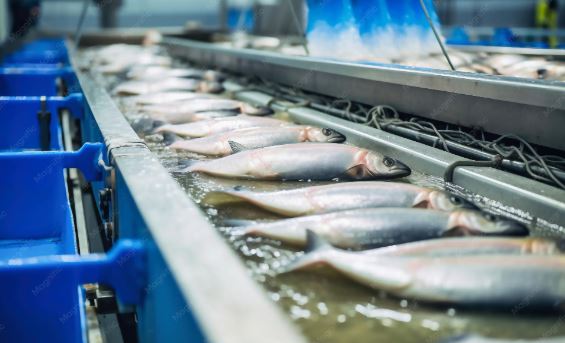
ISLAMABAD, 15 JUN (DNA) —    A total of 174 Pakistani fish processing plants have been enlisted with China, expanding market access for the country’s fisheries sector and strengthening trade links with one of Pakistan’s largest export destinations. According to official documents available with Wealth Pakistan, China has emerged as an increasingly important market for Pakistani seafood products as bilateral agricultural and food trade continues to grow.

The enlistment of 174 fish processing plants with the General Administration of Customs of the People’s Republic of China enables a larger number of Pakistani exporters to supply seafood products to the Chinese market under approved regulatory arrangements. Pakistan has also made progress in expanding access to international seafood markets. Following the resumption of exports to the European Union, several consignments of fish, cuttlefish and shrimp exported by four Pakistani companies successfully cleared 100 percent laboratory analysis requirements at EU borders.

Official documents show that besides China, 11 Pakistani fish processing facilities are registered for exports to Saudi Arabia. Meanwhile, registration of 16 facilities for exports to Russia is currently under process. Fisheries remain an important component of Pakistan’s economy, providing livelihoods to thousands of people, particularly in coastal communities. In addition to marine fisheries, inland fishing activities are carried out in rivers, lakes, ponds and dams across the country.

Official data shows that the sector contributes 1.29 percent to agriculture and 0.30 percent to Pakistan’s gross domestic product (GDP). During July-March FY2025-26, total fish production reached 642,180 metric tonnes, comprising 427,180 metric tonnes from marine fisheries and 215,000 metric tonnes from inland waters. The federal and provincial fisheries departments are implementing a range of initiatives to improve sector performance and boost exports.

These include strengthening extension services, introducing innovative fishing techniques, developing value-added seafood products, increasing per capita fish consumption and improving the socio-economic conditions of fishermen.Authorities are also reviewing the Deep-Sea Fishing Policy 2018 to align it with evolving industry requirements and emerging export opportunities.— DNA

Vance says he hopes to release text of agreement to halt war in Iran this week

Vance says he hopes to release text of agreement to halt war in Iran this week

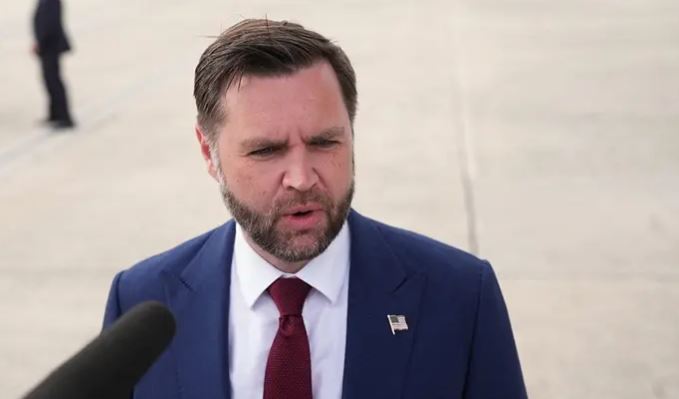
WASHINGTON, JUN 15: US Vice President JD Vance said on Monday that he hopes text of an agreement to halt the war in Iran and open the Strait of Hormuz will be released this week, as further negotiations over the deal’s details were set to continue.

In an interview on CNBC, Vance also said the United States expects the economically vital waterway would be open without tolls on a long-term basis.

For all the latest headlines follow our Google News channel online or via the app.

“Our expectation is that the Strait is going to be opened in a toll-free way for the long-term,” he said.

“That’s the sort of thing that we’re going to figure out in these technical negotiations. You know that there are a lot of very important details to figure out that we’re actually going to sit at the table and discuss together and figure out a path forward.”

The US and Iran said they had agreed terms to end their war and reopen the strait, news that brought relief to markets although the pact may hinge on an end to hostilities in Lebanon and defers talks on Tehran’s nuclear program.

While still a framework, the deal marked the biggest breakthrough towards resolving the conflict that has killed thousands and upended energy markets since it began with joint US-Israeli strikes on Iran in February.

Vance said Iran’s foreign minister and House speaker will represent Iran at the signing in Switzerland on Friday and many details of the deal are still to be sorted out. He did not say who would represent the US at the signing.

Ayaz meets Iranian Ambassador

Ayaz meets Iranian Ambassador

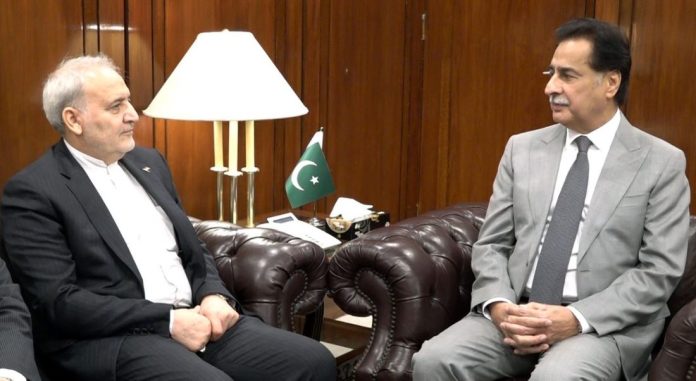
ISLAMABAD, JUN 15: Speaker of National Assembly of Pakistan, Sardar Ayaz Sadiq Monday met with the Ambassador of the Islamic Republic of Iran to Pakistan, Reza Amiri Moghaddam, at Parliament House.

During the meeting, the two dignitaries held detailed discussions on Pakistan-Iran relations, matters of mutual interest, the promotion of parliamentary cooperation, the regional situation and issues relating to peace and stability.

During the meeting, Ayaz Sadiq extended his heartfelt congratulations to the Iranian leadership and people on the peace agreement reached between Iran and the United States, warmly welcoming this significant development.

He said the agreement as a positive, encouraging and historic step towards promoting peace, stability, mutual trust and constructive diplomacy in the region.

NA Speaker said that the peace agreement between Iran and the United States would not only help reduce tensions in the region but would also contribute significantly to the establishment of sustainable peace, security and economic stability at both regional and global levels.

He expressed the hope that the parties would continue to prioritize dialogue and diplomacy in resolving differences in the future.

Ambassador Reza Amiri Moghaddam appreciated the sincere efforts of Pakistan’s political and military leadership in facilitating the ceasefire and peace agreement between Iran and the United States.

He said that Pakistan has consistently played a positive and constructive role in promoting peace and resolving conflicts.

The ambassador congratulated the Government of Pakistan, Parliament and military leadership on their successful diplomatic efforts and said that the government and people of Iran would always value and remember Pakistan’s sincere cooperation, goodwill and effective role in promoting peace.

He said that the contributions of Pakistan’s political, parliamentary, diplomatic and military leadership toward achieving the ceasefire and peace agreement between Iran and the United States were commendable and of great significance for fostering peace and stability in the region.

The ambassador accompanied by his delegation, also observed the proceedings of the National Assembly session.

He appreciated the thoughtful remarks made regarding the Iran–United States peace agreement by Prime Minister Muhammad Shehbaz Sharif, Speaker National Assembly Sardar Ayaz Sadiq, Minister for Defence Khawaja Muhammad Asif and other Members of the National Assembly.

Crucial months to shape Pakistan’s political future

Crucial months to shape Pakistan’s political future

Opinion

Ansar Mahmood Bhatti

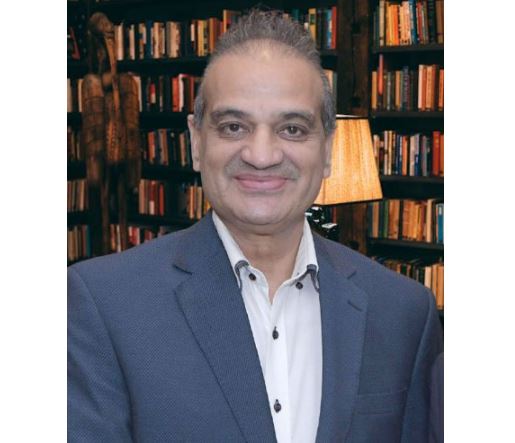
The recent elections in Gilgit-Baltistan have placed the PPP in a commanding position an outcome largely anticipated given the evolving political landscape and the ruling PML-N’s performance over the past three years. The budget has now been presented and is expected to pass smoothly through parliament. Yet, the pressing question remains: can the ruling party sustain its tenure for another two years? The establishment had sought to secure the 28th Amendment before the budget session, but disagreements among political parties delayed the move. As a result, the matter will likely be revisited after the budget. This makes the coming months particularly crucial, as they will shape the country’s future political trajectory.

Pakistan Tehreek-e-Insaf (PTI), despite facing unprecedented restrictions, continues to gain political traction. In last elections in GB the party had secured two-thirds majority and this time it was even not allowed to contest the elections. Even then, the party’s resilience in the face of adversity has become a defining feature of its current trajectory. With each passing day, PTI’s popularity appears to be expanding, even though it is barred from holding public meetings, rallies, or gatherings. This paradoxical rise can be attributed to two major factors: the continued imprisonment of Imran Khan and the governance failures of the incumbent government.

The imprisonment of Imran Khan has transformed him into a symbol of resistance and injustice. For many Pakistanis, his confinement is not merely a legal matter but a political statement. The longer Khan remains behind bars, the more sympathy he garners from the masses. People perceive his imprisonment as a denial of democratic rights and an act of political victimization. This perception fuels public support for PTI, as citizens rally behind the idea of justice and fairness.

Interestingly, Khan’s absence from the political stage has not diminished his influence. Instead, it has amplified it. His supporters argue that he is more dangerous to his opponents while in jail than outside it, as his imprisonment continuously reminds the public of the alleged injustices meted out to him. This dynamic has created a powerful narrative: Khan as a martyr of democracy, and PTI as the vehicle of change.

Parallel to Khan’s imprisonment, the incumbent government’s inability to deliver on governance has further strengthened PTI’s position. The economy remains fragile, with foreign reserves largely dependent on borrowed funds. Inflation continues to burden ordinary citizens, while corruption, nepotism, and jobbery dominate the political landscape. These failures have eroded public trust in the ruling coalition, creating fertile ground for PTI’s resurgence.

Even on the international front, where Pakistan briefly gained relief due to the easing of U.S.-Iran tensions, the political government failed to capitalize. Instead, the credit went to the military establishment, further diminishing the civilian government’s credibility. This imbalance has reinforced the perception that the political leadership is weak and ineffective, while PTI or for that matter PPP represent a stronger alternative.

The military establishment’s growing influence in political affairs has complicated the situation. The U.S.-Iran standoff highlighted how the military, rather than the civilian government, was seen as the stabilizing force. This dynamic raises questions about the balance of power in Pakistan. For PTI, PPP this presents both a challenge and an opportunity. While the parties may struggle against institutional resistance, its narrative of civilian supremacy and anti-establishment  politics resonates with a significant portion of the population.

Talking specifically about the PTI, if current trends persist, the party is poised to emerge as the largest party in the next elections. The combination of Imran Khan’s symbolic power and the government’s governance issues creates a strong electoral advantage. However, the political landscape in Pakistan is fluid, and scenarios may change rapidly. If another national government setup is introduced before elections, PTI may secure a share in governance but not necessarily a leading role. Much will depend on how the establishment and ruling coalition manage the pre-election environment.

The future of PTI in Pakistan’s politics is shaped by a paradox: restrictions on its activities have not weakened the party but strengthened its appeal. Imran Khan’s imprisonment has become a rallying point for supporters, while governance failures of the incumbent government have amplified PTI’s narrative of change. As long as Khan remains in jail, public sympathy will continue to grow, making PTI a formidable force in the political arena.

The PPP, meanwhile, is eager to position itself as the viable alternative should a change at the federal level be pursued. Yet the critical question remains: can leaders who have already been tested truly deliver better results this time? Perhaps it is time to consider something new a national government that brings together all political parties. Such an arrangement may well be the option favored by the Establishment, but how it could be implemented remains the million-dollar question.

Dar, Tajani reaffirm joint push for lasting regional peace

Dar, Tajani reaffirm joint push for lasting regional peace

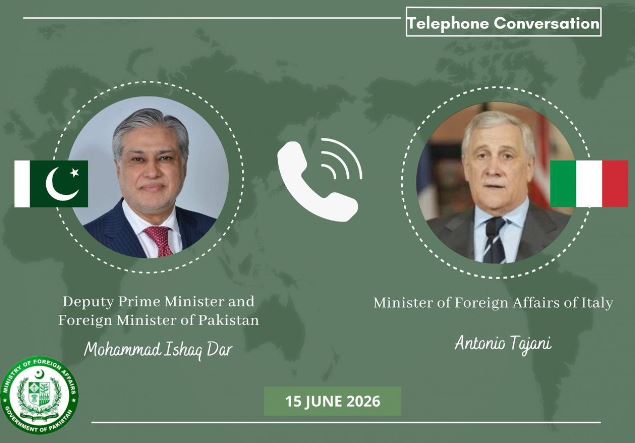
ISLAMABAD, JUN 15 /DNA/ – Deputy Prime Minister/Foreign Minister Senator Mohammad Ishaq Dar received a telephone call today from his Italian counterpart, Antonio Tajani.

DPM/FM thanked the Italian side, including Prime Minister Giorgia Meloni’s appreciation of Pakistan’s mediation efforts that facilitated the understanding reached between the United States and Iran.

Both sides stressed the importance of implementing the understandings reached and sustaining international efforts for lasting peace and stability in the region, including in Lebanon.

They underlined that the opening of the Strait of Hormuz is a positive step for global energy flows, trade, and the broader international economy.

Appreciating the positive trajectory of Pakistan–Italy relations, both sides welcomed the recent signing of the agreement on the abolition of visas for diplomatic passport holders between Pakistan and Italy.

They reaffirmed their commitment to further strengthening cooperation across all areas of mutual interest and agreed to remain in contact.

National conference on Party building held in Beijing

National conference on Party building held in Beijing

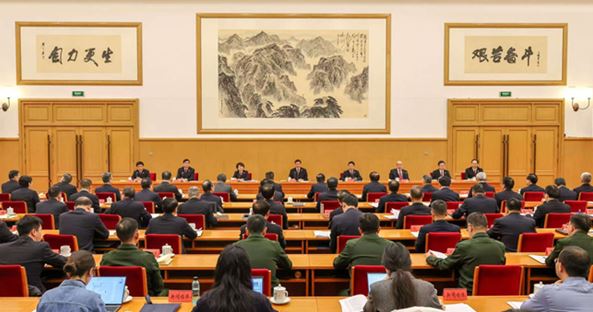
BEIJING, JUN 15 /DNA/ – A national conference on Party building was held in Beijing on Monday. Cai Qi, a member of the Standing Committee of the Political Bureau of the Communist Party of China (CPC) Central Committee and a member of the Secretariat of the CPC Central Committee, attended and addressed the conference. Li Xi, a member of the Standing Committee of the Political Bureau of the CPC Central Committee and secretary of the CPC Central Commission for Discipline Inspection, also attended the conference.

According to the conference, since the 18th CPC National Congress in 2012, the CPC Central Committee with Xi Jinping at its core has set forth a series of new ideas, thoughts and strategies in addressing the major questions of the times — what kind of Marxist party exercising long-term governance should be built, and how such a party should be built. In the process, Xi Jinping Thought on Party Building has taken shape, according to the conference.

The Thought is an important component of Xi Jinping Thought on Socialism with Chinese Characteristics for a New Era, has made major original contributions to the development of the Marxist theory of Party building, and is of great practical significance and far-reaching guiding significance for strengthening the Party and the country, the conference noted.

Palestine thanks Pakistan for regional peace efforts

Palestine thanks Pakistan for regional peace efforts

ISLAMABAD, JUN 15 /DNA/ – The Embassy of the State of Palestine in Islamabad has forwarded to the Ministry of Foreign Affairs of the Islamic Republic of Pakistan a message from Dr. Varsen Aghabekian Shahin, Minister of Foreign Affairs and Expatriates of the State of Palestine, addressed to Senator Mohammad Ishaq Dar, Deputy Prime Minister and Minister for Foreign Affairs of the Islamic Republic of Pakistan.

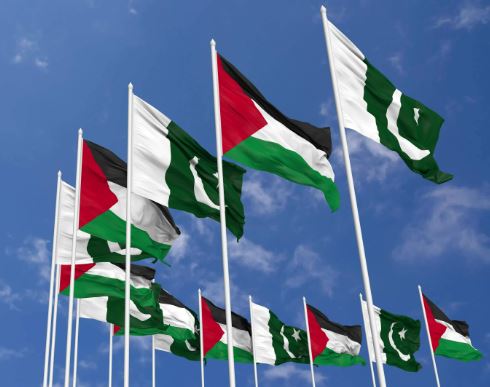
In her message, the Palestinian Foreign Minister expressed the sincere appreciation of the State of Palestine for Pakistan’s constructive efforts in support of de-escalation and the promotion of peace and stability in the region.

She highlighted Pakistan’s longstanding commitment to dialogue, diplomacy, and the peaceful resolution of conflicts, emphasizing the important role such efforts play in strengthening regional security, stability, and international cooperation.

The Minister further expressed hope that the international momentum generated by these diplomatic initiatives would contribute to renewed and intensified action aimed at ending the ongoing suffering of the Palestinian people, bringing an end to the war in Gaza, halting violations in the Occupied Palestinian Territory, and creating the necessary conditions for achieving a just, lasting, and comprehensive peace.

The Embassy of the State of Palestine reiterates its deep appreciation for the steadfast support extended by the Government and people of Pakistan to the Palestinian cause and looks forward to continued cooperation in advancing peace, justice, and the legitimate rights of the Palestinian people in accordance with international law and relevant United Nations resolutions.

Afghanistan to host regional meeting of strategic research centers in Kabul

Afghanistan to host regional meeting of strategic research centers in Kabul

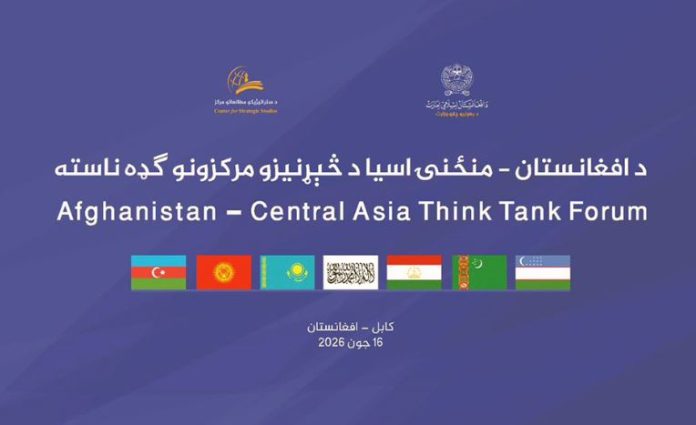
KABUL, JUN 15: The Strategic Studies Center of the Ministry of Foreign Affairs of the Islamic Emirate of Afghanistan is set to host a high-level regional meeting of leading research and policy institutions from Afghanistan, Central Asia, and Azerbaijan in Kabul on 16 June 2026.

The gathering will bring together heads of strategic studies centres, researchers, and policy experts from Uzbekistan, Turkmenistan, Kazakhstan, Kyrgyzstan, Tajikistan, and Azerbaijan. The participating institutions operate under the respective presidential administrations of their countries.

Officials say the meeting comes amid growing engagement between Afghanistan and regional states, with discussions expected to focus on regional connectivity, stability, trade, energy cooperation, transit, and investment. Participants will also review current cooperation frameworks and develop practical recommendations for future collaboration.

A key aspect of the forum is the direct exchange of views between research institutions on shared regional challenges and opportunities, aimed at strengthening coordination and mutual understanding.

The meeting will be officially inaugurated by Foreign Minister Mawlawi Amir Khan Muttaqi.

Organisers say the forum reflects Afghanistan’s balanced, economy-oriented foreign policy and is expected to contribute to greater trust-building, expanded economic and transit cooperation, and long-term stability and shared prosperity across the region.

The initiative underscores Afghanistan’s continued role as an active participant in advancing regional connectivity and economic integration.

TAPI project advances in Afghanistan as 84kms of pipeline laid

TAPI project advances in Afghanistan as 84kms of pipeline laid

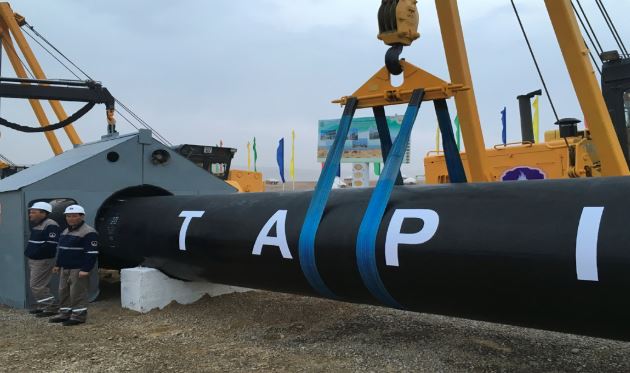
KABUL, JUN 15: Construction work on the Afghanistan section of the Turkmenistan–Afghanistan–Pakistan–India (TAPI) gas pipeline is progressing steadily, with officials confirming that around 84 kilometres of pipeline have now been installed.

Mohammad Yousuf Saeedi, spokesman for the governor of Herat, said the major regional infrastructure project has reached approximately 60 percent completion, with efforts underway to finalise the remaining work by the end of the current year.

He added that groundwork has been completed along roughly 130 kilometres of the route, while 108 kilometres are now fully prepared for pipeline installation.

Technical and engineering teams, along with skilled workers, remain actively engaged in construction. The pipeline route extends from Rabat-e-Sangi district near the Turkmenistan border and has now reached parts of Zinda Jan district in Herat province.

Saeedi said sufficient equipment, machinery, and logistical support have been deployed to the site, noting that there are currently no major obstacles affecting implementation.

The TAPI pipeline is regarded as one of the region’s most significant energy and economic initiatives, aimed at enhancing regional connectivity and strengthening energy cooperation among the participating countries.

Deputy PM Dar briefs Romanian FM on Middle East peace progress

Deputy PM Dar briefs Romanian FM on Middle East peace progress

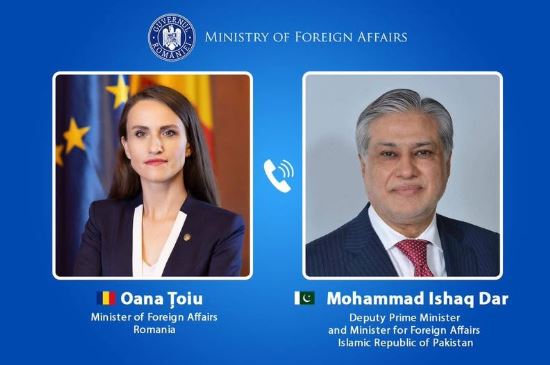
ISLAMABAD, JUN 15 /DNA/ – Romanian Foreign Minister Oana Țoiu announced today that Romania and Pakistan have further consolidated their bilateral ties, with Pakistan assuming an increasingly pivotal mediation role in the Middle East. Following a morning discussion with Pakistan’s Deputy Prime Minister and Foreign Minister Ishaq Dar, Minister Țoiu revealed significant progress toward reopening the Strait of Hormuz, alongside a forthcoming US-Iran agreement.

“This morning, I spoke with Ishaq Dar, who briefed me on the latest mediation efforts in the Middle East regarding the reopening of the Strait of Hormuz, the essential agreement between the United States and Iran, and the timeline for its signature,” Minister Țoiu stated.

She extended Romania’s appreciation for Pakistan’s diplomatic engagement and acknowledged the contributions of regional partners, including Saudi Arabia, Qatar, Türkiye, and Egypt, as well as the ongoing support of the United Nations and the European Union. The two officials reaffirmed the strong bilateral relationship between Romania and Pakistan, rooted in a sustained political dialogue dating back to the beginning of the Islamabad peace process.

Key Developments Announced:

  • Signing Ceremony: The official signing of the US-Iran agreement is scheduled for June 19.
  • Nuclear File: The next phase will include technical negotiations, where Romania’s role as Vice-Governor of the International Atomic Energy Agency (IAEA) will be highly relevant.
  • Economic Impact: Shared objectives—reducing energy prices and ensuring timely access to agricultural fertilizers to stabilize global food markets—now have a realistic prospect thanks to US-led diplomatic efforts.
  • International Coalitions: Romania is part of both the coalition coordinated by the U.S. Department of State to support the reopening of the Strait of Hormuz and the broader European coalition engaged in these efforts.

Minister Țoiu emphasized that continued international coordination, regional stability, and the deterrence of armed attacks remain essential. The deepening Romanian-Pakistani partnership is expected to play a supportive role in the post-agreement phase, particularly in nuclear governance and global market stability.

Stay Connected

64FansLike
60FollowersFollow

Latest Reviews

Exchange Rates

USD - United States Dollar
EUR
1.15
GBP
1.35
AUD
0.70
CAD
0.71