Home Blog Page 86

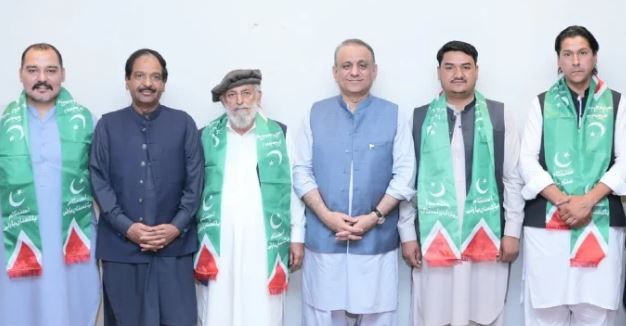
Independents join Aleem Khan’s IPP

Independents join Aleem Khan’s IPP

Staff Report

GILGIT: At least four independent winners from Gilgit-Baltistan Assembly elections on Tuesday joined Istehkam-e-Pakistan Party, announcing the decision during a meeting with Federal Minister for Communications and IPP President Abdul Aleem Khan.

The newly-joined members include Anwar Ali from GBA-23 Ghanche-2, Asad Shafiq from GBA-24 Ghanche-3, Muhammad Dilpazeer from GBA-15 Diamer-1, and Aman Ali from GBA-21 Ghizer-3.

Speaking on the occasion, Dilpazeer said that the four candidates formed a group and joined the IPP, adding that they were also in contact with other independent candidates as well as Majlis Wahdat-e-Muslimeen (MWM) nominees.

According to Dilpazeer, the group would extend invitations to other independents to join the party, claiming that IPP would emerge as the second-largest party in the GB Assembly.

The general elections for 24 seats of the GB Assembly were held on June 7, with the Pakistan Peoples Party (PPP) emerging as the single largest party by securing 10 seats, according to unofficial and preliminary results.

According to unofficial and unconfirmed results, the PPP won constituencies including GBA-1, GBA-4, GBA-5, GBA-7, GBA-9, GBA-10, GBA-11, GBA-12, GBA-17 and GBA-19.

Later, Prime Minister Shehbaz Sharif invited the PPP to form the government in GB, saying that the PPP has emerged as the majority party in the polls.

In a statement on June 12, he assured full support to the Bilawal-led party in the formation of the government.

PM Shehbaz said that the Pakistan Muslim League-Nawaz (PML-N) has decided to sit on the opposition benches in the GB Assembly, but its elected members will vote in favour of the PPP to form the government.

He added that the decision had been taken in line with the democratic traditions and values.

‘Peace, stability’ CDF sole interest in US-Iran deal

'No headline diplomacy': Security officials say 'peace, stability' CDF Munir's sole interest in US-Iran deal

Security officials warn some elements still seeking to spoil US-Iran peace deal

Staff Report/DNA

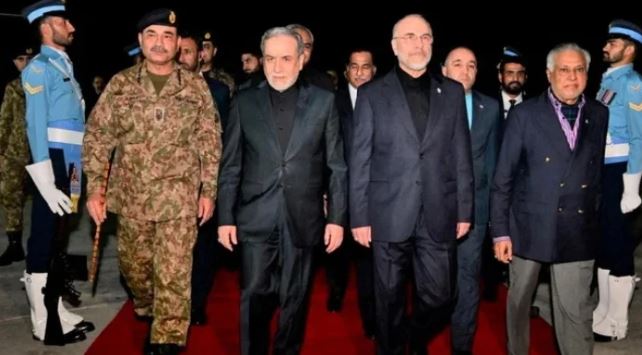
ISLAMABAD: Field Marshal Asim Munir’s sole interest in a US-Iran deal was achieving “peace and stability” in the region, sources cited top security officials as saying on Tuesday, emphasising Pakistan was not interested in “headline diplomacy”.

Islamabad achieved a historic diplomatic victory on Monday when US President Donald Trump announced that Washington has signed a memorandum of understanding (MoU) with Iran to end the war in the Middle East.

Pakistan has been acting as a key mediator between Tehran and Washington since the Middle East conflict erupted on February 28, following US-Israel strikes on Iran.

During a briefing to journalists, senior security officials said that Pakistan has been handling the Iran-US issue as a “highly complex matter” and has fulfilled all requirements of being a mediator in the conflict.

“We are not interested in headline diplomacy,” security sources said, adding that the world was gradually recognising the role Islamabad had played.

According to security sources, Field Marshal Munir’s sole interest in the matter was “peace and stability” in the region.

The security officials warned that there were still actors seeking to spoil the understandings, saying that Israel dominated international media, they added.

They also noted that Qatar, Saudi Arabia, Turkiye, Egypt and the UAE also deserved credit for efforts aimed at de-escalation.

According to security sources, Pakistan maintained separate relationships with Iran, Saudi Arabia and the United States, which enabled it to engage with all sides.

On regional security, the security officials said that Pakistan wanted good relations with Afghanistan.

They stated that 862 militants were killed in Operation Ghazab lil-Haq in Afghanistan, while 999 others were eliminated inside Pakistan.

Discussing the situation in Azad Jammu and Kashmir (AJK), security officials the government had asked shopkeepers to reopen businesses.

However, members of the banned Jammu Kashmir Joint Awami Action Committee (JAAC) blocked roads and threatened those reopening shops.

“Every moment [banned] JAAC is becoming more exposed,” they said, adding that the matter would be dealt with according to the Constitution.

On defence spending, security officials said that Rs300 billion had been allocated in the budget, representing a 17% increase.

They noted that most of the allocation would go towards mandatory expenditures, leaving limited funds for development projects.

Referring to broader security challenges, security sources said that terrorism remained an internal challenge and that modern warfare was increasingly dependent on advanced technology.

“In this context, the budget is low, and both military and political leadership are aware of this,” they said.

Portuguese National Day celebrated in Islamabad

Portuguese National Day celebrated in Islamabad

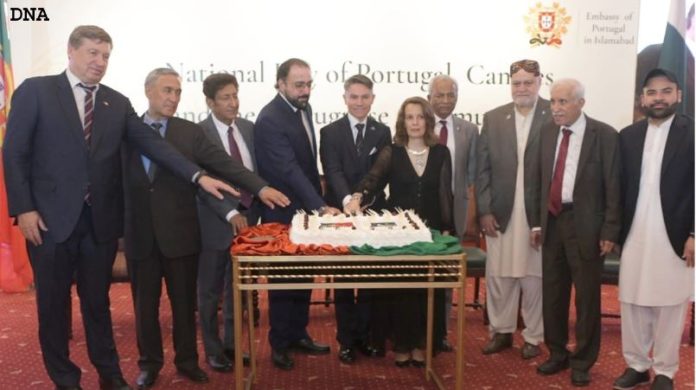
ISLAMABAD, JUN 16 /DNA/ – The National Day of the Portuguese Republic was commemorated with great fervor and diplomatic warmth at a ceremony held at the Islamabad Serena Hotel here on Tuesday.

Federal Minister for Overseas Pakistanis, Ch. Salik Hussain, graced the occasion as the chief guest. The event was also attended by a distinguished array of government dignitaries, including Ministers Qaisar Ahmed Sheikh, Syed Imran Ahmed Shah, and Barrister Aqeel, alongside Governor Sindh Nehal Hashmi.

The diplomatic corps was well-represented at the celebration, with the Ambassador of the European Union and the Ambassador of Portugal, Paulo Guedes Domingues, also in attendance.

The highlight of the evening was a ceremonial cake-cutting, symbolizing the enduring friendship and cooperative ties between Pakistan and Portugal. The dignitaries jointly cut the cake to mark the Portuguese National Day, fostering an atmosphere of goodwill and mutual respect.

The reception provided a platform for high-level interactions, reinforcing the commitment to strengthen bilateral relations between the two nations across various sectors. The event concluded with a toast to the prosperity and continued friendship between the people of Pakistan and Portugal.

Saudi Arabia’s Riyadh Air wins approval to operate US flights

Saudi Arabia’s Riyadh Air wins approval to operate US flights

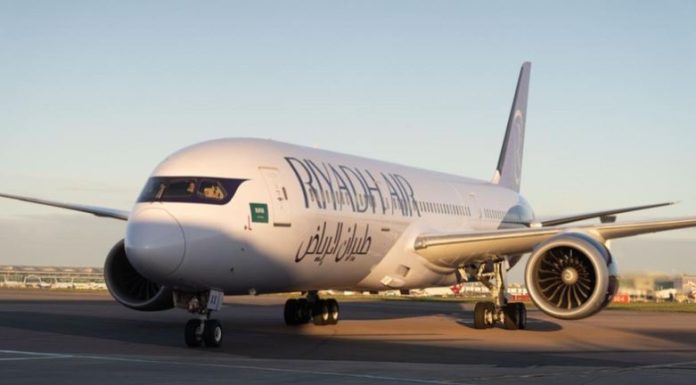
RIYADH, JUN 16: Saudi Arabia’s new airline Riyadh Air won the right to operate flights to and from the United States, the US Transportation Department said in an order Tuesday.

The airline launched its first London flight on its new Boeing fleet last week.

Launched in 2023, Riyadh Air is Saudi Arabia’s second national airline after Saudia and is owned by the country’s Public Investment Fund.

USDOT said “the grant of this authority is consistent with the public interest.”

Govt sets aside over Rs14.2bn for Gwadar-linked development

Govt sets aside over Rs14.2bn for Gwadar-linked development

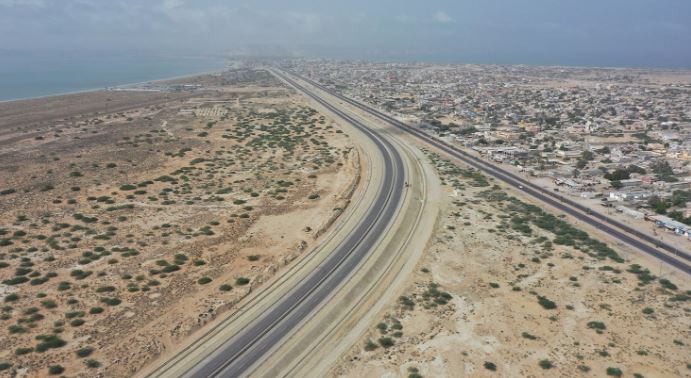
ISLAMABAD, 16  JUN (DNA) —    The federal government has earmarked more than Rs14.2 billion in the Public Sector Development Programme 2026-27 for Gwadar and related connectivity projects, with road, airport and port-linked schemes receiving the bulk of the allocations.

The spending pattern shows that Islamabad is still prioritising links between Gwadar and the rest of the country, alongside basic urban services in the port city. The largest allocation is Rs6.5 billion for the Hoshab-Awaran-Khuzdar sections of the M-8 corridor, followed by Rs2.55 billion for the New Gwadar International Airport and Rs1 billion for the Gwadar-Ratodero Road Project, Gwadar Pro reported on Tuesday.

PSDP also provides Rs400 million for land acquisition for rail connectivity from Gwadar via Besima to Jacobabad, indicating continued work on long-term plans to connect the port city with Pakistan’s rail network.

Port and maritime-related schemes include allocations for land acquisition under the Gwadar Master Plan, the Off-Dock Terminal, East Bay Expressway Phase-II and the Project Management Cell for the proposed Gwadar Shipyard.

The programme also covers civic and municipal schemes, including sanitation, landfill development, rehabilitation of Old Town Gwadar, the Gwadar Development Authority Business Plan, water supply and treatment, and the Gwadar Safe City Project.

Other allocations have been made for Shehzanik Dam, the Model Customs Collectorate Gwadar, the Oceanographic Research Sub-Station, the University of Gwadar and scholarships for students from Gwadar under the Higher Education Commission. — DNA

Trump: Iran deal says ‘loud and clear’ that Tehran won’t have a nuclear weapon

Trump: Iran deal says ‘loud and clear’ that Tehran won’t have a nuclear weapon

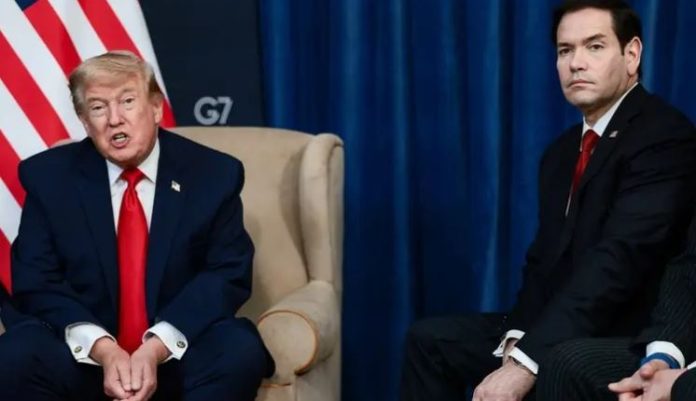
WASHINGTON, JUN 16: US President Donald Trump maintained on Tuesday that an interim accord with Iran makes clear that Tehran would never be allowed to develop a nuclear weapon, and he also suggested Syria could be better positioned to disarm Iran-backed Hezbollah.

Speaking alongside Qatar’s Emir Sheikh Tamim bin Hamad Al Thani on the sidelines of the G7 summit in France, Trump defended the 14-point memorandum of understanding with Iran that has yet to be made public.

“The only thing that really matters to me is Iran will never have a nuclear weapon, and it says it loud and clear,” he told reporters, warning that “all hell will rain down” on Iran if it sought to acquire one.

Trump also said that the US has “no obligation” to invest in Iran even after its deal with the Islamic Republic to end the Middle East war.

“We are not investing any money” in Iran, Trump said.

US and Iranian officials are due in Switzerland on Friday to begin detailed negotiations, opening a 60-day window for complex technical talks. These are expected to cover issues such as the future of Iran’s highly enriched uranium and the lifting of sanctions.

European allies have voiced concern that an inexperienced US negotiating team could struggle to secure a robust agreement, potentially leading to a prolonged standoff.

In 2015, former US President Barack Obama secured a nuclear deal with Iran in exchange for sanctions relief, a process that took two years to finalise. Trump withdrew the United States from that accord during his first term.

“This deal is a wall to a nuclear weapon. His (Obama) deal was a road to a nuclear weapon. My deal, they can’t have a nuclear, they get blown up,” Trump said.

Diplomats and analysts note that Iranian negotiators are highly skilled in nuclear diplomacy, often exploiting weaknesses in their counterparts and buying time to advance their agenda, making the prospect of a comprehensive agreement within 60 days challenging.

One key factor in whether the interim accord holds will be the situation in Lebanon, where Israeli Prime Minister Benjamin Netanyahu has said his troops would remain in the south as long as needed to tackle Hezbollah. Tehran has demanded an Israeli
withdrawal.

Trump appeared critical of Israel’s strategy in Lebanon and also suggested that neighboring Syria – which under President Ahmed al-Sharaa is struggling to stabilize the country after years of civil war – could be best placed to intervene.

“I suggested to Israel to let Syria take care of Hezbollah because to be honest, I think they do a better job of doing it,” he said.

Speaking later in the day during his meeting with UAE President Sheikh Mohamed bin Zayed Al Nahyan, Trump reiterated that the memorandum of understanding with Iran states clearly that Iran will not have a nuclear weapon.

Trump also said that he will release the text of the US-Iran memorandum in a formal setting.

The president also said he likes the idea of sending the Iran deal to Congress for review, a request by some Republican lawmakers.

“I never thought about sending it, never even thought about it, but I will,” Trump told reporters. “I will send it to Congress. I like the idea.”

The US deal with Iran is an agreement to hash out details in the coming weeks.

“I think it’s going to go pretty quickly,” Trump told reporters about the next phase of negotiations with Iran.

“Iran wants to get it done. They have to get back to business, and the relationship is now normalized, so I think it’s going to go pretty quickly,” Trump added. “Could go faster, could take longer too, but it could go fast.”

China warns next phase of US-Iran talks will be ‘more difficult’

China warns next phase of US-Iran talks will be ‘more difficult’

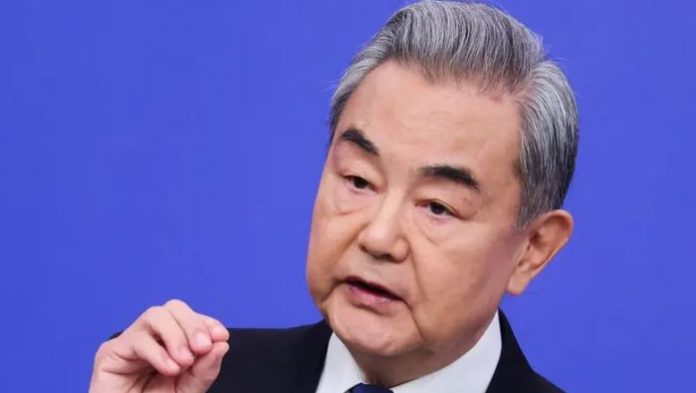
BEIJING, JUN 16: China’s top diplomat told his Pakistani counterpart on Tuesday that the next phase of negotiations between the United States and Iran – which Pakistan has helped mediate – will be “more difficult.”

In a phone conversation ahead of the planned signing on Friday of a US-Iran memorandum of understanding to end their war, Chinese Foreign Minister Wang Yi told Pakistan’s Ishaq Dar that “it is foreseeable that, compared with the first stage, the second stage of negotiations will be more difficult.”

Wang added that the United Nations Security Council “should also play a greater role” in supporting these talks, according to a statement from Beijing’s foreign ministry.

“The current consensus is far from the final destination, rather it is a new starting point,” Wang said.

“Achieving lasting peace in the Middle East and Gulf region still requires unremitting efforts from all parties,” Wang said, adding that China was willing to work with Pakistan to promote peace.

‘No headline diplomacy’: Security officials say ‘peace, stability’ CDF Munir’s sole interest in US-Iran deal

'No headline diplomacy': Security officials say 'peace, stability' CDF Munir's sole interest in US-Iran deal

ISLAMABAD, JUN 16: Field Marshal Asim Munir’s sole interest in a US-Iran deal was achieving “peace and stability” in the region, sources cited top security officials as saying on Tuesday, emphasising Pakistan was not interested in “headline diplomacy”.

Islamabad achieved a historic diplomatic victory on Monday when US President Donald Trump announced that Washington has signed a memorandum of understanding (MoU) with Iran to end the war in the Middle East.


Pakistan has been acting as a key mediator between Tehran and Washington since the Middle East conflict erupted on February 28, following US-Israel strikes on Iran.

During a briefing to journalists, senior security officials said that Pakistan has been handling the Iran-US issue as a “highly complex matter” and has fulfilled all requirements of being a mediator in the conflict.

“We are not interested in headline diplomacy,” security sources said, adding that the world was gradually recognising the role Islamabad had played.

According to security sources, Field Marshal Munir’s sole interest in the matter was “peace and stability” in the region.

The security officials warned that there were still actors seeking to spoil the understandings, saying that Israel dominated international media, they added.

They also noted that Qatar, Saudi Arabia, Turkiye, Egypt and the UAE also deserved credit for efforts aimed at de-escalation.

According to security sources, Pakistan maintained separate relationships with Iran, Saudi Arabia and the United States, which enabled it to engage with all sides.

JAAC stands ‘exposed’
On regional security, the security officials said that Pakistan wanted good relations with Afghanistan.

They stated that 862 militants were killed in Operation Ghazab lil-Haq in Afghanistan, while 999 others were eliminated inside Pakistan.

Discussing the situation in Azad Jammu and Kashmir (AJK), security officials the government had asked shopkeepers to reopen businesses.

However, members of the banned Jammu Kashmir Joint Awami Action Committee (JAAC) blocked roads and threatened those reopening shops.

“Every moment [banned] JAAC is becoming more exposed,” they said, adding that the matter would be dealt with according to the Constitution.

On defence spending, security officials said that Rs300 billion had been allocated in the budget, representing a 17% increase.

They noted that most of the allocation would go towards mandatory expenditures, leaving limited funds for development projects.

Referring to broader security challenges, security sources said that terrorism remained an internal challenge and that modern warfare was increasingly dependent on advanced technology.

“In this context, the budget is low, and both military and political leadership are aware of this,” they said.

ISSI seminar discusses future trajectory of Pakistan-India relations

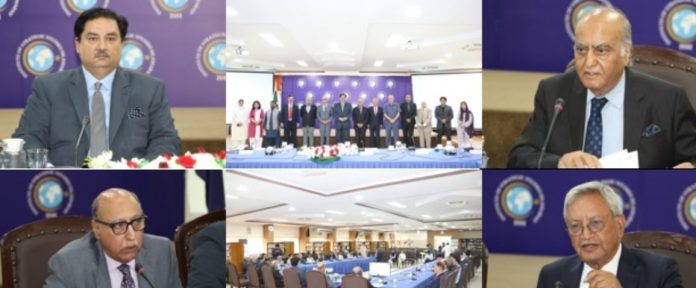
ISLAMABAD, JUN 16 /DNA/ – The Institute of Strategic Studies Islamabad on Tuesday hosted a seminar titled “Decoding the Future Trajectory of Pakistan–India Relations,” bringing together diplomats, academics, and policy experts to discuss the challenges and prospects of bilateral ties between the two neighboring countries.

Former Foreign Minister Khurram Dastgir Khan attended the event as the chief guest, while speakers included Ambassador Khalid Mahmood, Chairman ISSI; Ambassador Abdul Basit, Pakistan’s Former High Commissioner to India; Dr Manzoor Ahmed, Former Ambassador to the WTO; Dr Mujeeb Afzal, Assistant Professor, School of Politics and IR, Quaid-e-Azam University; and Dr. Khurram Abbas, Director ISC at ISSI, said a press release.

In his welcome remarks, Ambassador Khalid Mahmood noted that the history of Pakistan-India relations has remained a mix of conciliatory and confrontational approaches. Citing several key figures from among the Indian policy elite, he observed that New Delhi’s ambition to globally ‘isolate’ Pakistan had actually backfired and voices are emerging to revisit their Pakistan-strategy.

He, however, warned that India’s military leadership still maintains threatening and rhetorical tone towards Pakistan. Islamabad must remain cautious, tread carefully without reading too much into the recent calls for engagement. He suggested that Pakistan should go for a structured dialogue instead of hasty engagements.

The Chief Guest, Engr. Khurram Dastgir Khan (HI), indicated three strengths that Pakistan has carved out of recent US-Iran conflict in recent months, including a goodwill from the United States; an international legitimacy; and ability to conduct complex diplomacy at international fronts. He emphasized the need to use these as a leverage in ties with India.

He expressed concern that several key obstacles such as the unresolved Jammu and Kashmir dispute; the reciprocal allegations of cross-border terrorism; deep-seated domestic nationalism in India; nuclear dilemma; and friction over Indus Water Treaty could again lock the two neighbours in a military confrontation. He specifically pointed towards mounting tensions over water-sharing mechanisms as the potential source of conflict.

Earlier, in his opening remarks, Dr Khurram Abbas labelled the India-Pakistan ties as the most-observed bilateral ties globally, trajectory of which impacts the course of security and stability in South Asia and beyond. He argued that while marred with historic tensions and occasional confrontations, the recent period is the worst era of bilateral ties given the fact that decades-old settled issues such as water-sharing are now prone to mutual hostilities.

Dr Abbas emphasized that academics, policy-practitioners, and civil society were duty-bound to build on the natural appetite for peace and guide the two countries to exit the existing stalemate.

Ambassador Abdul Basit, in his address, indicated that unlike history, the two countries seemed short of ideas to break stalemate and initiate a constructive engagement. Expressing suspicion over the recent calls for engagement from India, Ambassador Basit pointed out that, from an Indian perspective, this was not a suitable time for a breakthrough with Pakistan.

He stressed that Pakistan must prioritise its interests and long-term objectives instead of an open-ended structured dialogue. Ambassador Basit argued that Confidence Building Measures (CBMs) were only useful when a proper mechanism is drawn to discuss the central issues including Jammu and Kashmir.

Dr Manzoor Ahmed was of the view that the most haunting casualty of the ongoing crisis between the two countries was that of trade. After banning direct trade with India, Pakistan is forced to rely on indirect routes for Indian products, which consequently exponentially affects Pakistan’s import bill. Citing a World Bank study, Dr Manzoor Ahmed argued that Pakistan could earn US$38 billion from its exports to India, after which its overall exports would rise by 80 percent. He called for decoupling trade relations from longstanding contentious issues with New Delhi.

Dr Mujeeb Afzal presented a historical overview of competing narratives and claims of India and Pakistan over Jammu and Kashmir dispute.

He opined that the standoff between the two countries over the territory was structurally engrained in their respective national identities, which makes it very costly for anyone to back-off. India’s unilateral step to put the Indus Waters Treaty ‘in abeyance’ adds further layer to the complex web of India-Pakistan relations. Dr Mujeeb opined that the two countries are trapped in a situation where constructive engagement and long-term peace seem very unlikely.

A rigorous Q&A session followed the formal proceedings of the seminar.

Senior security official’s important session with the media

Senior security official's important session with the media

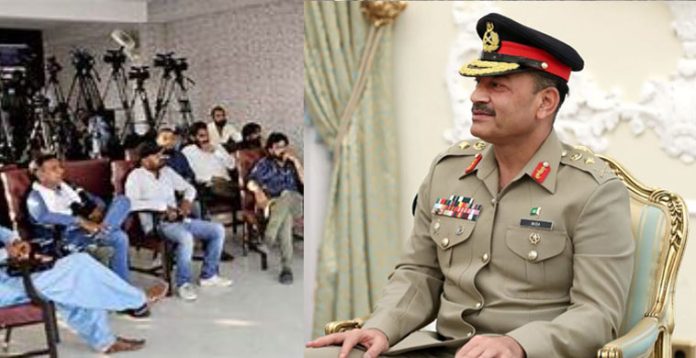
Key security matters were discussed during an important session between a senior security official and the media.
Islamabad Peace Deal

ISLAMABAD, JUN 16 /DNA/ – Pakistan’s civil and military leadership motives for mediating are not narrow rather stability in the region and peace amongst Muslim Ummah.

Through consultation and cooperation with all key stakeholders, Pakistan especially FM Asim Munir saved the region from a major war that was planned to be imposed with serious consequences.

This was a war won by FM Asim Munir through sincerity, competence, brilliance and Allahs Blessings for the greater good of humanity without actually being fought,” which is pinnacle of strategy; stated security sources.

This sensitive diplomatic process requires utmost confidentiality, responsibility and caution.

As a responsible mediator, Pakistan cannot afford any form of speculation and therefore will not go into contents and substance of any talks and what’s next.

Spoilers and multiple detractors will continue to try to subvert peace efforts however Pakistan will continue with partners in utmost sincerity to pursue peace.

Great credit goes to Muslim countries especially KSA who showed masterly leadeship, restraint and strategic patience and concerned with FM wisdom to avoid a war that could have engulfed region and pitched Muslim against Muslim.

Military diplomacy and relations with any friendly country cannot be viewed through a single, narrow lens; rather, these relations fall under the ambit of both countries’ broader diplomacy based on national interests.

Stay Connected

64FansLike
60FollowersFollow

Latest Reviews

Exchange Rates

USD - United States Dollar
EUR
1.15
GBP
1.35
AUD
0.70
CAD
0.71