Home Blog Page 764

SDPI reports Rs567B loss as cigarette makers influence policymakers

Cigarette

DNA

Islamabad – Cigarette consumption is increasing in developing countries and Pakistan is no exception and has witnessed an upsurge in recent years and instead of generating additional revenue from the cigarette industry, the country has incurred billions in losses, both in terms of revenue and increased health costs.
Pakistan is one of the top tobacco- consuming countries standing at the 7th position globally and 1st in the WHO Eastern Mediterranean Region (EMR) in terms of the number of tobacco product users.
According to an estimate the country produces more than 60 billion sticks of cigarettes every year but when it comes to revenue the Federal Board of Revenue (FBR) data shows all tax collection targets were missing during last seven years.
The total loss, estimated by a number of research studies including one by the Sustainable Development Policy Institute (SDPI), during the last seven years has been estimated at Rs 567 billion.
The World Health Organization (WHO) emphasizes the need to safeguard tobacco tax policies from vested interests of cigarette companies for effective development, implementation, and enforcement of public health initiatives. However, it did not happen in Pakistan.
The study also highlighted how high and middle-income countries successfully imposed high taxes on cigarette products to decrease consumption and increase government revenues, but the fact remains that Pakistan still lacks a clear strategy on using cigarette taxation and prices as a public health tool.
Pakistan has signed Framework Convention for Tobacco Control (FCTC), the multilateral treaty initiated by World Health Organization (WHO) in 2004 to curb smoking.
Two decades post FCTC, the cigarette industry is influencing decision making and the country stands at the losing end – loss of revenue and extra burden on the country’s fragile healthcare system.
World Bank has also revealed, in a report titled “Pakistan: Overview of Tobacco Use, Tobacco Control Legislation, and Taxation,” that the decline in government revenue in the 2016-2017 fiscal year was carefully planned by the powerful cigarette industry.
According to details, the cigarette industry convinced the government to introduce third-tier (for taxation) in order to curb illicit trade. The industry cited exaggerated numbers of illicit trade and consequently, with the introduction of the third tier in the tobacco taxation regime, the revenues fell from Rs 114.27 billion in 2015-16 to Rs 83.76 billion in 2016-17.
When it comes to burden on the health sector, Pakistan Institute of Development Economics (PIDE) provides insight into the overall costs linked to smoking-related diseases and deaths in Pakistan for the year 2019.
The analysis points to an additional financial burden of Rs 615.07 billion ($3.85 billion), with indirect costs such as morbidity and mortality constituting a significant 70% of the total expenses.
This highlights the pressing need to reassess the industry’s sway on national policies, emphasizing the importance of balancing public health and economic stability.

CDA’s decision to build Pakistan’s largest IT park

CDA

DNA

ISLAMABAD: On the direction of the Chairman Capital Development Authority (CDA) from the related departments including Member Technology and Digitalization, where all the office affairs of CDA are to be digitized rapidly there, several steps are being taken to provide best IT facilities to the citizens.

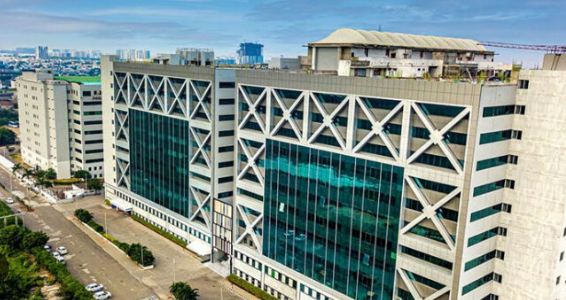
According to the details, the Capital Development Authority (CDA) board has approved the construction of an IT park on an area of 3.3 acres in Sector G-10 of Islamabad, for which a plot has also been allocated.

Further, Islamabad IT Park will be established under Public Private Partnership. The covered area of this park will be 1 lakh square feet. In which 5 to 6 thousand freelancers should be worked. In the IT Park, working space for freelancers, start-ups, software houses, library, space for exhibition of IT products, research centers, conference halls, meeting rooms will also be allocated.

It should be noted that the private companies will bear all the costs of building Islamabad IT Park, while after 15 years this park will be completely handed over to CDA. Similarly, private companies will be able to rent space and build IT offices in this park. This will not only increase the income of CDA but also ensure the provision of modern and quality IT facilities to the citizens of Islamabad. On this occasion, the Capital Development Authority (CDA) administration says that equipping the city of Islamabad with modern facilities is one of the first priorities of the organization so that all possible facilities can be provided to the citizens coming to Islamabad.

‘Politics aside, state belongs to all’: PTI, PML-N break ice as KP CM Gandapur calls on PM Shehbaz

Ali Amin Gandapur

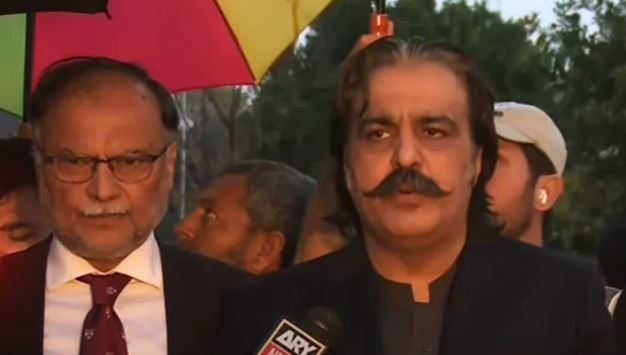
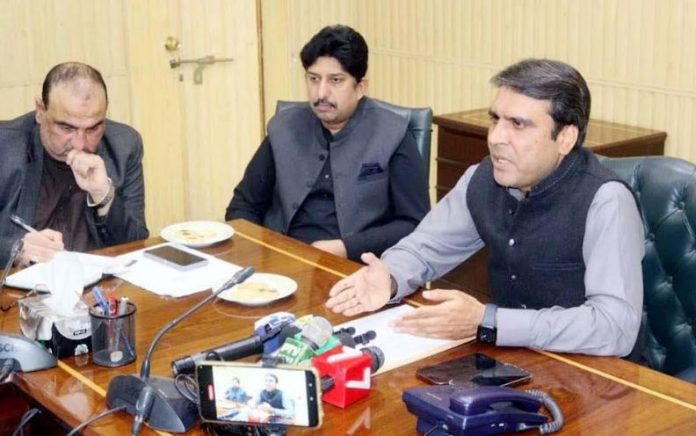
In a major political development, Khyber Pakhtunkhwa Chief Minister Ali Amin Gandapur met Prime Minister Shehbaz Sharif and hailed his first engagement with the chief executive belonging to rival Pakistan Muslim League-Nawaz (PML-N) as “positive”.

He stated this while addressing a press conference flanked by Planning Minister Ahsan Iqbal and other PML-N leaders following a meeting with the premier.

CM Gandapur, who belongs to Pakistan Tehreek-e-Insaf (PTI), said he stressed the need to hold political dialogue with party incarcerated founder Imran Khan who has been behind bars since August last year in different cases ranging from corruption to terrorism.

“I have asked the prime minister to politically engage with Imran Khan. Political engagement will lead to a political solution,” he added.

Gandapur said PM Shehbaz had also assured him that he would be allowed to meet the party founder in Rawalpindi’s Adiala Jail where the authorities have beefed up security measures and barred ex-premier Imran from holding meetings owing to “threat alert”.

The KP CM said he told the premier that he had to hold a meeting with the party founder to discuss upcoming Senate polls.

Gandapur said he held discussion with the premier to resolve issues of the masses. “The prime minister has assured that all dues of province will be cleared,” he said describing his meeting as “good and positive”. 

Responding to a question related to PM Shehbaz’s recent visit to KP, Gandapur said he was not present in Peshawar during the PM’s visit.

“It’s our tradition that we take special care of guests,” the CM added.

Govt to make all policies with consultation of the business community: Jam Kamal Khan

Govt to make all policies with consultation of the business community: Jam Kamal Khan

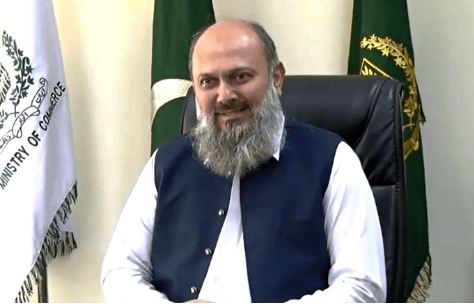
ISLAMABAD, MAR 13 /DNA/ – Federal Minister of Commerce Jam Kamal Khan has said that the government is business friendly, will make all the policies with the consultation of the business community and will take all the chambers of the country along with it. The solution of the economic crisis is the first priority. We want the support of the business community for the stability of the business, We will provide facilities to the business community for ease of doing business. The mission of fully facilitating investment and local and foreign investors and under the leadership of Prime Minister Shehbaz Sharif has come with a strong determination to overcome the economic challenges facing the country. I would like to thank President Islamabad Chamber of Commerce Ahsan Zafar Bakhtawari and Secretary General UBG Zafar Bakhtawari for coming to congratulate me.. 

He expressed these views yesterday while talking to President ICCI Ahsan Zafar Bakhtavari and Secretary General UBG Zafar Bakhtavari, who congratulated him on assuming the post of Federal Minister of Commerce, Federal Minister of Commerce Jam Kamal Khan. said will increase the volume of trade, especially in key sectors such as mining, livestock, and textiles.We urgently need to align with global standards and adopt modern methods, Jam Kamal said that there is a need to move beyond the traditional trade approach and adopt proactive measures to improve Pakistan’s position in the global market.

Speaking on the occasion, ICCI President Ahsan Zafar Bakhtavari said that people across the country, including the business community, have many expectations from the government. We know that there are difficult times and bad conditions. will fully cooperate with,The business community also expects that the government will consult the businessmen, especially the Chambers, in policy making, because the policy made with their consultation will benefit the country and the economy, We will lend our hand in the government’s efforts for economic stability, We will work together with the government to deal with the problem of inflation, reduce interest rates, improve exports, increase foreign exchange reserves and revive the economy.Pakistan has excellent potential to promote exports of IT, pharmaceuticals, textiles and other sectors, so the business community should work with the government to solve the problems of the export sector and create a favorable environment for export promotion. ICCI will fully cooperate with the Government in its efforts to improve business and economic activities in the country.The government should start working on the budget proposals in consultation with all chambers of commerce and associations in the country so that a comprehensive document of proposals based on the views of the business community can be presented to the government for the next budget.

On this occasion, Secretary General UBG Zafar Bakhtavari said that the business community will provide its full support to the government for economic stability, the business community is playing the most important role in the development of the economy. Will work with the newly elected government to promote ease of doing business in the country and improve the economy.

Bahrain National Guard Commander meets CJCSC Sahir Shamshad

Bahrain National Guard Commander meets CJCSC Sahir Shamshad

RAWALPINDI, MAR 13 /DNA/ – General Sheikh Mohammed Bin Isa Bin Salman Al Khalifa, Commander Bahrain National Guard, called on General Sahir Shamshad Mirza, Chairman Joint Chiefs of Staff Committee, at Joint Staff Headquarters, Rawalpindi.

Matters of bilateral professional interest and further strengthening of security and defence cooperation between the two countries were discussed during the meeting. Both sides reiterated the resolve to further strengthen security and defence cooperation between the two brotherly countries.

Earlier, upon arrival at Joint Staff Headquarters, a smartly turned-out tri-services contingent presented ‘Guard of Honour’ to the visiting dignitary.

ECOSF to arrange lecture series on `Popularizing Mathematics and Science’

ECOSF to arrange lecture series on `Popularizing Mathematics and Science’

ISLAMABAD, Mar 12 (APP/DNA): The ECO Science Foundation (ECOSF) and the Union of Iranian Societies of Mathematical Sciences (UIMS) are jointly arranging Lecture Series on Popularizing Mathematics and Science, virtually.

As a part of this series, an engaging and enlightening Mathematical Popularizing Talk will be held on March 14 where the participants will delve into the fascinating world of Mathematics.

According to an official of ECOSF, renowned Expert,  Imran Parvez Khan will deliver lecture on the topic “Symmetry of Frieze Patterns” which will be attended by a number of participants including students and researchers.

Frieze patterns are decorative patterns found in nature and in man-made art.

All frieze can be grouped into seven types.

This presentation will be interactive and the participants will get to see various frieze patterns and will be able to classify them into one of the seven types, according to their specific symmetries.

An algorithm will be shared for determining the symmetry group of any frieze pattern.

ECO Science Foundation (ECOSF) is a Specialized Agency of the ECO for promotion of Science and Technology leading to economic development.

The Basic Charter of ECO was formed under the Treaty of Izmir as a result of the meeting of the member countries held in Izmir, Turkey on 12th March, 1977.

It envisaged the establishment of ECO Science Foundation as a specialized agency of ECO to function as a reservoir of highly skilled scientific and technical manpower and to facilitate promotion of scientific research among the Member States.

Interior Minister Mohsin Naqvi announces to forego salary

Mohsin Naqvi

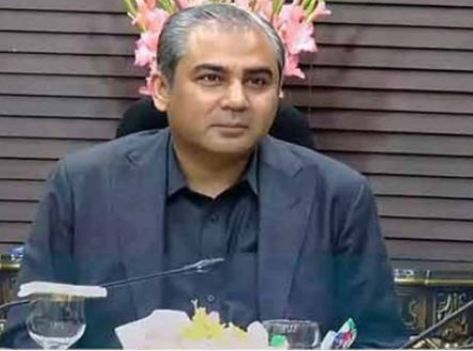
ISLAMABAD, MAR 12 (APP/DNA): Minister for Interior & Narcotics control Mohsin Naqvi on Tuesday announced to forego his salary during his tenure as minister.

He made an announcement on social media application X and stated that in this challenging time, he was committed to support and serving the nation in every possible ways.

Earlier, the minister had a meeting with lawyers’ community in Lahore in a simple gathering organized in his honor in a local hotel.

Former President Supreme Court Bar Ahsan Bhawan, Federal Minister of Law Senator Azam Nazir Tarar and the officials of Pakistan and Punjab Bar Council attended the meeting.

Advocate General Punjab and officials of various bar associations also participated in the function.

The lawyer leaders pay tributes to Mohsin Naqvi for his unparalleled performance as Chief Minister of Punjab.

They said that Mohsin Speed excelled at every level and completed public projects with surprising speed in a short period of time.

The lawyer leaders congratulated Mohsin Naqvi on his appointment as a federal minister and expressed good wishes.

The minister said that he would do his best to pay back to the country in the best interest and fulfill the responsibility that Allah had given to him.

He said that he did best for the lawyers what he could do for the community because lawyers’ community was very close to his heart.

“I believe in team work and team work brings the best results”  the minster added.

The lawyer leaders thanked Mohsin Naqvi for the record work for the welfare of the lawyers community

Will Shahbaz’s Hard Work alone Do the Magic?

Qamar Bashir

By: Qamar Bashir

The current state of Pakistan’s economy is alarming, with several key sectors facing significant challenges. The electricity circular debt has ballooned to an alarming Rs. 4000 billion, while the national carrier, PIA, is incurring losses exceeding Rs. 800 billion. Furthermore, the state of electricity plants has deteriorated, contributing to inefficiencies and financial losses. Rampant electricity theft has resulted in losses exceeding Rs. 400 billion, exacerbating the financial strain on the energy sector.

Adding to the financial woes, corruption within government institutions, such as the FBR, has resulted in the embezzlement of over Rs. 300 billion. State-owned enterprises are also struggling, with losses surpassing Rs. 500 billion.

The consequences of these financial mismanagement are dire, disproportionately affecting the majority of the population. While a small percentage of the population benefits from these losses, the burden falls heavily on the remaining 90%, leading to increased taxes, utility charges, and commodity prices. As a result, the vulnerable population is experiencing a decline in living standards, facing challenges such as inflated school fees, transportation costs, and housing expenses, pushing them further into poverty.

The Prime Minister Shahbaz Sharif painted a bleak picture during his address at the inaugural meeting of the newly sworn-in cabinet. It echoed a similar sentiment to the speech he delivered upon assuming the premiership in April 2022. However, this time, there was a noticeable departure from scapegoating, as he refrained from attributing the country’s economic woes to the PTI.

Reflecting on our collective memory, we can recall countless instances where newly sworn-in leaders, be they prime ministers, military dictators, or technocrats, have delivered similar speeches promising to address the nation’s dire economic and financial circumstances. They vow to leave no stone unturned in their efforts to uplift the country. However, history bears witness to the rapid fading of these promises as they become immersed in the trappings of power and privilege.

Once in office, these leaders often prioritize the perks and prestige of their positions, neglecting their initial pledges. They soon confront the reality of entrenched systemic issues, perpetuated by powerful vested interests within the government, civil service, and military bureaucracy. These individuals benefit from the status quo and resist any attempts at meaningful reform that might threaten their own positions or privileges.

Should a government dare to challenge these entrenched interests and pursue genuine reform efforts, they are met with polite warnings to desist from disrupting the established order. If they persist in their efforts, they face the threat of being swiftly removed from power.

This cycle of promising change but ultimately succumbing to the pressures of the status quo perpetuates a vicious cycle of stagnation and decline, leaving the nation’s progress at the mercy of those who prioritize self-interest over the common good.

In his extensive address, Sharif reiterated his steadfast belief in the power of “hard work” to surmount the nation’s challenges. However, he also acknowledged the limitations of hard work alone, recognizing the imperative for innovative and creative solutions. He emphasized the importance of learning from past mistakes and, above all, addressing the underlying systemic issues plaguing the country.

In addition to the challenges highlighted by the Prime Minister, several other pressing issues confront the new government, casting a shadow over its ability to steer the country towards stability and growth.

The contraction of the real GDP, plunging to -0.2% in 2023, paints a grim economic picture, with projected modest growth of only 2% in 2024 offering little solace. The surge in the unemployment rate to 8.5% in 2023 signals deep-seated economic distress, with scant prospects for improvement in the foreseeable future.

Furthermore, the relentless escalation of the Consumer Price Index, which reached a staggering 29.2% in 2023, threatens to exacerbate the plight of ordinary citizens, with projections indicating little respite in 2024.

Compounding these challenges is the dwindling foreign investment, which trickled to a mere $2.7 billion in 2023. Meanwhile, the country grapples with a mounting external debt burden, soaring to approximately $126.3 billion by 2023. This fiscal strain is further compounded by a persistent fiscal deficit, oscillating between -7.6% and -7.8% of GDP from 2022 to 2024.

To add to the woes, Pakistan’s foreign exchange reserves have plummeted to critically low levels, hovering around $8 billion, posing severe constraints on the government’s ability to manage its economic affairs effectively. These daunting challenges underscore the urgent need for decisive and strategic action to stabilize the economy and foster sustainable growth.

Overcoming these challenges is undoubtedly formidable, yet not insurmountable. Numerous nations, grappling with severe economic and financial predicaments, have successfully resolved their underlying issues, confronted the proverbial “elephants in the room,” and propelled themselves toward accelerated growth and development.

However, in the context of Pakistan, these metaphorical elephants wield considerable power. They not only influence the selection of members in provincial and national assemblies, the Senate, the president, and the prime minister, but also dictate the composition of the cabinet. Any form of resistance or disobedience is met with swift and unforgiving consequences, as punishment is meted out promptly. The entrenched influence of these powerful entities poses a significant hurdle to meaningful reform and underscores the complexity of navigating the political landscape in Pakistan.

Furthermore, allegations surfaced suggesting that the electoral process was orchestrated to prevent Nawaz Sharif from potentially assuming the prime ministership for the fourth time. Subsequently, upon the formation of the government, key ministries were entrusted to unelected individuals. This composition sends a clear message: interference in the country’s internal affairs, financial and economic sectors, or the Special Investment Facilitation Council will not be tolerated. The strategic allocation of ministerial portfolios underscores the establishment’s intent to maintain control over critical areas and deter any attempts to challenge its authority.

With unelected technocrats, handling the economy and the finance of the country, the nation is bracing itself  for another round of economic strain. The government has initiated a media campaign to manage expectations regarding imminent hikes in taxes, utility costs, and petroleum prices. This effort is packaged as a Ramzan Package, purportedly worth Rs. 12 billion, aimed at showcasing the government’s purported commitment to shielding the most vulnerable segments of society from the impending financial strain.

However, this move is a familiar tactic employed before the implementation of stringent economic measures. The provision of free ration, though ostensibly a gesture of support, is woefully inadequate to sustain vulnerable families for more than 15 days. It fails to address the systemic challenges faced by these families, leaving them vulnerable to hunger, deprivation of basic necessities, lack of livelihood opportunities, inadequate education, and even insufficient clothing and footwear.

Thousands of employees of State-Owned Enterprises are anxiously anticipating the potential privatization and sale of their employers, which could lead to retrenchments, golden handshakes, or terminations, exacerbating the already high levels of unemployment. The looming decisions have deterred the PPP from securing cabinet positions, as they seek to avoid public backlash and preserve their political capital.

Regrettably, the current government assumed power under a cloud of controversy, with allegations of electoral rigging and manipulation casting doubt on the legitimacy of its mandate. The opaque and unfair conduct of the election process has raised serious concerns about the transparency and fairness of the government’s foundation.

Given these circumstances, there are legitimate questions about the ability of a government that ascended to power through questionable means to instill transparency and fairness in the system. The lack of trust in the electoral process undermines the government’s credibility and raises doubts about its commitment to upholding democratic principles and governance. These lingering doubts present a significant challenge for the government in its efforts to enact meaningful reforms and gain the trust of the populace.

Qamar Bashir

Press Secretary to the President(Rtd), Former Press Minister at Embassy of Pakistan to France, Former MD, SRBC

Who is White Tyrian Jade Khan?

Qamar Bashir

By Qamar Bashir

Former  Press Secretary to the President, Press Minister at the Pakistani Embassy in France

In 1987, Imran Khan, the most eligible bachelor of the 1980s and 1990s, reportedly met Sita White in 1987. The daughter and heiress of the late British industrialist and billionaire Lord Gordon White, as well as a prominent American industrialist. 

She fell instantly in love with the stunningly handsome young man. In contrast to other brief relationships, his relationship with Sita White lasted over six years. Reportedly, they decided to have a child in 1991, and their daughter Tyrian Jade was born at Cedars-Sinai Medical Center in Los Angeles in June 1992. Khan reportedly refused to accept Tyrian as his daughter nonetheless a Los Angeles court ruled in 1997 that Khan was Tyrian’s father. Tyrian’s mother died on May 13, 2004 at the age of 43 due to complications from childbirth. In her will dated February 27, 2004, Jemima Khan was appointed as guardian of her daughter, Tyrian Jade Khan-White.

Tyrian was raised in California primarily by her material parents and later by Jemima. She did not appear to have received the love from her father that she deserved, unlike her two handsome step brothers. In her early years, she led a relatively private life and avoided the spotlight. Tyrian was able to create a successful life for herself despite the controversy surrounding her birth and the paternity dispute between her parents. She attended the American University in Washington, D.C., and went on to work in digital marketing. Due to his political disposition, Khan did not maintain visible contact with her, as evidenced by the fact that there is only one photograph of both of them online, taken when she was likely under the age of ten.

Tyrian White is currently moderately active on social media and maintains a twitter account (@Tyriankwhite) and a facebook account (Tyriankwhite). In her Twitter profile photo, she can be seen standing between her two handsome step brothers with pride and happiness. According to some sources, despite the fact that her Twitter location indicates she is in New York, she has been living in London with her stepmother and step brothers who appear to be enjoying living together. They also occasionally post pictures of themselves smiling and happy on social media. Jemima, despite being divorced, exhibited exceptional character; she stood by her ex-husband whenever he was in need and took great  care for his sons and alleged stepdaughter.

Khan, surprisingly, never denied his colourful bachelor lifestyle. When an Indian host confronted him about being in relationships with a number of high-profile women, he responded with a smile, “You have missed naming many others.”

The British newspaper, “The Times” referred to his numerous girlfriends as “mysterious blondes” because of his reputation as an ascetic bachelor and playboy who frequented London’s nightclubs. Zeenat Aman, Sarah Crawley, Stephanie Beacham, Goldie Hawn, Kristiane Backer, Susannah Constantine, Marie Helvin, Caroline Kellett,Liza Campbell, Anastasia Cooke, Hannah Mary Rothschild, and Lulu Black were among them.

Emma Sergeant, an artist and the daughter of British investor Sir Patrick Sergeant, was his first girlfriend from 1982 until they broke up in 1986. She was also a frequent visitor to Pakistan. Afterwards, he had a brief relationship with the artist Susie Murray-Philipson, who painted several artistic portraits of Khan during their time together.

It remains a mystery when and how he became a devout and practising Muslim, an accomplished philanthropist, an educator, a reformer, a politician, and an environmentalist. His interest in Islam reportedly began in the early 1980s, when he met his religious mentor, who taught him the significance of prayer, charity, and other aspects of the faith. Khan’s faith grew stronger over time, and he began to devote more time and effort to promoting Islamic values and principles. In recent years, Khan has become even more outspoken about his faith, making a number of high-profile statements regarding the significance of Islam in his life. He has also taken steps to promote Islamic values in Pakistan, including launching a campaign to encourage more charitable giving and assistance for the poor and needy.

On the basis of his repentance and service to Islam and the needy people of Pakistan, the question is whether he is exonerated of his past deeds. When a person repents for his past sins, he can receive forgiveness and attain spiritual redemption in many religions and spiritual traditions. In Islam, such a person can receive His forgiveness and mercy, as well as a renewed commitment to living a righteous life and a sense of inner peace. When a Christian confesses his sins and asks for forgiveness from God, he receives salvation, eternal life, a renewed sense of purpose, and a commitment. In many other spiritual traditions, the act of repentance and turning towards a higher power or divine source is regarded as a crucial step towards spiritual growth and enlightenment, as well as a state of spiritual purity and grace.

The Quran states, “Except for those who repent, believe, and perform good deeds.” Allah will replace their evil deeds with good ones for them. Quran 25:70. Ataa’ ibn Abu Rabaah stated that Allah, The Exalted, replaces a person’s bad behaviour with a good one. Al-Hasan Al-Basri stated, “Allah, The Exalted, replaced their evil deeds with good ones, their polytheism with worshipping Allah alone, their immorality with chastity, and their unbelief with faith” (in Islam). According to Abu Al-‘Aaliyah, Qataadah, and others, sincere repentance transforms past sins into good deeds. It adds, “Indeed, we are Allah’s, and to Him we shall return,” and asks for forgiveness. In this sense, such sins are transformed into acts of obedience.

Mr. Imran Khan, whose courage and candour are his most notable characteristics, admitted his past lifestyle and conceded  that he had never been a saint, but that he had renounced his past life and devoted his life to the cause of Islam and to achieving honour and dignity for Pakistan and its people.

As unforgiving as our nation is, we will continue to confront him about his past, regardless of his current conduct as a practising Muslim leading a pious life and fighting around the world against “Islamophobia, courageously advocating against the desecration of the Holy Quran and the publication of blasphemous cartoons of the Holy Prophet (PBUH) on all national, regional, and international forums, and finally persuading the United Nations declare 15th March as International day to combat Islamophobia in 140 countries around the world. He  advocated and exerted pressure on other countries of the world to pass laws prohibiting their citizens from insulting Hazarat Mohammad (PBUH), as such insults hurt the feelings of more than one billion Muslims worldwide, and the right to freedom of speech comes with responsibility and sensitivity for the feelings, aspirations, and sentiments of other people.

His contributions in the realm of philanthropy are equally remarkable. During the 1990s, he served as the Special Representative for Sports for UNICEF and promoted health and immunization programmes in Bangladesh, Pakistan, Sri Lanka, and Thailand. Khan was appointed tourism ambassador in the caretaker government of Moeen Qureshi in 1993. During his time in London, he worked for the cricket charity Lord’s Taverners. He constructed the first and only cancer hospital in Pakistan at a staggering cost of over $25 million. He founded Namal College in the Mianwali District, which is affiliated with the University of Bradford. The Imran Khan Foundation, which assists needy people throughout Pakistan, accepted the challenge of lighting up villages in Dera Ghazi Khan, Mianwali, and Dera Ismail Khan as part of the project ‘Lighting a Million Lives’ by establishing solar charging stations in the selected off-grid villages and providing villagers with solar lanterns that can be regularly recharged. Among the few projects he has led in his personal capacity are the construction of a cutting-edge cancer hospital in Peshawar and Karachi.

I conducted an internet search to compare his accomplishments in promoting and protecting Islamic values and philanthropic contributions, but no other politician, religious scholar, or leader of our nation could even come close to matching his characteristics and accomplishments.

Currently, the Islamabad High Court is hearing a petition filed by a likely front man for both the incumbent government and the establishment, requesting that Khan be disqualified for concealing his alleged daughter Tyrian White on his nomination forms for the 2018 general election. In the petition two questions were posed. The first is that he is the father of Tyrian, a fact he concealed on his nomination form for the 2018 election, and the second is that he did not disclose his daughter Tyrian’s assets and liabilities.

First is completely unwarranted, as he was only required to declare the assets and liabilities of his legitimate children, who were registered as such in the NADRA data. Moreover, only residents of Pakistan are subject to Pakistan’s tax laws. According to the Income Tax Act, a person is considered a resident of Pakistan for income tax purposes if they are physically present in Pakistan for 183 days or more during the tax year (1 July to 30 June), regardless of their nationality. The relevant provision states, According to section 116 of the Internal Revenue Code, a non-resident is not required to file a statement of wealth.

Both sons and the alleged daughter of Imran Khan and his ex-wife are non-Pakistani residents and are not even Pakistani citizens. Since Tyrian is an American citizen and Jemima and her two sons are British citizens, none of them are subject to Pakistani law. The California court rendered a decision ex parte without conducting a DNA test or hearing Khan’s argument. Moreover, a U.S. court has no jurisdiction over a citizen of Pakistan, and the question of Tyrian’s paternity has never been litigated in any court of law in Pakistan, nor has a decision been rendered. Therefore, by any stretch of the imagination, Tyrian is not Khan’s daughter for practical purposes, and he was not required to declare her or her assets and liabilities on Form B of the nomination forms. Above all both Jemina and Tyrian are the heirs of unimaginable wealth sufficient to buy more than half of Pakistan at the prevailing market price. The petitioner and the court perhaps knew this also that the entire wealth of Khan is in Pakistan and if he needed more, he just had to ask either Jemima or Tyrian and he would get whatever he wanted.

Upon perusing the website of the election commission and closely examining Form “B,” it was crystal clear that the candidate was required to disclose the assets and liabilities of his dependent children. The exact wording is “I hereby declare that I, my spouse(s), and dependent children do not own any immovable or movable property, including bonus shares, securities, insurance, policies, or jewelry, other than those listed below. In 1992, Ms. Tyrian was born. In 2018, she was 26 years old when the elections were held. Likewise, the two sons were born in 1996 and 1999, so they were all adults and responsible for their own financial and economic matters.

The malfeasance of the petition is understandable, as filing such a futile appeal was akin to firing a legal weapon to malign Khan’s character and portray him as a person with lax moral values and moral turpitude. However, it is difficult to comprehend why the court has admitted this obviously futile appeal. This legal weapon is employed by the government in connivance with the establishment in alongwith brute administration power, igniting religious sentiments, constructing a vile political narrative and banning Khan’s speeches from mainstream media.

Over 76 FIRs were filed against Khan on frivolous and unfounded grounds in an effort to wear him down and break his will and determination against the government. Our interior minister said in a media interview that the punishment for fathering an illegitimate child is death by stoning and nothing less, ignoring the verdict of his leader, Ms. Maryam, who stated, when asked to comment on the video of former Governor Sindh Zubair’s sexual engagement, that it is Zubair’s private affair and between him and Allah. During her public addresses and media interactions, Ms. Maryam, who has conveniently distanced herself from the failures and incompetence of the government, spews venom and accuses Khan of fathering an illegal and immoral child. Currently, another weapon has been added to the arsenal by using the shoulder of PEMRA, which had banned the media from broadcasting Khan’s addresses to the public, while ignoring the public’s demonstrated propensity to abandon traditional media in favour of social media, thereby closing their ears and eyes to the government’s narrative as well, which is even more dangerous for the government. Intriguingly, while the government is increasing the power and lethality of its arsenal, Imran Khan’s popularity is increasing in the same proportion. The government and its allied political parties are losing the necessary political capital to win elections, and at the same time they are reinforcing the public’s perception of their incompetence and inability to manage financial, economic, and administrative issues confronting the people with each passing day. Whereas the government is using every weapon at its disposal to defame and discredit Khan, they are unable to make even the slightest dent in his popularity. Rather, every additional weapon used bolsters his perception as a fighter, validates his commitment and resolve to stand against all odds without fear or rising tides, and validates his grit and determination to stand for the cause of the people and the country. According to him, all that humans can do is exert effort, and Allah the Almighty will always determine their success.

Perhaps the government and its allies  should reconsider their strategy; they should pause and reset the political clock. Otherwise, they will quickly realise that the length of the delay in holding free, fair, and transparent elections will increase Khan’s political capital proportionally and decrease their own. Therefore, it is in the government’s best interest to expeditiously pave the way for free and fair elections in order to preserve any remaining political capital.


Zero Tolerance: Strict action against illegal profiteering in Ramadan, says Atif Raza

Zero Tolerance: Strict action against illegal profiteering in Ramadan, says Atif Raza

By Faisal Munir / DNA

ATTOCK, 11 Mar: Deputy Commissioner Rao Atif Raza has said that all possible steps will be taken to stabilize the prices of essential commodities in Ramadan. He expressed these views while talking to media representatives at DC office here on Monday.

The Deputy Commissioner said that high selling and illegal profiteering will not be tolerated in the holy month and strictest legal action will be taken against those who do so. 9189 inspections were conducted from March 1 to March 10 to control prices of essential commodities. During this period, fines of Rs. 655,500 were imposed and 94 people were arrested, he added.

Atif Raza said that On the direction of Punjab Chief Minister Maryam Nawaz Sharif, 27 Price Magistrates are working across the district to control the sale of graphs and illegal profiteering and And special instructions have been issued to these magistrates to keep prices stable during the holy month. The district administration will adopt a policy of zero tolerance on haggling and profiteering. As per reported by our district representative faisal munir that He said that the distribution of Ramadan packages to deserving people, more than 86,000 Ramadan bags will be distributed across the district, Currently, more than 36 thousand bags have been distributed and the rest will be distributed in the near future he added.

Deputy Commissioner said that On the direction of Chief Minister Punjab Maryam Nawaz Sharif, every possible relief is being provided to the deserving people in Ramadan And he himself is supervising the entire process. On the directives of the Chief Minister of Punjab, the campaign “Sthara Punjab” has been started across the district, Under this campaign, vigorous measures are being taken for cleanliness. Five villages across the district will be made model villages, including Bhoda, Deri Lagal , Bahbodi, Jalwal and Humak. Later, DC Attock along with media representatives visited Ramzan Bazaar and reviewed the prices of essential commodities.

Stay Connected

64FansLike
60FollowersFollow

Latest Reviews

Exchange Rates

USD - United States Dollar
EUR
1.17
GBP
1.34
AUD
0.67
CAD
0.73