ISLAMABAD, MAR 11 /DNA/ – In order to measure the performance and quality of Cellular Mobile Operators’ (CMOs) services being provided to customers, Pakistan Telecommunication Authority (PTA) carried out an Independent Quality of Service (QoS) Survey in seventeen (17) cities of Khyber Pakhtunkhwa, Punjab, Sindh Balochistan and in three (3) cities of Azad Jammu & Kashmir (AJK).
Survey routes were selected to cover main roads, service roads, and key sectors/colonies, totaling 14,000 kilometers in 79 days to cover maximum area. Mobile handsets, set to technology auto-detect and 3G locked modes, were employed for Voice Calls, SMS, and Mobile Broadband/Data sessions, especially in AJ&K cities. The survey included 0.25 million tests for Data, 45,000 for Voice & SMS, and 0.13 million tests in Ookla, utilizing automated QoS Monitoring & Benchmarking Tools to ascertain compliance with Next Generation Mobile Service (NGMS) licenses as well as Cellular Mobile Network Quality of Service (QoS) Regulations 2021.
Based upon the compliance level of each KPI in surveyed cities against threshold defined in the respective licenses and QoS Regulations, CMOs were ranked 1st to 5th in Mobile Network Coverage and Voice Services. In Mobile Broadband Speed segment, rankings were based on factors like highest data download & upload speed, network latency, and webpage loading time.
The survey results indicate that CMOs are compliant with respect to upload and download speed to a great extent, with improvements in network latency and webpage loading time compared to previous surveys. However, certain Voice KPIs fall below licensed thresholds in specific areas. Operators employing advanced technologies like LTE Carrier Aggregation and Voice over LTE deliver better quality of services. Instructions have been issued to operators for necessary improvements to meet quality standards. Survey results are available on PTA’s website (https://pta.gov.pk/en/consumer-support/qos-survey/qos-survey).
PTA field teams are diligently conducting service quality monitoring to encourage operators to enhance mobile services and promote healthy competition.
Premier summons first meeting of federal cabinet at 5pm today
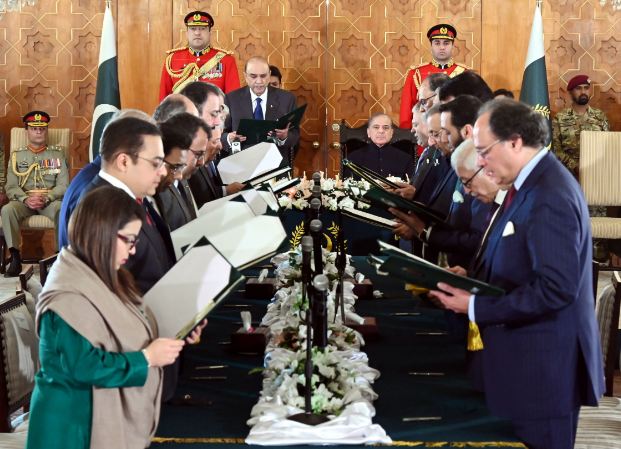
ISLAMABAD, MAR 11 /DNA/ – After days of intense consultation among the ruling partners, President Asif Ali Zardari Monday administered oath to the 19-member federal cabinet comprising some new faces.
Earlier today, Prime Minister Shehbaz Sharif Monday recommended 19 names to the president to be inducted into the federal cabinet, according to a summary forwarded to the Aiwan-e-Sadr.
Those who were recommended for the federal ministries, under clause 1 of the Article 92 of the Constitution, include PML-N lawmakers Ahsan Iqbal, Khawaja Asif, Qaiser Ahmed Sheikh, Riaz Hussain Pirzada, Rana Tanveer, Azam Nazeer Tarar, Jam Kamal Khan, Amir Muqam, Awais Leghari and Attaullah Tarar, while MQM-P’s Khalid Maqbool Siddiqui and Istehkam-e-Pakistan Party’s Abdul Aleem Khan are also on the list.
Moreover, Senators Ishaq Dar and Musadik Malik have also been recommended to be appointed as federal ministers under clause 9 of Article 91 of the Constitution, as both will cease to be senators on March 12 (tomorrow) following the end of their Senate term.
The said clause authorises the prime minister to induct anyone into the federal cabinet who is not a member of parliament for a period of six months.
Three more names that have been recommended to be inducted as federal ministers — under clause 9 of Article 91 — include Muhammad Aurangzeb, Ahad Khan Cheema and Syed Mohsin Raza Naqvi.
Meanwhile, Shaza Fatima is the only woman to be recommended for inclusion in the federal cabinet. She will take oath as a state minister under clause 1 of Article 92 of the Constitution, reads the summary.
ISLAMABAD, MAR 11 /DNA/ – In the midst of the celebrations marking achievements and progress on this Women’s Day, a somber reality remains concealed— the burdensome cost of smoking borne by the women.
On this Women’s Day, one of the tragedies that went unreported is the cost of smoking that women had to pay. Highlighting the plight, a study by PIDE states, “The share of morbidity and mortality costs for females is underestimated because of their lower rates of labor force participation and difficulties in putting monitory value on their informal contribution to household production,” notes a study by the Pakistan Institute of Development Economics (PIDE).
Part of the problem is cheap price of cigarettes and civil society and health experts have underlined the need for increase in FED on cigarettes.
Dr Hassan Shehzad, from IIUI, says that in rural areas, both poverty and smoking levels are higher than urban areas, which is surprising.
He stated that the problem is that prices of cigarettes are the cheapest in Pakistan as multinational companies reportedly influence the governments to facilitate their business.
“This is a business of loss for the country,” he stated.
Highlighting this phenomenon, The PIDE report mentions, “Overall, the mortality cost for males is Rs 259 billion ($1.62 billion), which is 92 percent of the total…The total costs attributable to all smoking-related diseases and deaths in Pakistan for 2019 are Rs 615.07 billion ($3.85 billion).”
There is a need for 26 percent FED increase on cigarettes to bear the health burden and make for the revenue shortfall that smoking has created.
Civil society activists have been demanding a 26 percent FED on cigarettes for the country to be able to bear the health burden of smoking.
At present, Pakistan has two tiers of tax on cigarettes and international guidelines require a uniformed tax system for this sector.
Multinational companies place their products on the second tier so that they had to pay less tax, hence the prices of cigarettes come down and they become accessible to the masses.
Their easy accessibility results into swelling of healthcare costs and prevenances of death and diseases in the society.
“Following a substantial increase in 2022-23, the FED share in retail prices reached 48% and 68% for low and high tiers, respectively. However, the leveling off of the FED share in 2023-24, due to the absence of rate adjustments, could adversely affect revenue and public health efforts,” says a report.
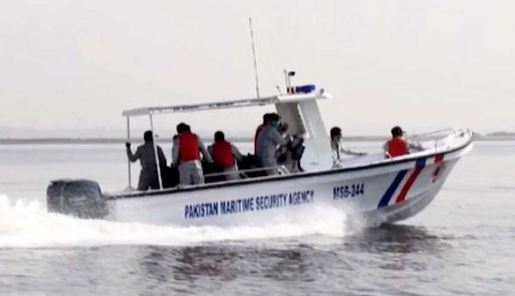
KARACHI, MAR 11 /DNA/ – Pakistan Navy (PN) in coordination with Pakistan Maritime Security Agency (PMSA) recovered 10 dead bodies out of 14 missing fisherman of boat Al-Assad in a joint search and rescue operation.
Search and Rescue operation was started on 05 March 24 in open sea. Despite dense marine traffic in vicinity of accident, time lapse and choppy sea conditions the dead bodies of 10 missing fishermen were successfully recovered today.
The fishing boat Al-Assad with an onboard crew of 45 capsized in open sea off Hajmbro creek on 5 March due inclement weather. Search operation involved multiple assets of PN and PMSA including aircraft, helicopters, ships and speed boats.
Major break through of search efforts marerialised today when PMSS REHMAT upon receipt of information from deployed units recovered 10 dead bodies of missing fishermen.
The recovered bodies have been handed over to concerned civil authorities for further formalities.
Conduct of continuous Search and rescue operation by PN &PMSA is a manifestation of PN’s resolve to assist in every civil calamity at Sea.
An almost complete cessation in the production of private sector establishments in Gaza Strip in addition to an unprecedented decline in the West Bank incurred the Palestinian Economy losses in production by 2.3 billion USD through four month (October/2023- January/2024) of Israeli occupation Aggression About half of the private sector establishments stopped their production or declined in Palestine as a result of an almost total suspension in production of about 56 thousand establishments in Gaza Strip, where internal trade constitutes more than half of the establishments in Gaza Strip.
The estimated number of private sector establishments in Palestine in 2023 is about 176 thousand establishments, 56 thousand establishments in Gaza Strip and 120 thousand establishments in the West Bank. Internal trade constitutes the largest share in Gaza Strip, which is about 56% of the total number of establishments, followed by the services sector with a percentage of 30%, and industry sector by 10% while other economic activities (construction, transport and storage, information and telecommunications, finance and insurance) constitute 4% of the total number of establishments. The primary results indicated that 29% of total establishment in west bank witnessed decline or stopped in production through the Israeli occupation Aggression while most of establishments in Gaza strip stopped their production The majority of employment in Gaza Strip has become unemployed, estimated at more than 153 thousand employees, except for employees in the health and humanitarian relief sectors.
The estimated number of employees in Palestine in 2023 is about 522 thousand employees (349 thousand employees in the West Bank, 173 thousand in Gaza Strip). As for the percentage distribution of economic activities, internal trade activity in Gaza Strip contributes with the highest share to employment by 45.5% of the total number of employees, followed by service activity by 38.1%, while industry activity contributes with 11.1%, followed by construction activities by 1.7%, information and communication activities by 1.5%, transportation and storage activities by 1.2%, and financial and insurance activities by 0.9%. As a result of the ongoing Israeli occupation aggression on Gaza Strip, about 89% of the total number of employees in Gaza Strip have been out of work.
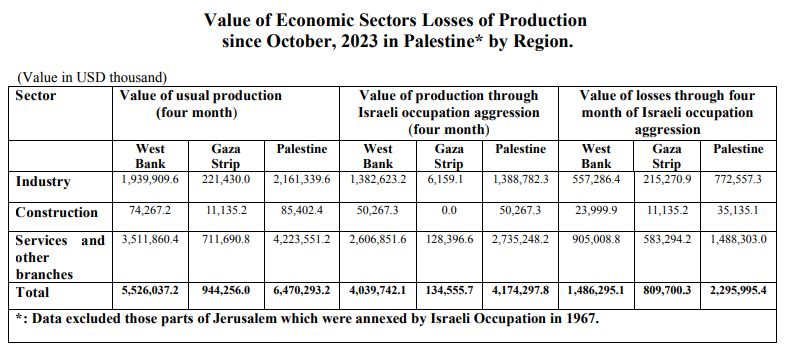
Approximately USD 2.3 billion is the value of losses through four month of Israeli occupation Aggression in Palestine as a result of an almost total suspension in production in Gaza Strip along with the repercussions of the Israeli occupation aggression on Palestine, of almost USD 19 million per day, except for direct losses in properties and assets losses the Palestinian economy has witnessed, during the past years, a recession, especially, in Gaza Strip, due to repeated Israeli occupation aggressions on Gaza over the past years, in addition to the suffocating siege imposed by the Israeli occupation aggressions on Gaza Strip. However, there is no doubt that this current and ongoing Israeli occupation aggression on Gaza Strip is not like theprevious ones, as it involves systematic destruction of all aspects of life in all its sectors, which has paralyzed the economy in all of Gaza Strip, especially after the destruction of many economic.
2
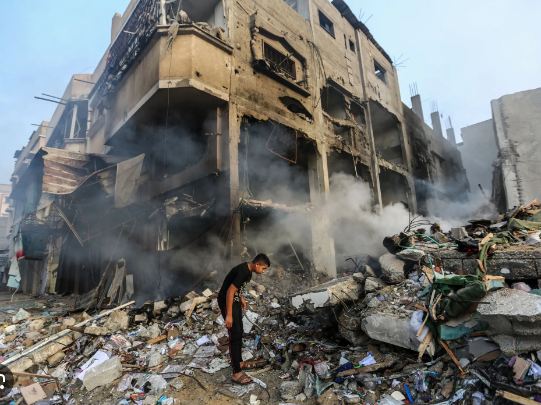
establishments, which cannot be counted or listed until now and up to this moment because of the ongoing violent bombardment of Gaza Strip. There is certainly a complete destruction of the economic life of all sectors in Gaza Strip, where Gaza Strip is operating now at a productive capacity of about 14% through four month of Israeli occupation Aggression. Knowingly, this percentage is made up of vital sectors that did not stop completely during the Israeli occupation Aggression on Gaza, such the health sector, bakeries and part of the internal trade sector to meet people’s needs of food and medicine.
This impact has not only been reflected on Gaza Strip, but also on the West Bank, even if it was less affected. The impact of the Israeli occupation aggression on Gaza and its repercussions in the West Bank of increasing restrictions and tightening the stranglehold on the governorates of the West Bank, disconnecting communication and roads between the governorates, the obstruction of goods access from abroad, preventing the Palestinians living in 1948 territories enter the governorates of the West Bank as well as forbidding workers to access their work inside the occupied territories of Palestine, and the continued deduction of parts of tax revenues (clearance) by the Israeli occupation aggressions over the year which exceeded NIS 2 billion. Where all these reasons and other more have paralyzed the economic movement in Palestine. Preliminary estimates have indicated that private sector establishments in Palestine have suffered losses estimated at more than USD 2.3 billion as of the beginning of the Israeli occupation aggression on Gaza Strip, which is about USD 19 million per day, excluding loss of properties and fixed assets.
Erosion of the Production Base: Preliminary estimates indicate that the production of economic sectors in the West Bank through four month of Israeli occupation Aggression lost about 27% of its production compared to the total of usual four month production percentage with an estimated loss of about USD 1.5 billion through four month. Whereas Gaza Strip lost 86% of its usual monthly production during the month-long Israeli occupation aggression on Gaza since October, that is equivalent to USD 810 million, which will, in return, negatively affect Palestine’s general revenues.
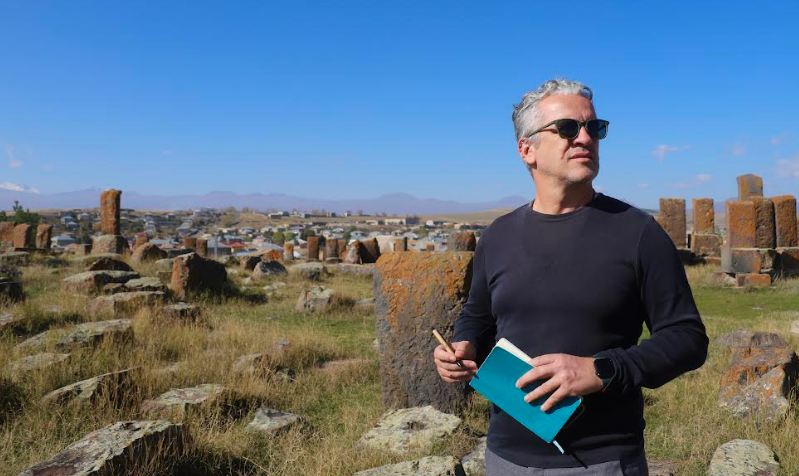
José Luís Peixoto is one of Portugal’s most acclaimed contemporary writers. His vast work in fiction, non- fiction, poetry and children’s literature has received several portuguese and international awards, such as the José Saramago Literary Award, Libro d’ Europa and Oceanos Literature Award, and was shortlisted for the IMPAC Dublin Literary Award and the Femina Prize.
He was born in 1974, in a small village from the south interior of Portugal, in the Portuguese region of Alentejo. He finished a degree on Modern Languages and Literature in the Universidade Nova de Lisboa. Was a teacher for some years in Portugal and in Cabo Verde before becoming a professional writer in 2001.
Peixoto’s works often explore the complexities of human relationships, the rural landscape and the impact of societal changes on traditional ways of life. He is known for his evocative prose and deep insights into the human condition.
“He‘s a man who knows how to write and
who is the successor to the great writers.”
José Saramago
Peixoto’s books are currently translated into 34 languages.Here are some of the publishing houses where Peixoto’s
books are available:
Bloomsbury (UK), Doubleday, Random House (US), Grasset (France), Seuil (France), Literatura Random House (spanish-speaking countries), Companhia das Letras (Brazil), Einaudi (Italy), Kedros (Greece), Meulenhoff (Nederlands), Atlas Contact (Nederlands), Kineret (Israel), Wsoy (Finland), Polirom (Romania), Bozicevic (Croatia), Bakur Sulakauri (Georgia), among many others.
XXXXXXXXXXXX
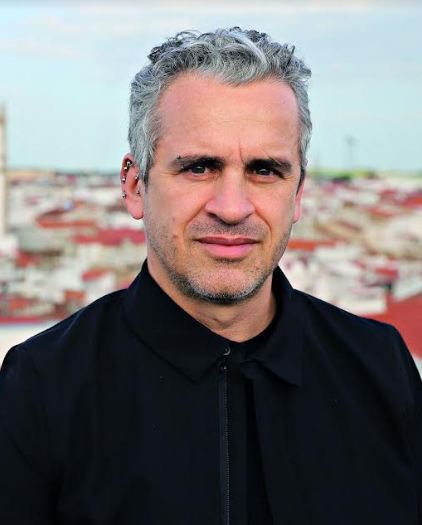
ISLAMABAD: Salt and Pepper hairdo, pierced ears and eyebrows, leaned body and honey dew tone and tenor may confuse oneself for a heavy rock band star ready to hit the notes. However, the gentleman sitting comfortably on a sofa is in fact, Jose Luis Piexoto, the Portuguese most acclaimed and bestselling novelist, a literature Wizkid when introduced. His resume is more than impressive. The list of his accomplishments in fiction, non-fiction, poetry and children’s literature far surpasses many of his peers and even contemporaries. Recipient of Jose Saramago Literary award, Libro d Europa and Oceanos prize, his journey in the world of literature started at a very young age. “I was in my teens when I started writing poetry and that was my very first experience. However, as a teenager one goes through a lot of changes and a lot of discoveries and so it helped me organize myself in certain way because poetry is such a condensed form of literature which helps you to reach new horizons” explains the literati.
His first book, Morreste-me (You Died on Me) was published when he was 25 years old. The book is a very detailed account of relationship between the writer and his father. As one flips through the pages of this short story, one finds itself present at the scene along with the author himself. The description of the hospital room, the bedroom of the house, the fireplace, narration of the buildings in the neighborhood is so intricately sketched that one can see visuals while going through the texts. Although the book is not an exciting read as it narrates the harsh reality of a dying father and the helplessness of a son whose deep love for his father comes to light in every sentence.
Jose’s second publication was a novel titled Nenhum Olhar (Blank Gaze) which won him the prestigious Jose Saramago award named after the Portuguese noble laurate at the age of 27. Blank Gaze which has been translated in more than 20 languages is all fictional. The character in the story, the Devil, Siamese twins, the giant and the shepherd are all are all connected with one common threat, the fate.
Your travelogues like Inside the secret, Book and The Imperfect Path do not excite readers to visit these countries as a tourist whereas Travelodge’s meant to do the very same. Your comment?
“To answer your question, out of the three, Livro (Book) is not a Travelodge. It’s a novel and it describes experience that I did not live myself. Having said that, it was lived by hundreds and thousands of Portuguese in 60’s and 70’s and among them my parents included. They were immigrants also, who migrated to the suburbs of Paris, France and that was the exodus of Portuguese people. One and a half million Portuguese went to France in that period and the journey was painful. There was censorship, dictatorship, war and poverty. It was a very difficult period in Portuguese history.
Now on the other two books, Inside the secret on North Korea and The Imperfect Path on Thailand, I have not tried to impose my opinion on the places, but tried to describe my experience as a Portuguese tourist. I feel that sometimes the touristic narrative, gives a portrait of a country that is very shallow and superficial. So, I made an effort to dig deeper and write on the unchartered territories of these two countries.
Jose Luis’s novel Galveias is named after his birth place, Galveias, a small village in the Portuguese region of Alentejo. “Yes, I have deliberately named the novel Galveias to give my village a tribute. However, your take on the novel reading from far away will be very different from a reader who is an inhabitant of Galveias and knows the streets, café, schools and the roads that I had mention in the novel” answer the writer.
The two children book A Mae que Chovia (The Mother who Rain)published in 2012 and Todos os Escritores do Mundo Tem a Cabeca Chela de Piolhos (All the writers of the World have their heads full of Lice) in 2016 were written after birth of his own children. “The idea to write children’s book grew after I had my children. I had to tell them stories to make them sleep”, informs the father of two boys. He accepts that children literature is very specific. It has different layers and different tones, and sometimes as grownups we forgot to see the world from their perspective which is sad, he adds.
q-Was the success of your first book at the age of 25 the reason for your inspiration to write more and more an expand your horizons trying your luck in other mediums?
a-After my teenage years, I had always been dreaming of writing books. l used to look up to writers and poets at that time and it was my wildest dream to become one of them. It was the Jose Saramago award which encouraged me to write professionally as it brought me to limelight. Secondly when I was a teacher as well, I had always though to continue writing books while teaching. Professional writing also provides livelihood an di was always very open to ideas not confining to one medium only”, he informs
Although the writer confessed that he never tried his vocals for singing or held a paint brush in his hand, but his pursuit for working with musicians, with visual artists, painters kept pulling him towards the performing art and that it provided a great impetus in his writing.
Jose Luis Piexoto termed his visit to Pakistan as an eye opener. He attended the Literature Festival in Lahore and spent two days in Islamabad. “My perception of this country was totally opposite before coming here. It is very unfortunate that the west has portrayed Pakistan with a lot of fallacies, misleading narratives. I started to get an insight about Pakistan when I planned to visit Lahore to attend the Literature festival and it started to change right then. The literati promises to write a Travelodge on Pakistan someday but looks forward for a lot of input from his Pakistani fraternity.
INSET SCREEN
Awards
Galveias – The Best Translation Award Japan 2019 (Best foreign novel translated into japanese in 2019)
Galveias – Prémio Oceanos 2016 (Best novel published in all portuguese-speaking countries in 2015)
Livro – Prémio Libro d’Europa 2013 (Best novel published in Europe in 2012)
A Criança em Ruínas- Prémio da Sociedade Portuguesa de Autores 2013 (Best poetry book published in Portugal on the previous year)
Gaveta de Papéis – Prémio de Poesia Daniel
Faria 2008 (Best poetry book published in Portugal by a poet under 35 years old)
Cemitério de Pianos – Prémio Cálamo 2007 (Best foreign
novel published in Spain in 2007)
Nenhum Olhar – Prémio Literário José
Saramago 2001 (Best novel published in all portuguese speaking countries on the two previous years)
Morreste-me (Prose, 2000)
Nenhum Olhar (Novel, 2000)
A Criança em Ruínas (Poetry, 2001) Uma Casa na Escuridão (Novel, 2002) A Casa, a Escuridão (Poetry, 2002)
B
Antídoto (Prose, 2003)
I Cemitério de Pianos (Novel, 2006)
B Cal (Prose and Theater, 2007) L Gaveta de Papéis (Poetry, 2008) I Livro (Novel, 2010)
O Abraço (Prose, 2011)
G A Mãe que Chovia (Children’s, 2012)
R Dentro do Segredo (Travel, 2012)
A Galveias (Novel, 2014)
P Em Teu Ventre (Novella, 2015)
H Todos os Escritores do Mundo Têm a Cabeça Cheia de
Y Piolhos (Children’s, 2016) Estrangeiras (Theater, 2016)
O Caminho Imperfeito (Travel, 2017) Autobiografia (Novel, 2019) Regresso a Casa(Poetry, 2020) Almoço de Domingo (Novel, 2021) Onde (Narrative, 2022)
RECEPTION
‘Peixoto has an extraordinary way of perceiving, conveyed in his original choices of language and imagery’
Times Literary Supplement
“Splendidly demanding…. The images Peixoto evokes in helping his characters communicate without words are singular and unforgettable…. Nature appears to prevail as the governing force, and Peixoto’s brilliance and power as an artist are precisely in his desire to mimic nature’s ability to create and destroy simultaneously.”
San Francisco Chronicle
“Peixoto offers an appealing addition to the genre of rural
magical realism…. [A] poignant debut.”
Kirkus Reviews
“You read and breathe as if you were downing a bottle of life in one gulp.”
Le Figaro (about Blank Gaze)
‘Peixoto has an acute ear for cadence, a sharp eye for the
luminous image and a good nose for the pungent’
Independent
‘Peixoto’s evocation of pathos is tempered by a keen sense of the absurd’ Financial Times.
In the realm of urban development, developed countries and cities often serve as laboratories, offering valuable lessons to others facing similar challenges. Izmir, Turkey’s third-largest city, stands as a prime example of successful urban transformation and sustainable development. Both Izmir and Pakistani cities face rapid urbanization, traffic congestion, and environmental challenges. They share a rich cultural heritage, with historical landmarks contributing to their identity and tourism potential. Additionally, both prioritize economic growth and seek to diversify their economies. Both regions also value community engagement, recognizing the importance of involving citizens in urban planning processes.
Despite differences in scale and context, these shared similarities provide opportunities for mutual learning and exchange of best practices, facilitating collaboration towards sustainable development and improved quality of life for residents. As Pakistan wrestles with rapid urbanization and the many issues accompanying it, there are valuable lessons it can learn from Izmir’s experience. From innovative infrastructure projects to community engagement initiatives, here’s what Pakistan can learn from Izmir.
One, Izmir’s journey towards sustainable urban planning began with a comprehensive vision that integrated economic growth, environmental preservation, and social equity. Pakistan and newly elected government can copy this approach by prioritizing long-term sustainability over short-term gains. Yes, shortsightedness has been an issue with all political parties in Pakistan. Countries with short-term planning typically focuses on immediate goals and challenges, such as addressing current economic fluctuations, responding to social crises, or managing political instability. In contrast, long-term planning involves strategic foresight to anticipate future trends and challenges, such as demographic shifts, technological advancements, and environmental sustainability. While short-term planning is reactive and often tactical, long-term planning requires vision, coordination, and investment in infrastructure, education, and innovation. In case of Pakistan long-term planning requires a sense of nationalism and inclusivity in political dialogue. All major political stakeholders have to keep the state interests before personalized benefits. How did countries like Turkey and Indonesia brought such level of inclusivity? That needs a separate article. But in any case, balancing short-term needs with long-term objectives is essential for ensuring the sustainable development and resilience of countries in an ever-changing global landscape. The political elite in Pakistan has to recognize this fact and must abandon short-termism, and then implementing zoning regulations, green spaces, and efficient public transportation systems can mitigate urban sprawl and environmental degradation.
Two, Izmir’s efficient public transportation network, including metro, tram, and ferry services, has revolutionized mobility within the city. As Pakistan’s ever-increasing population adding to traffic congestion and air pollution, it needs to invest in similar mass transit systems. Just to put on record, Mr Shahbaz Sharif, the then Chief Minister of Punjab and current Prime Minister of Pakistan launched mass transit system in Lahore; the capital of Punjab, with the technical help of Turkish experts, but that plan has been spoiled when opposition took charge of the government. Again, it is witnessed that government in power do not entertain the advice of opposition, so change in government brings in change in the already executed projects; Egos are prior to long lasting benefits for the citizens. Anyhow, addressing challenges like overcrowded and poorly maintained vehicles, inadequate infrastructure, unreliable schedules, safety concerns, and limited coverage and accessibility requires investment in modernizing transport systems, improving regulations, and promoting sustainable alternatives. Prioritizing and encouraging public transportation also reduces carbon emissions, which is the need of the hour.
Three, in general Turkey, but specifically Izmir is situated in a seismic zone and it has prioritized disaster preparedness and resilience in its urban planning strategies. Pakistan, prone to natural disasters such as earthquakes and floods, can adopt Izmir’s proactive approach by enforcing strict building codes, establishing early warning systems, and investing in disaster response infrastructure. Thank you to President Gen. Pervaiz Musharaf (late) who established the National Disaster Management Authority after the devastating earthquake of 2005 in Pakistan. NDMA is gradually improving its capability and can have program of mutual learning with AFAD.
Four, Izmir’s rich cultural heritage is preserved through the restoration of historic landmarks; ancient Agora, Kadifekale Castle, Clock Tower etc., and the promotion of cultural tourism. Pakistan can leverage its own cultural heritage to stimulate economic growth while preserving its identity. Revitalizing historic sites, promoting cultural events, and integrating heritage preservation into urban development plans can foster a sense of pride and belonging among citizens.
Five, Izmir has implemented various green initiatives, including urban parks, bicycle lanes, and waste management programs, to promote environmental sustainability. Pakistan can combat pollution and improve public health by investing in renewable energy, green spaces, and waste recycling facilities. Embracing eco-friendly practices not only enhances quality of life but also attracts investment and tourism.
Six, Izmir has embraced technology and innovation to enhance urban services and streamline administrative processes. Pakistan can harness the power of digitalization to improve governance, increase transparency, and deliver efficient public services. Implementing smart city solutions, such as digital infrastructure and e-governance platforms, can enhance the overall urban experience for residents.
Seven, Izmir’s success in urban development is attributed, in part, to active community engagement and participatory planning processes. Pakistan can foster inclusive decision-making by involving citizens, civil society organizations, and local stakeholders in the planning and implementation of development projects. Empowering communities to voice their concerns and contribute to shaping their urban environment promotes social cohesion and ownership. The element of community engagement on sustainable basis seems to be the weakest one in the context of Pakistan.
Eight, Izmir’s economy thrives on a diverse range of sectors, including manufacturing, trade, and tourism. Pakistan can foster economic diversification and entrepreneurship by investing in education, vocational training, and small-scale industries. Supporting local businesses and startups not only creates job opportunities but also reduces dependency on a single sector, ensuring long-term economic resilience. One of the dilemmas with our political governments is, that they focus more on resource allocation than resource generation. This temperament and approach need to be reversed.
As Pakistan confronts the challenges of rapid urbanization, it can draw inspiration from Izmir’s model of sustainable development. Pakistan can chart a path towards inclusive and resilient cities. The lessons learned from Izmir serve as a roadmap for Pakistan to build vibrant, liveable, and prosperous urban centres for future generations.
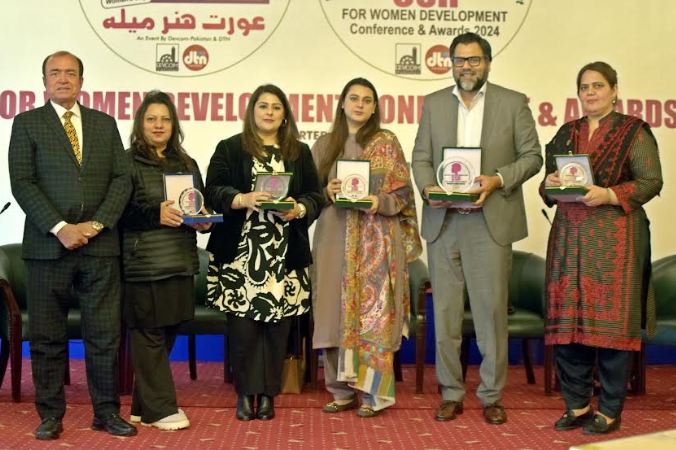
Islamabad, MAR 10 /DNA/ – Pakistan’s two prestigious financial institutions, Bank of Punjab and National Bank of Pakistan, were awarded “Corporate Social Responsibility (CSR) for Women Development” awards here Saturday at a revered ceremony. The National Bank of Pakistan (NBP) won two awards for its large CSR portfolio of women’s education, and health and hygiene while the Bank of Bank (BOP) was conferred upon award for the comprehensive and inclusive women development, empowerment and engagement strategies and products.
The ‘CSR for Women Development Awards’ ceremony was a momentous part of the 10th edition of 3-day long ‘Aurat Hunar Mela’ (National Women-at-Work Festival) that kicked off on March 8 with a showcasing women’s work, products and services including an art exhibition “Herself” at the Lok Virsa, Shakarparian, Islamabad.
The ‘Aurat Hunar Mela’ (National Women-at-Work Festival) is an annual flagship event of Devcom-Pakistan (Development Communications Network) to mark the UN’s International Women’s Day that falls on March 8. This year the 3-day event is being organized in collaboration with the National Institute of Folk and Traditional Heritage (Lok Virsa), Federal Ministry of National Heritage and Culture.
Earlier, a conference on the ‘CSR for Women Development’ was also organized. The panelists included the Bank of Punjab Head of Customer Services Rai Usman Mujahid, entrepreneur and Islamabad Women Chamber of Commerce and Industry (IWCCI) Vice President Sadaf Asim Abbasi, entrepreneur and human resource management expert Tahira Haider, Lok Virsa Director Research and Publications Dr. Zobia Sultana and, art and design mentor and Devcom-Pakistan Creative Director Riffat Ara Baig. Devcom-Pakistan Executive Director Munir Ahmed conducted the panel discussion.
Rai Usman Mujahid said: The Bank of Punjab is a leading financial institution with 900 branches nationwide and is committed to creating a workplace that champions women empowerment and inclusivity. Our comprehensive initiative includes the implementation of women-friendly policies, such as flexible work arrangements to support work-life balance. Mentorship programs have been introduced to provide guidance and facilitate career advancement for female employees. Tailored leadership development opportunities aim to enhance the professional growth of women within the organization. Furthermore, we actively organize targeted networking events and forums to foster a supportive community. Our commitment to gender inclusivity extends to regular training programs on diversity and inclusion for all employees, ensuring a workplace that not only values but actively promotes equal opportunities for every individual to thrive.
He said there are numerous CSR initiatives including The Citizens Foundation’s girls-education and the Indus Hospital, and financial inclusion of marginalized community women through interest-free loans. The bank, he said, is open to engage with different development and women organizations to create women-friendly workplaces and financially empowered women.
Sadaf Asim Abbasi said: (CSR) plays a crucial role in the development and empowerment of women by promoting initiatives that address gender equality, access to education, economic opportunities, healthcare, and leadership development. The women’s chambers of commerce are struggling to create economic and financial opportunism for the women especially for the middle-class individuals.
Tahira Haider education and skill development is very crucial for the community women where the CSR programs may be aimed at increasing access to education and skill development opportunities for women and girls. This can include scholarships, vocational training programs, and workshops designed to enhance their employability and entrepreneurship skills.
Riffat Ara Baig said: The CSR shall also be focused on empowering the community women with the skills to redesign their products to meet the market needs. It will increase their share in the market. The product design and development matter a lot in the competitive market. They shall also be given exposure to the new markets.
Devcom-Pakistan Executive Director Munir Ahmed urged the corporates to include women’s leadership and decision-making roles within organizations and communities. This can involve mentorship programs, leadership training, and initiatives to break down barriers to women’s participation in leadership positions. The CSR initiatives shall also include advocacy and awareness raising about gender inequality and advocating for policies and practices that promote women’s rights and empowerment. This can involve partnering with advocacy organizations, supporting campaigns, and engaging stakeholders to drive positive change.
In a separate ceremony on Sunday, the management volunteers from the Institute of Tourism and Hospitality Management (ITHM) were also awarded certificates. The women artists who put their artworks on display were awarded with the festival mementos and certificates. They included Nigar Nazar, New York-based Nayyer Iqbal, Shahnaz Akram, Riffat Ara Baig, Saima Tahir, Saima Amir, Hatice Omar, Ambreen Anjum, Salvat Hijazi, Sabahat Amir, Beenish Azam, Shehla Moazzam, and Ambreen Bilal.
Prime Minister Shehbaz Sharif is poised to embark upon a transformative journey, drawing inspiration from his previous leadership during the PDM government. As he resumes his responsibilities, he aims to build on the lessons learned and address the challenges that marred his previous 16-month tenure.
Acknowledging the allegations of misgovernance and political victimization that clouded the past, Prime Minister Shehbaz Sharif is committed to fostering a transparent and accountable administration. Learning from past experiences, his government would like to prioritize effective governance, ensuring that the needs and aspirations of the people take center stage.
The challenges faced during the previous tenure have provided valuable insights into areas that require improvement. Prime Minister Shehbaz Sharif is determined to institute reforms that enhance governmental efficiency, curb corruption, and promote inclusivity. By fostering a climate of fair play and equal opportunities, his administration should seek to dispel any lingering doubts about political victimization.
Recognizing the pivotal role of opposition parties in a thriving democracy, the new government under Shehbaz Sharif ought to aim to promote a culture of constructive dialogue. Embracing inclusiveness and open communication channels, the administration must seek to bridge the gap between different political entities, creating a more collaborative and cooperative political landscape.
While the PTI has emerged as a popular party, the Shehbaz Sharif-led government would like to present itself as a compelling alternative. By addressing the concerns that contributed to the rise of the PTI, such as governance lapses, the new administration aims to regain public trust and demonstrate a commitment to the welfare of the nation.
Enhancing political stability should be the foremost priority for Prime Minister Shehbaz, recognizing that a stable political environment is crucial for the successful completion of his tenure. Notably, Pakistan has witnessed a historical trend where no prime minister has managed to serve a full term, even those with a two-thirds mandate faced premature exits. In this context, the Shehbaz government faces a particularly challenging scenario, with its sustainability heavily reliant on the support of allied parties.
The pervasive issue of corruption poses the most formidable challenge for Shehbaz Sharif. Without effectively curbing corruption, the prospect of steering the country towards progress remains elusive. Unfortunately, both the PML-N manifesto and the Prime Minister’s maiden address to the National Assembly fell short of addressing this pressing threat. It is noteworthy to acknowledge KPK Chief Minister Ali Amin Gandapur for his commendable initiative. He compelled all PTI lawmakers to take a solemn oath, pledging their commitment to abstain from corrupt practices and to prevent others from engaging in corruption.
While the effectiveness of this pledge in eradicating corruption in the province remains uncertain, the very act of making such a commitment underscores the high moral standards that the PTI aspires to establish in its governance. The pertinent question now arises: Do other provincial assemblies and the national assembly possess the moral courage to undertake similar vows? The future of our nation’s progress hinges on our collective commitment to address and eliminate corruption at every level of governance.
China has consistently demonstrated a proactive approach in extending warm greetings to Shehbaz Sharif upon his election as the Prime Minister of Pakistan. The immediacy of Chinese engagement can be attributed to the historical precedent of flourishing bilateral relations whenever the Pakistan Muslim League-Nawaz (PML-N) assumed power. Both Nawaz Sharif and Shehbaz Sharif successfully cultivated personal relationships with Chinese leadership, fostering mutual trust and cooperation.
During PML-N tenures, China staunchly supported Pakistan, contributing to the elevation of bilateral ties to unprecedented levels. However, this close association also stirred feelings of envy and apprehension among other political parties, notably the Pakistan Tehreek-e-Insaf (PTI). Consequently, the transition of power to PTI marked a notable downturn in China-Pakistan relations.
The strained relations under PTI rule underscored the challenges of maintaining the same level of warmth and collaboration witnessed during PML-N’s tenure. This shift highlights the delicate nature of international relationships, where personal connections between leaders play a pivotal role. It remains to be seen how the dynamics between China and Pakistan will evolve under the current political landscape and whether efforts can be made to rebuild and strengthen the bond that has historically existed between the two nations.
The current scenario on the ground reveals a significant stagnation in all projects associated with the China-Pakistan Economic Corridor (CPEC). Remarkably, these projects have been at a standstill since the tenure of the Pakistan Tehreek-e-Insaf (PTI) government. With the recent formation of a government that maintains a positive relationship with China, there is a heightened anticipation that bilateral relations will undergo a complete restoration, paving the way for the revival of CPEC initiatives.
In terms of our relationship with the IMF, the current government appears to be well-positioned and unlikely to encounter significant challenges. It’s crucial to acknowledge that the IMF’s decision-making process is multifaceted, involving both economic and political considerations. Fortunately, the present administration enjoys robust support from both the national and international establishments, further strengthening its standing. Given the solid backing, the release of the IMF tranche is expected to proceed smoothly.
The genuine challenge, however, seems poised to arise from the domestic sphere. The apparent surge in prices is undeniably exacting a substantial toll on a broad spectrum of the population. The survival of the middle and lower-middle class has unquestionably become a formidable challenge in Pakistan. In navigating these economic hardships, the current government must orchestrate transformative measures to shift the momentum in its favor.
The key lies in implementing innovative strategies that have the potential to alleviate the burden on the citizens. It necessitates a proactive approach that goes beyond the conventional methods employed during the 16-month tenure of the previous PDM government.
If all unfolds as anticipated, the Shehbaz government is poised to maintain unimpeded governance for at least a year and a half. However, a pivotal juncture awaits in November 2025 with the impending appointment of the army chief. The dynamics between the PML-N and the Establishment, currently in a state of camaraderie, might witness a shift post the crucial decision – be it a new appointment or an extension.
Historically, Pakistan has not witnessed a prime minister completing a full five-year term. This entrenched tradition appears likely to persist unless the Shehbaz government can orchestrate a remarkable transformation, not only stabilizing the political landscape but also effecting a substantial turnaround in the economy.
The writer is the Editor Daily Islamabad POST/Centreline journal.
The ongoing clashes between Lebanon and Israel mean that there are continuous fights or conflicts happening between the two countries. These clashes involve ongoing, or continuous, instances of violence or disagreement. It could be in the form of military actions, disputes, or other confrontations between Lebanon and Israel. The situation is still unfolding, and tensions persist between the two nations. As of my last knowledge update in January 2022, I do not have specific information about any recent Lebanon-Israel clashes that may have occurred after that date. I recommend checking the latest news sources or reliable news websites for the most up-to-date information on any developments related to Lebanon-Israel clashes. However, historically, tensions have existed between Lebanon and Israel, primarily related to territorial disputes, the presence of militant groups, and broader regional conflicts. The border area between Lebanon and Israel, particularly along the Blue Line (established by the United Nations in 2000), has been a source of periodic tensions. Issues such as the presence of the militant group Hezbollah in Lebanon, cross-border attacks, and disputed territories have contributed to sporadic clashes between the two countries. The situation in the region is complex, involving political, religious, and geopolitical factors.
There have been ongoing conflicts between Lebanon and Israel along their border since October 8, 2023. These clashes are related to the war in Gaza, but they are not a new occurrence. While they may differ in scale and intensity compared to previous border clashes, they follow a pattern of measured retaliation. Israeli officials are increasingly warning that these border clashes could lead to a full-scale war with Lebanon. In response, Hezbollah officials argue that such a war would be equally costly for Israel. Both sides express a commitment to finding a diplomatic solution to the border tensions. Hezbollah conditions any negotiations on this issue on the end of the war in Gaza. The leader of Hezbollah, Hassan Nasrallah, has stated that the primary goals of the border escalation are to support Hamas and bring an end to the Gaza conflict. Historically, Lebanon and Israel have a record of border clashes, with the most recent ones occurring in June, when Israel claimed that Hezbollah had set up tents near the disputed village of Ghajar. In July, exchanges of fire wounded three Hezbollah members, and Israeli tear gas targeted Lebanese journalists and parliament members along the border. Notably, there is no internationally recognized land border between Lebanon and Israel, as both parties have not agreed to delineate it. The United Nations established a 120-km “line of withdrawal,” known as the Blue Line, in June 2000 after Israel’s withdrawal from southern Lebanon. This line helps determine compliance with United Nations Security Council Resolutions 425 and 426.
The United States recently helped Lebanon and Israel agree on their maritime borders. Now, the U.S. is trying to prevent a big war between the two countries by calming tensions along their land borders. There are 13 disputed points on this land border, and the U.S. had already helped settle 7 of them in the past. The remaining 6 are causing issues, especially two points called B1 and the “Wazzani reservation.” Last August, the U.S. envoy, Amos Hochstein, mentioned that the U.S. might help in solving the land border disputes. This idea gained importance recently due to increased military activity along the border. During a visit to Lebanon, Hochstein said the U.S. wants a diplomatic solution to the border conflict. He suggested temporary measures to ease tensions while acknowledging the difficulty of finding a long-term solution. Hezbollah, a group in Lebanon, changed its usual stance by expressing openness to indirect talks with the U.S. and Israel about the land borders. However, they set a condition that these talks should only happen if the conflict in Gaza ends. This is a significant shift from Hezbollah’s previous refusal to negotiate about Lebanon’s southern land border.