Home Blog Page 749

CM Punjab Maryam Nawaz Sharif’s Message on ‘Besakhi’

PODA greets Maryam Nawaz on her groundbreaking role and commitment to women's rights

Lahore, APR 14 /DNA/ – “‘Besakhi’ is the hallmark of Punjab’s unique culture,” said Chief Minister Punjab Maryam Nawaz Sharif in her message on Besakhi. She added,”Besakhi is a festival full of happiness, I congratulate all brothers and sisters on this blissful occasion.” Madam Chief Minister also offered greetings to the Sikh brothers and sisters who have come here to celebrate this festival.

Chief Minister Maryam Nawaz Sharif said,”I am a proud Punjabi after my identity as a Pakistani first. Punjab lives in my heart.” She added,”Every person of my Punjab equally shares the joy and happiness of Besakhi.” “May Allah Almighty protect the happiness of Besakhi forever,” she prayed.

Besakhi starts with the harvest of golden crop of wheat with sickle on the drum beat, spreading joy and happiness around. Madam Chief Minister said,”We are starting to officially celebrate this Punjabi festival ‘Besakhi.” She added,”Special ceremonies of Besakhi have been organized in Hasan Abdal, Nankana Sahib, Kartarpur and Lahore for the Sikh community coming from all over the world to celebrate this festival.”

Chief Minister Maryam Nawaz Sharif said,”We are focused on providing best environment and facilities to Sikh pilgrims in Punjab for their religious and cultural tourism.”

Putin fears World War III

Putin fears World War III

DNA

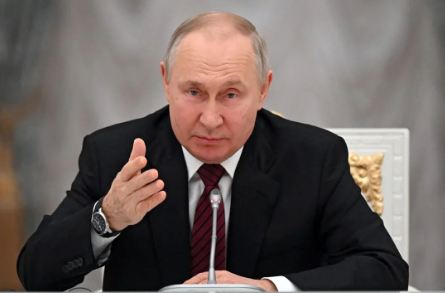
MOSCOW: An attack on Israel by Iran means one thing: There is likely to be a world War where countries globally will take sides 1, said Russian President Vladimir Putin in his televised address.

He further said If you side with the west (United States, France, NATO, Ukraine, UK, Australia) you are likely to find yourself supporting Israel 2.

 If you BRICS (China, Brazil, India, Russia, and South Africa) you will likely find yourself supporting Iran World War III will likely threaten human existence, he added.

Pakistan’s deep concern over the Ongoing Developments in the Middle East

Pakistan’s deep concern over the Ongoing Developments in the Middle East

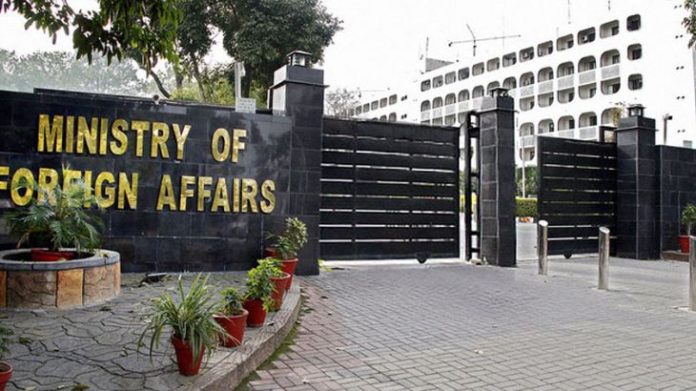
ISLAMABAD, APR 14 /DNA/ – Pakistan is watching with deep concern the ongoing developments in the Middle East. For months, Pakistan has underlined the necessity of international efforts to prevent expansion of hostilities in the region and for a ceasefire in Gaza.

On 2 April 2024, Pakistan had pointed to the dangers of the attack on an Iranian consular office in Syria as a major escalation in an already volatile region.

Today’s developments demonstrate the consequences of the breakdown of diplomacy. These also underline the grave implications in cases where the UN Security Council is unable to fulfill its responsibilities of maintaining international peace and security.

It is now critically urgent to stabilize the situation and restore peace. We call on all parties to exercise utmost restraint and move towards de-escalation.

Iran launches unprecedented strikes on Israel ‘in response’ to attack on consulate in Syria

Iran launches unprecedented strikes on Israel ‘in response’ to attack on consulate in Syria

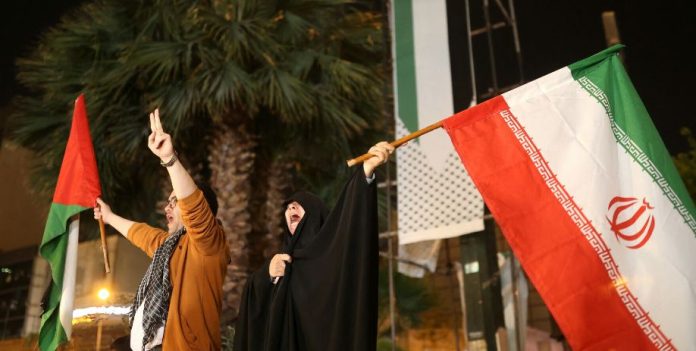
Tehran, APR 14: Iran launched an unprecedented drone and missile attack on Israel late on Saturday, the Israeli army announced, in a major escalation of the long-running covert war between the regional foes.

Blasts were heard in the skies above Jerusalem early on Sunday, AFP journalists said.

Iran had repeatedly threatened to strike Israel in retaliation for a deadly April 1 air strike on its Damascus consular annexe and Washington had warned repeatedly in recent days that the reprisals were imminent.

“Iran launched UAVs from its territory towards the territory of the state of Israel,” military spokesman Daniel Hagari said in a televised statement.

“We are working in close cooperation with the United States and our partners in the region in order to act against the launches and intercept them,” Rear Admiral Hagari said.

Iran’s Revolutionary Guards confirmed a retaliatory drone and missile attack was under way against Israel in retaliation for the Damascus strike which killed seven Guards, two of them generals. The Guards said its ballistic missiles were fired almost an hour after the slower-moving drones.

An Israeli army official said Iran had launched more than 100 attack drones at Israel and said he expected more to follow.

“We expect the drones to be here in the following hours and we might see some more waves of drones as time progresses,” the official said.

Iran’s allies in the region joined the attack with Yemen’s Houthi rebels also launching drones at Israel, according to security agency Ambrey, and Lebanon’s Hezbollah movement announcing rocket fire at Israeli positions in the annexed Golan Heights.

‘Unfolding’ attack
The White House said it expected the attack — which comes against the backdrop of the six-month Israel-Hamas fighting in Gaza — to “unfold over a number of hours”. It said Washington would “stand with the people of Israel”.

The Iranian mission to the United Nations warned Washington to keep out of Iran’s conflict with Israel. “It is a conflict between Iran and the rogue Israeli regime, from which the US MUST STAY AWAY!” it said.

President Joe Biden cut short a weekend trip to his home state of Delaware for urgent consultations, the White House said.

Israeli Foreign Minister Israel Katz postponed a planned visit to Hungary and Austria while the prime minister convened his war cabinet in Tel Aviv.

An adviser to Iran’s supreme leader said that Israel was in “complete panic” over Tehran’s looming response. “They don’t know what Iran wants to do, so they and their supporters are terrified,” senior adviser Yahya Rahim said.

British Prime Minister Rishi Sunak condemned Iran’s “reckless” action and pledged that his government would “continue to stand up for Israel’s security”.

France echoed its commitment to Israel’s security. “In deciding to take this unprecedented action, Iran has reached a new level of destabilisation,” Foreign Minister Stephane Sejourne said.

Airspace closing
Shortly before the launches, Prime Minister Benjamin Netanyahu said Israel was prepared for a “direct attack from Iran”.

“Our defence systems are deployed, we are prepared for any scenario, both in defence and attack,” the Israeli premier said in a televised statement, adding Israel had the backing of the United States and “many” other countries.

Iran’s Revolutionary Guards had already seized an Israeli-linked container vessel in the Gulf earlier on Saturday, putting the whole region on alert. Israel said it was closing schools nationwide while Jordan, Iraq and Lebanon announced they were temporarily closing their airspace.

Israel said it was closing its own airspace from 9:30pm GMT. The Israeli military warned Iran it would suffer the “consequences for choosing to escalate the situation any further”.

The April 1 strike in Damascus, which killed 16 people, including two Iranian generals, had been widely blamed on Israel. Iran had repeatedly vowed to hit back, but had not specified how.

Iran’s Revolutionary Guards seized a container ship “related” to Israel in the Strait of Hormuz on Saturday, which was now heading towards Iranian waters, Iranian state media reported.

The ship’s operator, the Italian-Swiss group MSC, said it was working with the relevant authorities to ensure the wellbeing of the 25 crew onboard.

Both Israel and the United States denounced the seizure as piracy, with Israel also demanding that the Guards be declared a “terrorist organisation” by the European Union.

In Washington, National Security Council spokeswoman Adrienne Watson called on Iran “to release the vessel and its international crew immediately”. “Seizing a civilian vessel without provocation is a blatant violation of international law, and an act of piracy”, she said.

Gaza truce stalemate
The Gaza crisis began with the unprecedented October 7 attack by Hamas against Israel which resulted in the deaths of 1,170 people, mostly civilians, according to an AFP tally based on Israeli figures.

Israel’s retaliatory offensive has killed at least 33,686 people in Gaza, mostly women and children, according to the territory’s health ministry. Israel’s military said on Saturday it had struck more than 30 Hamas targets across Gaza.

In the main central city of Deir al-Balah, fire burned in the rubble of a destroyed mosque. Israel’s military “demanded that the whole area be evacuated” before it was “wiped out in minutes”, said Abdullah Baraka, a witness.

In nearby Nuseirat refugee camp, Abd Thabet said residents had been warned to evacuate on Friday evening ahead of a large explosion that caused “massive destruction”.

“All of the houses were demolished, including my home,” the 35-year-old told AFP.

Palestinians injured during Israeli bombardment arrive at al-Aqsa Martyrs Hospital in Deir el-Balah, Gaza on April 13. — AFP
Hamas said it had submitted its response to a Gaza truce plan presented by US, Qatari and Egyptian mediators at talks in Cairo this week.

The Palestinian group said it was sticking to its previous demands, insisting on “a permanent ceasefire” and the “withdrawal of the occupation army from the entire Gaza Strip”.

During the October attack, Hamas seized about 250 hostages, 129 of whom Israel says remain in Gaza, including 34 the army says are dead.

The Israeli prime minister’s office accused Hamas of torpedoing efforts for an exchange of hostages for prisoners. “Hamas to this day has refused any deal and any compromise proposal,” it said.

Kyrgyz president explains what sources contributed to economic growth in country

Kyrgyz president explains what sources contributed to economic growth in country

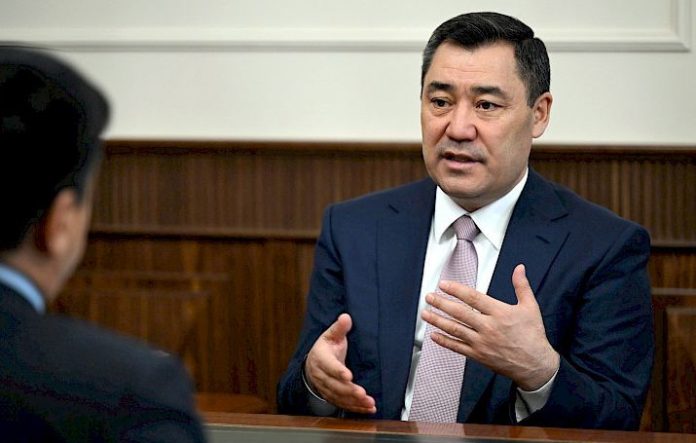
In the first quarter of 2024, the growth of the economy of Kyrgyzstan made 8.8%. Compared to the indicators of the first quarter of 2023, the growth rate increased by 3 times. Chairman of the Cabinet of Ministers Akylbek Zhaparov said that these are not just numbers, but the result of hard work of the president’s team over the last three years. In this regard, Kabar Agency asked President Sadyr Zhaparov about the reasons for the growth of economic indicators.

– Sadyr Nurgozhoevich, Chairman of the Cabinet of Ministers, stated that according to the results of the first quarter, our economy grew by 8.8%. Excluding the Kumtor gold mine, this figure was 9.8%. Is this true? Which sectors of our economy contributed to such growth?

Indeed, these figures are accurate. These are official numbers monitored and calculated by the National Statistics Committee. Additionally, the Ministry of Economy and Commerce oversees the process. All sectors contribute to the growth of our economy.

Of course, at the expense of taxpayers:

1. Kumtor

2. Alliance Altyn (Zherui)

3. Altynken

4. Nur Telecom

5. Sky Mobile (Bitel)

6. Alfa Telecom (MegaCom)

7. Red Petroleum (Alfa Oil)

8. Partner Neft

9. Gazpromneft

10. Top Noch

11. Ayil Bank

12. Optima

These companies take leading places.

And I would like to note the significant contribution of the National Bank to economic growth and curbing inflation.

– You said that the National Bank has a great contribution to the growth of our economy. How much reserves we have if it’s not a secret? What about our gold reserves?

– There is no secret. All these are public information. To-date, our total international reserves have reached 3 billion 491 million dollars. From our independence to 2020, our international reserves were only 2 billion 424 million dollars in 30 years.

Today, the team of our National Bank added 1 billion 67 million dollars in 3 years.

As for gold reserves, until 2020, only 16 tons of gold had been collected in 30 years. Today, the National Bank has 51 tons of gold. 35 tons of gold was added in 3 years. You see the difference: 16 tons in 30 years, 35 tons in 3 years.

In addition, the National Bank lowered the inflation rate to 5.2 percent to-date. Compared to other countries, today inflation is lower in our country. This is the result of the correct policy of the National Bank.

— Are there currently problems in the state budget in paying foreign debts, making payments on protected items? There are critics, who state that our external debt has increased…

In simple terms, let’s forget about discussing external debt from now on. We won’t entertain these questions any longer. Some of our citizens may persist in claiming that our external debt has increased, but we won’t pay any attention to them anymore.

Up until 2020, our external debt was around 5 billion dollars, accumulated over 30 years. Apart from recent projects like Datka-Kemin, the North-South highway construction, and the modernization of thermal power plants, not much significant work had been undertaken.

However, these three projects have become essential for Kyrgyzstan’s development, akin to air and water. It’s worth noting that these projects won’t justify their costs even over 40 years, as their expenses have increased by 2-3 times. Comparatively, similar construction and work in European countries are done 2-3 times cheaper than here.

For instance, even a fifth-year student in this field can calculate the required funds for building a thermal power plant

The North-South highway and the Datka-Kemin project are also overpriced. This is not the fault of the Chinese side, which issued the loan, but our authorities and officials are to blame. The money was stolen.

By 2035, we will repay our foreign debts in the amount of 5 billion dollars, which have accumulated to date. The timing of the payment coincided with the period of work of my team. God bless. It is within our power to do this. Our economy has improved. As long as there is peace and stability in the country, we will easily pay.

Remember: we will pay off previous debts at the expense of the people, from the national budget. Because before this there was not a single self-sustaining project. All the money received disappeared like water into sand.

We will direct the debts that we take on now, every dollar taken, to specific projects. We will take on self-sustaining projects. I’ll give one example. About 5-6 billion dollars will be spent for the construction of the Kambar-Ata 1 hydro power plant.

This project will pay off in 13-15 years from completion and commissioning. When the time comes to repay the debt for this project, the republican budget and the people will not pay. The Kambar-Ata 1 hydro power plant will pay for itself before the debt is due. How?

For example, the World Bank provides a loan of 500 million dollars for 50 years with a 10-year grace period without interest. Kyrgyzstan received a loan on such terms for the first time in the history of the country.

Now I’ll tell you about the Kambar-Ata 1 project. Construction period is 8-10 years. The 5-6 billion dollars spent for construction will be fully recouped within 13-15 years from the date of completion of construction and start of operation. It turns out that the longest time for the cost of Kambar-Ata 1 to be fully recouped, including the construction period, is 25 years.

Therefore, even if our external debt reaches 10-15 billion dollars, we don’t have to worry about anything. The most important thing is that by 2035 we will fully repay previously incurred debts. In the future, no matter how much we borrow, every project will pay for itself.

There will be no burden on the republican budget and people’s pockets. Of course, not taking into account the debts incurred for road construction.

I mentioned only large projects. There are projects of small and medium-sized hydro power plants that will pay for themselves in 7-8 years. We must invest in them too. We now asked the Global Climate Fund to help. If they help, we will completely switch to green energy.

We have many projects in other areas. I won’t go into all the little details. We are implementing them with private investors and, to the extent possible, at the expense of the budget.

– Thank you for answering our questions.

– I wish you good luck in your work!

Interviewed by Mederbek Shermetaliev, Director of Kabar News Agency

Devcom announces ‘RCS Himalayan Odyssey Award for Creative Arts’ 2024

Devcom announces ‘RCS Himalayan Odyssey Award for Creative Arts’ 2024

ISLAMABAD, APR 13 /DNA/ – Devcom-Pakistan (Development Communications Network) on Saturday announced the details of the seventh category of Pakistan Mountains Pride Awards (PAMPA) for 2024, titled ‘Raja Changez Sultan Himalayan Odyssey Award for Creative Arts’.

In an online artists meetup, the founder of the PAMPA and Executive Director Devcom-Pakistan Munir Ahmed said three artists will be given the RCS Himalayan Odyssey Award for Creative Arts for their best work on the mountain themes. The categories for nominations of the creative arts include paintings, sculptures, and digital art. The best artworks will be chosen from their exhibitions on the themes. The artists can share the details of the exhibition of their artwork to the organizers at the Devcom-Pakistan. A three-member jury comprising the well-known artists will scrutinize all the data of the exhibits and select one artist from each category; paintings, sculptures and digital art for the Award.

Briefing about the objectives of the RCS Himalayan Odyssey Award for Creative Arts, Munir Ahmed said primarily, we are adding this category to engage artists from various fields to focus on the challenges confronting the grandeur of mountains, its people and resources that are very vital for the people living downstream. Most of the 250 million people are unaware of what is happening in the highlands. Devcom-Pakistan aspires to engage the artist-community in raising the significance of mountains for life on earth. Besides, the pieces of art will also decorate the buildings and houses with enhanced aesthetics.

Munir Ahmed said: Pakistan is blessed with 11 ranges of mountains that have their own characteristics and treasures of natural resources, which are being depleted. It is the time to raise collective-voice on the exploitation of the mountain resources, and encourage the shared conservation and protection of the mountain resources. Pakistan Mountains Pride Awards (PAMPA), launched in 2019, is a very important organ of Pakistan Mountain Festival, a flagship annual event of Devcom-Pakistan. It is a gesture of recognition and appreciation to the services of the marvelous individuals and organizations that have laid the foundation of the initiatives to improve the lives and livelihood of the natives, or rendered their life selflessly for mountain conservation, community development.

He said the Raja Changez Sultan Himalayan Odyssey Award for Creative Arts will add a new colour to the bouquet of existing six awards including Agostino Da Polenza Mountain Conservation Award,  

Shoaib Sultan Khan Mountain Community Development Award, Nazir Sabir Mountaineering Award,

Ashraf Aman Sustainable Mountain Tourism Award, Ustad Jan Ali Mountain Music Award, and the PPAF Best Mountain Small and Medium Enterprises Award.

The artists present on the occasion appreciated the Devcom-Pakistan efforts to engage artists in a very important voluntary campaign for the conservation and protection of mountains. Senior Nigar Nazar said launching the Award will be a significant initiative that would encourage artists to focus on mountains. She suggested including art mentoring and art education in this regard.   

Asrar Farooqi said the artists shall take responsibility for spreading the word about the Raja Changez Sultan Himalayan Odyssey Award for Creative Arts in their native towns to engage them in the initiative.

Saima Raza suggested organizing the exhibition of the selected pieces of art in different cities to achieve the objective. Some of the artists also took responsibility to coordinate the exhibition in their towns with the coordination of the local departments and authorities. 

Two brave soldiers martyred in anti-terrorism operation: ISPR

Two brave soldiers martyred in anti-terrorism operation: ISPR

RAWALPINDI, APR 13 /DNA/ – Security forces conducted an intelligence based operation in Buner District, on reported presence of terrorists.

During the conduct of operation, after an intense fire exchange, HVT Terrorist ring leader Saleem @Rabbani was sent to hell, while two other terrorists were injured.

Terrorist Saleem @Rabbani remained actively involved in numerous terrorist activities against the security forces as well as extortion & target killings of innocent civilians. He was highly wanted by the Law enforcement agencies and Government had fixed Head money of PKR 5 Million on him.

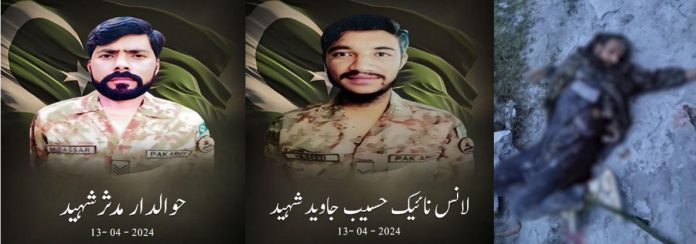
However, during the operation, two brave sons of soil, Lance Havildar Mudassar Mehmood (age-36 yrs; resident of district Rawalpindi) and Lance Naik Haseeb Javed (age-27 yrs; resident of district Poonch, AJ&K), having fought gallantly, embraced Shahadat.

Sanitization operation is being carried out to eliminate any other terrorists found in the area. Security forces of Pakistan remain determined to wipe-out the menace of terrorism and such sacrifices of our brave soldiers further strengthen our resolve.

Can Pakistan do better than ADB’s  predictions?

Qamar Bashir

By: Qamar Bashir

The Asian Development Bank’s recent outlook points to growth potential, contingent upon addressing underlying issues, building a more stable political environment, diversifying the economy, and investing in infrastructure which will usher the country towards sustained economic prosperity.

The SWOT analysis of ADB’s outlook for Pakistan’s economy reflects a mix of strengths, weaknesses, opportunities, and threats. One of the strengths identified is the potential for GDP growth of 1.9% in 2024 and 2.8% in 2025 if Pakistan adheres to the economic adjustment program critical for restoring macroeconomic stability and gradual growth recovery. This anticipated rebound is bolstered by ongoing IMF support, which enhances market confidence and attracts external financing. However, growth prospects still hinge on higher crop output, improvements in manufacturing, and a rebound in private sector investment, contingent on factors such as progress in reform measures driven by increased confidence, reduced macroeconomic imbalances, achieving greater political stability, and improved external conditions.

The weaknesses pointed out by the ADB reports are  high inflation which would continue at about 25% in FY2024, driven by higher energy prices, and may ease down to 15% in FY2025, if progress on macroeconomic stabilization continues. In an effort to reign in the python of inflation, the State Bank of Pakistan (SBP) has maintained a tightened monetary policy, keeping the policy interest rate at 22% due to persistent inflationary pressures and external imbalances. The SBP is expected to maintain a tight policy to lower inflation by 5%–7%. However, political uncertainty remains a significant challenge, potentially hampering reform efforts and economic stability. The projected growth rate of 1.9% in 2024 and 2.8% in 2025 is very low compared to any other countries of the region (India 7% Bangladesh 7.1%, China 4.8%). If we factor in annual population growth rate of 2% the nominal GDP growth will be (1.9-2=0.1 in 2024), (2.8-2=0.8% in 2025) whereas a country needs a growth rate of at least 7% to absorb the addition of workforce which enters every year in the country’s  labor market.

Opportunities lie in attracting private sector investment through reforms, enhancing infrastructure to boost efficiency, and fostering regional cooperation to access new markets. Threats including a global economic slowdown, climate change impacts on real growth.

Pakistan has been facing cyclic economic crests and troughs since the past 50 years marked by periods of impressive growth followed by setbacks triggered by political instability, external shocks, and natural disasters. The “Asian Tiger” era of the 1960s and the remittance-fueled boom of the 2000s contrast with lows in the 1970s and 1990s due to political instability. External shocks like the global financial crisis and wars, along with natural disasters such as floods and the recent pandemic, have further challenged economic stability.

These cycles underscore key vulnerabilities, including frequent changes in government that hinder long-term planning, a heavy reliance on imports, and inadequate infrastructure leading to bottlenecks. Moreover, persistent high government spending exceeding revenue has contributed to debt and inflation.

In recent years, Pakistan experienced impressive economic growth, reaching 6.2% in 2022 across various sectors including agriculture, large-scale manufacturing, real estate, and IT. However, this growth was overshadowed by political uncertainty triggered by a no-confidence motion against the prime minister, followed by PTI agitation that disrupted governance. These events contributed to a sharp decline in the value of the Pakistani rupee, imposed curbs on imports, and weakened production, consumption, and investment. Additionally, devastating floods further compounded the challenges faced by the economy. This period of uncertainty persisted through coalition and interim governments, leading to an overall economic slowdown in fiscal year 2023 (ended 30 June 2023).

Achieving sustainable economic growth and proving the prediction of international financial institutions wrong is possible. Many other countries like South Korea, India and Ireland which  had been facing the similar situation, but on the strength of competent leadership, applying innovative and creative macroeconomic and fiscal measures not only defied the predicted low GDP growth but surprised the world by achieving much higher economic growth.

South Korea faced severe economic challenges during the Asian Financial Crisis of 1997,  including a sharp decline in GDP growth and currency devaluation. The IMF and World Bank initially predicted a slow recovery. However, under the leadership of President Kim Dae-jung, South Korea implemented bold reforms, including corporate restructuring, financial sector reforms, and opening up to foreign investment. These measures helped South Korea recover faster than expected. After the bounce back from the 1997 Asian financial crisis, the economy continued strong growth in 2000 with a GDP growth of 9.08%.

In 1991, India faced a balance of payments crisis, and the IMF and World Bank projected low GDP growth. The Indian government, led by Prime Minister Narasimha Rao and Finance Minister Manmohan Singh, implemented significant economic reforms, including liberalization of trade, deregulation, and opening up to foreign investment. These reforms transformed India’s economy. Since then India has grown with an average growth rate of 7% and have become the world’s fifth largest economy valuing at $3.7 trillion in 2023 compared $ 266 in 1991, while its purchasing power parity increased from $1 trillion in 1991 to $13 trillion in 2023.

Ireland experienced a severe economic downturn during the 2008 global financial crisis, with IMF and World Bank projections indicating prolonged economic stagnation. The Irish government, under Taoiseach Brian Cowen, implemented a series of measures including fiscal consolidation, banking sector restructuring, and policies to attract foreign investment. These efforts contributed to Ireland’s economic recovery, exceeding initial growth projections and since then over the past decade to 2022, Ireland’s economy recorded an average growth rate of 9.1%, which is above the 1.4% average for the Euro Area.

Pakistan can also defeat these pessimistic predictions by proactive and innovative leadership and by adopting innovative, creative, and out-of-the-box solutions to achieve sustainable economic growth.

The key innovative strategies which have worked for other countries should also work for our country. These strategies include implementing comprehensive structural reforms to enhance business environment and labor market productivity, investing in education and healthcare to develop a skilled workforce, accelerating infrastructure development to address bottlenecks, promoting export-oriented industries to diversify exports and reduce reliance on imports, attracting foreign direct investment (FDI) through incentives and streamlined processes, fostering innovation and technology adoption, addressing governance challenges and corruption, prioritizing climate resilience and sustainability, strengthening social safety nets, and fostering political stability and consensus-building. These efforts, supported by policymakers, business leaders, civil society, and international partners, can pave the way for sustained high economic growth, positioning Pakistan’s economy for long-term prosperity and resilience.

By: Qamar Bashir

Former Press Secretary to the President

Former Press Minister to the Embassy of Pakistan to France

Former MD, SRBC

Military-Police Alliance Prevails: Swift Resolution in Bahawalnagar Incident

Military-Police Alliance Prevails: Swift Resolution in Bahawalnagar Incident

RAWALPINDI, APR 12: /DNA/ – An unfortunate incident occurred in Bahawalnagar recently, which was promptly addressed and resolved through collaborative efforts of military and police authorities.

Despite this, certain factions with vested motives started fanning vitriolic propaganda on social media to create divisions between state institutions and government departments.

To ensure a fair and deliberate inquiry, and to determine responsibility for violation of laws and misuse of  authority, a joint inquiry  comprising security and police officials will be conducted for ascertaining the facts and apportioning responsibility.

Single-tier structure and high taxes: the recipe to curb cigarette consumption 

Single-tier structure and high taxes: the recipe to curb cigarette consumption 

ISLAMABAD, APR 12 /DNA/ – In a bid to combat the alarming rates of cigarette consumption in Pakistan, experts and health advocates have put their weight behind the International Monetary Fund’s (IMF) compelling recommendation: transition to single tier tax structure alongside a significant increase in taxes on tobacco products.

According to the IMF’s Technical Assistance Report titled “Pakistan Tax Policy Diagnostic and Reform Options,” released in February, the consumption of cigarettes in Pakistan has witnessed a notable decline of 20-25 percent following substantial hike in prices  of tobacco products.

The findings of decline in consumption due to high taxes, breathed new life into calls for aligning the tax with the guidelines set by the World Health Organization (WHO).

Health activists have also voiced their support for the IMF’s stance, emphasizing the urgent need for a revamp of tobacco taxation policies in Pakistan.

They have called upon the government to transition to a Single Tier Tobacco Taxation System and eliminate the existing dual-tier system for both local and imported cigarettes.

The IMF’s advocacy for increased taxation on tobacco products not only seeks to curb cigarette consumption but also aims to bolster government revenue.

By implementing uniform excise rates and bridging the gap between local and foreign cigarette manufacturers, Pakistan stands to streamline its taxation system and mitigate the healthcare costs associated with tobacco-related illnesses.

The seventh-largest tobacco-consuming country globally, Pakistan signed the Framework Convention for Tobacco Control (FCTC) in 2004 to address and regulate tobacco use.

The World Health Organization (WHO) underscores the importance of robust tax measures in reducing tobacco consumption, particularly in low- and middle-income countries, by elevating tobacco prices.

However, the cigarette industry has persistently opposed tax hikes, disregarding the health consequences associated with the affordability of cigarettes.

Pakistan has suffered a staggering loss of 567 billion rupees in revenue over the past seven years due to the influence of MNCs lobbying against tax increases.

A study conducted by the Pakistan Institute of Development Economics (PIDE) underscores the dire repercussions of smoking-related diseases and deaths, with costs soaring to Rs 615.07 billion ($3.85 billion) in 2019, amounting to 1.6% of the GDP.

Stay Connected

64FansLike
60FollowersFollow

Latest Reviews

Exchange Rates

USD - United States Dollar
EUR
1.16
GBP
1.34
AUD
0.67
CAD
0.72