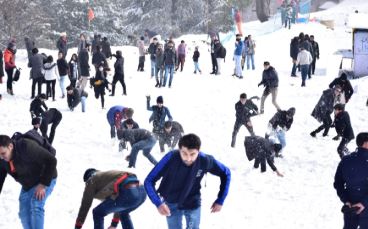
ISLAMABAD, APR 24: /DNA/ – Foreign Minister of Pakistan, Ishaq Dar held telephone conversation with Foreign Minister Sheikh Abdullah Bin Zayed Al Nahyan of United Arab Emirates to express deepest sympathy on the devastation caused by recent torrential rains. He commended the leadership of the UAE for the swift, efficient and timely administrative response to this natural calamity. They also exchanged views on matters of bilateral as well as global significance.
PTI blasts FO for silence over US warning of imposing sanctions for doing business with Iran
Govt should issue befitting, solid response to US administration threatening statement
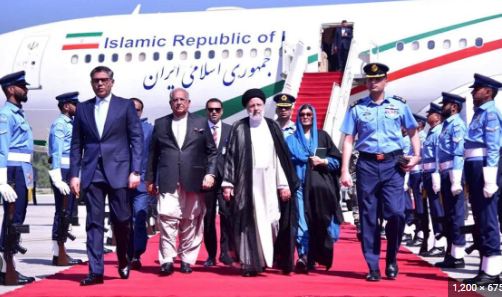
ISLAMABAD: /DNA/ – Pakistan Tehreek-e-Insaf (PTI) lashed out at the puppet government for its silence over the US’s warning of imposing sanctions against Pakistan for doing business with Iran, which raised many questions and urged the Foreign Office to issue a befitting, solid and unambiguous response on the issue as the nation would not compromise on its sovereignty, autonomy and national integrity come what may.
PTI Spokesperson, in a strongly-worded statement on Wednesday, expressed deep concerns over the silence of the Pakistani government and the Foreign Office over the US State Department’s threatening statement pertaining to the Pak-Iran mutual economic cooperation and said that the FO’s silence on the issue raised several important questions about the puppet government’s foreign strategy.
He said that the government devoid of public support and mandate did not have the courage and capability to adopt a solid strategy regarding the sovereignty and independent foreign policy of Pakistan.
He said that being a free and sovereign state, Pakistan had full authority to chalk out an independent foreign policy based on its national interests, adding that making defence and autonomy of Pakistan inviolable through independent foreign policy was the topmost agenda of the PTI Founding Chairman Imran Khan.
He said that Imran Khan had taken all possible measures to promote cordial relations with all countries by following the principle of mutual cooperation.
PTI Spokesperson lamented that Imran Khan was being punished for his stance of Haqeeqi Azadi of the nation, adding that public expressed full confidence in PTI by giving overwhelming mandate on February 8 to make Pakistan self-reliance state; however, mandate thieves were imposed on the nation fraudulently.
He noted that the silence on the recent statement after the failure of the federal government to adopt a clear cut policy on the US administration’s sanctions on entities supplying items for Pakistani missile program was tantamount to jeopardizing the country’s security and sovereignty.
PTI Spokesperson sought an explanation from the Pakistani government on the situation related to the American statement and demanded that the FO to give a strong response to the US administration’s threatening statement because Pakistan was an independent sovereign country.
Message from 22 Billion kilometers away…
By: Qamar Bashir
NASA scientists were shocked when Voyager-1, an interstellar spacecraft currently around 15 billion miles (22 km) away from Earth, stopped transmitting data in November 2023 for the first time since it began its interstellar voyage 46 years ago. This unexpected halt in communication cast a gloom of sadness and despair over NASA. A team of NASA scientists and engineers was hastily assembled to identify the fault and attempt to address it remotely, despite the immense distance of 15 billion miles, but with little or no hope of success.
Voyager 1, originally designed for a mission of five to six years, was launched by NASA on September 5, 1977, from Cape Canaveral, Florida, aboard a Titan IIIE/Centaur rocket. Its primary mission was to study the outer planets of the solar system, including Jupiter and Saturn, along with their moons.
Later, Voyager 1’s objective shifted to studying the interstellar medium and providing data on the heliosphere’s boundary, where the influence of the Sun ends and the interstellar medium begins. It achieved the remarkable feat of becoming the first human-made object to reach such a distant location.
During its maiden and exciting journey, Voyager 1 provided valuable data on the magnetic fields, energetic particles, and cosmic rays in the outer solar system. Its observations have contributed significantly to our understanding of space and time, mass, and energy. Voyager 1 has helped us comprehend the dynamics of the outer solar system and the interactions between the solar wind and interstellar medium.
This boxy machine, with its pearly white, conical disk, resembles a giant loudspeaker in space. Voyager 1 has been sending back stunning data, making it not only the first craft to enter interstellar space but also the farthest human-made object ever.
Voyager 1 has been responsible for identifying new Jovian moons, discovering another Saturnian ring, and capturing the solar system’s first and only “family portrait,” which includes our eclectic gang of planets.
Furthermore, Voyager 1’s observations have provided insights into the nature of magnetic fields, plasma, and cosmic rays in interstellar space. It has also transmitted stunning images of planets, moons, and other celestial bodies in outer space, enriching our understanding of the universe.
The development of the Voyager spacecraft and its instruments led to advancements in technology that have been applied to various fields, including communication, imaging, and spacecraft design. These advancements have contributed to the development of new technologies that have improved daily life for many people. This knowledge has contributed to humanity’s collective knowledge and has inspired generations of scientists and researchers.
The Voyager missions have captured the imagination of people around the world and have inspired interest in space exploration and science. This inspiration has led to increased support for scientific research and education, which has benefit society as a whole.
Voyager 1 carries the Golden Record, a time capsule containing sounds and images from Earth, intended to communicate the diversity of life and culture on our planet to any intelligent extraterrestrial life that may encounter the spacecraft. It also contains greetings from Earth, intended to provide a snapshot of life and culture on our planet.
If decoded, it could give the alien civilization insights into Earth’s biodiversity, languages, music, and more, helping them understand humanity and our planet in ways previously impossible. It could open up the possibility of communication between our two civilizations leading to exchanges of knowledge, ideas, and potentially even diplomatic relations. It contains cultural artifacts intended to represent the diversity of human culture. If understood by the alien civilization, it could lead to a cultural exchange between our two civilizations, fostering mutual understanding and appreciation.
The technology used to create the Golden Record, as well as the spacecraft itself, could be of interest to the alien civilization. Studying these technologies could lead to advancements in their own technology, or at the very least, a better understanding of our technological capabilities.
The NASA scientists were acutely aware of the importance of the messages and images sent back by Voyager 1. They were hoping against hope to restore its functionality. Frantically, they utilized all available tools and gadgets to understand the nature and extent of the damage the craft might have sustained, although they knew that the spacecraft’s power supply was gradually decreasing. They realized that it would eventually be unable to communicate with Earth. Finally, the day arrived when one of humanity’s most accomplished spacecraft stopped communicating with the world.
Undaunted by the slim possibility, the team diligently employed all tools and knowledge at their disposal. They discovered that the spacecraft was still operational but had only lost communication. The breaking news was joyously announced by Mr. Bruce Waggoner, the Voyager mission assurance manager.
This discovery provided them with the added motivation and incentive to continue their efforts to restore communication with the spacecraft. They eventually identified the fault: a tiny, worn-out chip. Over time, exposure to solar and interstellar radiation, as well as bombardment by subatomic particles, had caused the chip to malfunction, disrupting the entire communication system of Voyager 1.
Equipped with far more advanced technology than was available during the spacecraft’s launch in 1977, the scientists managed to retrieve the data from the faulty chip. They then transferred this data to another chip, bypassing the faulty one and restoring communication. Additionally, they reset the craft’s computer and other vital components.
Their perseverance paid off, and against all odds, Voyager 1, one of humanity’s greatest achievements, began communicating once again with Earth on April 20, 2024.
With its communication restored, Voyager 1 is expected to continue its journey through interstellar space for tens of thousands of years. This stunning restoration ensures that Voyager 1 can continue its historic mission, serving as a testament to human curiosity and exploration for generations to come.
By: Qamar Bashir
Former Press Secretary to the President
Former Press Minister to the Embassy of Pakistan to France
Former MD, SRBC
Usain Bolt named ICC Men’s T20 World Cup 2024 ambassador

AFZAL JAVED
ISLAMABAD: The International Cricket Council (ICC) on Wednesday announced Olympic legend Usain Bolt as the ambassador for the upcoming ICC Men’s T20 World Cup, which will be played in the West Indies and USA in June 2024.
The announcement comes a few weeks ahead of the start of the biggest cricket carnival spectacle ever that will inspire a new generation of fans. Bolt’s global appeal alongside his out of this world athletic achievements and ability to transcend boundaries makes him a perfect fit for the biggest T20 World Cup ever.
Bolt, who holds the world records in the 100m, 200m and 4x100m, will play a key role in promoting the event, starting with a cameo appearance in next week’s release of the event’s official anthem music video alongside artists Sean Paul and Kes. The eight-time Olympic Gold Medallist will also attend T20 World Cup matches in the West Indies and be part of fan engagement events promoting the sport within the United States.
Bolt created history at the 2016 Olympic Games in Rio when he achieved the ‘Triple-Triple’, three gold medals at three consecutive Olympic Games. His journey to worldwide stardom started at the 2008 Olympic Games in Beijing where he won the 100m, 200m and 4x100m, all in world record times.
Usain Bolt expressed his excitement about his new role, saying: “I am thrilled to be an ambassador for the upcoming ICC Men’s T20 World Cup. Coming from the Caribbean where cricket is a part of life, the sport has always held a special place in my heart, and I look forward to attending West Indies matches at the World Cup and making a contribution to the growth of cricket globally.
“While I will of course be supporting the West Indies at the World Cup, getting the sport into the US is big for cricket. It’s the biggest sports market in the world and the energy that we will bring for the T20 World Cup is a huge opportunity leading towards cricket’s inclusion in the LA Olympics in 2028.”
ICC Chief Executive Officer, Geoff Allardice said: “Usain Bolt is a global icon, we are thrilled to have him on board as an Ambassador for the ICC Men’s T20 World Cup 2024 to engage with a new generation of fans. His passion for cricket is well known, making him the perfect fit for this role. Alongside his world record breaking achievements and energetic personality, he will add another exciting element to the World Cup.”
Pakistan among 9 poor countries producing 90pc cigarettes for world: Study

LONDON, APR 24 (DNA): Recently unveiled study of London’s Imperial College on smoking titled “Tobacco’s global environment footprint” finds major tobacco production in under-developed countries which is matter of grave concern.
Citing the study, Dr Aftab Madni, Dean of the Indus University said, “Almost 90% of all tobacco production is concentrated in the developing world”.
As per study, out of the 10 tobacco producing countries, nine are developing which include four low-income food deficit countries (LIFDCs). “Pakistan falls in the category of LIFDCs,” he said.
Dr Aftab Madni said concerning was the fact that easy availability of cigarettes has become a cause for these people to fall deeper in poverty.
He said the amount that they spend on buy cigarettes can be spent on food and other essential items. He said Capital Calling has mentioned that there is a need for the country to follow the WHO guidelines taxing tobacco.
The Dean Indus University said similarly PIDE, a government-run research institute, has reported that there are 24 million active smokers in the country.
He said the institute has reviled that, “The total costs attributable to all smoking-related diseases and deaths in Pakistan for 2019 are Rs 615.07 billion ($3.85 billion), and the indirect costs (morbidity and mortality) make up 70 percent of the total cost. The total smoking-attributable costs are 1.6 percent of the GDP, whereas the smoking-attributable costs of cancer, cardiovascular and respiratory diseases are 1.15 percent of the GDP.”
Dr Madni said that according to some reports, 337500 Pakistanis have lost their lives because of smoking.
He said these statistics are reason enough for the government to increase taxes on tobacco products. He also said that Pakistan has lost Rs 567 billion just to facilitate two Multinational Cigarette companies in last seven years.
Irshad’s Book ‘Physics and Cosmology’ launched at IPRI
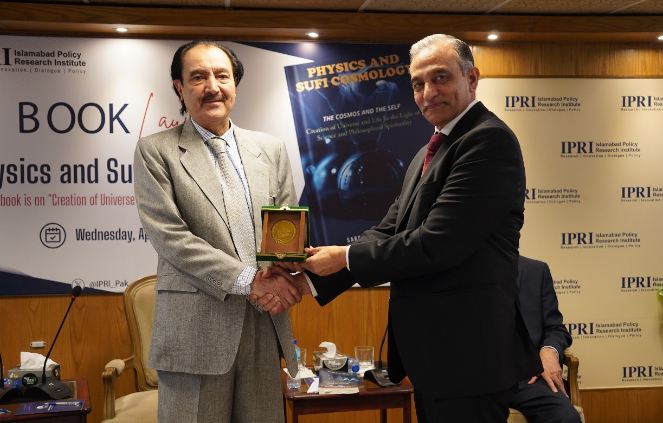
ISLAMABAD, APR 24 (DNA) —The book on ‘Physics and Cosmology’ written by former CSP officer Sardar Irshad Shaheen was launched on Wednesday here at Islamabad Policy Research Institute (IPRI).
The book talks about creation of the universe in the light of science and philosophical spirituality, and has been published in the United States, a news release said. Sardar Shaheen, a CSP, worked in the Inland Revenue Service, FBR and he was also appointed as Advisor to Federal Tax Mohtasib. He claims that right from his school days, he was inquisitive about writing about nature, the universe and life.
The book launch was participated by notables of the federal capital and included senior parliamentarian Farhatullah Babar and former Inspector General of Police and Chairman One-man Commission on Minorities’ Rights, Dr Shoaib Suddle.
The book is a thoroughly researched work, citing over 800 references, and talks at length about the emergence of the universe, concepts in science as well as ways and beliefs held by different religions.
But the author has exclusively penned it not on the premise of religion but on what science has to say on the creation and sustenance of the universe, and the concept in the unitary of Almighty.
This is why the book frequently quotes the Holy Quran in relevance of thought process, and not as a religio-motivational aspect.
It refers to Sufism and the teachings of the holy men and carves out rationality in the limelight of science and practical theories. It did not ever refer to religion as a word or concept, but glued itself to spirituality, per se. The trend of mysticism in the West, he said, evaluates it from the perspective of Quantum theory, and draws parallels between the East and West based on scientific theories.
He exclusively quoted the sermons of Imam Hussain ibn Ali in ‘Miratul Arifeen’, which go on to establish the origin of the universe and the existence of the Almighty. He also referred to the Holy Prophet Muhammad (PBUH), who narrated the existence of God in Hadees-e-Qudsi, saying, “HE was there since time immemorial, and made Himself known as he wanted his Manifestations to be known…”
The book explores the interconnectedness between modern physics and mystical cosmology. It delves into the works of prominent figures such as German philosopher Hegel and Muslim mystic philosopher Ibn-al Arabi, highlighting their profound insights into the nature of existence and the universe.
The introductory chapter outlines a chronological journey through key scientific theories like the Big Bang theory, the expansion of the universe, and the formation of galaxies, while also delving into Sufi perspectives on creation and the relationship between humanity and the cosmos.
The text aims to bridge the gap between science, philosophy, and spirituality, offering a thought-provoking exploration of the fundamental questions surrounding human existence and the universe. Through a synthesis of diverse disciplines and perspectives, the book sets the stage for a deeper exploration of the intricate connections between science and spirituality at deeper levels. — DNA
Assistant-Secretary-General UNDP calls on the Foreign Minister

ISLAMABAD, APR 24: /DNA/ – Assistant Secretary General (ASG), United Nations Development Programme (UNDP), Ms. Kanni Wignaraja, called on Foreign Minister Mohammad Ishaq Dar, today.
The Foreign Minister appreciated the important work carried out by the UNDP since the catastrophic floods in Pakistan in 2022, on the Sustainable Development Agenda and climate action.
The Foreign Minister said expressed Pakistan‘s desire to enhance cooperation with the UNDP in strengthening climate resilience and adaptation and pursuing Sustainable Development Goals (SDGs) and socio-economic development. He emphasized that the UN system could play a critical role in supporting developing countries in terms of the achievement of SDGs as well as climate agenda, by galvanizing international solidarity and cooperation.
The Foreign Minister added that assistance to countries most vulnerable to climate change will enable them to rebuild from natural disasters and to adapt to the ever more frequent and more ferocious climate impacts.
Assistant Secretary General Wignaraja thanked the Government of Pakistan for its continued cooperation and support to the UNDP in implementation of various projects in Pakistan. She also appreciated Pakistan’s active diplomatic engagement at the United Nations.
CAMEA, FES host Int’l conference on Pakistan’s geopolitical role
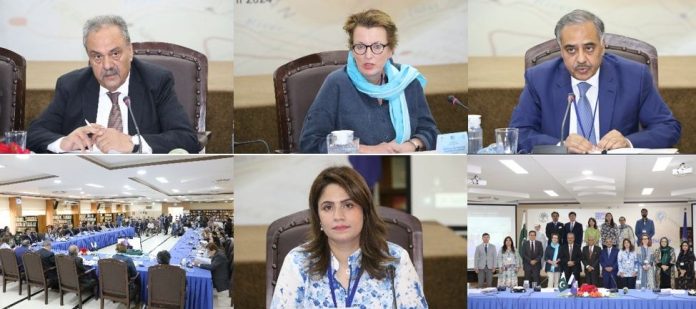
ISLAMABAD, APR 24 /DNA/ – The Centre for Afghanistan, Middle East & Africa (CAMEA) at the Institute of Strategic Studies Islamabad (ISSI), in collaboration with the Friedrich-Ebert-Stiftung Pakistan Office, hosted a one-day International Conference, titled “Pakistan in the Emerging Geopolitical Landscape.” The Chief Guest at the Inaugural Session was Ambassador Asif Durrani, Pakistan’s Special Representative on Afghanistan.
Ms. Amina Khan Director CAMEA, in her introductory remarks, brought attention to the undergoing major transformations around the globe highlighting the need for increased global partnerships and equitable progress. Amidst these global shifts, the world, including Pakistan, stands at a critical juncture as regional dynamics, especially in West and Central Asia, impact Pakistan’s foreign policy and security, emphasizing the necessity to embrace international norms to navigate the complexities of the current global landscapes. While shedding light on the deliberations of the one-day Conference, Ms. Khan said that it will focus on three key areas: Afghanistan post-August 2021, the evolving Middle East, and emerging non-traditional security threats in Afghanistan, Central Asia, and the Middle East; issues that are vital for Pakistan’s future.
Ambassador Sohail Mahmood Director General ISSI, in his welcome remarks, stated that amidst historic transformations globally the world today is marked by intense polarization, volatility, and fragmentation. Traditional threats including major-power competition and wars in Europe and the Middle East are accentuated by new challenges such as cyber warfare and climate change. Some see a ‘decline of the West’ and ‘rise of the rest.’ A shift towards multi-polarity is also discernable. Similarly, technology adds complexity, from informational warfare to AI militarization. He stressed that Pakistan, like others, grapples with these complexities, from cross-border terrorism to volatility of food and fuel prices to extreme weather events. From instability in South Asia to conflict in the Middle East, and cross-border terrorism to hybrid warfare, Pakistan faces the fallout of a complex array of challenges. Like others, Pakistan must navigate these threats and challenges while seizing available opportunities. He added that “it is our considered view that for tackling all these phenomena successfully – on national and international scale – a collaborative approach is indispensable.” Specifically, an approach that puts a premium on adherence to time-honoured principles of inter- state relations and international law, renewal of faith in equal security, fostering international cooperation and solidarity, and strengthening cooperative multilateralism. Furthermore, an approach that prioritizes peaceful coexistence, eschews zero-sum perspectives, and seeks win-win outcomes is critically important.
Ambassador Asif Durrani, Pakistan’s Special Representative on Afghanistan, while making his remarks stated that Pakistan’s neighbourhood is infested with challenges, conflicts and disputes, further compounded with major power rivalry. In the past, the Iranian revolution, the breakup of the Soviet Union and the rise of China created new paradigms for regional peace and security. He underlined the concern that the Ukrainian crisis is considered the revival of the Cold War rivalry; the Israel-Hamas conflict has further compounded the global war; Iran-Israel conflict if not contained urgently can engulf the Middle East and beyond. While shedding light on Pakistan, Ambassador Durrani emphasized that Pakistan’s unique geography enhances its geopolitical and geo-economic value as it sits in the middle of important regions like Central Asia and the Middle East. Moreover, due to its position Pakistan has also suffered at the hands of conflict – post-Soviet withdrawal, American intervention in Afghanistan – in the past two decades. While talking about Pakistan’s internal and external challenges, Ambassador Durrani pointed out that Pakistan has been in a constant flux partly rooted in history and partly due to the unstable conditions in the region. He highlighted four important factors that impact Pakistan’s regional and global perspectives; Pakistan-India relations, the situation in Afghanistan, Pakistan’s proximity to the Middle East, and Pakistan-China relations. Concluding his remarks, Ambassador Durrani brought attention to the fact that the future outlook for Pakistan in the regional context points to a mixed picture: India continues to work on anti-Pakistan pursuits; the western border persists as an avoidable irritant in the short to medium term; and Iran-China relations offer a basis for a durable partnership in terms of security and economics. Moreover, the Indo-U.S. relations, flux in the Middle East politics, and Israel’s atrocities against the Palestinians pose a formidable challenge for Pakistan. While these challenges are alarming, they also underscore the importance for Pakistan to forge a stable regional policy prioritizing neighborhood.
Dr. Almut Weiland-Karimi, Country Director FES, Pakistan in her remarks stated that we are living in troublesome times with world order shifting from the West to the East and the ‘Global South.’ These transformations are not happening in isolation. Today the world is interconnected, impact of decisions made in South Asia have a close impact on other continents and regions across the globe. To meet this challenge the world must work together to benefit from the opportunities that exist, especially concerning issues that are a mutual threat or a challenge including climate change and the global economy. She stressed that there is a need to foster dialogues regarding these issues. Similarly, Pakistan is situated in an important neighbourhood and with the complex geopolitical environment it is equally important for Pakistan to navigate its position wisely. Concluding her remarks she extended her gratitude to all the speakers of the conference.
The Inaugural Session of the Conference was attended by a large number of academics, practitioners, think-tank experts, diplomats, and members of civil society and the media.
President Zardari, High Commissioner Hawkins pledge to strengthen Australia-Pakistan relations
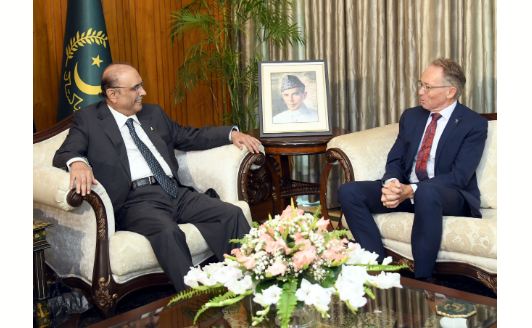
ISLAMABAD, APR 24 /DNA/ – High Commissioner of Australia to Pakistan, Neil Hawkins, called on President Asif Ali Zardari at Aiwan-e-Sadr.
During the meeting, both dignitaries discussed bilateral relations between Australia and Pakistan, emphasizing the importance of strengthening ties in various fields including trade, education, and cultural exchange.
High Commissioner Hawkins conveyed Australia’s commitment to further enhancing cooperation with Pakistan for mutual prosperity and development.
President for stronger economic and cultural ties with China
DNA
ISLAMABAD, 24 APR: President Asif Ali Zardari has stated that Pakistan and China enjoy long-term strategic relations, which need to be further strengthened in the areas of trade, economy, agriculture, people-to-people contacts, and culture. He underlined the need for both countries to continue to work together to take bilateral relations to new heights.
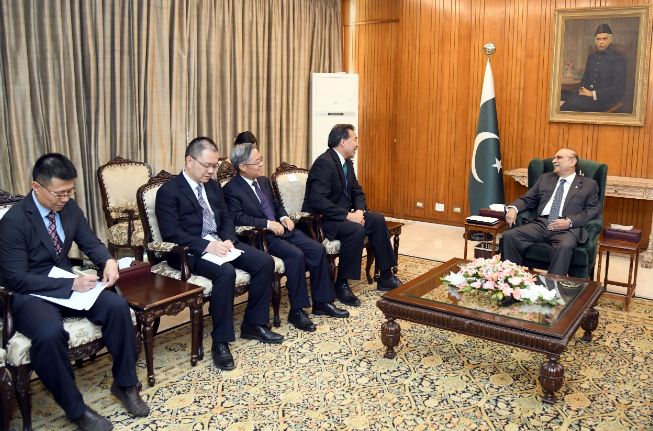
The President expressed these views while talking to the visiting Chairman of China International Development Cooperation Agency (CIDCA), Mr Luo Zhaohui, who along with his delegation called on him, at Aiwan-e-Sadr, today. The Ambassador of China to Pakistan, Mr Jiang Zaidong, the Deputy Chairman Planning Commission, Dr Jahanzeb Khan, and senior officials of the Chinese and Pakistani governments attended the meeting.
While reiterating Pakistan’s firm commitment to China Pakistan Economic Corridor (CPEC), the President said that Pakistan considered CPEC of immense strategic importance and was fully committed to the timely completion of all CPEC projects. Highlighting the importance of Gwadar Port, he said that Gwadar Port would not only promote regional connectivity but would also make the transport of goods to China cost-effective. He also suggested to undertake joint training projects to equip human resources with skills keeping in view the Chinese demand for skilled workforce.
Chairman of China International Development Cooperation Agency (CIDCA), Mr Luo Zhaohui, briefed the President about CIDCA’s role in Pakistan’s socio-economic development as well as its contributions in the health and education sectors. He also underlined the need to promote tourism and agricultural cooperation between the two countries.
The President expressed grief over the unfortunate terrorist attack on Chinese workers in Bisham, saying that Pakistan would make all-out efforts to provide a safe environment for the Chinese workers and investors in Pakistan.
The Chairman of CIDCA said that the enemies of the two countries wanted to harm bilateral relations but they would never succeed in their designs.
The President thanked the Government of China for its support to Pakistan and for playing a vital role in Pakistan’s economic development. He also appreciated CIDCA’s contributions to the rehabilitation of flood-affected people and reconstruction of schools in Khyber Pakhtunkhwa and Sindh, besides constructing housing units for Lady Health Workers in Sindh and Balochistan.