Home Blog Page 739

Minister assures Chinese Consul General of safety measures for Chinese nationals in Pakistan

Minister assures Chinese Consul General of safety measures for Chinese nationals in Pakistan

Chinese nationals’ safety is our core responsibility, instructions have been issued to the concerned agencies to ensure the safety of Chinese citizens: Mohsin Naqvi

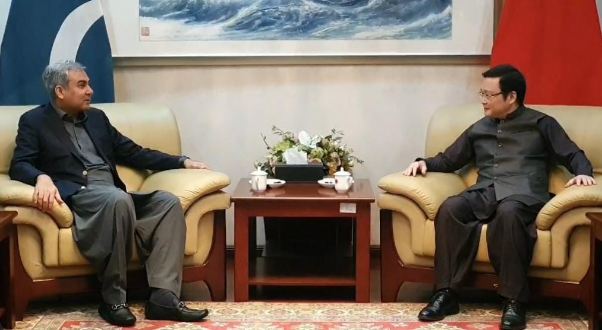
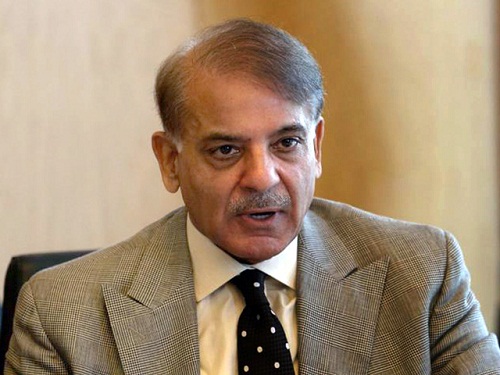
Lahore APR 27 /DNA/ – Federal Minister for Interior Mohsin Naqvi called on Chinese Consul General Zhao Shiren. On his arrival at the Chinese Consulate, the Chinese Consul General welcomed Federal Minister for Interior Mohsin Naqvi. Issues of mutual interest and bilateral cooperation were discussed in the meeting.

Security of Chinese citizens in Pakistan was also discussed. Federal Interior Minister Mohsin Naqvi informed about the measures taken for the security of Chinese citizens and said that the security of Chinese citizens in Pakistan is our national responsibility.

Federal Minister Mohsin Naqvi said that instructions have been issued to all relevant institutions to ensure the safety of Chinese citizens as per SOPs. We’ll not allow any conspiracy to harm Pak-China friendship. No effort will be spared to ensure the security of the Chinese brothers. The Chinese Consul General said that China and Pakistan are all-weather friends.

Pakistan embassy hosts Pakistan professional and student forum in Beijing

Pakistan embassy hosts Pakistan professional and student forum in Beijing

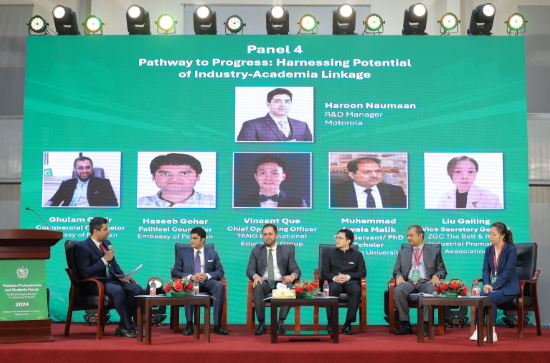
BEIJING, APR 27 /DNA/ – The Embassy of Pakistan today hosted “Pakistan Professionals and Students Forum” under the theme “Building Bridges between Academia and Industry”, which brought together high-ranking government officials, private sector representatives, members of academia as well as a large number of Pakistani professionals and students residing in China.

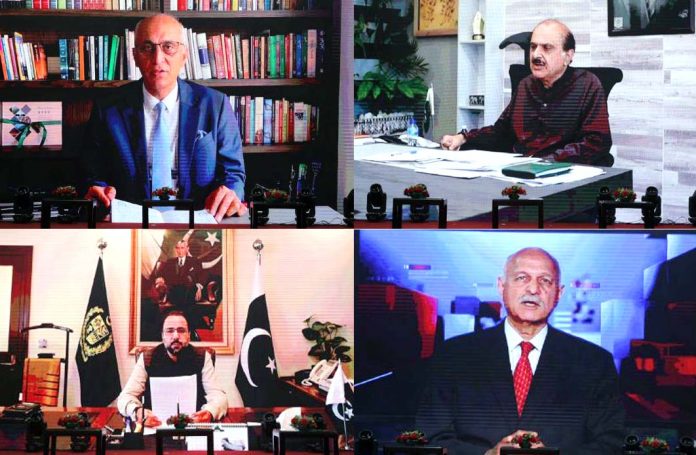
The forum featured a pre-recorded message from Chaudhry Salik Hussain, Federal Minister of Overseas Pakistanis and Human Resource Development, underlining the importance of building bridges between academia and industry for national development and prosperity. The Federal Minister commended Pakistan Embassy for providing a platform to Pakistani students and professionals to interact and exchange ideas on harnessing the current and emerging opportunities in the industry. Messages from Senator Mushahid Hussain Syed, Mr. Moin-ul – Haque, former Ambassador of Pakistan to China and Mr. Mohyuddin Ahmad Wani, Federal Secretary of the Ministry of Federal Education and Professional Training were also played on the occasion.

In his welcome address, Ambassador Khalil Hashmi commended the Pakistan community for its contributions to solidifying the ‘all weather strategic cooperative partnership’ between China and Pakistan. He also underscored the significance of Forum in boosting interactions, exchanges and networks between Pakistani professionals and students. The Ambassador touched on his vision of transforming the Forum into a permanent annual feature with an active participation and imvolvement of Pakistan community.

The Forum also featured panel discussions in which the speakers shared perspectives on current industry trends, highlighting the opportnities arising from China’s enhanced focus on new quality productive forces. They explained the importance of strengthening knowledge corridor between China and Pakistan as part of the endeavors to foster an even stronger community of shared future of the two countries.

In the end, representatives of Pakistan Professional and Students Forum thanked the Pakistan Embassy for hosting the forum, recognizing it as a useful platform for exchanging ideas, sharing experiences, and nurturing a profound sense of community among the Pakistanis in China.=DNA

=================

Court suspends Mahmood Khan Achakzai’s arrest warrant

Court suspends Mahmood Khan Achakzai's arrest warrant

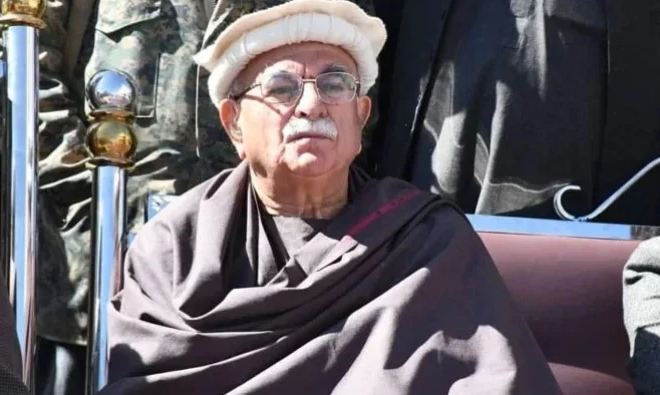
QUETTA, APR 27 /DNA/ – A local court in Quetta on Saturday suspended the arrest warrant of Pashtunkhwa Milli Awami Party (PkMAP) Chairman Mahmood Khan Achakzai till next hearing on May 31.

The investigation officer apprised the court that the PkMAP chief did not comply with the warrant by not appearing before the court in connection with the first information report (FIR) against him.

The judicial magistrate suspended Achakzai’s arrest warrant and fixed the date for next hearing on May 31.

The warrant for the politico’s arrest was issued a day earlier and the police were directed to arrest and produce him before the court on April 27.

The local administration had lodged a case at the Gawalmandi police station against Achakzai on March 11 for interference in the public affairs during a raid on his house.

On March 4, the district administration refuted the claims of the raid at the senior politician’s house, saying that it just got an empty government land vacated near Achakzai’s house on Quetta’s Quarry road.

Quetta Deputy Commissioner Saad bin Asad had said Achakzai  illegally occupied the government land by putting up walls around it. He confirmed that a person, who was guarding the land, was arrested for pointing weapons at an assistant commissioner and interfering in the state affairs.

Former Balochistan caretaker information minister Jan Achakzai, in a hurriedly called press conference, also denied the claims of a raid at the PkMAP chairman’s house, saying the district administration of Quetta recovered a government land.

He said lands in the city’s outskirts were recovered and the campaign against illegal land occupation would continue in the future as well. The district administration took action on a landlord’s complaint and got a plot vacated in front of the veteran politician’s house, he added.=DNA

===================

FRIA calls for encompassing long-term vision for sustained growth

FRIA

LAHORE, APR 27 /DNA/ – The Ferozepur Road Industrial Association (FRIA) has asked the government that its strategies should not only focus on short-term gains but also encompass a long-term vision for sustained progress.

FRIA senior vice chairman Shahbaz Aslam emphasized that such transparency from the government is crucial for instilling confidence in the business community and investors. He observed that the country has had trouble raising enough money to cover its expenses. Due to the low tax-to-GDP ratio, borrowing and outside help are heavily relied upon to close the fiscal imbalance. There is a recurring budget deficit because the government spends more than it takes in. The national debt burden has risen, as a result, needing substantial financial resources for debt repayment. Both internal and external debt in Pakistan has been constantly rising.

FRIA SVC called upon the government to announce clear and robust economic strategies, as the country has stuck in low economic growth situation, where double-digit policy rate for the last few years has diminished capacity to increase domestic production, and exports, negatively impacting domestic resource mobilization.

Shahbaz Aslam said that the new government that comes into office will have its work sharply cut out as far as the economic challenges are concerned. Coming at the back of fast-unfolding climate change crisis and recent Covid pandemic that pushed millions into poverty with little fiscal capacity of government to provide anywhere near close to what was needed in stimulus spending. Then there is acute debt distress, and seriously high inflation at the back of global aggregate supply shock, and accentuated by a world of rising conflicts, mainly in Ukraine, and the Middle East.

He said that even though Pakistan’s economic crisis is a recurring factor in the country’s political unrest, it has a history of ignoring the nation’s true issues, which include poor governance, a broken judicial system, outdated laws, complicated tax system, lack of transparency, duplication in the government system, ineffective bureaucracy, improper use of our human, natural and water resources, lack of efficient local government, inadequate data for country’s planning, and the consistent flaws in policies in execution by the government departments. Pakistan’s GDP growth rate has always remained below its potential despite efforts to boost economic growth. He said that the development of important sectors and investment prospects was hampered by inadequate revenue collection, structural problems, and governance issues.

Since it has been causing serious governance and economic issues for years, the cost of goods, food, petrol, and other necessities has increased, and inflation has almost reached 45 per cent, which is not bearable for the common man. On the other hand, there has been an increase in dissatisfaction among the public that no state institution is performing well and to save them from the haughtiness and bad administration pervasive in the system.=DNA

=================

PM Shehbaz to attend World Economic Forum in Riyadh

ISLAMABAD, APR 27 /DNA/ – Prime Minister Muhammad Shehbaz Sharif is leaving today for Riyadh, Saudi Arabia to attend the World Economic Forum Special Meeting on Global Collaboration, Growth and Energy being held from 28-29 April 2024. The invitation has been extended by HRH Muhammad bin Salman bin Abdulaziz Al-Saud, Crown Prince and Prime Minister of the Kingdom of Saudi Arabia and Professor Klaus Schwab, the Founder and Executive Chairman of the World Economic Forum.

Prime Minister will be accompanied by a high level delegation including Foreign Minister Mohammad Ishaq Dar and Finance Minister Muhammad Aurangzeb. The Prime Minister and the Ministers will participate in WEF discussions on issues related to trade and investment measures, new investment frameworks, restructuring of supply chains, sustainable growth, and the energy landscape. The high level participation in the Forum will afford an important opportunity to present Pakistan’s priorities specifically in global health architecture, inclusive growth, revitalizing regional collaboration and the need for striking a balance between promoting growth and energy consumption.

On the margins of the main event, the Prime Minister and his delegation will hold bilateral meetings with world leaders, including the Saudi leadership, heads of international organizations, and other prominent figures participating in the event.

Mushahid Hussain: Palestine integral to Pakistan’s national identity, tells Istanbul Summit

Mushahid Hussain: Palestine integral to Pakistan's national identity, tells Istanbul Summit

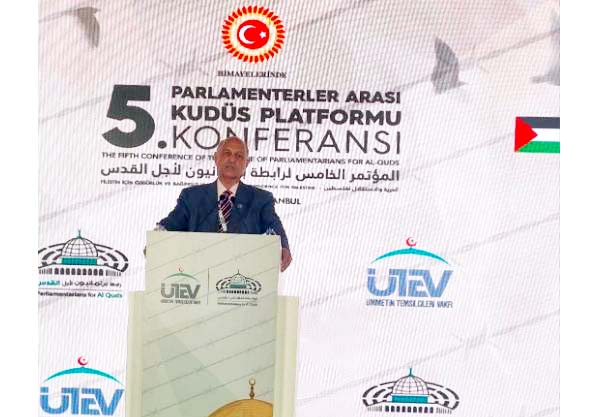
Mushahid tells Istanbul International Conference on Palestine: ‘Rightful Hamas resistance has altered Middle East status quo, Palestine part of Pakistan’s DNA’

ISTANBUL, (DNA): In his address to the International Conference on Palestine, Senator Mushahid Hussain Sayed said that ‘Palestinians armed resistance to brutal Israeli occupation was fully justified under International Law and the UN Charter’, adding that ‘Palestine is part of Pakistani DNA’.

The three day conference, inaugurated by President Erdogan, is being attended by parliamentarians and political leaders from 80 countries. Mushahid Hussain, who is member of the 12-member Executive Board of Parliamentarians for Palestine & Al Quds’, said the ‘entire people and political parties of Pakistan support the just cause of Palestine, as Pakistan’s policy on Palestine was first enunciated by the Father of the Nation, Quaid e Azam Muhammad Ali Jinnah, even before the independence of Pakistan’.

Condemning the Gaza Genocide by Israel, Mushahid termed it the ‘first live televised genocide in modern history’, adding that ‘both Muslim regimes and West countries have let down the Palestinians, except for public opinion in Muslim and Western countries’. He said the ‘Al Aqsa Storm’ unleashed by Hamas on October 7 has altered the global political landscape, especially in the Middle East by shattering the myth of Israeli invincibility’.

Giving Pakistan’s track record of supporting Palestine, Mushahid Hussain referred to Pakistan being the only non-Arab country to take part in two Arab-Israeli Wars in 1967 and 1973, plus first recognition of PLO under Yasser Arafat took place at the Lahore Islamic Summit in 1974.

Mushahid urged an immediate ceasefire & steps to establish an independent Palestine with Jerusalem as its capital. The Pakistan Parliamentary Delegation attending the conference includes Senator Mushtaq Ahmed, MNAs Sheryar Meher, Chaudhry Shahbaz & Junaid Akbar. The Pakistani delegates also met President Erdogan and Speaker of Turkish Parliament, Dr Noman Kurtulmus.

Revitalizing Agriculture: Enhancing Food Security in Pakistan

Revitalizing Agriculture: Enhancing Food Security in Pakistan

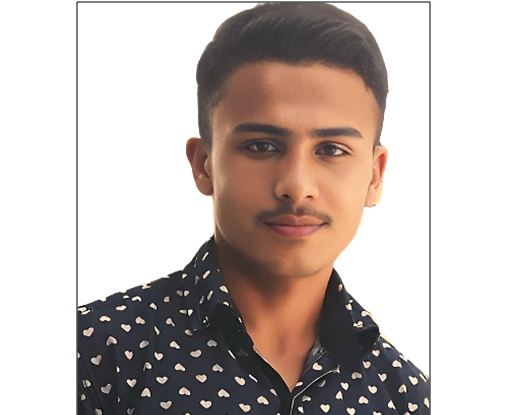
By: Muhtasim Afridi

For a huge period in the history of Pakistan agriculture has been the most common practice of landlords. In parts of Khyber Pakhtunkhwa, Sindh, Balochistan and specifically Punjab,people are widely into farming and raising livestock – given the abundance of fertile land and the presence of freshwater rivers. That is perhaps the reason why Pakistan has remained an agrarian societysince its inception. However, there are problems with the traditional methods of crop productionand distribution, which undermines the agriculture sector, consequently, leading to food insecurity in Pakistan.


The population of the country is snowballing with each fleeting year. It currently stands at 241.5 million, increasing annually with an average of 2.55% since 2017 – according to the National Population and Housing Census 2023. The scientific community has continuously been warning states about the negative impacts of overpopulation. The disparity between population growth and production growth ultimately contributes to food insecurity. However, Pakistan seems oblivious to this issue – as pera report, the country stands 99th on the Global Hunger Index, which is a serious situationand will continue to be worse if not taken care of.


On top of that, floods remain a huge problem for farmersin Pakistan. Since its independence, the country has received 29 floods – and in the last decade, it has witnessed floods each year consecutively. The 2022 floods destroyed crops on a massive scale, hence resulting in food shortages all over the country. This ultimately led to all-time high prices of wheat, rice, fruits and vegetables – making it difficult for consumers to buy. Each time floods hit the country; the farmers demand subsidies from the government which is never a long-term solution. Instead, the construction of dams and widening of irrigation canals might help in overcoming this issue.


To meet the needs of the public, countries around the globe are on a quest to develop more efficient means which could accelerate the processes – particularly in the field of agriculture to double up the yield. Unfortunately, Pakistan is an oligarchic state – ruled and driven by the old people, where the decisions favourancient methods of agriculture. Hence, it lacks the touch of technology, ultimately affecting the outcome.Contrary to that, various states adopted innovative concepts such as precision agriculture technology, agroforestry, and vertical farming.

Similarly, Pakistan needs to keep up the pace in the race of technology. The failure to address food insecurity reveals the weakness of the government – one thing is for sure it cannot work in isolation from the private sector. The government can collaborate with educational institutions or private firms for research and development. There are 33 top organizations in Pakistan working on developing efficient means for agriculture. For instance, ‘Crop2x’is a private limited which provides IOT and AI services to increase crop yield.

Similarly, LUMS University provides research on technology to enterprises such as NestleandBayer. Regrettably, the government rarely welcome innovation, which is the reason for technical backwardness.
It sounds absurd to criticize the government alone, while not mentioning other stakeholders contributing to food insecurity. The role of middlemen, wholesalers, and retailers in the distribution process is central to the discussion. In most cases, these stakeholders, specifically the middlemen, exploit the pricesfor their interest, eventually making it hard for daily wagers to buy food at cheap and convenient prices. The lower and middle-class citizens are already struggling to survive the inflation storm, and with the additional misadventures of middlemen, their lives are further at stake.


The world has now transformed to a greater extent, it has become more connected than ever. The decision-makers must consider new methods to revitalize the agriculture sector, otherwise technological backwardness will take Pakistan on the back foot. Agriculture used to be one of Pakistan’s major sources of economic growth – given the large number of exports to other countries. However, the figure has decreased over the period. A recent report shows that Pakistan’s wheat productionis estimated at 29.69 million tons against the set target of 32.2 million tons for the Rabi season 2023-2024, which is a loss.


The irony is that wheat was once among Pakistan’s top exports, and now things are on the contrary – it imports from Russia and Ukraine.However, the government can still decrease the gap between population growth and food production with the adoption of precision agriculture technology. It will not only help in increasing the yield but also reduce waste and function more efficiently. The initial cost might be highbut dreams of becoming an Asian tiger come at a high cost.


In addition, since the government is battling with other problems, the fate of the poor and undernourished segments of society remains in question.There are various cases of suicides reported each year just because of non-availability or high prices of food. The state is a creation of people; therefore, the individuals must be the key priority of the state. A little investment by the government can transform the agriculture sector – consequently increasing economic activity and ensuring food security in the country. Furthermore, a hard check on middlemenin the distribution process would be a sigh of relief for the people. The government must get rid of these exploiters that have plagued Pakistan for decades.

The writer is an editorial intern at the Associated Press of Pakistan; he can be reached at: [email protected]

“US Country Report: A True Reflection, or…”

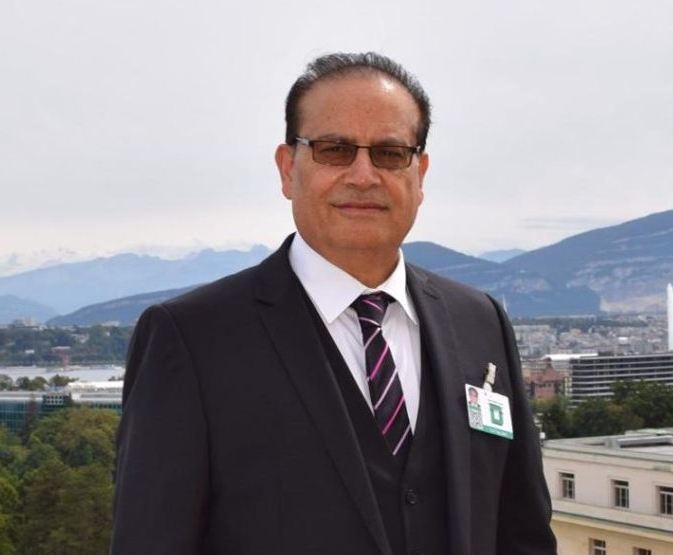
Qamar Bashir

By Qamar Bashir

Pakistan’s Foreign Affairs promptly rejected the US Department of State’s 120-page “2023 Country Reports on Human Rights Practices: Pakistan” without acknowledging its comprehensive compilation process where the source of almost all necessary data rests in Pakistan. The compilation involves gathering data from embassy and consulate reports, local NGOs, media coverage, government agencies, international organizations, academic institutions, testimonies, diplomatic channels, official government reports, and open-source intelligence. The report aims to provide a thorough and accurate assessment of human rights conditions in Pakistan indicating a failure to address shortcomings.

Rather than addressing issues and implementing reforms, Pakistan tends to respond with generic statements disconnected from reality which is shortsighted, as baseless rejection only draws more attention to the report’s contents, prompting further scrutiny. Pakistan’s tendency to ignore issues and reject criticism perpetuates poor human rights practices rather than fostering improvement.

“There is nothing in the report that has not been discussed almost on a daily basis by our courts, political parties, civil society, and both traditional and social media. Our media and civil society, day in and day out, in their reports, comments, and analyses, discuss, refer to, and quote, rightly or wrongly, all those issues, matters, and incidents which were referred to in the report. These include unlawful or arbitrary detentions and  killings, including extrajudicial killings; enforced disappearances; torture; and cases of cruel, inhuman, or degrading treatment or punishment by the government or non state actors.”

“They discuss harsh and life-threatening prison conditions; political prisoners; arbitrary or unlawful interference with privacy; punishment of family members for alleged offenses by a relative; and serious abuses in conflict, including reportedly unlawful civilian deaths and enforced disappearances.

The elite journalists and opposition political parties have raised concerns about significant restrictions on freedom of expression and media freedom. These include violence against journalists, unjustified arrests, and disappearances of journalists, as well as censorship and serious constraints on internet freedom. Additionally, there are substantial interferences with the freedom of peaceful assembly and association, including overly restrictive laws governing the operation of non-governmental organizations and civil society groups.

The media and civil society have been vocal about issues such as restrictions on religious freedom, coerced or forced returns of individuals to countries where they may face torture or persecution, government corruption, and government restrictions on both domestic and international human rights organizations. They have also highlighted extensive gender-based violence, including domestic or intimate partner violence, sexual violence, and child and early forced marriage.

Media reports also suggest physical abuse of criminal suspects in custody, leading to injuries or deaths. Besides, lengthy trial delays at both the commencement and conclusion of trials, along with the failure to adequately investigate, discipline, and prosecute those responsible for killings, have contributed to a culture of impunity.

Our media is full of reports that there is a significant increase in attacks against police and security forces. According to the independent think tank Center for Research and Security Studies, there were at least 386 reported deaths of police and military personnel in terrorist attacks and counterterror operations during the first three quarters of the year. The number of attacks and casualties were higher than in 2022 or 2021.

However, they may not realize that these commentaries and analyses are being recorded, compiled, and reported upon by human rights watchdogs around the world, including those in the US reflecting negatively on our human rights record.”

The impugned report comprehensively cataloged a multitude of incidents, events, and statements with detailed dates, names, and qualifications forming its foundation. Noteworthy examples include the killing of seven Shia Muslims, including four teachers, in Upper Kurram, Khyber Pakhtunkhwa, on May 4, apparently in retaliation for the earlier killing of a Sunni Muslim; a suicide bombing in Mastung, Balochistan, on September 29, which claimed the lives of at least 60 individuals during a religious procession; and an attack by Tehreek-e-Jihad on Pakistan Air Force Training Base M.M. Alam in Mianwali, Punjab, resulting in the deaths of nine militant attacks on November 4.

Ironically, instead of addressing these issues, there was a tendency to blame rating agencies for using inaccurate data, ignoring the fact that much of the data originates from within our own country, often from government sources.

During my tenure as Joint Secretary, I compiled a comprehensive report on all international ratings, rankings, and indexes, revealing a dismal picture of our nation’s neglect, lethargy, aimless governance, and widespread lawlessness. It underscored the multitude of challenges we faced, including multiple power centers, injustice, economic stagnation, and social degradation.

Surprisingly, the government at that time took my report seriously. It was shared with the Prime Minister and other key government figures, who instructed me to develop a robust plan of action to improve our international ratings and rankings. I diligently crafted such a plan, which was subsequently shared with the higher echelons of the government. The national security advisor was entrusted with leading the implementation of this plan, and I was tasked with briefing him on the report and the proposed strategy.

However, as fate would have it, the government was dissolved before any significant progress could be made. Sadly, this scenario mirrored the fate of similar plans throughout Pakistan’s history—promising initiatives often succumbing to the tide of political change, leaving crucial reforms languishing on the shelf.

It is imperative that reports by the US statement department and such other reports reflecting our national performance and responsibilities are thoroughly reviewed and referred to relevant committees of the National Assembly and Senate for in-depth analysis. These committees should scrutinize the reports meticulously, identifying any inaccuracies in the data and bringing them to the attention of the rating agencies for clarification or amendment.

Furthermore, these committees should establish robust collaboration with the focal persons of rating agencies in Pakistan, providing them with accurate and reliable data to ensure the integrity of subsequent reports. If the data and analysis in the report are found to be accurate, the committees should then formulate a comprehensive plan of action to address the shortcomings highlighted.

Rather than blaming the mirror, we must have the courage to acknowledge the reflections it presents and strive to ensure that what the mirror reflects is indeed a true representation of our nation’s beauty and charm. This approach fosters accountability and facilitates proactive measures to enhance our national performance and reputation.

By Qamar Bashir

Former Press Secretary to the President

Former Press Minister to the Embassy of Pakistan to France

Former MD, SRBC

Pakistan Hockey Federation still in a shambles

Pakistan Hockey Federation still in a shambles

In a significant move, Rana Mashood has delegated the critical task of team selection for the upcoming Azlan Shah hockey tournament to chief coach Roelant Oltmans. This decision aims to streamline the process and ensure the squad’s competitiveness, commencing from May

Ansar M Bhatti

ISLAMABAD: Recent efforts aimed at reconciling the divergent factions within the Pakistan Hockey Federation (PHF) have yet to yield resolution on key issues. Spearheaded by the Prime Minister Youth Program chief, Rana Mashood, a gathering was convened on April 25, inviting representatives from both factions.

Tariq Bugti, designated as PHF President by the prior caretaker government, and Shehla Raza, assuming a self-appointed role, met with Rana Mashood to outline the ongoing challenges. Accompanying them were Rana Mujahid from Bugti’s faction and Haider from Raza’s group, further enriching the discourse.

In a significant move, Rana Mashood has delegated the critical task of team selection for the upcoming Azlan Shah hockey tournament to chief coach Roelant Oltmans. This decision aims to streamline the process and ensure the squad’s competitiveness, commencing from May 4.

However, recent developments have also seen the exclusion of Umar Bhutta, a veteran former Pakistan captain, from the training camp. Bhutta’s abrupt departure has raised eyebrows and sparked discontent among players and commentators, who advocate for a more dignified transition for such a stalwart.

Looking ahead, the fate of the PHF, particularly under Shehla Raza’s leadership, appears uncertain. Rana Mashood’s endorsement of the ongoing Islamabad camp suggests a shift in legitimacy, potentially marginalizing Raza’s faction. Despite encouragement for Karachi camp players to integrate with the Islamabad contingent, no significant crossover has materialized thus far.

Meanwhile, Tariq Bugti might sustain his role as PHF President until a new appointment is made, with the Pakistan Olympic Committee entrusted with resolving the Secretary’s appointment. These deliberations underscore the complexity of PHF’s internal dynamics and the broader efforts to rejuvenate Pakistan’s hockey landscape.

UNODC, Pakistan join hands to combat smuggling of migrants

UNODC

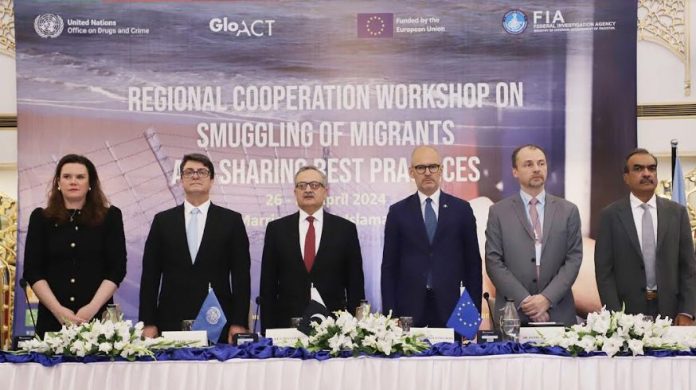
ISLAMABAD, APR 26 /DNA/ – The Federal Investigation Agency (FIA) and the Ministry of Foreign Affairs (MoFA) are hosting a regional conference in collaboration with the United Nations Office on Drugs and Crime (UNODC) and the European Union (EU) to discuss the challenges of smuggling migrants on 26-27 April at the Marriott Hotel Islamabad.

Migrant smuggling is a crime with high profits and a low risk of punishment for the criminals involved. Smugglers sell illegal and dangerous services to desperate people and are often part of a well-organized, multinational network. International cooperation is vital to combat this crime.

“This regional cooperation workshop constitutes a veritable part of our desire to benefit from the perspectives, expertise, as well as cooperation of our regional and international partners. The international community needs a “comprehensive approach” that helps safe, orderly and regular migration on the one hand, while addressing the negative impacts of irregular migration on the other” said Mr. Syrus Sajjad Qazi, the Foreign Secretary.

“Recent incidents, including the tragic event where 350 Pakistanis were on board a packed trawler that capsized off southern Greece on 14 June 2023, are a stark reminder of the urgent need for increased collaboration among nations to effectively address this complex crime,” said Jeremy Milsom, UNODC Representative in Pakistan.

The conference, held as part of the PROTECT: Improving Migration Management and Migrant Protection in Selected Silk Route Countries project, funded by the European Union, and implemented in the framework of the Global Action against Trafficking in Persons and the Smuggling of Migrants (GLO.ACT), will explore mechanisms to improve information-sharing between countries and emphasize victim-centered approaches to combat migrant smuggling.

The Deputy Head of the EU Delegation to Pakistan, Mr. Philipp Gross, highlighted: “The importance of regional cooperation cannot be overstated in addressing the multifaceted challenges posed by human trafficking and smuggling of migrants. Routes originating in Pakistan, traversing through Iran and Türkiye, and ultimately reaching the European Union, serve as critical pathways for irregular migration. Formal and informal cooperation mechanisms along these routes are essential to disrupt criminal networks, dismantle smuggling rings and protect vulnerable migrants. The European Union launched the Global Alliance to Counter Migrant Smuggling in November 2023, to strengthen international cooperation to prevent and respond to migrant smuggling, and to provide alternatives to irregular migration. Today’s regional conference is a primary example of key countries strengthening cooperation along a whole-of-route approach to counter this crime, In parallel, consistently addressing the root causes of irregular migration, such as poverty and conflict, remains imperative to deter people from embarking on perilous journeys. The EU remains committed to support Pakistan and regional partners towards these shared objectives.”

Participants will discuss common challenges faced by countries, best practices in border security and investigations, and discuss the possibility of establishment of a regional task force.

“It shouldn’t take tragedies to bring us all together,” Milsom added. “The support of the European Union has led to significant milestones in the fight against migrant smuggling worldwide. This event is a unique opportunity.”

The conference held under the umbrella of the UNODC Country Programme III of Pakistan (2022-2025).

Stay Connected

64FansLike
60FollowersFollow

Latest Reviews

Exchange Rates

USD - United States Dollar
EUR
1.17
GBP
1.35
AUD
0.67
CAD
0.72