Home Blog Page 74

Iran will be ‘only country’ to determine how to use unfrozen assets: Ambassador

Iran will be ‘only country’ to determine how to use unfrozen assets: Ambassador

TEHRAN, JUN 23: Tehran alone will decide how to use its frozen assets once they are unfrozen under a US-Iranian deal towards ending the Middle East war, an Iranian ambassador said Tuesday, contradicting US claims.

As part of the deal under negotiation, Washington has agreed to release $12 billion in frozen funds to Iran, Iranian state media reported on Tuesday, and temporarily suspend sanctions on oil from the Islamic Republic.

US Vice President JD Vance said on Monday that Iranian assets had not yet been unfrozen as part of the deal and that, if they were, they could be used to buy US goods such as soybeans and would not fund terrorism.

Ali Bahreini, the Iranian ambassador to the United Nations in Geneva, rejected that.

“Iran is the only country who will decide what to do with its assets, which are going to be defrozen,” he told reporters at a briefing in Geneva hosted by the UN correspondents’ association ACANU.

“I reject any claim by (Washington) about that there should… be any role for any other country to have an influence on those decisions or on those processes.”

Iran has been subject to asset freezes and sweeping sanctions by the United States and others for much of its history since the 1979 Islamic Revolution.

Bahreini also reported good progress in negotiations between the United States and Iran during peace deal talks in Switzerland.

“Our colleagues continue to discuss in very good talks yesterday at technical level,” Bahreini said, adding that two working groups will be established within the coming days to discuss the removal of sanctions against Iran, and issues related to Iranian nuclear activities.

Israel targeted Gaza children resulting in genocide, UN inquiry says

Israel targeted Gaza children resulting in genocide, UN inquiry says

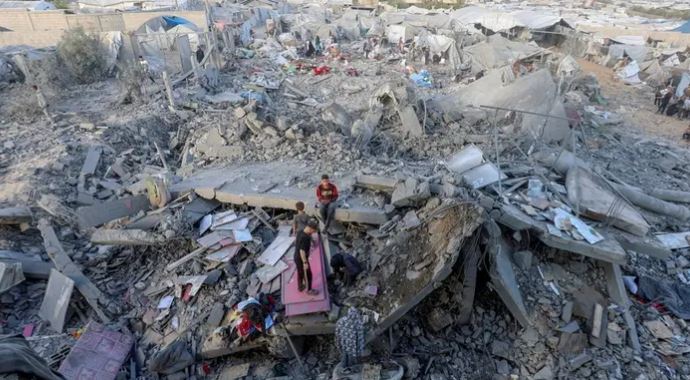
NEW YORK, JUN 23: Israeli authorities and security forces deliberately targeted Palestinian children, resulting in genocide, crimes against humanity and war crimes in Gaza, and war crimes in the occupied West Bank, an independent UN inquiry said on Tuesday.

The report by the UN Independent International Commission of Inquiry on the Occupied Palestinian Territory, including East Jerusalem, and Israel examined violations against Palestinian children since the start of the war between Israel and Hamas on October 7, 2023.

Around 30 percent of those killed in the Gaza war were children, the report found.

A previous report by the commission in September found that Israel had committed genocide in Gaza and that top Israeli officials including Prime Minister Benjamin Netanyahu incited these acts — accusations that Israel called scandalous.

Israel’s mission in Geneva said Israel rejected what it called the Commission’s “second defamatory advocacy report.”

“Israel dismisses this libelous sham,” it said in a statement, adding that “every child deserves protection” and asserting that the report ignored “the brutal tactics of Hamas.”

The UN commission said that Palestinian children were deliberately targeted and killed during the war, including after a ceasefire came into effect in October 2025. It said this was a key element establishing genocidal intent by Israeli authorities and security forces to destroy the Palestinian group, in whole or in part, in Gaza.

“The evidence shows that Palestinian children have been deliberately targeted and killed by the Israeli security forces,” said Srinivasan Muralidhar, the commission’s chair, in a statement accompanying the report.

Child deaths
The report found that the proportion of children killed was higher than in previous conflicts. Between October 7, 2023 and October 7, 2025, at least 20,179 children were killed, around 30 percent of the overall death toll.

By comparison, in hostilities in Gaza in 2008–2009 and 2014, children made up approximately 24 percent of conflict-related fatalities, the report said.

Israeli forces continued to use high-payload munitions and weapons with wide-area effects in densely populated residential areas despite mounting child casualties, the commission said.

“This indicates that such attacks, which killed children in such high numbers, were intentional,” it said. It said it believed children were targeted collectively because the Israeli security forces considered the civilian population as a whole to be associated with Hamas and other armed groups.

A rebuttal shared by Israel’s mission in Geneva said Israel “consistently strives to minimize harm to children even in situations of conflict” and that Israel rejected the suggestion it deliberately targets children “in the strongest terms.”

Muralidhar said that by targeting children, Israel was undermining the capacity of the Palestinian people to exist and to determine their future.

Conditions imposed by Israel in Gaza, including widespread attacks, repeated displacement and starvation caused by the blockade of aid, food and medicine, severely harmed children’s health and development, resulting in preventable deaths and trauma, the report said.

The inquiry also found that attacks on healthcare and reproductive facilities impacted the survival of newborns and reported increases in miscarriages, and that nearly all children in Gaza were reported to require psychological support.

Israel’s rebuttal said the report failed to mention Israel’s role in facilitating vaccinations and the entry of medical staff, and the establishment of field hospitals. It accused Hamas of systematically diverting humanitarian aid and fuel for hospitals. Hamas has rejected such accusations.

West Bank
In the West Bank, including East Jerusalem, the Commission found a sharp increase in violence by Israeli settlers against Palestinian children and documented evidence of torture, including sexual and gender-based violence, during mass arrests and detention.

It said Palestinian children, particularly boys, were subjected to systematic mistreatment in detention, including forced stripping, beatings and food deprivation.

The commission concluded that the treatment constituted the crimes against humanity of torture and other inhumane acts causing great suffering or serious injury.

Israel’s rebuttal said the report’s findings on the West Bank omitted context on the “constant terrorist threat” that it said Israeli security forces were responding to.

FPCCI warns wind curtailment driving investors to bankruptcy

FPCCI warns wind curtailment driving investors to bankruptcy

KARACHI, JUN 23 /DNA/ – Atif Ikram Sheikh, President of the Federation of Pakistan Chambers of Commerce and Industry (FPCCI), has apprised that Federation’s Central Standing Committee on Renewable Energy, chaired by Convener Mr. Fawad Jawed, has expressed its grave concern over the intensifying curtailment of wind power plants.

Mr. Atif Ikram Sheikh stressed that this grid infrastructural failure is inflicting billions in revenue losses, driving green energy investors toward bankruptcy, and forcing inflation-weary consumers to bear the brunt of expensive imported fuel.

FPCCI Chief elaborated that, despite definitive sovereign guarantees that transmission bottlenecks in the Gharo-Jhimpir corridors would be removed, the National Grid Company (NGC) and the Independent System & Market Operator (ISMO) have repeatedly failed to upgrade evacuation infrastructure.

Consequently, the national grid is suppressing Pakistan’s cheapest and cleanest source of electricity – available at a mere Rs. 14 per unit – while the country endures debilitating load shedding and bleeds scarce foreign exchange on costly imported RLNG and coal.

Mr. Atif Ikram Sheikh said that FPCCI’s Central Standing Committee on Renewable Energy has highlighted a shocking tariff irony: under NEPRA determinations, wind energy generated beyond benchmark capacity drops to an unprecedented under Rs. 1 per kWh. Yet, the system operator chooses to reject this virtually free local power, prioritizing multi-billion dollar thermal imports instead.

Furthermore, the Non-Project Missed Volume (NPMV) mechanism recovers only 38% of losses despite 100% plant readiness, creating a recipe for financial liquidation.

FPCCI warns that launching the Competitive Trading Bilateral Contract Market (CTBCM) and wheeling auctions over a congested – failing network will further destabilize the grid.

The FPCCI urgently demands that the Prime Minister’s Office, Ministry of Energy, and NEPRA intervene to enforce ‘Must-Run’ Status, Ensure Accountability, Redirect Power to grid and Reform NPMV.

Timely action: Security Forces foil major terrorist plot in Panjgur

Timely action: Security Forces foil major terrorist plot in Panjgur

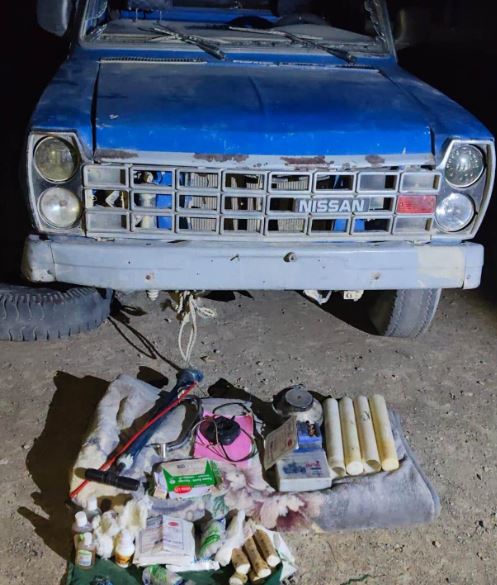
QUETTA, Jun 23: Security forces successfully foiled a major terrorist plot through a swift and intelligence-based operation in the Panjgur district of Balochistan.

According to security officials, acting on credible intelligence, security personnel carried out a targeted operation in the Jeerak area of Panjgur. During the raid, they recovered a significant cache of weapons, explosives, and communication equipment.

The seized materials included four rocket fuses and several improvised explosive devices (IEDs) discovered inside a vehicle.

The explosive material was meant to be used in a possible major terrorist attack, the security sources said. The timely and professional action by security forces thwarted this nefarious plan.

Pak-Russian JWG discusses terrorism threat emanating from Afghanistan

Pak-Russian JWG discusses terrorism threat emanating from Afghanistan

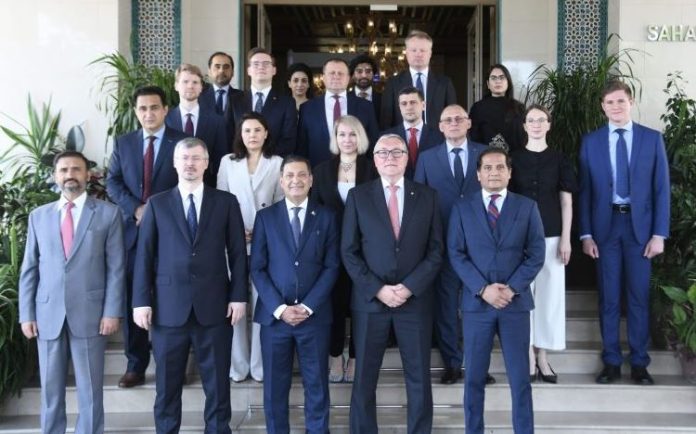
ISLAMABAD, June 23: Pakistan-Russia Joint Working Group to Counter International Terrorism, Tuesday, discussed the regional terrorist threat, with particular focus on terrorism emanating from Afghanistan and the risk it posed to the neighboring states and the broader regional security.

The 12th meeting of the JWG was held in Islamabad. Additional Secretary (Ministry of Foreign Affairs) Ambassador Muhammad Khalid Khan Jamali and Russian Federation Deputy Minister for Foreign Affairs Dmitry Lyubinsky led the dialogue, the Foreign Office Spokesperson said in a press release.

The delegations also reviewed the state of bilateral cooperation on counterterrorism and identified avenues for deepening engagement at regional and international forums especially the United Nations (UN) and the Shanghai Cooperation Organization (SCO).

Iranian President Pezeshkian touches down in Islamabad, set to meet top leadership

Iranian President Pezeshkian touches down in Islamabad, set to meet top leadership

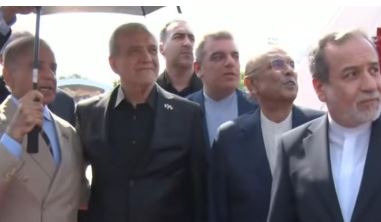
ISLAMABAD, JUN 23: Iranian President Masoud Pezeshkian landed in Islamabad on Tuesday for a one-day visit following Islamabad-mediated talks between Tehran and Washington in Switzerland.

The Iranian president arrived on a special aircraft operated by Mirage Airlines, identified as Minab 168 — a symbolic tribute to the 168 children who were martyred in an attack on their school by the United States and Israel in Iran’s Minab city.

The trip — Pezeshkian’s first foreign visit since the United States and Israel launched strikes on Iran on February 28 — comes a day after Pakistan and Qatar announced that the opening round of high-level US-Iran talks in Burgenstock, Switzerland, had produced a 60-day roadmap towards a final agreement.

Director of public relations at the Iranian president’s office, Habibollah Abbasi, said that expressing appreciation to Prime Minister Shehbaz Sharif for “his mediation between Iran and the United States” is among the objectives of Pezeshkian’s visit.

The Foreign Office also confirmed the Iranian president’s visit to Islamabad, saying Pezeshkian will be accompanied by a high-level delegation, including ministers and other high-ranking officials.

During his time in Pakistan, the visiting dignitary will meet President Asif Ali Zardari and hold talks with PM Shehbaz.

The two sides will also review the full spectrum of bilateral relations and explore new avenues to further deepen cooperation across diverse sectors, including trade, energy, border security, people-to-people exchanges, and regional connectivity,” it added.

The FO said the visit will also provide an important opportunity to discuss ongoing diplomatic engagements following the signing of the Islamabad Memorandum of Understanding, as well as regional and international developments of mutual interest.

“The forthcoming visit reflects the shared commitment of Pakistan and Iran to further deepen their historic and cultural ties and underscores their common aspiration for peace, stability, and sustainable progress in the region,” the statement added.

This will be Dr Pezeshkian’s second visit to Pakistan in his capacity as president of Iran.

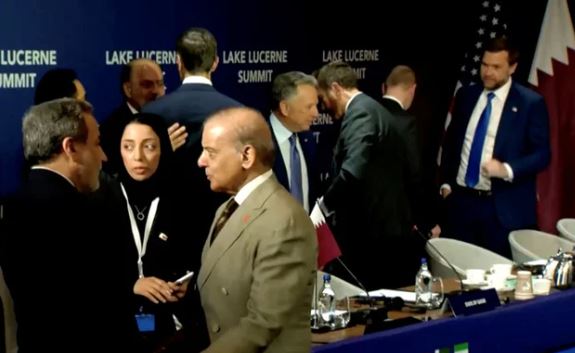
The United States and Iran made “encouraging progress” at the first round of talks aimed at reaching a final peace deal, mediators said on Monday, although tension persisted over Lebanon and the Strait of Hormuz.

A joint statement from mediating nations Pakistan and Qatar said the US and Iran agreed to a roadmap towards a final deal within 60 days. Technical talks will continue for the rest of the week in the Qatari-owned Swiss mountain resort of Buergenstock, according to the statement, which was released by the Qatari foreign ministry.

They also agreed on a mechanism to end fighting in Lebanon between US ally Israel and Iran-aligned Hezbollah, and opened a communications line to help ensure safe passage for commercial ships through the strait, a vital global oil supply route.

The parties agreed to a mechanism to end the fighting in Lebanon and opened a communications line to help ensure safe passages for commercial ships through the contested strait, the statement said.

US Vice President JD Vance said that a first round of US-Iran talks in Switzerland had laid a good foundation for reaching a final deal on ending the Middle East war.

Pakistan, he said, would continue to play an honest and sincere role in promoting dialogue and diplomacy aimed at achieving a peaceful and lasting resolution.

PM Shehbaz commended the leadership of both the United States and Iran for their continued commitment to constructive engagement.

He also thanked friendly and brotherly countries for their support in advancing what he described as a historic diplomatic process.

The prime minister expressed special gratitude to Qatar for its critical role in creating conditions that enabled the negotiations to move forward.

He also thanked the Swiss government for facilitating and hosting the talks.

Tougher phase of US-Iran talks lies ahead but final deal within reach: DPM Dar

Tougher phase of US-Iran talks lies ahead but final deal within reach: DPM Dar

BERN, JUN 23: Deputy Prime Minister and Foreign Minister Ishaq Dar has said the next phase of negotiations between the United States and Iran could prove more difficult, but expressed confidence that a final agreement remains within reach.

Speaking to an Arab news outlet, Dar said Iran would lower the level of its uranium enrichment rather than transfer its enriched uranium stockpiles abroad, noting that Washington had initially sought the removal of those reserves from the country.

He said three technical working groups would be established to address the nuclear file, frozen assets and issues relating to Lebanon as part of the broader negotiations.

Dar also revealed that vessels passing through the Strait of Hormuz would be allowed to transit for 60 days without any additional tariffs under the understanding reached, paying only standard navigation or service charges.

According to the deputy prime minister, US President Donald Trump personally oversaw the negotiations between Washington and Tehran, while Saudi Arabia, Qatar, Egypt and the United Arab Emirates supported the mediation efforts.

Describing the arrangement as positive, Dar said the agreement contained “no negative points” and voiced optimism that the ongoing diplomatic process would ultimately lead to a comprehensive settlement despite the challenges that may arise in the next stage.

‘No hidden deal or vested interest for Pakistan’
According to Dar, US President Donald Trump personally guided the negotiations between Washington and Tehran, while Saudi Arabia, Qatar, Egypt and the United Arab Emirates supported the mediation efforts.

Rejecting speculation about any secret understanding, the deputy prime minister said there was no hidden deal behind the agreement and that all provisions were contained in the written Islamabad Accord.

He said Pakistan had no vested interest in the matter and had played a sincere mediatory role solely in the interest of the Muslim world and global peace. Pakistan took the initiative to bring the parties to the negotiating table and, through sustained diplomatic efforts, first helped secure a ceasefire between them, he added.

Dar said US and Iranian delegations held six rounds of talks spanning 21 hours in Islamabad, marking the first direct negotiations between the two countries in 47 years. He said US Vice President JD Vance, Iran’s parliamentary speaker and the Iranian foreign minister represented their respective sides in the talks.

Representing Pakistan, Dar said he, Chief of Defence Forces (CDF) Field Marshal Asim Munir and the national security adviser participated as mediators and witnesses. He added that Islamabad kept regional countries informed throughout the diplomatic process.

According to Dar, Qatar, Bahrain, Kuwait, Jordan, the European Union, Canada, Australia, Japan and China also backed Pakistan’s efforts to facilitate the talks. He said the final signing of the Islamabad Memorandum of Understanding took place on June 18.

Dar further said the R4 Forum, comprising Pakistan, Saudi Arabia, Egypt and Turkiye, had now been established. He described it as a shared platform representing around half a billion people rather than a political bloc, adding that it connected the Red Sea, the Mediterranean and Africa.

The United States and Iran made “encouraging progress” at the first round of talks aimed at reaching a final peace deal, mediators said on Monday, although tension persisted over Lebanon and the Strait of Hormuz.

A joint statement from mediating nations Pakistan and Qatar said the US and Iran agreed to a roadmap towards a final deal within 60 days. Technical talks will continue for the rest of the week in the Qatari-owned Swiss mountain resort of Buergenstock, according to the statement, which was released by the Qatari foreign ministry.

They also agreed on a mechanism to end fighting in Lebanon between US ally Israel and Iran-aligned Hezbollah, and opened a communications line to help ensure safe passage for commercial ships through the strait, a vital global oil supply route.

The parties agreed to a mechanism to end the fighting in Lebanon and opened a communications line to help ensure safe passages for commercial ships through the contested strait, the statement said.

US Vice President JD Vance said that a first round of US-Iran talks in Switzerland had laid a good foundation for reaching a final deal on ending the Middle East war.

Pakistan, he said, would continue to play an honest and sincere role in promoting dialogue and diplomacy aimed at achieving a peaceful and lasting resolution.

PM Shehbaz Sharif commended the leadership of both the United States and Iran for their continued commitment to constructive engagement.

He also thanked friendly and brotherly countries for their support in advancing what he described as a historic diplomatic process.

The prime minister expressed special gratitude to Qatar for its critical role in creating conditions that enabled the negotiations to move forward.

He also thanked the Swiss government for facilitating and hosting the talks.
Pakistan’s Vigilance Against India’s Dirty Game in Azad Kashmir

Pakistan’s Vigilance Against India’s Dirty Game in Azad Kashmir

by Muhammad Mohsin Iqbal

There is an old and wise Urdu saying that a single dirty fish can pollute the entire pond. The truth of this proverb has once again been laid bare in the verdant hills and valleys of Azad Kashmir, where generations of peace-loving people have lived in harmony, sharing one another’s joys and sorrows like members of a single family. Their pond was clean, tranquil, and prosperous. Yet, as has happened so many times before, an external hand has sought to muddy these sacred waters by introducing elements of discord and division from outside.

In recent weeks, the serene landscape of Azad Kashmir has been disturbed by calculated unrest. Protests led by the Joint Awami Action Committee have erupted across several areas, including Rawalakot, Muzaffarabad, and Poonch. What began as agitation over local issues such as reserved legislative seats for refugees, rising prices, and governance concerns has turned tense, resulting in tragic clashes, loss of precious lives, injuries, shutter-down strikes, and disruption of normal life. This is precisely the kind of chaos that Pakistan’s adversaries relish and actively seek to exploit.

India, our eternal enemy, has once more shown its true cowardly face. Unable to confront Pakistan honourably on the battlefield, it has resorted to its familiar tactics of a long-standing proxy war. Through infiltration of agents, funding of disruptive elements, dissemination of false propaganda, and clever exploitation of local grievances via social media and covert networks, India plants “dirty fish” — mischievous proxies and instigators — into the peaceful waters of Azad Kashmir. These elements work methodically to fan the flames of discontent, amplify minor differences into major divisions, and sow seeds of hatred, suspicion, and chaos where peace once prevailed. This proxy warfare is part of India’s broader strategy of “bleeding by a thousand cuts,” avoiding direct confrontation while attempting to weaken Pakistan from within.

The pattern is not new; it is part of a long, sinister design. Before targeting Azad Kashmir so directly, the same enemy struck at East Pakistan, then attempted to destabilise Balochistan, Khyber Pakhtunkhwa, and other parts of the country through similar proxy tactics — supporting insurgent groups, spreading disinformation, and funding anti-state activities. The scars of those earlier conspiracies still remind us of India’s cunning and relentless malice.

This adversary is patient and treacherous. It avoids open war, preferring instead to strike from the shadows through infiltration, propaganda, and the instigation of internal divisions. In Azad Kashmir today, the goal remains clear: to disturb the hard-earned peace, weaken the unbreakable bond between the people and the state, and create conditions that serve Indian interests, especially ahead of important regional developments including upcoming elections.

Yet Pakistan has developed robust and highly effective counter-insurgency strategies that have repeatedly proven their worth. Through a combination of intelligence-based operations, kinetic military actions, and comprehensive non-kinetic measures — including socio-economic development, deradicalisation programmes, and close coordination between civil and military institutions — the nation has successfully cleansed many troubled areas in the past. Operations like Zarb-e-Azb and Radd-ul-Fasaad demonstrated to the world Pakistan’s unwavering resolve and professional capability to uproot terrorism and proxy networks from its soil. The same spirit of vigilance, precision, and national unity now stands ready to protect Azad Kashmir.

The people of Azad Kashmir have always demonstrated remarkable resilience and unwavering loyalty to Pakistan. This latest test calls upon that same spirit. All political parties and leaders in the region must rise above narrow personal and partisan differences. Internal rivalries must be set aside immediately for the greater interest of the homeland. It is the solemn duty of every responsible citizen and leader to identify these foreign-planted elements, expose their nefarious designs, and remove them before they cause lasting damage. The ponds must be cleansed so that peace, prosperity, and harmony may return.

Our valiant Pakistan Army and law enforcement agencies stand ever ready, as they always have, to defend the motherland and its people. Their vigilance, sacrifices, and proven counter-insurgency expertise form the strongest shield against external threats and proxy warfare. But the most effective defence begins with the awareness and unity of the people themselves. When the masses remain alert, united, and loyal, no amount of external mischief or Indian proxy tactics can succeed.

Pakistan has faced such conspiracies many times in the past and has emerged stronger with each challenge. The enemy may introduce dirty fish, but it cannot prevail as long as the pond — the people of Azad Kashmir and Pakistan — refuses to accept pollution. By rejecting division, maintaining internal harmony, and standing firm as a lead-lined wall against foreign interference and proxy designs, the people will once again frustrate the designs of those who wish them ill.

The strength of Pakistan lies not only in its armed forces but in the unbreakable unity of its people from the shores of Karachi to the peaks of Kashmir. If we stand together with wisdom, determination, and love for the nation, no dirty fish, however cunningly introduced through India’s proxy war, can ever dirty our pond. The future of Azad Kashmir, like that of Pakistan itself, will be written by those who cherish peace, reject foreign meddling, and place the honour and integrity of the homeland above all else. In this sacred duty, there can be no compromise.

Global CEO Serena Hotels bids farewell to Italian, Bulgarian envoys

Global CEO Serena Hotels bids farewell to Italian, Bulgarian envoys

The ambassadors expressed their appreciation for the hospitality and friendship they had experienced during their tenure in Pakistan, noting that they would carry fond memories of the country and its people

Ansar M Bhatti

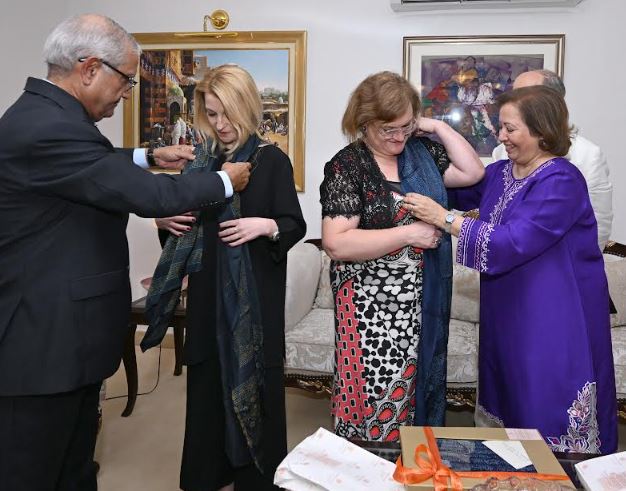
ISLAMABAD: Global CEO of Serena Hotels, Aziz Boolani, hosted a distinguished farewell dinner in Islamabad to honor the outgoing ambassadors of Italy and Bulgaria. The event brought together senior government officials, diplomats, and members of the business community in a warm gesture of appreciation for the ambassadors’ contributions to strengthening bilateral ties.

In his address, Boolani lauded the services of both diplomats, recalling the memorable moments shared during their tenure in Pakistan. He emphasized that the ambassadors had played a vital role in promoting bilateral relations, fostering cultural exchange, and enhancing cooperation between their respective countries and Pakistan. “It is always tough to say goodbye, but that is the nature of diplomacy. One day, one has to leave, but they are remembered with cherished memories,” he remarked.

The farewell was attended by prominent figures including Finance Minister Muhammad Aurangzeb, U.S. Chargé d’Affaires Natalie A. Baker, ambassadors, high commissioners, and senior government officials. Their presence underscored the importance of the occasion and the respect accorded to the departing envoys.

Aziz Boolani, accompanied by Mrs. Boolani, presented souvenirs to the outgoing ambassadors as a token of appreciation and friendship. Guests were treated to a rich culinary experience featuring traditional Pakistani and continental cuisines, prepared with the signature excellence of Serena Hotels. The menu highlighted the hotel’s reputation for blending local flavors with international standards, leaving a lasting impression on attendees.

The evening was marked by heartfelt speeches, warm camaraderie, and a spirit of gratitude. The ambassadors expressed their appreciation for the hospitality and friendship they had experienced during their tenure in Pakistan, noting that they would carry fond memories of the country and its people.

This farewell dinner not only celebrated the achievements of the outgoing ambassadors but also reaffirmed Serena Hotels’ role as a hub for cultural diplomacy and international engagement. Boolani’s gesture reflected the hotel’s commitment to fostering goodwill and strengthening Pakistan’s ties with the global community.=DNA

Ambassador Kutschera turns lawn into fan zone for FIFA Football World Cup 2026

Ambassador Kutschera turns lawn into fan zone for FIFA Football World Cup 2026

ISLAMABAD, JUN 22 /DNA/ – The diplomatic community in Islamabad traded formal communiques for sporting camaraderie on evening, as Austrian Ambassador Wolfgang Oliver Kutschera hosted a high-energy live screening of the Argentina–Austria match at his official residence.

The event, which drew a cross-section of Islamabad’s diplomatic corps and government officials, transformed the ambassador’s lawn into a lively fan zone, complete with a large screen and stadium-style refreshments. The gathering offered a rare, informal glimpse into the personal passions of the capital’s elite.

Among the distinguished guests seen passionately following the play were State Minister for Law and Justice Barrister Aqeel MalikUS Chargé d’Affaires Natalie A. Baker, and Ambassador of Jordan, Maen Khreasat. In a symbolic moment of unity and sportsmanship, the four officials posed for photographs holding a football, underscoring the event’s spirit of friendly competition.

For Ambassador Kutschera, the match carried particular significance as his home nation, Austria, took the field. The gathering not only celebrated the beautiful game but also served as a testament to the strong bilateral ties Austria shares with Pakistan.

“The World Cup is more than just a tournament; it is a bridge between cultures,” a guest remarked, echoing the sentiment of the evening. The event concluded with lively discussions on the match’s outcome, with guests lingering long after the final whistle to enjoy Viennese culinary delicacies and the warm hospitality of the Austrian mission.

Stay Connected

64FansLike
60FollowersFollow

Latest Reviews

Exchange Rates

USD - United States Dollar
EUR
1.15
GBP
1.35
AUD
0.70
CAD
0.71