Home Blog Page 723

Deputy PM, Saudi FM discuss robust bilateral relations

Saudi FM

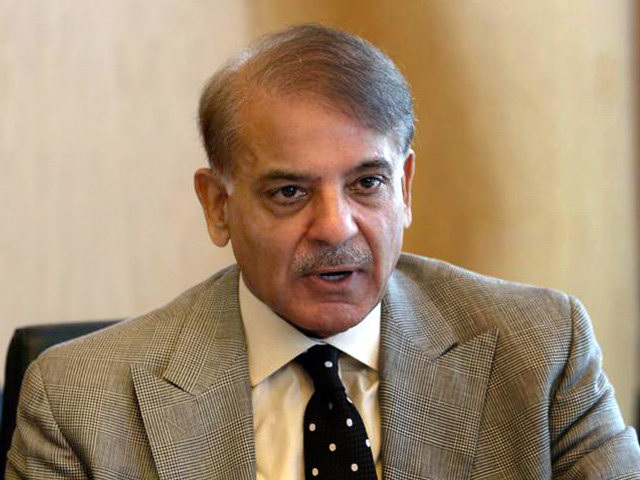
ISLAMABAD, MAY 19 /DNA/ – Deputy Prime Minister and Foreign Minister Senator Mohammad Ishaq Dar held a telephone discussion today with Prince Faisal bin Farhan bin Abdullah, Minister for Foreign Affairs of the Kingdom of Saudi Arabia. 

 
The two Leaders discussed the robust bilateral relations between Pakistan and Saudi Arabia, exploring various avenues for further strengthening cooperation across multiple sectors. This dialogue underscored the profound and enduring partnership between Pakistan and Saudi Arabia.

They reviewed preparations for the visit of the Crown Prince and Prime Minister of Saudi Arabia His Royal Highness Prince Mohammed Bin Salman Al Saud to Pakistan. 

Deputy Prime Minister Ishaq  Dar underlined that people of Pakistan are eagerly looking forward to the visit of His Royal Highness at a mutually agreed date.

The Ministers also discussed the grave situation in Gaza and other pressing regional and global developments of mutual concern. The two sides reaffirmed dedication to fostering peace and stability in the region through collaborative efforts and dialogue.

Turkish Foreign Minister Hakan Fidan Arrives in Islamabad for High-Level Talks

Turkish Foreign Minister

ISLAMABAD, MAY 19 /DNA/ – The Foreign Minister of Türkiye, Hakan Fidan (@hakanfidan), has arrived in Islamabad for a two-day official visit. He was warmly received by Additional Foreign Secretary (Afghanistan & West Asia) Ambassador Ahmed Naseem Warraich.

During his visit, Foreign Minister Hakan Fidan is scheduled to meet with Prime Minister Muhammad Shehbaz Sharif and engage in comprehensive discussions with Deputy Prime Minister and Foreign Minister Senator Mohammad Ishaq Dar (@MIshaqDar50). The meetings will focus on reviewing the state of bilateral relations and preparing for upcoming high-level engagements between Türkiye and Pakistan.

Generals Campbell, COAS Munir highlight bilateral military cooperation

COAS Munir

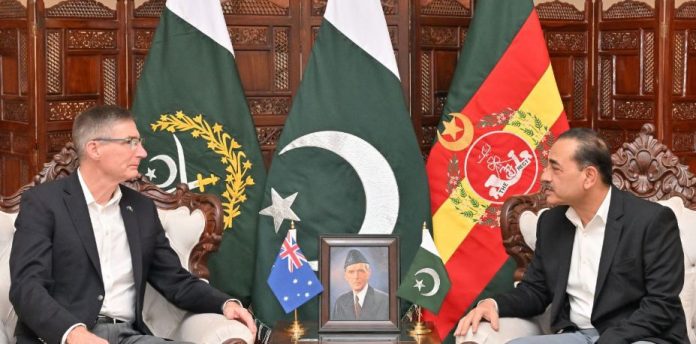
RAWALPINDI, MAY 19 /DNA/ – General Angus J. Campbell, Chief of Defence Forces Australia, paid a visit to General Syed Asim Munir, NI (M), Chief of Army Staff (COAS), today. During their meeting, they engaged in discussions on matters of bilateral professional interest, with a particular focus on the global and regional security environment and cooperation between the two Armed Forces. Both parties expressed a mutual desire to further expand military-to-military cooperation.

The Australian Chief of Defence Forces expressed his admiration for the high professional standards maintained by the Pakistan Armed Forces, their notable achievements in the fight against terrorism, and their continued efforts to promote regional peace and stability.

“Navigating the Queer Movement in Pakistan amidst Educational Paradigms”

“Navigating the Queer Movement in Pakistan amidst Educational Paradigms

By: Durre Maknoon

In Pakistan, a traditionally conservative society, there has been a remarkable surge in the visibility and activism of the queer movement in recent years. Research indicates a growing acceptance and recognition of LGBTQ+ identities, particularly among younger generations, challenging traditional taboos and fostering spaces for LGBTQ+ visibility and activism. Digital platforms and social media have emerged as powerful tools for LGBTQ+ activism and community-building in Pakistan. Online forums, blogs, and social networking sites provide avenues for individuals to connect, share experiences, and organize events, contributing to the visibility and mobilization of the queer movement.Although specific statistical data on LGBTQ+ gatherings and events in Pakistan is limited due to the clandestine nature of such activities, broader research sheds light on the challenges and opportunities facing the LGBTQ+ community in the country

Historically, single-gender schools have been prevalent in Pakistan, aiming to provide a focused learning environment. However, this educational model perpetuates gender segregation and reinforces traditional gender roles, limiting opportunities for social interaction and understanding.According to recent surveys, there is growing recognition of the drawbacks of single-gender schools. Many educators and parents advocate for co-educational settings, emphasizing the importance of fostering inclusive environments that reflect real-world diversity and promote gender equality.Ahmed, a young LGBTQ+ activist, shares his experience navigating a traditional single-gender school environment. “Growing up in an all-boys school, I struggled to express my identity and faced bullying and discrimination. Education should empower us to embrace diversity, not reinforce stereotypes.”

While legal recognition and protection of LGBTQ+ rights remain limited in Pakistan.According to,   Section 377: Pakistan’s Penal Code criminalizes “carnal intercourse against the order of nature,” which is often interpreted to criminalize same-sex relationship and Recent court rulings and advocacy efforts have raised awareness and sparked dialogue on issues such as discrimination, violence, and access to healthcare faced by LGBTQ+ individuals.

On the other hand while Pakistan officially recognizes a third gender category on official documents, providing some legal recognition for transgender individuals due to some Legal Loopholes , some individuals may falsely claim transgender identities as a legal workaround to engage in same-sex relationships without facing legal consequences. These cases highlight the legal and societal challenges faced by LGBTQ+ individuals in contexts where their identities are not recognized or protected.

There  have been instances of LGBTQ+ individuals organizing underground parties and events in major cities like Karachi and Lahore, despite the prevailing societal taboos and legal restrictions they’re held discreetly but you can find updates on them on LGBTQ+ advocacy organizations and support groups in Pakistan, such as Queer Pakistan and Naz Male Health Alliance, which may publish articles or updates about community events and gatherings.Moreover International human rights organizations like Human Rights Watch and Amnesty International often report on LGBTQ+ rights issues globally, including instances of discrimination, persecution, and activism in Pakistan. there have been instances of LGBTQ+ individuals organizing underground parties and events in major cities like Karachi and Lahore, despite the prevailing societal taboos and legal restrictions.

For many families , the top priority nowadays  is protecting their kids from influences that might be at conflict with our moral, religious and  cultural norms. Building a solid foundation of faith and values in the family is important to protect our children from the LGBTQ+ movement. Parents should emphasise the value of moral principles and traditional values in their open and age-appropriate conversations about their beliefs. Children can be guided in the development of a solid, value-based worldview by keeping an eye on their media intake and educational content, as well as by being encouraged to participate in community and religious activities that uphold family values.

Written by  Durre Maknoon

About me: I am a 21-year-old student of Television broadcasting and digital media 5 semester at Bahria University Islamabad.

Federal Minister for Finance, Revenue updated on Banking Sector’s Strategic Initiatives in Priority Sectors

Federal Minister for Finance, Revenue updated on Banking Sector’s Strategic Initiatives in Priority Sectors

DNA

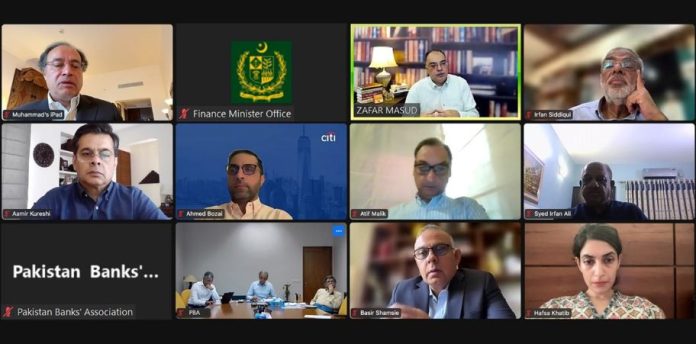
KARACHI, MAY 19: Pakistan Banks’ Association (PBA) held a meeting with the Federal Minister for Finance & Revenue, Muhammad Aurangzeb. The meeting focused on enhancing support by the banks for the three key sectors of Agriculture, Small and Medium Enterprises (SMEs), and Digital & Technology in Pakistan. The discussion underlined the banking sector’s commitment to fostering financial inclusion in the Country. 

Federal Minister mentioned at the outset that the idea of this exercise shall be to encourage the entire sector to contribute towards these priority sectors as per their size and unique offerings & strengths. While there will be no “directed lending”; however, there shall be voluntary targets to be set between the banks and the regulator to share the responsibility to contribute towards these critical sectors. He expects the banks to step up and continue to work with the Government in the revival and the growth of the economy. 

During the session, Chairman PBA, Zafar Masud, along with the Steering Committee members on these initiatives, including Vice Chairman PBA, Ahmed Bozai, CEO & SG PBA, Muneer Kamal, Executive Director (Financial Inclusion Group) State Bank of Pakistan (SBP), Syed Irfan Ali, and President & CEO Meezan Bank, Irfan Siddiqui, presented a comprehensive set of recommendations aimed at promoting growth and sustainability in these vital sectors. The proposals were developed in close consultation with SBP to ensure they effectively address the unique challenges and highlight the opportunities within each sector.

The key recommendations in the agriculture sector included, among other steps, restructuring crop loan insurance schemes to integrate crop yield factors, revitalizing agricultural cooperative banks and upgrading provincial agricultural cooperative legislations to facilitate the creation of agricultural cooperative lending institutions. The recommendations also included exploring technology-driven solutions to facilitate the distribution of targeted subsidies through banks, particularly to the subsistence-level farmers, similar to BISP, to promote much-needed financial inclusion.

Similarly, it was resolved in the meeting that banks get actively involved in providing financial and management support to entities such as the Small and Medium Enterprises Development Authority (SMEDA) and National Credit Guarantee Company Limited (NCGCL).  The Minister was apprised that PBA and SBP are actively engaged to revising SME Prudential Regulations, enhancing clean financing limits, and reviewing regulatory retail portfolio limits to facilitate SME financing.

The Minister was informed that PBA is contemplating to establish “SME and Agriculture Index” to target the customers currently outside the documented economy while also enhancing credit risk management.

On the Digital & Technology front, PBA recommended facilitating retail foreign investment through digital micro sukuks/infra bonds and integrating freelancers into payment gateways. It was also proposed to enhance foreign remittance flows via specially developed online portals for overseas Pakistanis. It was emphasized that the banks be allowed to offer products and services in technology space, currently only used for their own operations, to the outside world to harness export flows.  The recommendations related to documentation of the economy through the use of technology were also discussed, and outlined the role that the banks will play in furthering Government’s efforts in this respect. 

The Minister commended PBA’s Steering Committee, and the respective Task Forces for the three identified priority sector, for their thorough analysis and valuable recommendations. He highlighted the crucial role of the banking community in driving economic growth. He stressed upon the banks to enhance their efforts in supporting these priority sectors to foster economic development and prosperity. The Minister consented on the governance structure for the implementation of the proposed recommendations by PBA, jointly with SBP and the Ministry of Finance & Revenue, spearheaded by him and the Governor SBP. 

“PBA and its members are fully committed to working closely with the Ministry of Finance and the SBP to implement these recommendations and ensuring effective contribution of the banking sector to Pakistan’s economic prosperity.” Commented Zafar Masud, Chairman – PBA at the end of the meeting.

PM for necessary arrangements to bring back students from Kyrgyz Republic

LAHORE, May 19 (DNA): Prime Minister Muhammad Shehbaz Sharif on Sunday contacted Ambassador of Pakistan in the Kyrgyz Republic Hassan Ali Zaigham and directed him for making necessary arrangements for a special flight being sent to Bishkek this evening to bring back Pakistani students.

The special aeroplane will bring back 130 students to Pakistan on Sunday night, PM Office Media Wing said in a press release.  

At the instructions of the prime minister, the government of Pakistan will bear all the expenses of the special plane.

The prime minister directed for keeping continuous contacts with all the students and their families, emphasising that the return of injured students should be a priority.

He further asked for bringing back those students back whose families were residing with them in Kyrgyzstan on urgent basis.  

The ambassador of Pakistan Zaigham apprised the prime minister of his meeting with the Kyrgyz deputy foreign minister. According to Kyrgyz authorities, the situation was under control and no new incident of violence took place in the last two days. Security measures had been enhanced and the foreign students including Pakistanis were safe.

The prime minister directed that despite return of normalcy in Bishkek, those students should be facilitated who wanted to return to Pakistan.  

A number of students have already returned from Kyrgyzstan on Sunday via commercial fli

Shaping Social Morals and Propagating Cultural Values through Electronic Media and Role of the Regulator

Shaping Social Morals and Propagating Cultural Values through Electronic Media and Role of the Regulator

(Part 2)

By Imran Ghaznavi

In the contemporary world, electronic media stands as a formidable force. It influences societal norms, shapes public opinion, and disseminates cultural values. Its pervasive presence, spanning television, radio, and digital platforms, confers upon it a significant responsibility. This responsibility encompasses the dual roles of shaping societal morals and propagating cultural values. Effective Electronic Media Regulatory Authority is crucial in engaging stakeholders and safeguarding public interest.

Electronic media, with its vast reach and influence, plays a pivotal role in shaping social morals. Television programs, news broadcasts, reality shows and online content serve as primary sources of information and entertainment. They impact viewers’ perceptions and behaviors. The portrayal of ethical dilemmas, social issues, and human interactions on screen can profoundly influence public attitudes. For instance, media coverage of social justice movements can galvanize public support and drive societal change. Responsible reporting on sensitive issues can promote understanding and empathy, which is highly crucial for our society where defamation laws are very weak and justice is hardly seen at the end of the day.

However, this influence is a double-edged sword. The dissemination of content that glorifies violence, promotes superficial values, or perpetuates stereotypes can have detrimental effects on societal morals. Media owners, producers and broadcasters bear a significant ethical responsibility. They must strive to create content that promotes positive values, encourages critical thinking, and fosters a more inclusive society. Educational programs, documentaries, and balanced news reporting can contribute to a well-informed and morally conscious public.

Cultural values are the bedrock of any society. They encompass traditions, beliefs, and practices passed down through generations. Electronic media plays a crucial role in preserving and propagating these values. By showcasing diverse cultural narratives, media can foster a sense of identity and continuity within a community. Television shows, films, and online content that highlight cultural heritage, traditional practices, and local arts can strengthen cultural pride and understanding.

Moreover, electronic media has the power to bridge cultural divides and promote intercultural dialogue. In an increasingly globalized world, media can introduce audiences to different cultures, fostering mutual respect and appreciation. Programs that celebrate cultural diversity and highlight common human experiences can contribute to a more harmonious and cohesive global society.

To effectively harness the positive potential of electronic media, robust regulations are essential. Media Regulator play a crucial role in ensuring that the content disseminated by electronic media serves the public interest. This involves setting and enforcing standards for content quality, ethical journalism, and responsible broadcasting. Regulator must also ensure robust and effective in-house research and mentoring mechanism with highly qualified human capital.

Engaging stakeholders is a key component of effective media regulation. Stakeholders, including media producers, broadcasters, advertisers, and the public, have vested interests in the media landscape. Regulators must facilitate dialogue among these groups to address concerns, gather diverse perspectives, and foster a collaborative approach to media governance.

One effective strategy of the regulator is to rejuvenate advisory committees and engage stakeholders. These committees should comprise active and notable professionals representing various sectors. These committees can provide valuable insights and recommendations on media policies and practices which should be seriously looked into. Public consultations and feedback mechanisms can also ensure that the voices of the community are heard and considered in regulatory decisions.

Transparency and accountability are fundamental to effective media regulation. Regulators should operate with a high degree of openness, clearly communicating their policies, decisions, and the rationale behind them. This transparency builds trust and ensures that regulatory actions are perceived as fair and unbiased.

While electronic media holds immense potential for positive influence, it also faces significant challenges. The rapid evolution of digital platforms, the proliferation of fake news, and the commercialization of content pose risks to the integrity and ethical standards of media. Media regulators must adapt to these changes and implement innovative solutions to safeguard public interest.

The rise of social media platforms, in particular, presents unique challenges. Unlike traditional media, social media content is often user-generated and less subject to regulatory oversight. This can lead to the spread of misinformation and harmful content. Regulators must find ways to collaborate with social media companies to enhance content moderation and promote responsible online behavior.

Despite these challenges, electronic media also offers unprecedented opportunities for positive impact. Advances in technology enable more interactive and engaging content, reaching wider audiences than ever before. Media can leverage these advancements to enhance educational programming, promote social causes, and foster a more informed and connected society.

Electronic media wields considerable power in shaping social morals and propagating cultural values. With this power comes a profound responsibility to create and disseminate content that promotes ethical standards and cultural understanding. Effective regulation, driven by stakeholder engagement and a commitment to transparency, is essential to ensuring that electronic media serves the public interest. By navigating the challenges and seizing the opportunities presented by the evolving media landscape, electronic media can play a pivotal role in fostering a more ethical, informed, and culturally cohesive society.

The responsibility of electronic media in molding the social fabric cannot be overstated. It must balance its powerful influence with a deep-seated commitment to ethical standards and cultural enrichment. As society continues to evolve, the role of electronic media in shaping morals and cultural values will remain a cornerstone of public life, necessitating vigilant and adaptive regulatory practices.

The author is a senior media and regulatory practitioner with academic excellence and over 34 year of industry experience. Can be reached at [email protected] website: www.imranghaznavi.com

PHF committed to revival of hockey: Bugti

PHF committed to revival of hockey: Bugti

The President of the Pakistan Hockey Federation (PHF) says the Army Chief has graciously extended the offer of complimentary medical care for all hockey players at military-operated hospitals

Exclusive

Ansar M Bhatti

ISLAMABAD: President of the Pakistan Hockey Federation, Tariq Hussain Bugti has emphasized the comprehensive efforts underway for the revival of hockey in Pakistan. He highlighted the significant gestures exhibited by Prime Minister Shehbaz Sharif and Chief of the Army Staff General Asim Munir towards the national hockey team, underscoring their deep commitment and keen interest in promoting hockey across Pakistan.

Bugti conveyed these sentiments during an exclusive interview with Daily Islamabad Post.

The President of the Pakistan Hockey Federation (PHF) further elaborated that the Army Chief graciously extended the offer of complimentary medical care for all hockey players at military-operated hospitals. Additionally, he reassured the team management of his unwavering commitment to both advancing the sport and ensuring the well-being of the players.

Tariq Bugti, reflecting on the recent triumphs in the Azlan Shah Hockey Cup held in Malaysia, eloquently expressed that the team’s stellar performance has been instrumental in breathing new life into hockey in Pakistan. He astutely noted that the additional victories secured by the team were not just desirable but absolutely essential for the complete resurgence of the sport, and crucial for sustaining the interest of young enthusiasts, underscoring the profound impact that sporting success can have on national morale and the cultivation of future talent.

The President of the PHF expressed his utmost appreciation for the unwavering support extended by both the Prime Minister and the Army chief. He expressed optimism that with their steadfast backing, the issues plaguing players, particularly those concerning employment, would be effectively resolved.

Emphasizing the urgency of revitalizing departmental hockey, he underscored the imperative of engaging with various departments. The Federation, he noted, is actively liaising with these entities to encourage the reactivation of their sports directorates.

In response to a query, the President revealed plans for the establishment of a dedicated Federation office in Islamabad. Discussions are presently ongoing with the Pakistan Sports Board, aiming to secure a suitable space within its premises for the Pakistan Hockey Federation (PHF). It is anticipated that these negotiations will culminate in the allocation of a fitting facility for the PHF’s operational needs.

Tariq Bugti, upon assuming office as the 26th President of the Pakistan Hockey Federation, prioritized the revitalization of the sport at its grassroots. Though daunting, he approached this task with determination and a sense of responsibility. Through collaboration with his colleagues at the Federation and relying on divine guidance, he successfully steered the national game back on course.

While recognizing the services of the Secretary PHF Rana Mujahid and Dutch coach Roelant Oltmans, and other team management members he said that all these officials need fulsome applause as despite a very short time they were able to cobble together a superb team that ultimately brought laurels for Pakistan.

While discussing the upcoming Nations Cup in Poland, he emphasized that Pakistan’s first match is scheduled for June 30th. The President of the PHF expressed optimism regarding the team’s performance in the tournament, highlighting the opportunity for Pakistan to enhance its international ranking through strong performance.

Balochistan govt to extend all-out support to Pak hockey team

Balochistan govt to extend all-out support to Pak hockey team

Mir Jan Muhammad Musuri Bugti encouraged the players and said that the Pakistan hockey team showed the best performance in the Sultan Azlan Shah Hockey Cup and proved that even today the spirit of winning is still there in the national team

DNA

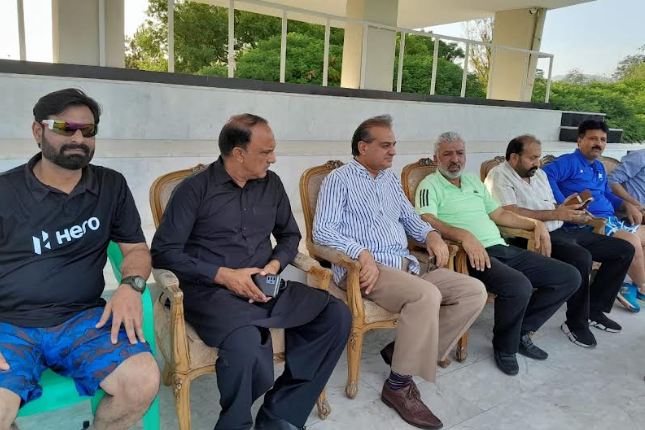
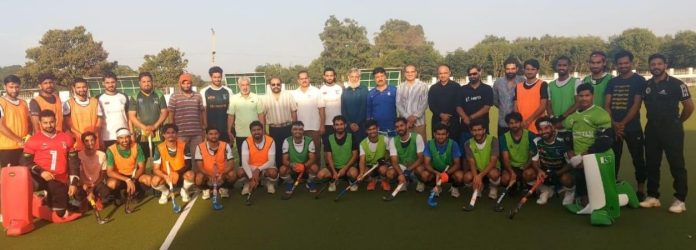
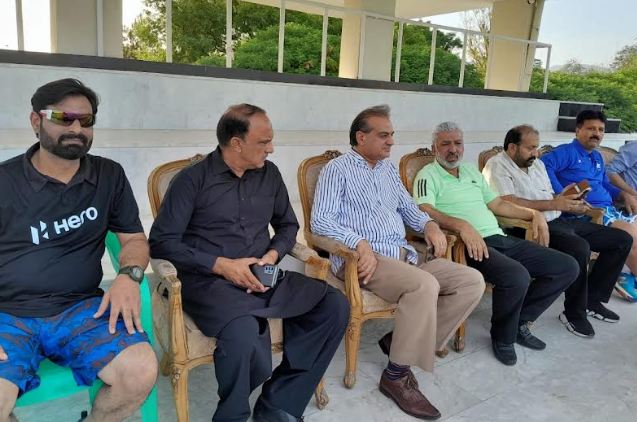
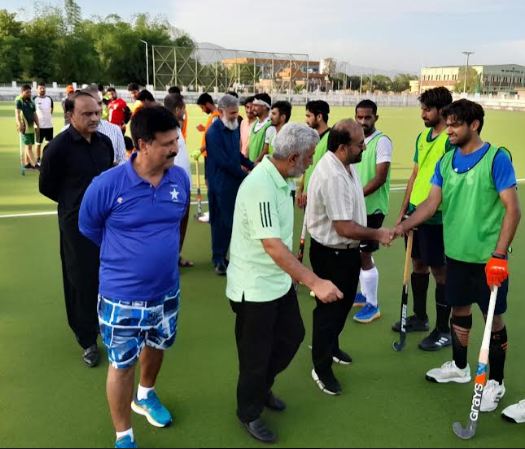
ISLAMABAD: Balochistan Chief Minister Mir Sarfraz Bugti’s elder brother Mir Jan Muhammad Masuri Bugti visited the ongoing national camp at Naseer Banda Hockey Stadium Islamabad. President PHF Tariq Bugti, Secretary General, Olympian Rana Mujahid Ali and Chief Editor of English newspaper Islamabad Post, Ansar Mahmood Bhatti were also present.

Meanwhile, Mir Jan Muhammad Musuri Bugti encouraged the players and said that the Pakistan hockey team showed the best performance in the Sultan Azlan Shah Hockey Cup and proved that even today the spirit of winning is still there in the national team.

 The national team remained unbeaten throughout the event. Defeated by Japan on shootout in the final but our heroes fought well. Balochistan government will continue to provide all possible support to national sports and athletes.

PHF President Mir Tariq Hussain Bugti thanked them for their arrival and said that their morale has been boosted by the encouragement of the players.

We are grateful to the military and national leadership who raised the morale of the players.

Empowered youth key to regional development: Ambassador Durrani

Empowered youth key to regional development: Ambassador Durrani

ISLAMABAD, MAY 18 /DNA/ – Not arms, but critical thinking, unity, and passion for change can drive the youth of this region forward. They need to have an inquisitive mind to question socio-economic injustices. These remarks were made by Ambassador Durrani, Pakistan’s Special Envoy for Afghanistan, addressing a gathering of Afghan and Pakistani youth leaders, hosted by the Center for Research and Security Studies (CRSS) as part of Pak-AfghanYouth Peace Initiative – Building Bridges, Improving Perceptions.

The envoy urged the youth from both sides to take an active role in regional development by focusing on their education, skills, and personal growth as they are the future leaders of the countries.

Regarding the sociopolitical situation in Afghanistan, he said that the pursuit of common interests in a fair socio-political environment is intrinsically linked to unity. By fostering solidarity, empathy, and collaboration, Afghans, especially the youth, can create a more just, developed, and equitable nation where everyone has the opportunity to thrive and contribute to the greater good. The youth of Afghanistan has the opportunity to change Afghanistan’s decades-long label of ‘conflict zone’ and take an active part in nation-building.

The participating Afghan youth voiced their concerns on the issues facing the education landscape in Afghanistan, particularly for females, the delays in visa issuance for Afghan students studying in Pakistan, as well as the challenges faced by those who have to return to Afghanistan due to their illegal status or expiration of the visa.

Mehnaz Akbar Aziz, former MNA, also joined the discussion where she underscored the significant role youth dialogues play in fostering unity between Pakistan and Afghanistan and that engaging the youth from both nations is crucial for bridging diplomatic gaps and building mutual understanding. She highlighted opportunities for youth engagement, such as academic exchanges and collaborative projects, which can help bridge diplomatic gaps.

A vital point of her address was the importance of supporting women’s education and their involvement in politics and law in both countries. She drew attention to the economic and psychosocial challenges faced by Afghan women as education remains banned for them in the country. Mehnaz lauded Pakistan’s efforts in educating Afghan refugees and shared statistics, noting that currently, 1.4 million Afghan refugees reside in Pakistan, with 50,000 enrolled in primary education. She stressed the importance of continued support for Afghan refugee youth’s education in Pakistan and urged the international community to help Pakistan create a more enabling academic environment for them.

The executive director CRSS, Imtiaz Gul noted that with the tons of information available in the offline and online space, youth have a huge onus to critically evaluate every bit of information they come across for its authenticity before disseminating it.

Elsa Imdad, CRSS research fellow and Global UGRAD alumna, concluded that Track III engagements and youth participation are only effective if the Track I stakeholders take ownership of such efforts and give agency to youth in the policymaking.

The forum concluded with policy recommendations aimed at fostering better relations, such as establishing educational corridors to empower women and ensuring their involvement in decision-making. They also suggested forming youth committees to address common challenges and prioritized collaboration over discord in diplomatic efforts. Additionally, there was a call for increased youth engagement for peace and unity and for promoting political maturity among young leaders. Strengthening academic exchanges and addressing longstanding issues in trade and transit – which are one of the major issues causing bad blood and negative perceptions – were seen as crucial steps.

The Pak-Afghan Youth Peace Initiative is a track III diplomacy effort supported by the US State Department, Global UGRAD Pakistan, and IREX. This initiative aims to foster goodwill and improve public perceptions between Pakistani and Afghan youth through dialogue, interactive workshops, community engagement, meetings with key stakeholders to discuss practical aspects of enhancing youth diplomacy and media interactions.=DNA

============

Stay Connected

64FansLike
60FollowersFollow

Latest Reviews

Exchange Rates

USD - United States Dollar
EUR
1.17
GBP
1.35
AUD
0.67
CAD
0.72