Home Blog Page 724

FTO Asif Jah inaugurates RCCI’s Export Dialogue Pakistan and 16th APCPC

FTO Asif Jah inaugurates RCCI’s Export Dialogue Pakistan and 16th APCPC

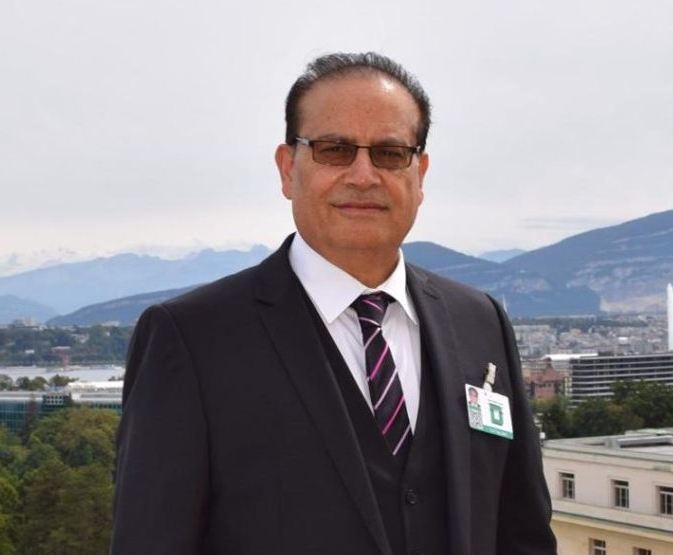
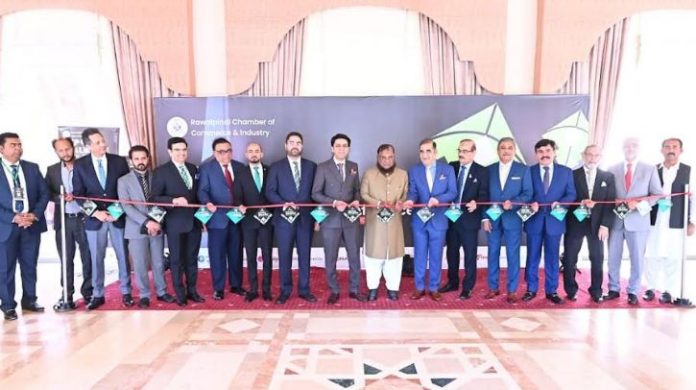
ISLAMABAD, MAY 19 /DNA/ – Dr. Asif Jah, Federal Tax Ombudsman was the chief guest at the Inauguration Ceremony of Export Dialogue Pakistan and 16th All Pakistan Chambers Presidents’ Conference organized by the Rawalpindi Chamber of Commerce and Industry (RCCI) at Serena Hotel, Islamabad.

RCCI President Saqib Rafiq, Group Leader Sohail Altaf, Senior Vice President Muhammad Hamza Sarosh, Vice President Faisal Shahzad, Presidents of FCCI and KCCI, former Presidents of RCCI and representatives and speakers from the export sector, among others, were present on the occasion.

FTO, Dr. Asif Jah, in his address, said that it was a great honor to be part of this important initiative from the Rawalpindi Chamber. No doubt, exports are the backbone of the economy. The FTO office has been facilitating the manufacturers and exporters. FTO entertained more than nine thousand complainants during the last one year besides getting a refund of Rs 17.74 billion to aggrieved tax payers. Also, the FTO office under its outreach program has been in coordination and close liaison with chambers across Pakistan. Even 20years old duty drawbacks and rebates issues were resolved through the FTO office.

He appreciated Chief Business Advisor Sohail Altaf, for his promising and effective role in bridging the gap between taxpayers and tax authorities in resolving key issues.

Earlier, Saqib Rafiq, President RCCI, in his opening remarks said that Export Dialogue Pakistan is an initiative aimed at getting recommendations on export enhancement, which ultimately helps in strengthening the national economy. “By prioritizing exports, Pakistan can generate much-needed foreign exchange, alleviate pressure on reserves, and stimulate sustainable economic growth, he added.

‘We want to promote collaboration with Japan’

‘We want to promote collaboration with Japan’

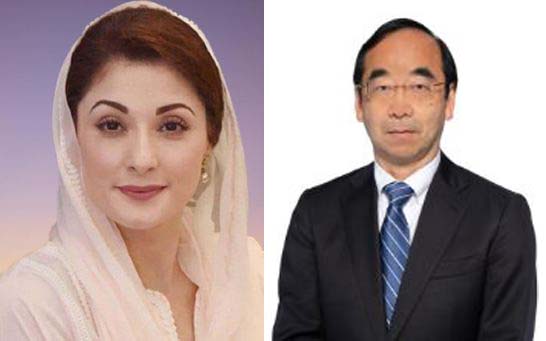
Investment & Other Fields of Mutual Interests for Socio-Economic Development need to be explored: Maryam Nawaz Sharif meets Japanese ambassador

Abid Raza/DNA

Lahore, 19 May 2024: “Punjab is emerging as a major consumer market. There are good investment opportunities for Japanese companies in Punjab,”said Chief Minister Punjab Maryam Nawaz Sharif in a meeting with Japanese Ambassador, Wada Mitsuhiro, in which all possible opportunities for strengthening trade, business and investment relations were discussed.  She added,”Skilled young manpower of Punjab can perform unprecedentedly in Japanese institutions.”

Exchange of cultural and educational delegations between Punjab and Japan were also discussed in the meeting. Madam Chief Minister said,”People-to-people interaction between Punjab and Japan is indispensable for the development of bilateral relations.” Moreover, the promotion of student-faculty programs between Punjab and Japan was also agreed in principle in the meeting.

Ambassador Wada Mitsuhiro said,”Japan attaches great importance to its relations with Pakistan.” He added,”We are determined to collaborate with Punjab government for the development of technology..”

H.E. Mr. Wada Mitsuhiro apprised Madam Chief Minister,”

Eleven Pakistani students are studying in Japan on MEXT scholarships for Masters/PhD degrees.” He added,”A number of Japanese projects are ongoing for public welfare in Pakistan.”

Nawaz Sharif demands accountability…

Qamar Bashir

By: Qamar Bashir

“Nawaz Sharif’s much-anticipated address to the PML(N) Central Working Committee was filled with expressions of past grievances and complaints against the judiciary, naming specific judges, and against the establishment, though without naming individuals, regarding the removal of his government three times: first in 1993, second in 1999, and third in 2017. He continues to wonder and seek answers about his unceremonious removal from power, which he believes was part of conspiracies against him, his government, and the country as a whole.

He questioned why, in the morning, he was a prime minister and by evening, he was labeled a hijacker. He questioned how a three-person bench, unelected and sitting in the Supreme Court, could declare an elected Prime Minister unfit for office.

He asserted that he would continue to seek answers to these questions for the rest of his life, vowing not to rest until all those involved in conspiracies against him, his government, his party, and his country are brought to justice.”

While indicating the masterminds behind the conspiracies, he pointed to former Chief Justice Saqib Nisar, who, in an audio leak, purportedly stated the intention to keep Nawaz Sharif and Maryam in prison while bringing Mr. Imran Khan to power. Nisar allegedly instructed an accountability judge to decide the case within six months and appointed Ejaz ul Hassan as a monitoring judge.

He then referred to another conspiracy involving Mr. Imran Khan, who was summoned to London by former ISI Chief Zaheer Ul Islam. Pervez Elahi and Tahir ul Qadri were also present, collectively hatching the conspiracy to remove his government through long marches and dharnas in 2013. Although the plan fizzled out, it resulted in significant costs for the nation, including delays in the visit of the Chinese President and the launch of CPEC.”

“Interestingly, all the answers to the questions he posed seem to rest with him, and perhaps no one can answer these questions better than him.

His first question was: How could three unelected judges of the Supreme Court remove an elected prime minister from power? According to him, such an occurrence had never happened anywhere else in the world.”

He has been the prime minister for three terms, he should have brought a constitutional amendment to give immunity to the prime minister from being removed by judges but he did not do so.  There are many countries which have granted immunity to the Prime Ministers and the presidents. France’s Constitution grants the President immunity from prosecution during their term, while Italy’s Parliament once passed a law granting Prime Minister Silvio Berlusconi immunity. In Kenya, the President is provided immunity from criminal proceedings during their tenure, and the Philippines’ Constitution offers similar protections to its President.

The claim that “nowhere in the world judges remove elected prime ministers” is not accurate. Courts have played a crucial role in removing elected officials in various countries. In Pakistan, Prime Minister Yousaf Raza Gillani was disqualified by the Supreme Court in 2012 for contempt of court, Thailand’s Constitutional Court removed Prime Ministers Samak Sundaravej in 2008 for a constitutional violation and Yingluck Shinawatra in 2014 for abuse of power. Italy’s Prime Minister Silvio Berlusconi faced multiple legal challenges, leading to his resignation in 2011. In South Korea, the Constitutional Court upheld the impeachment of President Park Geun-hye in 2017 amid a corruption scandal.

His second question was why his government was removed three times during his political career.

“The answer to this question also rests with him. All the parties and leaders of the country have been utilizing the establishment to achieve political objectives. The establishment has become so powerful and has wielded these powers for so long that it now assumes the role of kingmaker and is reluctant to relinquish this influence.  PML(N), under his leadership, allegedly benefited the most from the establishment’s role as kingmaker. Analysis, opinion-makers, political scientists, and election watchdog organizations are largely of the opinion that without the establishment’s outright support, PML(N) would not have been able to form governments at the center and in Punjab.  If he had learned a lesson, he would have refused the establishment’s help for his return to the country, absolving himself of all cases and playing a decisive role in winning his seat. He should have agreed to PTI’s demand that the election result should have been based on Form 45 and not on Form 47, which is derived from Form 45 and was allegedly manipulated. If he and PML(N) do not learn to refrain from seeking the establishment’s help, then what happened to Nawaz Sharif and what is currently happening to Imran Khan will continue unabated.”

His third question was that when the politicians have been subject to lethal accountability processes both by the courts and the establishment, why the judges and the establishment are out of the purview of the accountability. The answer to this question also rests with him.

While Nawaz Sharif’s three terms as Prime Minister saw significant political events, his failure to implement necessary reforms for ensuring the accountability of judges and the military remains a critical oversight. To address this, several constitutional reforms could be introduced: establishing an independent accountability commission to oversee all branches of government, implementing a robust judicial accountability process through an independent judicial council, subjecting military officials to civilian judicial review, strengthening parliamentary oversight committees, protecting whistleblowers who expose misconduct, mandating regular asset declarations for judges and military officials, and reinforcing civilian control over the military. Examples from countries like the United States, India, and South Korea demonstrate that these measures can promote transparency and accountability, ensuring balanced governance and reducing corruption in all branches of government.

“Now that PML(N) is once again in power, he should introduce constitutional reforms to end his quest for seeking answers.”

By: Qamar Bashir

Former Press Secretary to the President

Former Press Minister to the Embassy of Pakistan to France

Former MD, SRBC

FM Dar, Amir Muqam to leave for Bishkek to ‘support’ Pakistani students after mob violence

FM Dar, Amir Muqam to leave for Bishkek to ‘support’ Pakistani students after mob violence

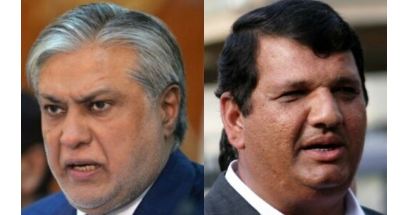
ISLAMABAD, MAY 18: Deputy Prime Minister and Foreign Minister Ishaq Dar and Kashmir Affairs Minister Amir Muqam will depart for Kyrgyzstan capital of Bishkek to support Pakistani students after several foreigners were subjected to mob violence late on Friday night.

Kyrgyz police said they had mobilised forces in the Central Asian nation’s capital yesterday to quell the violence, in which hundreds of Kyrgyz men attacked buildings housing foreign students, including Pakistanis.

What we know so far

Locals attack international students after video of fight with Egyptians goes viral on social media
Kyrgyz media outlet describes violence as “protest against foreigners”
Kyrgyz deputy PM meets Pakistan ambassador, assures situation is under control
Pakistan embassy says 5 Pakistanis injured, asks nationals to remain indoors; India issues similar instructions
FO hands demarche to Kyrgyz envoy
PM Shehbaz orders FM Dar, Kashmir Affairs Minister Amir Muqam to go to Bishkek
According to Pakistan’s embassy in Bishkek, foreign students living in the Kyrgyz capital, including those from Pakistan, were attacked by locals in the aftermath of their brawl with Egyptian nationals on May 13.

Kyrgyz private media outlet 24.kg reported that a “spontaneous protest against foreigners” that began last night in Bishkek ended this morning after police came to an agreement with the rioters and they dispersed a little later.

The report quoted the Kyrgyz health ministry as saying 29 people were injured in the violence. The country’s foreign ministry, meanwhile, said 14 foreigners were discharged from hospitals after treatment.

The Pakistani embassy in Bishkek reported there were no deaths. “Moreover, Kygyz Ministry of Internal Affairs has also issued press releases stating that the situation is under control,” it said.

A statement carried by state-run Pakistan Television said Prime Minister Shehbaz Sharif decided to send Dar and Muqam to Bishkek after monitoring the situation throughout the day and remaining in touch with the ambassador in Kyrgyzstan.

The two will leave for the Kyrgyz capital on Sunday morning via a special flight.

“Despite the satisfactory situation, it has been decided to send this delegation to provide necessary support and facilities to Pakistani students.

“The foreign minister will hold meetings with senior government officials in Bishkek and ensure the provision of medical facilities to the injured students,” the statement said, adding that Dar will also review issues regarding repatriation of Pakistani students.

An earlier statement from the Prime Minister’s Office said PM Shehbaz ordered Muqam to go to Bishkek immediately to provide assistance and support to Pakistani students.

“Engineer Amir Muqam will meet Pakistani students, listen to their problems and ensure that Pakistani students do not face any kind of difficulties in the current situation,” the premier said.

He added that the embassy should ensure support of the injured Pakistani students with the best treatment facilities.

The embassy “will not leave the sons and daughters of Pakistan alone in difficult times”, PM Shehbaz said.

He further said that officials should ensure the immediate return of those students who wanted to return to Pakistan at the government’s expense.

PM Shehbaz earlier said his office was in touch with the Pakistani embassy and “constantly monitoring the situation”.

“Deeply concerned over the situation of Pakistani students in Bishkek, Kyrgyzstan. I have directed Pakistan’s ambassador to provide all necessary help and assistance,” the PM wrote on X.

FM Dar earlier today said the reports of mob violence against Pakistani students in Bishkek were “extremely concerning”.

“We have established contact with the Kyrgyz authorities to ensure the protection of Pakistani students,” he said in a post on X.

“I have instructed our ambassador to Kyrgyzstan to fully facilitate them.”

Muqam also said that the Pakistani government was in contact with the Kyrgyz authorities to ensure the protection of its students in the incidents of violence in Bishkek.

In a statement, the minister expressed concern over the violent clashes in Kyrgyzstan and asked the students to stay in touch with the Pakistan embassy, adding that the safety of Pakistani students was more important to the government

He confirmed that no Pakistani student died in the violence.

KTC rubbishes market report as false, fabricated

KTC rubbishes market report as false

ISLAMABAD, May 18 (DNA): Khyber Tobacco Company (KTC) has taken an exception to a report “Pakistan Cigarette Market Assessment 2024” by Ipsos Pakistan and described it as false and fabricated.
 
The KTC in a statement issued here said KTC is a leading cigarette manufacturing company in Pakistan, and “is compelled to address the public regarding the baseless and defamatory allegations levelled against it” by Ipsos.
 
“The said report contains unsubstantiated claims and defamatory remarks regarding KTC’s business practices. These false allegations…have caused significant harm to KTC’s reputation and business interests,” it said.
 
KTC vehemently denies all accusations made in the report and asserts its steadfast commitment to compliance with all regulatory requirements, it added. 
 
“We assert with pride that we are among the preeminent national cigarette manufacturing entities, employing a workforce exceeding 400 individuals within the country, and serving as Pakistan’s foremost tobacco exporter during the fiscal year 2022-23. These factors significantly bolster our contributions to the national exchequer, in direct contradiction to the assertions made by Ipsos,” says KTC.
 
“Besides, KTC was among the initial proponents of executing the track and trace agreement with the Federal Board of Revenue (FBR), as evidenced by public records. The company has cooperated fully with regulatory authorities, including the FBR, and maintains a robust system of internal controls to ensure compliance with all applicable laws and regulations,” it says.
 
“KTC’s manufacturing units are subject to stringent oversight by FBR officials, with monitors stationed on the production floor,” it said.
 
“The defamatory nature of the report has not only harmed KTC’s reputation but has also triggered a detrimental media campaign against local cigarette manufacturers. KTC’s name, synonymous with quality and compliance, has been unfairly tarnished by these baseless allegations,” it says.
 
It says that “formal legal notices concerning defamation have been appropriately served to Ipsos Pakistan and its parent entity located in Paris, France.”
 
The KTC statement goes on to claim that “It has been brought to our attention that Ipsos Pakistan conducts its business operations within Pakistan through a single-member company (SMC) named ASB Associates, lacking a registered presence within Pakistan.”
 
“The evident non-compliance of Ipsos with established legal protocols within Pakistan is substantiated and verifiable,” it says.
 
“We remain steadfast in our commitment to upholding the highest standards of integrity and compliance across all facets of our operations, and we extend our gratitude for the continued support and trust of our esteemed clientele and stakeholders,” it says.

Bishkek: Pakistani students narrate ordeal of fear, harassment; seek urgent evacuation

Bishkek: Pakistani students narrate ordeal of fear

Bishkek, MAY 18: Pakistani students in Bishkek, Kyrgyzstan, have shared their harrowing experiences following the violent clashes with a local mob on Friday night. They described their ordeal as one filled with pain, fear, and a lack of support from the Pakistani embassy.

Reports from students on the ground indicate a dire situation. Many expressed fear for their safety and urgently called for evacuation.

One student recounted a clash between local and foreign students on May 16. The next day, locals began attacking Pakistanis, evicting them from their hostels, apartments, and private residences.

“No foreigner was being spared; everyone was targeted,” he said. “The police are helpless against the locals who are roaming the streets and chasing Pakistani students.”

“We are scared, sitting inside our homes with lights off and windows shut,” he stated.

Shehryar Haider, a Pakistani student in Bishkek from Jatoi, appealed for help. “All the Pakistani students, including me, are literally imprisoned in our hostels. There are repeated attacks on hostels to kill people,” he insisted.

He added that the assailants are on a looting spree, and Pakistani female students are being harassed. “The Pakistani embassy is not helping us. The government should help us,” Haider pleaded.

Tehreem Nasir, a resident of Jhang, is also stuck in Bishkek with her classmates. They have locked themselves in their hostels. “Attacks are being carried out by mobs,” Tehreem said in a video message. Her parents, living in Mohalla Sultanwala in Jhang, are seriously worried.

Tehreem’s parents have appealed for the safe evacuation of Pakistani students. “The embassy should ensure immediate assistance. Three other female students from Jhang are also trapped in Bishkek,” her father, Rana Nasir, said. He added that they were repeatedly contacting the Pakistani embassy but could not get through.

Another student shared that Pakistani students in Bishkek are facing severe harassment and threats. “We are in a lot of trouble. No one is helping. We are in great danger. The students have been harassed, and threats are being made that we will not be spared. We do not know what will happen to us,” she said.

Despite reassurances from the government that the situation is under control, she vehemently disagreed. “The government is saying everything is normal, but the situation is not normal. No one is picking up the phone at the Pakistani embassy,” she said, pleading for their return to Pakistan. She recalled that locals clashed with Egyptian nationals, and many people entered their hostel, broke the door locks, and injured male students.

More than 50 students from Pakpattan are stuck in Bishkek due to the tensions in Kyrgyzstan. Among them is Dr. Waleed. His father said they had spoken to Waleed, who said he was hiding with other Pakistani students. “Our children are craving food and drink,” his father said.

The mother of another female student said everything was normal until 9 pm on Friday when suddenly a mob attacked. She added that the children spent the entire night in fear. “The children should be evacuated safely from Kyrgyzstan. Our daughter is currently hiding in a flat with three other girls,” the mother stressed.

Blocking Sims: Netting Fish For Minting Money

Qamar Bashir

By Qamar Bashir

The Federal Board of Revenue has convinced the government that the only way to bring in non-tax filers into the tax net, is to block their SIMs. Drawing on my experience of over ten years as Deputy Commissioner Income Tax and knowing its culture very well, this is a very clever move, as they will get many “cows to milk” for personal gains without doing what they were supposed to do to achieve voluntary tax compliance from those with taxable income. Such as focusing on enhancing tax compliance through improving taxpayer services, increasing awareness and education, leveraging technology and data analytics, offering incentives, implementing progressive penalties, and ensuring transparent use of tax revenues to foster a culture of voluntary compliance more effectively.

FBR while pleading its case, cleverly concealed the consequences of  such a drastic measure, which could lead to significant public dissatisfaction and resistance, disrupt their daily lives and lead to widespread anger and potential protests. Blocking SIMs can hinder economic activities, in a country where mobile phones are integral to business operations, especially for small and medium-sized enterprises (SMEs). It could also negatively impact sectors like mobile banking and e-commerce. This measure could disproportionately affect lower-income individuals who may not be non-filers due to deliberate tax evasion but because of lack of awareness, literacy, or access to resources needed to comply with tax regulations and above all  implementing this policy would require a robust mechanism to identify and accurately target non-filers. There’s a risk of errors, where compliant taxpayers might get affected, leading to legal challenges and administrative burdens.

The policymakers at the FBR know very well that given their reputation for being corrupt from top to bottom, no matter what they do, not even a single businessman would believe that their intentions are good. They also know that non-filers are not averse to paying taxes, but they are intimidated by the high cost of filing income tax returns. Most retail business persons are uneducated or, if educated, would not be able to fill out the income tax return accurately. This leaves unintended gaps that tax authorities use to charge them with concealment of income, demanding huge sums of money to rectify the mistakes. Once a bargain is settled through tax lawyers, the faulty old return is replaced with a new rectified one. The tax that was evaded then goes proportionally to the tax officials and tax lawyers, without a single rupee going into the government coffers.

The FBR, being very clever, is trying to trap the government to help it to  net new “fish” for personal gains, by portraying indispensability of blocking the SIMs of the five hundred thousand non-filers. Most likely, this will meet the same fate as the documentation of the economy, with disastrous consequences for the government, taxpayers, and the country’s economy, which is already under heavy distress due to non-business-friendly monetary and fiscal policies. This measure will likely result in lost opportunities far exceeding the amount of tax raised through this aggressive approach.

Consider the hypothetical situation: the proposal is approved and the SIM cards of non-filers are blocked. Non-filers will attempt to register themselves as taxpayers. They will retain an income tax attorney at hefty retainership fees. The lawyer will gather non-filer’s income from all sources, expenditures, invoices, and proof of withholding taxes while guaranteeing that he will disclose solely that portion of the income that is equal to, or less than the amount of withholding taxes that have already been deducted. Later, he will grab a lot more money for the Income Tax Officer to accept the declared income. Under this scenario, the government and the non filer will gain nothing, but both the lawyer and the income tax officer will amass even greater wealth and prosperity.

Let us build a second scenario where the non filer is a bit technology savvy himself, or his son, daughter or any of his relatives or friends is technology savvy. He will frustrated blocking of the sim by pursuing technological solution like by using SIMs registered in others’ names, switching to internet-based communication apps, purchasing anonymous or prepaid SIM cards, using international SIM cards, mobile hotspots, alternative communication devices like satellite phones, VPNs, social media, email, and VoIP services.

With a little research the government would realize that both scenarios will be counterproductive. Had it been so effective the other countries would already have used this method. 

But the fact is that not even a single developed  country, including the US or European nations, has ever  implemented such a measure. Instead, they employ a variety of strategies to encourage voluntary compliance by making various interventions including making the tax filing process easier and more user-friendly to enhance compliance such as online filing systems, pre-filled tax forms, and mobile apps to reduce the complexity and effort required to file taxes.

They launch a public awareness campaign to educate the public about the importance of tax compliance and the benefits it brings to society. Offer  incentives for Compliance such as tax credits, deductions, or rebates for timely and accurate filing  of returns. Deploying advanced data analytics and technology to help identify potential non-compliance issues proactively by cross-check financial transactions, property records, and other data to identify discrepancies and target non-filers more effectively without coercive measures. Instead of blocking, the services  impose progressive penalties and interest on overdue taxes by making a clear communication about the consequences of non-compliance to motivate voluntary compliance.

Above all the government may set up tax filing services across the country on the pattern of NADRA in the private sector with the sole purpose of helping the business persons to file their tax returns and charge nominal fees. These services should not have administrative or policy connection with FBR, and its performance will only be determined by the number of tax returns filed, not on the basis of how tax was raised. This would enhance tax compliance by providing professional assistance, reducing errors, and making tax filing more accessible for business persons at the same time lower compliance barriers and broaden the tax base.

While the proposal to block SIMs of non-filers may seem like a quick fix, it could be counterproductive and harmful. A more sustainable approach would involve making the tax system more accessible, transparent, and engaging through education, incentives, and technology. This aligns with international best practices and respects the principles of voluntary compliance.

By Qamar Bashir

Former Press Secretary to the President

Former Press Minister to the Embassy of Pakistan to France

Former MD, SRBC

Gulf States as Mediators in the India-Pakistan Conflict

Gulf States as Mediators in the India-Pakistan Conflict

Dr. Muhammad Akram Zaheer

In recent years, Pakistan has made concerted efforts to strengthen its ties with Iran although hindered by American sanctions on Iran and concerns regarding cross-border militancy. The prospect of being drawn into Saudi-Iranian proxy conflicts has further complicated Pakistan’s diplomatic stance, notably demonstrated by its 2015 parliamentary decision against joining the Saudi-led coalition aimed at combating the Iranian-backed Houthi rebels in Yemen and reinstating Yemen’s internationally recognized government.

This neutrality in Yemen’s conflict was a difficult choice for Pakistan, given its historically strong relationship with Saudi Arabia which has provided crucial diplomatic and financial support, particularly during times of international isolation following Pakistan’s nuclearization in response to India’s tests in 1998.Former Prime Minister Imran Khan’s efforts to foster alliances with Muslim-majority countries such as Qatar, Turkey and Malaysia have strained Pakistan’s ties with traditional Gulf allies, particularly Saudi Arabia and the UAE. These tensions have inadvertently allowed India to enhance its trade and security relations with the Gulf States.

While India’s engagement with the Gulf historically revolved around energy imports and labor exports, Prime Minister Narendra Modi has sought to deepen bilateral ties, both economically and strategically, with countries like Saudi Arabia, the UAE and Iran.Pakistan, recognizing the shifting dynamics, has attempted to mitigate strains with its traditional Gulf partners. For instance, former Army chief Gen. Raheel Sharif assumed leadership of the Islamic Military Counter Terrorism Coalition, comprising 42 nations, in 2017.

However, Prime Minister Khan’s decision to forgo participation in the alternative Muslim Summit in Malaysia in 2019, seen as a challenge to Saudi leadership, failed to fully assuage tensions. Meanwhile, India’s growing clout in the region was underscored by the UAE’s decision to confer its highest civil honor on Prime Minister Modi, even amidst controversy over India’s Citizenship Amendment Act, which discriminates against Muslim refugees.Despite Pakistan’s pleas, Saudi Arabia and the UAE have refrained from openly opposing India’s actions, including the revocation of Kashmir’s special status in 2019. However, the fluidity of bilateral relations in the region suggests that these dynamics are subject to change.

The interplay between major Middle Eastern powers and South Asian states, particularly India and Pakistan, is increasingly influenced by broader strategic considerations amidst the emerging great power competition between China and the United States. As such, the geopolitical landscape in the Middle East and South Asia remains in flux, with implications for regional stability and global power dynamics.

The intensifying rivalry between China and the United States in the Middle East and South Asia has significantly heightened regional insecurities while simultaneously presenting unforeseen opportunities for reconciliation. As China seeks to challenge American dominance in the Middle East, India, too, endeavors to expand its influence to counterbalance China’s growing presence in the region. India’s collaboration with Iran, exemplified by its investment in the Chabahar seaport, has emerged as a direct challenge to China’s investment in Gwadar via the China-Pakistan Economic Corridor. Conversely, China’s substantial investment plans in Iran signal its ambition to deepen ties in the region, further solidifying its status as Iran’s largest trade partner and facilitating Iran’s integration into influential regional blocs.

Despite Pakistan’s aspirations to mediate between Iran and Saudi Arabia, China achieved a significant breakthrough by brokering the restoration of diplomatic ties between the two Middle Eastern rivals. Amid escalating regional tensions triggered by conflicts such as the Gaza war, Saudi Arabia and the UAE demonstrate a willingness to de-escalate tensions with Iran rather than exploit them for strategic advantage. Recent efforts to repair ties between Iran and Pakistan, following tensions sparked by missile exchanges, reflect a renewed commitment to enhancing bilateral relations and fostering security cooperation.

While the US appears open to increased Saudi and UAE investments in Pakistan, it is concerned about Islamabad’s growing reliance on Beijing. With the US bolstering military cooperation with India to counter China, its neutrality in potential Indo-Pakistani crises is increasingly questioned. Consequently, the US may encourage regional actors with influence over both India and Pakistan to establish crisis management mechanisms to prevent cross-border escalation. Secret talks facilitated by the UAE between Indian and Pakistani intelligence officials, along with Saudi statements advocating dialogue on the Kashmir dispute, suggest a regional push for conflict resolution.

While Indian media views such statements as endorsing its stance against third-party involvement in Kashmir, Pakistan interprets them as a show of solidarity against India’s reluctance to engage in Kashmir talks. Despite diplomatic overtures, challenges persist, including India’s upcoming elections and the delicate security situation in Kashmir. Despite the potential benefits of reconciliation for India and Pakistan, the current political climate may not favor immediate rapprochement. India’s domestic politics and security concerns, coupled with ongoing tensions in Kashmir, present obstacles to meaningful dialogue. However, incremental confidence-building measures and continued international encouragement, particularly from Saudi Arabia, the UAE, and the US, could pave the way for constructive engagement between India and Pakistan, reducing Pakistan’s dependence on China and fostering regional stability and cooperationof the Middle East and South Asia.

On protecting women: an overview

On protecting women: an overview

Ghazala Anbreen

According to a Chinese saying ”Women hold half of the sky” but unfortunately even in the present times they are the first to be enslaved and last to be freed at many places of the world.

patriarchy and misogyny

patriarchy and misogyny hold sway in our society and it is required that domestic violence towards women is combated effectively.

Kinds of violence include:

1. emotional violence,

2. economic abuse and

3. sexual violence.

One reason can be the economic situation of the household and secondly the women are not financially independent.

Seminars and panel discussions for awareness

Educating the women through holding of seminars and panel discussions is essential as it is felt continuously that there are but a few such events and virtual discussions in Pakistan to make women aware of their rights and obligations.

Fear clutches and ensnares her most often

A woman suffering at the hands of her near ones cannot have the free mind  and has a premonition of something sinister may happen to her and she may not be treated well and may be evicted from the house anytime without any fault of her own. She also apprehends that her parents or family may not accept her if she files a complaint concerning any wrong doing.

Females in Pakistan in general

Females are lagging behind in different aspects and are under developed and under represented in many sectors in Pakistan. The participation of women in electoral process is also is quite less.

Making the system easy

Protection is not that you make the woman vulnerable. You have to make the system direct, easy and help the women. We have to build the system and reform the society also. We have to break all the barriers. We have to build bridges. Why don’t we stand with the women who are facing the trials and instead let them face the misery and remain  nonchalant. We rather allow other forums to decide her fate and lot.

Forums for facilitating women in Pakistan

Many forums are there but lack of awareness is an obstacle in originating the cases. The women lack the basic knowledge as which forum they should go and how to approach the magistrate.

We see torture for the women when we see the rigmarole of filing the:

1. FIR,

2. Visiting the court, and then facing  prolonged trials,

3. All the communication will be in the form of challan and that is a public document from lawyer to lawyer, chamber to chamber.

How can she be facilitated for divorce, making it easy

Likewise, for dissolution of marriage there can be a simple statement , “I cannot live with him”: this must be sufficient statement for the dissolution of marriage. But she has to go through a tough experience as follows:

4. Lawyer

5. Court

6. Advertisement

7. Summons to the person who does not turn up often,

8. Statement is recorded

Legislation to combat domestic violence

Holistic legislation should be there to address the issue of domestic violence.

In Pakistan the cases of domestic violence have seen an increase. Now their percentage is far higher as compared to previous years.

It is a common practice that the cases a judge adjudicates daily in civil courts are inclusive of  the cases related to the dissolution of marriage which are also given to the same judge.

Number of female judges

As per a recent report of Law and Justice Commission of Pakistan “Female makes up a meagre 18 per cent of total working judges across country. There are only seven female judges out of the total 126 judges in Pakistan’s superior judiciary”. Their number needs to be increased as they have a better understanding of issues related to women and are more familiar with intricate details at domestic level.

Importance of mediation

For divorce cases importance of arbitration is also important. There should be more mediation councils for reconciliation for dispute resolution. The reality remains that the more lawyers go for arbitration, the more cases they will get. Digitization of the cases is also necessary as it will reduce the backlog.

Alternative dispute resolution. ADR.

LJCP reports that as many as 2.26 million cases are pending adjudication in Pakistani courts. In this regard ADR is helpful in reducing the number of pending cases.

Training police officials

Training police officials is crucial for the quick response by the police stations to afflicted women for ensuring that she will not be divorced if she files some complaint against her husband or in laws.

Make the system direct

After 18th amendment the role of the Federal Government was quite less regarding taking initiatives. Plethora of laws for protection of women in Pakistan are there but implementation is lacklustre. We have to work to bridge the gabs while women are deprived. We have to make the system direct and help the women. For amending these laws the situation should be looked at  from an overall point of view.

Awareness through seminars

Through seminars, conferences, panel discussions  ideas should be promoted regarding making women more aware of their rights. The fact remains that no society can flourish which does not support its females and kids. Awareness needs to be imparted if the case of domestic violence in any household occurs the women can go to the police station or even file the case directly in the court fearlessly.

Holy Prophet’s P.B.U.H treatment towards women

How Prophet B.P.U.H treated his household serves us a good lesson. Whenever his daughter visited, he used to stand up and this practice needs to be followed by all Muslims.

Families do not come to support the tormented ladies often

As far as domestic violence is concerned our system is not so much women centric. Unfortunately if a lady suffers in some way,  90 percent of the times the families do not support her. In such a case it is the responsibility of the government to give protection  to them for some time. Some NPOs are providing pro bono assistance to women and kids and have opened family protection centers having temporary shelters where women can stay with their kids in Pakistan but their number needs to be increased.

It is also seen that  if some untoward incidence happens to a lady, the fathers themselves do not report considering it a matter of honour.

Non cooperation of female police staff

The problem which the women face  if they go to police stations  the staff and especially lady police are not welcoming for the reason they say “it is your domestic issue, solve at your domestic level” despite the fact whether the woman has a solid  proof.

online violence

In addition to face to face or in person violence, online violence is more which is nerve wreaking and takes a heavy toll on women. We are living in an internet era where almost everything is online. There is a lot of violence in the form of bullying etc. Females are being blackmailed by their intimate partners and they are gripped by an apprehension that they may get public any time. This fear consumes them from within. On this issue they need a lot of awareness and need to be sensitized.

There are cyber crime cells to deal with the cyber crime stalker.

Article 25 of the Constitution of Pakistan ensures that  “you cannot discriminate anyone on the basis of sex”

Under legal provision of Protection against Harassment of women in the Workplace Act women can obtain the restraining orders against individuals who pose threat to her safety.

Under these laws women are provided protection.

Encouraging women

Females should not feel helpless totally. They must be asked to go and report.

Bringing females in the mainstream

Bringing females in the mainstream is very important because they have in general proved to be the better leaders and are endowed with greater levels of tolerance and patience.

Females are better administrators

Women are working in many international organizations and often they emerge as better administrators than the males. Financially also there are few corruption scandals against them. They have done better at governance levels and as team leads. They have proved that under their governance greater emphasis on health is given.

Following are some of the laws about women emancipation.

1. The Prevention of Electronic Crime Act 2016 (PECA)

Provides protection against if anyone makes your video or message public .

2. Domestic Violence (2022)

3. FOSPA,  relates to territorial jurisdiction,  and tells if the lady has to go to the native town to file the complaint then what is the use of FOSPA.

4. Section 498- A CPC, 1898 is related to cruelty towards married women by their husbands and in-laws.

5. Section 509  of Pakistan Penal Code addresses the (Intent to Insult the modesty of women)

6. Section 512 of PPC states that  (Nobody can Challenge the Modesty)

7. Section 365 (a) and (b) of Pakistan Penal Code, deals with kidnapping a woman to compel her for marriage.

Pakistan, an over legislated country

We are an over legislated country. So many laws about protection of women are there but their implementation is not witnesses in real sense. If at all the legislation is there that is not the result of debate.

A system should be devised to know how many adjournments were there of cases, how many witnesses were heard. For legislation to put into practice we have to see that it is not deficient.

Together we can make a difference and create an equitable society for all. We must make their trails easy and facilitate the suffering women. We must design the system in a way to give relief.

Character building of the society

Character building of the society is required where they are taught to give  respect to women. The men should be made aware that their  language towards women in general should reflect their upbringing. The more honorably they will treat the women, the better performance on the part of these women, both in quality and quantity, will be observed for sure.

Ambassador Hassan Zaigham meets with Kyrgyz Deputy Foreign Minister

Ambassador Hassan Zaigham meets with Kyrgyz Deputy Foreign Minister

ISLAMABAD, MAY 18 /DNA/ – At the instructions of Deputy Prime Minister and Foreign Minister Mohammad Ishaq Dar, Pakistan’s Ambassador to the Kyrgyz Republic Hassan Zaigham has met the Kyrgyz Deputy Foreign Minister Imangaziev Almaz in connection with the incidents of violence in Bishkek. Ambassador Hassan Zaigham strongly raised the concerns of Pakistani nationals particularly the large number of affected Pakistani students and their families. He urged the Kyrgyz Government to prioritize the safeguarding of Pakistani nationals.

The Kyrgyz Deputy Foreign Minister informed that the Kyrgyz authorities have controlled the situation which is now back to normal. He said that the Kyrgyz Police is providing security to all the hostels and the matter is being directly supervised by the Kyrgyz President.

Deputy Foreign Minister Almaz assured the ambassador that the Government of Kyrgyzstan would take legal action against the perpetrators yesterday’s attack. He shared that fourteen foreign nationals including some Pakistanis were discharged after first aid. One Pakistani national remains under treatment.

Stay Connected

64FansLike
60FollowersFollow

Latest Reviews

Exchange Rates

USD - United States Dollar
EUR
1.17
GBP
1.35
AUD
0.67
CAD
0.72