Home Blog Page 720

Punjab: Revolutionising healthcare and youth engagement

Punjab: Revolutionising healthcare and youth engagement

Abdul Rashid Shakir

A highly-acclaimed maxim, ‘A healthy mind lies in a healthy body,’ aptly underscores the need for a well-equipped and developed healthcare system in a society. A healthy society boasts of skilled and productive human resource which becomes its valuable asset instead of debilitating liability. Therefore, all pro-development states and societies invest liberally not only in antenatal and prenatal care but also in primary healthcare, universal health coverage, malnutrition and stunting.

Need for a state-of-the-art and reliable healthcare system for Punjab, with a huge population of around 128 million, can hardly be underestimated because if maintained well medically, this great pool of human resources can truly be a robust driving force for economic development and social growth, otherwise can easily push everything into an abysmal pit. Cognisant of its significance, the Punjab government, under the inspiring leadership of Chief Minister Maryam Nawaz Sharif, is investing heavily in the healthcare sector across all 36 districts of the province.

In a very short span of two months, the Punjab government has initiated seven mega healthcare projects worth Rs147 billion, covering all crucial sub-sectors including timely transport of critical patients to major hospitals, free medical tests and screening, free treatment and availability of free medicines. Oncology, cardiology, gynaecology and paediatrics are among the government’s top priority treatment sectors. The government is revamping and upgrading 2500 Basic Health Units (BHUs), 300 Rural Health Centres (RHCs) and major public sector hospitals across Punjab, in order to provide best healthcare facilities to its people. It has also launched two revolutionary initiatives: ‘Field Hospital’ and ‘Clinic-on-Wheels’ to provide best medical treatment facilities at the doorsteps of people living in remote rural and urban areas of the province.

In order to ensure availability of doctors in every healthcare unit across Punjab, the government has started ‘A Doctor in Every Health Facility’ program. Free home delivery of medicines across Punjab for the patients of cancer, cardiology, TB and hepatitis is another feather in the cap of Punjab government. Additionally, the Chief Minister Punjab also intends to introduce a free insulin Program in the province.

On top of that all, the Nawaz Sharif Institute of Cardiology Sargodha and Nawaz Sharif Cancer Hospital Lahore are going to be two other futuristic healthcare facilities in the province, expected to start operations within a year. The Chief Minister has further resolved to provide best of the best medical facilities including cancer and cardiology treatment units in all big cities of the Punjab, besides establishing three highly developed medical cities across Punjab during next five years.

For the first time in the history of not only Punjab but of the entire country, Air Ambulance Service and Motorway Ambulance Service are on the cards, expected to start in June and December this year respectively. The government has also added 100 more ambulances to the existing ambulance fleet of 500, dedicated to provide free pick and drop service to the pregnant women of rural areas. The TAT (Turn Around Time) of an ambulance will be improved when complimented by another visionary project of the chief minister: ‘Sarkein Bahal, Punjab Khushhal’ (Roads Revamped, Prosperous Punjab), under which around 600 major roads in the province are being rehabilitated and revamped to ensure rapid transportation and easy mobility of patients to and from healthcare facilities in the province.

Another flagship program of the Punjab government,’Suthra Punjab (Clean Punjab)’ is a great initiative, not only to provide healthy living conditions to the people but also to protect the environment and reduce undue pressure on the healthcare facilities.

Malnutrition and stunting in kids is a major stumbling block in the way of producing healthy and productive human resources. The government, in order to address this challenge, is planning to start a program to provide nutritious flavoured milk packs to the primary students of public sector schools. It would not only spur their cognitive abilities by providing them vital nutrients but would also shape their intellectual and physical abilities to make them fit and healthy for challenging assignments in future. Such a healthy and productive human resource proves to be a real asset of its society by contributing productively to its socio-economic development.

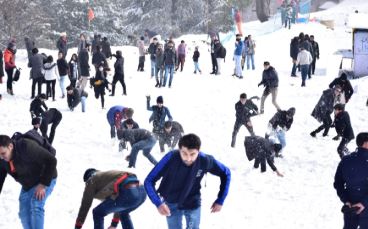
In order to ensure better and constructive engagement of such a healthy and young human resource, the government of Punjab has introduced another remarkable program:’Khelta Punjab (Playing Punjab),’ under which the first ‘Chief Minister Punjab Pink Games 2024’ have recently concluded, in which more than 1300 female players of around 16 universities in Lahore participated. The Chief Minister vowed to extend the sphere of ‘Pink Games’ to other parts of the province by providing sporting infrastructure for girls at the grassroots level. She has also directed the authorities concerned to start Punjab League soon in order to engage in a constructive way more than one million youth across Punjab.

Major takeaway of the entire discussion above is that Chief Minister Maryam Nawaz Sharif is fully focused on providing top notch healthcare facilities in both urban and rural areas of the Punjab, besides fostering a culture of constructive engagement of youth in order to raise such a pool of quality human resource that would contribute voluminously to the socio-economic development of the province.
Pakistan marks school safety day with nationwide events

Pakistan marks school safety day with nationwide events

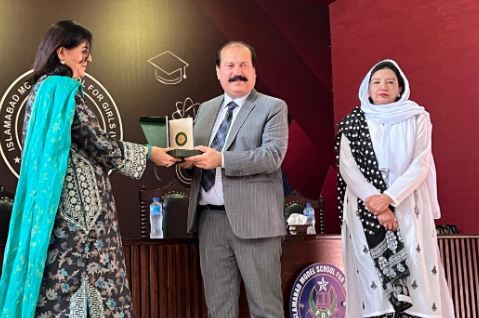
ISLAMABAD, May 22: /DNA/ – The Aga Khan Agency for Habitat (AKAH) Pakistan celebrated School Safety Day on May 16, 2024.

The event was held in collaboration with the National Disaster Management Authority (NDMA) and the Government Education Department.

The main event took place at Islamabad Model School for Girls G9/3.

Idress Mehsud from NDMA and Nusrat Nasab, CEO of AKAH Pakistan, attended the event.

Representatives from the government, AKDN agencies, partner organizations, students, and media officials also attended.

In 2008, an international conference on School Safety recommended celebrating this day annually.

The goal is to raise awareness about safe and secure learning environments.

AKAH Pakistan has promoted school safety since the inception of School Safety Day.

Nusrat Nasab emphasized the importance of creating safer learning environments.

She called for collaboration to ensure children’s safety in schools.

Idress Mehsud highlighted the lessons from the 2005 Kashmir Earthquake.

He stressed the importance of disaster preparedness and training.

Pakistan is highly vulnerable to climate change and natural disasters.

AKAH Pakistan has trained over 40,000 students and 3,000 teachers in disaster response.

More than 18,000 school safety committees have been formed.

Vulnerable schools in Gilgit-Baltistan and Chitral have been retrofitted for safety.

Schools in southern regions received Water, Sanitation, and Hygiene (WASH) facilities and safe drinking water.

Seminars were also conducted in Karachi, Gilgit, and Chitral.

The events underscored the commitment to a secure environment for children.

School Safety Day helps refine strategies based on lessons from past disasters.

This ensures a safe environment for the holistic development of youth.

Hamas, PLO welcome European countries’ recognition of Palestinian state

Hamas, PLO welcome European countries' recognition of Palestinian state

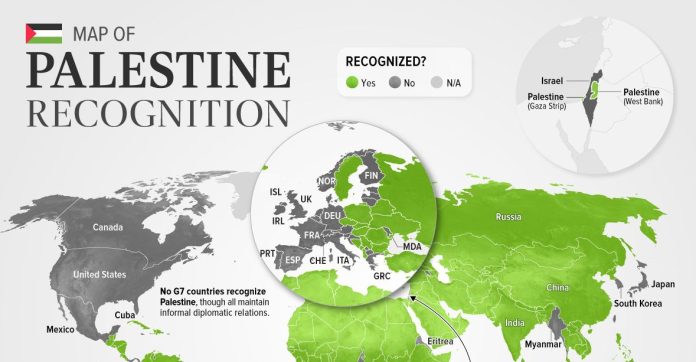
Doha, May 22 (AFP/APP): Hamas and the PLO welcomed moves by Ireland, Norway, and Spain to recognize Palestine. Ireland, Norway, and Spain will formally recognize the State of Palestine on May 28.

This decision comes more than seven months into the Gaza war.

Hamas called this an important step towards affirming their right to their land.

They urged other countries to recognize their national rights.

Senior Hamas official Bassem Naim credited the “brave resistance” of the Palestinian people for this move.

He said this recognition is a result of Palestinian steadfastness.

Naim believes this will be a turning point in international support for Palestine.

The PLO hailed the decision as historical.

Hussein al-Sheikh of the PLO called it a triumph for truth and justice.

Most Western governments, including the US, support Palestinian statehood but await agreements on key issues.

Israel opposes the move, calling it a reward for terrorism.

Israel will recall its envoys to Ireland and Norway for urgent consultations.

They are expected to do the same with their ambassador to Spain.

US inaugurates Cleantech Investment Roadshow in Karachi

US inaugurates Cleantech Investment Roadshow in Karachi

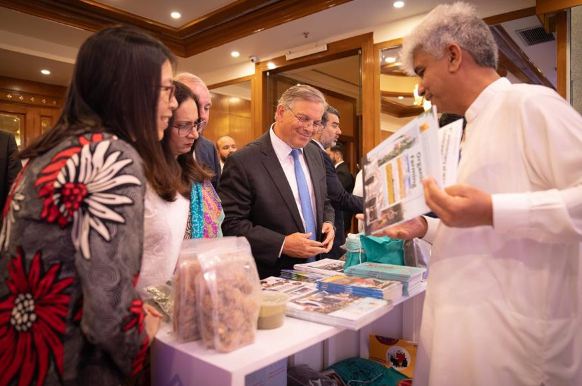
KARACHI, MAY 22 /DNA/ – Today the U.S. Ambassador to Pakistan Donald Blome inaugurated the second Investment Roadshow, supported by the U.S. Agency for International Development (USAID). Fourteen innovative companies in the clean technology sector showcased their work at the roadshow, promoting private sector investment in sustainable and viable clean energy solutions.

Organized by the USAID-funded Pakistan Private Sector Energy (PPSE) Project, the event sought to catalyze investment in commercially viable clean energy projects and help businesses access critical financing. Since its inception, PPSE has mobilized over $30 million for projects focused on clean energy, e-mobility, and energy efficiency.

“Expanding clean energy requires a supportive environment, which is why the United States continues to work with Pakistan on developing a stronger investment climate,” said Ambassador Donald Blome, adding that “investing in clean energy and low-carbon technologies is crucial for Pakistan to achieve its renewable energy goals.”

Sindh Secretary for Environment, Climate Change, and Coastal Affairs Dr. Nabeela Umer, echoed Ambassador Blome’s remarks, emphasizing the importance of U.S. support for Pakistan’s energy transition. “We wholeheartedly welcome the efforts by the United States to support our energy sector transition,” she said, noting “this roadshow is a vital platform for showcasing the critical need for increased investment in scaling up clean energy companies. We are grateful to the organizers for uniting the government, private sector, and financiers to highlight the innovative work the innovative work companies in Pakistan are doing to reduce emissions.”

The fourteen participating companies presented prototype models and pitched their innovative solutions to a diverse group of investors and financiers.

Omar greets Pervez Elahi on release from jail

Omar greets Pervez Elahi on release from jail

Lauds PTI President’s family for standing like a rock with Khan

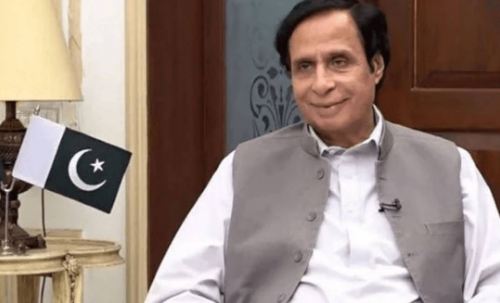
ISLAMABAD, MAY 22 /DNA/ – PTI Secretary General Omar Ayub Khan congratulated PTI President Chaudhry Pervez Elahi on his release from jail.

Pervez Elahi spent almost one year in incarceration.

Omar Ayub praised the Elahi family for standing firmly with PM Imran Khan.

He acknowledged their commitment to their principles.

Elahi was released yesterday and returned home after nearly one year in jail.

“Heartiest congratulations to Chaudhry Pervez Elahi, Moonis Elahi, and the family,” Omar remarked.

Intermediate Exams in Karachi to Start on June 1

Intermediate Exams in Karachi to Start on June 1

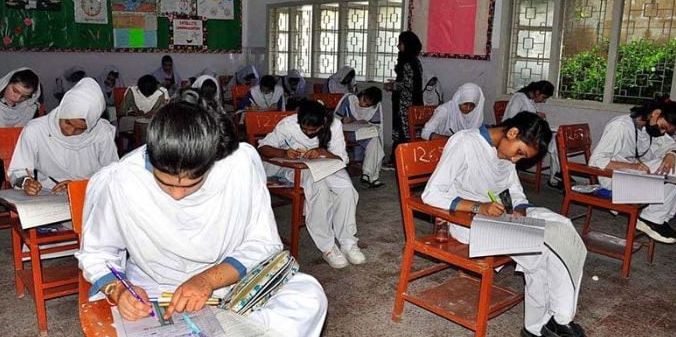
KARACHI, MAY 22: Board of Intermediate Education, Karachi (BIEK) Chairman Prof Nasim Ahmed Memon announced the exam schedule.

The intermediate exams will begin on June 1.

It is not possible to conduct them from May 28, said the chairman.

Memon said the board sought permission to extend the exams for four days.

He added that 21 higher secondary schools were set up as exam centres.

Intermediate exams will be held in the morning.

Matric exams are scheduled for the evening.

Matric exams were postponed due to hot weather.

Postponed papers will be taken from May 28 in the same centres.

It is not possible to hold matric and intermediate exams at the same time.

Provincial Minister for Universities and Boards Muhammad Ismail Rahoo has called a meeting about this.

Chairmen of both boards will attend the meeting.

Pakistan firmly upholds one-China principle: President

Zardari forms committee for talks with electables

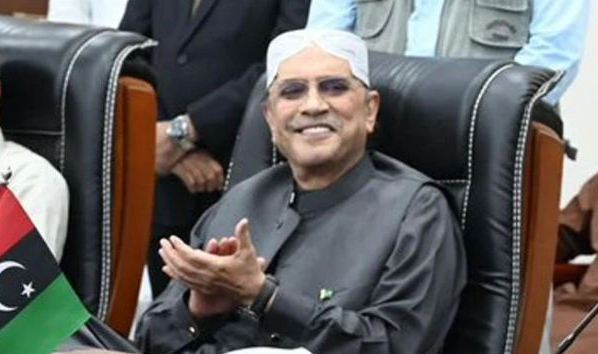
ISLAMABAD, May 22 (DNA): President Asif Ali Zardari reiterated Pakistan’s firm support for the one-China principle. He stated that Pakistan always chooses to stand on the right side of history.

“Pakistani people love China as there is no conditionality between us,” said President Zardari.

He made these remarks in an interview with Chinese media published on Wednesday.

The interview marked the 73rd anniversary of diplomatic relations between China and Pakistan.

This was President Zardari’s first interaction with foreign media after being re-elected in March.

Recalling past leaders’ rapport, Zardari mentioned his late father-in-law, former Prime Minister Zulfikar Ali Bhutto.

“Bhutto told the nation to look East, to look towards China,” Zardari said.

During his first term, President Zardari visited China nine times.

He reaffirmed Pakistan’s stance against any form of “Taiwan independence.”

“Taiwan is part of China. There’s no other way,” Zardari stated.

Pakistan will always stand with China and safeguard China’s core interests.

Zardari also commented on the development of Gwadar Port.

He noted significant progress at Gwadar Port since the launch of CPEC 11 years ago.

The Port welcomes investors from all over the world, Zardari said.

He mentioned Pakistan’s encouragement for more schools to adopt Chinese language into their curriculum.

Zardari emphasized the importance of strengthening people-to-people exchanges between the two countries.

He called for more policies to facilitate movement between Pakistan and China.

Appreciating China’s achievements, Zardari highlighted the importance of policy continuation.

He expressed Pakistan’s hope to be more involved in China’s development process.

Joint action committee rejects Punjab defamation bill

Joint action committee rejects Punjab defamation bill

Khayam Abbasi

ISLAMABAD: More than 80 civil society organisations registered their protest on Tuesday against the Punjab Defamation Bill (2024) passed by the provincial assembly a day earlier.

The provincial assembly yesterday passed the Defamation Bill, 2024, rejecting all amendments proposed by the opposition amid protests by the PTI-backed Sunni Ittehad Council and journalists covering parliamentary proceedings.

The SIC members tore apart copies of the bill after the House passed it through a voice vote.

Vetted by the Special Committee-1 in the absence of standing committees, the bill was tabled by Punjab Finance Minister Mujtaba Shujaur Rehman after the PML-N government refused to delay voting on the bill, even for a week, at the request of journalists.

On the occasion, the press gallery members walked out of the assembly to boycott the proceedings. They rejected the bill as a “curb on free media”.

A press release issued by civil society and journalists Joint action committee said they outrightly reject the Punjab Defamation Bill, given that it was a gross infringement on the fundamental rights of freedom of expression and press freedom.

It said that the bill served as a “draconian and regressive” tool to suppress dissent and criticism and particularly targeted journalists and the wider public.

“Its explicit mandate of safeguarding ‘public officials’ against defamation is nothing short of an authoritarian manoeuvre, designed to shield those in power from accountability and scrutiny,” it said.

It said that the bill’s provisions, which allow defamation actions to be initiated without proof of actual damage and imposing extortionate fines, amounted to nothing less than legal intimidation tactics.

Furthermore, the bill’s broad definition of “journalists” and “newspapers” to include social media users set a dangerous precedent for stifling freedom of expression online, the statement said.

“The proposed punishments, including the possibility of blocking social media accounts, are disproportionate and antithetical to democratic principles,” it said.

The alliance urged the Punjab government to heed civil society and stakeholders’ voices and reverse the effort to pass another regressive legislation akin to Peca (Prevention of Electronic Crimes Act).

It called for the defamation bill to be “scrapped entirely”, demanding the governor of Punjab to not sign the bill.
It said that future attempts to address disinformation and hate speech on online platforms should be initiated with inclusive consultations at the national level.

Opposition leader Shibli Faraz, Barrister Ali Zafar and other PTI leaders walked out of the Senate on account of the defamation bill passed by the Punjab assembly.

“The bill brought forward by the Punjab government regarding media is condemnable,” Faraz said while speaking to the Senate.

ISSI hosts Roundtable with SAARC Secretary General

ISSI hosts Roundtable with SAARC Secretary General

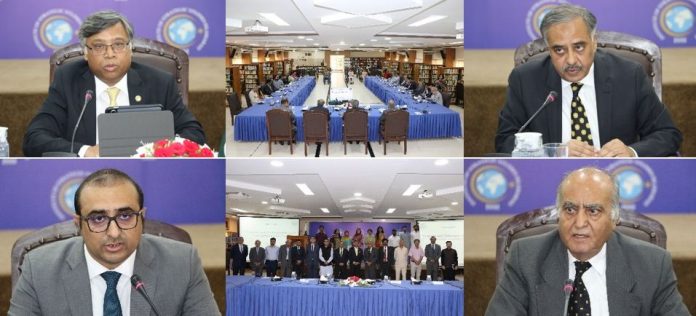
ISLAMABAD, MAY 21 /DNA/ – The India Study Centre at the Institute of Strategic Studies, Islamabad (ISSI) organised a Roundtable Discussion, titled “Prospects and Challenges of Regional Cooperation in South Asia”, with Ambassador Golam Sarwar, Secretary General of South Asian Association for Regional Cooperation (SAARC). The event was attended by diplomats, academics, practitioners, and researchers of various Islamabad-based think-tanks and Universities.

DG ISSI Ambassador Sohail Mahmood delivered welcome remarks.

During the Roundtable discussion, the importance of SAARC for the region was highlighted by the participants. It was noted that SAARC is a people-centric organization. It has played an instrumental role in addressing myriad of common challenges faced by member states like food insecurity, growing population, natural disasters, and deficient intra-regional trade and connectivity. Currently, among other things, the organisation envisions a ‘SAARC Youth Charter’, which will help promote cultural cooperation among youth of member states.

The participants focused on the need for improving implementation of SAARC’s decisions; strengthening economic cooperation and trade; and deepening regional integration and connectivity. The participants shared their perspectives on the progress made by SAARC so far and suggested ways to revive the SAARC process to make it a viable platform for regional cooperation. The need for resolving long-standing disputes and reducing bilateral tensions was emphasized by participants as a means of creating a conducive environment for regional cooperation.

Chairman BoG ISSI, Ambassador Khalid Mahmood, made concluding remarks.

WHO challenges illicit tobacco trade numbers in Pakistan, says trade share is 23%

tobacco

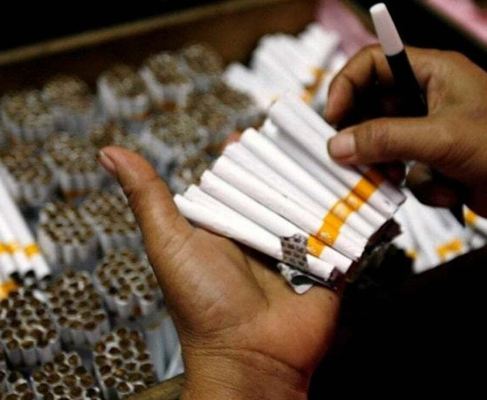
ISLAMABAD, MAY 21 /DNA/ – The World Health Organization (WHO) has contradicted claims by multinational tobacco companies regarding the illicit cigarette trade, revealing that the actual figure in Pakistan stands at 23 percent.

“Overall, the illicit trade of cigarettes in Pakistan accounted for 23.1% of the total trade. Locally produced cigarettes without a stamp of the tax authority are considered illicit products and account for 10.4% of the total number of packs,” said WHO study titled “Study on Incidence of Illicit trade of cigarettes in Pakistan: A case study for Islamabad Capital Territory”.

It further said that, in terms of the number of packs with counterfeit tax stamps as a percentage of total packs, it is 1.9%, and smuggled cigarettes account for 10.7% of the total consumption.

The latest report by the world health body has debunked myths and the tactics employed by multinational tobacco companies to evade taxes.

In the past, there had been several studies on the volume of illicit trade in Pakistan but they were conducted before the Track and Trace System was enforced in the country (July 2022). These studies found that illicit trade market in Pakistan ranges from 9 to 17% but they did not estimate the extent of the counterfeit issue, according to the WHO.

The report quoted data from Pakistan Bureau of Statistics (PBS) and said that tax evasion on domestically produced cigarettes in 2015-16 amounted to Rs.53.8 billion. An amount of Rs. 38.9 billion (72.7%) was evaded by the legitimated sector by under-reporting the production and Rs. 14.6 billion (27.3%) was evaded, it added.

“The most effective way to reduce tobacco consumption is to increase the price of tobacco products through higher taxes. In Pakistan, the cigarette industry claims that higher taxes trigger illicit trade, claiming smokers do not quit and opt for non-duty-paid cigarettes because they cost less,” the study said.

The world’s top health body emphasized that the prices of tobacco products in Pakistan should be increased by taxing the tobacco industry.

Anti-tobacco activists are pressing the government to raise tobacco taxes to 70% of the retail price, in line with WHO guidelines, to combat the alarming rate of tobacco consumption particularly among the youth.

Malik Imran Ahmed, Country Head of the Campaign for Tobacco-Free Kids (CTFK), said, “With over 60% of the population comprising youth, it’s crucial for the government to protect them from the ills of tobacco use,” he said, “as the move is expected to generate additional revenue, surpassing Rs 200 billion by year-end,”

Stay Connected

64FansLike
60FollowersFollow

Latest Reviews

Exchange Rates

USD - United States Dollar
EUR
1.17
GBP
1.35
AUD
0.67
CAD
0.72