Home Blog Page 703

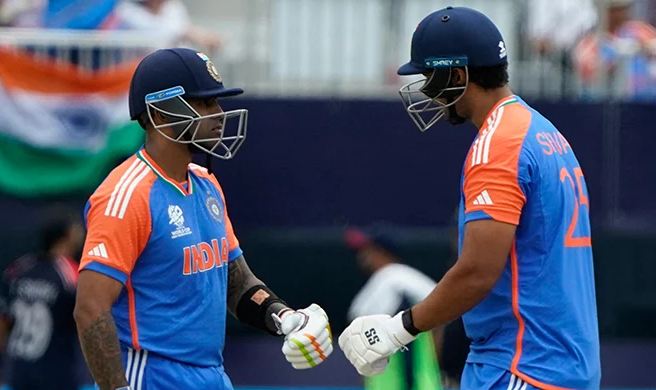
India beat USA to qualify for Super 8 in T20 World Cup 2024

India beat USA to qualify for Super 8 in T20 World Cup 2024

New York, JUN 13: India have qualified for the Super 8 of the T20 World Cup 2024 after securing a seven-wicket win over the USA at New York’s Nassau County International Cricket Stadium on Wednesday.

India became the third team after South Africa and Australia to qualify for the next round.

Earlier, India put the USA into bat first and restricted them to 110/8. Pacer Arshdeep Singh was the best bowler for India, securing figures of 4/9 – the best-ever by an Indian in the history of the competition.

He dismissed Shayan Jahangir, Andries Gous, Nitish Kumar and Harmeet Singh

Nitish was the only batter for the USA, scoring 27 off 23 balls. Opener Steven Taylor chipped in with 24 (30).

Apart from Arshdeep, Hardik Pandya secured 2/14 while Axar Patel bagged figures of 1/25.

In chase, India were on the back foot at the start of the chase with pacer Saurabh Netravalkar dismissing Virat Kohli (0) and Rohit Sharma (3) in the powerplay.

Rishabh Pant and Suryakumar Yadav recover but Ali Khan clean bowled Pant (18) to put more pressure on India.

But a brilliant partnership from Yadav and Shivam Dube led India to the end of the chase. Yadav remained not out on 49-ball 50 while Dube made 31 off 35 balls. They completed the chase in 18.2 overs.

Lineups
USA: Steven Taylor, Shayan Jahangir, Andries Gous, Nitish Kumar, Aaron Jones (c), Corey Anderson, Harmeet Singh, Shadley van Schalkwyk, 9 Jasdeep Singh, Saurabh Netravalkar, Ali Khan

India XI: Rohit Sharma (c), Virat Kohli, Rishabh Pant (wk), Suryakumar Yadav, Shivam Dube, Hardik Pandya, Ravindra Jadeja, Axar Patel, Jasprit Bumrah, Mohammed Siraj, Arshdeep Singh

Gen. Sahir Shamshad Mirza awarded ‘Legion of Merit’ in Turkiye for meritorious service

Gen. Sahir Shamshad Mirza awarded 'Legion of Merit' in Turkiye for meritorious service

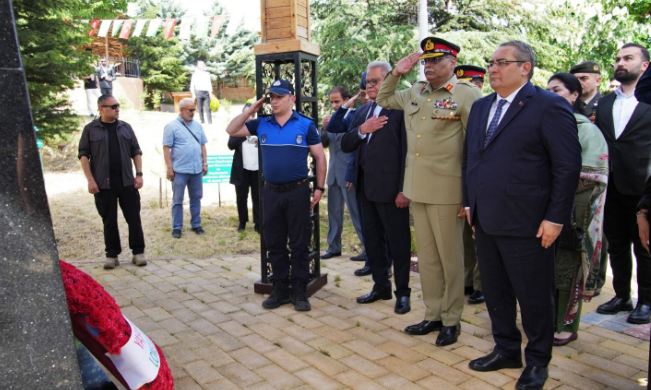
RAWALPINDI, JUN 12 /DNA/ – General Sahir Shamshad Mirza, Chairman Joint Chiefs of Staff Committee, who is on an official visit to Turkiye, called on General (R) Yasar GULER, Minister of Defence, General Metin Gurak, Commander Turkish General Staff, General Selcuk Bayraktaroglu, Commander Turkish Land Forces, Admiral Ercument Tatlioglu, Commander Turkish Naval Forces, General Ziya Cemal Kadioglu, Commander of Turkish Air Force and Haluk Görgün, President SSB, a government agency dealing with defence production.

During the meetings, both sides deliberated upon various areas of mutual interest, bilateral defense cooperation including security, counter-terrorism, and the prevailing regional environment. The military leadership shared commitments to enhance defense engagements between both countries and reaffirmed their resolve to further fortify the fraternal relationship.

In recognition of meritorious services and contributions, General Sahir Shamshad Mirza was also awarded the ‘Legion of Merit’.

Balochistan Home Minister hails EU, UN Support to Rule of Law Sector

Balochistan

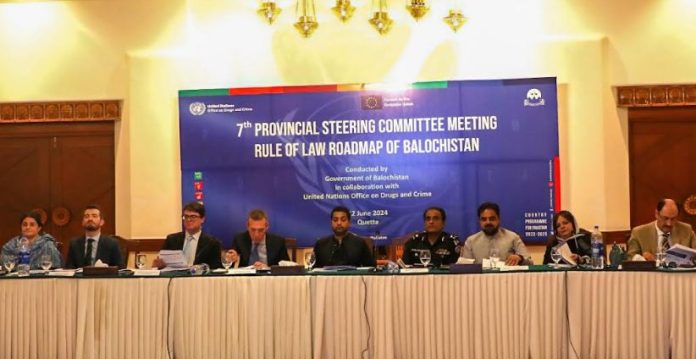
Quetta, JUN 12 /DNA/ – In his concluding remarks at the 7th Steering Committee meeting of the European Union-funded ‘Deliver Justice Project’, Balochistan Home Minister, Mr. Ziaullah Langua, hailed the European Union and UN partners for supporting the Government’s rule of law reform agenda. He further said, “It is a journey that we all look forward to as we take the work under the new Rule of Law Roadmap to the next level to realize our vision of a people‑centered rule of law in Balochistan.” He also appreciated the Police, Levies, Prosecution, Probation and Parole, and Prisons for their commendable work by improving their legal and operational capacities.

Chairing the 7th Project Steering Committee meeting, Additional Chief Secretary (Home), Government of Balochistan, Mr. Zahid Saleem, congratulated all partners for their longstanding collaboration with UNODC and other UN agencies, particularly UN Women and UNDP. He praised their institutional support by emphasizing the importance of achieving desired results while aligning ongoing efforts on legislative, police, prison, and women-focused reforms. Additionally, he highlighted the importance of citizen-centered and evidence-based rule of law initiatives.

During the meeting, key stakeholders reaffirmed their commitment to advancing evidence-based reforms in the rule of law sector to enhance public trust and confidence in law enforcement institutions in Balochistan. The Rule of Law Roadmap was initially approved for four years (2018–2022) and expired in May 2022. A recent evaluation informed a revised RoLR for another four years (2023–2026) to consolidate, sustain, scale up, and institutionalize good practices and data-informed approaches in the justice sector of Balochistan.

Highlighting the need for Government’s ownership and provision of matching resources for effective implementation of the Rule of Law Roadmap, Mr. Jeroen Willems, Head of Cooperation, EU Delegation to Pakistan stated that revalidated Rule of Law Roadmap 2023-2026 was pivotal in advancing justice, peace, and security, particularly for women and girls. He also said that data-centric, results-based approaches remained the backbone of the roadmap, serving as a tool to monitor progress and make timely decisions, while citizen-centric interventions aimed to enhance public trust in the justice system.

Dr. Jeremy Milsom, Representative, UNODC Country Office, thanked the Government of Balochistan for their vision and commitment and facilitating the revalidation and approval of the revised Roadmap. He also emphasized the need for institutional leadership to embrace evidence-based approaches to improve performance, noting the effectiveness of such methodologies in order to measure institutional performance and implementing robust reforms. Additionally, Dr. Milsom expressed gratitude to the European Union for their continued support in enhancing the rule of law and transforming the Balochistan rule of law sector into a citizen-friendly and demand-driven.

Mr. Arsalan Malik, Criminal Justice and Reforms Advisor from the UNODC Country Office in Pakistan, presented project updates and the 2024 work plan. He commended the Government of Balochistan’s commitment, as evidenced by the adoption of PC-1 and the initiation of the second phase of reforms through the endorsement of the Action Plan 2024–26. He stated that with EU support, the partners are well-positioned to further enhance the capacity of criminal justice actors in Balochistan.

Representatives from the Balochistan Police, Prosecution, Prisons, Levies, and Reclamation and Probation Departments presented their progress against provincial RoL targets. They shared the challenges and successes of

criminal justice institutions in addressing fundamental issues through sector coordination. The way forward for the implementation of the RoLR was also discussed and agreed upon.

The milestones achieved under the roadmap include, but are not limited to, capacity building and the establishment of facilitation centers such as the Women and Juvenile Facilitation Centre (WJFC), Smart Police Stations, Serious Crime Investigation Wing (SCIW) with gender facilitation desks, etc.

First 100 days of NA ‘slow-paced’: Fafen

First 100 days of NA 'slow-paced': Fafen

Fafen report says “parliamentary transparency and gender responsiveness” highlight of first 100 days

Staff Report

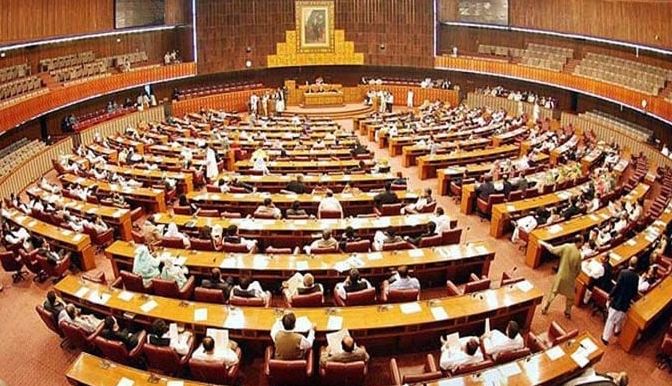
ISLAMABAD: The performance of Pakistan’s 16th National Assembly, which concluded its first 100 days following the oath-taking of legislators on February 29, has been described as “slow-paced despite high attendance”. 

According to a report published by the Free and Fair Election Network (Fafen), the assembly’s focus on “parliamentary transparency and gender responsiveness” was described as a defining characteristic of NA’s first 100 days. 

The report added that the House encouraged bipartisanship by allocating nearly 54% of the time used for points of order to the opposition.

Following the February 8 general elections, the Pakistani government descended into instability as no political party secured a clear majority. However, several of the winning parties formed an alliance with the Pakistan Muslim League-Nawaz (PML-N), forming a coalition government at the Centre.

The PML-N, therefore, formed the federal government with the support of eight parties, including the Pakistan Peoples Party Parliamentarians (PPPP), Muttahida Qaumi Movement-Pakistan (MQM-P), Pakistan Muslim League Quaid (PML-Q), Istehkam-e-Pakistan Party (IPP), Pakistan Muslim League Zia (PML-Z), Balochistan Awami Party (BAP) and the National Party (NP).

The House, however, still remains short of 26 members.

According to Fafen, at least 23 sessions have been conducted in the lower house of the Parliament up until now, spanning over 66 hours and 33 minutes. The speaker and deputy speaker chaired 84% of the proceedings.

Prime Minister Shehbaz Sharif has, so far, attended only two sessions, which makes up 10% of his attendence as compared to former premier and Pakistan Tehreek-e-Insaf (PTI) founder Imran Khan’s 29% in the first 100 days of his ousted government.

Fafen added that the assembly elected its standing committee on May 17 after a month-long delay. In the first 100 days, only a money bill has been approved by the House.

The Fafen report highlights that at least 159 members, or 51%, actively participated by sponsoring agenda items or participating in discussions out of the 310 members, 61% of which were females and 49% males.

On average, 230 members were present in one session, with a maximum attendance of 302 and a minimum of 176.

The House addressed 76% of its business, including 20 legislative bills, 93 questions, 28 calling attention notices (CANs), and 11 resolutions.

In his maiden speech, PM Shehbaz outlined his government’s plans for foreign relations, agriculture, economic affairs, tax reforms, energy, human development, and law and order, the Fafen report maintained.

Philippines National Day celebrated in Islamabad with ASEAN dignitaries

Philippines National Day celebrated in Islamabad with ASEAN dignitaries

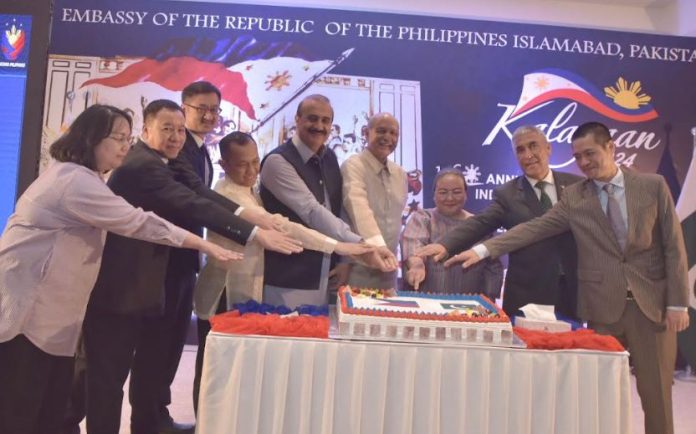
ISLAMABAD, JUN 12 /DNA/ – Former Senator Mushahid Hussain Sayed, Managing Director of Pakistan Sweet Homes Zamurrad Khan, and Ambassador of the Philippines Maria Agnes Cervantes, along with Heads of Missions from ASEAN countries, gathered to celebrate the National Day of the Philippines. The event featured a ceremonial cake cutting to mark the occasion.

This celebration in Islamabad highlighted the strong diplomatic ties and friendship between the Philippines and the ASEAN nations.

Punjab Defamation Act: Protecting Reputations, Or…

Qamar Bashir

By: Qamar Bashir

The entire primetime talk shows overwhelmingly discussed the Punjab government’s recently notified Punjab Defamation Act 2024, with the print media generating articles and editorials on the aggressive nature of this law. Social media is rife with criticism of the legislation, which has already been challenged in the Lahore High Court and admitted for hearing.

One question that dominated the discussion on all the shows was why it was so important and special for PML(N) and Punjab, compared to the Federation and other provinces, that this bill—termed draconian and authoritarian by media analysts and legal experts—was bulldozed through the Punjab Assembly, even without the consent of one of its biggest coalition partners, the PPP. The second and most important point discussed was the jurisdictional limitations and enforceability of the Act within Pakistan.

Both questions are difficult to answer. However, while attempting to brainstorm the first question, let us examine the stated objectives, which are to provide legal protection from false, misleading, and defamatory claims made via print, electronic, and social media against public officials and private citizens. These claims violate people’s privacy and damage the reputation and image of public figures or the government by defaming, slandering, and libeling them. The bill is necessary to contain such unwarranted criticism and dislike for a person or authority.

However, analysts view, albeit without any evidence, this Act as an attempt by the PML(N) to consolidate their control and influence in the province by curbing dissent and opposition within their stronghold to ensure smoother governance and political dominance. It might be aimed at centralizing power, streamlining decision-making, and implementing policies, albeit at the cost of democratic processes and coalition dynamics. It may also be an attempt to restrict the activities of rival political groups, curb protests, and control media narratives more tightly.

They also purported again without any conclusive evidence that  within the coalition, there could be power struggles and disagreements that have led the PML(N) to act unilaterally. The exclusion of the PPP’s consent indicates possible rifts and a desire by PML(N) to assert its dominance over the coalition and provincial governance. There might be underlying economic interests, such as investment projects, land reforms, or industrial policies that the PML(N) government aims to push through with minimal opposition.

The reply to the other question is even trickier. If alleged defamation occurs outside the province of Punjab, it would face challenges in bringing the alleged defamer to task. It would require coordination with federal authorities or the respective provincial government, through complex legal processes. However, when alleged defamation occurs outside Pakistan, the complexities increase further. The Punjab government lacks the authority to unilaterally enforce its defamation laws internationally. Thus, prosecuting or penalizing individuals residing outside the province and outside Pakistan becomes highly impractical.

Having said this, let us dive deep into the most controversial provisions of the said Act, which are making headlines in print, electronic, and digital media. Let us start with Section 3 of the said Act, which provides a speedy remedy to the person defamed by empowering them to initiate an action under this Act without proof of actual damage or loss. Where defamation is proved, general damages shall be presumed to have been suffered by the person defamed.

The onus to prove that defamation has occurred also does not rest with the claimant, as the Act does not require the claimant to establish their reputation. It shall be sufficient if they prove any damage, over and above the general damages to their reputation, against the defendant.

The general damages, as defined under Section 2, are damages to be granted by the Tribunal at the time of granting a preliminary decree if the defendant fails to obtain leave to defend in terms of Section 13 of this Act, with a minimum of Rs. 3,000,000/- (Rupees Three Million).

In this definition, the phrase “obtain the leave to defend” is key to understanding the full implication of this law. This means that the defendant cannot automatically defend against the claim but must apply to the tribunal to get permission to present their defense. In case of their failure to obtain leave to defend, the allegations in the claim are deemed to be admitted.

The tribunal will then pass a preliminary decree of general damages in favor of the person defamed, which, according to Section 2 of the said Act, is a minimum of Rs. 3,000,000/-. The story does not end here; there is another layer of deterrent to protect the defamed person. The preliminary decree passed under Section 15(1) cannot be stayed either by the Tribunal or the Lahore High Court.

Let’s move further and ask ourselves another question: if the defendant is granted leave to defend, then what? Section 13(13) provides that if the claimant seeks to pursue the case beyond the preliminary decree of general damages, they are empowered to press the charges further. The tribunal may impose special damages, defined in Section 2 as damages granted after the final conclusion of the proceedings. If the claimant proceeds further after the preliminary decree and establishes their claim for such damages, these will be in addition to the general damages granted by the tribunal.

Under Section 21, if defamation is established, the tribunal, in addition to general damages, may direct the defendant to tender an unconditional apology, published in the same manner and with the same prominence as the defamatory statement. The defendant must also pay damages in terms of this Act. Furthermore, the tribunal may direct the relevant regulatory authority to suspend or block the defendant’s social media account or any other medium through which the defamatory content was disseminated.

In a scenario where the defendant chooses not to appear before the tribunal to present their defense, Section 18 of the said Act empowers the tribunal to pass an ex-parte order. This order will attain finality and will not be appealable, unless the defendant files for leave to defend within 30 days with the tribunal.

Even more interestingly, the Qanun-e-Shahadat 1984, which lays down the rules and principles for admitting and evaluating evidence in judicial proceedings, does not apply to the proceedings under this Act. This implies that the tribunal or court handling cases under this Act can adopt a more flexible and informal approach to evaluating evidence. The tribunal will have greater discretion in deciding what evidence to consider and how to evaluate it. They can even admit evidence that might not meet the stringent criteria of the Qanun-e-Shahadat. This is fraught with risks of inconsistency in how evidence is treated in different cases, depending on the discretion of individual tribunals or judges.

The strength of this provision is that it strongly protects individuals’ reputations by allowing them to seek redress without the burden of proving actual damage, which can be challenging. Besides, the presumption of general damages serves as a deterrent against defamatory statements, encouraging individuals and entities to be more cautious about what they communicate.

The weakness could be that the lack of requirement to prove actual damage might lead to frivolous or vexatious lawsuits, potentially stifling free speech and legitimate criticism. Additionally, the imposition of general damages without clear guidelines might result in inconsistent or disproportionate awards, creating legal uncertainty.

By: Qamar Bashir

Former Press Secretary to the President

Former Press Minister to the Embassy of Pakistan to France

Former MD, SRBC

Naqvi condemns firing on ANF men

Mohsin Naqvi

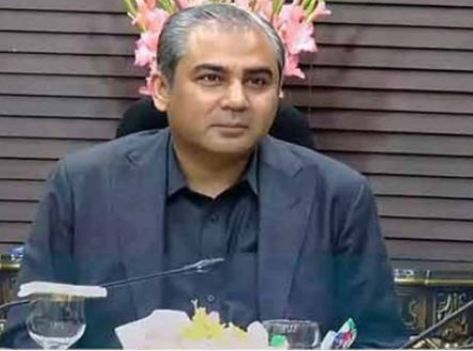
ISLAMABAD, JUN 12 (DNA) —Federal Interior Minister Mohsin Naqvi has expressed deep grief and sorrow over the martyrdom of two Anti-Narcotics Force (ANF) personnel and a civilian in firing by drug traffickers at Tarkai Toll Plaza in Jhelum. The Interior Minister paid rich tribute to the martyrs, including Head Constable Gulzar and Lance Naik Mazhar, and offered condolences to their families.

 He prayed that May Allah Almighty elevate the ranks of martyrs and grant patience and strength to their loved ones. Mohsin Naqvi said that the sacrifices of the ANF personnel who laid down their lives in the operation against drug traffickers will not go in vain.

 He further stated that those who gave their lives for the national mission to eradicate the menace of drugs are our true heroes. He vowed to bring the perpetrators of the incident to justice. He emphasized that the operation against drug traffickers would continue with full force as they were the enemies of our future. — DNA

UN diplomat advocates for Taliban participation in global conference on Afghanistan

UN diplomat advocates for Taliban participation in global conference on Afghanistan

ISLAMABAD, JUN 12 /DNA/ – The Islamic Emirate is doing a fairly notable job to achieve an inclusive system of governance in Afghanistan. However, a socially cohesive Afghanistan requires it to increase so that every Afghan citizen feels that they equally belong to the country and the government equally belongs to them. UNAMA is also engaging with all Afghans to help them achieve a broad-based governance system that includes everybody.

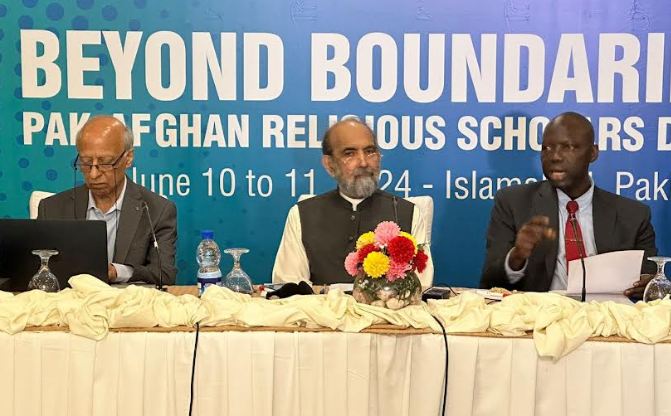
These remarks were made by the head of the Pakistan-based liaison office for the U.N. Assistance Mission in Afghanistan (UNAMA), Malick Ceesay, during the 4th round of Pak-Afghan Religious Scholars Dialogue, organized by the Center for Research and Security Studies (CRSS).

In his interaction with the participating religious scholars from the two countries, Ceesay noted that the Taliban have allowed Afghan females to work in some public offices related to passport, immigration, healthcare, and agriculture, but these concessions have been overshadowed due to bans on the remaining women’s access to employment and girls’ education beyond grade six.

He emphasized the importance of the easement of restrictions on women’s access to education and employment and an inclusive system of governance in the country to pay the way for its recognition.

“Islam never says that women should not go to school, and Islam never says that women should not go to work. Which (version of) Islam and which Quran says that? It’s not found in there,” he added.

Ceesay encouraged the Taliban to attend a conference on Afghanistan later this month, stating that it would help return much-needed global attention to the crisis-ridden country, as Ukraine war and Gaza hostilities had dramatically shifted the international attention from Afghanistan and that’s a concern for the United Nations. “We don’t want Afghanistan to be forgotten”, he said.

“We are hopeful that this time around, the Islamic Emirate will send its representatives (to Doha) to be able to engage with the international community in a constructive and effective manner, the U.N. diplomat said.

While moderating the two-day dialogue, the former chairman of the Council of Islamic Ideology (CII), Dr. Qibla Ayaz highlighted the potential of religious diplomacy to serve as an unofficial communication channel between two countries’ leadership and people and help address the issues of bilateral, regional, and international concern.

He urged both sides to let go of the bitter baggage of history and foster vision-oriented engagement at different levels of the relationship in the interest of the two countries’ connected future. Speaking about the role of media in shaping perceptions, especially of the public on both sides, Dr. Ayaz cautioned about negative propaganda in the cyber-space and the need to critically perceive the information available in the online medium.

Discussing the girls’ education in Afghanistan, he urged Taliban leadership to consider the international community’s offer – like the ones made by Turkey and Indonesia – to improve the country’s educational landscape and cultivate an environment conducive to girls and women empowerment.

Founding chairman of the UK-based Forum for International Relations Development (FIRD), Toaha Qureshi moderated one of the sessions during the gathering and shared the UK’s counter-terrorism experience and how community-ledapproaches – that onboard community stakeholders as part of the solution and not view them as part of the problem -serve as an inclusive model to tackle the security threats.

During the discussions spanning two days, the participating religious scholars from both sides deliberated several proposals concerning different areas of relationship between the two sides and the stability of the region at large.

They urged the Afghan government to address the barriers to girls’ education related to curriculum and infrastructure and launch teachers’ capacity-buildingprograms with the support of international donor bodies and institutions.

They stressed the need to ensure women’s access to employment opportunities to prevent socioeconomic regression in Afghanistan, and appointments of key personnel and representatives on merit, ensuring that all socioeconomic, political, and ethnic groups are included.

Committees comprising common citizens, and key community representatives such as religious scholars, tribal leaders, academicians, and government officials to discuss issues and tackle challenges on the grassroots level were recommended.

It was underscored that religious clerics should reach out to Shuras and relevant IEA authorities and convey the forum’s messages to amplify advocacy. Similar dialogues should be held in Kandahar, Kabul, Quetta andChaman, to ensure a broader and stronger representation of influential figures.

Emphasizing the counter-terrorism role of the religious community, it was recommended that Ulema from both sides should categorically condemn all kinds of terrorism as a common enemy along with the counter-terrorism cooperation between the two sides that catalyzes concrete joint actions against the militant outfits straining relations between the two countries.

Both sides also emphasized non-military measures – such as mechanisms anchored in multitrack dialogues – and the need to maximize and keep them open for smooth communication no matter how strained the political relations.

Addressing the gathering, the executive director of CRSS, Imtiaz Gul noted that counter-terrorism has become an inalienable part of conversations between two sides. Pakistan expects Afghanistan to realize and acknowledge its security concerns, and jointly tackle the terror threats that bedevil the relations. He urged the participating religious scholars to introspect and find a solution to contentious issues like terrorism.

“We are also hoping that before the upcoming Doha summit, both sides will come forward and try to resolve this long-standing issue”, he said.

PRCS empowers flood-affected families with livelihood assistance through Loader Rickshaw distribution

PRCS empowers flood-affected families with livelihood assistance through Loader Rickshaw distribution

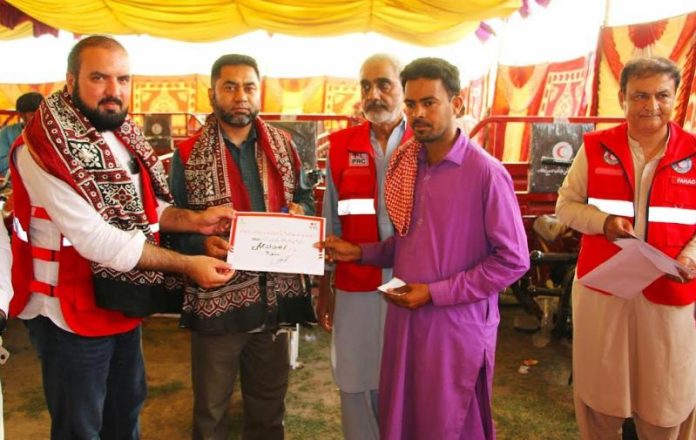
ISLAMABAD, JUN 12 /DNA/ – Under the leadership of Chairman Sardar Shahid Ahmed Laghari, the Pakistan Red Crescent Society (PRCS), in collaboration with the International Federation of the Red Cross and Red Crescent Societies (IFRC), has successfully distributed 210 loader rickshaws to families affected by the monsoon floods of 2022. This initiative forms a crucial part of PRCS’s Livelihood Assistance Program during the Recovery Phase.

The loader rickshaws have been allocated to deserving families in five districts of Sindh province, including Dadu, Khairpur, Shikarpur, Larkana, and Qambar Shahdadkot, with each district receiving 35 rickshaws. Additionally, 35 loader rickshaws were distributed in Jaffarabad district of Balochistan. The distribution of loader rickshaws in Punjab and Khyber Pakhtunkhwa will take place after Eid-al-Adha. This initiative aims to strengthen the affected communities by providing a source of income. It is part of PRCS’s ongoing efforts to empower communities to regain their livelihoods and move towards a brighter future.

The distribution ceremonies took place during the first and second weeks of June, attended by Secretary General PRCS, Muhammad Abaidullah Khan, Dr. Asfar Shams, Health Coordinator, IFRC Country Delegation Pakistan, officials from the provincial and district branches of PRCS and IFRC Country Delegation, volunteers, community members, and local notables.

PRCS Chairman Sardar Shahid Ahmed Laghari praised the relentless dedication of PRCS staff and volunteers, who continue to provide crucial support to flood-affected communities. He emphasized PRCS’s steadfast commitment to restoring normalcy through multifaceted programs, including livelihood assistance, shelter construction, cash assistance, and health and hygiene initiatives.

“We remain dedicated to our mission of serving humanity and stand ready to support communities in their journey towards recovery and resilience,” Chairman Laghari stated. “Our efforts are ongoing, and with the support of our partners and the tireless work of our team, we are making significant strides in helping communities rebuild their lives.”

According to Piwi Ophoff, Head of Country Delegation, IFRC Pakistan, “IFRC is supporting PRCS in the implementation of the Flood Recovery Programme, through which, as one of the livelihood activities, the distribution of loader carts among the flood-affected communities will help them recover from the impacts of the 2022 floods, which affected their livelihoods. They will be able to earn a decent living and support their families. The beneficiaries of this initiative have been identified after necessary due diligence, so that only the most vulnerable communities receive it.”

With the support of Red Cross and Red Crescent Movement partners, PRCS continues its tireless efforts to aid flood-affected populations, ensuring sustainable and effective recovery interventions. Previously, PRCS distributed buffaloes to flood-affected communities in the aforementioned districts as part of its livelihood program.

Govt to present federal budget today with aim to secure new IMF bailout

Govt to present federal budget today with aim to secure new IMF bailout

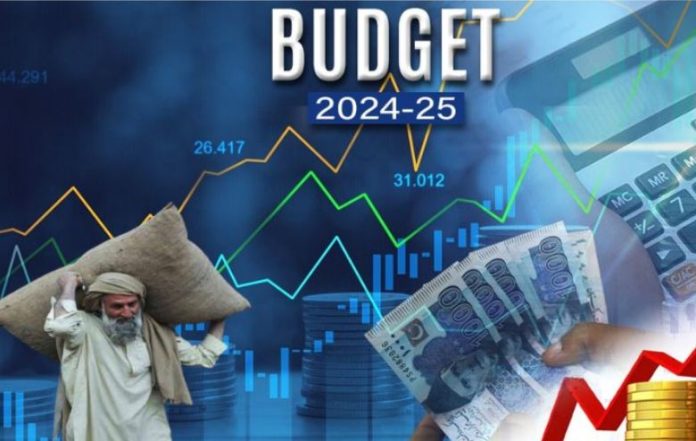
ISLAMABAD, JUN 12: The coalition government will present the country’s budget for the fiscal year 2024-25 today as it looks to strengthen the case for a new bailout deal with the International Monetary Fund (IMF).

According to state-run Radio Pakistan, Finance Minister Muhammad Aurangzeb is expected to present the budget — the country’s financial plan outlining proposed expenditures and the means of financing them — in the National Assembly shortly.

The finance minister will then lay a copy of the Finance Bill 2024 before the Senate, which is expected to convene at 6pm.

As per the government’s tentative plan, a general debate on the budget would start on June 20 and would continue till June 24. The members will take part in the debate and voting on cut motions on June 26 and 27 whereas the budget will be passed on June 28.

A day earlier, the government unveiled the Pakistan Economic Survey 2023-24, which showed that the economy failed to meet most of its targets set in the previous budget due to challenging conditions. The agriculture sector, however, achieved unprecedented growth.

But the comments made by the finance minister yesterday hinted at a renewed focus on taxing untaxed

On Monday, the National Economic Council (NEC) — comprising Prime Minister Shehbaz Sharif, Deputy PM Ishaq Dar, the four chief ministers and the defence, finance, and planning ministers — approved a Rs3.792 trillion federal Public Sector Development Programme — more than 47pc increase compared to the previous FY.

Last week, it was reported that the finance ministry and the IMF were locked in last-minute talks ahead of the budget as the global lender put forward some tough conditions.

The IMF’s key demands include an increase in the tax revenue target, withdrawal of subsidies, taxes on the agriculture sector, increase in levy and taxes on power, gas and oil sectors, privatisation of sick government organisations and units and improving administration, a ministry official said.

Meanwhile, economist Sakib Sherani said the budget would be in line with IMF requirements but cautioned, “However, the real problem will be adherence to fiscal austerity and prudence and containment of populism.”

Ahead of the budget presentation, PM Shehbaz also chaired a meeting on the “rightsizing of the government”, the government’s official X account stated.

According to state broadcaster PTV News, a committee constituted for the purpose presented a preliminary report before the premier.

The report, containing short-term and mid-term recommendations, proposed shutting down a few state-owned enterprises, merging several others and handing some to the provinces, PTV News reported.

The committee further recommended that all such posts vacant for more than a year be abolished and that government officials’ “unnecessary travel” be prohibited while teleconferencing be encouraged.

Subsequently, the prime minister formed a high-powered committee to furnish a comprehensive report within 10 weeks on the said proposals.

Agriculture only saving grace in otherwise dismal year
According to the PES, the strong 6.25 per cent expansion in the agriculture sector — said by the report to be the highest in 19 years — drove Pakistan’s GDP growth by an expected 2.38pc in FY2024, recovering from a contraction of 0.21pc in the previous year.

The report said fiscal discipline was maintained, with a fiscal deficit of 3.7pc of GDP and a primary surplus of 1.5pc of GDP. Total revenues, meanwhile, grew by 41pc, driven by non-tax revenues and improved tax collection.

The State Bank of Pakistan, meanwhile, kept a tight monetary policy, with a 22pc policy rate, helping to ease inflation to 26pc from 28.2pc last year.

The current account deficit narrowed by 87.5pc to $0.5 billion compared to $4.1bn last year, and gross foreign exchange reserves increased to $8.0bn.

However, the PES noted a decline in the investment-to-GDP ratio, sluggish large-scale manufacturing, and high public debt.

It further revealed that cash-strapped Pakistan witnessed the highest-ever single-year increase in tax exemptions or concessions, surging by 73.24pc compared to the previous year to dole out a record Rs3.879tr.

During the presentation, Aurangzeb hinted at letting “no sacred cow” escape without paying due taxes through the budget for FY2024-25. He expressed confidence in beginning the next fiscal year on a stronger note, backed by the IMF’s support.

Speaking less on the performance of each economic sector and their sub-sectors, the finance minister stressed focusing on reforming the revenue system, energy sector, and state-owned enterprises (SOEs), reiterating that there were no strategic SOEs.

Stay Connected

64FansLike
60FollowersFollow

Latest Reviews

Exchange Rates

USD - United States Dollar
EUR
1.17
GBP
1.35
AUD
0.67
CAD
0.72