Home Blog Page 701

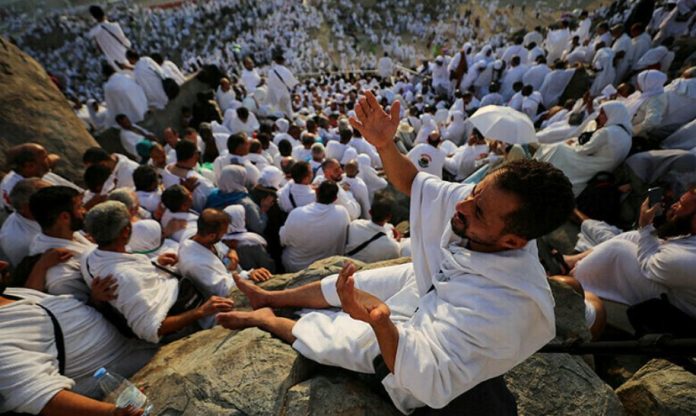
Muslims from all over the world pray on Mount Arafat in Haj climax

Muslims from all over the world pray on Mount Arafat in Haj climax

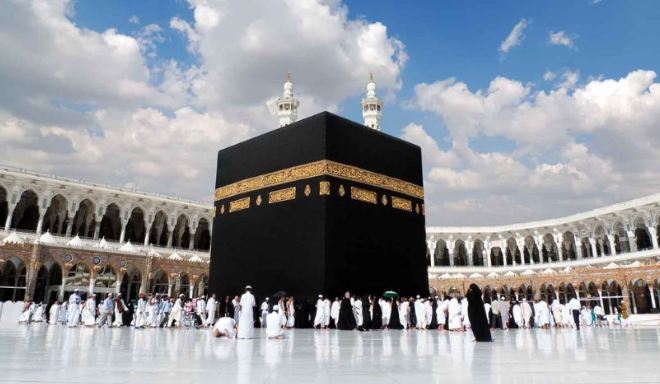
Arafat, JUN 15: More than 1.5 million Muslims braved extreme heat to reach Mount Arafat on Saturday for the high point of the annual Haj pilgrimage, praying for hours, especially for Palestinians in conflict-ridden Gaza.

Clad in white, worshippers began arriving at dawn for the most gruelling day of the annual rites, ascending the rocky, 70-metre hill where Prophet Muhammad (Peace Be Upon Him) gave his last sermon.

“This is the most important day,” said 46-year-old Egyptian Mohammed Asser, who came prepared with a list of prayers. “I pray also for the Palestinians. May God help them.”

This year’s Haj is unfolding in the shadow of the fighting in Gaza between Israel and Hamas, which was triggered by the latter’s unprecedented attack on southern Israel on October 7.

The assault resulted in the deaths of 1,194 people, mostly civilians, according to an AFP tally based on Israeli official figures.

Israel’s retaliatory military offensive and bombardment in the Gaza Strip has killed at least 37,266 people, also mostly civilians, according to the territory’s health ministry.

Saudi Arabia’s minister in charge of religious pilgrimages, Tawfiq al-Rabiah, warned last week that “no political activity” would be tolerated during Haj.

But that did not stop at least one pilgrim from chanting in support of the Palestinians who have endured more than eight months of incessant bombardment.

“Pray for our brothers in Palestine, in Gaza … may God give victory to the Muslims,” he shouted.

In a message to Haj pilgrims on Saturday, Iranian supreme leader Ayatollah Ali Khamenei said“ “The ironclad resistance of Palestine and the patient, oppressed people of Gaza … must be fully supported in every way.”

Some 2,000 Palestinians are performing the Haj at the special invitation of Saudi King Salman, official media said.

Haj, one of the world’s biggest religious gatherings, is increasingly affected by climate change, according to a Saudi study published last month that said regional temperatures were rising 0.4 degree Celsius each decade.

The rituals, which take at least five days to complete and are mostly outdoors, are “not easy because it is very hot”, said Abraman Hawa, 26, from Ghana.

“We have sun … but it is not as hot. But I will pray to Allah at Arafat, because I need his support,” she added.

The temperature was expected to hit 43°C today, creating challenges for pilgrims who arrived at Mount Arafat after spending the night in a giant tented city in Mina, a valley outside Makkah.

Saudi authorities have urged pilgrims to drink plenty of water and protect themselves from the sun. Since men are prohibited from wearing hats, many carry umbrellas.

Mustafa, an Algerian pilgrim who gave only his first name, clung to his umbrella which was handed out by Haj organisers, saying, “It’s what saves you here”.

Another man, an Egyptian who preferred to remain anonymous, said he was drinking “a lot of juice and water” and had twice stopped to rest on the roadside.

More than 10,000 heat-related illnesses were recorded last year, 10 per cent of them heat stroke, a Saudi official told AFP this week.

Ahmad Karim Abdelsalam, a 33-year-old pilgrim from India, admitted that he found the prospect of passing hours on Mount Arafat “a little scary”.

But with the help of an umbrella and water sprays, “God willing, everything will go well”, he said.

Haj is one of the five pillars of Islam and all Muslims with the means must perform it at least once. Yet visas, doled out to individual countries on a quota system, can be difficult to obtain.

“It’s a chance that only comes once in a lifetime, I couldn’t not come,” said Abdulrahman Siyam, a 55-year-old Iraqi pilgrim who was performing the rituals on a prosthetic leg.

After Mount Arafat, the pilgrims will head to Muzdalifah, where they will collect pebbles to carry out the symbolic “stoning of the devil” ritual in Mina on Sunday.

The Haj is an important source of legitimacy for the Al Saud dynasty, whose monarch has the title “Custodian of the Two Holy Mosques”, in Makkah and Madina.

It is also a major financial windfall for the conservative country, which is trying to develop religious tourism as part of a drive to reduce its dependence on crude oil.

The kingdom received more than 1.8 million pilgrims last year for Haj, around 90pc of whom came from abroad.

It also welcomed 13.5m Muslims who came to perform Umrah and aims to reach 30m pilgrims in total by 2030.

Premier Shehbaz Sharif also congratulated the entire country and Muslims everywhere on the annual Haj pilgrimage and Eidul Azha.

“We all pray to Allah that he accepts our prayers and sacrifices,” he said while addressing the nation.
PM Shehbaz vows to abolish all ministries, departments burdening exchequer

Shehbaz Sharif

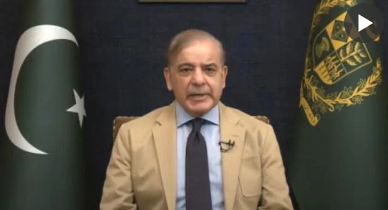
ISLAMABAD, JUN 15 /DNA/ – Prime Minister Shehbaz Sharif has vowed to abolish all institutions, ministries and departments that have become a burden on the exchequer, saying that this move alone will save tax payers’ billions of rupees and put the country on the path of prosperity.

“The abolishment of all ministries and department which, instead of serving [nation], have become a burden on the masses is indispensable,” the premier stated while addressing the nation on Saturday.

“When we came to power, the economic conditions at that time were evident to everyone, and we saved the country from default,” the premier said.

The PM gave credit to the last Pakistan Democratic Movement (PDM) alliance and the top leaders of Pakistan Peoples Party (PPP) including President Asif Ali Zardari and Bilawal Bhutto Zardari for pulling the country out of difficult economic situation.

Appreciating his government’s prudent economic policies, PM Shehbaz said the country was now moving on a path of progress after coming out of economic difficulties.

“However, this way is not only difficult and long but also requires sacrifice from higher-ups in the government and the elite. The entire nation’s eyes are set on the government to see how it steers Pakistan out of the economic crisis and brings about a revolution of prosperity in the country,” he added.

PM Shehbaz said that since he retook the reins of the country with the help of people’s support in form of votes and trust, inflation had dropped to 12% from 38% as a result of the government’s policies.

“This would promote investment and the country would walk down the path of prosperity at a greater pace,” PM Shehbaz said.

PM Shehbaz then referred to the latest petrol and diesel price cuts as a “relief” to the inflation-hit masses.

He, however, admitted that these steps were still not enough amid “storm of inflation” during the last four years that “broke the backbone” of poor class.

PM Shehbaz promised the nation to take further measures to keep providing relief to them and bringing down the inflation, expand investments and provide opportunities of higher education to the youngsters.

“We are not only serious about making Quaid’s dream true but also assure the nation that no difficulty would be an obstacle in our way if we work hard and keep the sentiment of sacrifice and selflessness alive,” he added.

The prime minister said: “Lamenting the past serves no purpose; instead, we must learn from it to reclaim Pakistan’s lost glory.” He emphasised the commitment to realising the vision of Quaid-e-Azam, saying that with a spirit of sacrifice and dedication, “no one can impede our progress.”=DNA

Bringing the Judiciary Back in Line

Qamar Bashir

By: Qamar Bashir

During martial laws and civil dictatorships, the judiciary has often been used by the executive as a potent weapon to lend legitimacy and legal cover to their political, administrative, and law-and-order objectives. This has included punishing, grilling, incarcerating, or even eliminating their declared or undeclared enemies and adversaries in politics, business, the judiciary, the executive, or the media.

However, recent efforts by the judiciary to assert its independence have seen this effective tool slipping away from the executive’s control. The usual methods of coercion, arm-twisting, intimidation, and luring judges to form compliant benches and deliver favorable decisions, particularly in highly sensitive political cases, appear to be losing their efficacy.

However, intelligence agencies, driven by their inherent nature and advanced training, are proficient in achieving their objectives through the simplest means or, as a standard operating procedure (SOP), by gradually increasing the complexity, lethality, sophistication, and effectiveness of their tools and techniques. If one method fails, they approach the objective from a different angle using more potent techniques and bringing in better and more experienced human resources. They will continue these efforts until they are either directed by their command to stand down, the target succeeds in eliminating them, or the target is eliminated.

At this point in time, there are significant stakes for the supra executive that can only be safeguarded with a compliant judiciary at all levels. These stakes include tainted elections and the formation of the government based on Form 47. If candidates who claim to have won the elections succeed in convincing independent election tribunals or the higher judiciary that the current government lacks legitimacy due to rigged Form 47s, then the government, allegedly put together by the supra executive with considerable effort and engineering, would collapse like a house of cards.

The second major stake is that handpicked non-political elements currently run major and sensitive ministries, departments, and bodies like PTA, NADRA, the Accountability Bureau, and SIFC. These individuals control, manage, and implement all important policy, strategic, and tactical decisions of the supra executive.

This also includes the Ministry of Finance, which holds the country’s financial resources. The ministry has the power to either strangle any policy, department, agency, or institution by depriving it of financial liquidity, or to nurture, promote, expand, or strengthen others by providing financial support.

The Ministry of Interior is also involved, manipulating the police and security agencies to update the software of political elements considered hostile to the supra executive. This ministry implements the narrative to impart exemplary punishment to political leaders, workers, supporters, abettors, masterminds, and facilitators of the events of May 9.

In this background the problem statement for the supra executive is how to bring the judiciary back under tight control to save the current government and retain the ability to make vital and far-reaching decisions that it believes are in the best interest of the army, the people, and the country.

The options before the supra executive are many. It can  continue to intensify direct pressure on judges, using threats, harassment, and surveillance and targeting judges’ families and exploiting vulnerabilities. But it also knows that, if this action backfired, it would further alienate the judiciary and strengthen their resolve for independence, besides risking significant public and international backlash.

The next indirect option is to influence the appointment of judges sympathetic to their interests through legal and administrative channels by leveraging existing political connections to appoint or promote judges who are more likely to align with its objectives. This approach however risks undermining the judiciary’s overall credibility and could provoke resistance from the legal community and civil society.

It might use its clout in the parliament and the government to offer financial incentives, career advancements, or other perks to judges in exchange for favorable rulings such as promises of high-profile positions post-retirement. The fallout of this strategy could erode judicial integrity and lead to long-term damage to the rule of law, besides exposing it to vigilant media or whistleblowers, leading to scandals.

It might use legislative and executive to undermine judicial independence indirectly by fostering where judicial decisions can be overridden or ignored by executive orders. The weakness of this approach is that it could destabilize the democratic process, leading to political unrest and weakening public trust in state institutions.

It can launch media campaigns to discredit independent judges and portray them as biased or corrupt and utilizing the state-controlled media to shape public opinion against the judiciary. The fallout of this strategy could cause a backlash if the public perceives it as overt propaganda. It can also rally civil society and international observers to support judicial independence.

It might create factions within the judiciary by aligning with judges who have similar ideological stances or grievances against independent judges by promoting internal division to weaken overall judicial solidarity. This strategy  may create short-term advantages but risks long-term instability within the judiciary, compromising its ability to function effectively and cohesively.

Out of all these scenarios, the best possible option is to  enhance its evidence-gathering capabilities to build stronger cases against individuals or entities. This includes cultivating highly effective lawyers, working closely with witnesses, and ensuring robust legal arguments. Additionally, they might employ intimidation tactics to deter victims or subjects from approaching the judiciary by threatening dire consequences. The implication of this approach may improve legal strategies leading to more successful prosecutions and minimum resistance from legal and human rights communities.

In this critical period, the judiciary’s resistance to executive control represents a significant shift towards asserting judicial independence in Pakistan. Any approach by the supra executive to regain influence must be carefully considered, as it carries the risk of exacerbating tensions and undermining the very fabric of Pakistan’s legal and political systems.

By: Qamar Bashir

Former Press Secretary to the President

Former Press Minister to the Embassy of Pakistan to France

Former MD, SRBC

Strong opposition, assertive Muslim vote bank signal potential shift in Indian politics

Strong opposition, assertive Muslim vote bank signal potential shift in Indian politics

BJP may need to moderate its approach

ISLAMABAD, JUN 15 /DNA/ – The BJP’s dominance in the Indian political landscape is poised to decline with the rise of a strong opposition in the parliament and the assertive stance of a consolidated Muslim electorate against the Hindu exclusionist parties. This sets the stage for a significant shift, potentially necessitating a more moderate approach from the BJP to adapt to the evolving political environment.

These views were expressed by speakers at a session titled “Indian 18th Lok Sabha Elections: Results and Realities” organized by the Institute of Policy Studies (IPS), Islamabad. The session was chaired by Khalid Rahman, chairman IPS, and moderated by Syed Nadeem Farhat, senior research fellow at IPS. The speakers included Ambassador (r) Syed Abrar Hussain, Iftikhar Gillani, Ankara-based senior Kashmiri journalist, Brig. (r) Said Nazir, defense and security analyst, Farzana Yaqoob, former AJK minister and secretary IPS Working Group on Kashmir, and Usama Hameed, an IPS associate.

Highlighting a significant shift in the Indian electorate’s behavior, Iftikhar Gillani noted that voters prioritized local candidate performance over Modi’s popularity. He noted the BJP’s slogan “Abki Baar 400 Paar” lacked empirical support while it was aimed at securing a parliamentary majority to amend the Indian Constitution. This agenda has raised concerns among minorities and Dalits about losing their special rights, and worked in favor of the Indian National Congress in augmenting the anti-BJP sentiment.

Gillani also emphasized the growing assertiveness among Muslims reacting to their systematic marginalization and victimization, which underscored their political maturity under the factor of fear generated during a decade-long BJP rule in the center. He noted the significant development of common strategies of the marginalized communities which garnered rare solidarity between Dalits, Muslims, and Other Backward Classes, hinting at new dynamics and undercurrents in the Indian society.
Ambassador Abrar noted that the BJP alliance’s extremist stance could be mitigated if the Congress alliance delivers a strong performance, potentially reducing the prevalence of hate-based politics.

Talking about the global perception of India’s policies and the reality of its internal politics, Usama Hameed remarked that despite efforts to downplay Pakistan’s relevance, BJP leaders frequently mentioned Pakistan in their speeches. He pointed out that the consolidated vote banks and strategic voting behaviors of Muslims have significantly impacted the election results, even though the number of Muslim candidates had decreased.

In this regard, Said Nazir stressed the need to analyze the impact of BJP’s policies on religious minorities over the past decade. He pondered whether Prime Minister Modi would pursue damage control or escalate these issues in the next five years.
He also emphasized the importance of scrutinizing the reactions of the RSS and other right-wing factions. He speculated that if Pakistan followed an appeasement policy against the arrogant Indian behavior, it might embolden India to continue blaming and stigmatizing Pakistan as a weaker state. Referring to the statements of Indian external affairs minister Jaishankar, in which he again attributed terrorism to Pakistan, the analyst advised the Pakistani government and politicians to follow calculated policies regarding the Eastern neighbor.

In his concluding remarks, Khalid Rahman emphasized that the stability and longevity of the BJP-led alliance is critically dependent on intra-party and inter-party interactions. He said given the self-centered political and administrative characteristics of the Indian prime minister, managing a coalition government would be particularly challenging for him. He also highlighted the importance of analyzing societal transformations in India to understand election outcomes. He pointed out that vulnerable groups might continue to face challenges due to the mindset of the society that has formed over the BJP’s last two tenures.

Over 1.5 million pilgrims arrive in Mina for Hajj 2024

Over 1.5 million pilgrims arrive in Mina for Hajj 2024

MINA, JUN 15: More than 1.5 million pilgrims descended on the tent city of Mina on Friday, the Day of Tarwiyah, to mark the beginning of the annual Hajj pilgrimage, chanting “Labbaik Allahumma Labbaik” (“Here I am, O God, here I am answering your call”).

Pilgrims arrived from all corners of the globe, beginning their journey to Mina early on Friday, Dhul-Hijjah 8, either by vehicles or on foot.

By Thursday night, roads leading to Mina were filled with pilgrims heading to the Holy Site, where they will camp in one of the world’s largest tent cities.

The valley of Mina echoed with the chanting of talbiyah as pilgrims from about 180 countries converged, praising God in an atmosphere of spirituality and faith.

This year’s Hajj, one of the largest religious gatherings globally, includes over 1.5 million pilgrims along with hundreds of thousands of domestic participants.

Upon arriving in Makkah on Thursday, pilgrims performed Tawaf Al-Qudum (Tawaf of Arrival) before proceeding to Mina.

Following the tradition of Prophet Muhammad (peace be upon him), pilgrims will spend the Day of Tarwiyah in Mina, engaged in supplications and final preparations for the main Hajj rituals, including the Standing at Arafat on Saturday.

In their Friday sermons at the Two Holy Mosques, imams encouraged pilgrims to seek forgiveness and perform the Hajj rituals with piety.

Sheikh Bandar bin Abdulaziz from the Grand Mosque in Makkah and Dr. Abdul Bari Al-Thubaiti from the Prophet’s Mosque in Madinah emphasized the importance of fearing God in all aspects of life.

This year’s Hajj also includes special groups such as 3322 guests of Custodian of the Two Holy Mosques King Salman, including 2000 Palestinian pilgrims from families affected by conflict, 1300 guests from various countries.

It also includes 22 pilgrims from families of conjoined twins recently separated in the Kingdom. Additionally, Syrian pilgrims are participating in Hajj after a 12-year hiatus, arriving via direct flights from Damascus to Jeddah.

The Saudi authorities and Hajj missions from different countries have meticulously prepared to ensure a smooth pilgrimage, despite the challenging heat.

With temperatures posing health risks, the Ministry of Health issued advisories for pilgrims to stay hydrated, seek shade, and avoid direct sunlight during peak heat hours. These precautions are essential for ensuring the well-being of all pilgrims during this sacred journey.

Modi’s third term and the future of India-Pakistan relations

Modi's third term and the future of India-Pakistan relations

Faryal Naz

I’m writing to express my opinions about the recent events in India, our neighbour, where Narendra Modi has sworn in for a third term as prime minister. I would like to provide my detailed analysis of the situation, with an emphasis on the potential risks and opportunities that may arise going forward, since this event has important ramifications for Pakistan and its people. The re-election of Modi marks a significant turning point in the history of India-Pakistan relations. Previous terms have been characterized by heightened tensions, especially over the disputed region of Kashmir. The decision to revoke Article 370, granting special status to Jammu and Kashmir, fueled further conflict and resulted in military escalation along the border. This move was viewed as bold and controversial, with ongoing implications for the region.

National security was a major theme of Modi’s reelection campaign, which may signal a shift toward a more assertive posture toward Pakistan. His administration has always maintained a tough stance against terrorism and charged Pakistan with providing shelter to and support for terrorist organizations. There is now more tension between the two countries as a result of this rhetoric, and there are worries that a military confrontation may break out.

Although tensions persist, there have been diplomatic attempts between the two countries. In 2019, Modi and Pakistan’s Prime Minister Imran Khan met in Riyadh, Saudi Arabia, and agreed to resume dialogue and strive for peace in the region. Nevertheless, these efforts have been unsteady, and the relationship between the nations remains fragile. In 2020, India conducted airstrikes on purported terrorist camps in Pakistan, escalating tensions. The airstrikes were viewed as a justified reaction to terrorist attacks in India and received support from international allies.

The military in Pakistan wields significant influence within the country and its stance towards India is crucial for the future relations between the two neighbours. The military has consistently taken a tough stance towards India, accusing it of aggression and human rights violations in Kashmir. They have called for international intervention to address these issues.

However, India has refuted these allegations, viewing them as a pretext for Pakistan’s own military activities in the region. Moving forward, Pakistan needs to address India’s concerns about terrorism and security by taking concrete steps such as cracking down on terrorist groups on its territory and engaging in meaningful dialogue on contentious topics like Kashmir.

In order to resolve the India-Pakistan conflict, the international community must play a significant role. Particularly important in the area and working to ease tensions between the

two countries is the United States. But the US has also come under fire for its patchy policies in the area and for failing to deal with the underlying causes of the conflict. In order to advance, the international community needs to engage with the region in a more thoughtful and comprehensive manner, addressing the intricate historical, political, and cultural elements that form the basis of the conflict. This entails promoting communication and diplomatic efforts between the two countries as well as tackling the root causes of the tensions that exist in the area.

PTCL group fraternity provides the gift of life to recipients through annual blood donation drive

PTCL group fraternity provides the gift of life to recipients through annual blood donation drive

ISLAMABAD, JUN 14 /DNA/ – As the world celebrates the 20th anniversary of World Blood Donor Day, Pakistan’s largest telecommunication and ICT services provider, PTCL Group (PTCL & Ufone 4G) perpetuates its compassionate legacy of saving lives and ensuring steady blood supply at hospitals and blood banks through its annual blood donation drive.

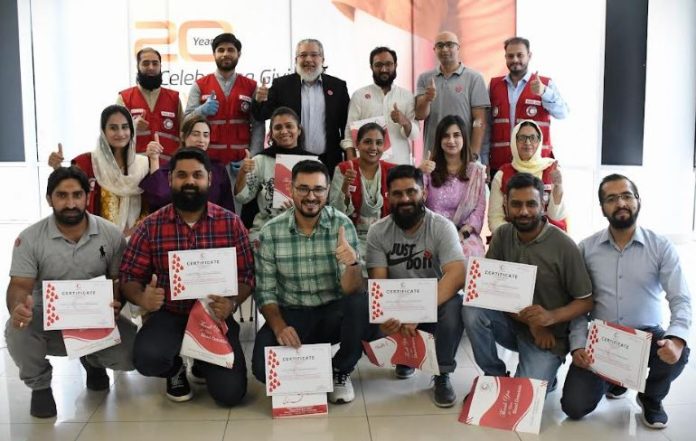
This year, PTCL Group joined forces with Pakistan Red Crescent Society (PRCS) for the drive, held at the Ufone Tower in Islamabad. PTCL & Ufone 4G management and employees, participated in the drive with remarkable enthusiasm and conviction in the significance of their contributions. The campaign is held every year under PTCL Group’s Corporate Social Responsibility Program to create shared value for fellow citizens and society.

World Blood Donor Day is celebrated to raise awareness regarding the significance of blood donations. The PTCL fraternity is conscious that blood is a non-replicable resource coming only from donors, and that, patients depend on the empathy of fellow citizens for essential medical treatments, surgeries, and emergencies, especially for patients with critical medical conditions like thalassemia, anemia, cancer, trauma, and more.

The selfless contributions of blood donors save millions of lives each year, including those of children. That is why the World Health Organization (WHO) is celebrating the 20th Anniversary of the day to recognize the love and humanity of blood donors worldwide, with the theme; ‘20 years of celebrating giving: thank you blood donors!’

Group Chief Marketing Officer, PTCL & Ufone 4G, Syed Atif Raza expressed his gratitude to PRCS for the collaboration and said, “Humanity and altruism are central to the religious and cultural ethos of our society, and shape PTCL Group’s vision for volunteerism, corporate philanthropy, and CSR. We are grateful to be part of a campaign that aims to save the lives of fellow citizens, including children, and fosters mutual empathy, solidarity, and social good. PTCL Group remains committed to exploring ways to create shared value and promote social good for the communities we serve and society at large.”

PTCL Group actively contributes to society, the economy, and the environment through its robust CSR and Volunteerism programs, thereby anchoring it strongly as a conscious and responsible corporate citizen of the country.

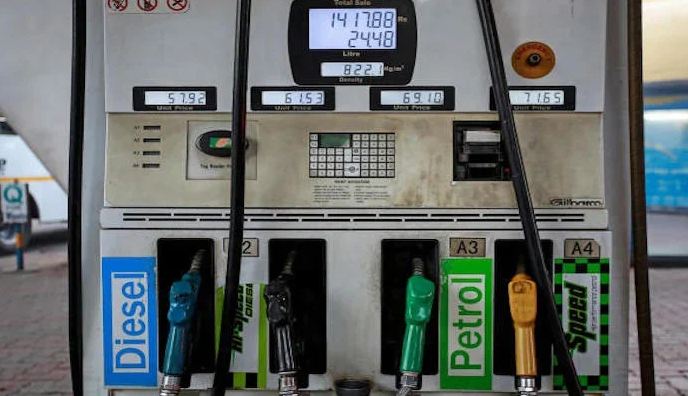
Govt reduces prices of petrol, diesel

Govt slashes petrol price by Rs15.39 per litre for next fortnight

Petrol price cut by Rs 10 per liter

ISLAMABAD, JUN 14 /DNA/ – Two major announcements by Prime Minister Muhammad Shahbaz Sharif have been made in one day. After making electricity cheaper for industries, Prime Minister’s big Eid for the people on Eid comes in the shape of reduction of petrol prices.

A big reduction in the price of petrol by 10 rupees 20 paise per liter

While Reduction in the price of diesel by 2 rupees 33 paise per liter has been announced. 

On June 1, the government had reduced the price of petrol by Rs 4 74 paise and the price of diesel by Rs 3 86 paise per litre. So far, a total relief of 35 rupees has been given to the public in the price of petrol per liter.

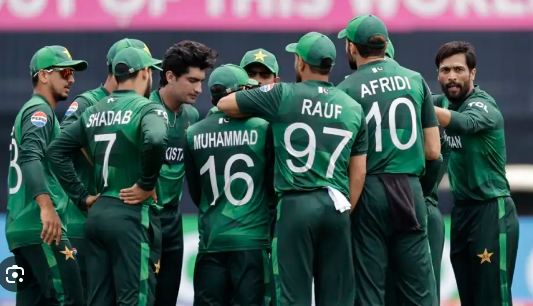
Pakistan out of T20 World Cup

Pakistan out of T20 World Cup

Internal grouping led to downfall of the team

DNA

New York: To the disappointment of the cricket fans Pakistan’s race for the T20 World Cup has ended as match between USA and Ireland could not take place due to heavy rain.

USA and India will now qualify for the super 8 stage of the World Cup. In any case Pakistan will play its last pool match against Ireland but even if Pakistan win, they cannot qualify for the super 8 stage.

After being kicked out of the world cup Pakistan, for the next T20 World Cup, will have to appear in the qualifying round and thus play against small nations.

The experts have termed Pakistan performance in the World Cup dismal and pathetic. Pakistan team, as reports suggest, was divided into many groups. The internal infighting led to this ignominious outcome. The PCB chairman Mohsin Naqvi has already hinted at taking a stern action against the players who did not perform or were involved in the infighting.

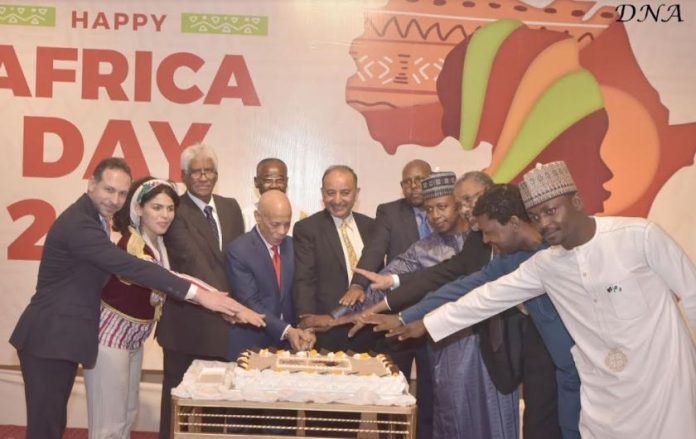
Africa Day celebrated in Islamabad

Africa Day celebrated in Islamabad

ISLAMABAD, JUN 14 /DNA/ – Federal Minister for Energy Mussadaq Masood Malik, along with Dean of the African Group Mohamed Karmoune, Ambassador of Morocco, and heads of missions from various African countries, gathered to celebrate Africa Day with a ceremonial cake cutting.

The event highlighted the strong diplomatic ties and mutual cooperation between Pakistan and African nations.

Stay Connected

64FansLike
60FollowersFollow

Latest Reviews

Exchange Rates

USD - United States Dollar
EUR
1.17
GBP
1.35
AUD
0.67
CAD
0.72