Home Blog Page 682

‘Sword Queen’ Kong cuts an Olympic dash

'Sword Queen' Kong cuts an Olympic dash

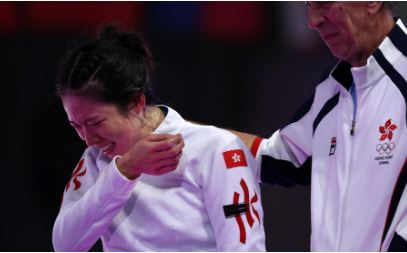
Paris, July 28 (AFP/APP): Vivian Kong is known in fencing as the “Sword Queen” and the tears that flowed after a memorable fightback on Saturday secured Hong Kong’s third Olympic title were understandable after overcoming two career-threatening injuries.

The 30-year-old has suffered two torn cruciate ligaments down the years and battled back to peak form each time.

She showed the same single mindedness to overcome a 7-1 deficit and a partisan crowd — including French President Emmanuel Macron — to beat Frenchwoman Auriane Mallo in the epee final.

The graduate of Stanford University joins windsurfer Lee Lai-shan at Atlanta 1996 and fellow fencer Cheung Ka-long in Tokyo in 2021 in the pantheon of Hong Kong’s Olympic champions.

Hong Kong — and the sport of fencing — are fortunate to have her.

She was once courted by Canada having lived there from age two to six but she declined their advances, and had chosen taekwondo as her favoured sport before she discovered fencing.

Her mother wanted her only child to carry on with her ballet classes but Kong opted instead for a compromise.

“I was interested in taekwondo and so I did it all the way until I was age 11 and I got my black belt,” she said.

“But then my mother still wanted me to dance and in between she made me do ice skating.

“I liked it, but I was not so good at it. And then my father stepped in and said, ‘Why don’t you try fencing?’

“Fencing is like the ballet of sports, it is very elegant and I really, really liked it.”

– ‘Reflect, heal and learn’ –

She may have lacked siblings but she would entertain herself by playing chess against herself although nowadays she prefers painting and yoga.

She had plenty of time to kill during her long lay-offs after her two cruciate ligament injuries — she tore her left one in 2017 and the right two years later.

However, she credits a life choice she made after her first cruciate ligament injury for improving her general physical well-being.

“After the injury, I wanted to change and be a new person,” she said.

“I wanted to recover faster. I kept Googling what foods to eat to recover quickly.

“I am recovering a lot faster, I get muscle pain but it goes away really quickly. I have become so much stronger after turning vegan.”

She may be a single child and her sport a solitary one but she does not live in a bubble as she showed when the Covid pandemic hit and forced the postponement of the 2020 Olympics.

She participated in Zoom calls with those who were living on their own as well as delivering supplies to children with special needs.

“This pandemic is asking us to ask ourselves what matters most,” Kong said in 2020.

“Postponing the Olympics gives us time to reflect, heal and learn.”

She certainly put those lessons into practice and it took just one more Olympics for her to achieve her golden moment.

Reduction in production cost to make trade, industry competitive: PIAF

Reduction in production cost to make trade, industry competitive: PIAF

LAHORE, JUL 28 /DNA/ – The Pakistan Industrial and Traders Associations Front (PIAF) has asked the government to take prompt measures to bring down the production costs for trade and industries to enable them to compete in the international market.

PIAF Chairman Faheemur Rehman Saigol said that trade and industry is currently having difficulty to compete the global market because of rapid increase in production costs. He said that the high cost of production is not good for our exports.

“The cost of production is a major factor, which makes an industry stand out among competitors in the world market,” he explained.

Faheem said that high energy tariffs, shortage of fuel for machines, high rate of taxes, and lack of skilled labor are the main reasons behind the increase in the cost of production. He expressed concern that the reduction in industries’ contribution to Pakistan’s gross domestic product (GDP) is a worrying trend. “Manufacturing and production industries have the potential to significantly impact economic growth by reducing unemployment in the country. The government needs to take solid steps to make doing business easier,” he added. He said lack of research and development (R&D) is one of the major reasons behind the increase in the cost of production in any industry.

“Sometimes we have the resources, but we make poor decisions. A poor decision means poor practices of work execution,” he added. He said that R&D could help in the provision of valuable technologies, business models, and designs for the industry. “Implementation of modern techniques or work practices can increase production and also reduce its costs,” he added.

The PIAF Chairman said that both external and internal issues lead to an increase in cost of production. He said Pakistan’s industry is struggling in the international market due to challenges such as high inflation, political instability, increased power tariff, rising fuel costs, energy shortages, and lack of R&D.

“An effective strategy is needed to improve the performance of the industrial sector. The government should facilitate exporters by providing a level playing field to them in terms of business costs, particularly in utility pricing,” he suggested. Pakistan Industrial and Traders Associations Front (PIAF) Chairman Faheemur Rehman Saigol said Pakistan’s economy, particularly small and medium-sized enterprises (SMEs), is struggling to cope with the current economic crunch, and needs support. “Rather than providing subsidies or waivers, the industries are being burdened through rising production cost. The burden of surging oil prices in the international market is immediately transferred to consumers by the government, but the process of reducing prices is always very slow,” he noted.

He asked the government to work on a fast track plan to address expansive energy issue and priority should be given to the value-added industry in this regard.

The Chairman said that Pakistan’s core issue is the high cost of doing business, which the government needed to bring down to bring the local as well as the export industry at par with global competitors. The chairman urged for increasing ease of doing business, lowering cost of production, paying early refunds to solve liquidity crunch, relaxing import policy for industrial raw material, and equalizing the energy tariff across the country.

He said Pakistan was at 147 out of 190 countries on the global ranking of doing business mainly due to bureaucratic hurdles. He said various provincial departments, including EOBI, Social Security, Women Welfare, Environment Department etc were playing a negative role and treating the manufacturers and exporters like criminals. He called for giving a boost to the export sector by adopting diversified marketing techniques and extending practical support to the industry, and asked the exporters to prepare themselves for meeting the global challenges so that exports could be enhanced by fully exploiting new opportunities.

Exploring Pakistan-Ethiopia Cooperative Ties

Exploring Pakistan-Ethiopia Cooperative Ties

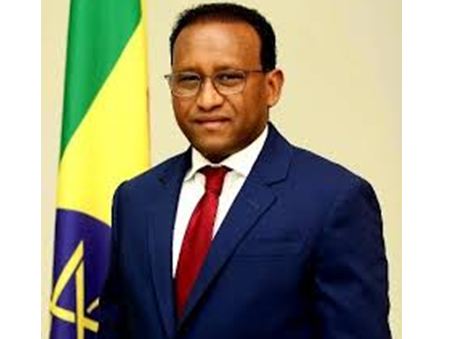
Ambassador Jemal Beker Abdula

The cooperative ties between Islamabad and Addis Ababa have been refreshed by the Ethiopian government’s decision to open the embassy in Islamabad on May 11, 2023, to strengthen the economic cooperation between the two states formally.

The Ethiopian government is highly ambitious to join Pakistan’s efforts to explore the untapped potential of African nations in the contemporary international system parallel to singing various bilateral cooperative agreements with different African nations.

During the inaugural ceremony of the embassy, the two-sided formal state authorities showed their commitment to working together in various areas of common interests, such as climate change, immigration, security and terrorism.

While appreciating the Addis Ababa’s choice of formalizing the ambassadorial relations with Pakistan, and the government of Pakistan accepted the need for boosting multidimensional cooperative ties between Pakistan and African nations.

The Islamabad-based decision-makers also acknowledge that the Ethiopian and Pakistani governments have common economic and development problems in the contemporary global order.

In the welcoming remarks, Pakistan’s state representatives dubbed the opening of the embassy in Islamabad as a new beginning in the bilateral cooperative interactions between the two states, and it has facilitated the two-sided leaderships in expanding the conventional patterns of their bilateral interactions in the diplomatic, political, economic, and social dimensions.

 On a reciprocal basis, the representatives of Ethiopia showed a keen interest in their government in deepening bilateral cooperation with Islamabad, which would enable the leaders of both sides to diversify their formal ties.

In this way, the decision to open an embassy in Pakistan has marked a significant development in the bilateral ties, and it exhibits the increasing values of diplomatic, trading, and cultural relations between the two nations.

 In cultural terms, the common ideological foundations provide solid grounds for the growth of cultural ties, and the prominent role of Ethiopians in Islamic history creates solid connections between Islamabad and Addis Ababa.

The recent development of opening an embassy in Islamabad cannot be divorced from a comprehensive account of Pakistan-Ethiopia relations, which started in the 1950s when the leaders of both nations realized their shared values of mutual respect and bilateral cooperation in diverse directions.

The major turn in the bilateral ties occurred in 1973 with the formal opening of the Pakistan’s Embassy in Addis Ababa under Islamabad’s broader framework of Engage Africa Policy.

The Engage Africa approach focused on various African states and preferred Ethiopia as one of the prominent nations appropriate for establishing collaborative connections with Islamabad in the areas of agriculture, education, and healthcare.

In this way, the governments of both nations witnessed a brief era of strong political coordination, diplomatic support, and economic cooperation throughout history. However, Addis Ababa’s launching of formal ambassadorial services in Islamabad started facilitating the two-sided governments in exploring new platforms for trading collaborations. The signing of the Bilateral Trade Agreement in May 2023 is important in this regard because it led the two-sided business communities to establish their partnerships.

The trading connections have already been established between both nations, and these relations made Pakistan a recipient of Ethiopian red kidney beans, chickpeas, pulses, hides and skins, tea, and coffee, whereas the Ethiopian government receives Pakistani healthcare products, chemicals, machinery, sugar, rice, and textiles.

In this way, a smooth trading connection based on a commendable volume of import-export enabled the Pakistani and Ethiopian governments to recognize their potential for working together for mutual trade benefits. It has widened the scope of trade and investment opportunities between their respective business communities while encouraging their mainstream leaders to consider each other as reliable business partners in the contemporary international system.

The quest to augment the existing level of people-to-people contact between the two nations has led Ethiopian and Pakistani formal state authorities to take several practical measures to deepen the two-sided societal acquaintances. To overcome the challenge of certain social disconnects, direct flights between Karachi and Addis Ababa have started recently, and it enabled Pakistan to receive four direct Ethiopian flights. The launching of direct flights plays a creditable role in promoting the mutual interests of two states to foster economic growth with the promotion of bilateral cultural ties. This step started leaving positive impacts on the shared interests of trade, tourism, and pleasant societal contacts between Islamabad and Ethiopia. Direct flights create easy chances for business professionals and potential investors to travel between both states while availing the benefits of reduced travel time and reasonable costs. 

In this way, the Ethiopian government has proved that its wealth of precious natural resources needs appropriate welcoming destinations around the world, where Pakistan has become an exception due to the non-existence of major disagreements between Addis Ababa and Islamabad. The absence of any political difference between two-sided governments provides additional support to the ongoing mutually collaborative patterns of bilateral relations between Pakistan and Ethiopia. Through developing special formats of regular interactions between Islamabad-based diplomatically community and leading circles of Pakistan’s business communities, the government of Ethiopia has conveyed an explicit message for fostering commercial ties between Pakistan and Ethiopia with the support of regular cultural and social contact. Therefore, the ongoing designs of political communication, diplomatic support, economic cooperation, and social interaction validate the determination of Addis Ababa to work with Islamabad in various unexplored dimensions of their bilateral cooperation. This pattern of multidimensional cooperative bilateralism contains substantial potential for convincing two-sided leadership to work on certain strategic extents. The strategic communication between both states has already witnessed teamwork in the training and capacity-building programs of United Nations international peacekeeping operations.

Addis Ababa and Islamabad have established a comprehensive framework to enhance their bilateral partnerships in various areas. The leadership of both nations is strongly committed to expanding their collaborative potential. Over the past two years, since the opening of ambassadorial services in Islamabad, significant progress has been made, indicating that the two nations could work towards a more stable and cooperative future. This cooperation aligns with their shared goals of social prosperity and economic development.

Security forces eliminate four terrorists in Tank operation

Security forces eliminate four terrorists in Tank operation

RAWALPINDI, JUL 27: Security forces on Saturday neutralised four terrorists during an operation in Tank district, Khyber Pakhtunkhwa, said the Public Relations Department of the Pakistan Army (ISPR).

The operation, launched based on a tip-off about the terrorists’ location, involved a fierce exchange of gunfire.

During the confrontation, the forces successfully gunned down the four Kharji terrorists of Fitna Al Khawarij, who were known to be involved in significant terrorist activities, including attacks on security forces.

The operation also led to the recovery of arms and ammunition from the slain militants.

ISPR confirmed that the terrorists had been engaged in kidnapping and target killings of innocent civilians.

The Pakistan Armed Forces are committed to eradicating terrorism from the region and are taking further actions to ensure that any residual terrorist presence is eliminated.

War of Narratives, Turns and U Turns

Qamar Bashir

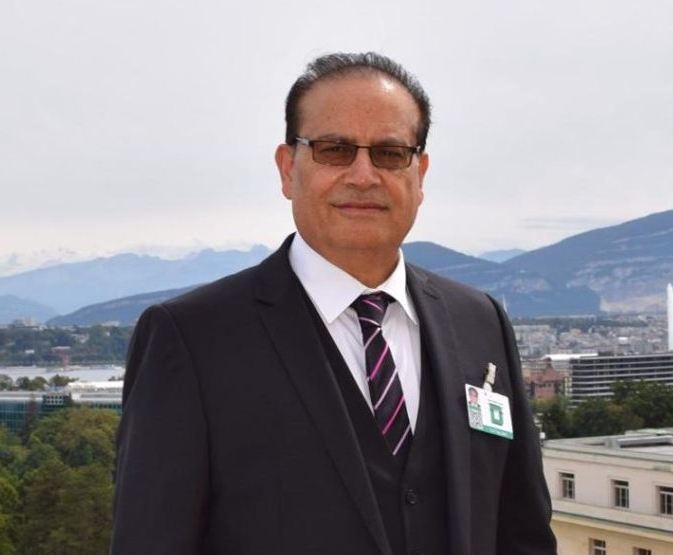
By: Qamar Bashir

The entire nation is reeling from the onslaught of conflicting narratives and frequent U-turns from various political parties. The public has become increasingly aware of how original narratives have been manipulated and distorted over time. They are frustrated and disillusioned by the constant introduction of new narratives that discard the older ones without any justification, reason, or prudence. This perpetual cycle of shifting stories and changing stances has eroded trust in political discourse and left the people weary of the relentless political maneuvering.

Nawaz Sharif, after his unceremonious ouster in 2017, primarily for refusing to follow the establishment’s lines on pressing national and international issues, invented and injected the narrative of “giving respect to the vote.” This narrative resonated with the people, and the popularity of PML(N) soared to new heights. However, the narrative was mercilessly killed before and after the 2024 Election depriving the PML(N) from much needed political capital and also faced personal humiliation.

He was assured of winning a ⅔ majority but was miserably ditched. He lost his own seat in Mansehra and was only able to save his seat in Lahore, allegedly due to brute interference from the establishment to give him some face-saving. PML(N) allegedly sold its soul and its brand narrative, “Give Respect to Vote”  in exchange for forming the government despite being the minority party in the parliament.

We also saw how our poor Information Minister was forced to hold an emergency press conference where he announced the launch of Operation Azm-e-Istehkam forthwith. However, he had to take a sharp U-turn once his announcement faced stiff opposition from all political parties, including his own.

Later, we experienced another sharp U-turn when the Information Minister, once again without any preparation or homework, announced the government’s intention to ban the PTI. He later had to take a U-turn after facing stiff resistance from all political parties, including some of the most loyal leaders of the PML(N).

The PTI chairman, when ousted unceremoniously from power in 2022, adopted the narrative that all those who claimed to be neutral are akin to animals. He qualified his statement by arguing that only animals, who don’t have minds or visions of their own, could be neutral. He was perhaps implying that the establishment should have supported his party when it was facing the no-confidence motion. However, since it chose not to do so, its claims of neutrality meant that it did not support PTI anymore and had instead shifted its blessings to other parties to bring them to power, for reasons best known only to them.

The constant chastising of the establishment by the PTI chairman after his ouster, terming them traitors, conspirators, and aggressors, and accusing them of seeking direction from a foreign country, finally led to his arrest. This culminated in the May 9 incident, which sealed the possibility of any rapprochement with the establishment.

All of a sudden, after one year of constant incarceration and maintaining the narrative that “neutral” is equal to “animal,” the PTI founder suddenly took an unexpected U-turn, demanding the establishment to become neutral. This U-turn not only amazed other parties and the people at large but also left the party leaders at a loss for words, grappling for arguments to support the narrative they had been opposing since the ouster of the PTI from the government.

Mehr Bano, the newly emerged star spokesperson of PTI, who returned to Pakistan after participating in political advocacy in the UK Parliament, came up with a new set of arguments to support the new narrative. She gave many reasons, one of which was that this narrative was injected to unnerve PML(N) and PPP, putting them in a defensive position and causing them to make mistakes that PTI could exploit for further political mileage.

The set of arguments also included that what the founder meant was that the establishment should stand with the righteous path, stand with justice and truth, and play their role in ensuring the dispensation of justice and the establishment of the rule of law. This implied that, according to them, only PTI is on the righteous path; therefore, the establishment should stand with PTI, help it reclaim its alleged stolen narrative, and put it in power with Imran Khan as Prime Minister.

The Chief Minister of KP came up with his own logic. He argued that PML(N) and PPP are using the establishment to prolong their rule and are entangling the establishment in a trap, pushing it to directly deal with the PTI, enter into a war of narratives with PTI, deal with court cases, and use its influence and power to secure verdicts that directly or indirectly insulate PML(N) and PPP from direct confrontation with PTI, thus helping them to prolong their stay in power.

He warned that the people are holding the establishment responsible for all the failures, incompetencies, inefficiencies, and lack of deliverance of the government, arguing that it was the establishment that brought this incompetent government to power; therefore, they are also responsible for its failure. He advised the establishment to withdraw its support from the government and let it fight its case alone.

Mr. Shibli Faraz, in reply to questions posed by inquisitive journalists, first tried to explain the new narrative of asking the establishment to become neutral but lost his temper in response to subsequent probing questions.

Analysts and commentators are of the view that the ice between PTI and the establishment is not going to melt anytime soon. They argue that the mistrust, bad blood, and animosity between the two have gone too far to be brought back on friendly terms. However, they also argue that the biggest threat faced by the establishment is its deteriorating image, not only among the people of Pakistan but also among most of the political parties in the opposition. They are especially worried about the erosion of their image among expatriate Pakistanis, particularly in the US, the UK, and the rest of the world.

They are also aware that as soon as it mends its fences with PTI, propaganda against it on all forms of social media will come to an end, giving it much-needed relief and improving its standing among the general public, which is pivotal for the performance of its duties within and outside the borders.

Analysts also believe that this war of narratives and frequent U-turns will continue to confuse the people even more, with no possibility of stopping anytime soon.

By: Qamar Bashir

Former Press Secretary to the President

Former Press Minister to the Embassy of Pakistan to France

Former MD, SRBC

Pakistan to become world’s major power, says Hungarian PM

Pakistan to become world's major power, says Hungarian PM

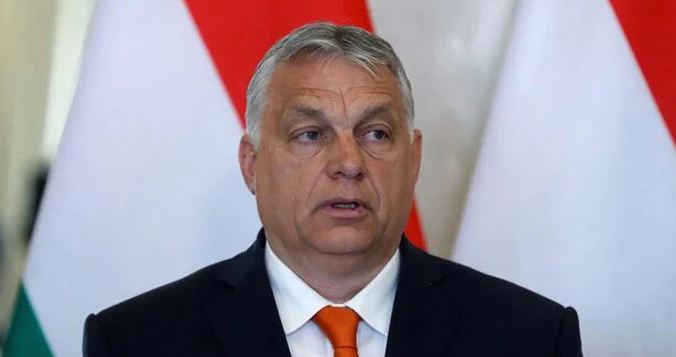
Budapest, JUL 27 /DNA/ – Hungarian Prime Minister Viktor Orban on Saturday forecast a shift in global power away from the “irrational” West towards Asia and Russia, predicting that Pakistan will become one of the world’s future big powers.

“In the next long decades, maybe centuries, Asia will be the dominant centre of the world,” Orban said while also mentioning China, India, and Indonesia as the future big powers.

“And we Westerners pushed the Russians into this bloc as well,” he said in the televised speech before ethnic Hungarians at a festival in the town of Baile Tusnad in neighbouring Romania.

He also said that Russia’s leadership was “hyper rational” and that Ukraine would never be able to fulfil its hopes of becoming a member of the European Union or Nato.

Orban, whose country currently holds the rotating EU presidency, has sharply differed from the rest of the bloc by seeking warmer ties with Beijing and Moscow, and he angered some EU leaders when he went on surprise visits to Kyiv, Moscow and Beijing this month for talks on the war in Ukraine.

He said that in contrast to the “weakness” of the West, Russia’s position in world affairs was rational and predictable, saying the country had shown economic flexibility in adapting to Western sanctions since it invaded Crimea in 2014.

He added that Ukraine would never become a member of the EU or Nato because “we Europeans do not have enough money for that”.

“The EU needs to give up its identity as a political project and become an economic and defence project,” Orban added.

The EU opened membership talks with Ukraine late last month, although a long and tough road lies ahead of the country before it can join the bloc.

A declaration at the end of the Nato summit this month said the alliance will support Ukraine on “its irreversible path” towards membership.

Pakistan-China institute launches strategic report on SEZ policies in Islamabad

Pakistan-China institute launches strategic report on SEZ policies in Islamabad

ISLAMABAD, JUL 27 /DNA/ – The Pakistan-China Institute, in collaboration with PowerChina, has launched a groundbreaking report titled ‘Aligning Special Economic Zones Policies of Pakistan and China’. The report aims to provide a strategic framework for enhancing the economic and industrial collaboration between Pakistan and China through Special Economic Zones (SEZs). The launch event, held in Islamabad, brought together key stakeholders and experts who shared their insights on the importance of this initiative and its potential impact on Pakistan’s economic landscape.

In his opening remarks, Mustafa Hyder Sayed, Executive Director of Pakistan-China Institute, emphasised the timeliness of the report. He noted that its release coincides with increasing collaboration between China and Pakistan, making it a pivotal moment for both nations. Sayed highlighted the critical need for Pakistan to adopt export-oriented policies to attract Chinese industries that are relocating to the global south due to rising production costs, business-friendly environments, and market access to regional markets. He stressed that the global economic landscape is highly competitive, and Pakistan must position itself as the prime destination for the relocation of key industries by developing unique selling points. Drawing lessons from China’s successful SEZ model, the report outlines what has worked in China and what needs to be adapted for Pakistan. Key takeaways include the necessity to attract investors with flexible policies and strategic locations for industrial zones, particularly near ports and business clusters, akin to the success seen in Shenzhen.

Su Dong, representing PowerChina, underscored the successful completion of 47 projects in Pakistan, with several others under construction. He expressed PowerChina’s readiness to continue working closely with Pakistan, extending best wishes for the report’s success. Su Dong emphasised the significance of this collaborative effort in driving economic growth and fostering a stronger bilateral relationship. He reiterated PowerChina’s commitment to supporting Pakistan in its industrial development journey, highlighting the potential for future projects and partnerships that can further enhance the economic ties between the two nations.

Federal Minister for Industries and Production, Rana Tanveer Hussain, delivered a keynote speech, lauding China as a great friend of Pakistan. He emphasised the significance of SEZs in attracting Foreign Direct Investment (FDI) and fostering industrialization, noting that the relocation of Chinese industries presents a significant opportunity for Pakistan. Hussain stated that the government is committed to offering more incentives and concessions to attract Chinese businesses, ensuring full security for their operations, and adopting Shenzhen as a benchmark for SEZ development. He highlighted that a few SEZs in Pakistan are already functional and stressed the importance of export zones in driving economic growth. The Minister underscored the need for Pakistan to compete with other regions, such as ASEAN, Bangladesh, and Central Asia, by creating a favourable environment for industrial relocation.

Mr. Zou Yaodong, Chief Administration Officer of China Overseas Ports Holdings Company Pakistan Ltd, extended warm congratulations on the launch of the report. He noted that in the past few years, SEZs have achieved significant development and become engines of economic growth. However, he acknowledged that there are still many challenges to overcome in the face of global competition. Zou Yaodong assured that his organisation is available to assist and support the improvement and development of SEZs in Pakistan, highlighting the importance of strategic partnerships and continuous efforts to enhance the SEZ framework to attract more investors and industries.

Dr. Erfa Iqbal, Additional Secretary and Executive Director General-II (EDG-II) at the Board of Investment (BOI), shared her insights on the report, emphasising that the topic is very close to her heart. She highlighted that economic survival depends on robust SEZ policies and that China serves as a valuable example for Pakistan, a model followed by countries like Cambodia and Vietnam. Dr. Iqbal pointed out that while Pakistan has made strides, the success of its SEZs is still debatable due to a range of problems. She praised the report for providing a comprehensive diagnosis of these issues and offering strategic recommendations. Dr. Iqbal stressed that the success of Shenzhen was not merely due to its location but a combination of factors such as land, labor, and capital, all supported by proactive government policies. She emphasized the need to reduce transaction costs, enhance supportive banking transactions for investors, improve security measures, and ensure business facilitation to create a conducive ecosystem for SEZ development.

The launch event concluded with a renewed commitment to strengthening Pakistan-China economic relations through strategic SEZ policies. The collaborative effort marks a significant step towards economic growth and industrial development in Pakistan, paving the way for a prosperous future. The report, ‘Aligning Special Economic Zones Policies of Pakistan and China’, is poised to serve as a blueprint for policymakers and industry leaders, guiding the development of SEZs that can attract global investments and drive sustainable economic growth in Pakistan.

Chairman CDA reviews ongoing uplift work in diplomatic enclave

Chairman CDA reviews ongoing uplift work in diplomatic enclave

Lakeview and Ankara Parks to See Major Beautification and Renovation Efforts, Says CDA Chairman

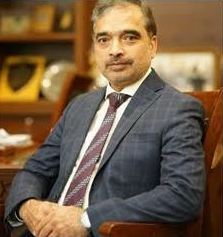
ISLAMABAD, JUL 27 /DNA/ – Secretary Interior Muhammad Khurram Agha along with Chairman CDA Muhammad Ali Randhawa on Saturday visited the Islamabad Industrial Triangle Kahota and Industrial Estate I-9/I-10.

The Interior Secretary said that the state-of-the-art development of Industrial Triangle Kahota should be done and the industrial estates of Islamabad should be ensured to provide all the facilities to the industrialists. He further said that all kinds of encroachments should be eliminated from the Industrial Triangle area.

Chairman CDA said that industrialists should be given special incrntives for the establishment and promotion of information technology and telecom industry in the industrial estates of Islamabad. He ditected that the allottees of such industrial plots who have not been able to establish industries on the allotted plots should set up industries on their plots as soon as possible. He said that all steps will be taken for the promotion of industry and for convenience of industrialists in Islamabad.

Chairman CDA Muhammad Ali Randhawa also visited various other places of Islamabad on Saturday. Officers of relevant formations CDA accompanied the Chairman during his visit.

According to the details, Chairman CDA Muhammad Ali Randhawa visited the Diplomatic Enclave. He reviewed the progress of ongoing uplift work in the diplomatic enclave and directed that the landscaping work should be done under a proper theme. He further said that after completing the landscaping and beautification work, measures be taken so that the beauty of the area could be maintained. Chairman CDA directed to complete minor construction and repair work at earliest.

Moreover, Chairman CDA Muhammad Ali Randhawa also visited Jinnah Convention Center and made a detailed review of the ongoing renovation work in the Convention Center. He said that during the renovation work of Jinnah Convention Center, the seating capacity in the main hall of the center should be expanded. Chairman CDA said that the convention center is being renovated according to the international standards for hosting world level events. He further said that landscaping work in the green area of Jinnah Convention Center should also be completed soon.

Besides, Chairman CDA Muhammad Ali Randhawa also visited Ankara Park. He said that landscaping should be improved to make Ankara Park more beautiful and the walls of Rawal Dam Interchange adjacent to the park should be beautified. Chairman CDA said that flags of all countries should be displayed in the park.

Later, Chairman CDA also visited Lakeview Park. Muhammad Ali Randhawa said that the walkways of Lakeview Park should be improved by constructing and repairing them and a comprehensive plan should also be presented to beautify the park and maintain it.

Kazakhstan win first Olympic medal as rain disrupts Games

Kazakhstan win first Olympic medal as rain disrupts Games

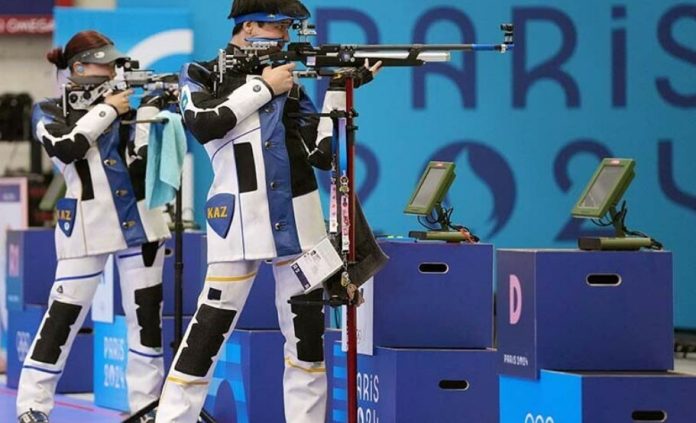
PARIS, JUL 27: Kazakhstan duo Alexandra Le and Islam Satpayev won the first medal of the Olympic Games on Saturday after claiming bronze in the 10-metre mixed team air rifle event.

Meanwhile, heavy rain disrupted the first full day of medal action at the Olympics as attention turned to sport after a spectacular but soggy opening ceremony.

Le and Satpayev cruised to victory over Germany’s Maximilian Ulbrich and Anna Janssen, outscoring their opponents 17-5.

A total of 14 golds are due to be up for grabs, with the first to come in the mixed-team 10-metre air rifle finals, taking place around 10:30 am local time.

But that number was swiftly reduced to 13 early on Saturday as the wet weather which deluged Friday night’s audacious opening ceremony along the River Seine continued to cause headaches.

The men’s street skateboarding competition, due to take place at the Place de la Concorde in the historic heart of Paris, was postponed until Monday due to rain overnight, organisers said.

The spectre of disruption also loomed over the opening rounds of tennis at Roland Garros, where only two of the 12 courts have roofs.

Torrential rain had lashed participants and spectators in Friday’s amphibious opening ceremony, where around 7,000 athletes paraded along the Seine in an armada of boats before a show-stopping finale which climaxed with a glittering light show at the Eiffel Tower and a performance from singer Celine Dion.

The ceremony received broadly favourable reviews, with France’s centre-right Le Figaro daily describing it as “full of surprises but often disjointed.”

Swimming duel
Elsewhere on the sporting front, swimming, badminton, rowing, cycling, hockey and basketball get underway along with the surfing competition, nearly 16,000 kilometres away on the French Pacific island of Tahiti.

Swimming will take centre stage at the La Defense Arena for the women’s 400m freestyle — one of the most-anticipated events of the entire Olympics involving three swimmers who have held the world record.

Australia’s defending champion Ariarne Titmus will dive in as favourite after clocking the second-fastest time ever last month behind only her own 3-minute, 55.38-second world best.

She stunned US rival Katie Ledecky in an electric Tokyo final three years ago, with the American great gunning for revenge.

Canadian teenage sensation Summer McIntosh, also a former world record holder, completes the hotly favoured trio.

Other gold medals on offer on the first night of action in the pool come in the men’s 400m freestyle and the men’s and women’s 4x100m freestyle relays.

Reigning French Open champions Iga Swiatek and Carlos Alcaraz are among the top draws on the first day of action on the clay courts of Roland Garros — weather permitting.

Women’s world number one Swiatek is first on court against Romania’s Irina-Camelia Begu, with Alcaraz to follow against Lebanese world number 275 Hady Habib.

But the biggest focus will be on the men’s doubles, with Alcaraz teaming up with 14-time French Open champion Rafael Nadal in a Spanish dream pairing.

Chinese shooters Huang Yuting and Sheng Lihao will start as favourites for the first gold of the Games after a dominant victory at last year’s world championships in Baku.

Medals will also be on offer early Saturday in the diving pool, with the women’s synchronised 3m springboard final, where another Chinese pairing, Chang Yani and Chen Yiwen, are favourites to strike gold.

The first cycling medals of the games will be decided with the men’s and women’s individual times trials taking place on a challenging 32.4-kilometre course. French rugby fans will flock to the Stade de France to see if Antoine Dupont can lead the host nation to gold in rugby sevens.

France however must overcome South Africa in Saturday’s semi-finals to reach the gold medal match against the winner of the other last-four clash between holders Fiji and Australia.

South Korea ‘regrets’ incorrect introduction
South Korea’s sports ministry on Saturday expressed regret over a gaffe during the opening ceremony of the Paris Olympics in which its athletes were incorrectly introduced as North Korean.

As the South Korean delegation rode a boat on the Seine River and entered the ceremony as the 48th participating nation, the French-speaking presenter introduced them using the official name for North Korea: “Republique populaire democratique de Coree” in French, then “Democratic People’s Republic of Korea” in English.

The error sparked displeased reactions in South Korea, a global cultural and technological powerhouse that is technically still at war with the nuclear-armed and impoverished North, as the 1950-1953 conflict ended in an armistice rather than a peace treaty.

South Korea’s sports ministry “expresses regret over the announcement during the opening ceremony of the 2024 Paris Olympics, where the South Korean delegation was introduced as the North Korean team,” it said in a statement.

Second Vice Sports Minister Jang Mi-ran, a 2008 Olympic weightlifting champion, has asked for a meeting with International Olympic Committee (IOC) chief Thomas Bach to discuss the matter, it added.

The sports ministry has also asked the foreign ministry to “deliver a strong protest to the French side” over the issue, it said.

South Korea’s National Olympic Committee plans to meet with the Paris Olympics Organising Committee and the IOC to voice their protest, request measures to prevent a recurrence, and send an official letter of protest under the name of the head of its delegation, the sports ministry said.

The International Olympic Committee issued an apology for the gaffe.

“We deeply apologise for the mistake that occurred when introducing the South Korean team during the broadcast of the opening ceremony,” the IOC said in a post on its official Korean-language X account.

Govt to end free electricity for bureaucrats, judges, parliamentarians

Govt to end free electricity for bureaucrats, judges, parliamentarians

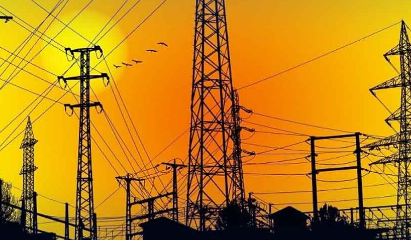
ISLAMABAD, JUL 27 /DNA/ – The Ministry of Energy has decided to work on an emergency plan that includes the potential abolition of free electricity facilities in all government and semi-government institutions.

Sources indicate that the ministry is contemplating cutting off free electricity to all, including bureaucrats, judges, and parliamentarians, as part of the broader strategy to address the financial challenges facing the country.

Additionally, the ministry is considering the withdrawal of the free petrol facility in the second phase of the plan. Sources say that permanent default can only be avoided only through revolutionary measures.

They said that these measures are seen as essential to achieve the ambitious goal of reaching $60 billion in exports.

Sources further reveal that only industries and businesses will be given the permissible facilities, emphasizing a targeted approach to support economic productivity. There is also a proposal to reduce Maximum Demand Indicator (MDI) charges for factories, aimed at lowering operational costs for the manufacturing sector.

The ministry has also decided to review the performance of regulatory bodies such as the National Electric Power Regulatory Authority (NEPRA) and the Oil and Gas Regulatory Authority (OGRA) to ensure efficiency and accountability.=DNA

Stay Connected

64FansLike
60FollowersFollow

Latest Reviews

Exchange Rates

USD - United States Dollar
EUR
1.17
GBP
1.35
AUD
0.67
CAD
0.72