Home Blog Page 66

Pakistan hands over demarche to Afghan envoy

Saifullah Ansar

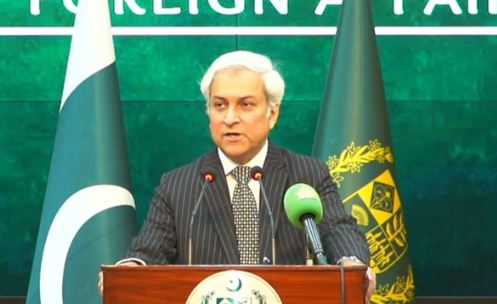
ISLAMABAD: Pakistan’s Ministry of Foreign Affairs confirmed that a strong demarche was issued to the Afghan Taliban regime following the recent terrorist attack in Karachi.

Spokesperson Tahir Andrabi stated that the Afghan chargé d’affaires was summoned to the Ministry last night, where Pakistan conveyed its concerns directly.

A similar demarche was also delivered by Pakistan’s Ambassador to Kabul, Ubaid-ur-Rehman Nizamani, to the Afghan Ministry of Foreign Affairs.

Andrabi explained that these steps were taken in light of evidence showing Afghan nationals, including one apprehended alive, were involved in the attack.

He stressed that this proves once again that Afghan soil and Afghan nationals continue to be used to orchestrate terrorist attacks inside Pakistan.

Injured terrorist confesses Afghan Taliban’s role in attack on Pakistan Rangers Camp

Injured terrorist confesses Afghan Taliban's role in attack on Pakistan Rangers Camp

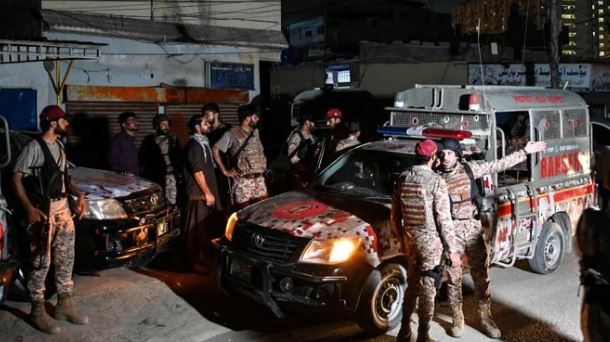
KARACHI, JUN 28 /DNA/ –  In a major development, an injured terrorist affiliated with the outlawed group Jamaat-ul-Ahrar, who was involved in the cowardly attack on a Pakistan Rangers camp, has made startling confessions. His revelations have brought to light substantial evidence implicating the Afghan Taliban regime in supporting cross-border terrorism.

The arrested terrorist, identified as Usman Ali, provided detailed information about the attack and his network during interrogation.

Key Confessions by the Arrested Terrorist, Usman Ali:

  • Identity and Origin: “My name is Usman Ali, and I came from Jalalabad, Afghanistan.”
  • Accomplices: “I had three other accomplices with me named Abdul Hadi, Janan, and Umar Farooq.”
  • Casualties: “Abdul Hadi, who came with me, has been killed.”
  • The Attack: “Janan threw the bomb at the Pakistan Rangers camp.”
  • Entry into Pakistan: “We came to Pakistan seven days ago. Abdul Hadi, who was a resident of Bajaur, was our guide.”
  • Planning and Logistics: “We were kept in an under-construction building. The weapons used in the attack were brought by Abdul Hadi from Waziristan.”
  • Attempted Escape: “As I was fleeing towards the other side, I was hit by a bullet and fell down.”
  • Affiliation: “I belong to Jamaat-ul-Ahrar. Our commander in Afghanistan is known as Ahrar Molvi Saheb.”
  • Training and Equipment: “We were all trained in Afghanistan. I was only given a jacket; we prepare the suicide vests ourselves.”
  • Training Source: “We learned to make the suicide vests in Afghanistan. The training for suicide vests and other tactics was given to us by Umar Qari in Afghanistan.”
  • Preparations: “All arrangements for us were completed in Afghanistan before coming to Karachi. Abdul Hadi knew everything here; he had come here before.”
  • Targeting: “Initially, we did not know the difference between the Army and the Rangers. But after coming here, we were told that the Rangers are all infidels.”

Defense Experts’ Analysis:

Following these confessions, defense experts have expressed grave concern over the role of the Afghan Taliban regime in harboring terrorist elements.

“Evidence is clear that the Afghan Taliban regime is using Afghan soil as a safe haven for terrorists and deploying them against Pakistan,” experts stated. They further noted that Pakistan has previously presented undeniable evidence of cross-border terrorism to the Afghan Taliban regime on multiple occasions, but the attacks have persisted.

Bangladesh’s fugitive ex-PM says will return to Dhaka ‘this year’

Bangladesh's fugitive ex-PM says will return to Dhaka 'this year'

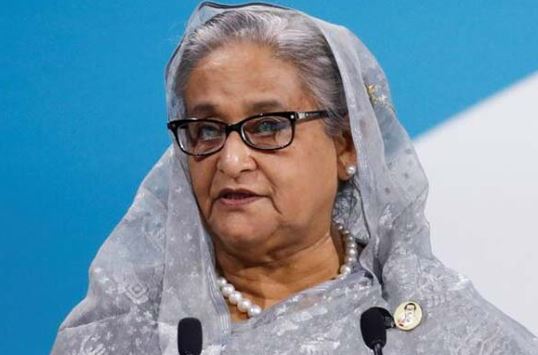
NEW DELHI, JUN 28: Bangladesh’s fugitive former leader Sheikh Hasina has vowed to return to her country “this year”, according to an interview published on Sunday, months after she was sentenced to death in absentia for crimes against humanity.

Hasina, 78, fled to neighbouring India in August 2024 after a student-led uprising ended her 15-year, iron-fisted rule.

She has not been seen in public since, except for a rare speech broadcast to a packed press club in New Delhi in January.

In an interview with Indian broadcaster NDTV, Hasina said she was not afraid of death and that the verdict against her was “part of an illegal, unconstitutional and politically motivated process”.

“Many conspiracies have been hatched against me. But breaking through every web of conspiracy… I was elected prime minister five times by the people’s vote and worked for the country’s unprecedented development,” Hasina said.

“I want to say clearly: overcoming every obstacle and every conspiracy, I will return to my country this year,” she added in response to a question on whether she would return despite the death penalty verdict.

Last November, Hasina was found guilty by a Dhaka court of incitement, order to kill and inaction to prevent atrocities, and sentenced to be hanged.

The activities of her former ruling Awami League, once one of the country’s most popular, have been outlawed.

Ties between India and Bangladesh have improved since Prime Minister Tarique Rahman won a landslide election victory in the South Asian nation of 170 million people in February.

But frictions remain, with Bangladesh repeatedly demanding the extradition of Hasina.

Dar speaks with Saudi FM; offers condolences over helicopter crash, reviews regional peace

Dar speaks with Saudi FM; offers condolences over helicopter crash, reviews regional peace

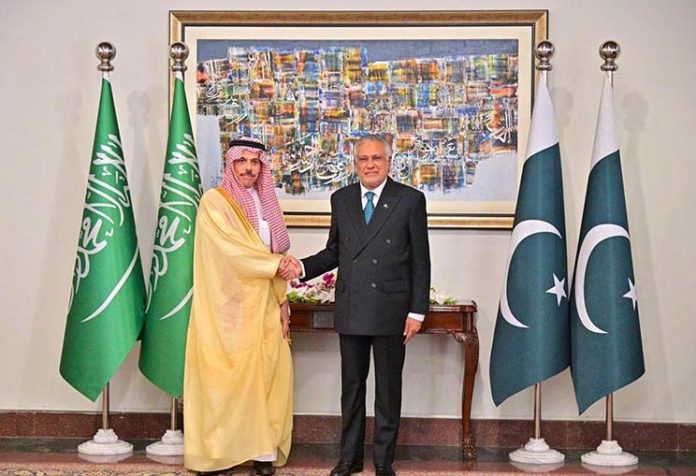
ISLAMABAD, Jun 28: Deputy Prime Minister and Foreign Minister Senator Mohammad Ishaq Dar on Sunday held a telephonic conversation with Foreign Minister of Saudi Arabia Prince Faisal bin Farhan Al Saud to discuss regional developments and convey heartfelt condolences over the deaths in a tragic helicopter crash.

During the conversation, the deputy prime minister expressed sincere condolences on behalf of Prime Minister Shehbaz Sharif, Chief of Defense Forces Field Marshal Syed Asim Munir, himself, the Government, and the people of Pakistan over the incident of a helicopter crash in Saudi Arabia, which resulted in the loss of 14 precious lives.

Prince Faisal bin Farhan thanked Deputy Prime Minister Dar and deeply appreciated the brotherly gesture.

The two leaders also held an in-depth discussion on recent developments in the region and expressed deep concern over the evolving situation.

Dar reiterated Pakistan’s resolve to continue working towards the prevalence of peace in the region in pursuance of the “Islamabad MoU”.

Prince Faisal also conveyed that he planned to visit Pakistan on mutually convenient dates at the earliest. DPM Dar welcomed the announcement and expressed hope that the visit would materialize soon.

Earlier, in a post on X, DPM Dar also expressed grief over the helicopter crash and extended heartfelt condolences to the government and people of the Kingdom.

“Our thoughts and prayers are with the victims of this tragic accident and their grieving families. Pakistan stands in complete and unwavering solidarity with our Saudi brethren in this hour of national grief,” he added.

Kant and the Crisis of the Global Order

Kant and the Crisis of the Global Order

Dr. Muhammad Akram Zaheer

The modern international order often appears trapped between power and principle. Wars continue to erupt despite the presence of global institutions, while states invoke morality even as they pursue strategic interests. In this uneasy landscape, the ideas of Immanuel Kant remain remarkably relevant. More than two centuries after his death, Kant’s reflections on peace, republican government, law and international cooperation continue to shape debates in global politics. Kant wrote during a turbulent period in European history. Monarchies competed endlessly for territory and influence, and war was considered a normal instrument of statecraft. Yet Kant challenged the assumption that conflict between nations was inevitable. In his celebrated essay Perpetual Peace, published in 1795, he argued that peace could emerge not through conquest but through reason, institutions and political reform.

At first glance, Kant’s ideas may appear idealistic in a world driven by military alliances, nuclear deterrence and economic rivalry. Yet many of the central features of contemporary international politics bear the imprint of his thinking. The spread of democratic governance, the rise of international law, and the establishment of organisations such as the United Nations all reflect, in varying degrees, the Kantian belief that cooperation among states is both possible and necessary. Kant believed that republics what would today broadly be called constitutional democracies were less likely to wage aggressive wars. His argument was simple but powerful. In monarchies, rulers could initiate wars for prestige or ambition while ordinary citizens bore the costs in blood and taxation. In representative systems, however, citizens would think carefully before supporting military adventures whose consequences they themselves would suffer.

This idea later evolved into what scholars now call the “democratic peace theory”, one of the most influential concepts in international relations. While democracies have certainly fought wars, proponents of the theory argue that mature democratic states rarely fight one another directly. The experience of post-war Western Europe is often cited as evidence. Countries that once devastated the continent through centuries of warfare gradually moved towards economic integration and political cooperation under institutions that eventually developed into the European Union. Kant’s significance, however, extends beyond democracy alone. He believed that international politics should not remain trapped in anarchy. States, in his view, required laws and institutions capable of regulating their conduct. This conviction anticipated the later development of international legal frameworks and multilateral diplomacy.

The horrors of the two World Wars strengthened the appeal of such thinking. After 1945, the international community attempted to construct a rules-based order aimed at preventing another global catastrophe. Institutions such as the United Nations, the International Court of Justice and numerous arms-control agreements reflected the belief that dialogue and law could moderate the destructive impulses of power politics. Yet Kant never imagined a world government exercising authority over all nations. He feared that concentrated global power could itself become tyrannical. Instead, he proposed a federation of free states cooperating voluntarily under shared legal principles. In many respects, this remains the foundation of modern multilateralism.

The contemporary world, however, also exposes the limitations of Kantian optimism. The post-Cold War era initially encouraged hopes that economic interdependence and liberal democracy would reduce geopolitical conflict. Instead, the twenty-first century has witnessed renewed rivalry among major powers, regional wars and the weakening of international consensus. The conflict in Ukraine, tensions between the United States and China, and instability across the Middle East suggest that national interests and strategic competition remain dominant forces in international affairs. Critics of Kant argue that states ultimately prioritise survival and power over moral ideals. Realist thinkers such as Hans Morgenthau insisted that international politics is governed less by ethics than by calculations of national interest.

There is considerable evidence supporting this criticism. International law is often applied selectively, while powerful states frequently bypass global institutions when their strategic objectives are at stake. Military interventions carried out in the name of democracy or humanitarianism have at times produced prolonged instability rather than peace. The Iraq War remains one of the clearest examples of how the language of moral purpose can coexist with geopolitical ambition. Even so, dismissing Kant would be premature. His ideas endure not because they perfectly describe the world, but because they offer a framework for improving it. International politics cannot function on power alone. Even the strongest states seek legitimacy, alliances and legal justification for their actions. Diplomacy itself assumes that dialogue is preferable to permanent conflict.

Kant also recognised the growing interconnectedness of humanity. He spoke of a form of “cosmopolitan right” grounded in the idea that individuals, not merely states, possess universal moral worth. In today’s world, this principle resonates strongly in debates over refugees, climate change, global inequality and human rights. These challenges transcend national borders and cannot be addressed solely through traditional notions of sovereignty. Climate change, in particular, demonstrates the continuing relevance of Kantian thinking. Environmental crises cannot be resolved through unilateral action. They require sustained international cooperation, mutual restraint and long-term collective responsibility. The same applies to pandemics, cyber security and global economic instability. In each case, the logic of shared vulnerability pushes states towards forms of collaboration that Kant anticipated centuries ago.

For countries such as Pakistan, Kant’s ideas carry additional significance. Pakistan exists in a region shaped by strategic competition, unresolved disputes and shifting alliances. The pressures of security often dominate policymaking. Yet long-term regional stability will depend not only on military deterrence but also on economic cooperation, institutional dialogue and political moderation. South Asia’s future cannot rest indefinitely on confrontation. Kant understood that peace is not merely the absence of war. It is the product of political maturity, accountable governance and international engagement. His vision may never be fully realised, but neither can it be ignored. In a fragmented global order marked by nationalism and mistrust, his philosophy remains a reminder that international politics need not be reduced entirely to force and fear.

The enduring tension between realism and idealism continues to define world affairs. Kant belongs firmly to the latter tradition, yet history suggests that even the harshest systems of power eventually require rules, norms and cooperation to survive. The modern international order, despite all its failures, still carries traces of the world Kant imagined imperfect, fragile, but unwilling to abandon the pursuit of peace.

Dr. Muhammad Akram Zaheer

Assistant Professor Pakistan Studies

Imperial College of business Studies Lahore

[email protected]

Pakistan will need 1.84 million cataract surgeries a year

Pakistan will need 1.84 million cataract surgeries a year

An estimated 570,000 adults in Pakistan are blind due to cataracts, while another 3.56 million live with cataract-related vision impairment. Cataracts are primarily linked to ageing, and growing life expectancy means more people are entering the age groups most at risk

RAWALPINID, JUN 28 /DNA/ – Pakistan will need at least 1.84 million cataract surgeries annually by 2030 to meet rising demand, but the public sector currently performs fewer than one in five procedures, leaving most patients dependent on charitable organisations and private hospitals.

Prof. Dr. Sabihuddin Ahmed, Head of the Cataract Department at Al-Shifa Trust Eye Hospital, highlighted the challenge during a media interaction, warning that the country’s cataract burden is growing faster than existing healthcare capacity.

Al-Shifa Trust performs around 60,000 cataract surgeries annually through its hospitals and outreach programmes. However, demand continues to outpace service capacity, widening the gap between the number of patients requiring treatment and the surgeries available, he added.

An estimated 570,000 adults in Pakistan are blind due to cataracts, while another 3.56 million live with cataract-related vision impairment. Cataracts are primarily linked to ageing, and growing life expectancy means more people are entering the age groups most at risk.

The burden of treatment is unevenly distributed. Private hospitals perform 42.4 percent of cataract surgeries, NGOs account for 39.9 percent, and public hospitals only 17.7 percent. As a result, many low-income patients depend on charitable services for treatment.

A shortage of specialists is adding pressure to the system. Pakistan has only 15 ophthalmologists per million people, far below the levels seen in many developed healthcare systems. Al-Shifa Trust trains about 20 ophthalmologists annually, but far more specialists are needed.

Diabetes is also accelerating demand for cataract treatment. Pakistan has 34.5 million adults living with diabetes, a figure projected to rise sharply in the coming decades. Diabetic patients often develop cataracts earlier and require surgery at younger ages.

Helicopter crash kills 14 in Saudi Arabia

Helicopter crash kills 14 in Saudi Arabia

DNA

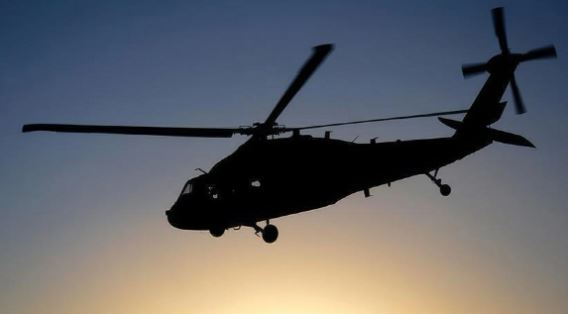
RIYADH: A helicopter crash in Saudi Arabia killed 14 Saudi citizens on Sunday, the official press agency reported, adding that the aircraft belonged to state oil giant Aramco.

The Saudi Press Agency, citing an official at the energy ministry, reported the helicopter crashed in Ras Tanura in the country’s east.

“The accident claimed the lives of all 14 passengers, all Saudi citizens,” the agency said, adding that an investigation was under way to determine the cause of the crash.

Aramco says it operates more than 60 aircraft, including helicopters serving more than 300 heliports in Saudi Arabia, making it one of the largest corporate fleets in the region.

The deadly accident comes as oil-rich Gulf nations seek to ramp up their output following Iranian attacks and the closure of the Strait of Hormuz, a vital waterway for the export of oil and gas.

Saudi Arabia did not indicate the incident was in any way connected to a hostile attack.

During the Middle East war, Iranian attacks had targeted energy facilities in the Gulf.

Ras Tanura is home to one of the largest refineries in the Middle East, with a capacity of 550,000 barrels per day, and is critical to Saudi Arabia’s energy sector.

The refinery has been targeted several times, notably during an Iranian drone attack at the beginning of the conflict, which caused a fire and forced a partial shutdown.

Aramco helicopter crash kills 14 in Saudi Arabia

Aramco helicopter crash kills 14 in Saudi Arabia

RIYADH: A helicopter crash in Saudi Arabia killed 14 Saudi citizens on Sunday, the official press agency reported, adding that the aircraft belonged to state oil giant Aramco.

The Saudi Press Agency, citing an official at the energy ministry, reported the helicopter crashed in Ras Tanura in the country’s east.

“The accident claimed the lives of all 14 passengers, all Saudi citizens,” the agency said, adding that an investigation was under way to determine the cause of the crash.

Aramco says it operates more than 60 aircraft, including helicopters serving more than 300 heliports in Saudi Arabia, making it one of the largest corporate fleets in the region.

The deadly accident comes as oil-rich Gulf nations seek to ramp up their output following Iranian attacks and the closure of the Strait of Hormuz, a vital waterway for the export of oil and gas.

Saudi Arabia did not indicate the incident was in any way connected to a hostile attack.

During the Middle East war, Iranian attacks had targeted energy facilities in the Gulf.

Ras Tanura is home to one of the largest refineries in the Middle East, with a capacity of 550,000 barrels per day, and is critical to Saudi Arabia’s energy sector.

The refinery has been targeted several times, notably during an Iranian drone attack at the beginning of the conflict, which caused a fire and forced a partial shutdown.

Riyadh said in April that the weeks-long attacks had disrupted several production operations at key facilities, with refineries in Ras Tanura as well as Jubail, Yanbu and Riyadh targeted.

Saudi Arabia, the world’s leading crude exporter, produces a little over 10 million bpd.

Pakistan plans to deploy 1 million workers to Saudi Arabia by 2030

Pakistan plans to deploy 1 million workers to Saudi Arabia by 2030

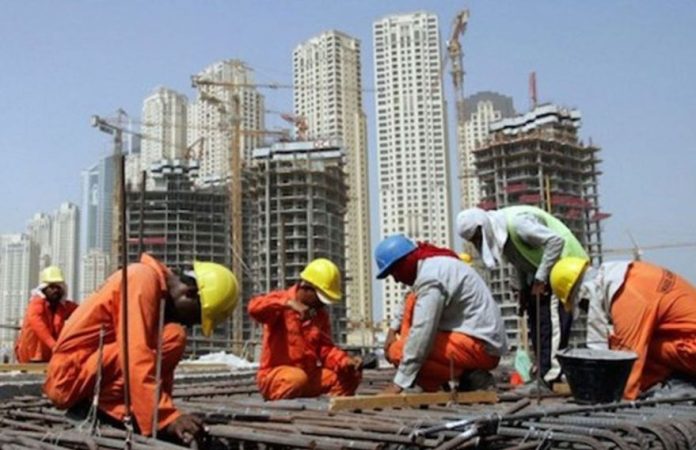
ISLAMABAD, Jun 28: Pakistan has set a target of deploying one million workers to Saudi Arabia by 2030 under a long-term workforce development strategy aimed at strengthening labour mobility, human capital development and economic cooperation between the two countries.

According to official documents available with Wealth Pakistan, the target forms part of the Human Resource Deployment Plan (2025-2039) developed under the Saudi-Pakistan Economic Cooperation Framework (SPECF), which institutionalizes labour cooperation between the two countries in line with Saudi Arabia’s Vision 2030.

The plan envisages increasing annual overseas deployments to 1.51 million workers by 2039 through a structured pipeline of skilled, semi-skilled and highly qualified manpower. The targeted sectors include construction, hospitality and tourism, healthcare, information technology, logistics, aviation and infrastructure development.

Saudi Arabia continues to be the leading destination for Pakistani workers. According to the Bureau of Emigration and Overseas Employment (BE&OE), 762,499 Pakistani workers were registered for overseas employment during 2025, of whom 530,256, or 69.54%, moved to Saudi Arabia. More than 96% of Pakistani workers proceeding abroad through official channels were employed in Gulf Cooperation Council (GCC) countries, particularly Saudi Arabia and the United Arab Emirates.

The documents note that Saudi Arabia’s Vision 2030 has significantly expanded employment opportunities in the infrastructure, construction and services sectors, helping the Kingdom retain its position as the largest overseas labour market for Pakistani workers.

To support the growing demand for skilled manpower, Pakistan’s workforce development strategy is aligned with major Saudi mega and giga projects. The country plans to strengthen training programmes in construction, hospitality, healthcare, ICT and engineering to ensure a steady supply of qualified workers for the Saudi market.

The framework also envisages a series of policy and institutional reforms, including Mutual Recognition Agreements (MRAs), qualification alignment initiatives involving NAVTTC and Saudi training institutions, digital labour market integration and employer-linked recruitment models.

According to the documents, Pakistan has proposed a US$3.8 billion investment framework for Saudi participation, comprising US$2.7 billion for technical and vocational education and training (TVET) and US$1 billion for higher education. The proposal aims to establish demand-driven training infrastructure, skill cities and joint educational institutions to prepare workers for emerging labour market requirements.

The documents highlight early progress under the initiative, including more than 70 memorandums of understanding and letters of intent signed during 2024-25, the deployment of over 4,700 workers following the Human Resources and Labour Services Expo, and strengthened cooperation with Saudi institutions, including Takamol, Musaned and the Technical and Vocational Training Corporation (TVTC).

In addition to supporting labour exports to Saudi Arabia, Pakistan is aligning workforce planning with future international opportunities, including preparations for the FIFA World Cup 2034. The strategy targets the training and deployment of 300,000 to 400,000 workers between 2026 and 2034 for the infrastructure, aviation, tourism and related services sectors.

According to the documents, the initiative is expected to facilitate a gradual shift towards higher-skilled and higher-remittance overseas employment while strengthening Pakistan’s position as a preferred workforce partner for Saudi Arabia.

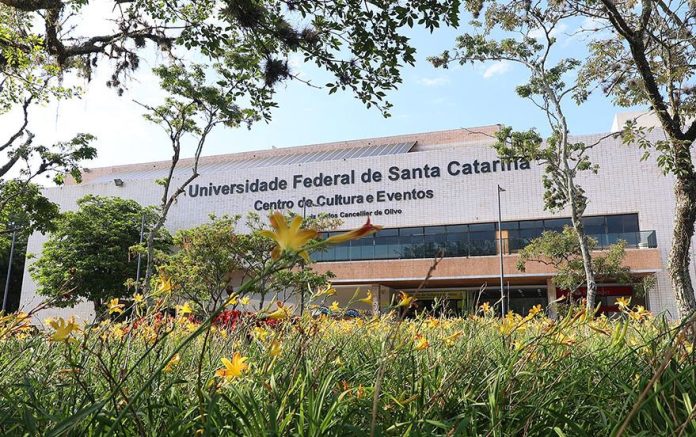
UFSC hosts seminar on Migration, Refuge and Human Displacement

UFSC hosts seminar on Migration, Refuge and Human Displacement

FLORIANÓPOLIS, JUN 28 /DNA/ – The extension project UFSC Without Borders, in partnership with PROGRAD, SINTER and Federal University of Santa Catarina’s Sérgio Vieira de Mello Chair, presents the seminar on migration, refuge and human displacement regarding Brazil’s Week of Migrants and Refugees to the entire academic community and the general public.

This week was instituted in Brazil by law 14.678/2023 and is celebrated annually on 19th to 23rd, June.

The objectives are to discuss the humanised emigrational phenomenon through diverse perspectives, with an emphasis on the participation of migrants and refugees on the making of the Brazilian state; to promote and disseminate migrants and refugees’ rights, freedoms, obligations and guarantees; to foment the debate on human rights in the academic community; to incentivise members of the civil society to know the institutional initiatives within the university; to contribute for the cultural integration of migrants and refugees; to value the cultural diversity that exists within the university; among others.

The event’s first edition happened on 13th June, 2025, and it was an afternoon presenting UFSC’s institutional resources and projects that are auxiliary to aiding students who are also refugees in our country, among academic work on migration within Brazil and Portuguese teaching for foreigners, and cultural interventions performed by immigrants themselves.

The second edition happened on 22nd June, 2026, an all-day seminar presenting UFSC’s projects that work with international students, civil society’s organisations that work with immigrants, cultural interventions performed by migrants and one workshop that targeted people’s self-care while working with refugees.

During the afternoon, there were academic presentations targeting psychological assistance to migrants, Portuguese teaching for foreigners, social assistance for refugees, concentration camps, gender violence among and towards migrants, healthcare for immigrants, education for immigrants, African immigrants in Santa Catarina and Mozambique’s music.

There was also a campaign to gather donations for refugees organised in partnership with the NGOs that participated in the event and an exhibit concerning Brazilian’s students and refugees’ leisure time.

Stay Connected

64FansLike
60FollowersFollow

Latest Reviews

Exchange Rates

USD - United States Dollar
EUR
1.16
GBP
1.35
AUD
0.70
CAD
0.71