Home Blog Page 655

The True Price of Peace: Understanding the Pain of a Martyr’s Family

The True Price of Peace: Understanding the Pain of a Martyr's Family

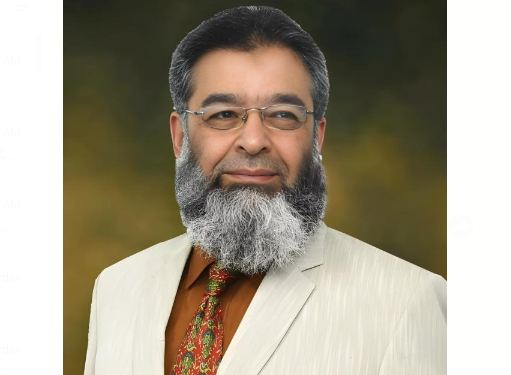
By Muhammad Mohsin Iqbal

In the course of life, there is one inevitable truth that no one can escape—death. It is the one certainty that transcends all boundaries, uniting every soul regardless of status, wealth, or power. Every living being is destined to taste death, and its timing is as fixed as the rising and setting of the sun. This universal fact is often accepted in theory, yet the reality of facing the departure of a loved one is a profoundly painful experience, one that shakes the very foundations of those left behind.

The grief is especially poignant when death comes unexpectedly, claiming the life of someone who is neither aged nor suffering from any life-threatening illness. Such losses are like a thief in the night, robbing families of their joy and leaving a void that can never be filled. The shock is compounded when the deceased is young, full of dreams, and with their whole life ahead of them. For those who had only just begun to experience the springtime of their lives, who were on the cusp of milestones such as marriage or the birth of a child, death seems unbearably cruel.

Imagine a family preparing to decorate their daughter’s head with the crown of a bride, only to be told that the groom has been taken by the cold hand of death. Picture a father who has not yet seen the face of his unborn child, or a brother who was planning to arrange for his sister’s wedding, only to receive the heart-wrenching news that their loved one has fallen in battle. The dreams of a future filled with joy and celebration are shattered in an instant, replaced by the harsh reality of loss and mourning.

In Pakistan, such tragedies are not uncommon, particularly among the families of soldiers. These brave men—whether they be Sepoy, Havildar, Lance Naik, Second Lieutenant, LieutenantCaptain, or Major—serve with honor and courage, knowing full well that death could claim them at any moment. Yet they go forth willingly, not for the paltry sum of money they earn, but for the love of their homeland and the protection of its people. The salary of a soldier, no matter how high, can never truly compensate for the life they risk every day. Human life is far too precious to be measured in rupees, yet these soldiers lay down their lives with the knowledge that their sacrifice is for a greater cause.

The land of Pakistan has also been a witness to countless sacrifices, where the atmosphere has reverberated with the tales of valor and dedication. Those who bore the weight of four stars on their shoulders and chests, symbols of their courage and glory, have selflessly embraced death for the sake of the nation. These brave souls, standing at the forefront of duty, have laid down their lives with unwavering commitment, ensuring that the spirit of patriotism and honor continues to inspire future generations. Their legacy is etched into the very soil of the country, a testament to their unwavering devotion to Pakistan.

When the body of a martyr returns to his home, the scene is one of unspeakable sorrow. The wails of mothers, the silent tears of fathers, the devastated expressions of siblings and spouses—all speak to the immeasurable loss that has befallen them. The grief of losing a loved one to war is compounded by the pride in knowing that they died a hero, yet this pride does little to ease the pain. It is in moments like these that the true cost of freedom and security is felt, not in abstract terms, but in the raw, personal agony of families who must go on without their beloved son, brother, or husband.

It is difficult to truly understand this pain unless one has experienced it firsthand. The sudden absence of someone who was once the center of a family’s world leaves an indelible mark on the hearts of those who remain. And yet, for the sake of the nation, these families bear their grief with dignity, knowing that their loved one’s sacrifice was not in vain. It is a reminder that the freedoms and security we often take for granted are built on the sacrifices of those who came before us, and those who continue to serve.

As a responsible citizen, it is our duty to honor these martyrs, not just in words, but in our actions and attitudes. We must recognize the enormity of their sacrifice and appreciate the peace and safety they have provided for us. It is easy to become absorbed in the trivialities of daily life, forgetting that there are those who have given everything so that we may live in peace. Yet, it is precisely because of their sacrifice that we have the luxury to do so.

Living nations are those that remember and honor their heroes. They understand that their freedom was bought with blood, and they do not let the memory of their martyrs fade away with time. Instead, they keep their legacies alive, teaching future generations about the price of freedom and the value of sacrifice. In this way, the memories of the fallen are preserved, and their sacrifices continue to inspire and protect the nation long after they have gone.

So, the next time you hear of a soldier who has been martyred, take a moment to reflect on the life that was lost and the family that is now grieving. Consider the dreams that will never be fulfilled, the joys that will never be experienced, and the future that was cut short. Let this be a reminder to cherish those who are still with you, to appreciate the sacrifices made on your behalf, and to honor the memory of those who gave their lives for your tomorrow.
A regional approach could help address Afghan challenges, say experts

A regional approach could help address Afghan challenges, say experts

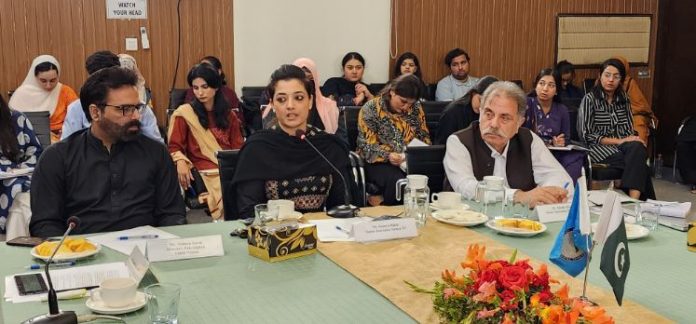
ISLAMABAD, AUG 28 /DNA/ – Speakers at a roundtable discussion organized by the Institute of Regional Studies (IRS) have called for adopting a regional approach towards the various challenges confronting and emanating from Afghanistan, including economic, human rights, and terrorism related challenges.

Various speakers at the event argued that with the establishment of de facto diplomatic relations with more and more capitals of the world, the Afghan Interim Administration was slowly expanding its diplomatic footprint. They maintained that even as the Afghan Interim Administration did not enjoy support of all ethnic groups in Afghanistan, it was seen as a force that had brought about a certain amount of political stability and an end to large-scale violence in Afghanistan.

The experts pointed out, however, that notwithstanding the relative political stability, human rights, especially women rights, remained compromised in Afghanistan. The enactment of a strict ‘promotion of virtue and prohibition of vice’ law was mentioned as a recent case of additional restrictions on the fundamental rights of Afghans, especially the Afghan women, whose future remained uncertain amidst the prevailing restrictions on their movement and education.

The participants alsofelt that forming an inclusive government remained a major challenge for the Afghan Interim Administration besides the economic situation of the country.The speakers were of the view that even though Afghan economy did not collapse as some had predicted, it remained precariously fragile.

While highlighting the efforts of Afghan Interim Administration towards expanding economic relations with the neighbouring countries, concerns were also expressed over the long-term health of the Afghan economy. Many speakers also urged the Afghan Interim Administration to ease restrictions on the travel of journalists to Afghanistan to report from the ground so that a factual picture of Afghanistan could be presented to the world. 

The participants of the roundtable included President IRS, Ambassador Jauhar Saleem,Director-General Institute of Strategic Studies Research and Analysis(ISSRA) at the National Defence University Major General Muhammad Raza Aizad,senior journalists Tahir Khan, Sumera Khan, and Khalid Khan, Director-General Pak-Afghan Youth Forum Salman Javed, athlete and women’s rights activist Samar Khan, and IRS researchers Aarish U. Khan and Aleena Shah.

A large audience including diplomats, academics, researchers, opinion-makers, and students witnessed the lively discussion.

Muscat hosts eighth session of Pakistan-Oman bilateral consultations

Muscat hosts eighth session of Pakistan-Oman bilateral consultations

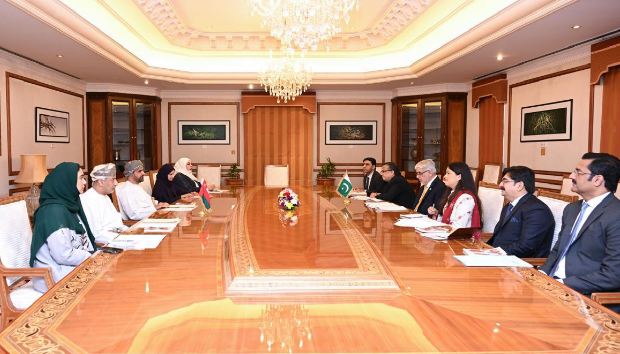
MUSCAT, AUG 27 /DNA/ – The eighth session of the Pakistan-Oman Bilateral Political Consultations was held today in Muscat, Oman. The Additional Foreign Secretary (Middle East), Ambassador Shehryar Akbar Khan and the Chief of GCC and Regional Neighborhood Department, Ambassador Sheikh Ahmad bin Hashil bin Rashid Al Maskari of Foreign Affairs of the Sultanate of Oman, led their respective sides.

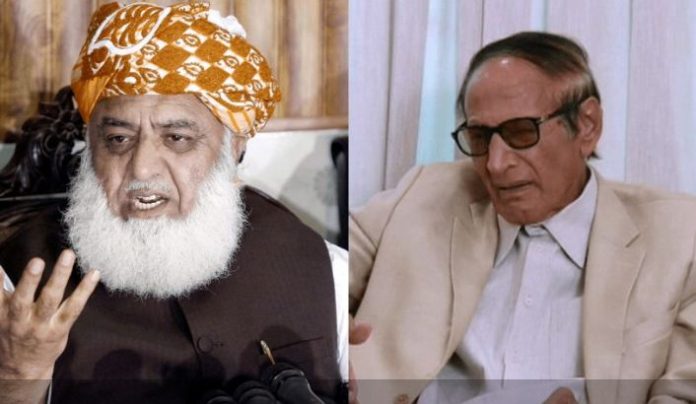
Fazlur Rehman, Chaudhry Shujaat exchange views on country’s political situation

Fazlur Rehman, Chaudhry Shujaat exchange views on country's political situation

LAHORE, AUG 27 – Jamiat Ulema-e-Islam-Fazl (JUI-F) supremo Maulana Fazlur Rehman and Pakistan Muslim League-Quaid (PML-Q) supremo Chaudhry Shujaat Hussain on Tuesday exchanged views on the country’s political situation.

According to details, Rehman called on Hussain at the latter’s residence in Lahore. On this occasion, Rehman inquired after the former prime minister.

Separately, Rehman announced to extend full support to the nationwide strike of traders on August 28 (Wednesday).

“Inflation and illegal taxes have ruined the lives of the people,” said Rehman.

Fazl said: “On the orders of the International Monetary Fund (IMF), that the budget has taken away the money from the mouths of the people”.

“The JUI-F workers will make peaceful strike successful. The JUI-F business forums across the country should fully participate in this strike,” Maulana Fazlur Rehman said.

PM rules out ‘soft approach’ or talks with terrorists amid uptick in deadly attacks

PM rules out 'soft approach' or talks with terrorists amid uptick in deadly attacks

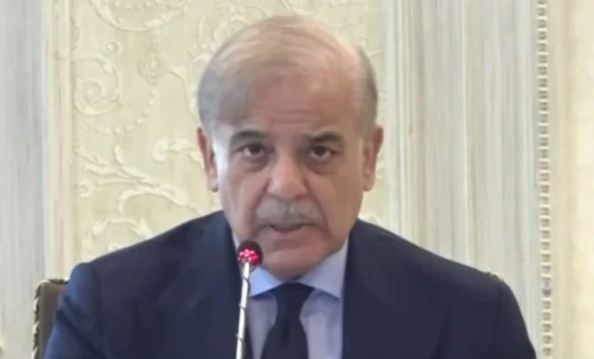
ISLAMABAD, AUG 27: In response to a series of terror attacks in Balochistan in the last couple of days, Prime Minister Shehbaz Sharif on Tuesday said neither talks could be held with the enemy nor a soft approach could be adopted to tackle them.

Addressing a meeting of the federal cabinet in Islamabad today, the prime minister said it was time to uproot terrorism and the government would provide all the available resources to the armed forces for this purpose.

“Doors of negotiations are open [only] for those who recognise the constitution and flag of Pakistan, but there is no room for terrorists,” he maintained.

The premier said the nefarious intentions of the terrorists would fail and they would be crushed. The terrorists would completely be eradicated, come what may, the PM reemphasised.

Play Video
In a series of violent attacks across Balochistan for the past couple of weeks, particularly those carried out between Sunday night and Monday, terrorists separately targeted civilians, police, and security forces.

In the Rarasham area of the province’s Musakhel district, at least 23 passengers were killed after being offloaded from passenger buses and trucks.

Separately, at least 10 people, including police and Balochistan Levies personnel, were martyred in a gun attack in Kalat.

PM Shehbaz regretted the aforementioned attacks, adding that more than 50 citizens as well as personnel of security forces were martyred in the recent terrorist incidents.

“Innocent people were killed in Dera Ismail Khan and Karak as well,” he said, adding that the Khawarij terrorists operated from across the border in Afghanistan.

Condemning the terror attacks in Balochistan, the PM also said the terrorists wanted to halt Pakistan’s development, by thwarting the China Pakistan Economic Corridor (CPEC) and other development projects.

“The terrorists want to create a rift between Pakistan and China as well as anarchy within the country,” he said.

Announcing to visit Balochistan soon to review its situation, he said the nation should recognise its enemies and unite to defeat them.

Shehbaz said the terrorists were mistaken that they could achieve their goal of spreading terror by killing innocent people.

Pakistan, Azerbaijan vow to deepen youth cooperation

Pakistan, Azerbaijan vow to deepen youth cooperation

DNA

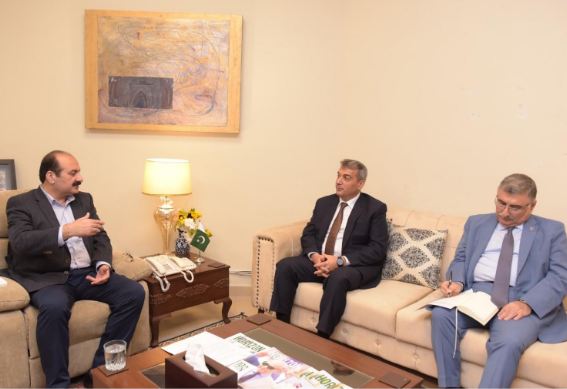
ISLAMABAD, AUG 27: Khazar Farhadov, the Ambassador of Azerbaijan to Pakistan, called on Mr. Rana Mashood Ahmed Khan, Chairman of the Prime Minister’s Youth Programme, at the latter’s office in Islamabad.

The meeting focused on exploring collaborative avenues in education, culture, and sports, with both sides expressing keen interest in enhancing bilateral relations through youth-centric initiatives.The meeting was attended by Member National Assembly Miss Syeda Amna Batool and officials from Prime Minister’s Youth programme.

During the meeting, Chairman Rana Mashood Ahmed Khan outlined the vision of the Prime Minister’s Youth Programme, which is committed to empower Pakistani youth through various initiatives aimed at enhancing their skills, education, and cultural exposure.

He emphasized the importance of technical education, stating, “The incumbent government places a strong emphasis on equipping our youth with technical skills that are essential for their personal growth and the nation’s economic development. Our goal is to prepare them to compete on an international level.” Ambassador Khazar Farhadov responded by acknowledging the pivotal role of youth as an invaluable asset for both nations.

He emphasized the need for continued collaboration between Pakistan and Azerbaijan, particularly in fields that directly impact the younger generations. “Youth is our most important asset, and it is through their development that we can ensure a prosperous future for our countries,” said Ambassador Farhadov. A significant portion of the discussions centered around the potential collaboration between Pakistan’s National Volunteer Corps (NVC) and Azerbaijan’s Volunteer Network. Chairman Rana Mashhood briefed the Ambassador on the objectives of the NVC, which aims to foster a spirit of volunteerism among Pakistani youth, encouraging them to contribute to social development projects across the country. He proposed the idea of a collaborative framework where volunteers from both countries could engage in cross-border initiatives, share best practices, and learn from each other’s experiences.

“By integrating our volunteer networks, we can create a dynamic platform for youth from Pakistan and Azerbaijan to work together on projects that promote peace, cultural understanding, and community development,” said Chairman Prime Minister’s Youth Programme.

Another key point of discussion was the establishment of dual diploma courses for students from both Pakistan and Azerbaijan. These courses would allow students to gain academic qualifications recognized in both countries, thereby enhancing their educational prospects and career opportunities. Both parties agreed that such initiatives would not only benefit students academically but also foster stronger cultural ties between the two nations.

In a gesture to further strengthen bilateral relations, Chairman Rana Mashhood Ahmed Khan extended an invitation to the Ministers of Youth, Sports, and Culture of Azerbaijan to visit Pakistan. The proposed visit aims to facilitate direct dialogue and exchange of ideas, paving the way for more concrete partnerships in youth development, cultural exchange, and sports diplomacy.

The meeting concluded on a positive note, with both sides expressing optimism about the future of Pakistan-Azerbaijan relations, particularly in the context of youth collaboration. Chairman Rana Mashood Ahmed Khan reaffirmed Pakistan’s commitment to working closely with Azerbaijan to create more opportunities for youth in both countries.

He stated, “Our youth are the architects of tomorrow, and by joining hands with Azerbaijan, we can provide them with the tools and opportunities they need to build a brighter future.”

The Prime Minister’s Youth Programme remains dedicated to fostering international partnerships that contribute to the holistic development of Pakistani youth, ensuring they are equipped to face global challenges and make meaningful contributions to society.

President Zardari confers Nishan-i-Imtiaz (Military) award on Chinese General Li Qiaoming

President Zardari confers Nishan-i-Imtiaz (Military) award on Chinese General Li Qiaoming

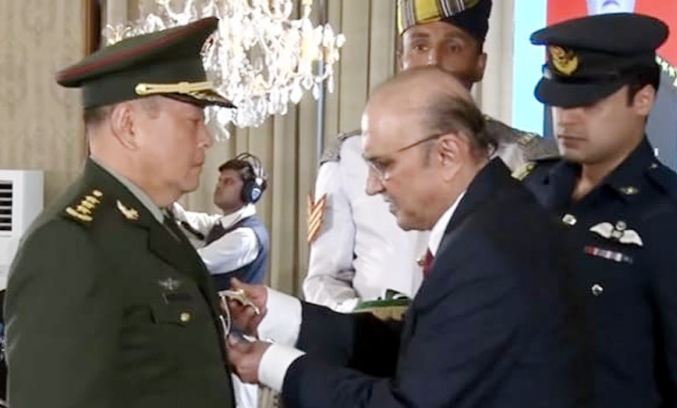
ISLAMABAD, Aug 27 (DNA): President Asif Ali Zardari on Tuesday awarded the Nishan-i-Imtiaz (Military) to General Li Qiaoming, Commander of the Ground Forces of China’s People’s Liberation Army (PLA), in recognition of his distinguished services and significant contributions to enhancing Sino-Pak defense relations.

The award was conferred during a special investiture ceremony at Aiwan-e-Sadr, attended by service chiefs and parliamentarians.

The citation at the ceremony highlighted General Li Qiaoming’s four-decade career, noting his significant contributions to the Chinese military. His intellect, administrative skills, and dedication have earned him a reputation as a courageous and capable officer, crucial in promoting peace and stability in China and beyond. General Li, is renowned for his exceptional professionalism and skills in maintaining peace and stability around China. As a friend of Pakistan, he greatly strengthened Pak-China military relations with unwavering commitment. In recognition of his valuable contributions, the president has awarded General Li Qiaoming the Nishan-e-Imtiaz (Military).

Deadly Russian strikes pound Ukraine for 2nd day

Deadly Russian strikes pound Ukraine for 2nd day

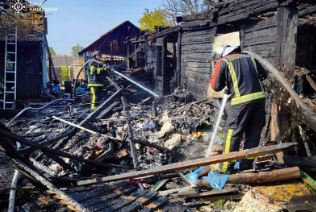
KYIV, UKRAINE, AUG 27 (AFP/APP): Russia fired a wave of attack drones and missiles at Ukraine that killed at least four people, authorities said Tuesday after the second night of heavy strikes across the war-battered nation.

The overnight barrage came a day after the Kremlin launched one of its largest-ever aerial attacks on Ukraine, which targeted energy facilities and killed several people.

Ukraine’s air force said Tuesday it downed half of the 10 missiles and 60 of the 81 attack drones launched from several regions of Russia and from occupied-Crimea.

“Unfortunately, despite the effective work of our air defence systems, four people were killed and 16 were wounded,” President Volodymyr Zelensky said in a post on social media.

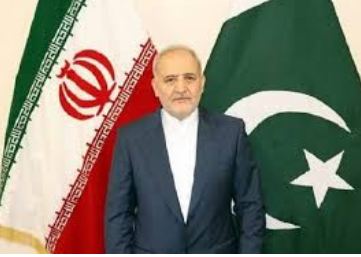
Iranian embassy decries Musakhel, Kalat attacks, offers condolences

Iranian embassy decries Musakhel, Kalat attacks, offers condolences

ISLAMABAD, AUG 27 /DNA/ – The Embassy of the Islamic Republic of Iran strongly condemned the heinous terrorist attacks in Balochistan’s Musakhel and Kalat, which resulted in the tragic martyrdom of 23 civilians and 10 police officers.

We extend our deepest condolences to the government and people of Pakistan, particularly to the families of those who lost their loved ones. May Allah Almighty bless the souls of the martyrs, Iranian embassy said.

Transboundary Climate Resilience: A call to Integration

Transboundary Climate Resilience: A call to Integration

Ambassador Jauhar Saleem, President of IRS, stressed the necessity of cooperation in the face of global threats, particularly climate change. He noted that climate change transcends borders and has the potential to serve as “low-hanging fruit” in diplomatic negotiations, as it presents a common threat that all parties can rally around

Faisal Sheikh

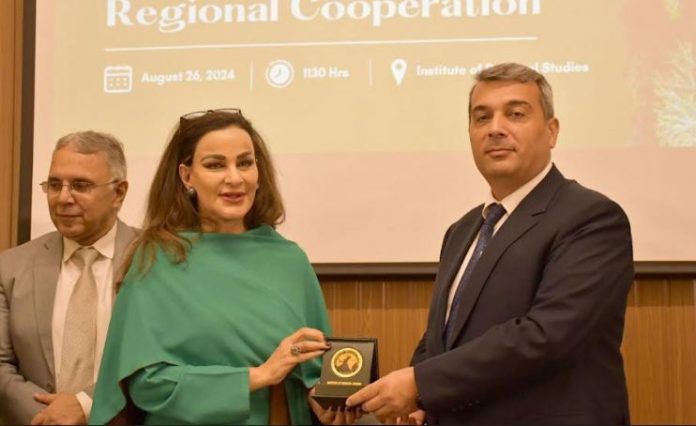
ISLAMABAD, AUG 26: /DNA/ – Senator Sherry Rehman issued an urgent warning today during a pre-COP29 seminar organised by the Institute of Regional Studies (IRS), stating that unless immediate action is taken to address the negative impacts of climate change, we will be living in a world of “want, lack, and scarcity.” In her call to action, Senator Rehman stated that the destructive power of geopolitics and hyper-nationalism, which have steered the world toward global conflict, are obscuring the imminent threat of mutually assured destruction posed by climate change.

The seminar, entitled “Strengthening Transboundary Resilience: Enhancing Regional Cooperation,” brought together several distinguished experts to discuss critical issues and potential solutions for regional climate resilience.

Keynote speaker Mr. Usman e Ghani, Additional Commissioner of Indus Waters at the Ministry of Water Resources, provided an in-depth overview of the Indus Waters Treaty. He highlighted the treaty’s various elements, from data sharing to dispute resolution, and its lasting relevance as a potential mechanism for transboundary water resilience. Mr. Ghani said that the treaty could become a powerful tool for cooperation if both sides fully committed to its implementation.

Ambassador Khazar Farhadov, Azerbaijan’s ambassador to Pakistan and the session’s chair, expressed optimism about the upcoming COP29, hosted by Azerbaijan. He emphasised the importance of global solidarity, the mobilisation of international climate finance, and the need for an inclusive process, stating that COP29 will be the most “significant international event of 2024.”

Dr. Samuel Rizk, UNDP country representative, addressed the pressing issue of water scarcity, describing it as a defining global challenge. He stressed that water scarcity is a “zero-sum game” and that the central goal of climate diplomacy should be to identify scenarios where all parties can benefit to create win-win situations.

Dr. Najibullah Sadid, an independent scholar with experience at the Federal Waterways Engineering and Research Institute (BAW), discussed Afghanistan’s water issues, including water quality and connectivity with Central Asian states. He called for a long-term vision in policymaking, criticising the current short-sighted approaches in the region.

Ms. Farrah Naz, country director of the Global Alliance for Improved Nutrition (GAIN), highlighted the agricultural challenges facing South Asia, which is already home to 40 per cent of the world’s poor and malnourished. She warned that climate change is projected to reduce crop production by 10-40 per cent in the region by the end of the century, exacerbating food insecurity. Urbanisation, rising sea levels, and increasing soil salinity are all contributing to the region’s growing challenges.

In his remarks, Ambassador Jauhar Saleem, President of IRS, stressed the necessity of cooperation in the face of global threats, particularly climate change. He noted that climate change transcends borders and has the potential to serve as “low-hanging fruit” in diplomatic negotiations, as it presents a common threat that all parties can rally around.

Finally, Talha Tufail Bhatti, an environmental scholar leading the “Strengthening Regional Climate Resilience Program” at the IRS, said that the institute’s is looking forward to hosting more seminars of this nature, expressing the importance of continued dialogue and collaboration in the fight against climate change.

Stay Connected

64FansLike
60FollowersFollow

Latest Reviews

Exchange Rates

USD - United States Dollar
EUR
1.17
GBP
1.35
AUD
0.67
CAD
0.72