Home Blog Page 656

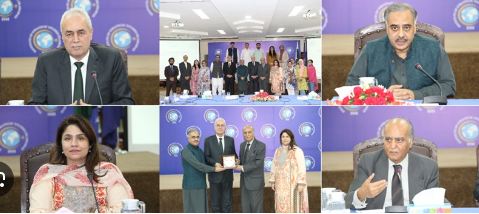
ISSI hosts farewell event for Palestinian ambassador

ISSI hosts farewell event for Palestinian ambassador

Ambassador Ahmad Rabaie expressed deep gratitude for Pakistan’s unwavering support for Palestine, especially after October 7. He highlighted the tragic toll of the conflict, with most victims being women and children, and over 150,000 Palestinians killed and injured

Saifullah Ansar

ISLAMABAD: The Centre for Afghanistan, Middle East & Africa (CAMEA) at the Institute of Strategic Studies Islamabad (ISSI) organized a farewell event in honor of H.E. Ahmad Rabaie, Ambassador of the State of Palestine to Pakistan. The event was moderated by Ms. Amina Khan, Director CAMEA. The speakers included: Ambassador Sohail Mahmood, Director General ISSI; Ambassador Khalid Mahmood, Chairman BoG ISSI; and H.E. Ambassador Ahmad Rabaie.

In her remarks, Ms. Amina Khan emphasized the deep-rooted bonds between Pakistan and Palestine, built on brotherhood and solidarity. She noted Pakistan’s consistent support for the Palestinian people in their struggle for a homeland and expressed gratitude for Ambassador Rabaie’s efforts to strengthening the bilateral relationship.

Speaking on the occasion, Ambassador Sohail Mahmood commended Ambassador Ahmad Rabaie for his valuable efforts to deepen the fraternal Pakistan-Palestine relations and to promote the just cause of the Palestinian people, particularly in the wake of developments since October 7, 2023. Sharing deep anguish over the relentless military onslaught against the Palestinians in Gaza, he noted that the issue pertained to decades-long illegal occupation of Palestinian lands and consistent denial of their right to self-determination and separate statehood. Ambassador Sohail Mahmood underscored that Pakistan’s support for the Palestinians emanated from three factors: a moral imperative to support their just struggle for an independent state; Quaid’s injunctions dating back even prior to the creation of Pakistan; and a historically consistent stance of solidarity with the Palestinians. He also drew parallels between the oppression and injustices faced by both Palestinians and Kashmiris. He highlighted that the Government of Pakistan has consistently supported the Palestinian cause through political and diplomatic support, humanitarian aid, advocacy at the United Nations, human resource development and so on. Ambassador Sohail Mahmood also emphasized that Pakistan remains steadfast in its position that the Palestinian people must have a viable sovereign and independent state, based on pre-1967 borders, with Al-Quds Al-Sharif as its capital. He concluded by thanking Ambassador Rabaie for his services and wishing him well in his future endeavors.

Ambassador Ahmad Rabaie expressed deep gratitude for Pakistan’s unwavering support for Palestine, especially after October 7. He highlighted the tragic toll of the conflict, with most victims being women and children, and over 150,000 Palestinians killed and injured. He praised Pakistan’s swift response, including the formation of a committee to send vital humanitarian aid. Ambassador Rabaie also acknowledged Pakistan’s unmatched diplomatic and political support at the United Nations. He was moved by the active support of Pakistan’s youth, who have actively raised their voices against the ongoing genocide and expressed hope for the future. Ambassador Rabaie especially thanked ISSI for its consistent focus on the Gaza situation and its support and solidarity with the Palestinians at this difficult time.

In his concluding remarks, Ambassador Khalid Mahmood reflected on Pakistan’s enduring support for Palestine, which also existed pre partition as Quaid-e-Azam was a staunch supporter of the Palestinian people. This solidarity continues till date. He also noted the challenging times for Palestine and expressed deep sympathy for the suffering Palestinian nation. Ambassador Khalid Mahmood reaffirmed Pakistan’s commitment to the Palestinian cause which continues to grow stronger.


Australia gives millions of workers ‘right to disconnect’

 Sydney, Aug 26 (AFP/APP): Australia gave millions of workers the legal right to “disconnect” on Monday, allowing them to ignore unreasonable out-of-hours contact from employers, to the distress of big industry.

  People can now “refuse to monitor, read, or respond to” their employers’ attempts to contact them outside work hours — unless that refusal is deemed “unreasonable”.

  The law is similar to those of some European and Latin American countries.

  Unions welcomed the legislation, saying it gave workers a way to reclaim a work-life balance.

“Today is a historic day for working people,” said Michele O’Neil, president of the Australian Council of Trade Unions.

  “The union movement has won the legal right for Australians to spend quality time with their loved ones without the stress of being forced to constantly answer unreasonable work calls and emails,” she said.

  “Australian unions have reclaimed the right to knock off after work.”

   Prime Minister Anthony Albanese hailed the reform pushed through by his centre-left Labor government.

“We want to make sure that just as people don’t get paid 24 hours a day, they don’t have to work for 24 hours a day,” he told national broadcaster ABC.

  “It’s a mental health issue, frankly, as well, for people to be able to disconnect from their work and connect with their family and their life.”

   – ‘Deeply confusing’ –

  But the reforms got a cool welcome from Australian industry leaders.

“The ‘right to disconnect’ laws are rushed, poorly thought out and deeply confusing,” the Australian Industry Group said in a statement.

  “At the very least, employers and employees will now be uncertain about whether they can take or make a call out of hours to offer an extra shift,” it said. 

  The law, enacted in February, came into force for medium-sized and large companies as of Monday.

 Smaller companies with fewer than 15 employees will be covered from August 26, 2025.

 “We encourage workplace participants to educate themselves on the right to disconnect and take a commonsense approach to applying it within their workplace,” said the head of Australia’s workplace relations regulator, Fair Work Ombudsman Anna Booth.

 Under the law, workers may be ordered by a tribunal to stop unreasonably refusing out-of-hours contact, and employers likewise may be ordered to stop unreasonably requiring employees to respond, it said.

  The question of what is reasonable will “depend on the circumstances”, the fair work ombudsman said in a statement.

   Deciding factors may include the reason for the contact, the nature of the employee’s role, and their compensation for working extra hours or being available, it said.

First Ever Test Defeat to Bangladesh: A new low for Pakistan cricket

First Ever Test Defeat to Bangladesh: A new low for Pakistan cricket

By: Fahad Parvez

In a cricket match that will be remembered for all the wrong reasons by Pakistan cricket fans, the men led by Shan Masood suffered their first-ever Test match defeat to Bangladesh in Rawalpindi. This loss not only marks a significant milestone for Bangladesh, a nation grappling with political instability and deadly floods, but also serves as a stark reminder of the glaring weaknesses in Pakistan’s cricketing approach, from team selection to on-field performance.

The Pakistan cricket think tank has long been known for misreading pitches, and this match only served to uphold that unfortunate legacy. One of the most baffling decisions was Pakistan’s choice to play four pacers on a wicket that clearly demanded more variety. Although the seamers weren’t expected to achieve much on what was a flat Rawalpindi deck, their recent poor form and overall inability to run through the opposition only worsened the situation. The over-reliance on a below-average pace quartet to deliver the goods afteran early declaration was made in the first inningsexposed a fundamental flaw in Pakistan’s strategy. The constant reluctance to play Abrar Ahmed, the only spinner of note, remainedbeyond comprehension and once again raised questions about the selection committee’s decision-making process.

The batting lineup, too, crumbled under pressure, with several players making poor shot selections on the final day to accelerate Pakistan’s downfall. Abdullah Shafiq and Saud Shakeel, in particular, played reckless shots at crucial moments, digging a hole for the team. The long tail meant that there wasn’t anyone gutsy or skillful enough to sustain the continuous pressure applied by Bangladeshi spinners.

Babar Azam, hailed as a golden boy of Pakistan cricket, seems to have completely lost his Midas touch. His recent form has been mediocre at best, and his failure to perform against weaker teams is becoming a concerning trend. Babar’s struggles against Bangladesh in both innings, a team he was expected to dominate, have only amplified the criticism of his current form.

Agha Salman, occupying a crucial spot in the team, has failed to justify his inclusion. Neither a complete batter nor a dependable bowler, his presence in the playing XI appears to be a liability rather than an asset.

This brings us to Shan Masood, whose selection is a talking point more often than not. Despite not being the most prolific run-scorer, Masood has managed to secure his place in the team, ironically, by virtue of being the captain. His captaincy, however, has done little to inspire confidence in the team’s overall performance.

As day-five of the Test match began, there was an ominous feeling that Pakistancould falter, and unfortunately, that premonition came true. The defeat not only shattered Pakistan’s hopes of a series win but also once again laid bare the long-ignored issues within Pakistan cricket that have resulted in the team hitting a new all-time low. With the next Test starting in just a few days on August 30, it remains to be seen what changes, if any, Pakistan will make to save face. At this point, even a series draw seems like a mountain to climb after such a humiliating loss. With the current team composition and attitude, hoping to ever reach the final of a World Test Championship would be nothing short of delusional.

The author, Fahad Parvez, is a Marketing and Communication specialist and a former radio broadcaster based in Canada. He has written numerous articles for various publications across the globe, including insightful pieces on cricket, driven by his keen understanding and passion for the sport.

Historical Cult Leaders and Their Modern Echoes Imran Khan’s Rise

Historical Cult Leaders and Their Modern Echoes Imran Khan’s Rise

Rai Muhammad Zaka Ullah Khan

In the history of the world, there have been many leaders who have become cult figures in their societies. Questioning such leaders is often considered blasphemy. They believe that if you start to question the leader, you have nothing to do with the nation or patriotism, and they consider you a traitor. A cult can take many forms, such as a political leader, head of state, religious figure, or even an artist. They control the minds of people or society, compelling them to perform actions they could not imagine doing under normal conditions. They exploit individuals’ rights and personal freedoms, destroying their own society, nation, and country solely for satisfaction stemming from their narcissistic behaviour.

A cult leader is dynamic, charismatic, and convincing, and their goal is to brainwash their audience to gain power-related advantages. A cult personality is defined as a public figure, often a political or religious leader, who gains an extraordinary following. This thing typically cultivates characteristics of personality or propaganda. It always seems that in history, a cult leader has such a personality that inspires others. They then use propaganda tools, such as media or communication tools, to control public perception or thoughts. They also offer their public a vision of a perfect society. People who oppose their behaviour are labelled as enemies or traitors. These leaders are usually portrayed as infallible, wise, and uniquely capable of solving the problems facing their community, country. There are some examples of historical personalities who poisoned the minds of people for the sake of their power.

Benito Mussolini’s rise as a cult leader in Italy during the early 20th century is an example of how a leader can transform into an authoritarian figure through charisma, propaganda, and manipulation of public sentiment. His rise began in 1919 when he founded a political movement called the “National Fascist Party,” which attracted nationalists, war veterans, and anti-socialists. He ruled Italy from 1922 to 1925 as Prime Minister and from 1925 to 1943 as Il Duce, the Fascist dictator. Mussolini was a master orator, his speeches are known for their passion and dramatic delivery, which captivated audiences. His ability to inspire and mobilize people with his words was a key factor in his rise to power. Mussolini tapped into Italian nationalism by promising to restore Italy to the glory of the Roman Empire. Mussolini’s rise to power came at a time when Italy was experiencing social unrest, strikes, and political violence. Many Italians, including business leaders and landowners, saw Mussolini as a stabilizing force who could restore order and prevent the spread of communism. His use of his followers, known as the “Blackshirts”, to suppress opposition and enforce discipline was seen by some as a necessary measure to bring stability. He is so popular many famous people praise him for his courage to restore Italian glory. Even Allama Muhammad Iqbal also wrote a poem for him, after met Mussolini during his visit to Italy in 1931. Impressed by Mussolini’s personality and leadership style, Iqbal penned a poem titled “Mussolini”. The poem is part of Iqbal’s collection known as “Bāl-e-Jibrīl”. His entry into World War II in 1940 was become a disaster for Italy. After defeated by allice power, He flee to Switzerland but was capture Italian partisans. On April 28, 194, was executed by firing squad. His body publicly display, symbolizing the end of fascism in Italy.

Another example of a religious and spiritual cult leader is Jim Jones, who led his followers to a tragic death. Jones was an American religious and cult leader who started a new religious movement in the United States in the 1950s. Jones is infamous for leading one of the largest mass suicides in modern history, which occurred in 1978 in Jonestown, Guyana. In the 1950s, he became a self-proclaimed preacher and founded the Peoples Temple, which combined Christian teachings with socialist ideology. Jim Jones had a charismatic personality and attracted followers by preaching messages of racial equality, social justice, and communal living. He gained a reputation for being a powerful speaker and a caring leader, initially working to help marginalized communities. As the People’s Temple grew, he enforced strict loyalty and obedience among his followers, often using psychological manipulation, threats, and fear. Jones also staged fake healings and miracles to convince his followers of his divine powers. In the mid-1970s, facing increasing scrutiny and investigations into allegations of abuse and misconduct, Jones decided to move his congregation to a remote area in Guyana, South America. Slowly, he came to the verge of madness because of his obedient followers who never disobeyed his orders. This made him narcissistic, as he considered himself the leader of the world. In 1978, he told his followers that the U.S. fascistic government and imperialists were against them. So, there was only one way left for dignity and pride, to commit revolutionary suicide. On November 18, 1978, he ordered his followers to drink a grape-flavoured drink laced with cyanide and sedatives. Over 900 people, including children, were coerced or forced into drinking the poison. Jones himself died from a gunshot wound, believed to be self-inflicted.

Another example of cult leaders is Adolf Hitler, Mao, and Stalin, who became a source of destruction for their nations. The objective of all these examples is to denote how the cult of personality surrounding Imran Khan has destroyed the minds of our Pakistani youth with its abusive nature. He also gathers his fan following with his charismatic personality, oratory skills and religious touch. His followers turn him into a heroic figure. He turned his party into a fascist regime when he was in government and oppressed opposition leaders like other cult leaders. He uses mass-scale propaganda against opposition leaders and journalists who speak out against his incompetence and corruption. Meanwhile, he portrays himself as a Messiah, claiming that everyone else is corrupt and against the country. He often uses religion as a tool to prove himself trustworthy and uncorrupted, standing against the corrupt elite in his quest to create a “Raisat-e-Madina.” He uses religious rhetoric to gain popularity and to exploit people’s religious sentiments. While being overthrown from the government by a vote of no confidence, in one of his speeches, he said it is mentioned in the Quran that it is better to die rather than live in atrocious conditions. In another speech, he said, “I want to tell my nation to build their belief strongly in Allah, and cowardice is punished by death. If you don’t stand up for me, then you are a coward.” So the end result of his cult is the incident on May 9th, where his blindly-following supporters suffered in jails due to these events.

The cult of personality surrounding Imran Khan has stifled critical thinking among Pakistani youth, turning them into blind followers who view him as a messianic figure. His use of charismatic oratory, religious rhetoric, and propaganda portrays him as a saviour against corruption. This undermines democratic values by promoting authoritarian tendencies and suppressing dissent.To counteract such influence, it is essential to uphold democratic values, promote critical thinking, and hold leaders accountable for their actions, ensuring they do not manipulate public sentiment for personal gain.

Rai Muhammad Zaka Ullah Khan

[email protected]

Sheikh Ahmed Al Maktoum discusses investments with Pakistan’s DPM/FM

Sheikh Ahmed Al Maktoum discusses investments with Pakistan’s DPM/FM

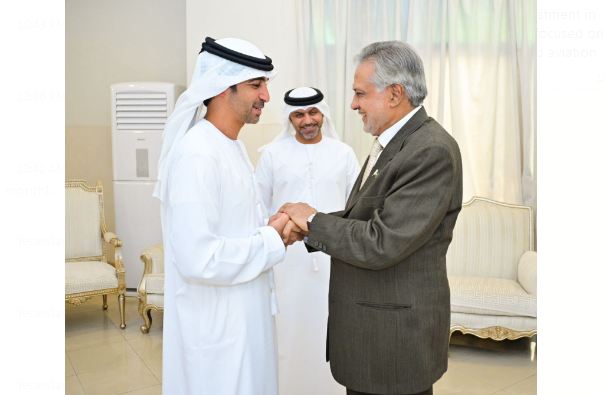
ISLAMABAD, AUG 25 /DNA/ – A high-ranking UAE delegation led by His Highness Sheikh Ahmed Dalmook Al Maktoum met with Pakistan’s Deputy Prime Minister and Finance Minister, Mohammad Ishaq Dar, to discuss potential investments in Pakistan’s key sectors.

The discussions centered on exploring opportunities in the maritime, railways, and aviation sectors, with both sides expressing a strong commitment to enhancing economic cooperation.

The meeting underscored the UAE’s interest in Pakistan’s strategic infrastructure and the mutual benefits of increased investment and collaboration between the two nations.

Experts highlight Pakistan’s unique position in balancing US-China relations

Experts highlight Pakistan's unique position in balancing US-China relations

LAHORE, AUG 25 /DNA/ – In the seminar organized by the Institute of International Relations and Media Research on the speakers highlighted this. Pakistan can play in bringing together the United States and China on a host of issues instead of siding with any one of it at the cost of its relations with the other power.

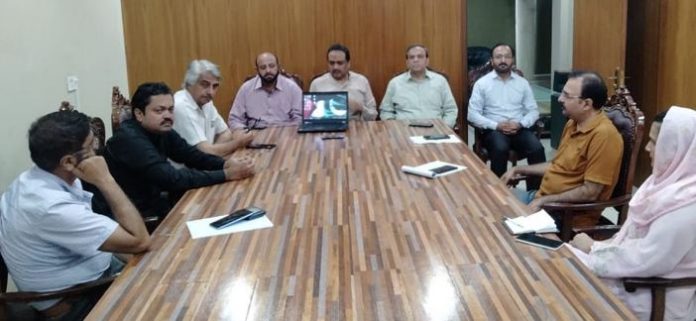
The seminar on ” Common Interests of US and China in Pakistan and a way forward for Pakistan “was hosted and chaired by foreign affairs expert Syed Muhammad Mehdi here on Sunday. Michael Kugelman, Asia Programme deputy director at Woodrow Wilson International Centre for Scholars, Washington, Prof Zhao of the China Renmin University, Dr Amjad Magsi, director of the Pakistan Study Centre, and UCP Political Department chairman Dr Waheed Khan were prominent among the speakers.

Mr Kugelman says Pakistan is one of the few countries who have good relations both with the US and China. Like in the past, Islamabad can play the role of a mediator on issues like climate change between the two biggest polluters of the environment.

Also, China has a significant influence on Taliban as is evident from its increasing investment in the energy exploration projects in Afghanistan while Pakistan has lost its leverage there. In the face of increasing terrorism threat from Afghanistan in the form of TTP and ISET, China may use its influence to the benefit of not only Pakistan but also the region and the world, he said.

He said US and China confrontation is not a new cold war like situation because nowhere Washington seems to contain Beijing as happens during wars. Rather US president’s emissary on climate change John Kerry convinced the US administration to end confrontation with China for creating an enabling environment to work together on climate change.

He said that Islamabad, as one of the worst victims of climate change, could also play a role in bringing together the two countries on the subject.

Prof Zhao said that developing a strategic relationship with the US is precarious, but critical for Pakistan.

He said the US competes with China in Pakistan making it difficult for Islamabad to balance its ties with both the states.

Developing a strategic relationship with China is important but not enough to fully address Pakistan’s economic and security concerns, he said. Thus, it seems reasonable to argue that Pakistan has no choice but to develop a strategic relationship with the US to secure its export market and arms supplies, to ensure that it can rely on the US to counterbalance India to some extent, although Pakistan sees that the US is not necessarily reliable in this regard. But to rely on the US seems to be a kind of inertia of Pakistani politicians.

He said China will in no way oppose the development of Pakistan-US strategic relationship but it must not harm Pakistan-China relations. It is also expected that Pakistan should not have unrealistic expectations from any friend.

 Muhammad Mehdi said Pakistan’s importance can be denied neither by the US nor China. Islamabad’s joining any defence pact with either power is a death knell for the other power in the region.

Leaving Pakistan alone in the rising terrorism threat is not a solution for US and China because the menace is and may destabilize the region if not the world.

The Pakistan-India conflict is not only damaging the two countries but also affecting world trade. If the Kashmir dispute is resolved, it would not only provide the much needed relief to the peoples across the borders but also the world. A trade corridor with the patronage of the US is being built from India to Israel and Europe that will pass by Pakistani seas and it would always remain insecure in case of tensions between Islamabad and New Delhi.

The shortest and cheapest possible route to get Iranian oil for both China and India passes through Pakistan. Likewise, India could get access to central Asian markets through Pakistan only.

The US is Pakistan’s largest trade partner, while China invested in Pakistan when no country was coming forward for the purpose. Through an effective diplomacy a balance may be created in relations with both the world powers.

Dr Magsi said a positive US-China relationship could help maximize the benefits of CPEC and pave the way for increased foreign direct investment in technology, infrastructure and energy sectors. Harmonious US-China ties means a more predictable and stable environment for economic development and regional stability helpful in enduring peace in South Asia, particularly Afghanistan. Both US-Chana may play a role in bringing Pakistan-India to the negotiation table.

Dr. Waheed Khan from the UCP said like in the Cold War era Pakistan cannot remain neutral in the rivalry between China and US. He, however, suggested that Islamabad should separate its geo-economic and geo-political objectives and realize the US and other states that its geo-strategic and geo-political objectives would remain confined to its borders with India and Afghanistan.

Dr Reza Zaidi from the Punjab University also spoke on the occasion.

British HC Jane likely to face Pak demarche

British HC Jane likely to face Pak demarche

The public perception was that Jane’s views on the elections diverged sharply from those of the government. Commentators and analysts suggested that Jane’s statements likely echoed the sentiments of the majority of the Pakistani populace. However, many critics argued that she overstepped her bounds by commenting on Pakistan’s internal affairs

Ansar M Bhatti/DNA

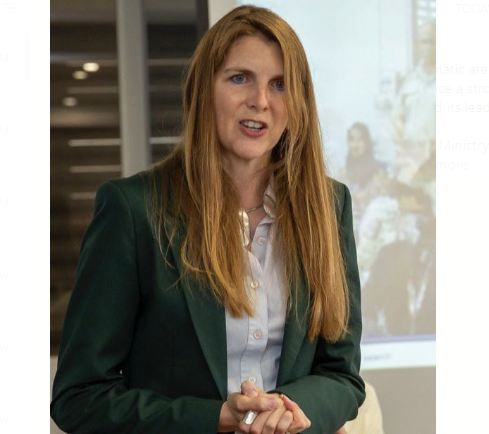
ISLAMABAD: In an unprecedented move in the diplomatic arena, British High Commissioner to Pakistan, Jane Marriott, is likely to face a strong demarche from Pakistan over her alleged support for the PTI and its leader, Imran Khan.

Sources familiar with the matter reveal that Pakistan’s Ministry of Foreign Affairs has already raised this issue with the British government. The British authorities have reportedly assured a thorough investigation into the allegations.

Tensions escalated when High Commissioner Marriott delivered a speech at the Asma Jahangir Conference, criticizing the Pakistani judiciary and the Election Commission for what she described as “flawed and rigged” general elections, which she claimed facilitated the installation of the PML-N government.

In May this year, Chief Justice of Pakistan, Justice Qazi Faez Isa, addressed a strongly worded letter to the British High Commissioner. The letter emphasized the judiciary’s role in ensuring that elections were held within 90 days of the national and provincial assemblies completing their terms. However, this did not occur due to disagreements between the then-President Arif Alvi and the Election Commission of Pakistan (ECP) over who had the authority to announce the election date.

The letter also highlighted the Elections Act of 2017, which mandates intra-party elections to prevent autocratic practices within political parties. The Supreme Court’s decision to uphold this law was, according to the registrar, unjustly criticized by Marriott.

Recently, the British High Commissioner reportedly gave the impression during meetings with various Pakistani political leaders, including members of the PTI, that the British government supported the release of Imran Khan. This was perceived by many as interference in Pakistan’s internal affairs, prompting the Foreign Office to consider lodging a formal complaint against Marriott.

Adding fuel to the fire, a renowned Pakistani TV host and veteran journalist recently claimed on air that Jane Marriott was actually working for the British intelligence agency MI5, which allegedly had a soft corner for the PTI and supported Imran Khan’s release.

Despite the growing diplomatic strain, some sources believe that the Pakistan government may ultimately seek an amicable resolution, given the complexity of its relations with the UK, particularly considering the significant assets that Pakistani politicians have in Britain.

The public perception was that Jane’s views on the elections diverged sharply from those of the government. Commentators and analysts suggested that Jane’s statements likely echoed the sentiments of the majority of the Pakistani populace. However, many critics argued that she overstepped her bounds by commenting on Pakistan’s internal affairs.

Govt to abolish all ‘non-strategic’ ministries, says federal minister

Govt to abolish all ‘non-strategic’ ministries, says federal minister

ISLAMABAD, AUG 25: Federal Minister for Maritime Affairs, Qaiser Ahmed Sheikh, said on Saturday that the government plans to close or privatise state-owned enterprises (SOEs) and ministries classified as “non-strategic” as part of its austerity measures.

Speaking on Dawn News TV’s programme ‘Doosra Rukh with Nadir Guramani,’ the federal minister emphasised that this move will not only relieve the government of a significant burden but also ensure a focus on “good governance.”

Sheikh said that the government was looking at multiple SOEs and considering whether to privatise them or close them entirely.

“These institutions, for the most part, generate losses and perform poorly,” he said.

“They bring no benefit and people aren’t satisfied with their service.”

He added that the government was holding discussions related to all federal institutions, aiming to privatise most of them.

“There are few that serve a strategic purpose… we need to downsize to ensure better governance.”

Asked about which institutions and ministries would be shut down, Sheikh provided no names but emphasised that they would be either closed or merged with other ministries.

“We are either going to merge one ministry with the other, or we’ll reduce the amount of divisions within them.

“The federal government needs to focus on good governance, so it will only control those institutions that serve a strategic purpose.”

The minister stated that the measures intend to ensure lower expenditures, adding that the government had recently decided to stop offering jobs as well.

“We have banned [offering] jobs as a means to cut down on spending”. Sheikh said. “Our institutions run on tax revenue and so far we are generating losses.

“We aim to maintain a very lean government,” he said.

The minister further stated that in addition to banning new job hirings, serving government officials will be prohibited from purchasing new cars and will be required to cover their own utility bills.

“We looked at how we could further reduce spending and made these decisions,” he maintained.

“Nobody can buy a new car and our cabinet members have said that they will not take additional salary and will pay their own utility bills,” he said, adding that ministers were discouraged from travelling in business class on foreign trips.

“These are stringent measures necessary to maximise savings while reducing expenditures,” Sheikh reiterated.

On Friday, the Ministry for Industries and Production (MoIP) secretary said that the government was considering shutting down all utility stores in the country, as part of the “rightsizing of federal government ministries, and institutions working under them.”

The Utility Stores Corporation (USC), although being run inefficiently, provides lifelines to millions of low-income Pakistanis in the form of subsidised groceries. Reports suggesting their closure raised public concern.

However, on Saturday, Minister for Industries and Production Rana Tanveer Hussain dismissed the impression that the utility stores were being closed, insisting that the government was planning to “restructure” the organisation.

“The decision has been made to close the USC and the Public Works Department,” Tanveer had said.

“We are taking SOEs that are not strategic and intend to either privatise them or operate them under a public-private partnership.”

Talha Mahmood, Azerbaijan Ambassador inaugurate ‘Red Maple’ School

Talha Mahmood, Azerbaijan Ambassador inaugurate 'Red Maple' School

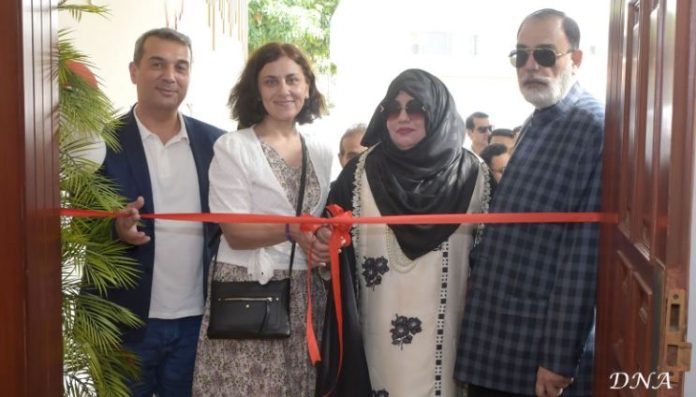
Talha Mahmood, Azerbaijan Ambassador inaugurate ‘Red Maple’ Montessori in Islamabad; school offers comprehensive educational and care services.

ISLAMABAD, AUG 25 /DNA/ – Former Federal Minister and Senator Talha Mahmood, along with the Ambassador of Azerbaijan, Khazar Farhadov, and other distinguished guests, inaugurated the state-of-the-art ‘Red Maple’ Montessori and School in Islamabad’s Sector F-7.

The school provides a range of educational and care services, including Toddler, Casa, Daycare, and After Care facilities.

During the event, the Head of School and Managing Director, Maleeha Hammad, gave an overview of the various facilities and services available to students and parents at the school.

Punjab major cities on high alert

Punjab major cities on high alert

LAHORE, AUG 25: According to the Director General of the Provincial Disaster Management Authority (PDMA), the administrations of major cities are on high alert due to the risk of urban flooding.

Monsoon rains are expected to begin in Punjab today and continue until August 29, with a powerful system entering the province this evening.

Punjab cities like Lahore, Faisalabad, Rawalpindi, and Gujranwala are particularly vulnerable. Additionally, there is a significant risk of flash flooding in the Dera Ghazi Khan, Multan, and Bahawalpur divisions. An alert has been issued to administrations across the province to prepare for the potential impact of these rains.

Stay Connected

64FansLike
60FollowersFollow

Latest Reviews

Exchange Rates

USD - United States Dollar
EUR
1.17
GBP
1.35
AUD
0.67
CAD
0.72